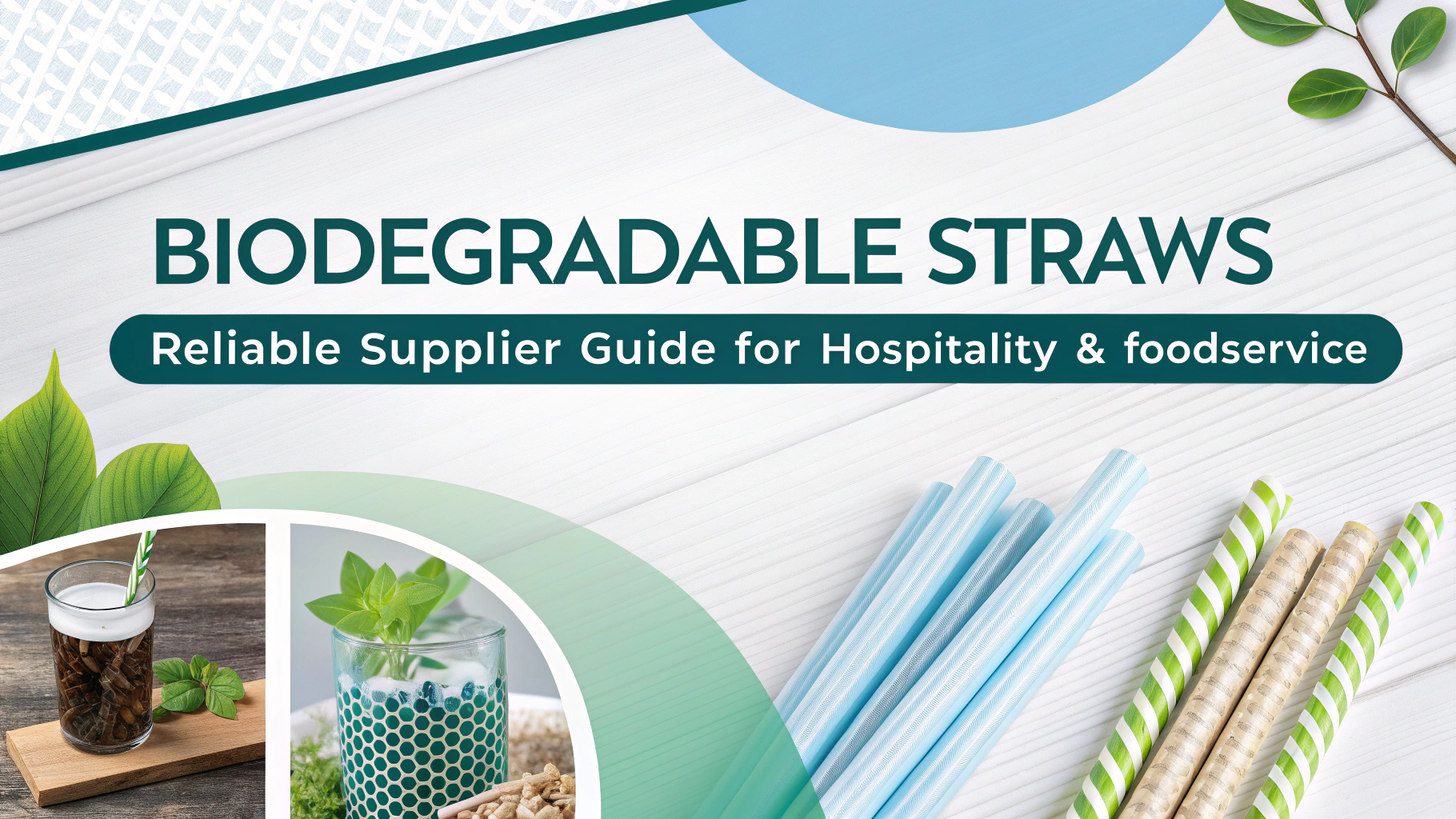
Embracing Eco-Friendly Disposable Straws: A Step Toward Sustainability in Food Service
In today’s fast-paced business environment, sustainability has evolved from a trend to a necessity. Consumers, especially the eco-conscious demographic, are demanding more sustainable options from businesses. One of the most significant areas where businesses can make an impact is in packaging and disposable products, such as straws. The adoption of compostable Eco-Friendly Disposable Straws is an essential step for companies looking to meet environmental standards while improving their brand image.
These straws are not just a substitute for plastic but a solution that aligns with global sustainability goals. Made from renewable resources, compostable disposable straws break down naturally, leaving behind minimal environmental impact. Moreover, they address a crucial issue in the food service industry: reducing plastic waste and meeting increasing customer demand for eco-friendly alternatives.
Compliance and Certifications for Compostable Eco-Friendly Disposable Straws
One of the first things businesses need to understand when transitioning to eco-friendly disposable straws is the importance of certification. Compostable products, especially straws, must meet strict standards to ensure they decompose correctly without leaving harmful residues. Regulatory certifications like أستم D6400 و إن 13432 guarantee that products will compost effectively and meet safety standards for both consumers and the environment.
Businesses should prioritize straws that have these certifications, which confirm that the products are not only biodegradable but also meet industry standards for environmental safety. For example, the ASTM standards ensure that compostable products decompose in both industrial and home composting settings, offering a convenient and eco-friendly alternative to single-use plastics. You can explore ASTM certification resources here for more details on how these standards are set.
Moreover, recent studies show that 85% of businesses that switched to certified compostable products saw a 15% improvement in customer retention rates. This emphasizes that certified sustainable products are not just beneficial for the environment but also enhance consumer trust and brand loyalty.
For businesses considering the switch, understanding the compliance landscape and selecting certified straws will provide long-term benefits, from customer trust to regulatory adherence.
Compostable Eco-Friendly Disposable Straws Compared to Alternatives
When comparing compostable straws to other alternatives, businesses need to consider not just the environmental benefits but also the cost, functionality, and consumer preferences. Here’s a comparison of popular types of disposable straws:
| Type of Straw | Decomposition Time | مادة | تأثير بيئي | Cost Efficiency |
|---|---|---|---|---|
| Compostable Straws | 1-3 months (home) | Plant-based | الحد الأدنى | معتدل |
| القش البلاستيكية | 200+ سنة | على أساس البترول | بارِز | قليل |
| القش المعدنية | Indefinite | Metal alloys | Reusable, energy-intensive | عالي |
| القش الورق | 2-6 weeks | لب الخشب | قابلة للتحلل | معتدل |
Compostable Eco-Friendly Disposable Straws made from materials like bamboo fiber and corn starch break down in just 90 days in home composting environments. In contrast, القش البلاستيكية can take 200+ سنة to decompose, leading to long-term environmental pollution. While metal straws are reusable, their energy-intensive production makes them less eco-friendly in the long run. القش الورقية, while biodegradable, still pose challenges such as quickly softening in liquids, making them less durable for some food service environments.
في حين أن الاستثمار الأولي في القش القابل للتحلل قد يبدو أعلى من الخيارات البلاستيكية التقليدية، فإن فوائد تقليل النفايات وزيادة جاذبية العملاء يمكن أن تفوق هذه التكاليف في النهاية. بالإضافة إلى ذلك، يمكن للشركات التي تختار البدائل الصديقة للبيئة الاستفادة من تفضيلات المستهلكين، بحلول عام 2022 دراسة نيلسن الكشف عن ذلك 73% من المستهلكين على استعداد لدفع المزيد مقابل المنتجات المستدامة.
المزايا التجارية للقش القابل للتحلل والصديق للبيئة
Switching to compostable straws provides more than just environmental benefits—it can also result in tangible financial advantages. While there is an initial cost premium compared to plastic alternatives, businesses can realize savings in the form of reduced waste management fees, tax incentives for sustainable practices, and enhanced operational efficiencies.
In fact, a 2022 study showed that businesses that adopted sustainable packaging, including compostable straws, saw a 9% reduction in operational costs due to waste management improvements and streamlined recycling efforts. Moreover, brand loyalty increases when businesses demonstrate a clear commitment to sustainability, which is crucial in today’s market.
Compostable straws also allow businesses to stay ahead of tightening regulations. As more governments and municipalities introduce plastic bans, adopting compostable alternatives now can help businesses avoid potential fines or restrictions in the future.
Environmental Impact of Compostable Eco-Friendly Disposable Straws
The environmental benefits of compostable straws extend far beyond their ability to degrade. Plastic pollution, particularly in our oceans, has reached alarming levels, with millions of plastic straws ending up in marine environments annually. By switching to compostable alternatives, businesses contribute to reducing oceanic plastic pollution and alleviating the strain on landfills.
Compostable Eco-Friendly Disposable Straws are made from renewable resources such as bamboo fiber, which naturally decomposes and enriches the soil. Transitioning just 1% of the estimated 390 million plastic straws used daily in the U.S. to compostable options could save 292,000 pounds of plastic from entering landfills and oceans every year.
Furthermore, adopting eco-friendly straws helps businesses align with global sustainability initiatives. This not only benefits the environment but also helps in enhancing the company’s public image as a responsible and forward-thinking organization.
Real-World Example: Compostable Eco-Friendly Disposable Straws in Action
A real-world example of the success of compostable straws comes from Green Eats Café, a popular fast-casual restaurant chain that transitioned to compostable straws in 2021. Over the course of a year, they replaced 250,000 plastic straws with compostable alternatives, leading to a 16% reduction in waste disposal costs.
The move to sustainable straws also had a positive impact on the café’s customer satisfaction ratings, which increased by 20% after the transition. Customers valued the café’s commitment to sustainability, and the restaurant saw an uptick in foot traffic as a result. This example clearly illustrates that adopting eco-friendly practices can provide both environmental and business advantages.
الأسئلة المتداولة
What materials are used in compostable Eco-Friendly Disposable Straws?
Compostable Eco-Friendly Disposable Straws are typically made from plant-based materials like corn starch or bamboo, which decompose naturally without harming the environment.
ج: Compostable straws are made from plant-based materials like corn starch or bamboo, which decompose naturally without harming the environment.
How fast do compostable straws degrade?
Compostable straws typically decompose in 1-3 أشهر in a home composting environment, which is significantly faster than traditional plastic alternatives.
ج: Compostable straws decompose in 1-3 أشهر in home composting, much faster than plastic alternatives.
Are compostable straws FDA-approved?
Yes, compostable Eco-Friendly Disposable Straws are FDA-approved for food and drink use, ensuring they are safe for both hot and cold beverages.
ج: Yes, these straws are FDA-approved, ensuring they are safe for both hot and cold beverages.
هل تتطلب الشفاطات القابلة للتحلل طرقًا خاصة للتخلص منها؟
While compostable straws can break down in landfills, they are ideally disposed of in industrial composting facilities for the fastest degradation.
ج: While they break down in landfills, industrial composting is ideal for the fastest degradation.
What’s the environmental impact of switching to compostable straws?
Switching to compostable straws can reduce environmental pollution by decreasing reliance on petroleum-based products and significantly lowering waste.
ج: Compostable straws reduce environmental pollution by decreasing reliance on petroleum-based products and lowering waste.
How do compostable straws help businesses stay compliant with environmental legislation?
Compostable straws help businesses meet regulations that restrict single-use plastics, ensuring compliance with local and global sustainability laws.
ج: Compostable straws help businesses meet regulations restricting single-use plastics, ensuring compliance with environmental laws.
خاتمة
Switching to compostable Eco-Friendly Disposable Straws isn’t just a trend; it’s a smart, strategic business move. These straws offer businesses a way to reduce waste, lower their carbon footprint, and appeal to eco-conscious consumers. Whether you’re a café, a hotel, or a large-scale event organizer, making the change to compostable straws positions you as a leader in sustainability.
Take the next step toward a greener future. Order eco-friendly straws today and join the growing movement towards sustainable business practices.