Die Zersetzung von Bambusstrohhalmen: ein B2B -Imperativ für nachhaltige Operationen
In an era defined by escalating environmental consciousness, businesses across the hospitality and foodservice sectors are confronting unprecedented pressure to pivot towards truly sustainable practices. The global exodus from single-use plastics isn’t merely a fleeting trend; it represents a fundamental operational realignment and a critical challenge to brand reputation. As procurement managers, operations directors, sustainability officers, and supply chain executives navigate this complex landscape, the search for viable, eco-friendly alternatives intensifies. Among the numerous contenders, bamboo straws have emerged as a prominent choice, often lauded for their natural origins. Yet, a pivotal question persists for decision-makers grappling with long-term strategy:Zersetzen sich Bambusstrohhalme tatsächlich und was sind die genauen Auswirkungen auf den ökologischen Fußabdruck und das Endergebnis Ihres Unternehmens?Dieser tiefe Einblick wird die wissenschaftlichen Realitäten, dynamischen Marktkräfte und entscheidenden betrieblichen Überlegungen rund um Bambusstrohhalme analysieren und Ihr Unternehmen mit den Erkenntnissen ausstatten, die es braucht, um fundierte, wirkungsvolle und umweltbewusste Entscheidungen zu treffen.
Der Einsatz ist beträchtlich. Das virale Video aus dem Jahr 2015, in dem ein Plastikstrohhalm aus dem Nasenloch einer Meeresschildkröte gezogen wurde, löste weltweit Aufsehen aus und verdeutlichte die schwerwiegenden ökologischen Schäden, die durch Einwegkunststoffe verursacht werden. Dieser öffentliche Aufschrei führte schnell zu konkreten gesetzgeberischen Maßnahmen. Städte wie Seattle führten den Vorstoß an und führten im Juli 2018 das erste große Verbot von Plastikstrohhalmen in den USA ein, gefolgt von der weit verbreiteten Einführung von „Stroh auf Anfrage“-Richtlinien (z. B. Kalifornien im Jahr 2019) und umfassenden Verboten, wie der Richtlinie der Europäischen Union zu Einwegkunststoffen, die im Juli 2021 in Kraft trat. Große Unternehmen, darunter Starbucks und McDonald’s, reagierten mit der Verpflichtung, bis 2020 weltweit Plastikstrohhalme zu eliminieren. Diese ignorierten diese Vorgaben Durch diese Verschiebungen drohen nicht nur behördliche Strafen und Bußgelder, sondern auch erhebliche Reputationsschäden, wodurch eine zunehmend umweltbewusste Kundenbasis entfremdet wird und möglicherweise wichtige Marktanteile verloren gehen.
Das Auspacken der biologischen Abbaubarkeit: Was passiert mit Bambusstrohhalmen nach der Verwendung?
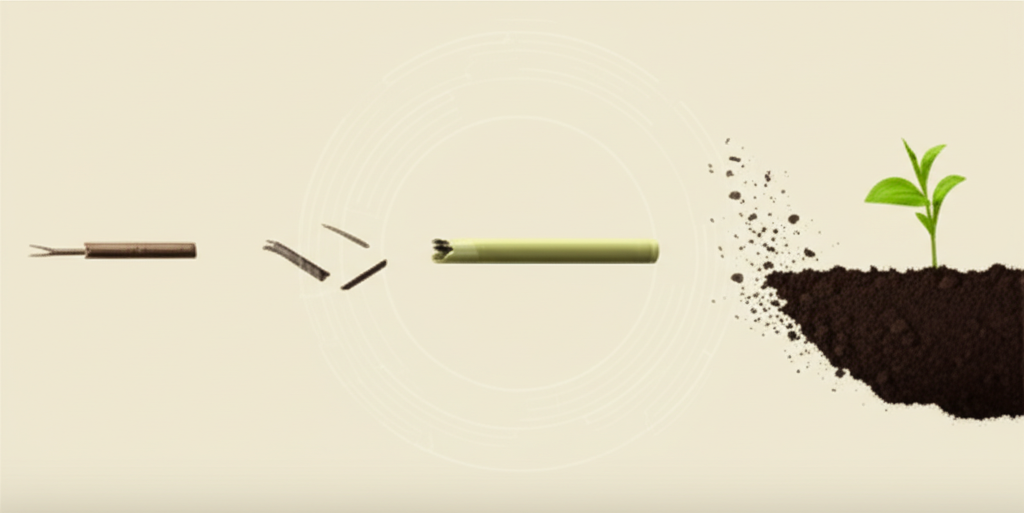
Den Zersetzungsweg von Bambusstrohhalmen zu verstehen, ist nicht nur eine ökologische Kuriosität; Dies ist ein grundlegendes Gebot für jedes Unternehmen, das sich einer echten Abfallreduzierung und den Grundsätzen der Kreislaufwirtschaft verpflichtet fühlt. Im Gegensatz zu ihren synthetischen Gegenstücken, die Jahrhunderte lang haltbar sind, sind Bambusstrohhalme von Natur aus natürlich und werden aus 100 % biologisch abbaubaren Materialien hergestellt. Diese inhärente Eigenschaft ermöglicht es ihnen, zur Erde zurückzukehren, ohne zur anhaltenden Mikroplastikverschmutzung beizutragen oder schädliche chemische Rückstände zu hinterlassen.
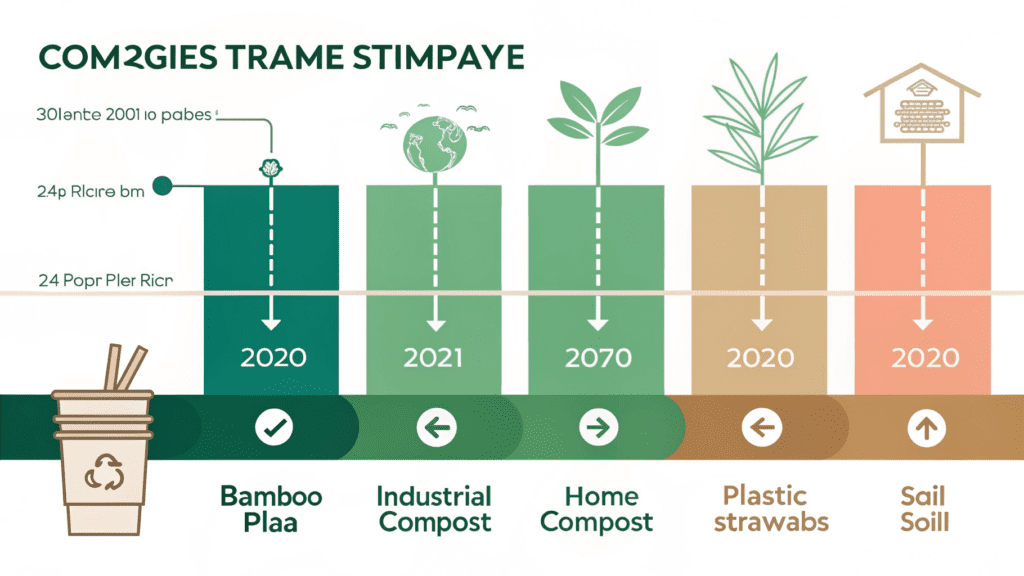
The speed and efficiency of bamboo straw breakdown are, however, contingent on several critical environmental factors. Their thickness, density, and the surrounding conditions—such as ambient temperature, humidity levels, and the microbial composition of the soil—all play a significant role. Generally, in an optimal industrial composting facility, where conditions are precisely controlled for warmth, moisture, and active microbial life, bamboo straws can decompose rapidly, often within less than 5 months (typically 45 to 180 days). For businesses with access to such facilities, this offers a clear and measurable path to waste diversion.
In weniger kontrollierten Umgebungen verlängert sich der Zeitrahmen für die Zersetzung. In einem Kompostbehälter zu Hause, wo die Bedingungen weniger gleichmäßig sind, dauert es normalerweise etwa 1,5 bis 2 Jahre, bis Bambusstrohhalme zerfallen. Wenn unbehandelter toter Bambus einfach in der Erde vergraben wird, insbesondere in feuchten Klimazonen, kann er sich innerhalb von etwa einem Jahr zersetzen. Insgesamt kann der Prozess bei der Entsorgung in natürlichen Umgebungen oder allgemeinen Abfallströmen, die eine gewisse biologische Aktivität ermöglichen, mehrere Monate bis zu zwei Jahren dauern. Entscheidend ist, dass direktes Sonnenlicht, enger Kontakt mit dem Boden und gleichmäßige Feuchtigkeit diesen natürlichen Abbauprozess erheblich beschleunigen und das Material wieder in seine organischen Grundbestandteile umwandeln.
The business advantages of embracing truly decomposable alternatives like bamboo are multifaceted and far-reaching:
- Reduced Landfill Burden: By opting for materials that naturally return to the earth, businesses directly contribute to lowering their operational waste volume and lessening dependence on overburdened landfills. This translates into potential cost savings on waste management and a tangible reduction in environmental impact.
- Compliance with Evolving Regulations: Proactive adoption of biodegradable solutions positions your business ahead of the regulatory curve. As governments globally continue to implement and tighten single-use plastic bans, using genuinely decomposable products ensures compliance, mitigates legal risks, and avoids costly penalties.
- Enhanced Brand Image and Market Positioning: Der Nachweis eines konkreten Engagements für Nachhaltigkeit findet bei umweltbewussten Verbrauchern und Unternehmenskunden von heute großen Anklang. Die Integration von Bambusstrohhalmen in Ihren Betrieb liefert ein sichtbares, umsetzbares Statement zum Umweltschutz, steigert die Markenwahrnehmung, zieht neue Kunden an und stärkt die Loyalität. Dieses Engagement steht im Einklang mit breiteren Trends zu verantwortungsvollem Konsum und kann den Wert Ihrer Marke in einem wettbewerbsintensiven Markt erheblich steigern. Um tiefer in die umfassenderen Auswirkungen auf das Gastgewerbe einzutauchen, erkunden Sie, wie nachhaltige Strohhalme, einschließlich Bambus, im Vergleich zu anderen Optionen abschneiden Zuckerrohr vs. Bambusstrohhalme: Nachhaltige Gastfreundschaft.
Strategischer Vergleich: Bewertung von Bambusstrohhalmen im Vergleich zu den Alternativen
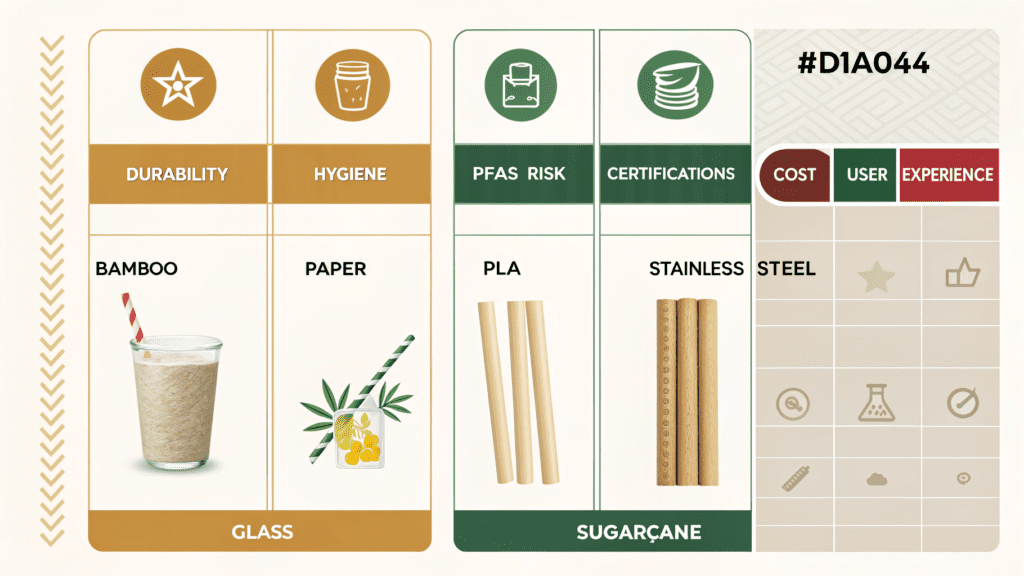
The decision to adopt a specific straw alternative extends far beyond mere biodegradability. For procurement managers and operations directors, a comprehensive evaluation must encompass factors such as cost-efficiency, product durability, hygiene standards, and the overall customer experience. A critical comparative analysis is essential to inform strategic purchasing decisions that align with both sustainability goals and operational realities.
Comparative Analysis of Straw Materials
- Plastikstrohhalme:
- Decomposition: A staggering environmental liability, taking up to 200 years to break down. Their degradation pathway leads to pervasive microplastic pollution, a growing global health concern.
- Business Impact: Face widespread bans and significant negative public perception. Continued use poses high environmental liability, reputational risk, and potential regulatory fines.
- Papierstrohhalme:
- Decomposition: Generally biodegradable, breaking down in 2-6 weeks.
- Business Impact: Prone to getting soggy quickly, compromising user experience. A significant recent controversy highlights that many brands contain PFAS “forever chemicals,” which do not decompose and raise serious health and environmental concerns. This inconsistency in safety and user experience makes them a mixed choice for businesses.
- Metal (Stainless Steel) Straws:
- Decomposition: Non-biodegradable; however, they are highly recyclable.
- Business Impact: Designed for extensive reusability and exceptional durability, making them a long-term investment. They generally do not contain PFAS. However, they require rigorous cleaning protocols (often special brushes), can be costly upfront, and pose safety concerns such as choking hazards or heat conduction with hot beverages.
- Glasstrohhalme:
- Decomposition: Non-biodegradable but recyclable.
- Business Impact: Highly reusable and aesthetically pleasing, offering a premium feel. However, they are fragile, posing breakage risks and potential injury. Cleaning can be challenging, and their initial cost is high.
- Sugarcane & Grass Straws:
- Decomposition: Highly biodegradable, decomposing in less than 3 months.
- Business Impact: Represent a promising emerging category with excellent biodegradability. They offer a natural feel but may face challenges related to product consistency and availability as they gain market traction. To understand how they stack up against bamboo, see our detailed comparison at Sustainable Straws: Sugarcane vs. Bamboo for Hospitality.
- Reisstrohhalme:
- Decomposition: Biodegradable, typically decomposing in 1-3 months.
- Business Impact: Fully biodegradable and often edible. However, they can soften in drinks, especially hot ones, and have limited reusability, making them primarily a single-use option.
Decision Matrix: Key Considerations for Commercial Procurement
| Merkmal / Strohtyp | Bambus | Plastik | Papier | Metall | Glas | Sugarcane/Grass |
|---|---|---|---|---|---|---|
| Biologische Abbaubarkeit | Hoch | Sehr niedrig | Hoch | Keiner | Keiner | Hoch |
| Decomp. Time | Months-2Y | 200Y+ | Weeks | N / A | N / A | <3 Months |
| Wiederverwendbarkeit | Months-Years | Single Use | Single Use | Years | Years | Single Use/Limited |
| PFAS-Risiko | High (some brands tested positive) | Keiner | High (some brands tested positive) | Keiner | Keiner | Low/Unknown |
| Hygiene Challenge | Medium (porous, requires diligent cleaning) | Niedrig | Niedrig | Medium (requires brush) | Niedrig | Niedrig/Mittel |
| Kosten (pro Einheit) | Medium | Niedrig | Niedrig | Hoch (anfänglich) | Hoch (anfänglich) | Medium |
| Haltbarkeit | Good (resists sogginess, can crack) | Hoch | Niedrig (durchnässt) | Hoch | Medium (fragile) | Good (can soften) |
| Benutzererfahrung | Natural feel, may impart slight woody taste | Flexible, tasteless | Sogs easily, no taste | Hard, no taste, can conduct heat | Clear, no taste, elegant | Natural feel, may soften |
| B2B Reputation | High (eco-friendly perception) | Negative (environmental pariah) | Mixed (sogginess, PFAS concerns) | Positive (durable, premium) | Positive (elegant, reusable) | Positive (innovative, eco-friendly) |
Navigating the Landscape: Essential Industry Insights for B2B Leaders
The bamboo straw market is not static; it’s a rapidly evolving segment within the broader sustainable packaging industry, presenting both immense opportunities and nuanced challenges for businesses seeking to integrate impactful, responsible solutions. Staying abreast of market trajectory, technological innovations, and evolving compliance standards is paramount for B2B leaders.
Market Trajectory and Growth Opportunities
Der weltweite Bambusstrohmarkt verzeichnet ein exponentielles Wachstum, was eine deutliche Verschiebung der Verbraucher- und Unternehmensprioritäten widerspiegelt. Prognosen deuten auf ein robustes Wachstum hin, das im Jahr 2023 auf etwa 175 Millionen US-Dollar geschätzt wird und bis 2032 möglicherweise etwa 490 Millionen US-Dollar erreichen wird, was einer durchschnittlichen jährlichen Wachstumsrate (CAGR) von etwa 12 % entspricht. Ehrgeizigere Prognosen deuten darauf hin, dass der Markt bis 2034 sogar 7,7 Milliarden US-Dollar überschreiten könnte, angetrieben durch eine konstante jährliche Wachstumsrate von 5,0 % ab 2024.
This impressive growth is fundamentally propelled by surging environmental consciousness among consumers worldwide and the proliferation of stringent government regulations. The EU’s comprehensive single-use plastic ban, coupled with similar policies and initiatives across numerous U.S. states and cities, creates a regulatory imperative for businesses to seek alternatives. This regulatory pressure, combined with a strong consumer preference for eco-friendly products, is making bamboo straws a go-to option for the foodservice, hospitality (including hotels, resorts, restaurants, and cafes), and retail sectors—all identified as primary growth segments. While Asia-Pacific currently holds the largest market share due to its established production infrastructure, North America and Europe are witnessing significant adoption rates, fueled by their robust regulatory frameworks and highly environmentally concerned consumer bases.
Innovations Driving Performance and Consistency
The bamboo straw industry is not resting on its natural laurels; it’s undergoing continuous innovation to address previous limitations and enhance product viability for commercial use.
- Enhanced Durability and Consistency: Advances in harvesting and processing techniques are leading to higher quality, more durable bamboo straws that resist cracking, splintering, and premature softening. Manufacturers are increasingly focused on achieving greater consistency in length and diameter, which is crucial for operational efficiency in commercial settings where uniformity matters for dispensing and user experience.
- Cost-Effective Production: Research-backed methods are democratizing access to high-quality bamboo straws. Researchers from the International Centre for Bamboo and Rattan (ICBR) in China, for example, have pioneered a method for producing biodegradable bamboo straws by winding ultra-thin slices of Moso bamboo. These innovative straws boast superior mechanical properties, including high tensile strength, exceptional flexibility, and remarkable resistance to breakage. Crucially, their production cost is estimated at a remarkably low 0.014 yuan (approximately US $0.002) per straw, making them highly competitive against other biodegradable alternatives.
- Novel Features: The future of bamboo straws could even integrate circular economy principles at their core. Some visionary developments include seed-embedded straws, designed to be planted after use, promoting new plant growth and offering a truly regenerative end-of-life solution.
Compliance and Certifications: Ensuring Trust and Safety
For B2B procurement, certifications are not just badges; they are non-negotiable proof of product quality, safety, and genuine sustainability claims. In a market where “greenwashing” can be a concern, validated certifications empower businesses to make confident, responsible choices.
- Food Safety Certifications: Always prioritize suppliers who can provide proof of food safety compliance, such as FDA (U.S. Food and Drug Administration), LFGB (German Food and Feed Code), or SGS (Société Générale de Surveillance) certifications. These confirm that the straws are safe for beverage contact and free from harmful substances.
- Biodegradability & Compostability: To ensure products genuinely break down as claimed, look for certifications like ASTM D6400 (U.S.), ASTM D6868 (U.S.), EN 13432 (European), BPI (Biodegradable Products Institute), and ABA SEEDLING (Australasian Bioplastics Association). These certifications guarantee that the straws will decompose within specified timeframes under industrial composting conditions without leaving toxic residues.
- Sustainable Sourcing: The Forest Stewardship Council (FSC) certification is vital. It verifies that the bamboo used is harvested from responsibly managed forests, promoting biodiversity, supporting local communities, and preventing deforestation.
- Biobased Content: The USDA BioPreferred Program certifies products for their biobased composition, indicating they are derived from renewable agricultural or marine resources. A high biobased content (e.g., 100%) signifies a strong commitment to renewable materials.
- PFAS-Free Verification: This is a crucial and evolving area. A significant controversy arose from an August 2023 study published in Lebensmittelzusatzstoffe und Verunreinigungen, which found that 80% of tested bamboo straw brands contained PFAS (“forever chemicals”). These persistent chemicals are linked to various health issues and environmental contamination. Businesses must prioritize suppliers who proactively test and provide explicit certification that their bamboo straws are PFAS-free. This directly addresses health concerns and ensures the integrity of your sustainability claims. Learn more about the potential disadvantages of bamboo straws in commercial settings, including hygiene and PFAS concerns, at Bamboo Straw Disadvantages in Hospitality & Foodservice.
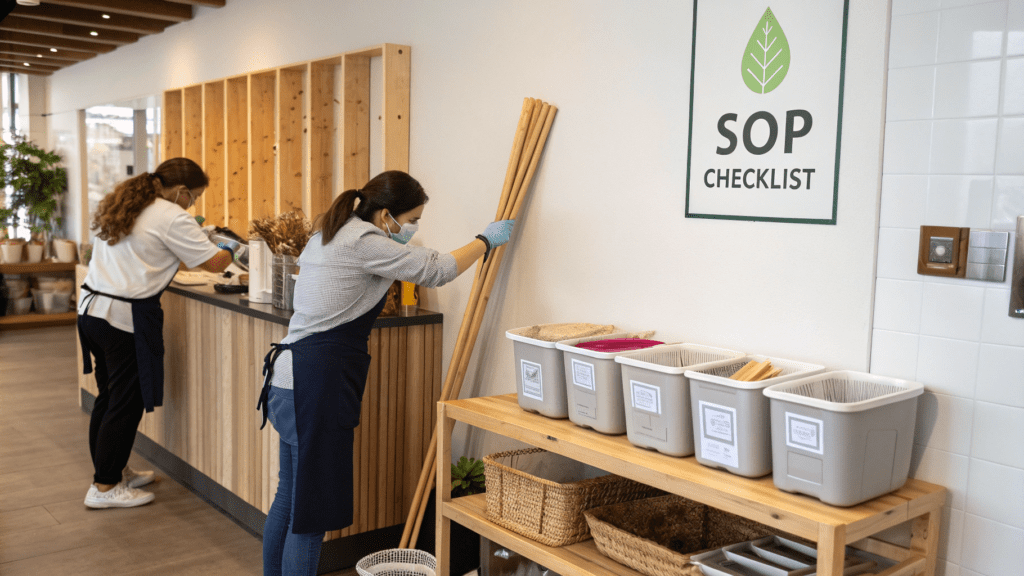
- Hygiene Protocols: While bamboo possesses natural antibacterial properties due to “bamboo kun,” its porous nature demands rigorous cleaning for reusable applications. For commercial settings, especially high-volume ones, ensuring thorough and consistent cleaning to prevent mold and bacterial growth can be challenging. Businesses should clarify supplier guidance on sanitation and consider if single-use certified compostable bamboo straws are a more practical solution where reususability poses operational hurdles.
Addressing the Hurdles: Hygiene, Lifespan, and Cost Realities
While the benefits of bamboo straws are compelling, a pragmatic approach necessitates acknowledging and addressing the operational hurdles:
- Hygiene Challenges: The porous and fibrous structure of bamboo can absorb liquids and organic residues. If not meticulously cleaned with specialized brushes and thoroughly dried after each use, bamboo straws can become breeding grounds for mold and bacteria. This poses a significant hygiene concern, particularly for commercial operations, often making reusable bamboo straws impractical for high-volume foodservice, where single-use compostable options are preferred. The German Federal Institute for Risk Assessment (BfR) advises against multi-use straws if thorough cleaning cannot be guaranteed.
- Lifespan Expectations: While more durable than paper, bamboo straws generally have a shorter operational lifespan compared to robust alternatives like metal or glass. With proper care, they can last “several months to a year.” Frequent use, especially with hot liquids, can accelerate degradation, leading to cracking, splintering, or softening, necessitating more frequent replacements than fully rigid reusable options.
- Initial Cost: Bamboo straws typically carry a higher per-unit cost than traditional disposable plastic straws due to the labor-intensive crafting process and treatment. However, this initial investment must be weighed against the significant long-term environmental benefits, enhanced brand perception, and potential avoidance of regulatory non-compliance costs. The declining cost of innovative production methods, as evidenced by the ICBR research, suggests future price competitiveness.
Pioneering Sustainable Practices: Your Next Steps
Embracing bamboo straws signifies more than just a product switch; it embodies a tangible, forward-looking commitment to environmental stewardship and operational excellence. This strategic choice resonates deeply with an increasingly eco-conscious consumer base and reinforces your enterprise’s core values, positioning you as a leader in sustainable business practices. By truly understanding their decomposition pathways, critically comparing them against a spectrum of alternatives, and leveraging the dynamic industry insights detailed above, your business can strategically integrate this powerful sustainable solution.
To optimize your transition, evaluate your specific operational needs. For high-volume, fast-paced environments, certified single-use compostable bamboo straws offer a practical and compliant solution. For dine-in experiences or scenarios where reusability is genuinely feasible, explore high-quality, durable reusable options, ensuring robust internal cleaning protocols are in place. Above all, partner with suppliers who offer comprehensive certifications, including verifiable PFAS-free status, to guarantee both genuine environmental integrity and unwavering consumer safety.
Take the definitive step towards a greener, more resilient future for your business. Exploremomoio.comextensive range of certified bamboo and other cutting-edge sustainable packaging solutions, meticulously curated and designed for the demands of the modern enterprise. By making informed choices today, your business can mitigate regulatory risks, reduce operational waste by up to 30% annually, uplift brand value by appealing to the estimated 70% of consumers willing to pay more for sustainable brands, and seize a significant share in the rapidly expanding green market.
Frequently Asked Questions (Bamboo Straws)
Q1: How quickly do bamboo straws decompose?
In optimal industrial composting facilities, bamboo straws can decompose rapidly, often in less than 5 months (45 to 180 days). In a home compost bin, it typically takes 1.5 to 2 years, and when buried in soil in a humid climate, decomposition can occur in about 1 year.
Q2: Are bamboo straws truly eco-friendly, given concerns like PFAS?
Yes, bamboo straws are generally considered eco-friendly due to their natural, rapidly renewable source and inherent biodegradability. However, recent studies have detected PFAS (“forever chemicals”) in some bamboo straw brands. To ensure true environmental safety and avoid health concerns, source exclusively from suppliers who explicitly test and certify their products as PFAS-free.
Q3: Can bamboo straws be reused in a commercial setting?
Bamboo straws are designed for reuse and can last for months with proper care, but commercial settings face hygiene challenges due to their porous nature. Thorough cleaning with specialized brushes and complete drying are essential after each use to prevent mold and bacterial growth. For many high-volume foodservice operations, single-use, certified compostable bamboo straws are often a more practical and hygienically compliant option.
Q4: How do bamboo straws compare in durability to other eco-friendly alternatives?
Bamboo straws are generally more durable than paper straws, resisting sogginess and maintaining integrity better. However, they are typically less durable and have a shorter operational lifespan (several months to a year) than robust options like stainless steel or glass. They can also crack or soften with prolonged exposure to very hot liquids or extensive use.
Q5: What certifications should businesses look for when purchasing bamboo straws?
Prioritize suppliers who can provide:
- Food safety: FDA, LFGB, SGS test reports.
- Kompostierbarkeit: ASTM D6400, EN 13432, BPI or CMA participation (as applicable).
- Sustainable sourcing: FSC (Forest Stewardship Council).
- Biobased content: USDA BioPreferred certification (where applicable).
- PFAS-free: Explicit verification and periodic lab testing for PFAS-free status.