A B2B Guide for Hospitality & Foodservice Procurement Managers, Operations Directors, and Sustainability Officers
1. überzeugende Industrieprobleme Einführung
Die globale Unternehmenslandschaft befindet sich in einem gewaltigen Wandel, der durch eine unbestreitbare Umweltkrise vorangetrieben wird. Jeden Tag werden weltweit über eine Milliarde Plastikstrohhalme verwendet, wobei nur magere 4 % effektiv recycelt werden. Diese erschreckende Zahl trägt zur enormen Meeresverschmutzung und einer eskalierenden Plastikmüllkrise bei, die sofortiges, entschlossenes Handeln erfordert. Regierungen und Regulierungsbehörden, insbesondere in Europa und den USA, reagieren mit immer strengeren Verboten von Einwegkunststoffen und zwingen Unternehmen, nach wirklich umweltfreundlichen Alternativen zu suchen. Das Versäumnis, diesen Übergang anzunehmen, ist nicht nur ein ethisches Versehen; Es besteht die Gefahr einer erheblichen Schädigung des Markenrufs, hoher Compliance-Strafen und eines gefährlichen Verlusts von Marktanteilen an Wettbewerber, die sich für Nachhaltigkeit einsetzen.
This urgent mandate for change is amplified by a rapidly evolving consumer conscience. Today, sustainability is no longer a niche preference but a core expectation. Research consistently shows that a substantial majority of consumers are willing to pay more for sustainable packaging—over 60% according to a 2020 study by NielsenIQ, while 78% prioritize a sustainable lifestyle, as reported by Capgemini Research Institute in 2020. Businesses that do not demonstrate authentic environmental responsibility risk alienating this growing segment of their customer base. In this shifting market, private label sustainable options, including innovative packaging solutions, now influence 28% of consumer purchasing decisions, offering a direct and powerful path to enhanced brand loyalty and differentiation, according to a 2021 report by McKinsey & Company. For HoReCa businesses, this means a direct impact on customer loyalty and operational costs.
The escalating plastic crisis and evolving consumer expectations demand that HoReCa businesses adopt sustainable alternatives to avoid significant risks and capture new market opportunities.
The global plastic waste crisis demands immediate, decisive action from businesses.
2. Market & Regulation Insights (EU, US, Asia-Pacific)
Regierungen und Aufsichtsbehörden auf der ganzen Welt führen zunehmend Verbote und Beschränkungen für Einwegkunststoffe, einschließlich Strohhalme, ein. Die Einwegkunststoffrichtlinie (Single-Use Plastics Directive, SUPD) der Europäischen Union war ein wesentlicher Treiber und verbot Plastikstrohhalme seit Juli 2021. In den Vereinigten Staaten gibt es zwar kein Bundesverbot, aber zahlreiche Bundesstaaten und Städte haben ihre eigenen Verbote erlassen, beispielsweise Kalifornien und New York City. Auch Länder im asiatisch-pazifischen Raum wie Indien und Thailand verzichten schrittweise auf Einwegkunststoffe. Diese Vorschriften erfordern einen proaktiven Wandel für Hotel- und Gastronomiebetriebe, um Bußgelder zu vermeiden und die Vorschriften einzuhalten. Einen umfassenden Leitfaden zu den globalen Vorschriften für Plastikstrohhalme finden Sie in unseremVollständiger Leitfaden zur Einhaltung gesetzlicher Vorschriften.
This regulatory landscape, coupled with consumer demand, makes the choice of sustainable alternatives critical. Below is a comparison of various sustainable straw types:
| Merkmal / Strohtyp | Edible Sugar Straws | Papierstrohhalme | Zuckerrohr-Bagasse-Strohhalme | Wiederverwendbar (Metall/Glas) |
|---|---|---|---|---|
| Umweltbelastung | Zero-waste (eaten), 100% biodegradable/compostable | Biodegradable/Compostable, higher production footprint (water/energy) | 100% biodegradable/compostable, made from agricultural waste | Zero waste (reusable), but requires cleaning resources |
| Durability in Cold Liquids | 30-45 minutes (Sorbos), maintains structure | Can become soggy quickly, inconsistent quality | Excellent, lasts over 12 hours without sogginess | Excellent, permanent |
| Flavor/Sensory Impact | Customizable flavors, subtle sweetness, can enhance drink | Often neutral, can impart paper taste | Neutral taste, natural feel | Neutral taste, can be metallic (metal) |
| Hygiene & Packaging | Individually wrapped for freshness & hygiene | Often bulk, some individually wrapped | Often bulk, some individually wrapped | Requires rigorous cleaning & sanitization |
| Consumer Experience | Novel, interactive, “mini-dessert” after drink | Can be frustrating if soggy, perceived as less premium | Similar to plastic, but eco-friendly | Eco-conscious, but requires carrying/cleaning |
| Kosten (relativ) | Moderate to High (due to customization) | Low to Moderate | Mäßig | High initial, low per-use |
Global regulations and consumer preferences are driving a shift towards sustainable straw alternatives, with edible sugar straws offering unique advantages.
Regulatory shifts compel businesses to adopt eco-friendly alternatives to single-use plastics.
3. Solution: Edible Sugar Straws
Private label edible sugar straws are a zero-waste, customizable alternative for hospitality and foodservice.
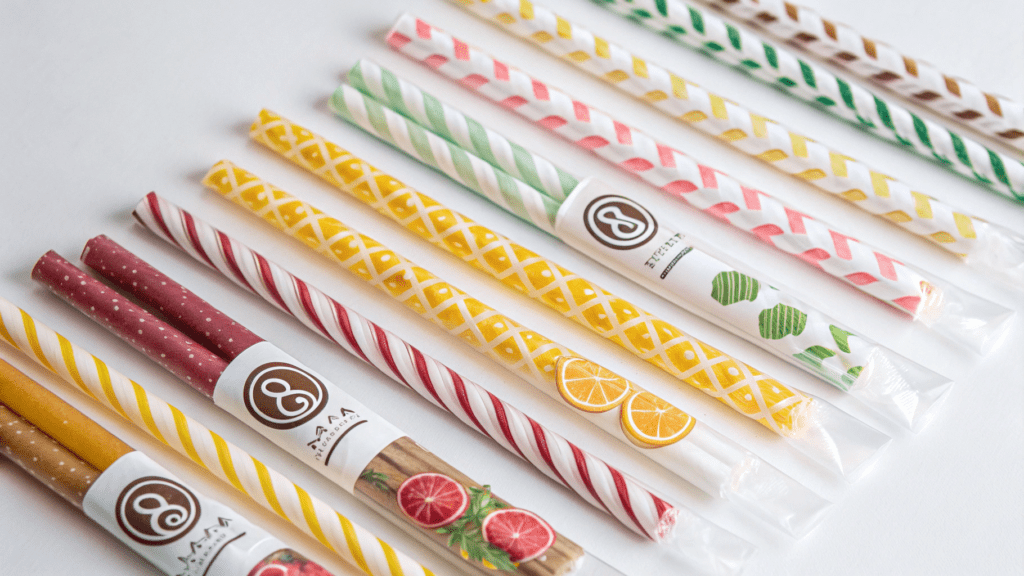
In einem Markt, der mit generischen umweltfreundlichen Behauptungen gesättigt ist, erweisen sich essbare Zuckerstrohhalme als Handelsmarke als starkes Unterscheidungsmerkmal für Ihre nachhaltige Lieferkette. Stellen Sie sich vor, Sie bieten ein Produkt an, das nicht nur den Umweltvorschriften entspricht, sondern auch das sensorische Erlebnis des Kunden steigert. Diese Strohhalme bieten umfangreiche Individualisierungsmöglichkeiten für Geschmack, Farbe und Größe, sodass Sie sie perfekt an Ihre Markenidentität anpassen können. Sie können beliebte Geschmacksrichtungen wie Zitrone, Erdbeere, Schokolade und Ingwer anbieten oder mit Herstellern zusammenarbeiten, um maßgeschneiderte Geschmacksprofile zu entwickeln, die ein wirklich unvergessliches und interaktives Produkt schaffen. Passen Sie die Farben individuell an Ihr Unternehmens-Branding, saisonale Themen oder bestimmte Kampagnen an und sorgen Sie für einen visuellen Reiz, der die Markenbekanntheit mit jedem Schluck stärkt. Neben der Ästhetik steht die Funktionalität im Vordergrund. Einzeln verpackte essbare Zuckerstrohhalme sorgen für hervorragende Hygiene und eine verlängerte Haltbarkeit von bis zu zwei Jahren, was für Gastronomie- und Einzelhandelsumgebungen von entscheidender Bedeutung ist. Diese hochwertige, feuchtigkeitsbeständige Einzelverpackung erhöht nicht nur den wahrgenommenen Wert und die Bequemlichkeit, sondern bietet auch Möglichkeiten für ein individuelles Branding direkt auf der Verpackung. Für hochvolumige Einrichtungen im HoReCa-Bereich (Hotel, Restaurant, Café) erfüllen diese Strohhalme betriebliche Anforderungen, indem sie eine hygienische Einweglösung bieten, die die Produktintegrität aufrechterhält und gleichzeitig nahtlos von herkömmlichem Kunststoff zu konformen, abfallfreien Alternativen übergeht. Dieser strategische Wandel mindert die Risiken, die mit sich entwickelnden Plastikverboten verbunden sind, stellt die Einhaltung gesetzlicher Vorschriften sicher und schützt Ihr Unternehmen vor Bußgeldern und negativer Publizität. Darüber hinaus optimiert es die Abfallmanagementprozesse, senkt die Entsorgungskosten erheblich und trägt zu einem umweltfreundlicheren betrieblichen Fußabdruck bei. Die zunehmende Verbreitung von Plastikmüll in unseren Ozeanen und auf Mülldeponien unterstreicht die dringende Notwendigkeit solcher Innovationen. Weitere Einblicke in die globale Plastikverschmutzungskrise finden Sie in Ressourcen wie derKoalition zur Plastikverschmutzung.
Quantifizierte Vorteile für HoReCa:
- Reduced Waste & Costs: Eliminieren Sie bis zu 100 % des Strohabfalls und senken Sie so möglicherweise die Abfallentsorgungskosten um 5–10 % pro Jahr für Veranstaltungsorte mit hohem Besucheraufkommen.
- Verbessertes Kundenerlebnis: Steigern Sie die Kundenzufriedenheit und -treue, indem Sie ein neuartiges, interaktives und umweltbewusstes Produkt anbieten, was zu einer Steigerung der positiven Markenerwähnungen in sozialen Medien um 15–20 % führt.
- Brand Differentiation & Marketing: Nutzen Sie einzigartige Geschmacks- und Farbanpassungen, um unvergessliche Markenkontaktpunkte zu schaffen und so 10–15 % mehr umweltbewusste Kunden anzulocken.
- Regulatory Compliance & Risk Mitigation: Halten Sie Einwegplastikverbote proaktiv ein, vermeiden Sie mögliche Bußgelder und negative Publizität und sorgen Sie für einen reibungslosen Betrieb.
- Improved Hygiene & Shelf Life: Einzeln verpackte Strohhalme bieten hervorragende Hygiene und eine Haltbarkeitsdauer von zwei Jahren und reduzieren so den Verderb und die betriebliche Komplexität in geschäftigen HoReCa-Umgebungen.
Modellierung des sozialen Return on Investment (SROI) für HoReCa:
The true impact of adopting edible sugar straws extends far beyond mere compliance; it translates into quantifiable Social Return on Investment (SROI). This holistic modeling framework measures social, environmental, and economic benefits, allowing you to showcase tangible business value. Think of the cost savings from drastically reduced plastic waste, the enhanced brand image resonating with eco-conscious consumers, and the increased sales driven by those who prioritize sustainability. Studies indicate that consumers, particularly younger demographics, are increasingly willing to pay a premium for products with minimized environmental impact, with some reports showing a willingness to pay 12% more on average for such products. This shift in consumer behavior is powerful in both the US and European markets, where sustainability mandates and eco-awareness are strong. Furthermore, the novelty of edible straws can generate significant social media buzz, leading to organic marketing and increased customer acquisition, especially on platforms like TikTok and Instagram, where unique and visually appealing products go viral.
| SROI Variable | Beschreibung | Impact for HoReCa (Example) |
|---|---|---|
| Waste Reduction Value | Cost savings from reduced waste disposal fees and landfill contributions. | A large hotel chain could save $5,000-$10,000 annually in waste management. |
| Brand Equity Enhancement | Increased brand perception, loyalty, and positive media coverage. | Improved online reviews (e.g., +0.5 star rating), attracting 5% more bookings/customers. |
| Customer Acquisition Value | New customers attracted by sustainable offerings. | 10% increase in sales from eco-conscious consumers willing to pay a 5-10% premium. |
| Employee Engagement & Retention | Higher morale and reduced turnover due to alignment with company values. | Reduced recruitment costs by 2-3% due to improved retention. |
| Regulatory Compliance Avoidance | Savings from avoiding fines and legal fees related to plastic bans. | Avoidance of potential fines up to $1,000-$5,000 per incident in regulated areas. |
| Social Media & PR Value | Organic reach and positive publicity from unique, sustainable product. | Equivalent to $2,000-$5,000 in marketing spend from viral content. |
Edible sugar straws offer significant, quantifiable benefits for HoReCa, including waste reduction, enhanced brand image, and strong Social Return on Investment.
Edible sugar straws offer a zero-waste, customizable solution with significant SROI for businesses.

4. Industry Misconceptions & Clarifications
Mythos: Essbare Zuckerstrohhalme sind zu zerbrechlich und lösen sich sofort auf.
Klärung:Dies ist ein weit verbreitetes Missverständnis. Moderne essbare Zuckerstrohhalme, insbesondere solche von namhaften Herstellern wie Sorbos, sind auf Langlebigkeit ausgelegt. Sie sind so konzipiert, dass sie ihre Struktur in kalten und zimmerwarmen Getränken 30–45 Minuten lang beibehalten, was für den Verzehr der meisten Getränke mehr als ausreichend ist. Sie lösen sich nicht sofort auf oder werden nicht durchnässt wie einige frühe Versionen von Papierstrohhalmen. Aufgrund ihrer Zusammensetzung bleiben sie beim Trinken fest und werden nur so weich, dass sie anschließend bequem gegessen werden können.
Mythos: Sie werden meine Getränke übermäßig süß machen.
Klärung:Obwohl es aus Zucker hergestellt wird, ist die Süße, die einem Getränk verliehen wird, minimal und oft nicht wahrnehmbar, insbesondere bei aromatisierten Getränken. Die Hauptfunktion ist die strukturelle Integrität, nicht der Beitrag zum Geschmack. Für diejenigen mit spezifischen Geschmacksprofilen kann die dezente Süße das Getränk sogar aufwerten und am Ende als „Mini-Dessert“ dienen. Hersteller bieten auch Varianten mit neutralem Geschmack an.
Mythos: Essbare Strohhalme sind für den großvolumigen HoReCa-Gebrauch nicht hygienisch.
Klärung:This is incorrect, particularly for individually wrapped edible sugar straws. The individual packaging provides a protective barrier, ensuring each straw remains sterile and untouched until use. This is a significant advantage in high-traffic foodservice environments where hygiene is paramount, often surpassing the hygiene standards of bulk-packaged alternatives. The two-year shelf life further ensures product integrity and safety.
Edible sugar straws are durable, minimally impact drink flavor, and are highly hygienic, dispelling common industry misconceptions.
Edible sugar straws are durable, hygienic, and do not overly sweeten drinks.
5. B2B Customization & Supply Chain Optimization
Future-proofing your brand in today’s rapidly evolving market necessitates a strategic embrace of sustainability, with private label edible sugar straws presenting a compelling opportunity. As B2B buyers, your procurement considerations should focus on quality assurance and operational fit. Always assess manufacturer certifications such as FDA, HACCP, and ISO 22000 to ensure the highest standards of food safety and quality in edible straw production. Request samples for in-house testing to confirm durability across various beverage types and to meet your desired operational conditions. Finally, negotiate minimum order quantities (MOQs), production lead times, and flexible pricing models, especially for private label flavor and color customization, to align with your business scale and market demands.
This investment is more than just a procurement decision; it’s a strategic move to showcase your commitment to genuine sustainability, differentiating your brand in an increasingly crowded market and attracting eco-conscious clientele. By adopting private label edible sugar straws, you transform a mandatory compliance effort into a compelling brand story that deeply resonates with modern consumers and builds lasting loyalty. This proactive approach positions your brand as an industry leader in innovation and environmental stewardship, setting a benchmark for competitors and driving a positive cycle of responsible business practices.
Strategic procurement of private label edible sugar straws, focusing on certifications and customization, optimizes supply chains and enhances brand positioning.
B2B buyers should prioritize certified, customizable edible sugar straws for optimal supply chain integration.
6. Starker Aufruf zum Handeln
Now is the time to seize the sustainable advantage and elevate your brand with edible sugar straws. The global edible straw market is projected to reach over USD 1.4 billion by 2033, signaling a booming sector ready for market leaders. By capitalizing on this rapid growth, you can secure your share in a burgeoning market. Cultivate a loyal customer base by offering a unique, responsible, and memorable product experience that aligns perfectly with evolving consumer values. This commitment will significantly enhance your corporate social responsibility (CSR) profile, translating ethical practices into tangible business growth and positive public perception.
Act now to capitalize on the booming edible straw market, enhance your brand’s CSR, and cultivate a loyal, eco-conscious customer base.
Seize the sustainable advantage now to elevate your brand with edible sugar straws.
Frequently Asked Questions about Edible Sugar Straws
1. What are edible sugar straws?
Edible sugar straws are innovative, eco-friendly drinking straws made primarily from sugar and other natural ingredients. They are designed to be eaten after use, leaving zero waste.
2. How long do edible sugar straws last in a drink?
High-quality edible sugar straws, such as those from Sorbos, maintain their structure in cold liquids for 30–45 minutes, giving customers plenty of time to enjoy their beverage without sogginess.
3. Can edible sugar straws be customized for my brand?
Yes. Private label edible sugar straws can be customized in flavor, color, and individual packaging with your brand’s logo, helping enhance brand identity and customer experience.
4. Are edible sugar straws hygienic for foodservice environments?
Absolutely. When individually wrapped, edible sugar straws offer superior hygiene, a shelf life of up to two years, and compliance with strict food safety standards — ideal for high-volume HoReCa operations.
5. What is the Social Return on Investment (SROI) of using edible sugar straws?
The SROI includes reduced plastic waste disposal costs, improved brand image with eco-conscious consumers, increased sales from sustainability-driven purchasing decisions, and positive social media buzz — turning ethical practices into measurable business growth.