
In der komplexen Welt des B2B-Geschäfts kann jedes Detail von großer Bedeutung sein. Während „Strohfarbe“ wie eine bloße ästhetische Beschreibung erscheinen mag, stellt sie für Beschaffungsmanager, Betriebsleiter, Nachhaltigkeitsbeauftragte und Führungskräfte in der Lieferkette einen entscheidenden Indikator für Qualität, Compliance und Materialintegrität dar. Dieser blassgelbe Farbton, der an trockenes Stroh erinnert und erstmals 1589 im Englischen als Farbname anerkannt wurde, geht über die bloße visuelle Anziehungskraft hinaus und wird zu einem wichtigen Leistungsindikator (KPI) in verschiedenen industriellen Anwendungen.
Das Missachten der genauen Spezifikationen im Zusammenhang mit der „Strohfarbe“ kann zu erheblichen betrieblichen und kommerziellen Auswirkungen führen. Von kostspieligen Produktablehnungen in der medizinischen Herstellung über Strafen bei Nichteinhaltung bei der Wasseraufbereitung bis hin zu beeinträchtigtem genetischem Material in der Landwirtschaft: Das Versäumnis, Farbstandards sorgfältig zu verwalten, kann Gewinnspannen schmälern, den Ruf der Marke schädigen und unvorhergesehene Risiken in der Lieferkette mit sich bringen. Beim Verständnis seiner industriellen Anwendungen geht es nicht nur um die Ästhetik; Es geht darum, die Effizienz zu steigern, die Einhaltung gesetzlicher Vorschriften sicherzustellen und Risiken auf Unternehmensebene zu mindern.

Entschlüsselung der Strohfarbe: Definition und Eigenschaften für die industrielle Anwendung
Im Kern ist die „Strohfarbe“ ein helles, gedämpftes Gelb, das an sonnenbeschienene Weizenfelder erinnert. Dieser Deskriptor, der seit dem späten 16. Jahrhundert Teil des englischen Lexikons ist, ruft Natürlichkeit und Wärme hervor. Für industrielle Zwecke ist dieser scheinbar einfache Farbton jedoch genau definiert.
Der grundlegende hellgelbe Farbton: Historischer Kontext und visuelle Merkmale
Dieser Farbton wird vom Collins Dictionary als blasses oder helles Gelb definiert, ähnlich der Farbe von trockenem Stroh, und ist weit mehr als ein eindrucksvolles Bild. Seine historische Präsenz, die seit 1589 von Merriam-Webster dokumentiert wird, unterstreicht seine langjährige Anerkennung. Im Design hebt Piktochart seine Fähigkeit hervor, Natürlichkeit, Wärme und rustikalen Charme hervorzurufen – Qualitäten, die die Wahrnehmung selbst in hochtechnischen B2B-Kontexten beeinflussen können, in denen das Erscheinungsbild des Produkts auf subtile Weise Qualität kommuniziert.
Wissenschaftliche Spezifikationen: Hexadezimal- und RGB-Werte der Strohfarbe
For procurement and quality control, subjective descriptions are insufficient. The primary hexadecimal color code for straw is #E4D96F. In the RGB color space, it is precisely defined as (228, 217, 111), boasting a high natural luminance of 67%. The CMYK breakdown is 0% cyan, 5% magenta, 51% yellow, and 11% black. These specific values provide an objective benchmark for color matching, ensuring consistency across suppliers and production batches.Precise color specifications like hexadecimal values ensure objective quality control in B2B supply chains.

Strohfarbe als kritischer Qualitätsindikator in allen Branchen
Die genaue Definition der „Strohfarbe“ wird unabdingbar, wenn sie als nicht verhandelbarer Qualitätsparameter dient. Sein einheitliches Erscheinungsbild weist oft auf chemische Reinheit, biologische Gesundheit oder Materialzusammensetzung hin und macht es zu einem wichtigen Kontrollpunkt für B2B-Entscheidungsträger.
Medizinische und biotechnologische Anwendungen: Präzision und Compliance in „Strohfarbe“
Im medizinischen und biotechnologischen Bereich dient die „Strohfarbe“ als entscheidender visueller Hinweis für Gesundheit und Qualität. Blutplasma wird aufgrund seines Bilirubingehalts immer wieder als „strohfarben“ beschrieben und Abweichungen können auf medizinische Probleme hinweisen. Ebenso präsentiert sich normaler Urin „strohfarben“, was auf eine ausreichende Flüssigkeitszufuhr und eine gesunde Nierenfunktion hinweist. Zur Produktidentifizierung sind medizinische Handschuhe wie Mölnlyckes Biogel® speziell in „Strohfarbe“ erhältlich, was eine schnelle visuelle Unterscheidung bei chirurgischen Eingriffen ermöglicht und das Fehlerrisiko minimiert. Dies verdeutlicht, wie sich eine scheinbar einfache Farbauswahl direkt auf die Patientensicherheit und die betriebliche Effizienz in Umgebungen mit hohem Risiko auswirkt.
Agricultural and Food Processing: Quality Assurance Through “Straw Color”
Across agriculture and food processing, “straw color” is a direct indicator of quality and maturity. “Pale straw color” characterizes specific high-value wines like Sauvignon Blanc and Chardonnay, signaling desired aging and flavor profiles. In grain harvesting, bread wheat reaches physiological maturity when its glumes turn “straw color” and moisture decreases to 12-13%, a crucial parameter for optimal yield and storage. Even in the processing of crude castor oil, an initial “straw-colored” appearance transforms during refining, indicating process progression and product quality. Each instance underscores how this specific color provides immediate, actionable intelligence for quality assurance.
Materials and Manufacturing: “Straw Color” in Product Specifications
In manufacturing, “straw color” is explicitly integrated into material specifications and quality control. Hem-Fir wood products, for example, are prized for their “white to a light straw color” and are preferred for high-quality case goods. Standards bodies like SEMI (Semiconductor Equipment and Materials International) and ASME BPE (American Society of Mechanical Engineers Bioprocessing Equipment) even incorporate “straw color” into their terminologies. For instance, SEMI F78 and F81 standards refer to “straw color to a black crusty coating” for semiconductor materials, while ASME BPE-2016 mentions it as a visual characteristic or discontinuity in biopharmaceutical equipment. These mentions are not arbitrary; they denote critical thresholds for material acceptance and process validation, directly impacting product performance and regulatory standing. Procurement professionals must align supplier specifications with these exact color expectations to avoid costly rejections and maintain production schedules.“Straw color” serves as a vital quality indicator across medical, agricultural, and manufacturing sectors, ensuring product integrity.
Navigating Regulatory Compliance and Industry Color Standards
The operational significance of “straw color” is further amplified by its role in regulatory compliance and adherence to industry-specific color standards. For many B2B entities, meeting these visual criteria is non-negotiable for market access and risk mitigation.
Adherence to “Straw Color” Standards: AWWA and European Directives
One notable example is the American Water Works Association (AWWA) standard for Fluorosilicic Acid (FSA), a chemical used in municipal water treatment. The current AWWA standard for FSA color is 100 APHA units, often presenting as a “straw color.” While this standard lacks a direct operational or health basis – with European standards for FSA having no color limits – its enforcement means that procurement managers must ensure their FSA suppliers meet this specific visual benchmark. The intensity of FSA’s “straw color” directly correlates with iodine and phosphoric acid content, making it an indirect indicator of raw material purity and processing consistency. Non-compliance, even on a seemingly arbitrary visual standard, can lead to supply chain disruptions and regulatory scrutiny. For more insights on color compliance, see our detailed guide:What do different straw colors mean B2B Compliance Strategy.
Specialized Sector Guidelines: SEMI and ASME BPE Standards
Beyond water treatment, highly regulated sectors like semiconductors and biopharmaceuticals rely on precise color definitions. As mentioned, SEMI International Standards document “straw color to a black crusty coating” in material terms, signifying acceptable visual characteristics for materials used in highly sensitive manufacturing processes. Similarly, the ASME BPE-2016 standard, critical for biopharmaceutical equipment, references “straw color” as a potential visual characteristic or discontinuity. These standards are not mere suggestions; they are crucial for material procurement, equipment validation, and ultimately, product safety and efficacy in regulated sectors. Failure to adhere to these visual specifications can result in disqualification of materials or equipment, leading to significant financial losses and operational delays.
The Landscape of “Color Standards” Bodies and Associations
Numerous organizations globally dedicate themselves to color research and standardization. The International Colour Association (AIC) promotes research across various industries, fostering a deeper understanding of color science. The International Association of Color Manufacturers (IACM) focuses on the regulation and use of color additives, particularly for food, drugs, and cosmetics. For specific color specifications, bodies like British Standard Colours (e.g., BS384 Light Straw, Hex #D7C199) provide precise, quantifiable data. While no single body governs “straw color” universally, these associations collectively contribute to the ecosystem of color management that B2B entities navigate, requiring a sophisticated approach to supplier management and quality control.Adhering to “straw color” standards is crucial for regulatory compliance and market access across diverse B2B industries.
Operational Impact and ROI: Strategic Applications of Consistent Straw Color
The strategic management of “straw color” is not just about avoiding penalties; it delivers tangible operational benefits and significant return on investment (ROI). By integrating precise color specifications into procurement and quality control, businesses can achieve higher efficiency, reduce waste, and enhance product reliability.
| Besonderheit | B2B Betriebswirkung | Compliance Note | ROI -Potenzial |
|---|---|---|---|
| Semen Straw Color Coding | Ensures accurate breed identification in animal husbandry. | Adheres to Swissgenetics/ICAR guidelines (e.g., Limousin is “ocher”). | Prevents misbreeding, optimizes herd genetics, secures asset value, avoids costly errors. |
| FSA Color Consistency | Critical for municipal water treatment chemical procurement. | Meets AWWA 100 APHA standard, despite lack of health basis. | Reduces supplier discrepancies, avoids costly rejections or reprocessing, ensures continuous water supply. |
| Medical Glove Color | Assists quick identification of specific glove types (e.g., Biogel® M). | Ensures use of correct glove for surgical procedures. | Enhances surgical efficiency, minimizes procedural errors, improves patient safety, reduces medical waste from incorrect usage. |
| Wood Product Color Grading | Dictates material selection for high-quality millwork. | Aligns with IWPA-BC notes for Hem-Fir’s desirable “light straw color.” | Secures premium pricing for products meeting aesthetic specifications, reduces material sorting costs. |
Case Study: Swissgenetics’ Use of “Straw Color” in Supply Chain Integrity
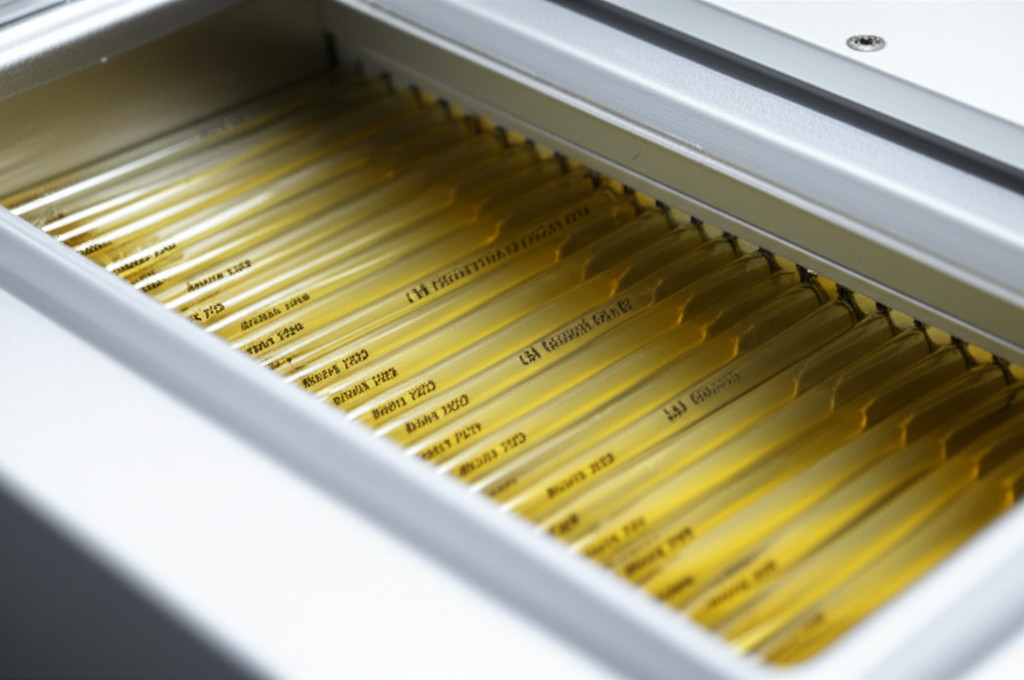
A compelling example of “straw color” driving critical operational integrity comes from the agricultural sector. Swissgenetics, a leading organization in animal breeding, implemented a precise “straw color” coding system for semen straws as early as March 16, 2011. For instance, Limousin (LM) semen straws are specifically colored “ocher,” a defined shade of “straw color.” This color coding, combined with EU codes and batch numbers, ensures precise genetic material traceability throughout the supply chain.
This seemingly simple visual standard has profound implications. It prevents misbreeding, optimizes herd genetics by ensuring the correct genetic material is used, and safeguards significant agricultural investments. By adhering to international guidelines, such as those from ICAR (International Committee for Animal Recording), Swissgenetics reinforces its commitment to breeding regulations and maintains the integrity of its highly valuable genetic assets. The color acts as an immediate visual verification, reducing the potential for human error and enhancing overall supply chain reliability in a sector where precision is paramount.Strategic management of “straw color” delivers tangible ROI by enhancing efficiency and reducing waste across B2B operations.
Future Outlook: Enhancing Efficiency and Quality Through Color Metrics
The future of managing “straw color” and other critical visual characteristics lies in advanced technological integration, moving beyond subjective interpretation to precise, real-time data.
Emerging Trends in “Material Properties” Analysis
The evolution from subjective color naming to quantifiable metrics like CIELAB values offers unprecedented precision in material properties analysis. This shift allows for the objective measurement and tracking of subtle color variations, which can be crucial indicators of material consistency, purity, or even degradation. Leveraging advanced colorimetric data reduces human error and significantly enhances quality control processes. Furthermore, the integration of predictive analytics may soon enable organizations to link even the most subtle color shifts to potential material contamination, shelf-life issues, or performance degradation, allowing for proactive intervention rather than reactive problem-solving. This forward-looking approach ensures that the “straw color” remains a reliable indicator, even as material science becomes more complex. For a deeper understanding of color in B2B applications, considerWas ist mit Strohfarben los?.
Advancing “Industrial Applications” with Precise Color Management
The next 5-10 years will see the widespread integration of real-time color monitoring systems directly into manufacturing lines. These automated systems will employ hyperspectral imaging and AI-driven algorithms to detect deviations from “straw color” standards instantaneously, triggering immediate alerts or automated process adjustments. Such capabilities will ensure consistent product quality, drastically reducing waste from off-spec materials and improving overall supply chain reliability. Beyond mere detection, these systems will provide continuous data streams, enabling deeper insights into process stability, raw material variability, and even supplier performance. This will transform “straw color” from a simple visual check into a dynamic, data-rich parameter driving operational excellence and competitive advantage.Future advancements in color metrics will enable real-time monitoring, enhancing efficiency and quality in industrial applications.
Competitive Advantage & Business Case
For B2B decision-makers, embracing a sophisticated approach to “straw color” management translates directly into a compelling business case and sustained competitive advantage.
Quantifiable cost savings are immediate. By minimizing material rejections due to color inconsistencies, businesses can significantly reduce waste, rework, and associated logistics costs. For instance, in water treatment, ensuring FSA color compliance can prevent expensive re-procurement or the need for costly reprocessing. In manufacturing, consistent color in raw materials like wood or medical components reduces sorting time and eliminates potential liabilities.
Risk mitigation is another cornerstone of the business case. Adhering to regulatory “straw color” standards, such as those set by AWWA or ASME BPE, protects companies from hefty fines, legal challenges, and operational shutdowns. Beyond direct financial penalties, consistent quality, partly signaled by uniform color, safeguards brand reputation. A medical device supplier whose products consistently meet visual and functional standards, for example, builds trust with healthcare providers, reducing the risk of product recalls or public perception issues.
Furthermore, a commitment to precise color management can unlock market share opportunities. In industries where color is a visual differentiator or a quality mark, delivering products that consistently meet or exceed “straw color” expectations can command premium pricing. For high-quality millwork, for instance, the consistent “light straw color” of Hem-Fir wood products directly correlates with premium market positioning. By ensuring visual consistency and regulatory compliance, companies differentiate themselves as reliable, quality-focused partners, securing long-term contracts and expanding their market presence in a competitive landscape.Precise “straw color” management offers significant competitive advantages through cost savings, risk mitigation, and market differentiation.
The seemingly simple “straw color” is anything but trivial for B2B decision-makers. From ensuring product authenticity in biotech to guaranteeing material quality in manufacturing, its precise definition and consistent application are paramount. By leveraging established standards, embracing cutting-edge colorimetric technologies, and integrating them into robust quality control and supply chain strategies, businesses can not only enhance operational efficiency and ensure regulatory compliance but also unlock substantial ROI. This commitment to visual precision mitigates risks, reduces waste, and elevates a brand’s reputation, ultimately driving significant competitive advantage.
Optimize your supply chain by standardizing color specifications and transforming visual compliance into a strategic asset. Connect with our experts to develop tailored color management strategies and gain a definitive edge in your market today!Connect with Our Experts
Häufig gestellte Fragen
Q: Why is ‘straw color’ important in medical manufacturing?
A: In medical manufacturing, ‘straw color’ often indicates specific material properties, purity, or product identification, like for medical gloves, ensuring patient safety and operational efficiency.
Q: How does ‘straw color’ affect agricultural supply chains?
A: In agriculture, ‘straw color’ signifies maturity in crops like wheat and is used in genetic material coding (e.g., semen straws), preventing misbreeding and safeguarding investments.
Q: What are the regulatory implications of ‘straw color’ in water treatment?
A: For water treatment, the AWWA standard for Fluorosilicic Acid (FSA) specifies a ‘straw color’ (100 APHA units), which procurement managers must meet to avoid supply chain disruptions and regulatory scrutiny.
Q: Can ‘straw color’ be quantified for quality control?
A: Yes, ‘straw color’ can be precisely quantified using hexadecimal (#E4D96F) and RGB (228, 217, 111) values, providing objective benchmarks for consistent quality control across suppliers.
Q: How can businesses leverage ‘straw color’ for competitive advantage?
A: By standardizing ‘straw color’ specifications, businesses can reduce material rejections, mitigate regulatory risks, enhance brand reputation, and command premium pricing for consistent quality.