Only 12% of all plastic used in Australia is recycled, despite the fact that we use too many single-use items and don’t recycle enough of them. We are also discarding too much of our thrown-away plastic, and it is accumulating in landfills or being littered in our parks, nature and oceans. Something must be done.
A plastic material that lasts forever is incredible.
Single-use plastics are responsible for around 30% of all plastics consumed. The issue is that they’re discarded after just one use. The amount of time, energy, and effort that goes into producing, exporting, and importing these items just doesn’t add up – especially if they’re made to last forever. Australians have one of the world’s biggest single-use plastic footprints per person, second only to Singapore.
More than 12% of all plastics used in Australia are never recycled, because we are using too many single-use items, we are not recycling enough, and the majority ends up in dumpsters, seaports, and oceans. What we need to do is change.
1. Plastics Straws are generally not biodegradable.
In den Vereinigten Staaten wurden im Jahr 2020 fast 1,3 Milliarden Strohhalme verwendet. Da sie leicht sind, können Plastikstrohhalme leicht in Gewässer gelangen und in unsere Ozeane gelangen, sobald sie fallen gelassen oder weggeworfen werden. Sobald sie in unseren Ozeanen sind, sind sie äußerst gefährlich für unsere Meereslebewesen. Im Jahr 2015 steckten Plastikstrohhalme schmerzhaft in den Nasenlöchern von Meeresschildkröten.
Entscheiden Sie sich für plastikfreie Alternativen: Wenn Sie können, entscheiden Sie sich für Edelstahlstrohhalme, Bambusstrohhalme, Nudelstrohhalme und Reisstrohhalme (ja, das gibt es!). Für diejenigen, die die Flexibilität von Plastikstrohhalmen schätzen, gibt es andere umweltfreundliche Alternativen, darunter Papierstrohhalme, wiederverwendbare Silikonstrohhalme und kompostierbare Strohhalme auf pflanzlicher Basis.
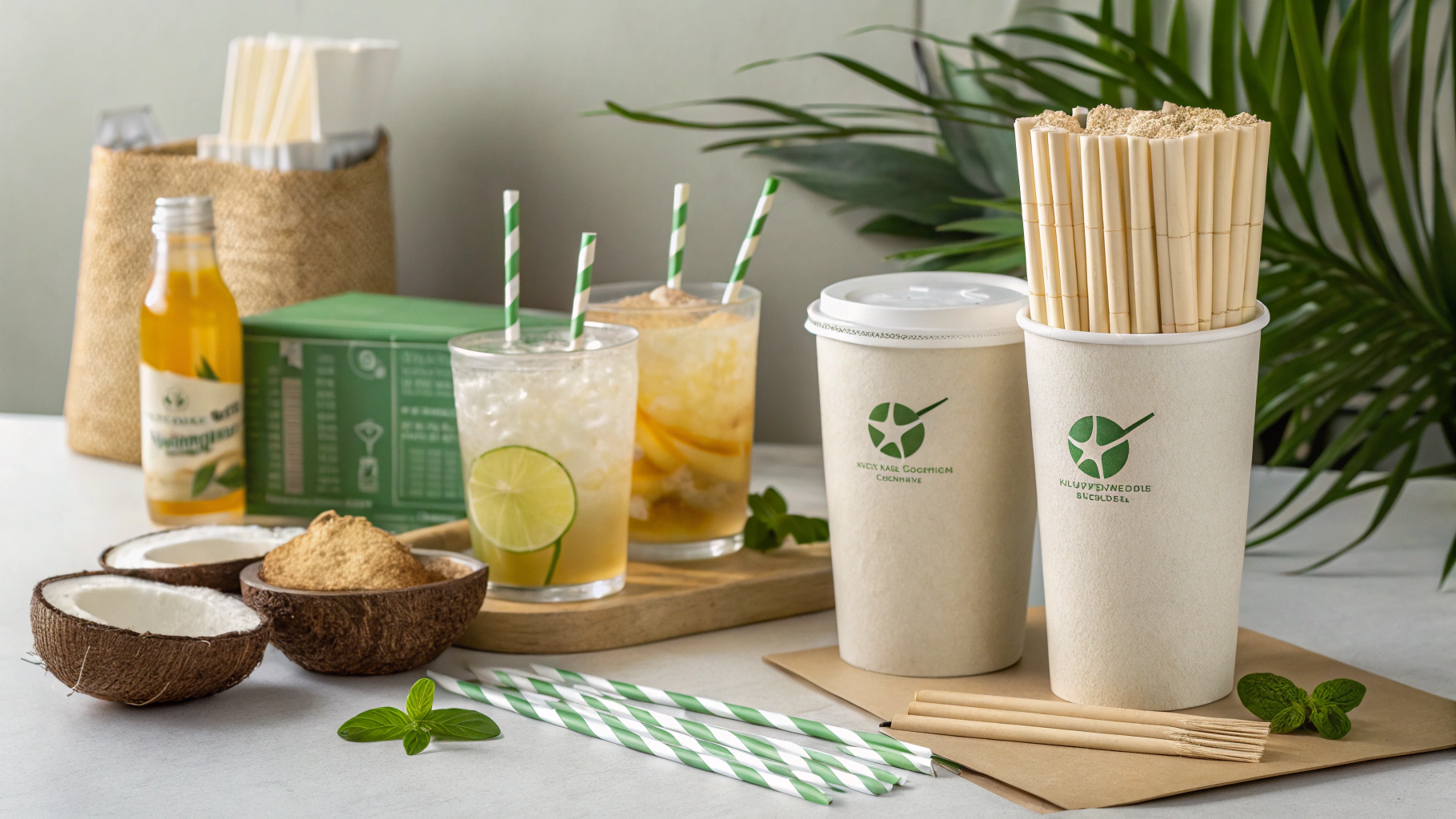
Our Sugarcane straws are produced based on plant fiber as raw material. It can perfectly replace plastic straws, yet have the same experience as plastic straws.

2. Plastic drink stirrers
A cocktail stirrer is an entertaining accessory for drinks, but most are made of plastic and only used once before the novelty of them wanes and they are discarded. They end up in the trash, on our beaches and in our oceans.
Reusable glass or bamboo stirrers, or spoons! Alternatively, try a stick of celery, carrot or cucumber. Why not try rosemary? Please try this!

3 & 4. Coffee cups & lids
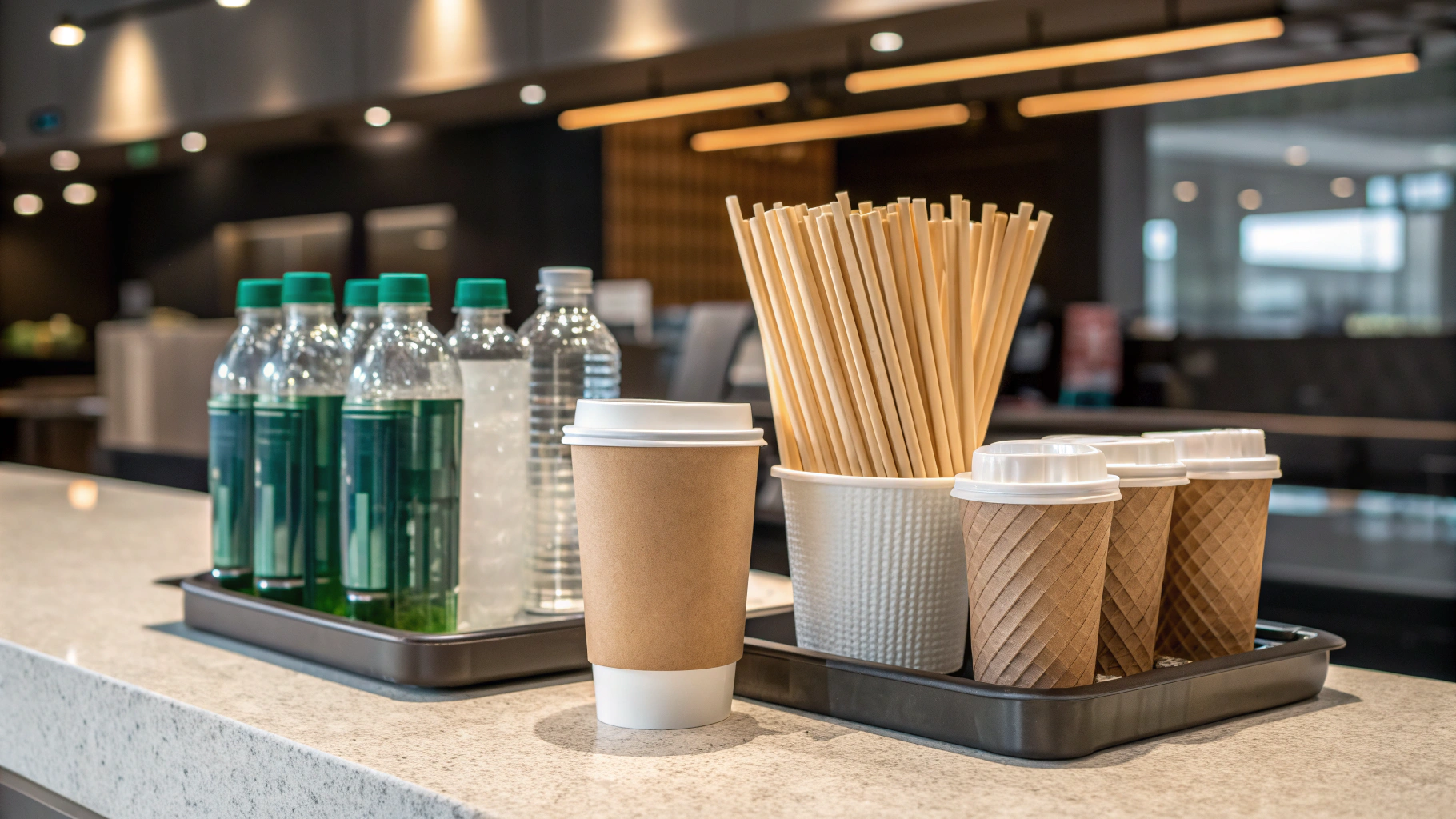
Around 1.8 billion cups are consumed and 1.5 billion coffee lids are produced each year. It’s critical to note that the vast majority of takeaway coffee cups and lids are not recycled or composted.
Double Wall Printed Logo Bamboo Pulp Paper Coffee Cup With Lid, Kraft Paper Coffee Cup are plastic free alternatives.

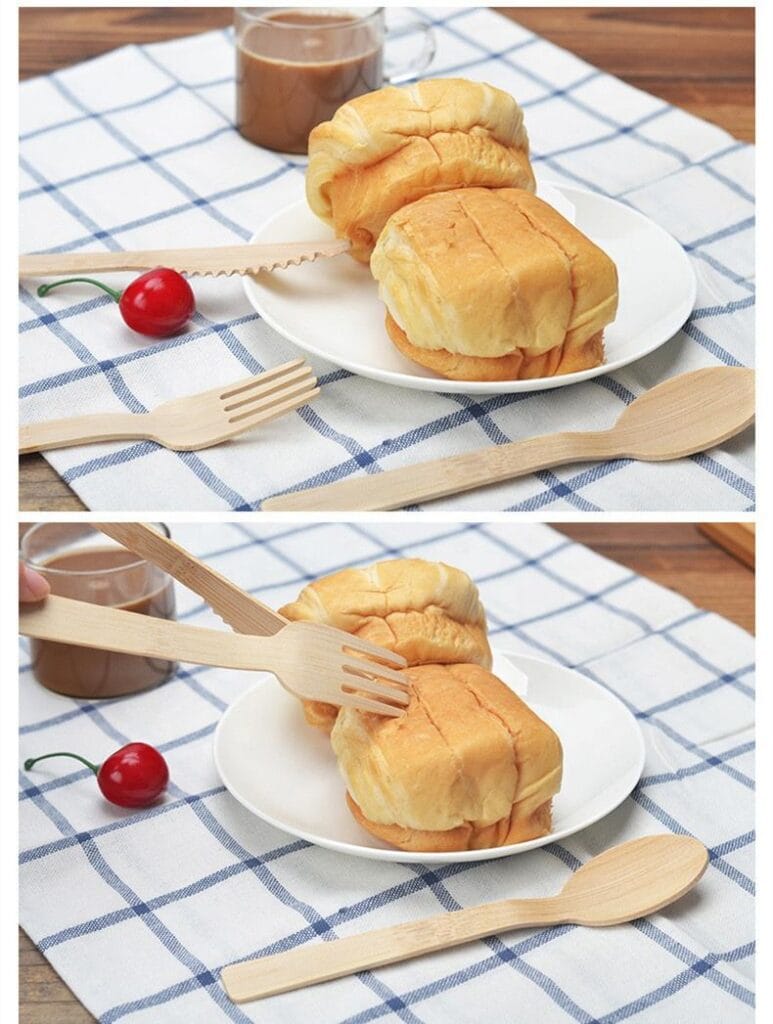
5. Plastic cutlery
Sometimes eating out and getting takeout can include more than just food. Plastic utensils and containers are often used.
In Australia, plastic cutlery is difficult to recycle. Because of their shape, recycling machines are unable to sort them out, so many end up in landfills for years – possibly decades.
Make sure to ask for your food to be served without disposable plates or chopsticks when you order takeaway the next time.
6. Plasticky vodki
In Australia, 910 million plastic cups are consumed each year. However, lightweight and convenient form cups (made from polystyrene) cannot be collected by most council kerbside recycling services and often end up as trash in landfills.
Bring your own reusable cup or a mason jar if you’re planning a trip to your favourite juice or smoothie shop. You can also help encourage your favourite cafes and food retailers to switch to eco-friendly and compostable alternatives by using plastic-free alternatives.
7. Plastics bottles
Einweg-Kunststoffbehälter werden verschwinden, da Staaten und Territorien in den nächsten Jahren Verbote einführen, Polystyrolbehälter sind jedoch immer noch weit verbreitet. Wir finden sie sowohl in Supermärkten als auch in unseren örtlichen Cafés und Take-Away-Restaurants.
Reusable food containers are a great alternative to plastic-free cuisine! When you order food from a restaurant, choose dishes that are typically served in plastic containers and avoid pre-prepared meals. Most eateries will put your food directly into a reusable container if you ask. Glass containers, stainless steel lunch boxes, and mason jars are among the containers you may use. It is also possible to bring your own containers to fill at bulk supermarkets. If you’re eating out, you may ask your favourite establishments to switch to compostable and eco-conscious dishes.

8. Plates made from plastic.
At the moment, plastic plates must be thrown away due to their shape, but once they are, they quickly end up in landfills. Most recycling centers cannot sort these plates due to their shape.
Reusable plastic, glass, or porcelain dishes are plastic-free alternatives. Palm leaf or bamboo pulp dishes are an alternative.

In order to cope with all the above contamination of food and beverage plastics, MOMOIO has a complete set of solutions, please contact our sales team for detailed information.