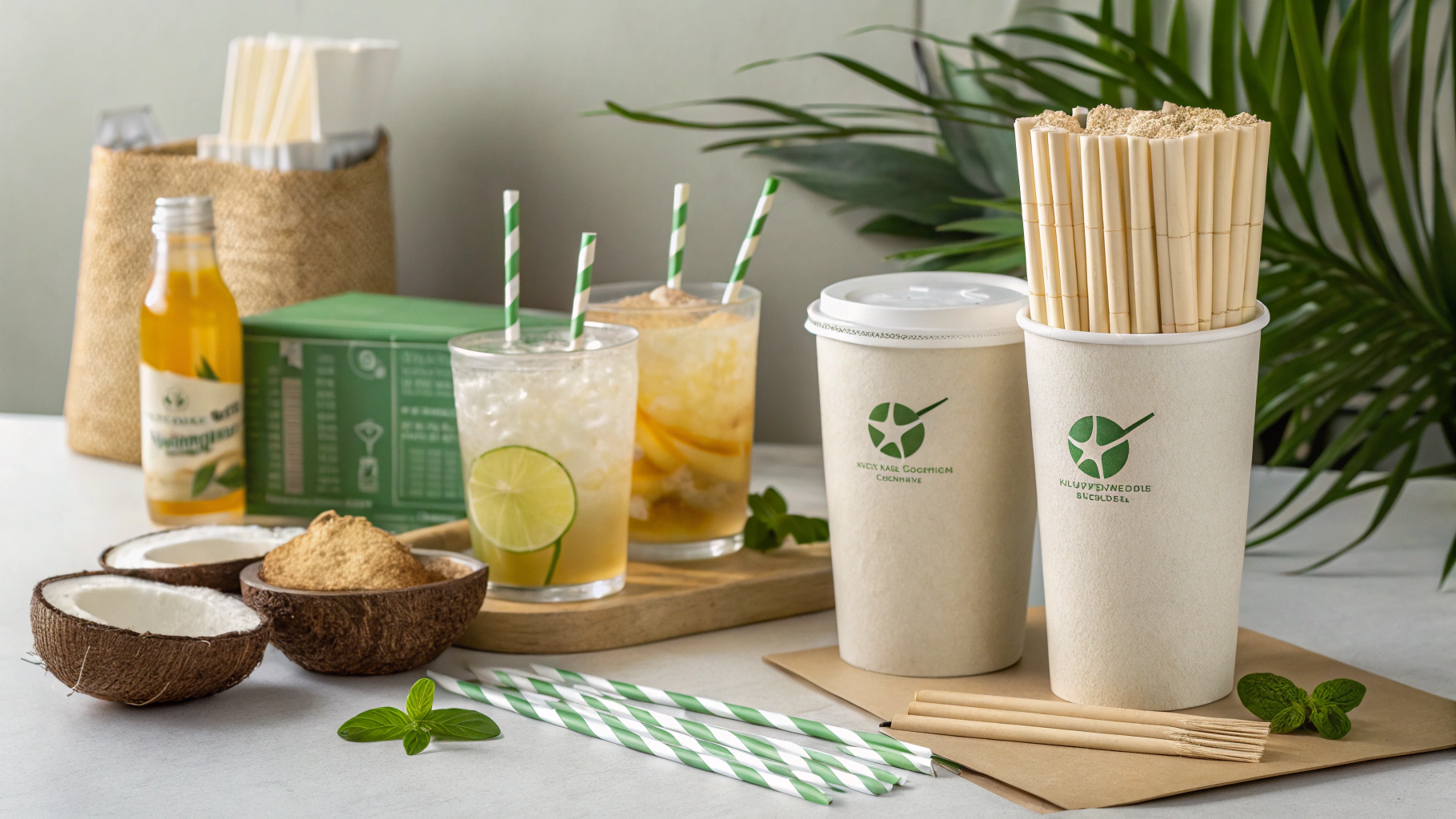
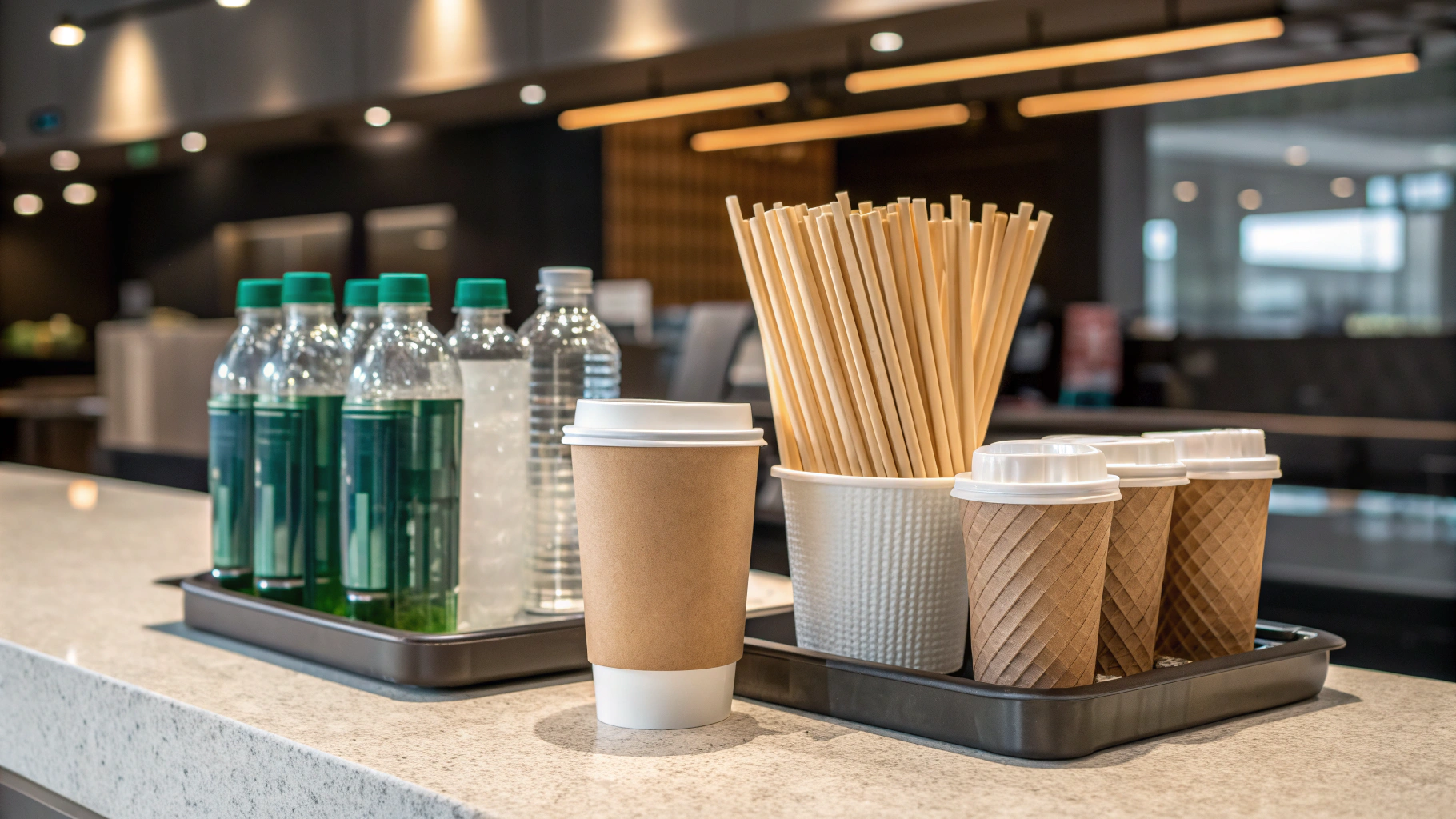
Como líderes en hoteles, bares, cafeterías, restaurantes, catering mayoristas e importadores, están en la primera línea de un cambio crítico. Los días de las omnipresentes pajitas de plástico de un solo uso están llegando rápidamente a su fin. Esta guía está diseñada para brindarle los conocimientos estratégicos necesarios para afrontar este cambio, garantizar el cumplimiento, mejorar su marca y contribuir a un planeta más saludable.
I. Introducción: el cambio inevitable hacia el sorbo sostenible
A. La situación del plástico en el sector alimentario: un llamado al cambio
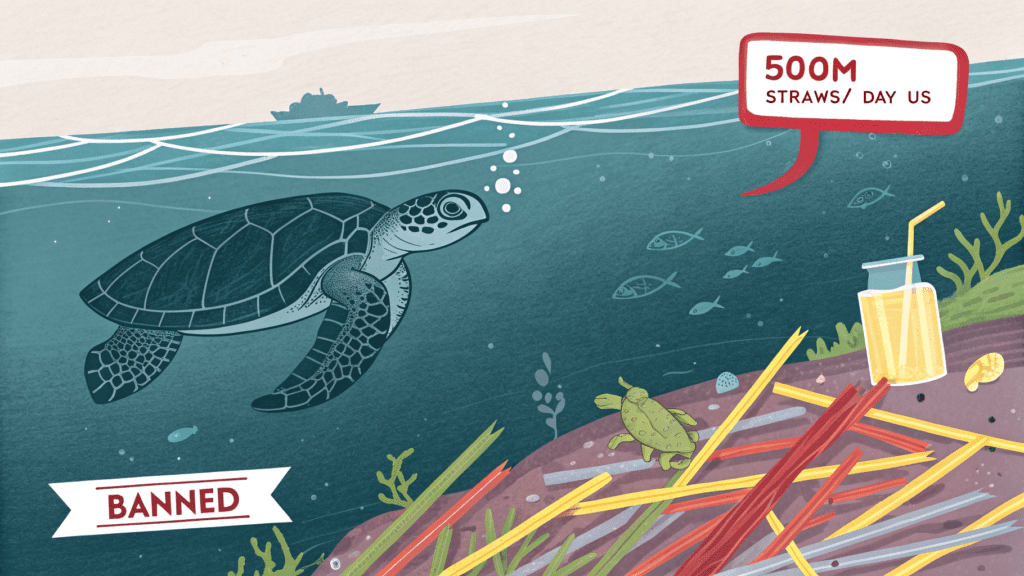
A nivel mundial, Diariamente se desechan cientos de millones de pajitas de plástico de un solo uso., tardando siglos en descomponerse y contribuyendo significativamente a la contaminación ambiental, particularmente en océanos y vertederos. Esta creciente crisis ambiental, junto con la evolución de los valores de los consumidores y regulaciones más estrictas, ya no es un tema periférico para las empresas de servicios de alimentos, sino un imperativo operativo y de marca crítico. Por ejemplo, solo en Estados Unidos se estima que se utilizan 500 millones de pajitas de plástico diariamente. Las empresas que no se adaptan corren el riesgo de alienar a los clientes y enfrentar repercusiones legales.
B. Abrazar la revolución ecológica: ¿Qué son las pajitas biodegradables?
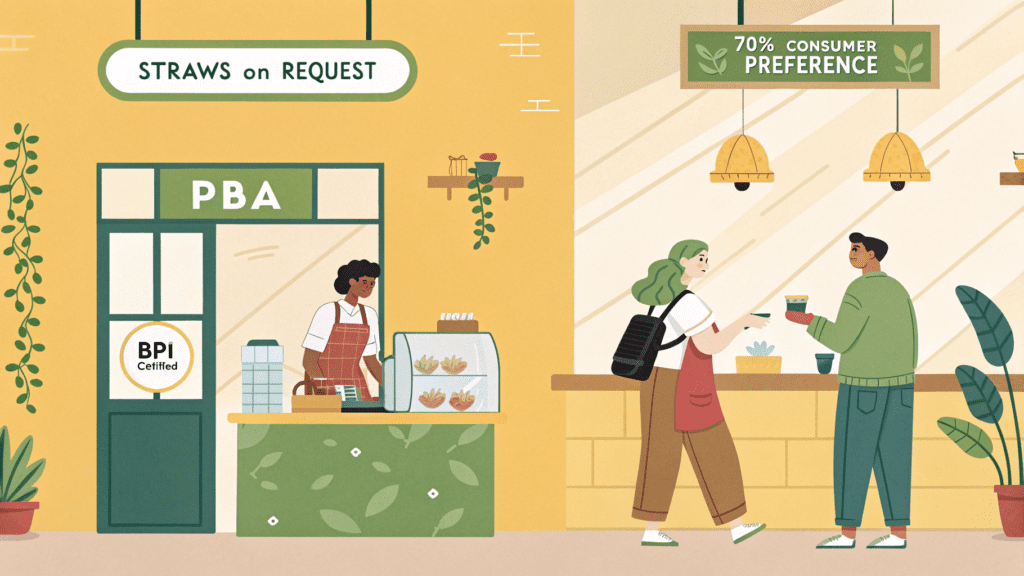
Las pajitas biodegradables son alternativas innovadoras a base de plantas diseñado para descomponerse de forma natural, reduciendo significativamente la huella ecológica. Estas no son sólo una medida de cumplimiento; ellos son un activo estratégico para mejorar la imagen de marca y atraer al creciente segmento de consumidores conscientes del medio ambiente, con estudios que muestran Más del 70% de los consumidores prefieren marcas sostenibles..
Obtenga más información sobre soluciones sostenibles para su negocio en momoio.com
II. La evolución del sorbo: de las cañas antiguas a las energías renovables modernas
A. Un panorama histórico: el viaje de la pajita para beber
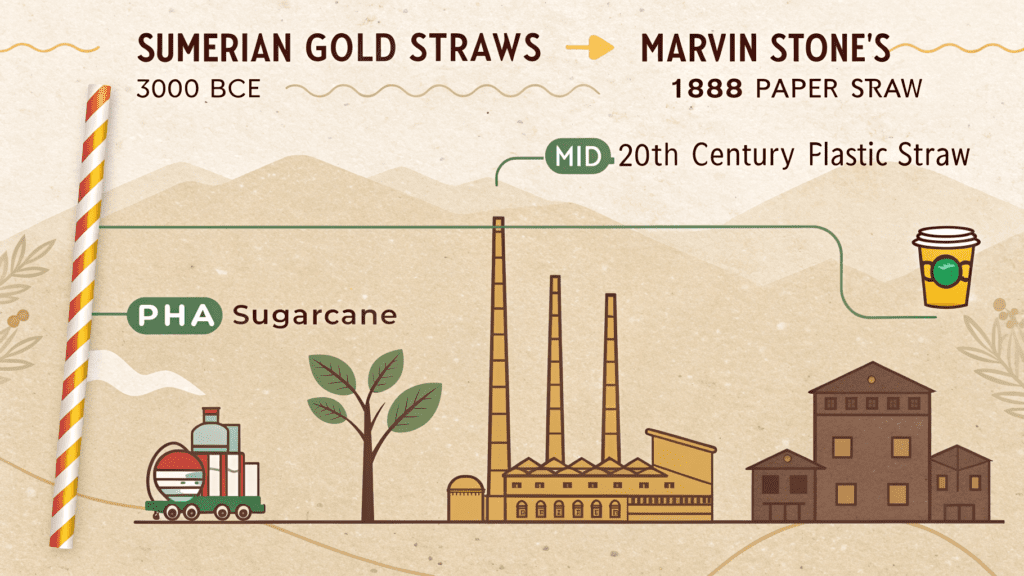
La pajita para beber tiene una rica historia, desde la antigüedad sumeria y egipcia que utilizaba pajitas de oro y madera, hasta la invención pionera de la pajita de papel de Marvin Stone en 1888. A mediados del siglo XX se produjo la Aumento de las pajitas de plástico., impulsado por el crecimiento de la comida rápida y la demanda de productos desechables duraderos y de bajo costo, lo que llevó a la casi extinción de las alternativas al papel en la década de 1970.
B. The Tipping Point: Environmental Awakening & Regulatory Action
El aumento de la conciencia pública y de la industria sobre la contaminación plástica comenzó a finales de la década de 2000, como se puso de manifiesto en el vídeo viral de tortugas marinas de 2015. Esta conciencia desató una ola de acciones regulatorias:
- Directiva de la UE sobre plásticos de un solo uso (SUPD), julio de 2021: Un hito prohibición de diversos plásticos de un solo uso, incluidas pajitas de plástico (incluso PLA), con excepciones hospitalarias limitadas. Esta directiva también impone Esquemas de Responsabilidad Ampliada del Productor (REP), responsabilizando a los productores de la gestión de residuos y los costes de limpieza.
- Prohibiciones a nivel estatal de EE. UU.: A mosaico de regulaciones existe, incluidas prohibiciones absolutas (por ejemplo, Seattle en julio de 2018, Nueva York, Nueva Jersey, Vermont, Washington) o políticas de “paja a pedido” (por ejemplo, California en enero de 2019, Ciudad de Nueva York). Algunas ciudades estadounidenses incluso han prohibido el “plástico compostable” (PLA), si no es que realmente no sea plástico.
- Respuesta de la industria: Grandes corporaciones como Starbucks (Compromiso de 2018, introducción de pajitas vegetales Green Planet™ en Japón en 2024), McDonald's (transición global de la paja de papel), Hyatt, American Airlines y Disney han asumido compromisos importantes, demostrando cambios exitosos que conducen a una mayor satisfacción del cliente y una cobertura mediática positiva.
Este período marcó un punto de inflexión definitivo para el servicio de alimentos, al hacer que el cumplimiento y el abastecimiento sostenible sean una máxima prioridad.
III. Navegando por el paisaje verde: opciones, tendencias y verdades
A. Comprender sus opciones: una inmersión profunda en los materiales biodegradables
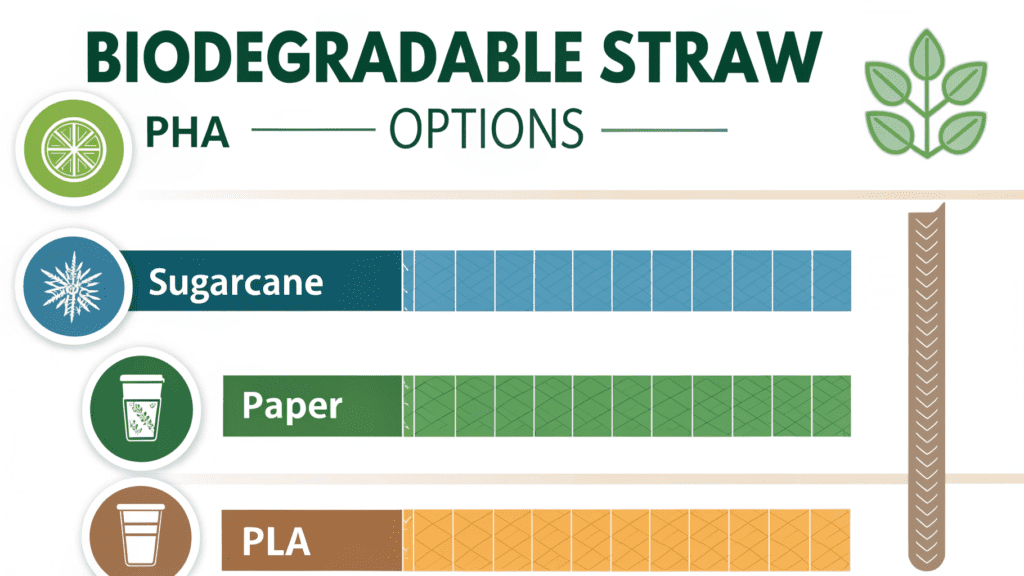
Elegir la pajita biodegradable adecuada implica comprender sus propiedades únicas y su idoneidad para diferentes aplicaciones de servicios alimentarios. Nos centraremos en la nueva generación de Opciones sin PLA:
- Polihidroxialcanoatos (PHA):
- Ventajas: Las pajitas de PHA imitan el Sensación y durabilidad del plástico tradicional., son marine & home/industrial compostable, duradero, adecuado para bebidas calientes (hasta 100°C/212°F), aprobado por la FDA y no producir microplásticos. Tienen una significativa huella de carbono reducida (hasta un 70% menos de emisiones que el plástico).
- Contras: Las pajitas de PHA pueden ser mas caro que otras opciones biodegradables debido a su complejo proceso de producción de fermentación, aunque los costos están mejorando. Críticamente, el La UE clasifica el PHA como un “polímero no natural” debido al proceso de fermentación industrial, prohibiendo así las pajitas de PHA de un solo uso como “plástico” a pesar de su biodegradabilidad, lo que afecta significativamente su uso en Europa. Las pajitas de PHA también están diseñadas para un solo uso, lo que perpetúa el consumo continuo de recursos.
- Caña de azúcar (bagazo):
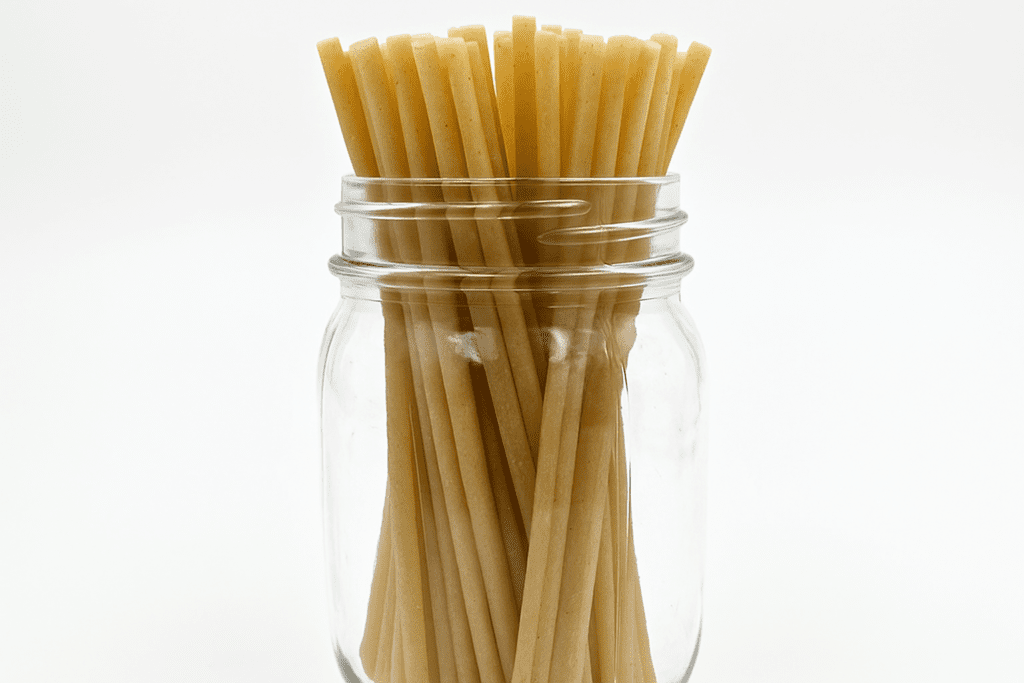
- Ventajas: hecho de bagazo, el subproducto fibroso de la extracción del jugo de la caña de azúcar, reutilizando residuos agrícolas en una economía circular. A menudo son 100% libre de PLA y PFAS, duradero, resistente al agua, adecuado para bebidas calientes (hasta 90°C/220°F), compostable en casa (normalmente de 3 a 6 meses) y sin sabor. Las pajitas de caña de azúcar son generalmente permitido según la SUPD de la UE como fibra natural, no modificada químicamente.
- Contras: Si bien duran horas, algunos pueden ablandarse ligeramente al muy líquidos calientes, aunque siguen siendo funcionales. Algunas de las primeras versiones (V1) contenían PLA, que ahora está prohibido en la UE. Los beneficios óptimos de la degradación requieren acceso a instalaciones de compostaje. Tienen una vida útil de 10 a 18 meses y requieren un almacenamiento adecuado.
- Documento (para contexto):
- Ventajas: Ampliamente disponible, rentable (en comparación con algunos bioplásticos), biodegradable y reciclable.
- Contras: Propenso a empaparse, perdiendo más del 75% de firmeza después de 20 minutos y colapsando en 30-60 minutos, lo que puede frustrar a los clientes. Pueden impartir un sabor a papel y algunos estudios han encontrado que son perjudiciales. Contenido de PFAS (sustancias perfluoroalquiladas y polifluoroalquiladas).
- Ácido poliláctico (PLA) (para contexto):
- Ventajas: Aspecto/sensación similar al plástico, resistente para bebidas frías.
- Contras: Requiere principalmente instalaciones de compostaje industrial; tarda años en descomponerse a temperatura ambiente en los vertederos o en los océanos, comportándose como el plástico convencional. Se suaviza y se deforma en líquidos calientes. (por encima de ~60-70°C). Fundamentalmente, el SUPD de la UE prohíbe las pajitas de PLA como plástico.
B. Current Market Adoption & B2B Buyer Preferences
El mercado mundial de pajitas biodegradables está experimentando un auge significativo, y se prevé que crecerá de 41.520 millones de dólares en 2024 a 178.870 millones de dólares hasta 2031 (una tasa compuesta anual del 23,20%). América del Norte y Asia Pacífico lideran las cuotas de mercado y el crecimiento.
Las empresas dan prioridad a la sostenibilidad para los objetivos de RSE, el cumplimiento normativo y la mejora de la marca. La funcionalidad (durabilidad, idoneidad para el frío y el calor) y la rentabilidad son factores clave para la decisión. Historias de éxito de importantes cadenas como Starbucks, McDonald's, Hyatt, American Airlines, Disney, Sweetgreen, Dunkin', Tous les JOURS y First Watch destacan transiciones exitosas que conducen a una mayor satisfacción del cliente.
¿Listo para liderar el cambio? 🌱 Contáctenos hoy para solicitar una cotización u obtener muestras gratuitas de pajitas premium de caña de azúcar y PHA para su cafetería o negocio de servicios de alimentos. Es hora de unirse a las filas de cafés y restaurantes sostenibles que están cambiando el rumbo del plástico de un solo uso, una pajita a la vez. ¡Tus clientes te lo agradecerán y el planeta también!
C. Addressing the Elephant in the Room: Challenges & Misconceptions
- Barrera de costos: Biodegradable straws are generally more expensive than traditional plastic (e.g., paper straws 5-12 cents vs. plastic <2 cents). However, this must be weighed against the “Costo real” de la contaminación plástica (75 mil millones de dólares anuales para la sociedad) y los beneficios a largo plazo de una mejor reputación de marca y lealtad del cliente. Las pajitas de caña de azúcar son competitivas con las de papel cuando se compran al por mayor.
- The “Biodegradable” Myth & Greenwashing: Muchos plásticos “biodegradables” (como el PLA) requieren condiciones específicas de compostaje industrial y pueden comportarse como el plástico convencional en los vertederos o en los océanos, contribuyendo a la contaminación. Consejos prácticos: Enfatice la importancia de certificaciones claras de “compostable” (p. ej., OK Compost Home/Industrial) sobre afirmaciones vagas de “biodegradable”.
- Preocupaciones sobre PFAS: Los estudios (2019-2024) han detectado “químicos permanentes” (PFAS) dañinos en muchas pajitas de papel y de origen vegetal. Consejos prácticos: busque certificaciones “libres de PFAS” al realizar el abastecimiento. Las pajitas de caña de azúcar normalmente no contienen PFAS.
- Desafío de infraestructura de compostaje: Si bien las pajitas de caña de azúcar y PHA son compostables, el acceso generalizado a instalaciones comerciales de compostaje no es universal en los EE. UU., lo que resalta la importancia de las opciones compostables en el hogar.
IV. Strategic Sourcing & Future-Proofing Your Business
A. Consideraciones clave sobre proveedores para compradores B2B
Para tomar una decisión segura y conforme, los compradores B2B deben priorizar:
- Certificaciones No Negociables:
- Compostabilidad: Busque compostable con certificación BPI, DIN CERTCO, TÜV Austria (OK Compost industrial/hogar, biodegradable marino).
- Contenido de base biológica: El programa USDA BioPreferred verifica el contenido de recursos renovables.
- Seguridad alimentaria: Pautas de seguridad en contacto con alimentos de la FDA, LFGB, Buenas prácticas de fabricación (GMP).
- Sourcing & Safety: Fuentes certificadas FSC (para pajitas de papel) y, fundamentalmente, Verificación libre de PFAS.
- Logistics & Scalability: Pregunte sobre los plazos de entrega de producción típicos (por ejemplo, 15 a 35 días), la cantidad mínima de pedido (MOQ) y analice la flexibilidad para las pruebas iniciales. Aprovechar el rentabilidad de la compra al por mayor y al por mayor para ahorros significativos.
- Personalización para alineación de marca (oportunidades OEM): Considere la posibilidad de imprimir logotipos personalizados (tintas de colores), grabar con láser (bambú) y diseños personalizados para reforzar la identidad de su marca. Garantice la disponibilidad de diferentes diámetros, longitudes y formas (recto, flexible, cuchara) y opciones de embalaje (a granel, envoltorios de papel individuales).
B. El argumento comercial a favor de la adopción: más allá del cumplimiento
Cambiar a ofertas de pajitas compostables y sin PLA ventajas comerciales tangibles:
- Cumplimiento de las regulaciones actuales (y futuras): Alinearse con las crecientes leyes que prohíben los plásticos de un solo uso, preparando sus operaciones para el futuro contra la próxima ola de restricciones plásticas.
- Apelación a los consumidores conscientes del medio ambiente: Más del 70% de los consumidores prefieren marcas sostenibles, mejorando su marca y fidelizando a sus clientes.
- Experiencia del cliente mejorada: Las pajitas duraderas y de sabor neutro eliminan las quejas comunes asociadas con el papel empapado, lo que genera una mayor satisfacción del cliente.
- Contribuir a una economía circular: La utilización de subproductos agrícolas y materiales verdaderamente compostables reduce los residuos y la huella de carbono.
- Ease of Disposal & Waste Management: Las pajitas compostables a menudo pueden ir a parar a los contenedores de desechos de alimentos o de abono, lo que simplifica la clasificación de residuos y potencialmente ahorra costos de eliminación.
- Marketing & Storytelling Opportunities: Resalte su “Iniciativa sobre pajitas compostables” en menús, letreros y redes sociales, posicionando su cafetería como líder en prácticas sustentables y generando relaciones públicas positivas.
C. Pasos prácticos: implementar su estrategia de paja sostenible
- Evalúe sus necesidades: Realizar una auditoría interna del uso actual de popotes, considerando los tipos de bebidas (calientes/frías, finas/espesas) y el volumen.
- Programa piloto: Iniciar una fase de prueba con una selección de materiales biodegradables, recopilando comentarios tanto del personal como de los clientes sobre el desempeño y las preferencias.
- Capacitación del personal: Eduque a su equipo sobre los nuevos materiales, el manejo adecuado y los métodos de eliminación correctos (por ejemplo, diferenciar el compostaje industrial del doméstico) para maximizar los beneficios ambientales.
- Comunicación con el cliente: Comunique de forma proactiva su compromiso de sostenibilidad a través de menús, carteles y redes sociales para reforzar los valores de la marca y educar a los consumidores. Considere ofrecer popotes “a pedido” para reducir aún más el desperdicio.
- Más allá de la paja: Posicionar este cambio como un trampolín dentro de una estrategia de sostenibilidad holística más amplia, explorando otras estrategias de reducción de residuos, sistemas reutilizables y abastecimiento responsable.
V. Future Outlook: Beyond 2025 – Continuous Innovation & Global Impact
El mercado mundial de pajitas ecológicas está preparado para un crecimiento sólido y continuo, con proyecciones de alcanzar 19.360 millones de dólares para 2029 y 25.100 millones de dólares para 2035 (7,3% CAGR).
• Innovaciones emergentes: Anticipe avances en materiales, recubrimientos para una mayor durabilidad y una verdadera biodegradabilidad en diversos entornos (marino, abono doméstico). Esto incluye la producción avanzada de PHA (ingeniería genética, nuevos sustratos como residuos de alimentos) y nuevos materiales de origen vegetal como algas, arroz, posos de café, coco y acetato de celulosa.
• Optimización de costos: Se espera que las economías de escala y los avances tecnológicos reduzcan el costo de las pajitas biodegradables, haciéndolas aún más accesibles.
• Sostenibilidad Integral: El cambio a pajitas biodegradables es parte de un movimiento industrial más amplio hacia prácticas sostenibles integrales, integrándose con otros desechables ecológicos y soluciones de gestión de residuos. Los hoteles, por ejemplo, están avanzando hacia la neutralidad de carbono, integrando la IA para la gestión de recursos, el diseño sostenible y las iniciativas de economía circular. Esto refleja un cambio de la sostenibilidad como un “complemento de marketing” a una “estrategia de evitación de costos” para las adquisiciones, impulsando la eficiencia y la resiliencia.
El momento de actuar es ahora. Alinearse con prácticas sostenibles no se trata solo de cumplimiento sino de aprovechar una ventaja competitiva en un mercado en rápida evolución. Al adoptar estas pajitas sin PLA de próxima generación, demuestra su compromiso con un futuro sostenible, deleita a sus clientes y prepara sus operaciones comerciales para el futuro.
¿Listo para liderar el cambio? 🌱 Contáctenos hoy para solicitar una cotización u obtener muestras gratuitas de pajitas premium de caña de azúcar y PHA para su cafetería o negocio de servicios de alimentos. Es hora de unirse a las filas de cafés y restaurantes sostenibles que están cambiando el rumbo del plástico de un solo uso, una pajita a la vez. ¡Tus clientes te lo agradecerán y el planeta también!
Descubra información sobre la evolución de la industria en momoio.com