Navegar por el panorama de la gestión sostenible de envases y residuos exige una comprensión precisa, especialmente para los líderes de adquisiciones y operaciones en las industrias hotelera y de servicios de alimentos. Los términos “biodegradable” y “compostable” a menudo se usan indistintamente, lo que genera una confusión generalizada y posibles errores operativos. Esta ambigüedad semántica plantea un riesgo significativo para las empresas que se esfuerzan por lograr un verdadero cumplimiento ambiental, social y de gobernanza (ESG), lo que podría conducir a costosas acusaciones de “lavado verde” y flujos de residuos ineficientes.
Para los tomadores de decisiones B2B, distinguir entre estos términos no es simplemente un ejercicio académico; es un imperativo estratégico. Se prevé que el mercado mundial de envases compostables, valorado en aproximadamente 55 530 millones de dólares en 2024 (Grand View Research, 2024), alcance los 89 850 millones de dólares en 2032, exhibiendo una tasa de crecimiento anual compuesta (CAGR) del 6,20 % entre 2025 y 2032 (Precedence Research, 2023). Este crecimiento subraya una oportunidad crítica para que las empresas se alineen con las expectativas cambiantes de los consumidores y los panoramas regulatorios. Sin embargo, sin una comprensión clara de la compostabilidad certificada, las empresas corren el riesgo de invertir en soluciones que no brindan los beneficios ambientales prometidos o no cumplen con estándares de cumplimiento cada vez más estrictos, lo que afecta todo, desde la eficiencia de la cadena de suministro hasta la reputación de la marca. Ignorar esta distinción puede generar mayores costos de eliminación de residuos, multas regulatorias y daños significativos a la marca en un mercado que valora cada vez más la sostenibilidad genuina (Fundación Ellen MacArthur, 2022).
Comprender esta distinción es crucial para operaciones B2B sostenibles y evitar un costoso lavado verde.
Comprender lo “biodegradable”: una afirmación amplia y a menudo engañosa
El término "biodegradable" sugiere que un material se descompone de forma natural, pero en gran medida no está regulado y carece de especificidad para aplicaciones B2B. Sin estándares claros, esta definición amplia puede obstaculizar la gestión eficaz de residuos y las iniciativas de sostenibilidad, creando un campo minado para empresas desprevenidas.
La naturaleza no regulada de la biodegradabilidad: riesgos para las cadenas de suministro
El problema central con lo "biodegradable" radica en la falta de un período de tiempo definido o condiciones ambientales específicas para la descomposición. Si bien el término implica descomposición por microorganismos, un producto etiquetado como “biodegradable” podría, en realidad, tardar “cientos de años” en descomponerse. Lo más importante es que aún puede dejar residuos nocivos o incluso fragmentarse en microplásticos, socavando los objetivos ambientales que pretende apoyar.
La Comisión Federal de Comercio (FTC) de Estados Unidos ha advertido explícitamente a las empresas que no hagan afirmaciones incondicionales de “biodegradable”, destacando los importantes riesgos del lavado verde. Afirmaciones tan vagas pueden engañar a los consumidores y dar lugar a un escrutinio regulatorio. Por ejemplo, algunos plásticos “biodegradables”, como los productos oxodegradables, son esencialmente plásticos convencionales mezclados con aditivos que hacen que se desintegren más rápido, pero se descomponen en innumerables microplásticos que pueden contaminar gravemente el medio ambiente, en lugar de desaparecer realmente. Esto plantea un importante riesgo de reputación y cumplimiento para las cadenas de suministro que incorporan inadvertidamente dichos materiales, especialmente para las empresas hoteleras que gestionan grandes volúmenes de artículos de un solo uso.
Por qué lo "biodegradable" no alcanza los objetivos de sostenibilidad B2B
La falta inherente de especificidad en las afirmaciones de “biodegradable” las hace inadecuadas para estrategias sólidas de sostenibilidad B2B.
- Sin plazo definido: Sin un marco de tiempo garantizado, las empresas no pueden predecir ni gestionar de manera confiable el final del ciclo de vida de sus productos, lo que genera una acumulación de desechos impredecible y entornos operativos ineficientes, particularmente en entornos de servicios de alimentos de ritmo acelerado.
- Ausencia de pruebas de toxicidad: No se requieren pruebas para detectar subproductos tóxicos en materiales generalmente "biodegradables". Esto introduce riesgos ambientales y de reputación, ya que los productos podrían liberar sustancias nocivas al suelo o al agua.
- Confusión del consumidor y de las instalaciones de residuos: La ambigüedad que rodea a “biodegradable” confunde tanto a los consumidores como a las instalaciones de gestión de residuos, lo que complica la eliminación adecuada y aumenta las tasas de contaminación en los flujos de reciclaje o compostaje, un problema común en la gestión de residuos de los hoteles.
- Vulnerabilidad legal y regulatoria: El uso de “biodegradable” en las ventas y marketing de productos de un solo uso se considera problemático e incluso es “potencialmente ilegal” en algunos estados de EE. UU., como California (AB 1201), que prohíbe tales afirmaciones sin una certificación de terceros. Esto crea un claro riesgo de cumplimiento para las empresas que operan en mercados regulados.
“Biodegradable” carece de estándares claros, lo que plantea importantes riesgos operativos y de lavado verde para las empresas.
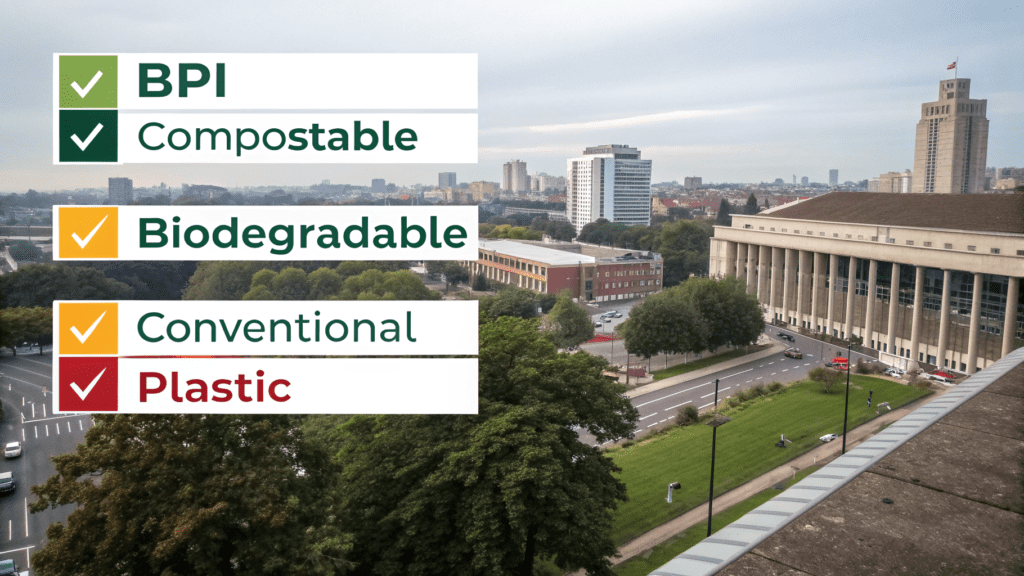
Definición de “BPI Compostable”: el estándar de oro para operaciones sostenibles
“BPI Compostable” significa un producto rigurosamente probado y certificado diseñado para descomponerse de manera efectiva en entornos industriales específicos, ofreciendo claras ventajas para esfuerzos de sostenibilidad B2B que cumplan e impacten. Esta certificación proporciona un camino transparente y verificable hacia contribuciones genuinas a la economía circular.
El papel del Instituto de Productos Biodegradables (BPI) en la certificación
El Instituto de Productos Biodegradables (BPI) es la principal autoridad sin fines de lucro de América del Norte, establecida en 1999, dedicada a promover y certificar productos y envases compostables. La certificación BPI no es sólo una etiqueta; es una verificación independiente de terceros de que los productos cumplen con los estrictos estándares de compostabilidad de la ASTM (Sociedad Estadounidense de Pruebas y Materiales).
La marca de certificación BPI, un diseño en forma de remolino distintivo, identifica productos diseñados específicamente para una descomposición adecuada en sistemas comerciales. Esta marca es invaluable para los gerentes de adquisiciones y directores de operaciones, ya que ayuda a los compostadores a diferenciar los verdaderos compostables de los similares, evitando así una costosa contaminación en sus instalaciones. Proporciona una señal clara de integridad y cumplimiento de estándares respaldados científicamente, lo cual es crucial para generar confianza con los socios de gestión de residuos y los usuarios finales, especialmente en entornos hoteleros de gran volumen.
Cumplimiento de los estrictos estándares ASTM para compostables certificados por BPI
Para obtener la certificación BPI, los productos deben someterse a pruebas exhaustivas y rigurosas para cumplir con estándares ASTM específicos.
- ASTM D6400 (para plásticos/envases) o ASTM D6868 (para revestimientos/películas): Estos son los estándares principales que deben cumplir los productos certificados por BPI. Determinan qué tan bien se descompone un producto en las instalaciones de compostaje industrial.
- Cronograma de desintegración definido: Se requiere que los productos se desintegren físicamente en un 90 % en 12 semanas (84 días) y se biodegraden en dióxido de carbono, agua y biomasa en un plazo de 90 a 180 días en entornos de compostaje comerciales. Esto garantiza un procesamiento oportuno y un rendimiento eficiente en las instalaciones industriales, fundamentales para la gestión de residuos del servicio de alimentos.
- Componentes no tóxicos: Fundamentalmente, el proceso de descomposición debe producir componentes no tóxicos, que no dejen residuos nocivos, niveles inaceptables de metales pesados o productos químicos fluorados (PFAS). También se debe demostrar que el abono resultante es seguro para el crecimiento de las plantas, garantizando un beneficio ambiental y una recuperación de recursos que realmente enriquezca el suelo y respalde la agricultura regenerativa.
- Exclusivo para compostaje industrial: Es importante tener en cuenta que la certificación BPI se aplica exclusivamente a productos que se ha demostrado que se descomponen en entornos de compostaje comercial, que mantienen los altos niveles necesarios de calor, humedad y actividad microbiana. Estos productos generalmente no están destinados al compostaje doméstico ni a los vertederos tradicionales, donde las condiciones para la descomposición son insuficientes.
BPI Compostable significa descomposición certificada en instalaciones industriales, garantizando verdaderos beneficios medioambientales.
BPI compostable versus biodegradable: una comparación fundamental para los tomadores de decisiones B2B
Comprender las implicaciones operativas, de cumplimiento y financieras de “BPI compostable” versus “biodegradable” es fundamental para las iniciativas estratégicas de adquisiciones y sostenibilidad. Las distinciones tienen un profundo impacto en la gestión de residuos, el cumplimiento normativo y la reputación de la marca.
Los gerentes de adquisiciones enfrentan la compleja tarea de seleccionar materiales que no solo satisfagan las necesidades operativas sino que también se alineen con los crecientes objetivos corporativos de ESG y las demandas regulatorias. Elegir productos etiquetados erróneamente como “biodegradables” puede provocar contaminación del flujo de desechos, mayores costos de eliminación y daños significativos a la marca debido a acusaciones de lavado verde. Por el contrario, invertir en soluciones compostables certificadas por BPI ofrece un camino verificable hacia la responsabilidad ambiental y la eficiencia operativa, particularmente para las empresas de hostelería y servicios de alimentos que gestionan grandes volúmenes de residuos orgánicos.
Tabla comparativa: Característica | Impacto operativo B2B | Nota de cumplimiento | Potencial de retorno de la inversión
| Característica | Impacto operativo B2B | Nota de cumplimiento | Potencial de retorno de la inversión |
|---|---|---|---|
| “Biodegradable” (General) | Avería impredecible en entornos variados; alto riesgo de formación de microplásticos y acumulación en vertederos. Puede requerir flujos de residuos separados y no optimizados, lo que aumenta la complejidad logística y los costos para hoteles y restaurantes. | Falta de definiciones regulatorias claras a nivel mundial; alto riesgo de reclamos de “lavado verde” que conduzcan a un escrutinio regulatorio/de la FTC. Potencialmente ilegal para la comercialización de productos de un solo uso en algunos estados de EE. UU. (por ejemplo, California AB 1201) debido a afirmaciones engañosas. | Retorno de la inversión limitado o negativo debido a la posibilidad de eliminación en vertederos, mayores costos de transporte de desechos debido a la contaminación y graves daños a la reputación debido a afirmaciones engañosas. No contribuye de manera confiable a iniciativas de economía circular ni a métricas ESG verificables. |
| “BPI Compostable” | Desglose garantizado dentro de 90-180 días en instalaciones de compostaje comerciales; permite la desviación eficiente de residuos orgánicos y reduce el volumen de los vertederos y las emisiones de metano. Agiliza la segregación de residuos y mejora el flujo operativo para las operaciones de servicios de alimentos. | Certificado según las normas ASTM D6400/D6868 por un tercero independiente; evita responsabilidades de “lavado verde”; se alinea y a menudo es requerido por las crecientes regulaciones estatales/locales (por ejemplo, CA AB 1201, Canadá SOR/2022-138 para plásticos de un solo uso). | Retorno de la inversión positivo a través de costos significativamente reducidos de eliminación de residuos, mejora de la reputación de la marca y la diferenciación del mercado (respalda los informes ESG) y la contribución a los objetivos de la economía circular (producción valiosa de compost). Reduce el riesgo de cumplimiento futuro. |
La elección de productos compostables de BPI ofrece claras ventajas operativas, de cumplimiento y financieras sobre las vagas afirmaciones de "biodegradable".

Superando los desafíos: infraestructura, desinformación y soluciones compostables de BPI
A pesar de los claros beneficios de los productos compostables certificados por BPI, los líderes B2B enfrentan obstáculos relacionados con la infraestructura, la percepción del consumidor y las complejidades regulatorias. Abordar estos desafíos es clave para maximizar sus ventajas ambientales y operativas, especialmente dentro de los sectores de hotelería y servicios de alimentos.
La brecha en la infraestructura de compostaje industrial: un obstáculo clave
Un desafío importante para la adopción generalizada de compostables certificados por BPI es la disponibilidad de instalaciones de compostaje industrial adecuadas. Muchas regiones carecen de infraestructura suficiente, lo cual es esencial para que estos artículos se descompongan adecuadamente en condiciones controladas. Esta brecha de infraestructura significa que incluso los productos genuinamente compostables podrían terminar en vertederos o incineradores si no se dispone de una recolección y procesamiento adecuados, lo que impacta los esfuerzos de sustentabilidad de hoteles y restaurantes.
La contaminación sigue siendo un problema importante; Aproximadamente el 17% de los gastos operativos de los compostadores se destinan a la eliminación de elementos no compostables. Los programas inconsistentes de recolección en las aceras exacerban aún más los desafíos de eliminación de los envases compostables. Si los productos certificados por BPI, o cualquier material orgánico, terminan en vertederos, pueden producir metano (un potente gas de efecto invernadero) si las condiciones se vuelven anaeróbicas. Esto subraya la necesidad crítica de mejorar los sistemas de clasificación y recolección diseñados para materiales compostables, particularmente para operaciones de servicios de alimentos a gran escala.
Luchando contra el “lavado verde” y la confusión del consumidor con “BPI Compostable”
Las etiquetas engañosas de “biodegradables” causan una confusión generalizada, y a menudo implican una avería en cualquier entorno. El término “biodegradable” es ampliamente criticado por “lavado verde”, desviando la atención de la verdadera sostenibilidad. Para los responsables de adquisiciones y sostenibilidad en el sector hotelero, esto presenta una batalla constante contra la desinformación, que afecta tanto las operaciones internas como las percepciones externas.
La certificación BPI combate directamente esto proporcionando pruebas claras y verificables de compostabilidad, generando así confianza en los consumidores y las partes interesadas. Garantiza que los productos funcionarán según lo previsto en un entorno de compostaje industrial. Educar al personal, a los socios de la cadena de suministro y a los usuarios finales sobre la eliminación adecuada de los materiales certificados por BPI es crucial para desviar eficazmente los desechos y maximizar los beneficios ambientales. Esta educación se extiende a diferenciar los artículos certificados por BPI de los "imitados" no certificados para prevenir la contaminación en los flujos de desechos de hoteles y restaurantes.
Panorama regulatorio en evolución: cumplimiento y oportunidad
El panorama regulatorio en torno a los envases sostenibles está evolucionando rápidamente, avanzando hacia una mayor claridad y cumplimiento. Estados de EE. UU. como California (AB 1201) y Washington ya han prohibido las afirmaciones engañosas sobre “biodegradable” sin una certificación sólida de terceros. En Canadá, el Reglamento SOR/2022-138 sobre plásticos de un solo uso a menudo exige el cumplimiento de ASTM D6400/BPI para alternativas viables, lo que refleja una tendencia más amplia hacia soluciones certificadas en toda América del Norte.
Organizaciones como el U.S. Composting Council y BPI colaboran activamente para orientar la legislación, anticipando más leyes sobre productos compostables en los próximos años. Las empresas proactivas que se alinean con los estándares de BPI pueden anticiparse a futuras regulaciones, evitar posibles sanciones y posicionarse como líderes en gestión ambiental responsable. Este cumplimiento prospectivo no solo mitiga el riesgo sino que también abre oportunidades para la diferenciación del mercado en las competitivas industrias hotelera y de servicios de alimentos. Para obtener detalles regulatorios completos,lea nuestra guía completa sobre regulaciones de embalaje sostenible.
Abordar las brechas de infraestructura y la desinformación es clave para aprovechar eficazmente las soluciones compostables de BPI.
La ventaja estratégica de las soluciones compostables certificadas por BPI para adquisiciones y operaciones
Adoptar envases compostables con certificación BPI ofrece más que beneficios ambientales; Proporciona eficiencias operativas tangibles, fortalece la reputación de la marca y contribuye a la salud financiera a largo plazo. Para los gerentes de adquisiciones y directores de operaciones en hotelería y servicios de alimentos, esto se traduce en un valor comercial mensurable.
Reforzar los objetivos ESG corporativos y la reputación de marca
La adopción de productos certificados por BPI ayuda directamente a las empresas a cumplir ambiciosos objetivos ambientales, sociales y de gobernanza (ESG). Al desviar de manera verificable los desechos de los vertederos y contribuir a una economía circular, las empresas pueden informar de manera creíble sobre sus esfuerzos de reducción de desechos, mejorar la confianza de las partes interesadas y atraer inversores con conciencia social. Los objetivos de la Fundación Ellen MacArthur para 2025, por ejemplo, incluyen garantizar que el 100% de los envases de plástico sean reutilizables, reciclables o compostables, estableciendo un claro punto de referencia para el sector hotelero.
Un fuerte compromiso con los compostables certificados diferencia a las marcas en un mercado competitivo y consciente de la sostenibilidad. Demuestra un liderazgo genuino, resonando entre consumidores y socios ambientalmente conscientes, y puede traducirse en una mayor lealtad a la marca y participación de mercado. Esta postura proactiva sobre la sostenibilidad puede convertirse en un importante diferenciador competitivo para hoteles, cafeterías y restaurantes.
Eficiencia operativa y optimización del flujo de residuos
Los productos certificados por BPI implementados correctamente agilizan la recolección de desechos orgánicos, reduciendo directamente el volumen de los vertederos y los costos de eliminación asociados. Esto es especialmente valioso para empresas con importantes residuos relacionados con los alimentos, como proveedores de hostelería o empresas de servicios alimentarios. Aprovechar los envases compostables para aplicaciones en contacto con alimentos (por ejemplo, recipientes para comida para llevar, tazas de café) facilita flujos de desechos orgánicos más limpios, ya que la contaminación de los alimentos a menudo hace que el reciclaje de plástico convencional no sea práctico.
Esta transición también reduce la dependencia de los plásticos convencionales, que están cada vez más sujetos al escrutinio regulatorio y a la reacción de los consumidores. Al minimizar la contaminación en los flujos de compostaje, las empresas apoyan la infraestructura de compostaje local, reducen las tarifas de eliminación y contribuyen a la producción de compost valioso. Para las empresas que buscan estrategias integrales de sostenibilidad en el sector hotelero, explorar cómo la certificación BPI se alinea con objetivos de sostenibilidad más amplios puede generar beneficios significativos. Puede encontrar más información sobre cómo optimizar los flujos de residuos con soluciones compostables certificadas leyendo más sobreCertificación BPI compostable y sostenibilidad hotelera.
Estudio de caso: Éxito en la reducción de residuos de un proveedor de servicios alimentarios ecológicos
Un importante proveedor universitario de servicios alimentarios implementó artículos de servicio de alimentos compostables con certificación BPI (por ejemplo, vasos fríos de PLA, contenedores de cartón compostables) en todos sus campus a partir de finales de 2023. Este cambio estratégico fue impulsado por el compromiso de reducir los residuos de los vertederos y mejorar las iniciativas de sostenibilidad del campus.
En tan solo 12 meses, el proveedor informó una reducción significativa del 35 % en los residuos destinados a vertederos procedentes de sus comedores. Este impresionante logro fue posible etiquetando claramente todos los artículos certificados por BPI con la distintiva marca de remolino y colaborando activamente con instalaciones comerciales de compostaje locales que aceptaron materiales que cumplen con la norma ASTM D6400. La recolección simplificada de desechos orgánicos, posible gracias a los productos compostables identificables, condujo a una reducción estimada del 15 % en los costos de transporte de desechos para su flujo orgánico. Este caso demuestra que con una selección adecuada de productos, etiquetado y asociaciones de flujo de residuos, los compostables certificados por BPI ofrecen una solución viable y económicamente beneficiosa para operaciones a gran escala, como los servicios de comedor universitario.
Las soluciones certificadas por BPI mejoran los criterios ESG, agilizan las operaciones y ofrecen ganancias financieras y de reputación mensurables.
El panorama futuro: crecimiento e innovación en materiales compostables
La trayectoria de los materiales compostables es de expansión significativa e innovación continua, impulsada por un compromiso global colectivo para reducir la contaminación plástica y fomentar una economía más circular. Los líderes de adquisiciones y operaciones deben reconocer este panorama en evolución para tomar decisiones informadas y preparadas para el futuro.
Crecimiento proyectado del mercado y factores impulsores
Se prevé que el mercado mundial de envases compostables alcance los 89.850 millones de dólares en 2032, creciendo a una sólida tasa compuesta anual del 6,20% a partir de 2025. Este crecimiento es una respuesta directa a la creciente demanda de los consumidores de soluciones sostenibles, combinada con regulaciones gubernamentales cada vez más estrictas destinadas a mitigar la contaminación plástica y promover prácticas ecológicas. Se espera que el segmento de alimentos y bebidas continúe su dominio, con la mayor participación de ingresos en el mercado de envases compostables, ya que las empresas de este sector priorizan los envases que pueden co-compostarse con desechos de alimentos. El papel y el cartón, junto con el ácido poliláctico (PLA), son segmentos de materiales líderes debido a su renovabilidad y sus propiedades certificadas como compostables.
Avances en innovación de biopolímeros y ciencia de materiales
La innovación continua se centra en el desarrollo de nuevos biopolímeros que rivalicen con los plásticos tradicionales en cuanto a rendimiento y al mismo tiempo sigan siendo compostables. Los investigadores están explorando materiales novedosos como los PHA (polihidroxialcanoatos), derivados de recursos renovables como algas y bacterias. Estos avances tienen como objetivo crear materiales con mayor durabilidad, flexibilidad y propiedades de barrera, abordando las limitaciones anteriores de las alternativas compostables. Las nuevas formulaciones están diseñadas específicamente para descomponerse en compuestos inofensivos, enriquecer el suelo y contribuir al ciclo natural de nutrientes sin dejar microplásticos ni toxinas. La investigación en curso también aborda los desafíos económicos, esforzándose por reducir el costo y optimizar la densidad de los materiales compostables, haciéndolos cada vez más competitivos con los envases convencionales para aplicaciones de hostelería y servicios alimentarios.
El papel de los materiales compostables en una economía circular
Los materiales compostables son cruciales para desviar los desechos orgánicos de los vertederos, reduciendo así significativamente las emisiones de metano, un potente gas de efecto invernadero. Al transformarse en abono rico en nutrientes, contribuyen a la salud y la fertilidad del suelo, reduciendo potencialmente la dependencia de fertilizantes sintéticos y apoyando prácticas agrícolas regenerativas. La integración de compostables respalda el objetivo más amplio de la economía circular de mantener los recursos en uso durante el mayor tiempo posible. Si bien no son una “solución mágica” para todos los desafíos relacionados con los residuos, son un componente vital, particularmente para los artículos contaminados con alimentos donde el reciclaje es un desafío. Para las empresas interesadas en el retorno de la inversión a largo plazo al adoptar estas soluciones, explorar los beneficios dePajitas compostables BPI para el cumplimiento de la normativa hotelera y el retorno de la inversión (ROI)puede proporcionar información valiosa sobre futuras ventajas del mercado.
La innovación y el crecimiento del mercado de materiales compostables están impulsando un futuro más circular y sostenible.
Conclusión
Comprender la diferencia precisa entre “BPI compostable” y “biodegradable” no es meramente semántico; es fundamental para los tomadores de decisiones B2B comprometidos con la sostenibilidad genuina, la eficiencia operativa y el cumplimiento normativo. Si bien “biodegradable” ofrece una vaga promesa con posibles riesgos ocultos como el lavado verde y la contaminación por microplásticos, “BPI compostable” proporciona un camino certificado y verificable hacia la gestión responsable de residuos y un planeta más saludable. Esta distinción permite a los gerentes de adquisiciones, directores de operaciones y funcionarios de sustentabilidad en las industrias hotelera y de servicios de alimentos tomar decisiones informadas que mitiguen el riesgo, mejoren la reputación de la marca y contribuyan positivamente tanto al medio ambiente como al resultado final. Adopte soluciones certificadas por BPI para garantizar que sus afirmaciones ambientales sean sólidas, sus operaciones se agilicen y el compromiso de su marca con una economía circular sea impactante y creíble.
¡Evalúe sus flujos de residuos hoy!
Aproveche esta claridad para obtener beneficios ambientales y comerciales mensurables, reduciendo los desechos en vertederos hasta en un 35 % y reduciendo los costos de transporte en un 15 %.
Adopte soluciones certificadas por BPI para lograr sostenibilidad verificable y excelencia operativa.
Preguntas frecuentes (preguntas frecuentes)
P: ¿Por qué la palabra “biodegradable” suele ser engañosa para las empresas hoteleras?
R: El término “biodegradable” carece de estándares específicos para el tiempo o las condiciones de descomposición, lo que significa que los productos pueden tardar cientos de años en descomponerse o dejar microplásticos dañinos. Para la hostelería, esto puede dar lugar a acusaciones de maquillaje ecológico, multas regulatorias y contaminación de los flujos de residuos, lo que socava los esfuerzos genuinos de sostenibilidad.
P: ¿Cómo beneficia específicamente la certificación BPI a las operaciones de servicios de alimentos?
R: La certificación BPI garantiza que productos como contenedores de comida para llevar y cubiertos se descompongan de manera eficiente en las instalaciones de compostaje industrial. Esto agiliza la recolección de desechos orgánicos, reduce el volumen de los vertederos y minimiza la contaminación, lo que reduce los costos de transporte de desechos y mejora la eficiencia operativa para los proveedores de servicios de alimentos de gran volumen.
P: ¿Cuáles son las normas ASTM clave para los productos compostables BPI?
R: Los productos con certificación BPI deben cumplir con ASTM D6400 (para plásticos/envases) o ASTM D6868 (para revestimientos/películas). Estos estándares exigen una desintegración del 90 % en 12 semanas y una biodegradación en componentes no tóxicos en un plazo de 90 a 180 días en entornos de compostaje comercial.
P: ¿Se pueden convertir en abono los productos certificados por BPI en casa o en vertederos?
R: La certificación BPI se aplica exclusivamente a productos diseñados para instalaciones de compostaje industrial, que mantienen condiciones microbianas, de humedad y de calor específicas. Por lo general, no están destinados al compostaje doméstico ni a los vertederos tradicionales, donde las condiciones son insuficientes para una descomposición adecuada.
P: ¿Cómo pueden los hoteles garantizar la eliminación adecuada de los artículos certificados por BPI para evitar la contaminación?
R: Los hoteles deben etiquetar claramente los artículos certificados por BPI con la distintiva marca en forma de remolino, proporcionar contenedores exclusivos para desechos orgánicos y educar al personal y a los huéspedes sobre la segregación adecuada. Asociarse con instalaciones de compostaje comerciales locales que acepten materiales que cumplan con la norma ASTM D6400 también es crucial para garantizar una desviación efectiva de los desechos.