A B2B Guide for Hospitality & Foodservice Procurement

I. El imperativo urgente de soluciones sostenibles en el servicio de bebidas calientes
El panorama de las adquisiciones B2B está experimentando un cambio sísmico, impulsado por el aumento de las regulaciones ambientales y un impulso global por la sostenibilidad. Para las empresas que operan en el sector de las bebidas, esta transformación presenta un momento crítico, especialmente en lo que respecta a los plásticos de un solo uso. Los organismos reguladores de todo el mundo están promulgando prohibiciones estrictas, como en Victoria (Australia), que prohibió las pajitas de plástico de un solo uso a partir del 1 de febrero de 2023, y en el Reino Unido, que hizo lo mismo a partir del 7 de octubre de 2024. Estos mandatos crean un imperativo urgente para que las empresas busquen alternativas de alto rendimiento que cumplan con las normas.
A significant operational challenge emerges when addressing hot beverages: traditional paper straws often falter, rapidly becoming soggy and disintegrating, which severely compromises the customer experience. This ubiquitous “soggy straw” dilemma has created a glaring market gap, demanding innovative solutions that can withstand high temperatures without degradation. Furthermore, businesses face immense pressure to align their operations with burgeoning consumer demand for sustainable practices and evolving ESG (Environmental, Social, and Governance) procurement policies. Failure to adapt not only risks regulatory non-compliance and associated fines but also significant reputational damage in a market increasingly valuing environmental stewardship. The financial implications of this shift are substantial; the global sustainable packaging market, a segment directly impacting straw alternatives, is projected to surge from USD 316.8 billion in 2024 to USD 662.4 billion by 2034, demonstrating a robust 7.6% Compound Annual Growth Rate (CAGR). This trajectory underscores the commercial viability and strategic importance of investing in advanced eco-friendly solutions.**Adopte pajitas ecológicas resistentes al calor para cumplir con las regulaciones y mejorar la satisfacción del cliente en el sector hotelero.**
II. Navegando por el panorama regulatorio y las demandas del mercado de pajitas ecológicas resistentes al calor
La evolución de las prohibiciones del plástico y su impacto operativo: más allá del mandato PPWR de la UE
El impulso legislativo global contra los plásticos de un solo uso se está intensificando, remodelando fundamentalmente las decisiones de adquisiciones y cadena de suministro para empresas de todos los sectores. Más allá de las prohibiciones nacionales y regionales, regulaciones generales como el Reglamento de Envases y Residuos de Envases (PPWR) de la UE exigen que todos los envases comercializados en el mercado de la UE deben ser reutilizables o reciclables para 2030. Estas directivas no son meras sugerencias; son requisitos legalmente vinculantes que obligan a las marcas a incorporar alternativas sostenibles en sus operaciones principales.
El alcance de estas prohibiciones es amplio y abarca todos los tipos de plástico de un solo uso, ya sea convencional, biodegradable, compostable o reciclado, e incluso artículos parcialmente hechos de plástico, incluidos aquellos con revestimientos o revestimientos de plástico. Por ejemplo, la prohibición del gobierno de Victoria de 2023 de pajitas de plástico de un solo uso se aplica universalmente, con exenciones específicas solo para personas con discapacidades o necesidades médicas. De manera similar, la prohibición del Reino Unido de 2024 incluye bebidas con pajitas de plástico adjuntas, pero exime a las que se utilizan como envases para artículos como medicamentos. Las empresas que no logran sortear estas regulaciones complejas y en evolución enfrentan no sólo multas sustanciales sino también graves daños a su reputación entre un público cada vez más consciente de la responsabilidad ambiental corporativa. Para comprender completamente el cambio hacia opciones más ecológicas en el sector de las bebidas, explore nuestra guía completa sobrepajitas ecológicas para restaurantes.
The Growing Sustainable Packaging Market & Why Hot Beverage Straws are Key
El impulso detrás de los envases sostenibles es innegable, impulsado por una confluencia de una mayor conciencia de los consumidores, ambiciosos objetivos corporativos de sostenibilidad y la adopción global de principios de economía circular. Este mercado está experimentando un rápido crecimiento, y se prevé que los materiales de papel y cartón dominen, con una participación de mercado estimada del 42% en 2025. Este aumento se ve impulsado por campañas gubernamentales y una transición generalizada entre las marcas de bienes de consumo de rápido movimiento (FMCG) que buscan reducir su dependencia de los plásticos tradicionales.
América del Norte, por ejemplo, representó aproximadamente el 33% de los ingresos mundiales por envases sostenibles en 2024, lo que indica una fuerte preparación del mercado y una demanda de soluciones ecológicas. Si bien persisten desafíos como mayores costos de producción de materiales sustentables y posibles limitaciones de materias primas, las corporaciones más grandes están absorbiendo cada vez más estos gastos como parte de sus compromisos estratégicos a largo plazo. El enfoque en las pajitas para bebidas calientes dentro de este segmento de mercado es fundamental, ya que representa un problema persistente que el papel estándar o las pajitas bioplásticas de primera generación han luchado por abordar. Las innovaciones en este nicho no tienen que ver sólo con el cumplimiento, sino también con mejorar la experiencia del cliente y reforzar el valor de la marca en un entorno competitivo.**Las prohibiciones mundiales de plástico y el crecimiento del mercado exigen alternativas de pajitas para bebidas calientes de alto rendimiento y que cumplan con las normas para la hostelería.**
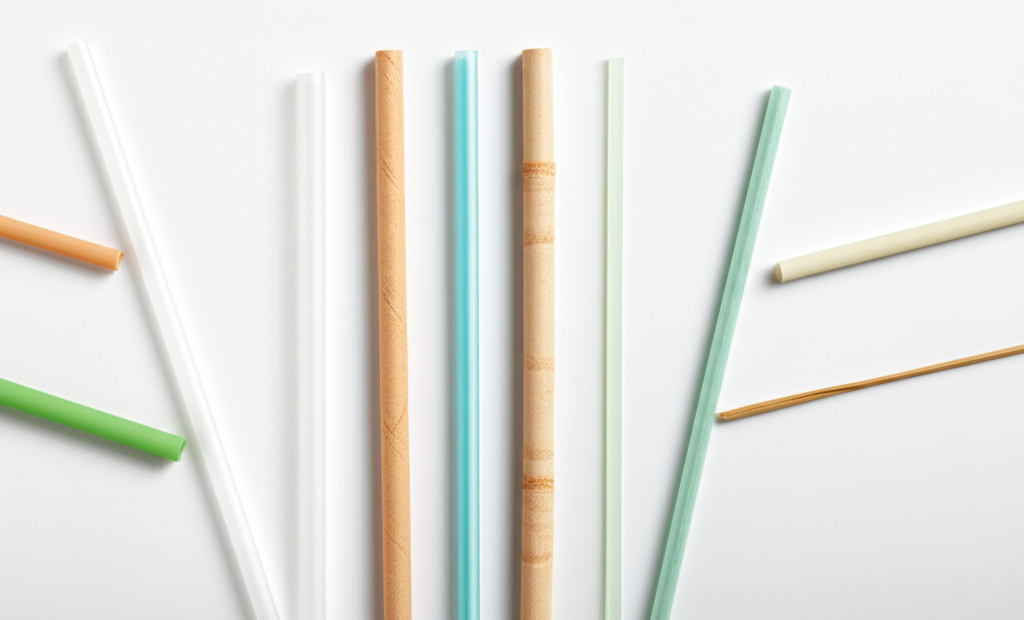
III. Breakthrough Materials in Heat-Resistant Eco-Friendly Straws
The quest to overcome the “soggy straw” dilemma in hot beverages has spurred significant advancements in material science, leading to a new generation of heat-resistant, eco-friendly straws. These innovations are critical for businesses aiming to meet both consumer expectations and regulatory mandates.
Advanced Bioplastics: Solving the “Soggy Straw” Dilemma at High Temperatures
Traditional polylactic acid (PLA) straws, while biodegradable, have historically suffered from a low heat deflection temperature (HDT), typically deforming above 40°C (104°F). This limitation has rendered standard PLA unsuitable for hot beverages. However, recent breakthroughs in bioplastic engineering are revolutionizing this.
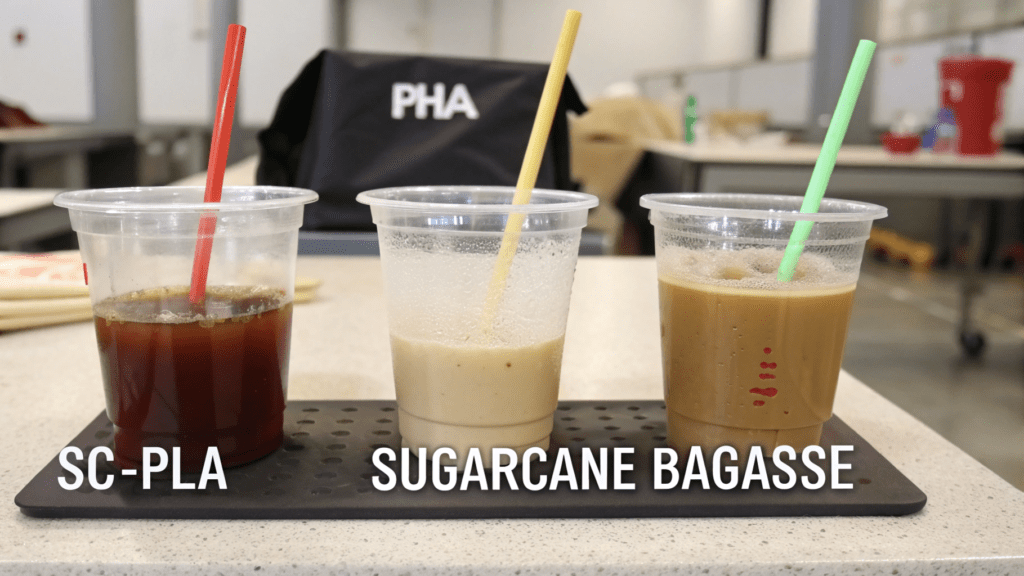
- Stereocomplexed Poly(lactic acid) (SC-PLA) straws represent a significant leap forward. Research indicates that SC-PLA straws remain remarkably stable even after immersion in 100°C water for 10 minutes, with only minimal loss of tensile strength. These straws are fully biodegradable and meet stringent compostable standards such as BPI (ASTM D6400) and TÜV Austria (EN 13432), offering a premium feel and robust performance in hot liquids.
- Evanesce offers innovative plant-based straws that are heat-resistant up to 80°C. These are 100% commercially compostable and engineered to be free of harmful PFAS chemicals and microplastics, providing a safe and sustainable solution.
- Zein straws, derivados naturalmente del maíz, el arroz y otros cereales, demuestran una excelente biocompatibilidad y estabilidad en agua hirviendo, lo que ofrece una alternativa verdaderamente natural y altamente funcional.
- Además, opciones avanzadas de PLA Ahora se están desarrollando productos que pueden soportar temperaturas superiores a los 70°C, y algunas formulaciones incluso superan los 100°C. Estos avances a menudo implican cristalización especializada (CPLA, que puede soportar hasta 82 °C) o mezcla con otros polímeros para mejorar las propiedades térmicas, abordando directamente las limitaciones históricas de calor de los bioplásticos.
- Pajitas de polihidroxialcanoatos (PHA) are another promising plant-based bioplastic, offering durability comparable to traditional plastic. PHAs are notable for their resistance to sogginess across various beverage temperatures and are uniquely marine degradable, in addition to being home and industrially compostable, future-proofing investments for businesses.
Natural Fibers: Sustainable Straws for Hot Beverages that Deliver Durability
Beyond advanced bioplastics, natural fiber-based straws are proving their mettle in hot beverage applications, offering both sustainability and surprising durability.
- Sugarcane (Bagasse) straws, made from the fibrous residue left after sugarcane juice extraction, are highly durable. They can handle temperatures up to 220°F (100°C) and resist sogginess for extended periods, making them a sturdy and reliable choice for hot drinks. They are often certified compostable, widely accepted by commercial composting facilities.
- Pajitas de arroz, crafted from rice flour and tapioca starch, provide an innovative, edible, and biodegradable option. They can withstand temperatures up to 60°C (140°F) for 2-3 hours before softening, offering a unique and sustainable drinking experience.
- Wheat straws, derived from natural wheat stems, are naturally heat-resistant and prove more durable than many paper alternatives. They are 100% compostable and represent a zero-waste solution by utilizing an agricultural byproduct.
- Innovative materials such as lignin and citric acid-based “thermoset films,” derived from edible starch and polyvinyl alcohol, show enhanced hydrostability and superior tensile strength, outperforming traditional paper and even some plastic straws in functionality.
- Other notable natural alternatives include pajitas de agave, made from upcycled agave fibers, which are durable, plastic-free, and designed to maintain their structure in hot and cold drinks, biodegrading within 12 months. Coffee straws, producidos a partir de posos de café reciclados, son inodoros, insípidos y libres de toxinas. Además, pajitas de caña Ofrecen resistencia al agua natural y robustez, descomponiéndose naturalmente en diversos entornos.
**Los nuevos bioplásticos y fibras naturales ofrecen soluciones de pajitas duraderas, resistentes al calor y compostables para bebidas calientes.**
IV. Comparación de pajitas ecológicas resistentes al calor: una guía de adquisiciones B2B
Elegir la pajita ecológica resistente al calor adecuada requiere una evaluación estratégica del impacto operativo, el cumplimiento y el retorno de la inversión. La siguiente comparación destaca consideraciones clave para los gerentes de adquisiciones, directores de operaciones y funcionarios de sostenibilidad.
| Característica | Impacto operativo B2B | Nota de cumplimiento | Potencial de retorno de la inversión |
|---|---|---|---|
| SC-PLA | Superior integrity in hot liquids (>100°C), offering a premium drinking experience. Maintains shape and structure longer, reducing customer complaints. | Totalmente biodegradable, compostable certificado según estándares rigurosos como BPI (ASTM D6400) y TÜV Austria (EN 13432). Se alinea con los PPWR de la UE y las prohibiciones globales de plástico. | Mejora la imagen de marca como líder en sostenibilidad, respalda precios premium. Reduce los costos de eliminación de residuos en el compostaje comercial. Contribuye a una mayor satisfacción del cliente y a la repetición de negocios debido a un rendimiento superior. |
| Caña de azúcar (bagazo) | Altamente resistente para bebidas calientes (hasta 100°C), proporciona una estética natural y rústica. Resiste la humedad por períodos prolongados, apto para diversas bebidas calientes. | Certified compostable, widely accepted by commercial composting facilities. Complies with most single-use plastic bans, offering a reliable, mass-market compliant option. | Cost-effective for bulk procurement, balancing sustainability with budget. Meets core sustainability mandates for large-scale operations. Strong consumer appeal due to natural origin, improving brand perception and driving eco-conscious purchasing. |
| Papel avanzado | Significantly improved durability over standard paper straws, reducing “soggy straw” complaints. Widely available and familiar to consumers. Still may soften with very prolonged exposure to extreme heat. | Generalmente biodegradable; sin embargo, es posible que se requiera compostaje industrial para algunas variantes dependiendo de los recubrimientos. El cumplimiento varía según las regulaciones regionales específicas para “plásticos de un solo uso” (algunas prohibiciones incluyen *todos* los tipos de plásticos de un solo uso, incluso el papel). | Menor inversión inicial en comparación con otras alternativas avanzadas, lo que facilita una adopción generalizada. Aborda la retroalimentación directa de "paja empapada". Puede ser un trampolín hacia bioplásticos más avanzados y al mismo tiempo hacer frente a las presiones ambientales inmediatas. |
| PHA | Proporciona durabilidad y sensación comparables al plástico tradicional en un rango de temperatura versátil. Ofrece un rendimiento constante para varios tipos de bebidas calientes sin comprometer la integridad. | Notable for being marine degradable, in addition to home and industrially compostable. Represents a significant step towards a circular economy, aligning with future regulatory trends. | Represents a future-proof investment given its broad degradability. Offers strong environmental credentials, appealing to a niche but growing segment of highly eco-conscious consumers. Reduces long-term environmental liability. |
| Wheat/Rice Straws | Wheat straws are naturally heat-resistant and more durable than paper. Rice straws withstand up to 60°C for 2-3 hours and are edible, offering a unique customer experience. Both are lightweight. | Both are 100% compostable and truly biodegradable. Wheat straws use an agricultural byproduct, while rice straws are edible, eliminating waste. High compliance with natural material bans. | Very low environmental footprint, enhancing brand authenticity. Can be a cost-effective choice for specific use cases. The novelty of edible straws or the natural appeal of wheat can create unique marketing opportunities and customer delight. |
**Evaluate heat-resistant eco-friendly straws based on operational impact, compliance, and ROI for optimal procurement.**
V. Certifications and Standards: Ensuring Compliance and Trust
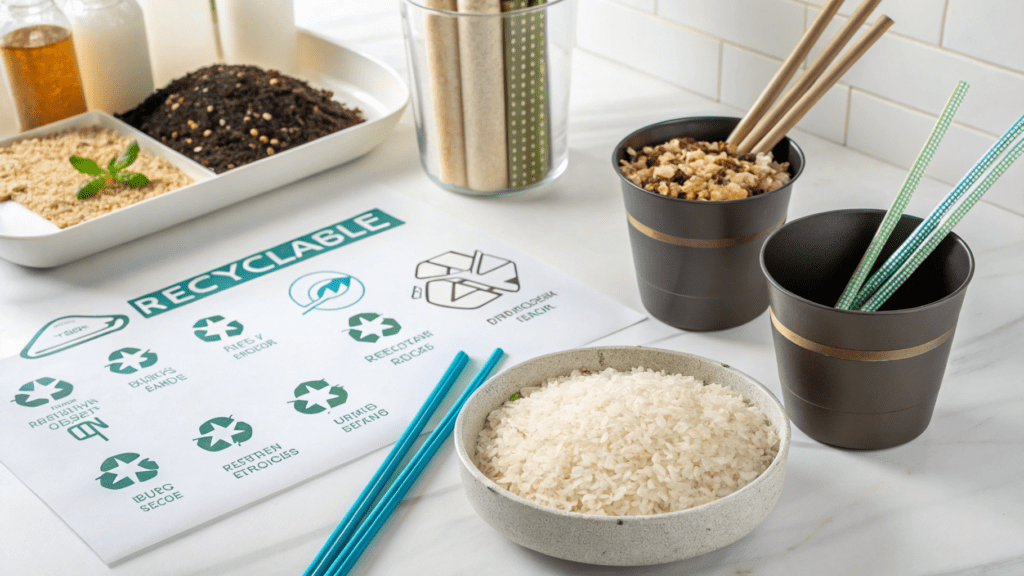
For decision-makers, navigating the array of eco-friendly straw options requires a clear understanding of the certifications and standards that guarantee both compliance and product integrity. Verifying these credentials is paramount to safeguarding brand reputation and operational continuity.
Navigating Compostability Standards for Biodegradable Straws High Temperature
The term “eco-friendly” can be broad, making robust certifications essential for validating claims of biodegradability and compostability. These standards ensure that products truly break down without leaving harmful residues, differentiating genuine sustainable solutions from greenwashing.
- Instituto de Productos Biodegradables (BPI): In North America, BPI is a leading certification body. Products certified by BPI meet the rigorous ASTM D6400 or ASTM D6868 standards, ensuring they will break down completely and safely in commercial composting environments. This certification is critical for businesses that dispose of waste via industrial composting facilities.
- TÜV Austria: A prominent European certification body, TÜV Austria offers “OK Compost INDUSTRIAL” and “OK Compost HOME” certifications. These verify compliance with European Bioplastics requirements and the EN 13432 standard for industrial composting, or for specific materials, suitability for home composting conditions.
- Australasian Bioplastics Association (ABA): For businesses operating in Australia and New Zealand, the ABA’s “Certified Compostable” trademark is key. Products certified to AS4736 (for industrial composting) require 90% biodegradation within 180 days and 90% disintegration within 12 weeks, ensuring high performance in managed waste streams.
- El Compost Manufacturing Alliance (CMA) also plays a vital role by collaborating with commercial composting facilities to verify that products meet ASTM lab standards through combined lab and field tests, providing additional assurance of real-world performance. Businesses can reference the BPI website for a comprehensive list of certified compostable products and materials at bpiworld.org.
Food Safety Regulations and Responsible Sourcing
Beyond environmental degradation, the safety of food contact materials is non-negotiable.
- FDA Approval: For products sold in the United States, Food and Drug Administration (FDA) approval is crucial. This ensures that the materials used in heat-resistant eco-friendly straws are non-toxic, do not leach harmful chemicals into beverages, and are safe for direct food contact.
- Chemical Safety: Businesses must ensure that their chosen straw alternatives are free from harmful chemicals such as BPA (Bisphenol A) and PFAS (per- and polyfluoroalkyl substances). These “forever chemicals” pose long-term health and environmental risks and are increasingly under regulatory scrutiny.
- Abastecimiento ético: Responsible sourcing practices extend beyond environmental impact to encompass the social aspects of production. Look for certifications or supplier commitments that confirm ethical labor practices, fair wages, and transparency throughout the supply chain. This enhances brand reputation and mitigates supply chain risks.
**Certifications like BPI and FDA approval are crucial for ensuring compliant, safe, and trustworthy eco-friendly straws.**
VI. Operationalizing Sustainability: Case Study & Strategic Advantages
The shift to heat-resistant eco-friendly straws is not merely a compliance burden but a strategic opportunity to enhance brand value, streamline operations, and build lasting customer loyalty.
Mini Case Study: The “Eco-Brew” Chain’s Hot Beverage Straw Transition
The “Eco-Brew” chain, a major player in the coffee service industry, faced significant challenges stemming from consumer dissatisfaction and evolving regional regulations. Their traditional paper straws for hot beverages were a constant source of complaints, becoming soggy and degrading quickly, undermining the premium coffee experience they aimed to deliver. Concurrently, regional single-use plastic bans, like Victoria’s 2023 mandate, pressed them to find compliant alternatives.
In response, Eco-Brew initiated extensive trials of various heat-resistant eco-friendly straws. After rigorous testing, they opted to switch to advanced sugarcane bagasse straws, certified compostable and proven to withstand temperatures up to 100°C (212°F) without losing structural integrity. This strategic pivot yielded remarkable results: within six months of the full transition, customer satisfaction scores related to their hot beverage experience increased by a notable 15%. Furthermore, their waste audit compliance improved significantly, demonstrating a tangible positive impact on their environmental footprint and regulatory standing. The successful integration of these straws allowed Eco-Brew to meet strict environmental standards while simultaneously elevating their brand perception among a rapidly growing segment of eco-conscious consumers.
ROI Beyond Compliance: Brand Image and Customer Loyalty
The return on investment for adopting superior heat-resistant eco-friendly straws extends far beyond simply avoiding fines. This strategic move can significantly bolster a company’s bottom line through:
- Enhanced Brand Perception: In today’s market, consumers are increasingly prioritizing sustainability. Adopting certified heat-resistant eco-friendly straws demonstrates a genuine commitment to environmental stewardship, improving brand perception and resonating deeply with eco-conscious customers. This positive image translates directly into increased sales and market share.
- Operational Efficiency & Cost Savings: While initial procurement costs for advanced materials might be higher, the reduction in “soggy straw” complaints leads to fewer refunds or remakes, enhancing operational efficiency. Furthermore, by adopting certified compostable options, businesses can reduce waste disposal costs associated with non-recyclable plastics, especially in regions with escalating landfill taxes or stricter waste segregation mandates.
- Strengthened Customer Loyalty: A superior customer experience, free from the frustration of a disintegrating straw, fosters repeat business and positive word-of-mouth. This enhances customer loyalty, transforming a potentially negative interaction into a moment that reinforces brand quality and care.
- Alignment with Corporate Sustainability Goals: Investing in these solutions directly contributes to a company’s broader corporate sustainability goals and Environmental, Social, and Governance (ESG) targets. This alignment is increasingly important for attracting ethically-minded investors, employees, and business partners. Procurement managers are keenly aware of the need for bulk supply, consistent quality, competitive pricing, and reliable supply chains for these crucial components. As consumer perception continues to drive demand for higher quality, durable eco-friendly options, the market for products like eco-friendly cocktail straws for B2B is also growing.
**Adopting heat-resistant eco-friendly straws boosts brand image, operational efficiency, and customer loyalty for hospitality businesses.**
VII. Future Outlook for Eco-Friendly Straw Innovations
The innovation pipeline for eco-friendly straws, particularly those designed for hot beverages, is robust and rapidly advancing. The drive for truly sustainable and high-performing alternatives will continue to shape material science and manufacturing processes over the next 5-10 years.
Ongoing Research and Development (R&D) is intensely focused on further improving the thermal stability and cost-effectiveness of biopolymers. Scientists are exploring novel blends and polymerization techniques to push the boundaries of heat resistance for biodegradable materials. For instance, academic research continues to investigate methods to improve the hydrophobicity and mechanical strength of natural materials, aiming to overcome the limitations of early-generation solutions.
New materials are constantly emerging, promising enhanced functionality and broader applicability. Examples include those refined from edible starch combined with lignin and citric acid, which are showing promise for superior hydrostability and strength. The future will also see greater integration of circular economy principles, with an emphasis on creating solutions that are not just compostable but can be recycled back into new products or designed for durable reuse, minimizing resource depletion.
Crucially,collaboration across material science, manufacturing, and the food service sectorswill accelerate innovation. This interdisciplinary approach is essential to translate laboratory breakthroughs into scalable, commercially viable products. The demand for materials that maintain stability and taste neutrality in hot liquids for extended periods remains a primary goal. The next decade will likely witness a diversification of heat-resistant eco-friendly straw options, addressing specific operational needs and catering to an increasingly discerning market that prioritizes both performance and planet. For a deeper dive into material science advancements and their environmental implications, consider exploring relevant scientific papers, such as those found on reputable academic platforms likeResearchGate.**Future innovations promise even more durable, cost-effective, and circular heat-resistant eco-friendly straw solutions.**
Conclusion: Elevate Your Brand with Superior Heat-Resistant Eco-Friendly Straws
The transition to heat-resistant eco-friendly straws is unequivocally more than a mere regulatory necessity; it represents a profound strategic opportunity for forward-thinking businesses. By proactively investing in certified, high-performance sustainable straw solutions, your organization can significantly reduce its environmental footprint, ensure seamless compliance with an increasingly stringent regulatory landscape, and crucially, deliver an unparalleled customer experience that mitigates the long-standing “soggy straw” frustration. This proactive approach transforms a potential compliance challenge into a distinct competitive advantage, positioning your brand as an industry leader in sustainability and customer satisfaction.
Act now to future-proof your procurement strategy; secure your market leadership and elevate your brand’s reputation. Request a compliance-ready sample pack today to explore the next generation of heat-resistant eco-friendly straws and transform your hot beverage service, recognizing that the future of beverage service is undeniablyeco-friendly drinking straws.
Preguntas frecuentes
Why are traditional paper straws unsuitable for hot beverages in hospitality?
Traditional paper straws quickly become soggy and disintegrate in hot liquids, compromising the customer experience and leading to dissatisfaction in cafes, hotels, and restaurants.
What are the key benefits of switching to heat-resistant eco-friendly straws?
Benefits include enhanced customer satisfaction, compliance with plastic bans, improved brand image, reduced waste disposal costs, and alignment with corporate sustainability goals.
Are heat-resistant eco-friendly straws truly compostable or biodegradable?
Many advanced options like SC-PLA and sugarcane (bagasse) straws are certified compostable (e.g., BPI, TÜV Austria), ensuring they break down safely in commercial composting facilities.
How do new bioplastics like SC-PLA and PHA perform in hot beverages?
SC-PLA straws remain stable even in boiling water, while PHA straws offer durability comparable to traditional plastic across various temperatures, resisting sogginess effectively.
What certifications should procurement managers look for when sourcing these straws?
Look for certifications like BPI (ASTM D6400), TÜV Austria (EN 13432), and ABA (AS4736) for compostability, and ensure FDA approval for food safety and absence of harmful chemicals like PFAS.