A B2B Guide for Procurement, Operations, and Sustainability Leaders in Hospitality & Foodservice
La industria mundial del café, valorada en más de 400 mil millones de dólares, se encuentra en una coyuntura crítica. La humilde pajita, que alguna vez fue una idea de último momento, se ha convertido en un desafío operativo y de cumplimiento de alto riesgo para los gerentes de adquisiciones, directores de operaciones y ejecutivos de la cadena de suministro. A medida que se intensifican las presiones regulatorias y aumentan las expectativas de sostenibilidad de los consumidores, la elección del material de la paja de café ya no es una decisión de compra menor: es un imperativo estratégico que da forma al acceso al mercado, la reputación de la marca y la rentabilidad a largo plazo.
Los plásticos de un solo uso, incluidas las pajitas de plástico tradicionales, enfrentan agresivas prohibiciones globales, ejemplificadas por la Directiva sobre plásticos de un solo uso de la UE, que ya ha eliminado las pajitas de plástico en los estados miembros. En EE. UU., estados como California (AB1276, vigente a partir del 1 de junio de 2022) exigen pajitas solo a pedido, mientras que la Ley EPR de Filipinas de 2022 responsabiliza financieramente a los fabricantes por los desechos de envases de plástico, incluidas las pajitas. Ignorar este panorama en evolución significa arriesgarse a multas regulatorias, incurrir en mayores costos de eliminación de desechos y alienar a un segmento en rápido crecimiento de consumidores con conciencia ecológica. Se proyecta que solo el mercado mundial de pajitas para beber sin plástico aumentará de un estimado de $9,840 millones de dólares en 2023 a la notable cifra de $17,550 millones de dólares para 2028, lo que subraya la urgente necesidad de que los tomadores de decisiones B2B alineen sus operaciones con estas tendencias ecológicas.
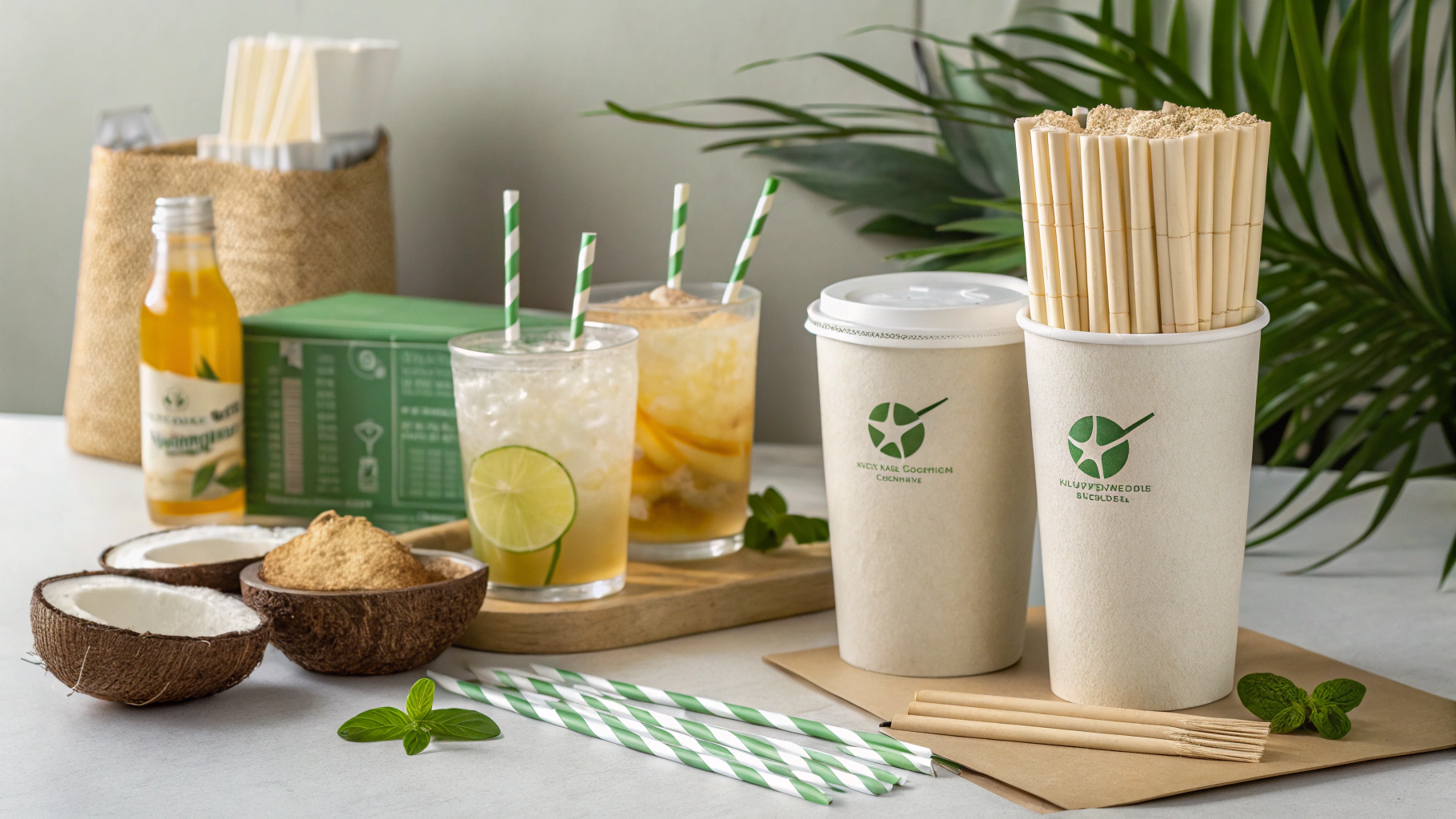
Elegir pajitas de café sostenibles es crucial para que la hostelería y el servicio de alimentación cumplan con las cambiantes regulaciones y demandas de los consumidores.
El núcleo: ¿De qué están hechas las pajitas de café? Explorando materiales clave
Se acabaron los días de una única y omnipresente pajita de plástico. Hoy en día, el mercado ofrece una amplia gama de materiales innovadores, cada uno de ellos diseñado para satisfacer necesidades comerciales, medioambientales y de rendimiento específicas para bebidas frías y calientes. Comprender estas composiciones es fundamental para tomar decisiones de adquisiciones informadas.
A. Innovadoras pajitas de posos de café: una solución de economía circular
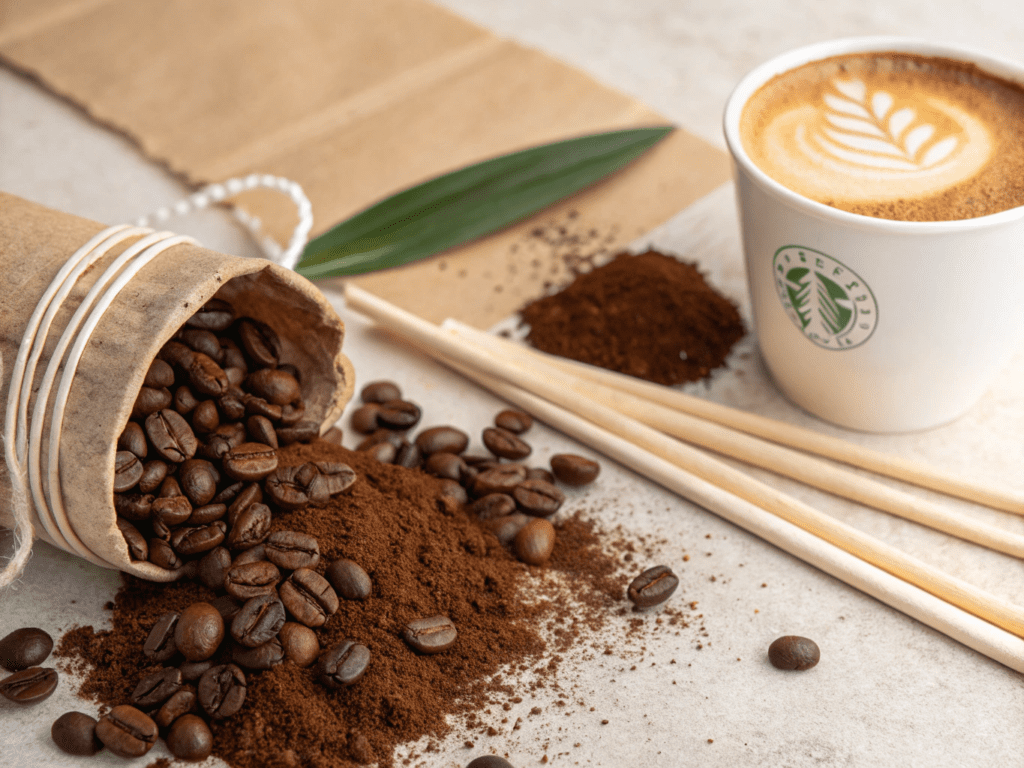
Una de las innovaciones más convincentes en pajitas sostenibles proviene directamente de la propia industria del café: las pajitas de posos de café. Estas extraordinarias pajitas están elaboradas a partir de posos de café reciclados, un subproducto de la producción de café, que luego se combinan con resinas naturales, fibras vegetales y almidones. Este ingenioso enfoque aborda dos flujos de desechos críticos simultáneamente: la contaminación plástica y los más de 6 mil millones de libras de desechos de café que se generan a nivel mundial cada año.
El material resultante es 100 % compostable y no contiene plástico, y está diseñado para descomponerse de forma natural en instalaciones de compostaje industrial en un plazo de 90 a 180 días, o incluso en ambientes de compostaje doméstico y de jardín en un plazo de 12 a 18 meses. Más allá de su impresionante biodegradabilidad, las pajitas de café molido están diseñadas para ofrecer un alto rendimiento. Ofrecen una durabilidad y flexibilidad notables, imitando la sensación de las pajitas de plástico tradicionales sin la carga ambiental. Lo más importante para los establecimientos de café es que soportan temperaturas de hasta 75 °C (167 °F) y se caracterizan por no empaparse, un problema común con las alternativas de papel anteriores. También tienen un aroma sutil y natural a café, lo que mejora la experiencia de la bebida sin impartir ningún sabor. Muchos están certificados por el Instituto de Productos Biodegradables (BPI) y cumplen con normas como ASTM D6400 y EN13432.
B. El auge de las pajitas de café comestibles: un capricho sin desperdicio
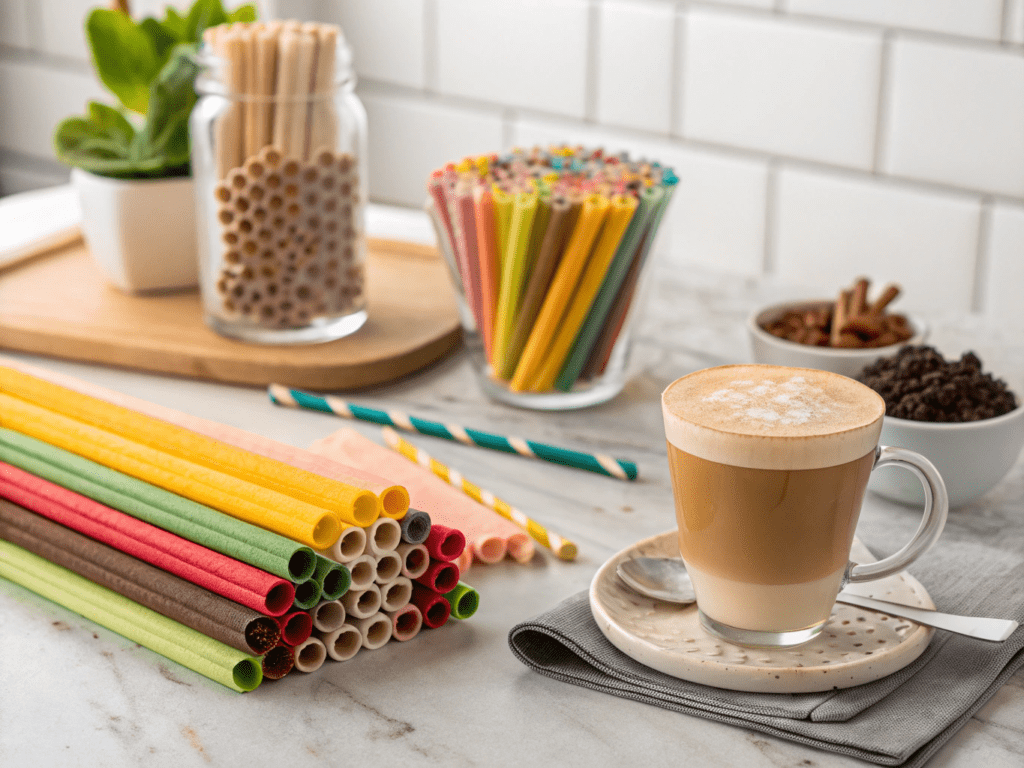
Para las empresas que buscan ofrecer una experiencia al cliente verdaderamente sin desperdicio, las pajitas de café comestibles presentan una frontera apasionante. Estas pajitas innovadoras están elaboradas con diversos materiales de origen vegetal, como posos de café reutilizados, almidón de tapioca, harina de arroz u otros ingredientes naturales como azúcar y almidón de maíz. Marcas como Sorbos y EQUO han sido pioneras en pajitas comestibles que no solo funcionan como pajitas para beber, sino que también pueden consumirse después de su uso.
Edible straws are engineered for impressive structural integrity, maintaining their form for hours in cold drinks and up to an hour in hot beverages. They come in unflavored options that allow the coffee’s natural taste to shine through, or in various flavors like coffee, vanilla, or chocolate, offering a unique, indulgent, and truly zero-waste customer experience. Individually wrapped, they also address hygiene concerns for high-volume operations, boasting a shelf life of up to two years. The edible straws market is projected to reach USD 446.96 million in 2030, underscoring their growing appeal.
C. Plant-Based Biodegradable Straws: Sugarcane, PLA, and More
Más allá de los posos de café y las variedades comestibles, una amplia categoría de pajitas biodegradables de origen vegetal ofrece diversas soluciones:
- Pajitas de Caña de Azúcar (Bagaso): Hechas de bagazo, el subproducto fibroso del procesamiento de la caña de azúcar, estas pajitas son altamente sustentables. Cuentan con una excelente resistencia al calor, soportan temperaturas de hasta 90 °C (194 °F) y son significativamente más resistentes a la humedad que las pajitas de papel tradicionales. Son 100 % compostables, no contienen PLA ni PFAS y ofrecen una opción sólida y confiable para el café caliente.
- Pajitas de PLA (ácido poliláctico): Derived from renewable resources like corn starch or sugarcane, PLA is a popular bioplastic due to its transparent, plastic-like feel. While industrially compostable, PLA straws can deform or soften above 60°C (140°F), making them less ideal for very hot coffee unless specifically formulated as heat-resistant (crystallized PLA, capable of withstanding up to 85°C). It’s crucial to note that PLA requires specific industrial composting facilities to break down, which may not be universally available.
- PHA Straws (Polyhydroxyalkanoate): Las pajitas de PHA, que representan la próxima generación de biopolímeros, son producidas por microorganismos y ofrecen una resistencia al calor superior, una mayor durabilidad y una amplia biodegradabilidad en diversos entornos, incluido el agua marina, el suelo y las instalaciones de compostaje, sin dejar microplásticos.
- Otras opciones naturales: Materiales como caña, pasto, bambú y pajitas de trigo también brindan diversas aplicaciones. Las pajitas de bambú y caña son muy duraderas y, a menudo, se pueden reutilizar. Las pajitas de pasto son conocidas por no contener químicos y descomponerse naturalmente en seis meses.
D. Pajitas de café reutilizables: la durabilidad se une a la sostenibilidad
Para ciertos modelos operativos, particularmente aquellos que alientan a los clientes a traer sus propias tazas, las pajitas de café reutilizables siguen siendo una opción altamente sustentable. Por lo general, están hechos de materiales duraderos como:
- Acero inoxidable: Extremadamente resistentes y duraderos para bebidas frías, aunque pueden conducir el calor rápidamente cuando se usan con bebidas calientes, lo que podría representar un riesgo de quemaduras.
- Vidrio (borosilicato): Pueden soportar temperaturas muy altas sin impartir sabor, pero son propensos a romperse.
- Silicona: 100% BPA-free and highly flexible, silicone straws (e.g., KoffieStraw) are safe for hot drinks and are dishwasher-friendly, making them convenient for consumers. Google Trends data in July 2025 showed a sudden surge in “reusable coffee straw” searches, highlighting growing consumer interest in these long-term solutions.
While offering significant long-term waste reduction, reusable straws require a robust cleaning and sanitation infrastructure for B2B settings, and they still depend on customer adoption and commitment to regular washing.
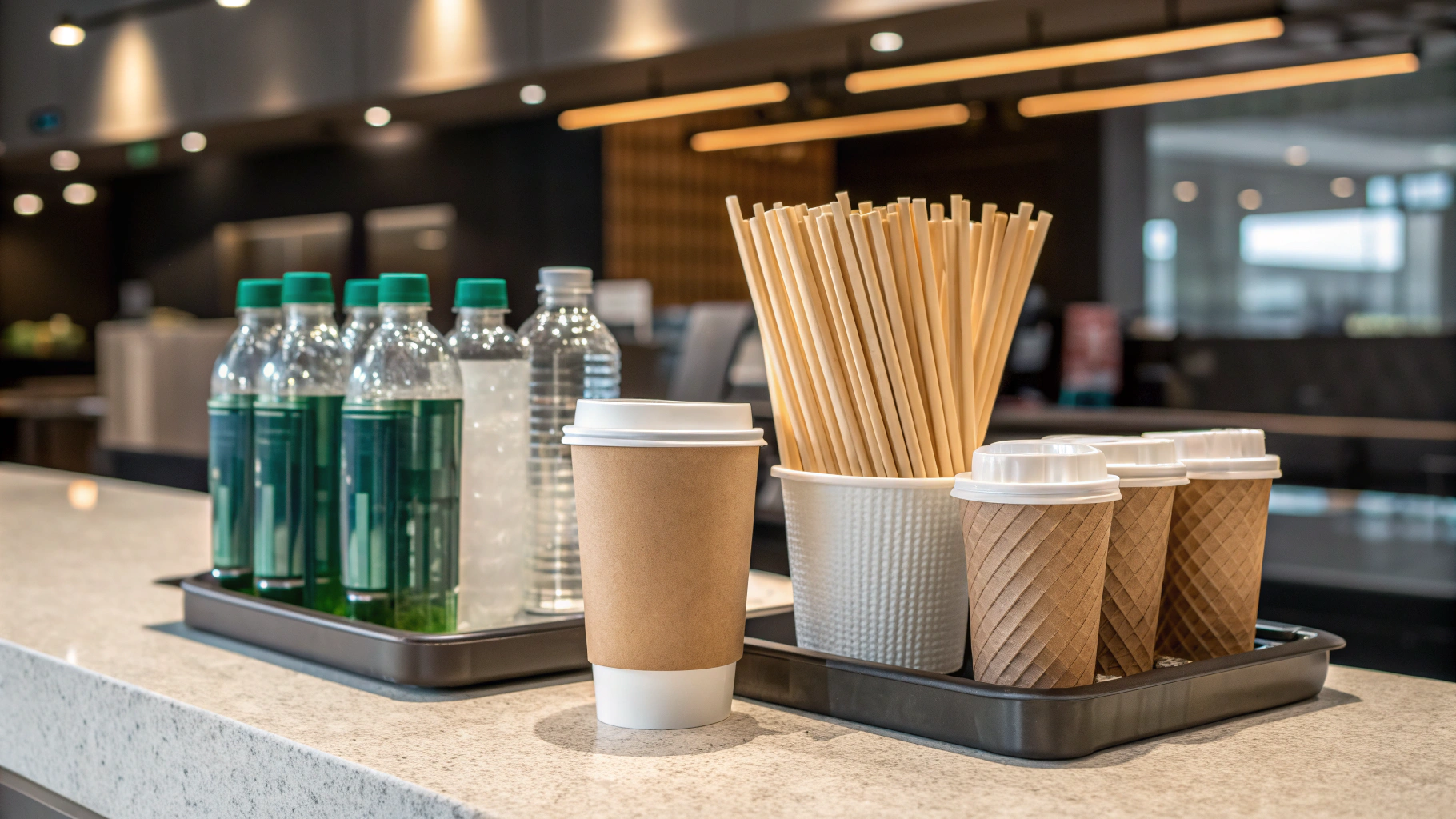
Diverse sustainable straw materials offer varied performance and environmental benefits for B2B coffee operations.

Navigating the Market: Performance, Compliance, and Cost of Coffee Straws
For procurement managers and operations directors, selecting the right sustainable straw material involves a careful evaluation of performance, regulatory compliance, and economic viability.
A. Performance Benchmarks for Sustainable Coffee Straws: Beyond Soggy Paper
The early generation of paper straws, a common first step away from plastic, often became soggy within 20 minutes, severely compromising the customer experience and leading to dissatisfaction. This “soggy straw” dilemma highlighted the critical need for advanced materials.
Today’s innovative materials offer significant improvements:
- Advanced Materials: Las pajitas de caña de azúcar y café molido, por ejemplo, están diseñadas para mantener su integridad durante horas, incluso en bebidas calientes, proporcionando una experiencia de bebida constante y agradable.
- La resistencia al calor es crucial: Muchas pajitas estándar de origen vegetal, en particular las versiones anteriores de PLA, fallan o se deforman por encima de 60-90 °C, lo que las hace inadecuadas para el café caliente. Las empresas deben examinar las especificaciones de resistencia al calor para evitar fallas funcionales y comentarios negativos de los clientes. Materiales como la caña de azúcar y el PHA están diseñados específicamente para sobresalir en aplicaciones de alta temperatura.
- Sabor y Textura: El control de calidad es primordial. Las pajitas sostenibles de alto rendimiento deben ser inodoras e insípidas, lo que garantiza que no alteren el delicado perfil de sabor del café. Su textura también debe proporcionar una sensación cómoda y no parecida al papel.
B. Regulatory Landscape & Compliance for Sustainable Straws: Navigating Global Bans
El abandono global de los plásticos de un solo uso no es voluntario; es un mandato legal en muchos mercados clave. Las estrategias de adquisiciones deben priorizar el cumplimiento para mitigar riesgos significativos.
- Prohibiciones globales de plástico: La Directiva de la UE sobre plásticos de un solo uso (SUPD) ya prohíbe las pajitas de plástico, incluido el PLA, en los estados miembros. Esto requiere un giro completo hacia alternativas genuinamente libres de plástico para el acceso al mercado europeo. La Ley EPR de Filipinas de 2022 exige aumentar los objetivos de recuperación de envases de plástico, incluidas las pajitas, hasta alcanzar el 50 % en 2025 y el 80 % a partir de 2028, lo que afecta directamente las responsabilidades de los fabricantes.
- Leyes estatales de EE. UU.: En EE. UU., estados como California (AB1276) exigen pajitas solo a pedido, mientras que la ciudad de Nueva York implementó reglas similares en 2021. Las empresas deben ser muy conscientes de las variaciones regionales en las prohibiciones de plástico y las leyes de “pajitas a pedido”.
- Preocupaciones sobre PFAS: A growing concern surrounds “forever chemicals” (PFAS) detected in some paper and plant-based straws, used for water resistance. These chemicals can leach into hot beverages and pose significant health and compliance risks, leading to legal liabilities and reputational damage. Sourcing certified PFAS-free options is now a non-negotiable.
- Certificaciones: To ensure compliance and genuinely sustainable sourcing, B2B buyers must insist on verifiable certifications. Look for:
- Certificación BPI (Instituto de Productos Biodegradables): Confirms industrial compostability in North America (meeting ASTM D6400/D6868 standards).
- EN13432: The European standard for industrial compostability.
- FDA Approval: Ensures food safety.
- Plastic-Free Verification: Essential for meeting most plastic ban regulations.
C. Economic Implications: ROI and Cost-Benefit for B2B Operations
While sustainable straws can have higher upfront costs—for example, PLA straws surged 67% in price in 2020, and paper straws can be significantly more expensive than plastic—the long-term ROI is compelling.
- Consumer Willingness to Pay: A significant 74% of consumers are willing to pay more for sustainable packaging, and adopting eco-friendly solutions can boost customer loyalty by up to 20%. This translates directly to increased revenue and stronger brand equity.
- Reduced Operational Costs: Shifting to compostable straws can reduce waste disposal fees by diverting materials from landfills. Furthermore, the enhanced brand image attracts environmentally conscious customers, expanding market share without heavy marketing spend.
- Supply Chain Optimization: Strategic bulk purchasing from specialized B2B platforms and direct manufacturers can help optimize costs. Procurement managers should evaluate total cost of ownership, considering not just unit price but also compliance risk, brand uplift, and waste management savings. For more insights on sourcing sustainable options, read our guide on sustainable” target=”_blank” class=”text-primary-dark hover:underline”>sustainable coffee straws for B2B.
D. Comparison Table: Key Sustainable Coffee Straw Types for B2B
| Característica | Impacto operativo B2B | Nota de cumplimiento | Potencial de retorno de la inversión |
|---|---|---|---|
| Café molido | Reduces waste stream, subtle coffee aroma, durable in hot/cold drinks up to 75°C. | 100% compostable (e.g., ASTM D6400, BPI), plastic-free, PFAS-free. | Enhanced brand image, waste diversion, premium perception, customer loyalty. |
| Pajitas comestibles | Zero-waste, high novelty factor, individual hygiene. Holds for hours in cold, 1 hr in hot. | Fully biodegradable, consumable; check allergen compliance. | Premium offering, viral marketing potential, eliminates waste collection. |
| Caña de azúcar (bagazo) | High heat resistance (up to 90°C), minimal sogginess, sturdy. | 100% compostable, no PLA/PFAS, complies with plastic bans. | Appeals to eco-conscious consumers, robust performance, cost-effective in bulk. |
| PLA (bioplástico) | Similar feel to plastic, clear options, widely available. | Industrial composting required; may soften >60°C; restricted in some bans. | Widely available, meets some “green” criteria, good for cold drinks. |
| Reusable (Metal/Silicone) | High initial cost, requires washing/storage infrastructure, potential heat conductivity issue (metal). | Long-term waste elimination; specific cleaning protocols needed. | Significant long-term cost savings, strong sustainability messaging, reduces repeat purchases. |
Evaluating performance, compliance, and cost is essential for B2B sustainable straw procurement.
IV. Driving Adoption: B2B Opportunities and Future of Coffee Straws
The imperative to transition to sustainable straws extends beyond mere compliance; it’s a profound opportunity for businesses to gain a competitive edge, deepen customer loyalty, and contribute to a more sustainable future.
A. Enhanced Brand Image & Customer Loyalty: The Sustainability Dividend
La adopción de soluciones ecológicas mejora directamente el perfil de Responsabilidad Social Corporativa (RSC) de una empresa. Esto resuena profundamente en los consumidores de hoy, especialmente en los grupos demográficos más jóvenes que priorizan cada vez más el impacto ambiental en sus decisiones de compra. Las empresas que reducen activamente su huella de plástico, utilizando opciones certificadas como compostables, como posos de café o pajitas de caña de azúcar, obtienen una ventaja competitiva significativa. Esto comunica un compromiso genuino para reducir la contaminación plástica, impactar la vida marina y fomentar una economía circular. Estas acciones tangibles pueden atraer clientes nuevos y leales y reforzar la percepción positiva de la marca, transformando un desafío de cumplimiento en un poderoso activo de marketing.
B. Mini Case Study: Starbucks’ Evolution in Sustainable Straws
Starbucks, un gigante mundial del café, ha sido un referente en la lucha de la industria con los plásticos de un solo uso. En 2018, la empresa se comprometió a eliminar mil millones de pajitas de plástico al año para 2020, introduciendo inicialmente tapas sin pajitas y pajitas de papel con certificación FSC®. Esta medida fue un paso significativo hacia sus objetivos de sostenibilidad más amplios, que incluyen una reducción del 50 % en los residuos, las emisiones de carbono y el uso de agua para 2030.
Sin embargo, el viaje no ha estado exento de desafíos. De manera significativaprograma piloto en junio de 2025, Starbucks Korea reintroduced sugarcane-based plastic straws in approximately 200 stores. This decision came in response to persistent customer complaints about the performance of soggy paper straws, highlighting the ongoing tension between sustainability, customer experience, and operational feasibility. This case underscores a vital lesson for B2B decision-makers: true sustainable innovation must balance environmental responsibility with uncompromised product performance. Sourcing heat-resistant, non-soggy options like those available atMomoio” target=”_blank” class=”text-primary-dark hover:underline”>Momoio Heat-Resistant Coffee Strawsis crucial.
C. Future Trends in Sustainable Coffee Straw Innovation: 2025-2035 Outlook
Los próximos 5 a 10 años serán testigos de una aceleración de la innovación en pajitas de café sostenibles, impulsada por la evolución de las regulaciones y los avances en la ciencia de los materiales.
- Crecimiento del mercado: Se prevé que el mercado de la paja ecológica alcance casi 25.1 mil millones de dólares para 2035, con un crecimiento CAGR sólido del 7,3%. Se espera que las pajitas biodegradables (incluidos papel, bambú, PHA y PHBH) capten una cuota de mercado del 60% para 2030.
- Advanced Materials & Coatings: Expect a strong focus on advanced water-resistant coatings for paper straws and hybrid materials for enhanced durability. Next-generation bioplastics like PHA (Polyhydroxyalkanoate) and PHBH (Polyhydroxybutyrate-co-hydroxyhexanoate), derived from biomass, will gain prominence for their plastic-like performance and broad biodegradability in diverse environments, including marine water.
- Waste Valorization: Innovations leveraging waste streams, such as coffee grounds and sugarcane bagasse, will continue to expand, promoting a circular economy.
- AI-Fueled Manufacturing: Artificial intelligence will play an increasing role in material research, driving the discovery of novel bio-based polymers and optimizing production efficiency for sustainable straws.
- Integrated Solutions: The market will see more multi-use straw solutions, including collapsible reusable straws, and integrated tumbler-straw products, offering enhanced convenience for on-the-go consumption.
- Smart Composting: Advances in smart composting technologies will make it easier for businesses to handle compostable straws, closing the loop on their lifecycle.
Future trends indicate significant growth and innovation in sustainable coffee straw materials and solutions.
Conclusion: Elevate Your Coffee Experience with Sustainable Choices
The transition away from single-use plastics is not just a passing trend; it’s a fundamental shift reshaping business operations and consumer expectations across the globe. By understandingwhat coffee straws are made ofy al adoptar opciones sostenibles innovadoras y de alto rendimiento, como posos de café y pajitas comestibles, su empresa puede lograr un cumplimiento normativo crítico, mejorar la eficiencia operativa y captar la lealtad de un mercado en crecimiento con conciencia ecológica. Este enfoque proactivo mitiga los riesgos, cuantifica el ahorro de costos mediante la reducción de desperdicios y eleva significativamente el valor de la marca, posicionando a su empresa como líder del mercado en sostenibilidad.
Adoptar pajitas de café sostenibles garantiza el cumplimiento, aumenta la eficiencia y mejora la fidelidad a la marca.
Actúe ahora para preparar su estrategia de adquisiciones para el futuro.Momoio.com” target=”_blank” class=”btn-primary inline-block”>Explore Truly Compostable Options for Your Coffee Shop
Preguntas frecuentes (FAQ)
Q: How do coffee grounds straws perform in hot beverages compared to paper straws?
A: Coffee grounds straws are engineered to withstand temperatures up to 75°C (167°F) and are significantly more resistant to sogginess than traditional paper straws, providing a consistent and enjoyable experience for hot coffee drinkers in hospitality settings.
Q: Are edible coffee straws a hygienic option for high-volume foodservice operations?
A: Yes, many edible straws are individually wrapped, which addresses hygiene concerns for high-volume operations. They also boast a shelf life of up to two years, making them a practical and zero-waste solution for cafes and restaurants.
Q: What certifications should procurement managers look for to ensure sustainable straw compliance?
A: Key certifications include BPI (Biodegradable Products Institute) for industrial compostability in North America (ASTM D6400/D6868), EN13432 for European industrial compostability, FDA approval for food safety, and explicit plastic-free verification to meet global plastic ban regulations.
Q: How can adopting sustainable straws impact a hospitality business’s brand image and customer loyalty?
A: Adopting eco-friendly straws significantly enhances a company’s Corporate Social Responsibility (CSR) profile, resonating with eco-conscious consumers. This can attract new, loyal customers and reinforce positive brand perception, transforming a compliance challenge into a powerful marketing asset.
Q: What are the long-term cost benefits of switching to compostable straws for foodservice operations?
A: While upfront costs might be higher, compostable straws can reduce waste disposal fees by diverting materials from landfills. The enhanced brand image also attracts environmentally conscious customers, potentially increasing revenue and market share without heavy marketing spend, leading to compelling long-term ROI