Eskaloituva maailmanlaajuinen muovikriisi ei ole enää kaukainen ympäristöhuoli; se on kiireellinen toiminnallinen ja kaupallinen haaste, joka vaatii kiireellisiä toimia suurilta volyymitoimialoilta, kuten hotelli- ja ilmailualalta. Hotellit ja lentoyhtiöt, jotka ovat etulinjan vieraspalveluiden tarjoajia, joutuvat kriittiseen vaiheeseen navigoiden monimutkaisessa maisemassa, jonka muovaavat nopeasti kehittyvät sääntelypaineet, voimakkaat muutokset kuluttajien mieltymyksissä ja yritysvastuun kiistaton välttämättömyys.
Tämän paradigman muutoksen huomiotta jättämisellä on merkittäviä kaupallisia seurauksia mahdollisista sakoista ja mainevaurioista aina ympäristötietoisemman asiakaskunnan vieraantumista. Yksittäin pakatut kompostoituvat pillit tarjoavat vakuuttavan kaksoisratkaisun, joka yhdistää tiukat hygieniavaatimukset – jotka ovat ensiarvoisen tärkeitä palvelualoilla – kriittisen ympäristönsuojelun kanssa. Tämä strateginen käyttöönotto ei ainoastaan ratkaise välitöntä ympäristökriisiä, vaan tarjoaa myös konkreettisen kilpailuedun. Tämä viesti tarjoaa strategisia näkemyksiä hankintapäälliköille, toimintajohtajille, kestävän kehityksen johtajille ja toimitusketjun johtajille, jotka tutkivat markkinadynamiikkaa, sääntelyympäristöä ja tämän olennaisen siirtymän konkreettisia etuja.
I. The Imperative for Change: Market Growth & Regulatory Pressure for Individually Wrapped Compostable Straws
Vaatimus kestävistä ratkaisuista kaikuu kovemmin kuin koskaan, sekä markkinavoimien että lainsäädännöllisten valtuuksien vetämänä. Hotellien ja lentoyhtiöiden kannalta kertakäyttömuovista luopuminen ei ole vain vaihtoehto vaan strateginen välttämättömyys.
A. Kestävien ratkaisujen kasvava kysyntä: 2,7 miljardin dollarin ympäristöystävällisten pillien markkinat vuoteen 2032 mennessä
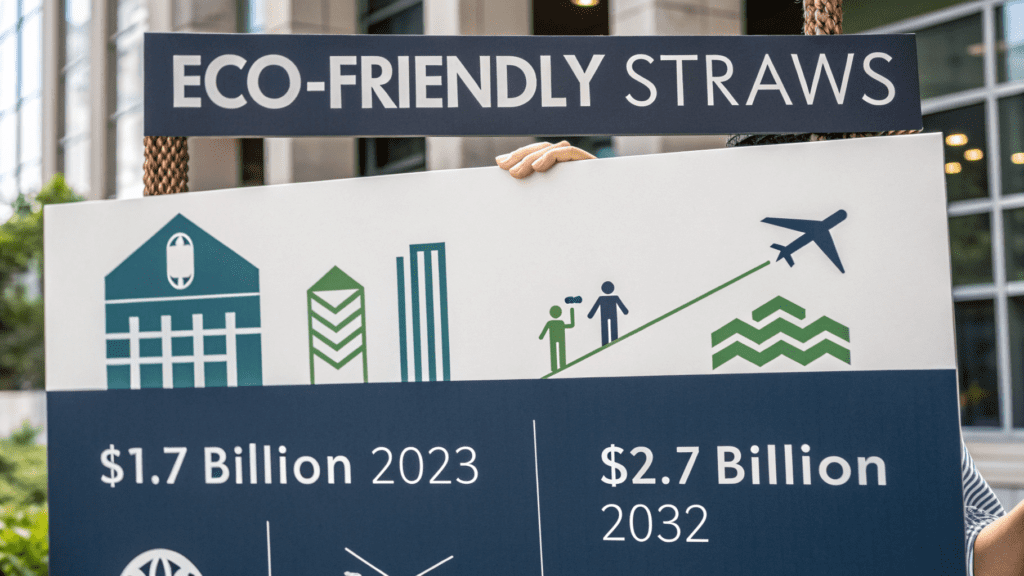
Globaalit ympäristöystävälliset pillimarkkinat kasvavat eksponentiaalisesti, ja sen ennustetaan saavuttavan vaikuttavan2,7 miljardia dollaria vuoteen 2032 mennessä, kasvaa 5,3 prosentin yhdistetyllä vuosikasvulla (CAGR) vuoden 2023 1,7 miljardin dollarin arvosta. Tämä ylöspäin suuntautuva liikerata on suora vastaus merkittävään kuluttajamuutokseen: merkittävä80 % kuluttajista ilmaisee nyt suosivansa ympäristöystävällisiä tuotteita, jotka vaikuttavat suoraan yritysten kestävän kehityksen aloitteisiin ja hankintapäätöksiin.
Tämä trendi ulottuu pillien lisäksi laajemmille kompostoivien pakkausten markkinoille, joiden on määrä kasvaa 99,6 miljardista dollarista vuonna 2023 369,9 miljardiin dollariin vuoteen 2032 mennessä, mikä on vahva 15,7 % CAGR. Nämä luvut korostavat selkeää markkinasignaalia: kestävä kehitys ei ole enää markkinarako, vaan ostopäätösten päätekijä ja ratkaiseva tekijä markkinoiden merkityksen ylläpitämisessä.
B. Navigating the Regulatory Landscape: EU SUPD & Global Plastic Bans
Sääntely-ympäristö muuttuu nopeasti muovisaasteen hillitsemiseksi, mikä luo vaatimusten noudattamisen välttämättömäksi kansainvälisille toimijoille. TheEuroopan unionin kertakäyttöisten muovien direktiivi (SUPD)on tämän muutoksen kulmakivi, jonka tavoitteena on vähentää merkittävästi muovin oljen kulutusta vuoteen 2026 mennessä. Tämä direktiivi tekee sertifioiduista kompostoivista pilleistä ainoan vaatimusten mukaisen vaihtoehdon EU:n alueella toimiville majoituspaikoille.
Euroopan ulkopuolella muovin vähentäminen on maailmanlaajuista. Kiina kielsi hajoamattomat kertakäyttöiset muovipillit ravintoloissa valtakunnallisesti vuoteen 2021 mennessä, ja Intia kielsi ne vuonna 2022. Yhdysvalloissa Seattlen kaltaiset kaupungit olivat edelläkävijöitä ja panivat vuonna 2018 käyttöön määräyksiä, jotka vaativat ravitsemisalan yrityksiä käyttämään kestäviä tai kompostoitavia pillejä, mikä saavutti 77 prosentin vaatimustenmukaisuuden. Tällaiset määräykset eivät ainoastaan velvoita muuttamaan, vaan myös altistavat yritykset mahdollisille rangaistuksille ja mainevaurioille, jos niitä ei oteta huomioon, mikä tekee ennakoivasta noudattamisesta strategisen edun.Globaalien muovikieltojen ennakoiva noudattaminen tarjoaa strategisen edun hotelleille ja lentoyhtiöille.

II. Yksittäin käärittyjen kompostoivien pillien purkaminen: tyypit ja edut
Termillä "kompostoituva" on erityinen merkitys ja todennettuja standardeja, jotka erottavat sen vähemmän vaikuttavista "biohajoavista" väitteistä. Saatavilla olevien materiaalien vivahteiden ja niiden sertifikaattien ymmärtäminen on olennaista tietoon perustuvien hankintapäätösten kannalta.
A. Paperin lisäksi: Monipuoliset materiaalit kestäviin olkiin
Vaikka paperipillit johtavat tällä hetkellä markkinoita merkittävällä 44,3 %:n markkinaosuudella vuonna 2025 niiden nopean biologisen hajoamisen ansiosta (2–6 viikkoa verrattuna muovin 200 vuoteen), materiaaliinnovaatiot tarjoavat yhä kestävämpiä ja monipuolisempia vaihtoehtoja:
- PHA (polyhydroksialkanoaatti) pillit: Edustavat huippuluokan biomuoviteknologiaa. Materiaalit, kuten BIOLO-sertifioidut PHA-pillit, ovat huomattavia koti-, teollisuus- ja meressä hajoavista aineista, jotka hajoavat alle 180 päivässä jättämättä mikromuovia. Ne tarjoavat erinomaisen kestävyyden ja tuntuvat samanlaisilta kuin perinteinen muovi.
- PLA (polymaitohappo): Uusiutuvista luonnonvaroista, kuten maissitärkkelyksestä tai sokeriruo'osta, johdettu PLA on yleinen biomuovivalinta. Se vaatii kuitenkin tyypillisesti erityisiä teollisia kompostointilaitoksia hajottaakseen tehokkaasti.
- Innovatiiviset materiaalit: Beyond these, the market is seeing the emergence of straws made from rice, sugarcane fiber (bagasse), grass, and even edible straws. These offer unique durability and degradation profiles, expanding the range of choices for specific operational needs. For a deeper dive into material distinctions, explore our guide on compostable vs. biodegradable straws.
B. The Hygiene Advantage: Individually Wrapped Compostable Straws Ensure Safety
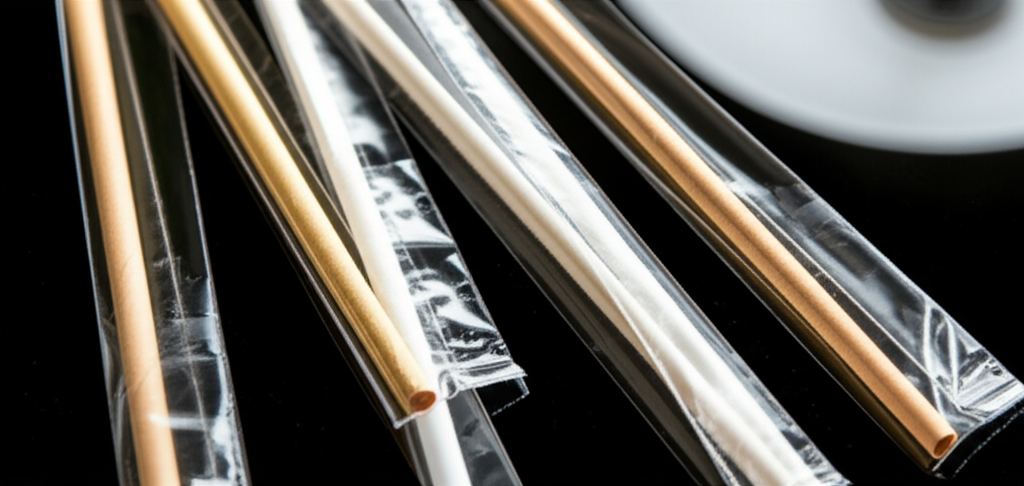
Vilkkaasti liikennöidyissä ympäristöissä, kuten hotelleissa ja lentoyhtiöissä, hygieniasta ei voida neuvotella. Yksittäiset kääreet ovat ratkaisevan tärkeitä, jotta tuote pysyy tahrattomana ja koskemattomana, jotta estetään käsittelystä ja ympäristöaltistumisesta johtuva kontaminaatio. Tämä takaa koskemattoman oljen jokaiselle vieraalle, mikä on elintärkeää terveys- ja turvallisuusstandardien noudattamisen kannalta ja parantaa merkittävästi käsitystä palvelun laadusta ja vieraiden luottamusta. Tämän tason hygieniavarmuudesta tulee kriittinen erottava tekijä, etenkin pandemian jälkeisessä maailmassa, jossa puhtaus on matkustajien tärkein prioriteetti.
C. Sertifikaatit ja standardit: Todellisen kompostoitumisen varmistaminen
Termit "kompostoituva" ja "biologisesti hajoava" voivat olla väärän tiedon miinakenttä, jos niitä ei tueta tiukalla kolmannen osapuolen sertifioinnilla. B2B-päättäjille näiden standardien ymmärtäminen on ensiarvoisen tärkeää, jotta vältetään "viherpesu" ja varmistetaan todelliset ympäristövaikutukset.
- BPI (Biodegradable Products Institute) -sertifikaatti (ASTM D6400, D6868): This certification verifies a product’s complete breakdown in industrial composting facilities. Since January 2020, BPI has mandated that all certified items contain no intentionally added PFAS chemicals, with total organic fluorine levels verified to be below 100 ppm, ensuring the compost remains free from these persistent “forever chemicals.” For a comprehensive understanding of BPI standards, refer to our BPI compostable vs. biodegradable sustainability guide.
- TÜV Austria: Offers “OK compost INDUSTRIAL” (equivalent to EN 13432) and “OK compost HOME” certifications, confirming a product’s ability to decompose in various settings, including marine degradation.
Nämä sertifioinnit antavat hankintatiimeille luottamusta siihen, että heidän valitsemansa tuotteet toimivat mainostetulla tavalla ja edistävät aidosti jätteiden ohjaamista sen sijaan, että ne päätyisivät vain viipyviin saasteisiin kaatopaikoille.Sertifioidut kompostoituvat pillit tarjoavat ylivertaista hygieniaa ja todistettuja ympäristöhyötyjä vieraanvaraisuudelle.
III. Strateginen toteutus: Yksittäin käärittyjen kompostoivien olkien toiminnallinen vaikutus ja ROI
Siirtyminen kompostoitaviin pilleihin sisältää enemmän kuin pelkän tuotteen vaihdon; Se on strateginen päätös, jolla on mitattavissa olevat toiminnalliset ja taloudelliset vaikutukset.
A. Hankintoja ja toimitusketjuja koskevat toiminnalliset näkökohdat
While the long-term benefits are clear, switching from traditional plastic may incur short-term cost increases for new alternatives and require process adjustments. Ensuring a stable supply chain with certified manufacturers is vital for consistent product availability and quality, especially given the rising demand. Furthermore, storage requirements for certain compostable materials may differ, necessitating adjustments to existing logistics and inventory management. Procurement teams must conduct thorough due diligence to secure reliable, certified suppliers who can meet their volume and quality needs.
B. Feature Comparison: Compostable vs. Traditional Straws
| Ominaisuus | B2B-toiminnan vaikutus | Vaatimustenmukaisuushuomautus | ROI-potentiaali |
|---|---|---|---|
| Materiaali | PHA, Paper, PLA, Rice, Agave (diverse options) | Adherence to specific compostability standards (ASTM, EN) | Varies; PHA higher initial cost, superior environmental/durability return |
| Hajoaminen | Requires industrial composting for most; some home/marine | Certified compostable (BPI, TÜV Austria); clarifies “biodegradable” | Reduced landfill costs, improved waste management efficiency |
| Kestävyys | Varies by material (e.g., paper can get soggy); PHA more robust | Performance standards for specific uses (hot/cold drinks) | Enhanced guest satisfaction, fewer product-related complaints |
| Wrapping | Paper/compostable film; maintains hygiene, portion control | Meets stringent food safety and sanitation guidelines | Boosted brand image, higher perceived value from guests |
| Maksaa | Generally higher upfront than conventional plastic | Aligns with impending plastic bans and sustainability goals | Long-term brand equity, competitive advantage, compliance cost avoidance |
C. Measuring ROI: Beyond Purchase Price
The return on investment (ROI) for adopting individually wrapped compostable straws extends far beyond the initial purchase price, impacting brand perception, market share, and long-term operational costs.
- Enhanced Brand Reputation: Studies show that 73% of travelers actively prefer eco-friendly accommodations. Adopting sustainable practices like compostable straws directly aligns with these consumer values, positioning your brand as a responsible industry leader.
- Compliance Cost Avoidance: Proactive adoption helps businesses avoid penalties and legal issues from escalating plastic bans and environmental regulations, safeguarding financial stability and market access.
- Attracting Eco-Conscious Consumers: As sustainability becomes a key purchasing driver, offering compostable alternatives can attract and retain a growing segment of environmentally aware customers, driving market share and building long-term loyalty.
- Reduced Waste Management Costs: Diverting waste from landfills to composting facilities can lead to significant savings in waste disposal fees, particularly in regions with established composting infrastructure and landfill taxes.
Adopting compostable straws offers significant ROI through enhanced brand reputation and compliance cost avoidance.

IV. Leading the Charge: Hotel and Airline Adoption of Individually Wrapped Compostable Straws
Major players across the hospitality and aviation sectors are already making substantial commitments to eliminate single-use plastics, demonstrating the viability and strategic importance of this transition.
A. Hotels Embracing Sustainable Straws
The hotel industry has seen widespread commitment to straw reduction and elimination:
- Marriott International aimed to eliminate 1 billion plastic straws annually by July 2019 across its 6,500 properties.
- Four Seasons Hotels & Resorts announced a ban on plastic straws across all 110 hotels by the end of 2018.
- Hilton committed to removing plastic straws from its 650 managed hotels globally by the end of 2018, estimating a saving of 35 million straws annually.
- Kimpton Hotels and Restaurants are actively reviewing policies to offer compostable, metal, or no straws by default, reflecting an industry-wide shift away from plastic.
- 1 Hotels ja Hyatt Hotels have also implemented initiatives to reduce or eliminate plastic straws, offering biodegradable options or providing them only upon request.
These examples underscore a collective industry recognition of the need for change and the competitive advantage gained by demonstrating environmental leadership.
B. Airlines Prioritizing Eco-Friendly Straws
The aviation sector, with its unique operational complexities, is also making strides:
- American Airlines replaced plastic straws with biodegradable alternatives and wooden stirrers, cutting an estimated 71,000 pounds of plastic annually.
- Alaska Airlines phased out 22 million plastic straws and stirrers used in 2017, acknowledging their significant landfill impact.
- Ryanair aims to remove all non-recyclable plastics from its aircraft by 2023, transitioning to biodegradable cups and paper packaging as part of its sustainability goals.
- Delta Airlines has also embarked on significant efforts to remove various single-use plastic items, including stir sticks and straws, from aircraft and Sky Clubs, expecting to eliminate over 300,000 pounds of plastic waste annually.
C. Case Study: HMSHost’s PHA Straw Transition in Airports
A compelling example of successful strategic implementation comes from global travel restaurateurHMSHost. Starting in January 2023, HMSHost partnered with BIOLO to introduce PHA biodegradable straws in numerous dining venues across US airports in states like California, Washington, Texas, North Carolina, and Florida. This strategic initiative aims to eliminate millions of single-use plastic straws annually from HMSHost’s North American airport operations.
The decision to adopt PHA straws was significant, occurring after the company’s previous trials with paper straws proved unsatisfactory in performance. This highlights a crucial lesson: the importance of material selection and testing to ensure that sustainable alternatives meet operational demands for durability and guest satisfaction, even in high-volume, dynamic environments like airports. This transition by a major food service provider demonstrates the tangible benefits and scalability of individually wrapped compostable straws in a demanding B2B context.Major hospitality and aviation players are successfully transitioning to compostable straws, demonstrating viability.
V. Overcoming Challenges: Logistics and Infrastructure for Individually Wrapped Compostable Straws
While the benefits are clear, successful implementation requires addressing existing challenges, particularly around waste management infrastructure and product performance perceptions.
A. The Composting Infrastructure Gap
A significant barrier to widespread adoption remains the limited availability of accessible industrial composting facilities in many regions. Without proper waste management infrastructure, even certified compostable straws may still end up in landfills, negating their environmental benefits and undermining the investment. This highlights the need for continued advocacy for, and investment in, robust composting infrastructure. For detailed guidance on managing BPI-certified compostable products, refer to ourB2B-pelikirja kestävään jätehuoltoon.
B. Cost-Effectiveness and Performance of Sustainable Straws
Compostable options can be significantly more expensive initially; some reports indicate costs up to four times higher than traditional plastic straws, as experienced by Joe Coffee when they transitioned. Performance concerns also exist, such as certain paper straws getting soggy quickly, potentially impacting customer satisfaction. However, continuous research and development in materials like PHA are crucial for addressing durability, heat resistance, and cost-effectiveness, bringing prices down and performance up over time. The HMSHost case study exemplifies how material science advancements can overcome previous performance limitations.
C. Navigating Greenwashing and Misinformation
The lack of globally consistent terminology for “recyclable,” “compostable,” and “biodegradable” can create confusion for both industry professionals and consumers. Rigorous third-party certification from bodies like BPI or TÜV Austria is essential to counter misleading “greenwashing” claims. Beyond certification, educating both staff and consumers on proper disposal methods is vital for ensuring compostable products complete their intended life cycle, maximizing their environmental value.Addressing infrastructure gaps and misinformation is crucial for successful compostable straw adoption.
VI. The Future of Individually Wrapped Compostable Straws: Innovation and Collaboration
The trajectory for individually wrapped compostable straws is one of continuous innovation, driven by material science breakthroughs and a concerted effort towards industry-wide collaboration and policy harmonization.
A. Advancements in Material Science
The horizon for compostable straw materials is expanding rapidly:
- New Bio-based Polymers: Innovations such as stereo-complexed poly (lactic acid) (SC-PLA) are improving product performance, especially for heat resistance and durability.
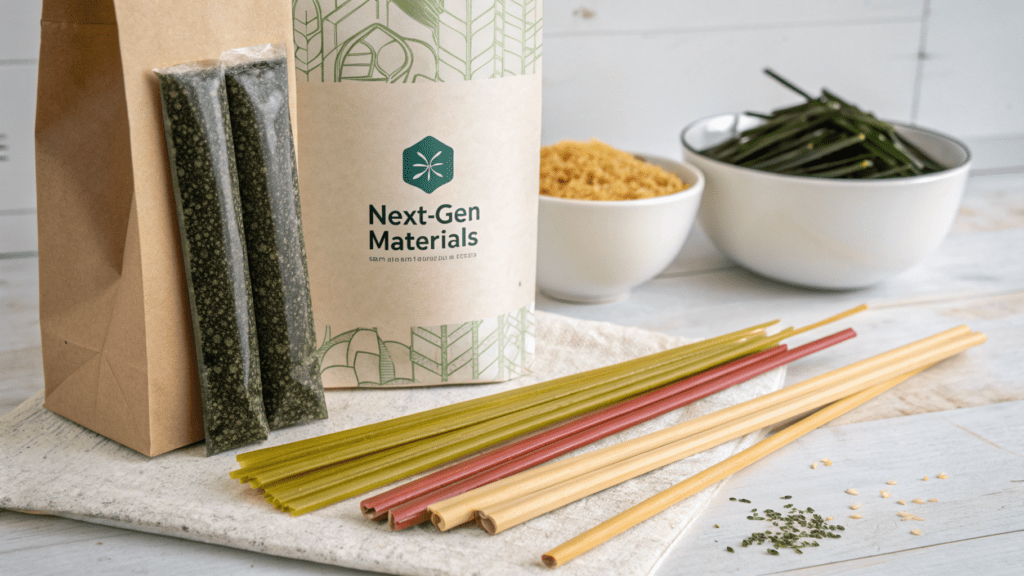
- Novel Materials: The development of innovative materials like edible seaweed-based straws (biodegrading in under 60 days) and mushroom-derived plastics signals future possibilities for even more sustainable and rapidly degradable options.
- Ultra-Rapid Biodegradation: Research into straws made from unused rice and rice bran demonstrates potential for ultra-rapid biodegradation within four days, opening new avenues for truly ephemeral single-use items.
These advancements promise to address existing performance and cost challenges, making compostable straws an even more attractive and viable solution.
B. Industry Collaboration for Sustainable Practices
Collective action is vital for accelerating the shift to sustainable practices:
- The Global Tourism Plastics Initiative (GTPI): Encourages signatories, including major hotel groups and airlines, to achieve 100% reusable, recyclable, or compostable packaging by 2025.
- The International Air Transport Association (IATA): Recommends the installation of industrial composting plants at airports to facilitate waste diversion, recognizing the unique challenges of airline waste management.
- “Stay Plastic Free”: Initiatives like this provide vital vendor toolkits to inspire broader adoption and simplify the procurement process for hotels seeking plastic alternatives.
Such collaborations foster shared knowledge, accelerate best practices, and build the necessary infrastructure for a truly circular economy.
C. Policy Evolution and Global Harmonization
The regulatory landscape is set for further evolution and harmonization:
- Growing Federal and State-Level Bans: A strong push towards sustainable alternatives continues through expanding bans on single-use plastics.
- Revised International Civil Aviation Organization (ICAO) Regulations: Needed to enable diversion of recyclable and recoverable waste from incineration, supporting biotreatment and material recovery at airports.
- Harmonization of Standards: Consistent compostability standards across regions will streamline procurement and reduce complexity for international operations, simplifying compliance for global brands.
These policy changes will create a more conducive environment for sustainable choices, making compostable straws the default, rather than the alternative.Future innovations and collaborations will accelerate the widespread adoption of compostable straws.
Usein Kysytyt Kysymykset
Why should hotels and airlines switch to individually wrapped compostable straws?
Switching to individually wrapped compostable straws helps hotels and airlines meet escalating environmental regulations, satisfy eco-conscious consumer demand, enhance brand reputation, and ensure superior hygiene for guests, all while reducing plastic waste.
Are compostable straws truly hygienic for high-volume service environments?
Yes, individually wrapped compostable straws are designed to maintain pristine hygiene. The individual wrapping prevents contamination from handling and environmental exposure, ensuring a sanitary product for every guest, which is crucial for health standards in hotels and airlines.
What are the best materials for compostable straws for hospitality and aviation?
While paper straws are common, advanced materials like PHA (Polyhydroxyalkanoates) offer superior durability and feel, being home, industrial, and marine-degradable. PLA (Polylactic Acid) is another option, though it typically requires industrial composting. The best choice depends on specific operational needs and waste infrastructure.
How can hotels and airlines ensure their compostable straws are genuinely eco-friendly?
To ensure genuine eco-friendliness, procurement teams should look for third-party certifications like BPI (Biodegradable Products Institute) or TÜV Austria’s ‘OK compost INDUSTRIAL’ or ‘OK compost HOME’. These certifications verify that products will break down as advertised and are free from harmful ‘forever chemicals’ like PFAS.
What are the ROI benefits of adopting compostable straws beyond environmental compliance?
Beyond compliance, the ROI includes enhanced brand reputation (attracting eco-conscious travelers), avoidance of regulatory penalties, increased market share from sustainability-driven consumers, and potential reductions in waste management costs by diverting waste to composting facilities.
Johtopäätös
The transition to individually wrapped compostable straws represents a strategic imperative for hotels and airlines, driven by escalating market demand, evolving regulatory pressures, and a profound commitment to environmental stewardship. While challenges remain in infrastructure development and initial investment, continuous innovation in material science and collaborative industry efforts are paving the way for scalable, effective solutions.
Embracing these sustainable alternatives not only mitigates critical environmental impact but also significantly enhances brand value, reinforces corporate social responsibility, and builds operational resilience in a rapidly changing global landscape. For forward-thinking decision-makers in procurement, operations, and sustainability, the shift to individually wrapped compostable straws is a clear path to both ecological responsibility and enduring commercial success.
Assess your current plastic straw usage and initiate a comprehensive plastic audit today. Partner with certified suppliers to transition to individually wrapped compostable straws and elevate your brand’s commitment to a sustainable future, reducing your environmental footprint and meeting evolving consumer expectations.Ota yhteyttä ja kysy kestäviä ratkaisuja