I. Intro : le héros (ou le méchant ?) inattendu de votre boisson des Fêtes
Imaginez ceci : une tasse de cacao fumante, couronnée non seulement de guimauves, mais aussi d'une flèche tourbillonnante rouge et blanche – une paille en canne à sucre. Festif, n'est-ce pas ? Mais arrêtez-vous un instant. Quoi exactementsontces délicieuses bizarreries ? S’agit-il de nouveautés purement comestibles destinées à une fin tragique ? Ou s’agit-il de quelque chose de plus, un minuscule témoignage de l’ingéniosité humaine et de notre relation complexe avec le plaisir et la durabilité ? Plongeons tête première dans ce monde étonnamment complexe et souvent contradictoire.
II. Un voyage sur Sippy Lane : L'histoire secrète des gorgées sucrées
The story, as always, begins long before the advent of peppermint and plastic. Our journey begins with the candy cane itself. Imagine, if you will, 17th-century Germany. A straight, stark white sugar stick, a far cry from the striped sensation we know today. Legend, perhaps apocryphal, whispers of choirmasters bending these sugar sticks into the shape of a shepherd’s crook, a subtle nod to the Nativity. But when did those iconic red stripes and the invigorating burst of peppermint crash the party? The early 1900s, it seems, cemented the candy cane’s now-familiar form.
Revenons maintenant plus loin sur la notion même de paille. Croyez-le ou non, nos ancêtres en buvaient bien avant que les plastiques à usage unique ne deviennent un problème planétaire. Les Sumériens, dès 3000 avant notre ère, savouraient leur bière avec des pailles en or élaborées – un témoignage à la fois de leur opulence et de leur soif. Avance rapide des millénaires, et nous nous retrouvons avec d’humbles pailles de seigle, sujettes au détrempage mais indéniablement pratiques. Ce n’est qu’en 1888 que Marvin C. Stone révolutionne le jeu avec sa paille en papier. Et puis, dans les années 1930, Joseph Friedman a fait trembler les esprits (et les pailles !) avec son ingénieux design flexible, parfaitement adapté pour s'attaquer aux milkshakes épais.
The “candy cane drinking straw,” then, isn’t some isolated invention sprung from nowhere. It’s a modern convergence, a creative mash-up building upon the long history of both candy sticks and flavored straws (remember those “Flav-R-Straws” from ’56?). It is, in essence, an edible evolution, a playful hybrid of confectionery and convenience.
III. Today’s Twists and Turns: What’s the Scoop on These Swirly Sippers?
The candy cane drinking straw exists in many forms. On one hand, we have the edible wonders, actual candy canes repurposed for sipping. Consider, for instance, Gilliam Peppermint Candy Straws – an invitation to stir your hot cocoa and indulge in a quick nibble simultaneously. (And have you ever tried the candy cane and orange experiment? Trust me, it’s an unexpected flavor explosion.)
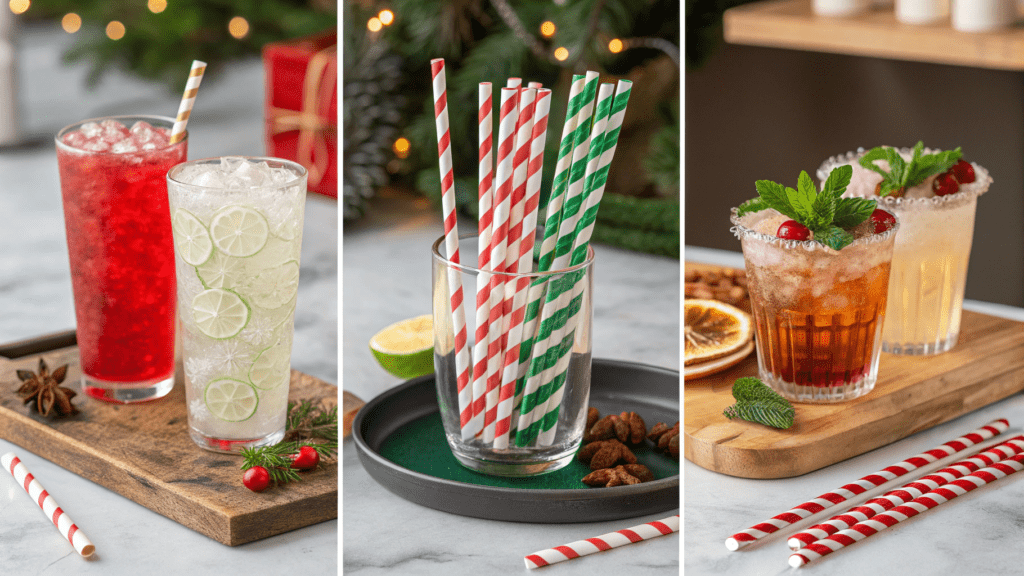
But the candy cane drinking straw has evolved beyond mere edibility. A whole universe of strawsdesignedto resemble candy canes has emerged. Durable plastic versions offer reusability. Elegant glass options, often handcrafted, elevate the experience. And even eco-friendly paper iterations cater to our growing desire to minimize our environmental footprint.
Why this enduring appeal? Undeniably, they’re festive, injecting an “extra special” touch into any beverage. They exhibit versatility, accommodating smoothies, milkshakes, peppermint mochas, and more. And, crucially, many align with our eco-conscious aspirations, offering a way to ditch single-use plastic. This is about more than just Christmas; it’s about conscious sipping.
These festive fixings are increasingly ubiquitous, available everywhere from big box stores to cool niche online shops.

IV. The Sticky Side of Sweetness: Unwrapping the Controversies
But let’s not shy away from the less palatable aspects. The sugar rush comes with its own set of challenges.
Pour la variété comestible, les « Meltdown Diaries » sont une réelle préoccupation. Sucre + liquide = gâchis collant. Ils fondent, deviennent cassants etvolontémodifier le profil de saveur de votre boisson. Ce n’est pas un défaut de conception ; c'est simplement la nature inhérente des bonbons. Ici, l’aspect pratique entre en conflit avec la nouveauté.
Et puis il y a l’éléphant écologique dans la pièce. La recherche de la durabilité dans les pailles conduit souvent à des matériaux à base de plantes, comme la canne à sucre, qui contiennent du PLA (acide polylactique). Même si le PLA semble vertueux, il nécessite souventindustrielcompostage pour se décomposer correctement. Sans cette infrastructure spécifique, ils risquent de se transformer en un énième déchet plastique persistant.
Worse still, PLA can contaminate recycling batches, rendering entire loads unusable and destined for landfills. Adding to the unease, some plant-based straws have been found to leach harmful chemicals like melamine and formaldehyde, especially in hot beverages. Some companies are now actively avoiding these materials. Even the production of PLA raises questions about resource allocation, requiring agricultural land and resources that could be used elsewhere.
Even seemingly simple candy canes grapple with real-world complications. Ingredient shortages, packaging challenges, shipping delays, and even a global decline in peppermint production can all impact the availability of that festive sip.

V. Sip into the Future: What’s Next for Festive Straws?
Innovation, thankfully, is bubbling to the surface. The emphasis is shifting toward truly biodegradable and compostable straws that don’t demand industrial facilities. Imagine seaweed-based straws, rapidly renewable and air-purifying, or 100% PLA-free sugarcane options that disintegrate in home compost within weeks.
Expect to see candy cane-themed straws transcend their traditional holiday association, appearing year-round in novel colors and flavors. The future might hold candy straws with intricate flavor release mechanisms or even color-changing designs that respond to the temperature of your drink!
As people abandon plastic straws, the demand for eco-friendly alternatives is soaring. Manufacturers are now grappling with how to accurately forecast our candy cane straw cravings, particularly around the holidays, striving to maintain sufficient stock without risking overproduction. The quest for perfect candy cane stripes involves meticulous “color-variance tolerance” and stringent quality control.
The issue of returns is also complex, particularly for edible straws. Food safety regulations make returns a delicate balancing act between consumer satisfaction and hygiene protocols.
VI. Conclusion: The Sweet, Sustainable, and Sometimes Sticky Saga Continues
From the beer-sipping Sumerians of antiquity to the modern dilemmas of sustainability, the candy cane drinking straw, seemingly trivial, embodies a surprisingly grand narrative. Whether you’re savoring an edible treat or utilizing a festive reusable, these straws are more than mere decorations. They’re participants in a larger discussion about enjoyment, utility, and our planet’s future. So, the next time you reach for one, remember its rich history, its continuous innovation, and, perhaps most importantly, try to avoid gettingtoosticky.