Naviguer dans la révolution de la paille de bar : sécuriser l'approvisionnement et augmenter la rentabilité malgré les changements réglementaires
1. Introduction convaincante du problème de l’industrie
Le secteur des bars et de la vie nocturne est confronté à des défis urgents liés à l'interdiction de la paille en plastique, ce qui a un impact sur les opérations et la rentabilité.
Le tintement des verres, le murmure des conversations et l’énergie vibrante définissent l’industrie de la vie nocturne moderne. Pourtant, sous la surface de cocktails savamment élaborés et d’une musique palpitante, une révolution silencieuse se déroule, ayant un impact profond sur l’un des produits les plus modestes et pourtant les plus vendus : la paille de bar. Les entreprises du secteur des bars et de la vie nocturne sont confrontées à un bilan urgent. Des interdictions strictes sur les plastiques à usage unique se sont répandues dans le monde entier, depuis les restrictions britanniques d’octobre 2020 (Directives du gouvernement britannique, 2020) à l’interdiction complète du Canada de décembre 2023 (Gouvernement du Canada, 2023), and major US cities like Los Angeles imposing annual fines of up to $1,000 for non-compliance (LA Sanitation & Environment, 2022). This mandates a costly transition, with paper straw alternatives often commanding prices up to 400% higher than their plastic predecessors.
This isn’t merely a compliance headache; it’s a critical operational challenge. Bar straws are integral to daily service, and any disruption – be it stockouts or reliance on poor-quality alternatives that quickly turn soggy – directly undermines drink service efficiency, customer satisfaction, and a venue’s hard-earned brand perception. The market itself is undergoing a permanent transformation. Valued at $30.17 billion in 2024, the global straw market is projected to swell to $45.60 billion by 2032, exhibiting a robust 5.30% Compound Annual Growth Rate (CAGR). This growth is primarily fueled by an escalating demand for sustainable products, signaling that proactive supply chain strategies are no longer optional, but essential for B2B buyers in this sector.
Au-delà du simple respect des nouvelles réglementations, la gestion proactive de la paille est devenue un puissant différenciateur commercial. Pour les bars et les lieux de vie nocturne, la maîtrise des flux de consommables à forte rotation comme les pailles est fondamentale pour protéger la rentabilité. Un approvisionnement inefficace entraîne une augmentation des coûts liés aux achats premium de dernière minute et une perte d'opportunités de revenus lorsque le service est interrompu. De plus, les consommateurs sont de plus en plus exigeants et choisissent des établissements qui démontrent un engagement clair en faveur de la durabilité environnementale et sociale. L'intégration de pailles de bar respectueuses de l'environnement et le maintien de chaînes d'approvisionnement transparentes améliorent considérablement la valeur de la marque, attirant et fidélisant ce segment croissant de clientèle soucieuse de l'environnement. Les récents événements mondiaux ont clairement mis en évidence les vulnérabilités des chaînes d’approvisionnement. Pour les articles à forte rotation comme les pailles, un solide plan d’urgence en cas de rupture de stock ne consiste pas seulement à éviter les désagréments ; il s’agit d’assurer un service ininterrompu et de maintenir un avantage concurrentiel.
The bar and nightlife industry faces significant operational and financial risks from plastic straw bans, making proactive, sustainable straw management crucial for maintaining service quality and brand reputation.

2. Market & Regulation Insights (EU, US, Asia-Pacific)
Global regulations and market shifts demand proactive sustainable straw alternatives for B2B buyers.
A resilient bar and nightlife straw framework deal hinges on several strategic components. Firstly, developing a `high-turnover SKU set` requires a precise inventory of essential bar straw types—standard, cocktail, wide-bore for smoothies—based on historical consumption data and menu requirements. Defining par levels for each straw SKU, adjusting frequently based on at least six months of sales patterns, is critical. Implementing First-In, First-Out (FIFO) for all straw types can reduce waste by up to 50% for biodegradable options, ensuring freshness and minimizing spoilage. Secondly, advanced `stockout contingency` planning is paramount. This means establishing formal protocols to prevent and address potential straw shortages, primarily by diversifying straw suppliers to mitigate reliance on a single source. Maintaining a strategic emergency stockpile of core straw types acts as a vital buffer against unforeseen supply chain issues or demand spikes. Thirdly, exploring `monthly buy-back terms` for reusables and excess inventory can mitigate financial risk, especially for high-value items like metal or silicone straws, while supporting a circular economy model. A monthly review mechanism enables agile inventory adjustments, preventing capital tie-up. For a deeper dive into making sustainable choices for your business, consult thisGuide B2B des pailles écologiques.
Embracing smart inventory management is the cornerstone for optimizing bar straw procurement. Leveraging technology, such as inventory management software integrated with POS systems, allows businesses to track straw stock levels, forecast demand with 15-20% higher accuracy, and automate reorder triggers. Real-time reporting dashboards visualizing key performance indicators like turnover rate and shrinkage percentage can increase overall operational efficiency by 20%, potentially reducing straw-related holding costs by 30% through predictive analytics and Just-In-Time (JIT) ordering. Strategic SKU rationalization for straws involves regularly analyzing performance (sales velocity, seasonality, profitability) to focus on top-selling, high-margin options. Eliminating underperforming or infrequently used straw types reduces complexity and waste, simplifying procurement and increasing the turnover of high-margin items. When considering the best options for your inventory, ourbiodegradable straws B2B sourcing guideoffre des informations précieuses.
Effective bar straw procurement involves precise SKU management, robust stockout contingency planning, and exploring flexible buy-back terms to ensure supply and optimize costs.
3. Solution: Sustainable Straw Alternatives
Sustainable straws offer durable, eco-friendly alternatives, enhancing brand value and reducing waste.
Understanding the landscape of sustainable bar straw alternatives is crucial. Here’s a comparison to guide your procurement decisions:
| Type de paille | Source matérielle | Durability & Performance | Impact environnemental | Typical Cost (Relative) | Ideal Application |
|---|---|---|---|---|---|
| Pailles en papier | Pâte de bois | Varies; can become soggy quickly | Biodegradable, Recyclable | Moyen | High-volume, quick consumption |
| Pailles en métal | Acier inoxydable | High; reusable, durable | Reusable, Low Waste | Élevé (initial) | Long-term use, premium drinks |
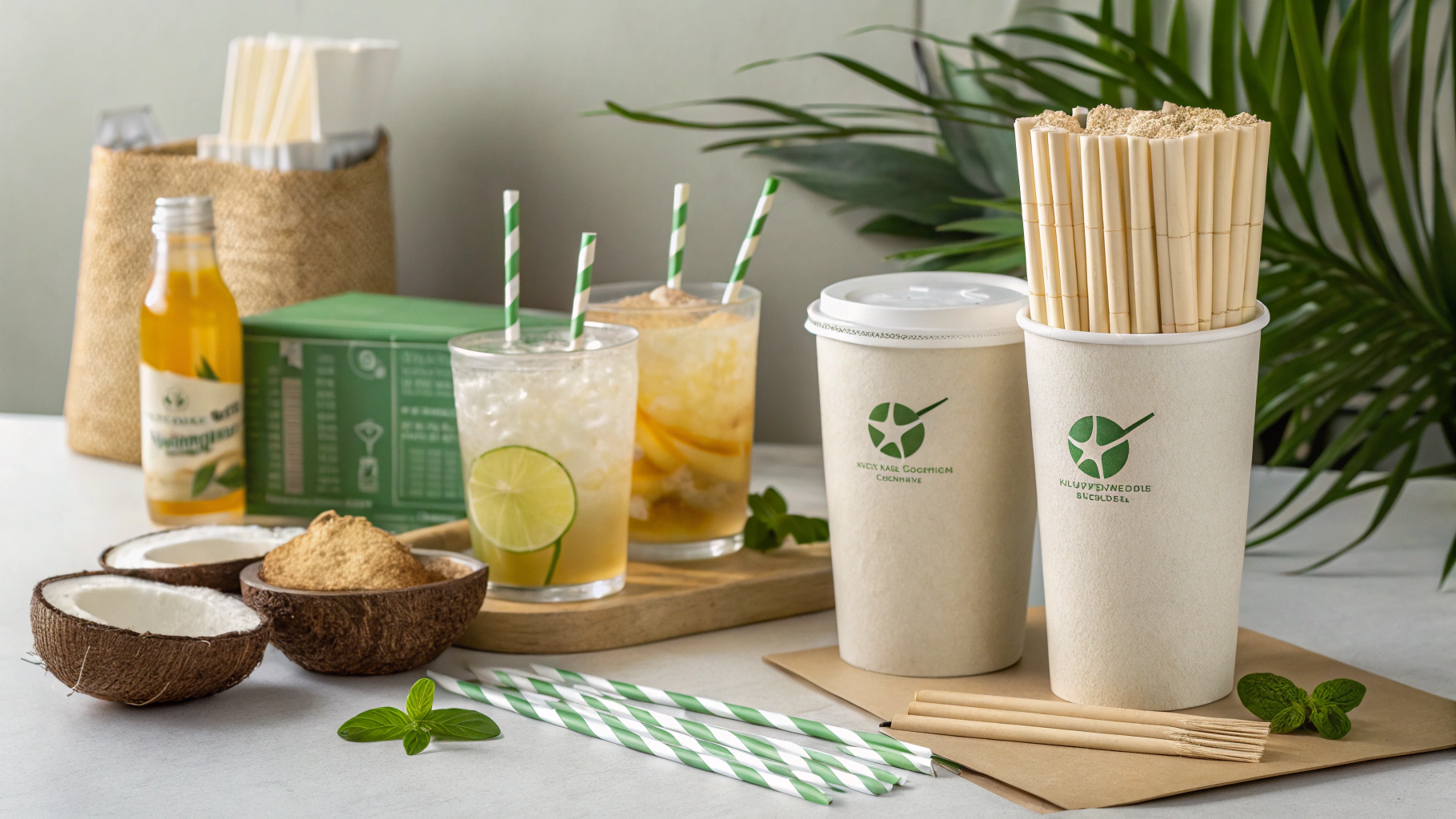
| Pailles en bambou | Bamboo Plant | Moderate; reusable (if cleaned), can be disposable | Biodégradable, compostable | Moyen-élevé | Natural aesthetic, hot & cold |
| Pailles de blé | Tiges de blé (sous-produit) | Haut; naturel, ne sois pas détrempé | 100% naturel, biodégradable | Moyen | Aspect naturel, toutes les boissons |
| Pailles d'agave | Déchets d'agave (sous-produit) | Haut; solide, résistant à la chaleur, se décompose rapidement | Compostable | Moyen-élevé | Histoire unique, cocktails |
| Pailles PHA | Fibres végétales | Haut; imite la sensation du plastique | Biodégradable (composant industriel) | Haut | Alternative premium au plastique |
| Pailles comestibles | Riz, céréales, sucre, etc. | Faible; conçu pour être mangé | Zéro Déchet, Nouveauté | Très élevé | Cocktails expérientiels |
The shift towards these alternatives is prominent in both the US and Europe. For instance, the edible straw market, valued at USD 0.56 million in 2025, is projected to reach USD 1.12 million by 2033, with a 9.11% CAGR. Notably, 40% of cocktail menus now incorporate edible straws, reflecting a significant trend in the hospitality sector. Europe alone deploys approximately 180 million edible straws annually, representing 30% of global use. This highlights a clear trend towards experiential and sustainable offerings. For more on specific types, consider ourcompostable straws B2B guide.
A diverse range of sustainable straw alternatives exists, each with unique properties and applications, driving significant market growth and offering new opportunities for bars.

4. Industry Misconceptions & Clarifications
Dispelling myths about sustainable straw costs and performance is crucial for informed procurement.
Une idée fausse courante est que les pailles durables sont universellement moins performantes ou d’un coût prohibitif. Alors que les premières pailles en papier présentaient des problèmes de durabilité, les innovations dans des matériaux tels que le PHA, l'agave et même les tiges de blé ont conduit à des alternatives robustes et performantes qui ne se détrempent pas. De plus, même si le coût unitaire peut être plus élevé, le retour sur investissement à long terme résultant de la réduction des déchets, de l'amélioration de l'image de marque et des remises potentielles sur volume compense souvent cet investissement initial. Le marché évolue rapidement, offrant des prix compétitifs et diverses options adaptées aux différents besoins opérationnels et budgets.
Another myth is that consumers don’t care about straw sustainability. On the contrary, studies consistently show a growing preference for eco-conscious businesses. Integrating sustainable straws is not just about compliance; it’s a powerful marketing tool that attracts and retains a significant segment of the modern consumer base, especially in the nightlife sector where experiences and values often drive choices.
Les pailles durables ont considérablement évolué en termes de performances et peuvent offrir des avantages financiers et de marque à long terme, remettant en question les idées fausses courantes sur leur coût et leur attrait pour le consommateur.
5. B2B Customization & Supply Chain Optimization
Un MOQ, une image de marque et une logistique sur mesure sont essentiels pour optimiser les chaînes d'approvisionnement durables en paille.
Cultivating a culture of sustainability within your bar is equally vital. This includes empowering staff through training on proper handling, cleaning (for reusables), and disposal of different straw types, as well as how to communicate these sustainable choices to customers. Educating teams on the “why” behind sustainable shifts, linking it to brand values and customer expectations, fosters deeper engagement. Strengthening supplier partnerships involves establishing clear communication channels. Regular dialogue on demand changes, sales trends, and potential delays is crucial for timely deliveries and preventing shortages, especially with the complexities of sustainable supply chains. Partner with eco-conscious suppliers committed to sustainable sourcing and reduced packaging throughout their operations, as highlighted by industry expert insights on supply chain challenges in sustainable packaging. Learn more about the global transition from single-use plastics at theProgramme des Nations Unies pour l'environnement (PNUE)site web.
Optimizing sustainable straw supply chains requires strong internal training, transparent supplier partnerships, and a focus on eco-conscious sourcing and packaging.

6. Secure Your Competitive Edge
Future-proof your bar’s supply chain and enhance sustainability credentials with a tailored framework deal.
Realizing significant cost savings and market share growth is within reach. While the initial investment in sustainable straws may appear higher, a well-structured framework deal, coupled with optimal inventory management, ultimately minimizes waste, reduces costly emergency purchasing, and leverages potential volume discounts. This contributes to a healthier bottom line, offsetting the higher unit cost of sustainable alternatives over time. The innovative edible straw market alone offers new revenue streams and branding opportunities, aligning with consumer demand for unique experiences. This trend underscores how embracing sustainable options can enhance customer engagement and even command premium pricing. Furthermore, a robust `stockout contingency` and a diversified `high-turnover SKU set` are your best defense against unforeseen supply chain shocks. This ensures your bar consistently delivers on customer expectations, even when competitors falter, solidifying your position in a dynamic market. Explore the latest market trends in disposable plastic alternatives onStatista.
A strategic approach to sustainable straws can lead to significant cost savings, new revenue streams, and a stronger market position, ensuring resilience against supply chain disruptions.
Don’t let regulatory shifts or supply chain uncertainties compromise your operations or profitability. The market is evolving rapidly towards sustainable solutions, and proactive engagement is key to leadership. Secure your competitive edge.Schedule Your Tailored Consultation Today
Foire aux questions (FAQ)
1. What is a ‘high-turnover SKU set’ in the context of bar straws?
A high-turnover SKU set refers to a precisely curated inventory of essential bar straw types (standard, cocktail, wide-bore) that are consumed rapidly, requiring frequent replenishment and optimized management based on sales data.
2. How can a ‘stockout contingency’ plan prevent service disruptions for bars?
A stockout contingency plan involves diversifying straw suppliers, maintaining an emergency stockpile, and establishing formal protocols to prevent and address potential shortages—ensuring uninterrupted drink service even during supply chain issues.
3. What are ‘monthly buy-back terms’ and how do they benefit bars?
Monthly buy-back terms allow bars to return excess or reusable straw inventory to suppliers, mitigating financial risk, preventing capital tie-up, and supporting a circular economy model for high-value items like metal or silicone straws.
4. Are sustainable straws always more expensive than plastic ones?
While initial unit costs for sustainable straws can be higher, a well-structured framework deal with optimal inventory management, volume discounts, and reduced waste can lead to significant long-term cost savings and improved profitability—offsetting the initial investment.
5. How does integrating eco-friendly straws enhance a bar’s brand value?
Adopting eco-friendly straws demonstrates a commitment to environmental sustainability, which resonates with increasingly discerning consumers. This enhances brand perception, attracts eco-conscious clientele, and can even open new revenue streams through unique offerings like edible straws.