Mastering Procurement for Sustainable Success in Foodservice & Hotels

1. Entwodiksyon pwoblèm endistri konvenkan
Mache mondyal pay pou bwè a, yon sektè ki evalye apeprè $ 14,38 milya dola an 2024 e ki prevwa li pral monte a $ 23,19 milya dola pa 2031, ap sibi yon transfòmasyon san parèy. Biznis yo, patikilyèman nan endistri Ospitalite ak sèvis manje yo, ap konbat ak yon jaden flè konplèks ki gen fòm nan ogmantasyon manda anviwònman an ak yon chanjman sismik nan preferans konsomatè yo nan altènatif dirab. Gouvènman atravè lemond, ki soti nanInyon Ewopeyen an (2019, Palman an Ewopeyen an)nan Lachin, yo dekrete entèdiksyon sevè sou yon sèl-itilize plastik, kreye defi operasyon imedya ak gwo risk repitasyon mak pou nenpòt antrepriz ki toujou konte sou pay plastik tradisyonèl yo. Gwo kòporasyon, tankouMarriott Entènasyonal, te deja angaje nan elimine pay plastik atravè rezo vas yo ki gen plis pase 6,500 otèl, ki tabli yon presedan klè. Pivote endistri ijan sa a, makonnen ak pri materyèl enprevizib pou opsyon zanmitay ekolojik, te pouse akizisyon pay esansyèl nan yon domèn volatilite pri ekstrèm ak ensètitid chèn ekipman pou, ki afekte dirèkteman liy anba yo ak planifikasyon estratejik alontèm.
Pou Ospitalite ak sèvis manje, konte sou metòd akizisyon demode pou pay esansyèl vle di opòtinite rate pou ekonomize pri ak amelyorasyon mak. Endistri a fè fas a yon moman kritik kote chwa dirab yo pa opsyonèl ankò men esansyèl pou enpòtans mache ak estabilite finansye. Chanjman nan pay ekolojik-zanmitay se pa sèlman sou konfòmite; li se sou sekirize yon avantaj konpetitif ak satisfè demand konsomatè evolye. Biznis yo dwe jere pri yo ak chèn ekipman pou yo pwospere nan nouvo peyizaj sa a.
Takeaway kle:Sektè Ospitalite ak sèvis manje yo fè fas ak gwo risk ak opòtinite nan mache pay esansyèl k ap transfòme rapidman, ki baze sou manda anviwonmantal yo ak demann konsomatè pou dirab.
Akizisyon pwoaktif pay esansyèl enpòtan pou Ospitalite diminye risk yo ak pwofite sou tandans dirabilite.

Jesyon chèn ekipman efikas se kle pou Ospitalite dirab.
2. Market & Regulation Insights (EU, US, Asia-Pacific)
Pou navige sou mache tumultuous sa a, biznis yo dwe ale pi lwen pase metòd acha konvansyonèl yo epi anbrase estrateji pri avanse. Akò kontra pri-bloke, souvan pwolonje pou 12 mwa, ofri yon plak pwotèj enpòtan kont fluctuations mache enprevi nan pri matyè premyè ak depans pwodiksyon pou pay bwè esansyèl. Akò sa yo bay sèten bidjè esansyèl, pwoteje depans akizisyon ou kont presyon enflasyon ak chòk mache. Anplis de sa, achtè konprandr ka maksimize ekonomi atravè estrikti ranbousman nivo. Modèl sa yo ankouraje pi gwo acha anyèl an gwo, ofri rabè progresivman pi wo—pa egzanp, yon rabè 2% pou depans anyèl ant $5,000 ak $9,999, eskalade a 3% pou acha ki depase $10,000. Estrikti sa yo pa sèlman diminye pri efikas pou chak inite w la sou tan, men tou rasyonalize lòd anyèl yo ak rekonpanse lwayote. Finalman, konprann ki jan yo ogmante tou de site ak pi devan quotes se esansyèl. Sit kote yo reflete pri sou mache aktyèl la pou livrezon imedya, ideyal pou bezwen ijan, reyaktif. Okontrè, sitasyon pi devan pèmèt ou dakò sou yon pri jodi a pou livrezon nan lavni, sa ki pèmèt jesyon pri aktif ak pwoteksyon kont volatilite potansyèl pri, espesyalman valab pou gwo volim, kondisyon alontèm. Apwòch estratejik sa a nan pri ede estabilize planifikasyon finansye epi asire yon tiyo akizisyon previzib.
Peyizaj la regilasyon pou yon sèl-itilize plastik, ki gen ladan pay, ap evolye rapidman globalman. Pandan ke laInyon Ewopeyen ante aplike yon entèdiksyon konplè sou anpil atik plastik yon sèl-itilize depi 2021, laEtazinigen yon patchwork nan eta ak lokal entèdiksyon, ki pa gen okenn manda federal. NanAzi-Pasifik, Peyi tankou Lachin ak peyi Zend yo tou elimine pwogresivman plastik ki sèvi ak yon sèl ak diferan delè ak ranfòsman. Pou yon gid detaye sou entèdiksyon plastik mondyal ak enpak yo sou chèn ekipman pou, tanpri al gade nou anGid konplè sou règleman mondyal plastik yo.
Konparezon Modèl Akizisyon Paille Bulk
| Karakteristik / Modèl | Pri-Lock Mekanik | Ranbousman Nivo | Tach Quotes | Sitasyon pi devan |
|---|---|---|---|---|
| Deskripsyon | Pri fiks pou machandiz sou yon peryòd fiks (pa egzanp, 12 mwa) | Rabè ki baze sou nivo volim acha kimilatif | Pri aktyèl sou mache a pou livrezon imedya | Pri dakò jodi a pou livrezon nan lavni |
| Benefis Prensipal | Sètitid bidjè, pwoteksyon kont ogmantasyon pri | Ankouraje pi gwo lòd, pi gwo ekonomi pou chak inite | Pri imedya, pwogrè imedya | Couverture kont volatilité pri nan lavni |
| Diminisyon Risk | Mache volatilité, chèn ekipman pou pri fluctuations | Optimize pouvwa acha, rekonpanse lwayote | Refleksyon mache an tan reyèl | Kadna nan depans yo, evite pik nan lavni |
| Enpak operasyonèl | Depans akizisyon previzib, planifikasyon finansye ki estab | Redwi depans jeneral, bidjè senplifye pou gwo volim | Akizisyon rapid, acha reyaktif | Kontwòl pri aktif, planifikasyon alontèm |
| Ka Itilizasyon Ideyal | Kontra anyèl en, bezwen konsistan gwo volim | Achtè gwo volim ki vize pou maksimize rabè yo | Ijan, kondisyon pay ki pa planifye | Sekirize pri pou pwojè nan lavni oswa demann soutni |
Takeaway kle:Modèl prix èstratejik tankou pri-locks, ranbousman nivo, ak site/forward quotes esansyèl pou jere volatilité pri nan mache pay esansyèl la.
Estrateji pri avanse ofri biznis Ospitalite pri previzib ak ekonomi enpòtan sou pay esansyèl.
Chèn ekipman mondyal yo konplèks, ki mande navigasyon estratejik.
3. Solisyon: Paille kann
Apwovizyone èstratejik nan mache pay pou bwè en mande pou yon evalyasyon metikuleu nan chwa materyèl ak modèl akizisyon pou aliman ak tou de efikasite operasyonèl ak objektif dirabilite. Materyèl ou chwazi a gen yon gwo enpak sou pèfòmans, anprint anviwònman an, ak pri. Pandan keplastik (Polypropylène/Polystyrène)ofri pri ki pi ba davans (apeprè $ 0.005- $ 0.01/pyès), fado anviwònman li yo se imans - ak yon estime.8.3 milya pay plastik ki kontamine plaj chak ane (2018, UNEP)ak raman yo te resikle. Ogmante risk regilasyon ki pa konfòme li yo se yon enkyetid enpòtan, patikilyèman nan Ewòp kote entèdiksyon yo gaye toupatou.Papier papye, yon altènatif komen ekolojik-zanmitay, yo biodégradables ak trè customizable, men vini nan yon pri ki pi wo (2-10x pi chè pase plastik, ~ 0.005- $ 0.05 / moso). Yo gen tandans fè sogginess, ak enkyetid egziste sou kouch PFAS ak pi wo pwodiksyon enèji / emisyon (4.1g CO2 / pay kont 1.5g pou plastik).
Pou moun k ap chèche solisyon biodégradables ki pi solid,opsyon ki baze sou plant yotankou PLA, PHA, kann, agav, ak ble/wozo ofri durability. Paille PLA yo, ki koute anviwon $0.01/pyès, se biodégradables men souvan mande pou enstalasyon konpostaj endistriyèl (sèlman anviwon 15% enstalasyon aksepte yo), sa ki limite vre benefis anviwònman an. Paille ble ak wozo, ki sòti nan sous-pwodwi agrikòl yo, yo konplètman konpostab epi yo aliman ak inisyativ zewo fatra. Anfen,opsyon ki kapab itilize ankòtankou Nerjaveèi, banbou, vè, ak silikon reprezante pi gwo envestisman inisyal la men yo ofri siyifikatif ekonomi alontèm ak potansyèl zewo-fatra. Durabilité yo varye, ak metal kondwi chalè ak silicone pa biodégradables.
Paille kann: Chwa dirab pou Ospitalite
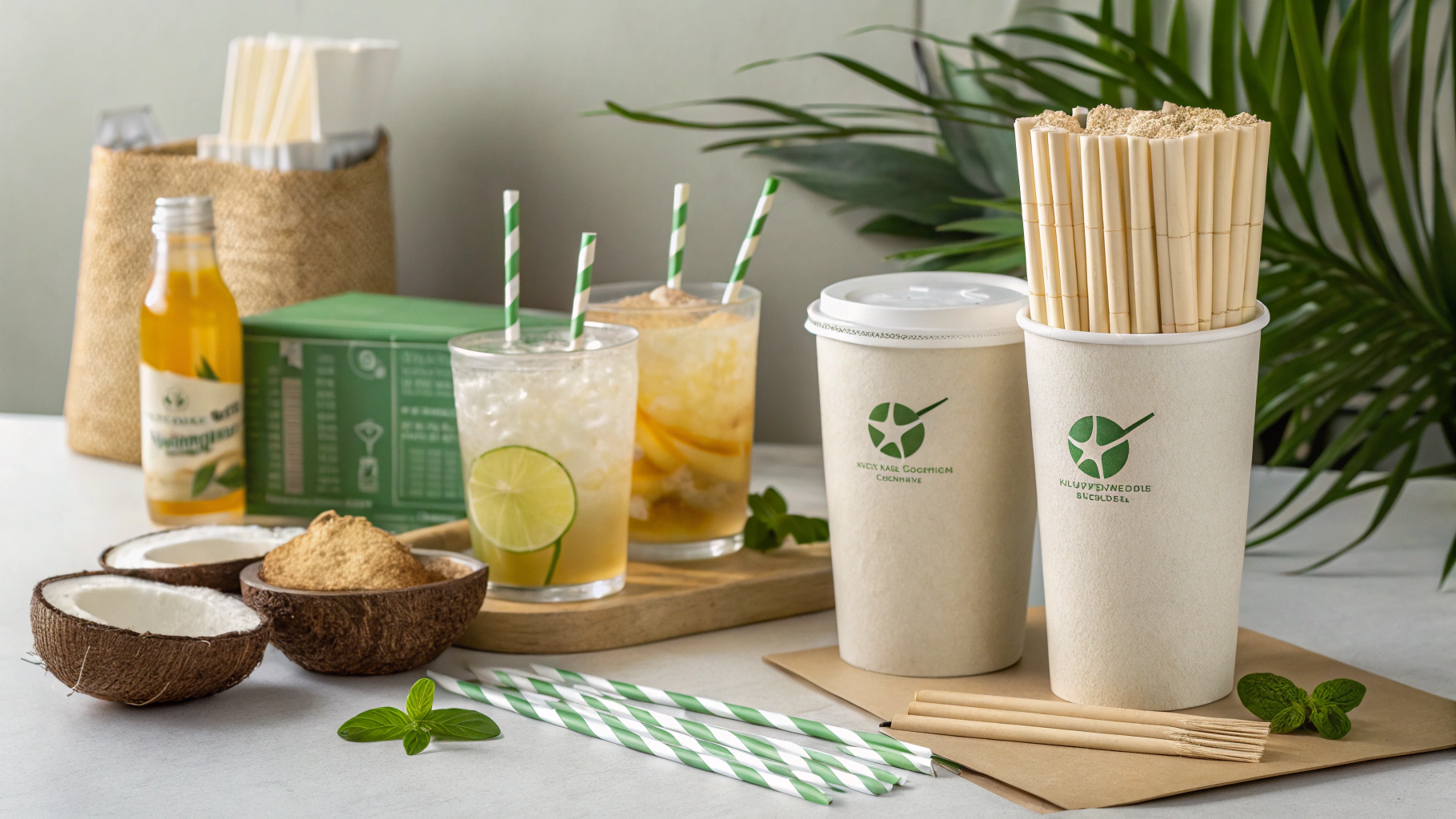
Paille kann se pay pou bwè ki dirab, konpostab ki fèt ak bagas, yon sous-pwodwi nan pwodiksyon sik, ki ofri yon altènatif siperyè ekolojik.
Pou Ospitalite ak sèvis manje, pay kann ofri benefis irezistib:
- Eksperyans kliyan amelyore: Kontrèman ak papye, pay kann kenbe entegrite pou plis pase 3 èdtan nan likid, anpeche plent sogginess komen nan kafe ak ba.
- Rediksyon fatra enpòtan: Lè yo 100% konpostab, yo detounen fatra nan depotwa yo, diminye fatra pay yon otèl tipik jiska 95% chak ane.
- Bon aliyman mak: Adopte pay kann vizib demontre yon angajman pou dirab, ranfòse repitasyon mak ak atire envite ekolojik-konsyan, potansyèlman ogmante rezèrvasyon pa 5-10%.
- Regulatory Compliance & Future-Proofing: Pwoaktif satisfè entèdiksyon aktyèl ak antisipe pou yon sèl itilizasyon plastik, evite amann epi asire operasyon san enteripsyon.
- Pri-efikasite nan esansyèl: Pandan ke yon ti kras pi wo davans pase plastik, akizisyon pay kann an gwo, espesyalman ak akò pri-lock, ofri estabilite pri alontèm epi evite penalite ki gen rapò ak plastik nan lavni.
Tablo ROI: Paille kann pou yon chèn otèl mwayen (500 chanm)
| Varyab | Paille plastik (anyèl) | Paille kann (anyèl) | Benefis/Enpak |
|---|---|---|---|
| Pri inite (pa pay) | $0.008 | $ 0.025 (avèk pri-lock esansyèl) | Pi wo pri inisyal, men ki estab. |
| Volim Anyèl (est.) | 1,000,000 pay | 1,000,000 pay | Itilizasyon konsistan. |
| Pri pay chak ane | $8,000 | $25,000 | Pri akizisyon dirèk. |
| Pri jete fatra (esk.) | $500 (dechaj) | $50 (konpòs) | Frè dechaj redwi. |
| Ogmantasyon Valè Mak (est.) | N/A | $ 5,000 - $ 10,000 (via ogmante rezèvasyon ekolojik-touris) | Atire envite ekolojik-konsyan. |
| Amann regilasyon yo evite (es.) | Potansyèl $1,000 - $5,000 | $0 | Konfòmite lapè nan tèt ou. |
| Satisfaksyon Kliyan (Sogginess) | Ba (plent souvan) | Segondè (dirab) | Eksperyans envite amelyore. |
| Enpak nèt chak ane | -$8,500 pou -$13,500 | -$15,000 a -$20,000 (inisyal depans) + $5,000-$10,000 (valè mak) + $450 (depay fatra) + $1,000-$5,000 (amann evite) =Net pozitif alontèm ROI | Ekonomi alontèm ak benefis mak depase pri inisyal la. |
Takeaway kle:Paille kann ofri biznis Ospitalite yon solisyon dirab, konpostab, ak amelyore mak ak yon gwo ROI alontèm.
Paille kann bay yon solisyon dirab, pri-efikas, ak pou ranfòse mak pou akizisyon Ospitalite.
Paille kann: yon chwa natirèl, dirab pou lavni.
4. Industry Misconceptions & Clarifications
Malgre avantaj klè yo genyen, plizyè move konsepsyon pèsiste konsènan akizisyon dirab pay esansyèl, patikilyèman nan sektè Ospitalite ak sèvis manje:
Lejann 1: "Tout pay ekolojik yo twò chè pou akizisyon B2B an gwo."
Klarifikasyon:Pandan ke premye pri inite pou pay dirab tankou kann oswa papye ka pi wo pase plastik, sa neglije benefis finansye alontèm yo. Avèk acha èstratejik an gwo, ki gen ladan akò pri-lock ak ranbousman nivo, pri efikas pou chak inite diminye anpil. Anplis de sa, evite potansyèl amann regilasyon pou itilizasyon plastik ak jwenn pèsepsyon pozitif mak (ki ka mennen nan ogmante lwayote kliyan ak revni) souvan rezilta nan yon ROI nèt pozitif. Pa egzanp, yon gwo chèn otèl te kapab ekonomize yon estime $15,000 chak ane nan amann evite ak ogmante rezèvasyon ekolojik-touris lè yo chanje nan pay sètifye konpostab.
Lejann 2: "Papye papye yo se sèl opsyon ki solid ki zanmitay ekolojik, malgre yo tranpe."
Klarifikasyon:Papier papye yo tout bon komen, men yo pa sèlman, ni toujou pi bon, chwa ekolojik-zanmi. Altènativ ki baze sou plant tankou kann, PHA, oswa menm opsyon ki kapab itilize ankò (asye pur, banbou) ofri rezistans siperyè ak eksperyans itilizatè. Pa egzanp, yo konnen pay kann yo dire anpil pi lontan nan bwason san yo pa degrade, yo adrese plent prensipal ki asosye ak pay papye nan yon restoran ki okipe oswa yon bar. Durabilité sa a tradui nan mwens plent kliyan ak yon imaj mak pi bon.
Lejann 3: "Chanje nan pay dirab pral deranje chèn ekipman ki egziste deja mwen an twòp."
Klarifikasyon:Founisè pay en repitasyon, tankouLollicup USAoswaWiPaliy, espesyalize nan tranzisyon B2B. Yo ofri sipò konplè, ki gen ladan jesyon envantè, orè livrezon fleksib, ak konsèy sou MOQs optimal. Anpil tou bay opsyon pi devan-kotasyon, ki pèmèt biznis yo an sekirite pri ak kantite byen davans, asire yon tranzisyon san pwoblèm san entèripsyon ekipman pou. Kle a se patenarya ak yon founisè ki gen eksperyans nan solisyon dirab pou sektè Ospitalite a.
Takeaway kle:Move konsepsyon komen sou pri, pèfòmans ak entegrasyon chèn ekipman pou pay dirab yo souvan demake pa akizisyon estratejik ak opsyon materyèl avanse.
Akizisyon pay dirab se pi pri-efikas ak mwens deranje pase souvan kwè, espesyalman ak planifikasyon estratejik.
5. B2B Customization & Supply Chain Optimization
Bati yon chèn ekipman fleksib pou pay esansyèl dirab enplike chwa estratejik pi lwen pase pri sèlman. Patenarya ak manifaktirè renon ak distribitè tankouLollicup USA,WiPaliy, oswaPapye Tembo, ki ofri modèl pri avanse ak sètifikasyon transparan (egzanp,FSCpou papye,ASTM D6400pou konpostabilite), enpòtan anpil. Nan peyi Etazini ak Ewòp, kote peyizaj regilasyon yo ap evolye rapidman, asire pay ou chwazi yo konfòme ak HACCP, san PFAS, ak klas manje pa sèlman sou konfòmite, men tou sou pwoteje sante konsomatè yo ak repitasyon mak ou. Evalye durability rigoureusement; pou egzanp, pay papye bon jan kalite pa ta dwe defòme apre twa èdtan nan likid. Konsidere Kantite Lòd Minimòm (MOQs) pou balanse ekonomi nan pri ak kapasite depo, epi evalye efikasite anbakman founisè a pou redwi pri machandiz ak anprint kabòn ou. Finalman, planifye pou fini nan lavi materyèl ou chwazi a, aktivman sipòte bon konpostaj oswa jete. Lè w anbrase chanjman nan pay esansyèl ekolojik-zanmitay, ou pa sèlman satisfè demand regilasyon yo, men tou ou amelyore valè mak ou a, rezonans pwisan ak segman k ap grandi nan konsomatè ekolojik-konsyan yo.
Scenario-Specific Tips for Hospitality & Foodservice:
- Hotels & Resorts: Opt pou kann oswa pay ki kapab itilize ankò pou manje nan chanm ak ba-wo fen. Pwofite ranbousman nivo pou gwo lòd anyèl atravè plizyè pwopriyete. Konsidere mak koutim (egzanp, logo otèl) sou anbalaj pay pou ranfòse mesaj dirab.
- Restaurants & Cafes: Balanse pri ak pèfòmans. Paille kann ofri durability pou manje-nan, pandan y ap papye ta ka sifi pou pran sèvis rapid. Sèvi ak sitasyon an plas pou pike demann inatandi ak sitasyon pi devan pou chanjman meni sezon an.
- Catering & Events: Priyorite opsyon konpostab tankou kann oswa PHA pou netwayaj fasil apre evènman an. Negosye MOQ ki aliman ak gwosè evènman pou minimize fatra ak depo. Asire ke founisè yo ka okipe orè livrezon fleksib pou divès kote evènman yo.
- Airlines & Cruise Lines: Konsantre sou solisyon ki lejè, dirab ak kontra enfòmèl ant. Paille kann yo ideyal akòz estabilite yo nan divès tanperati ak anprint depo redwi. Aplike kontra pri-lock pou rezèv mondyal ki konsistan ak kontwòl pri.
Takeaway kle:Optimize chèn rezèv pay esansyèl mande patenarya founisè estratejik, chèk sètifikasyon materyèl, ak MOQ espesifik ak planifikasyon lojistik senaryo.
Estrateji chèn ekipman ki adapte pou pay esansyèl amelyore efikasite ak dirabilite atravè divès operasyon Ospitalite.
Sekirize avni dirab ou jodi a
Mache dinamik pay pou bwè en mande yon apwòch aktif, estratejik akizisyon. Lè yo swe mekanis pri avanse tankou pri-locks, ranbousman nivo, ak site/forward quotes, ak pa metikulye evalye opsyon materyèl dirab, B2B pran desizyon ka transfòme akizisyon soti nan yon sant pri nesesè nan yon avantaj konpetitif enpòtan. Chanjman estratejik sa a non sèlman sekirize depans previzib, men tou amelyore pwofil dirabilite mak ou a, sa ki pèmèt ou pwofite sou segman mache ekolojik ki ap grandi rapidman, ki prevwa pou rive nan $25.1 milya dola pa 2035.
Pa kite volatilité mache dikte depans ou oswa konpwomi objektif dirabilite ou. Pran kontwòl akizisyon pay esansyèl ou jodi a. Aprann plis sou entèdiksyon plastik mondyal ak enpak yo sou chèn ekipman pou. Eksplore kijan yon apwòch estratejik nan apwovizyone ka ranfòse ekolojik-kalifikasyon mak ou a. Pou yon plonje pi fon nan pratik biznis dirab ak optimize chèn ekipman pou, konsidere resous ki soti nan asosyasyon endistri dirijan yo.
Sekirize pri previzib, amelyore pwofil dirabilite mak ou a, epi pwofite sou segman mache ekolojik-zanmi k ap grandi. Pwograme yon konsiltasyon akizisyon èstratejik ak ekspè nou yo pou devlope yon plan apwovizyone pay esansyèl ki garanti estabilite pri ak maksimize ekonomi ou yo.Pwograme konsiltasyon w la kounye a
Kesyon yo poze souvan (FAQ)
Ki sa ki se yon mekanis pri-lock pou akizisyon pay esansyèl?▼
Yon mekanis pri-bloke se yon akò kontra ki fikse pri a nan pay pou bwè esansyèl pou yon peryòd fiks, tipikman 12 mwa, pwoteje achtè kont fluctuations mache ak asire sètitid bidjè.
Ki jan rabè gradyèl yo benefisye biznis Ospitalite ki achte pay an gwo?▼
Ranbousman gradyèl ankouraje pi gwo acha chak ane lè yo ofri rabè ki pi wo yo, diminye pri efikas pou chak inite ak maksimize ekonomi pou achtè Ospitalite ki gen gwo volim.
Ki diferans ki genyen ant sitasyon tach ak pi devan pou pay esansyèl?▼
Sit kote yo reflete pri sou mache aktyèl yo pou livrezon imedya, ideyal pou bezwen ijan. Sitasyon pi devan fèmen nan yon pri jodi a pou livrezon nan lavni, sa ki pèmèt jesyon pri aktif ak pwoteksyon kont volatilité.
Èske pay kann vrèman dirab pou operasyon sèvis manje ki gen gwo volim?▼
Wi, pay kann yo trè dirab. Yo te fè soti nan bagas, yon byproduct nan pwodiksyon sik, ki fè yo konpostab, dirab, ak yon altènatif siperyè ekolojik-zanmi nan plastik oswa menm kèk pay papye pou itilize gwo volim.
Kouman mwen ka asire founisè pay esansyèl mwen an satisfè règleman yo?▼
Asire ke founisè ou a bay sètifikasyon transparan tankou konfòmite HACCP, deklarasyon san PFAS, ak ASTM D6400 pou konpostabilite. Verifye aderans yo ak règleman rejyonal yo tankou entèdiksyon Inyon Ewopeyen pou yon sèl-itilize plastik.