A B2B Guide for Procurement, Operations, and Sustainability Leaders in Hospitality & Foodservice
Endistri kafe mondyal la, ki vo plis pase 400 milya dola, se nan yon moman kritik. Yon fwa apre yon ti reflechi, pay pou bwè enb la parèt kòm yon gwo enjman operasyonèl ak defi konfòmite pou manadjè akizisyon, direktè operasyon yo, ak egzekitif chèn ekipman pou. Kòm presyon regilasyon entansifye ak atant konsomatè yo pou dirab ogmante, chwa nan materyèl pay kafe se pa yon desizyon acha minè ankò - li se yon enperatif estratejik fòme aksè mache, repitasyon mak, ak rentabilité alontèm.
Plastik yon sèl-itilize, ki gen ladan pay plastik tradisyonèl yo, fè fas a entèdiksyon agresif mondyal, egzanp pa Direktiv Inyon Ewopeyen pou yon sèl-itilize plastik, ki te deja elimine pay plastik nan eta manm yo. Ozetazini, eta tankou Kalifòni (AB1276, efektif 1ye jen 2022) mande pay sèlman sou demann, pandan y ap EPR Act nan 2022 Filipin yo kenbe manifakti yo responsab finansyèman pou fatra anbalaj plastik, ki gen ladan pay. Inyore jaden flè sa a k ap evolye vle di riske amann regilasyon, fè depans ki pi wo pou jete fatra, ak alyene yon segman k ap grandi rapidman nan konsomatè ekolojik-konsyan. Yo prevwa mache mondyal pay pou bwè ki pa plastik poukont li ap monte soti nan yon estimasyon de 9.84 milya dola nan 2023 a yon remakab 17.55 milya dola pa 2028, sa ki montre nesesite ijan pou moun k ap pran desizyon B2B aliman operasyon ak tandans ekolojik sa yo.
Choosing sustainable coffee straws is crucial for hospitality and foodservice to meet evolving regulations and consumer demands.
The Core: What are Coffee Straws Made Of? Exploring Key Materials
The days of a single, ubiquitous plastic straw are over. Today, the market offers a diverse array of innovative materials, each designed to meet specific performance, environmental, and commercial needs for both hot and cold beverages. Understanding these compositions is fundamental to making informed procurement decisions.
A. Innovative Coffee Grounds Straws: A Circular Economy Solution
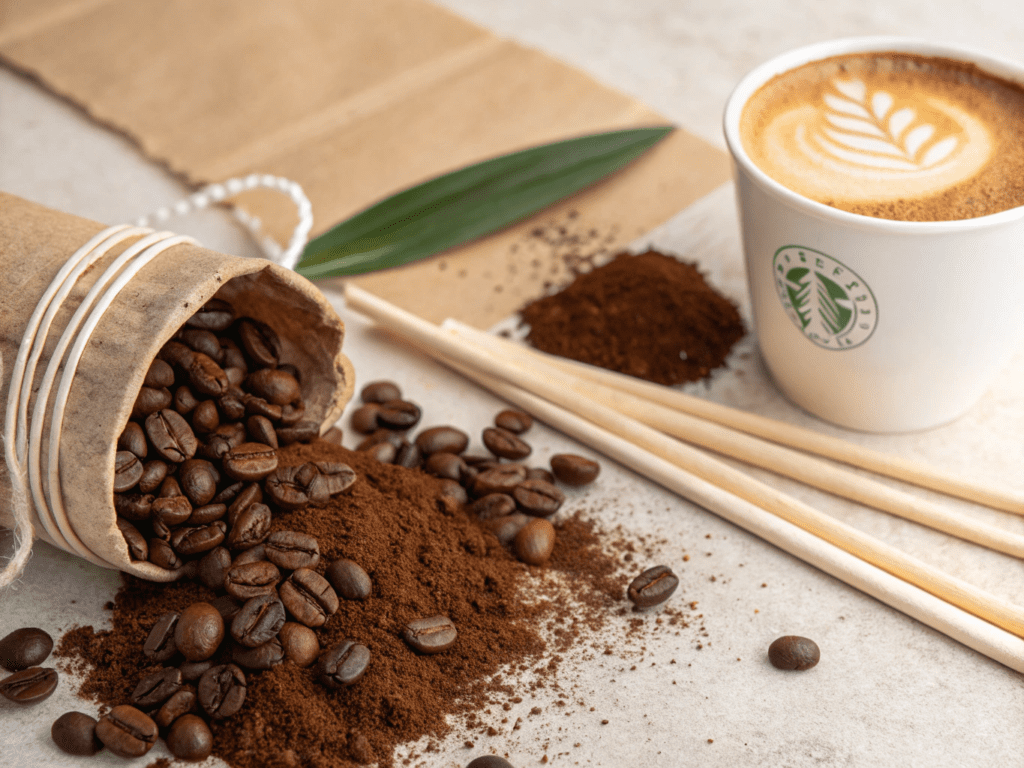
Youn nan inovasyon ki pi konvenkan nan pay dirab soti dirèkteman nan endistri kafe a li menm: pay kafe. Paille remakab sa yo fabrike nan tè resikle kafe, yon sous-pwodwi nan pwodiksyon kafe, ki answit konbine avèk rezin natirèl, fib ki baze sou plant, ak lanmidon. Apwòch enjenyeu sa a adrese de kouran fatra kritik an menm tan: polisyon plastik ak plis pase 6 milya liv fatra kafe ki pwodui globalman chak ane.
Materyèl ki kapab lakòz la se 100% konpostab epi san plastik, ki fèt pou kraze natirèlman nan enstalasyon konpostaj endistriyèl nan 90 a 180 jou, oswa menm nan anviwònman konpòs kay ak jaden nan 12-18 mwa. Pi lwen pase biodégradabilite enpresyonan yo, pay kafe yo fèt pou pèfòmans. Yo ofri durability remakab ak fleksibilite, imite santi a nan pay plastik tradisyonèl san chay anviwònman an. Esansyèlman pou etablisman kafe yo, yo kenbe tèt ak tanperati jiska 75 ° C (167 ° F) epi yo note pou yo pa vin mou, yon pwen doulè komen ak altènativ papye pi bonè. Yo menm tou yo pote yon bon sant kafe sibtil, natirèl, amelyore eksperyans bwason an san yo pa bay okenn gou. Anpil nan yo sètifye pa Biodegradable Products Institute (BPI) ak konfòme yo ak estanda tankou ASTM D6400 ak EN13432.
B. Ogmantasyon Paille Kafe Manjab: Yon Enduljans zewo-fatra
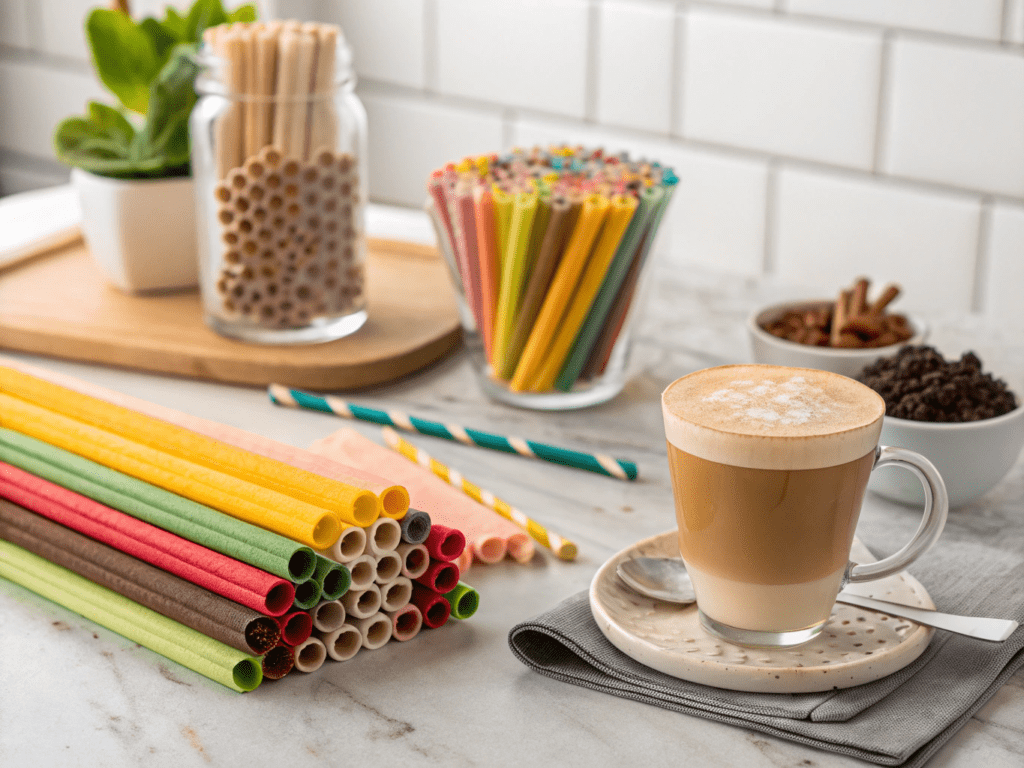
Pou biznis k ap chèche ofri yon eksperyans kliyan vrèman zewo fatra, pay kafe manjab prezante yon fwontyè enteresan. Paiyon inovatè sa yo fèt ak divès kalite materyèl ki baze sou plant tankou kafe repurposed, lanmidon tapioca, farin diri, oswa lòt engredyan natirèl tankou sik ak lanmidon mayi. Mak tankou Sorbos ak EQUO te pionnier pay manjab ki pa sèlman fonksyone kòm yon pay pou bwè, men yo ka boule apre yo fin itilize.
Paille manjab yo enjenyè pou entegrite estriktirèl enpresyonan, kenbe fòm yo pou èdtan nan bwason frèt ak jiska inèdtan nan bwason cho. Yo vini nan opsyon san gou ki pèmèt gou natirèl kafe a briye nan, oswa nan divès gou tankou kafe, vaniy, oswa chokola, ki ofri yon eksperyans kliyan inik, induljan, ak vrèman zewo-fatra. Anvlope endividyèlman, yo tou adrese enkyetid ijyèn pou operasyon gwo volim, vante yon lavi etajè ki rive jiska de zan. Yo prevwa mache pay manjab yo rive nan 446,96 milyon dola nan 2030, sa ki montre afè k ap grandi yo.
C. Paille biodégradables ki baze sou plant: kann, PLA, ak plis ankò
Beyond coffee grounds and edible varieties, a broad category of plant-based biodegradable straws offers diverse solutions:
- Sugarcane Straws (Bagasse): Made from bagasse, the fibrous byproduct of sugarcane processing, these straws are highly sustainable. They boast excellent heat resistance, withstanding temperatures up to 90°C (194°F), and are significantly more resistant to sogginess than traditional paper straws. They are 100% compostable, free from PLA and PFAS, and offer a robust, reliable option for hot coffee.
- Paille PLA (asid polilaktik): Ki sòti nan resous renouvlab tankou lanmidon mayi oswa kann, PLA se yon bioplastik popilè akòz transparan li yo, ki sanble ak plastik. Pandan ke endistriyman konpostabl, pay PLA yo ka defòme oswa adousi pi wo a 60 ° C (140 ° F), sa ki fè yo mwens ideyal pou kafe trè cho sof si espesyalman fòmile kòm rezistan chalè (PLA kristalize, ki kapab reziste jiska 85 ° C). Li enpòtan pou sonje ke PLA mande pou enstalasyon konpostaj endistriyèl espesifik yo kraze, ki ka pa disponib inivèsèl.
- PHA Paille (Polyhydroxyalkanoate): Ki reprezante pwochen jenerasyon biopolymers, pay PHA yo pwodui pa mikwo-òganis epi yo ofri rezistans chalè siperyè, durability amelyore, ak biodégradabilite laj nan divès anviwònman, tankou dlo maren, tè, ak enstalasyon konpostaj, san yo pa kite mikwoplastik.
- Lòt opsyon natirèl: Materyèl tankou wozo, zèb, banbou, ak pay ble bay divès aplikasyon tou. Banbou ak pay wozo yo trè dirab epi yo ka souvan itilize ankò. Paille zèb yo li te ye paske yo te pwodui chimik gratis ak dekonpoze natirèlman nan sis mwa.
D. Paille Kafe ki kapab itilize ankò: Dirab satisfè Dirab
Pou sèten modèl operasyonèl, patikilyèman sa yo ki ankouraje kliyan yo pote pwòp tas yo, pay kafe ki kapab itilize ankò rete yon chwa trè dirab. Sa yo anjeneral fèt ak materyèl dirab tankou:
- Nerjaveèi: Extremely durable and long-lasting for cold drinks, though they can conduct heat rapidly when used with hot beverages, potentially posing a burn risk.
- Glass (Borosilicate): Can withstand very high temperatures without imparting flavor, but are prone to breaking.
- Silikon: 100% BPA-gratis ak trè fleksib, pay silicone (egzanp, KoffieStraw) yo san danje pou bwason cho epi yo zanmitay lave-vaisselle, fè yo pratik pou konsomatè yo. Done Google Trends an Jiyè 2025 te montre yon ogmantasyon toudenkou nan rechèch "paille kafe ki kapab itilize ankò", sa ki mete aksan sou enterè konsomatè k ap grandi nan solisyon alontèm sa yo.
Pandan ke yo ofri siyifikatif rediksyon fatra alontèm, pay ki kapab itilize ankò mande pou yon netwayaj solid ak enfrastrikti sanitasyon pou anviwònman B2B, epi yo toujou depann sou adopsyon kliyan ak angajman nan lave regilye.
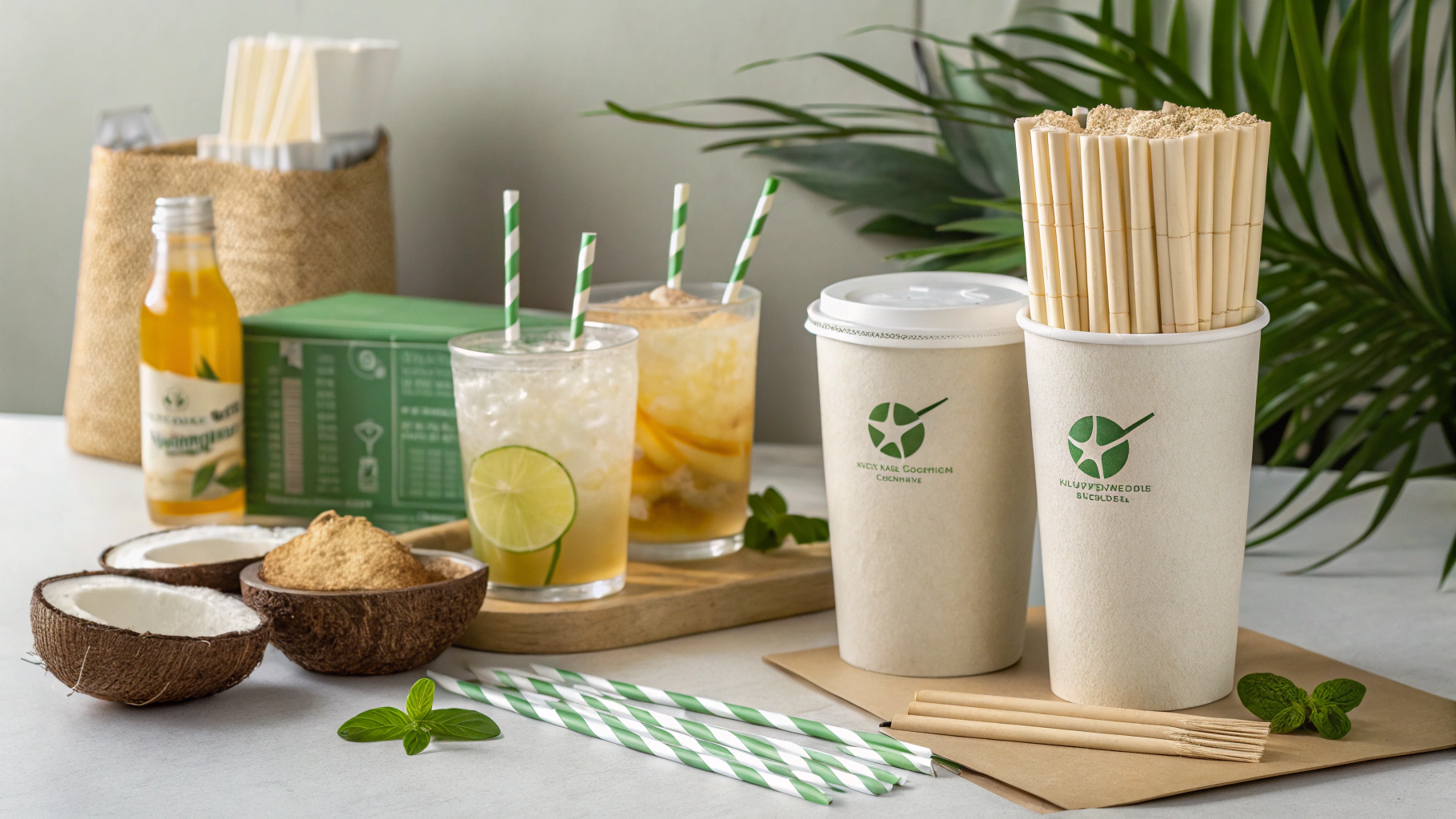
Divès materyèl pay dirab ofri pèfòmans varye ak benefis anviwònman an pou operasyon kafe B2B.

Navige sou mache a: Pèfòmans, Konfòmite, ak pri nan pay kafe
For procurement managers and operations directors, selecting the right sustainable straw material involves a careful evaluation of performance, regulatory compliance, and economic viability.
A. Performance Benchmarks for Sustainable Coffee Straws: Beyond Soggy Paper
The early generation of paper straws, a common first step away from plastic, often became soggy within 20 minutes, severely compromising the customer experience and leading to dissatisfaction. This “soggy straw” dilemma highlighted the critical need for advanced materials.
Today’s innovative materials offer significant improvements:
- Advanced Materials: Pa egzanp, kann ak pay kafe yo fèt pou kenbe entegrite yo pandan plizyè èdtan, menm nan bwason ki cho, yo bay yon eksperyans ki konsistan e ki agreyab pou bwè.
- Rezistans chalè se esansyèl: Anpil pay estanda ki baze sou plant, patikilyèman vèsyon PLA pi bonè, echwe oswa defòme pi wo a 60-90 ° C, ki fè yo pa apwopriye pou kafe cho. Biznis yo dwe egzamine espesifikasyon rezistans chalè pou evite echèk fonksyonèl ak fidbak kliyan negatif. Materyèl tankou kann ak PHA yo fèt espesyalman pou briye nan aplikasyon pou tanperati ki wo.
- Gou ak teksti: Kontwòl kalite se esansyèl. Paiyon dirab pèfòmans segondè yo ta dwe san odè ak san gou, asire yo pa chanje pwofil la gou delika nan kafe. Teksti yo ta dwe tou bay yon santiman konfòtab, ki pa papye.
B. Regulatory Landscape & Compliance for Sustainable Straws: Navigating Global Bans
Chanjman mondyal la kite plastik pou yon sèl-itilize se pa volontè; li legalman obligatwa nan anpil mache kle. Estrateji akizisyon yo dwe priyorite konfòmite pou bese risk enpòtan yo.
- Entèdiksyon plastik mondyal: Inyon Ewopeyen Single-Use Plastics Directive (SUPD) deja entèdi pay plastik, ki gen ladan PLA, nan eta manm yo. Sa a nesesite yon pivot konplè nan altènativ vrèman san plastik pou aksè nan mache Ewopeyen an. Lwa EPR 2022 nan Filipin yo mande pou ogmante objektif rekiperasyon pou anbalaj plastik, ki gen ladan pay, rive nan 50% nan 2025 ak 80% apati 2028, ki afekte dirèkteman responsablite manifaktirè yo.
- Lwa Eta Etazini yo: Ozetazini, eta tankou Kalifòni (AB1276) egzije pay sèlman sou demann, alòske Vil Nouyòk te aplike règ menm jan an an 2021. Biznis yo dwe byen okouran de varyasyon rejyonal nan entèdiksyon plastik ak lwa "paiyon sou demann".
- PFAS Concerns: A growing concern surrounds “forever chemicals” (PFAS) detected in some paper and plant-based straws, used for water resistance. These chemicals can leach into hot beverages and pose significant health and compliance risks, leading to legal liabilities and reputational damage. Sourcing certified PFAS-free options is now a non-negotiable.
- Sètifikasyon: To ensure compliance and genuinely sustainable sourcing, B2B buyers must insist on verifiable certifications. Look for:
- Sètifikasyon BPI (Enstiti pwodwi biodégradables): Confirms industrial compostability in North America (meeting ASTM D6400/D6868 standards).
- EN13432: The European standard for industrial compostability.
- Apwobasyon FDA: Ensures food safety.
- Plastic-Free Verification: Essential for meeting most plastic ban regulations.
C. Economic Implications: ROI and Cost-Benefit for B2B Operations
While sustainable straws can have higher upfront costs—for example, PLA straws surged 67% in price in 2020, and paper straws can be significantly more expensive than plastic—the long-term ROI is compelling.
- Consumer Willingness to Pay: A significant 74% of consumers are willing to pay more for sustainable packaging, and adopting eco-friendly solutions can boost customer loyalty by up to 20%. This translates directly to increased revenue and stronger brand equity.
- Reduced Operational Costs: Shifting to compostable straws can reduce waste disposal fees by diverting materials from landfills. Furthermore, the enhanced brand image attracts environmentally conscious customers, expanding market share without heavy marketing spend.
- Supply Chain Optimization: Strategic bulk purchasing from specialized B2B platforms and direct manufacturers can help optimize costs. Procurement managers should evaluate total cost of ownership, considering not just unit price but also compliance risk, brand uplift, and waste management savings. For more insights on sourcing sustainable options, read our guide on sustainable” target=”_blank” class=”text-primary-dark hover:underline”>sustainable coffee straws for B2B.
D. Comparison Table: Key Sustainable Coffee Straw Types for B2B
| Patikilarite | B2B enpak operasyonèl | Remak Konfòmite | ROI potansyèl |
|---|---|---|---|
| Kafe Grounds | Reduces waste stream, subtle coffee aroma, durable in hot/cold drinks up to 75°C. | 100% compostable (e.g., ASTM D6400, BPI), plastic-free, PFAS-free. | Enhanced brand image, waste diversion, premium perception, customer loyalty. |
| Paille manjab | Zero-waste, high novelty factor, individual hygiene. Holds for hours in cold, 1 hr in hot. | Fully biodegradable, consumable; check allergen compliance. | Premium offering, viral marketing potential, eliminates waste collection. |
| Kan (bagasse) | High heat resistance (up to 90°C), minimal sogginess, sturdy. | 100% compostable, no PLA/PFAS, complies with plastic bans. | Appeals to eco-conscious consumers, robust performance, cost-effective in bulk. |
| PLA (Bioplastik) | Similar feel to plastic, clear options, widely available. | Industrial composting required; may soften >60°C; restricted in some bans. | Widely available, meets some “green” criteria, good for cold drinks. |
| Reusable (Metal/Silicone) | High initial cost, requires washing/storage infrastructure, potential heat conductivity issue (metal). | Long-term waste elimination; specific cleaning protocols needed. | Significant long-term cost savings, strong sustainability messaging, reduces repeat purchases. |
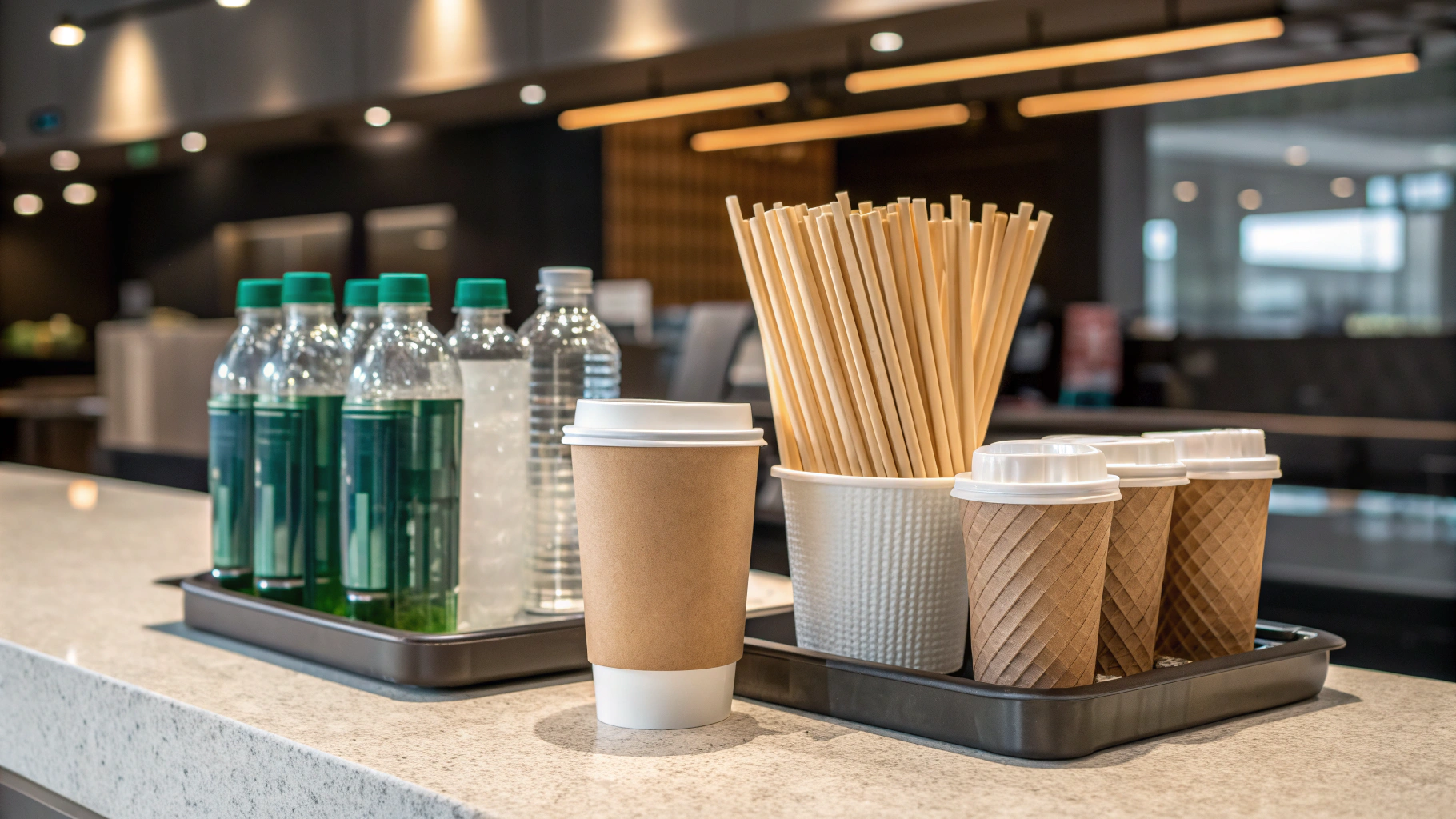
Evaluating performance, compliance, and cost is essential for B2B sustainable straw procurement.
IV. Driving Adoption: B2B Opportunities and Future of Coffee Straws
The imperative to transition to sustainable straws extends beyond mere compliance; it’s a profound opportunity for businesses to gain a competitive edge, deepen customer loyalty, and contribute to a more sustainable future.
A. Enhanced Brand Image & Customer Loyalty: The Sustainability Dividend
Adopte solisyon ekolojik-zanmitay dirèkteman amelyore pwofil Corporate Social Responsibility (CSR) yon konpayi. Sa a rezonans pwofondman ak konsomatè jodi a, espesyalman pi piti demografik ki de pli zan pli bay priyorite enpak anviwònman an nan desizyon acha yo. Biznis ki aktivman diminye anprint plastik yo, lè l sèvi avèk opsyon konpostab sètifye tankou kafe oswa pay kann, jwenn yon avantaj konpetitif enpòtan. Sa a kominike yon angajman otantik pou diminye polisyon plastik, afekte lavi maren, ak ankouraje yon ekonomi sikilè. Aksyon byen mèb sa yo ka atire nouvo kliyan fidèl ak ranfòse pèsepsyon pozitif mak, transfòme yon defi konfòmite nan yon avantaj maketing pwisan.
B. Mini Case Study: Starbucks’ Evolution in Sustainable Straws
Starbucks, a global coffee giant, has been a bellwether in the industry’s struggle with single-use plastics. In 2018, the company committed to eliminating 1 billion plastic straws annually by 2020, initially introducing strawless lids and FSC® certified paper straws. This move was a significant step towards their broader sustainability goals, which include a 50% reduction in waste, carbon emissions, and water usage by 2030.
However, the journey has not been without its challenges. In a significantpilot program in June 2025, Starbucks Korea reintroduced sugarcane-based plastic straws in approximately 200 stores. This decision came in response to persistent customer complaints about the performance of soggy paper straws, highlighting the ongoing tension between sustainability, customer experience, and operational feasibility. This case underscores a vital lesson for B2B decision-makers: true sustainable innovation must balance environmental responsibility with uncompromised product performance. Sourcing heat-resistant, non-soggy options like those available atMomoio” target=”_blank” class=”text-primary-dark hover:underline”>Momoio Heat-Resistant Coffee Strawsis crucial.
C. Future Trends in Sustainable Coffee Straw Innovation: 2025-2035 Outlook
Pwochen 5-10 ane yo pral temwen yon akselerasyon nan inovasyon nan pay kafe dirab, kondwi pa evolye règleman ak zouti syans materyèl.
- Kwasans mache: Yo prevwa mache pay ekolojik la rive nan prèske $ 25.1 milya dola pa 2035, ap grandi nan yon CAGR solid nan 7.3%. Paiyon biodégradables (ki gen ladan papye, banbou, PHA, ak PHBH) yo espere pran yon gwo pati nan mache 60% pa 2030.
- Advanced Materials & Coatings: Atann yon gwo konsantre sou kouch avanse ki reziste dlo pou pay papye ak materyèl ibrid pou durability amelyore. Pwochen jenerasyon bioplastik tankou PHA (Polyhydroxyalkanoate) ak PHBH (Polyhydroxybutyrate-co-hydroxyhexanoate), ki sòti nan byomass, pral genyen enpòtans pou pèfòmans plastik yo ak gwo biodégradabilite nan divès anviwònman, ki gen ladan dlo maren.
- Valorizasyon dechè: Inovasyon k ap ogmante dechè yo, tankou kafe ak bagas kann, ap kontinye elaji, pou ankouraje yon ekonomi sikilè.
- AI-Fueled Faktori: Entèlijans atifisyèl pral jwe yon wòl ogmante nan rechèch materyèl, kondwi dekouvèt nouvo polymère ki baze sou bio ak optimize efikasite pwodiksyon pou pay dirab.
- Solisyon entegre: Mache a pral wè plis solisyon pay milti-itilize, ki gen ladan payi ki kapab itilize ankò, ak pwodwi entegre pay, ki ofri konvenyans amelyore pou konsomasyon sou-ale.
- Konpostaj entelijan: Avansman nan teknoloji konpostaj entelijan pral rann li pi fasil pou biznis yo jere pay konpostab yo, sa ki pral fèmen bouk la sou sik lavi yo.
Tandans nan lavni yo endike gwo kwasans ak inovasyon nan materyèl ak solisyon pay kafe dirab.
Konklizyon: Ogmante eksperyans kafe ou ak chwa dirab
Tranzisyon an lwen plastik yon sèl-itilize se pa sèlman yon tandans pase; se yon chanjman fondamantal ki chanje operasyon biznis yo ak atant konsomatè yo atravè lemond. Pa konpreyansyonkisa pay kafe yo fèand embracing innovative, high-performance sustainable options like coffee grounds and edible straws, your business can achieve critical regulatory compliance, enhance operational efficiency, and capture the loyalty of a growing eco-conscious market. This proactive approach mitigates risks, quantifies cost savings through reduced waste, and significantly uplifts brand value, positioning your enterprise as a market leader in sustainability.
Embracing sustainable coffee straws ensures compliance, boosts efficiency, and enhances brand loyalty.
Act now to future-proof your procurement strategy.Momoio.com” target=”_blank” class=”btn-primary inline-block”>Explore Truly Compostable Options for Your Coffee Shop
Kesyon yo poze souvan (Kesyon yo mande anpil)
Q: How do coffee grounds straws perform in hot beverages compared to paper straws?
A: Coffee grounds straws are engineered to withstand temperatures up to 75°C (167°F) and are significantly more resistant to sogginess than traditional paper straws, providing a consistent and enjoyable experience for hot coffee drinkers in hospitality settings.
Q: Are edible coffee straws a hygienic option for high-volume foodservice operations?
A: Yes, many edible straws are individually wrapped, which addresses hygiene concerns for high-volume operations. They also boast a shelf life of up to two years, making them a practical and zero-waste solution for cafes and restaurants.
Q: What certifications should procurement managers look for to ensure sustainable straw compliance?
A: Key certifications include BPI (Biodegradable Products Institute) for industrial compostability in North America (ASTM D6400/D6868), EN13432 for European industrial compostability, FDA approval for food safety, and explicit plastic-free verification to meet global plastic ban regulations.
Q: How can adopting sustainable straws impact a hospitality business’s brand image and customer loyalty?
A: Adopting eco-friendly straws significantly enhances a company’s Corporate Social Responsibility (CSR) profile, resonating with eco-conscious consumers. This can attract new, loyal customers and reinforce positive brand perception, transforming a compliance challenge into a powerful marketing asset.
K: Ki benefis alontèm pou chanje nan pay konpostab pou operasyon sèvis manje?
A: Pandan ke depans inisyal yo ta ka pi wo, pay konpostab ka diminye frè jete fatra lè yo detounen materyèl ki soti nan depotwa yo. Imaj mak amelyore tou atire kliyan ki gen konsyans anviwònman an, ki kapab ogmante revni ak pati nan mache san depans maketing lou, ki mennen ale nan ROI konvenkan alontèm.