持続可能なビジネス慣行と製品に対する世界的な需要の高まりにより、調達マネージャー、オペレーションディレクター、サステナビリティ責任者、サプライチェーン幹部に前例のないプレッシャーがかかっています。ホスピタリティや外食サービスから小売店や施設向けケータリングに至るまで、あらゆる業界で「グリーン化」の義務は交渉の余地がありません。しかし、この変化は複雑な課題をもたらしています。それは、特にストローのような遍在する使い捨て品目において、「環境に優しい」ラベルが密集し、しばしば誤解を招きやすい状況をどう乗り越えていくかということです。 「生分解性」、「堆肥化可能」、「植物由来」などの用語は頻繁に同じ意味で使用され、最も賢明な意思決定者にとってさえ混乱を招く環境を作り出しています。
この曖昧さは単に意味論的な問題ではありません。これは、ブランドの評判、業務上のコンプライアンス、および長期的な環境目標に影響を与える一か八かのジレンマを表しています。調達におけるミスは、グリーンウォッシングの告発、規制上の罰則、ますます環境意識を高める顧客ベースとの深刻な乖離など、深刻な結果につながる可能性があります。顧客ベースのかなりの 80% が現在、明確な持続可能性への取り組みを掲げたブランドを好みます。欧州連合の野心的な使い捨てプラスチック指令は、米国全土で州レベルでの禁止措置の増加と並んで、世界的な規制の推進を強調し、情報に基づく調達を絶対的な義務に変えています。企業は、罰金を回避するだけでなく、環境への義務や消費者の期待に真に一致し、持続可能なソリューションへの投資が実際に検証可能な効果をもたらすことを保証するために、これらの「グリーン」主張の正確な違いを把握する必要があります。この重要な違いをより深く理解するには、当社の包括的な B2B ガイドを参照してください。生分解性ストローと堆肥化可能なストロー。
「環境に優しい」スペクトルを理解する: ビジネスリーダーのための詳細な考察
The journey of the drinking straw is a compelling reflection of human ingenuity and environmental awareness. From Marvin C. Stone’s innovative paper straw patent in 1888, born out of a desire to avoid the grassy taste and rapid deterioration of natural rye grass, to the widespread plastic dominance of the mid-20th century, convenience often overshadowed ecological impact. However, the 21st century has heralded a powerful resurgence of eco-friendly alternatives, primarily driven by a stark awakening to the catastrophic effects of plastic pollution on marine life. Viral moments, such as the widely shared 2015 video of a plastic straw being removed from a sea turtle’s nostril, ignited global public outrage, fueling powerful campaigns like #stopsucking and catalyzing significant policy changes. Cities like Seattle led the charge in 2018 with single-use plastic straw bans, followed by California’s “straw upon request” policy in 2019, and the EU’s sweeping ban on single-use plastics by 2021.
しかし、持続可能性へのこの緊急な移行は、曖昧な「環境に優しい」主張の蔓延する落とし穴という重大な課題を明らかにしました。 「生分解性」として販売されている製品の多くは、環境破壊の真の基準を満たしていないことが多く、企業に予期せぬ結果や重大な評判リスクをもたらします。ここでは精度が最も重要になります。認定基準を明確に理解して順守しないと、企業は表面的な環境配慮のみを提供するソリューションに投資する危険があります。このようなグリーンウォッシングは消費者の信頼を損ない、持続可能な代替品を採用するという目的そのものを無効にする可能性があります。したがって、「生分解性」や「堆肥化可能」などの用語について正確に記録することは、単なる意味論の問題ではなく、責任ある調達と廃棄物管理にとって戦略的に不可欠です。
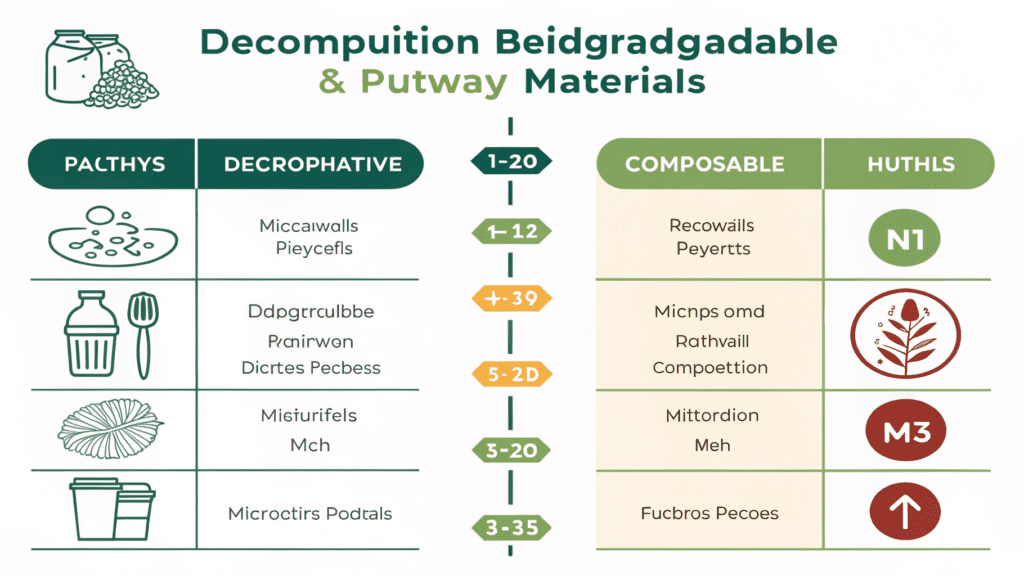
生分解性と堆肥化可能: 業務における重要な違いを明らかにする
検証可能な持続可能性を達成するには、B2B の意思決定者にとって、生分解性ストローと堆肥化可能なストローの重要な違いを明らかにし、業務効率と環境への影響への影響を理解することが重要です。
生分解性レンズ: サプライチェーンにとってそれが本当に意味するもの
生分解性ストローは、主に微生物と酵素の助けを借りて、生物活動を通じて時間の経過とともに自然に分解されるように設計されています。多くの場合、材料にはコーンスターチベースのポリ乳酸 (PLA)、一般的な紙、竹、小麦などが含まれます。コンセプトは魅力的に聞こえますが、サプライ チェーンと廃棄物管理の現実ははるかに複雑です。の分解時間なぜなら、これらのストローの状態は数か月から数年まで大きく変動し、非常に予測不可能だからです。それらの分解は、特定のレベルの熱、湿気、微生物の存在といった「適切な条件」に依存しており、従来の埋め立て地や自然環境ではこれらの条件が満たされることはほとんどありません。たとえば、PLA ストローは、一般的な埋立地で室温で数年間保存できます。
A crucial concern is theenvironmental residuethey can leave behind. Many biodegradable bioplastics, particularly some forms of PLA, may still fragment into microplastic residues, continuing to contaminate soil and marine environments. Furthermore, some can leach chemicals as they slowly degrade, contrary to genuine eco-friendly claims. This ambiguity is compounded by a pervasivelack of universal certification. Many biodegradable products rely solely on manufacturer claims for decomposition capabilities, often lacking the stringent, third-party verified standards that truly ensure environmental safety. For an in-depth look at biodegradable options, consult our dedicated guide onBiodegradable Straws。
The Compostable Advantage: Achieving Verifiable Circularity
堆肥化可能なストローは、生分解性代替品のより高度なサブセットを表します。これらは、特定の管理された堆肥化環境下で、定められた短期間内に有機物(水、二酸化炭素、栄養豊富なバイオマス(腐植土))に完全に分解し、有害な残留物を残さないように特別に設計されています。これらには通常、PHA (ポリヒドロキシアルカノエート)、サトウキビバガス、認定 PLA などの材料が含まれます。主要な差別化要因は、制御された分解。堆肥化可能なストローには、特定の条件、つまり高温、制御された湿度レベル、および主に微生物の活発な環境が必要です。産業用堆肥化施設。家庭での堆肥化が認定されている施設は少数ですが、商業施設の多くは、数週間から数か月以内、通常は 90 ~ 180 日以内に効果的に分解する必要があります。
この迅速かつ完全な故障は、次の方法によって保証されます。厳格な認証基準。生分解性製品協会 (BPI)、CMA、テュフ オーストリア (OK Compost Home/Industrial などの認証を発行) などの評判の高い機関は、製品が分解、毒性、残留物に関する厳しい環境基準を満たしていることを保証する第三者検証を提供しています。この認証は、B2B の意思決定者に、真の環境への影響とコンプライアンスに必要な保証を提供します。
| 基準 | Biodegradable Straws | 堆肥化可能なストロー |
|---|---|---|
| 基本的な定義 | 生物学的活動により時間の経過とともに自然に分解されます。 | Decomposes completely into organic matter (CO2, H2O, biomass) in controlled conditions. |
| Decomposition Speed | Months to years; highly variable and often unpredictable. | Weeks to months (e.g., 90-180 days) in industrial composting facilities. |
| Required Conditions | “Right conditions” (often unspecified and rarely met in nature/landfill). | Specific high temperatures, moisture, and microbial activity (industrial or certified home compost). |
| Environmental Residue | Can leave microplastics or leach chemicals; does not enrich soil. | No harmful toxic residues or microplastics; creates nutrient-rich humus. |
| Certification Standards | Often lacks universal certification; relies on manufacturer claims. | Certified by recognized bodies (BPI, TÜV AUSTRIA, CMA) ensuring strict environmental standards. |
| Common Materials | Generic PLA, paper (sometimes with plastic coatings), wheat, bamboo. | Certified PLA, PHA (e.g., from canola oil), sugarcane bagasse, advanced paper. |
| コストへの影響 | Potentially lower upfront cost, but higher environmental risk and potential for greenwashing. | Generally higher initial cost, but stronger, verifiable sustainability claim and brand value. |
| Waste Management Path | Primarily landfill-bound, where decomposition is negligible; can contaminate recycling. | Requires access to industrial composting infrastructure; some are home compostable. |
| Brand Reputation Impact | Risk of greenwashing accusations if claims are not met. | Strong, verifiable message of genuine environmental responsibility. |

Industry Insights & Future Outlook: Positioning Your Business for Sustainable Leadership
これらのバズワードを超えて、企業はいくつかの重大な誤解や課題に直面する必要があります。特に多くの紙や竹のストローの場合、重大な懸念事項は次のとおりです。PFASの問題. Studies have detected per- and polyfluoroalkyl substances (PFAS), known as “forever chemicals,” in a high percentage of these products. These chemicals, used for water resistance, do not easily break down and have been linked to serious health issues, fundamentally undermining their eco-friendly claims. This issue necessitates diligent sourcing and supplier transparency. For more on the compliance and ROI implications of your choices, read our guide onBiodegradable Straws: B2B Compliance and ROI。
Another stark reality is theIndustrial Composting Dilemma. Even truly “compostable” straws often end up in landfills due to inadequate composting infrastructure. The US, for example, has just over 100 qualified industrial composting facilities, making proper disposal challenging for many businesses and consumers. This infrastructure gap negates the intended benefits and highlights the need for broader systemic changes. Furthermore, the perennial issue ofdurability vs. customer experiencepersists. Paper straws, despite advancements, are frequently criticized for becoming soggy and losing structural integrity, leading to a poor user experience and potentially increased waste if multiple straws are used. Finally,アクセシビリティに関する懸念cannot be overlooked. For individuals with disabilities, the rapid softening of paper straws or the rigidity of alternatives like metal or glass can pose significant challenges and safety risks, making the transition from flexible plastic straws an ableist issue if not approached thoughtfully.
These challenges are not insurmountable; rather, they serve as crucial considerations for businesses positioning themselves for sustainable leadership. The global compostable straws market, valued at approximately USD 1.8 billion in 2024, is projected to reach USD 3.8 billion by 2035, growing at a robust CAGR of 7.1%. The broader eco-friendly straw market is expected to surge from USD 12.3 billion in 2025 to nearly USD 25.1 billion by 2035, driven by stringent plastic bans, surging consumer demand for sustainable products, and proactive corporate sustainability initiatives. The foodservice sector, accounting for 52.8% of the compostable straws market in 2025, is a key demand driver, with major chains like McDonald’s and Starbucks investing in compostable alternatives.

In terms ofkey material trends, advanced paper straws are expected to dominate the compostable market, holding a 44.3% share in 2025. This is due to continuous innovation in multi-ply construction and moisture-resistant coatings that prevent sogginess without compromising biodegradability. Certified PLA straws, derived from plant starches like corn or sugarcane, also continue to gain traction, though their reliance on industrial composting remains a critical point of consideration. However, the most exciting developments lie innext-generation innovations. Polyhydroxyalkanoates (PHA) straws, for instance, are cutting-edge biopolymers mimicking traditional plastic but offering robust biodegradability in diverse environments, including marine water, soil, home, and industrial compost, without leaving microplastics. The “Phade straw,” made from PHA, is a prime example of this technology, engineered to withstand hot liquids up to 100°C while remaining FDA-approved and PFAS-free.
Beyond PHA, “hyper-compostable” solutions are emerging. Loliware, a pioneering startup, has developed seaweed-based straws that look and feel like plastic, yet rapidly biodegrade in the ocean within weeks and can even be eaten. Researchers are also exploring bacterial cellulose straws, produced by bacteria feeding on sugar, which are reported to be stronger than paper, cost-comparable to plastic, and capable of breaking down without industrial composting. These innovations are reshaping the landscape of sustainable packaging, moving towards solutions that seamlessly integrate with existing consumer habits while minimizing environmental impact.
Manufacturing advancementsare also crucial, with advanced automated systems capable of producing thousands of straws per hour, employing biodegradable paper rolls and food-safe adhesives, further improving durability and cost-effectiveness. This trend aligns with a broader focus oncircular economy integration, fostering partnerships between manufacturers and composting facilities to streamline end-of-life disposal and repurposing. Regionally, North America has historically been a dominant market, with the US projected for a 7.5% CAGR in compostable straws. Asia-Pacific, however, held a significant 48.5% market share in the eco-friendly straws market in 2024, driven by expanding retail and consumer spending, and is poised for the fastest growth. Europe, with its stringent regulations, also remains a key market. These strategic opportunities allow forward-thinking businesses to leverage these trends for genuine differentiation, ensuring compliance, mitigating environmental risks, and ultimately building long-term brand value.
Paving Your Path to Authentic Sustainability: Next Steps for Your Business
Paving your path to authentic sustainability requires a proactive and informed strategy. Begin by conducting a thorough audit of your current straw usage, waste streams, and local composting infrastructure to understand your unique needs.Prioritize certified options, insisting on straws with verifiable certifications like BPI or TÜV AUSTRIA to ensure genuine environmental benefits and avoid the pitfalls of greenwashing. Demand radical transparency from your suppliers, asking for detailed material breakdowns, decomposition data, and proof of certifications. Crucially,educate your team and customersthrough clear communication strategies regarding proper disposal methods and the environmental benefits of your chosen sustainable straws. Explore innovative solutions, such as PHA or advanced paper straws, that offer superior performance and wider degradability options. Consider a multi-pronged approach, combining single-use compostable options with reusable alternatives where appropriate for your specific operational context. Finally, connect with experts and partner with sustainability consultants or specialized suppliers to tailor a straw strategy that aligns perfectly with your business needs and environmental goals.
Don’t let greenwashing obscure your commitment to genuine environmental stewardship. Embrace the opportunity to lead in a market projected to reach over $25 billion, mitigate regulatory risks, and elevate your brand’s market position by delivering verifiable sustainability. Ready to transform your packaging strategy with truly sustainable and certified straw solutions? Contact us today for a personalized consultation and a comprehensive assessment of your business’s eco-friendly straw needs.
よくある質問
Biodegradable straws break down naturally over time through biological activity, but the timeline and environmental conditions are often undefined and may take months or years. Compostable straws are a subset designed to completely decompose into organic matter (water, CO₂, biomass) within a short, specified timeframe (about 90–180 days) under controlled industrial composting conditions, leaving no harmful residues.
Certification by organizations such as BPI (Biodegradable Products Institute), CMA, or TÜV AUSTRIA provides third-party verification that compostable straws meet strict environmental standards. This ensures they break down completely within a specified timeframe, leave no toxic residues, and are safe for their intended composting environment. Without certification, compostability claims can be misleading.
PFAS (per- and polyfluoroalkyl substances) are synthetic chemicals often used to make paper and bamboo straws water-resistant. They are called “forever chemicals” because they do not break down easily in the environment or the human body and are linked to various health risks. Their presence undermines the eco-friendly claims of straws and poses compliance and safety concerns.
Compostable straws are designed to decompose, but only if they reach the right facilities. Many require industrial composting environments with controlled high temperatures and moisture. If placed in conventional landfills, they may persist for years like traditional plastics. Some newer materials are home-compostable or even marine-biodegradable, but proper disposal remains critical.