
はじめに: カリフォルニアの進化するプラスチック問題をナビゲートする
カリフォルニア州は長年にわたって環境法の最前線に立っており、しばしば全米、さらには世界に影響を与える前例を築いてきました。州内で事業を展開する企業にとって、このリーダーシップは、特に使い捨てプラスチックに関する動的な規制環境につながります。これらの進化する義務を理解することは、単に法律を遵守することだけではありません。これは、サステナビリティへの意識がますます高まる市場において、業務の効率化、リスクの軽減、ブランドの評判を高めるための戦略的必須事項です。
カリフォルニア州のプラスチック製ストロー規制を無視したり、そのニュアンスを誤解したりすると、運営上および商業上に具体的な影響を与える可能性があります。企業は、直接的な金銭的罰則を超えて、環境意識の高い消費者層を遠ざけ、ブランドイメージを傷つけ、持続可能な取り組みを積極的に採用する競合他社に後れを取るリスクがあります。この包括的なガイドでは、カリフォルニア州のプラスチックストローを管理する現在の州全体および地方自治体の義務を詳細に分析し、調達マネージャー、運営責任者、持続可能性責任者、サプライチェーン幹部に、プロアクティブに適応し、プラスチック汚染を最小限に抑え、変化する情勢の中で競争上の優位性を確保するために必要な洞察を提供します。Proactive adaptation to California’s plastic straw regulations is crucial for business success and brand reputation.
The Core of California’s Plastic Straw Regulations for Businesses
Contrary to a common misconception, California does not enforce a complete statewide ban on plastic straws. Instead, the state’s primary legislation focuses on restricting theautomatic distributionof single-use plastic straws, rather than an outright prohibition. This distinction is crucial for businesses, as compliance hinges on understanding where and when these restrictions apply. Navigating this regulatory framework is paramount for any enterprise to avoid fines, maintain a positive public image, and align with California’s broader environmental objectives.
AB 1884 を理解する:「リクエストに応じてストロー」ポリシー
カリフォルニア州のプラスチック製ストロー規制の基礎となるのは議会法案 1884 (AB 1884) で、2019 年 1 月 1 日に正式に発効しました。この画期的な法律は、主にフルサービスのレストランに対して「リクエストに応じてストロー」ポリシーを導入しました。 AB 1884 に基づき、これらの施設が顧客に使い捨てプラスチック ストローを自動的に提供することは明示的に禁止されています。代わりに、顧客はストローを受け取るために具体的にストローを要求する必要があります。
2018年にAB1884に署名して法律として成立させた際、当時のジェリー・ブラウン知事は、その控えめだが象徴的な意図を強調し、「あらゆる形態のプラスチックが地球を窒息させている」と述べた。同氏は、この法案は国民の意識を高め、プラスチック汚染による環境への広範な影響を軽減することを目的とした「小さな一歩」であるとみなした。企業にとって、これは運用プロトコルの根本的な変化、つまりデフォルトの製品からオプトイン システムへの移行につながります。
「フルサービスのレストラン」の定義と主な免除
AB 1884 の重要な側面は、AB 1884 が管理する施設の具体的な定義にあります。この法律は、給仕スタッフがテーブルで注文を受け取り、店内で消費する料理を提供する施設として特徴付けられる「フルサービス レストラン」に適用されます。この正確な文言は、多くの客足の多い非着席店が当初、州全体の「リクエストに応じてストローを提供する」要件から免除されていることを意味します。
たとえば、ファストフード レストラン、デリ、コーヒー ショップ、ドライブスルーは、AB 1884 の開始当初は規制の対象ではありませんでした。この法律上の微妙な違いにより、多くの観察者が「抜け穴」と呼ぶものを外食産業のかなりの部分に生み出し、プラスチック製ストローを自動的に提供し続けることを可能にしました。これは、運用ディレクターと調達チームにとって、サービス モデルに基づいてルールが大幅に異なる、二股に分かれたコンプライアンス戦略を意味しました。
カリフォルニア州プラスチックストロー法違反に対する罰則
While the statewide law is not an outright ban, non-compliance with AB 1884 carries escalating penalties designed to encourage adherence. State Public Health Officers are primarily responsible for enforcement, typically initiated through local environmental health divisions, such as the Tulare County Environmental Health Division. Businesses found in violation of AB 1884 will first receive two warnings. These initial notices serve as an opportunity for establishments to rectify their practices and train staff on the “straws-upon-request” policy.
However, subsequent non-compliance following these warnings incurs financial repercussions. Violations can result in a fine of $25 per day. To prevent undue financial burden, the law caps the maximum annual fine for AB 1884 violations at $300. While this might seem a modest sum for larger enterprises, repeated fines can accumulate, and more importantly, the associated reputational damage from being identified as non-compliant can far outweigh the monetary penalty.California’s AB 1884 mandates “straws-upon-request” for full-service restaurants, with penalties for non-compliance.

Beyond Statewide: Local Plastic Straw Bans in California
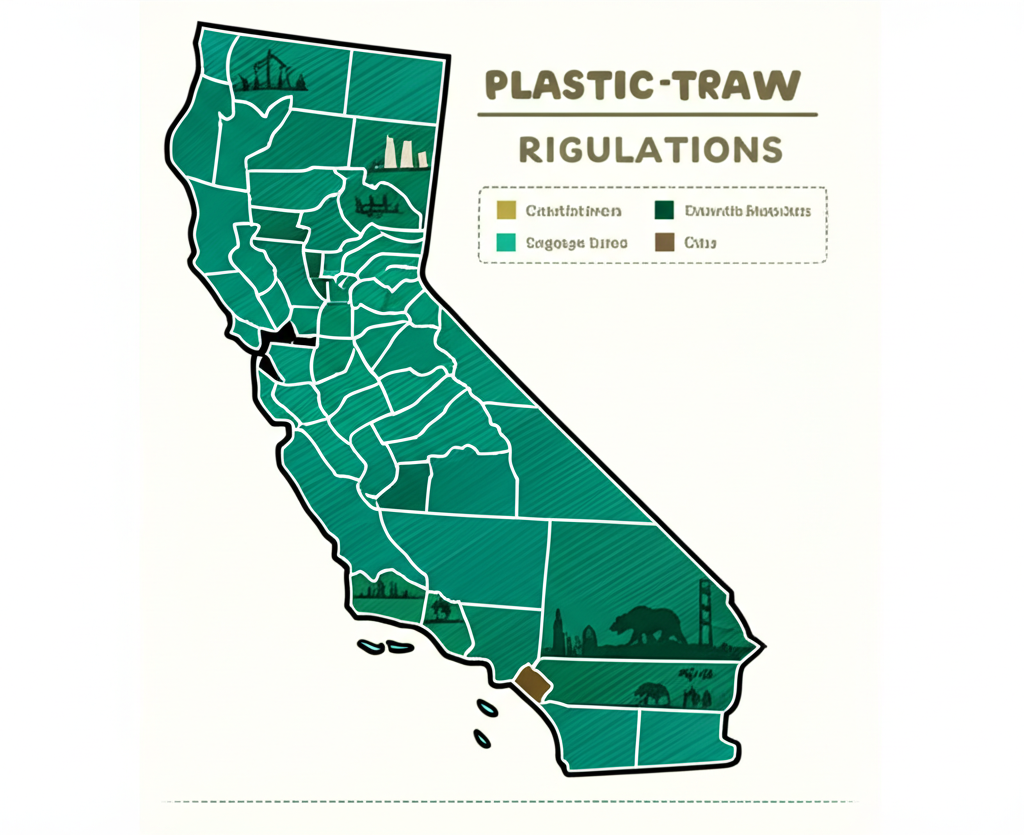
While AB 1884 sets a baseline for plastic straw regulations statewide, it is crucial for businesses, especially those operating across multiple locations, to understand that individual cities and counties in California possess the authority to implement stricter ordinances. This decentralized regulatory power has led to a patchwork of local laws that often go beyond the “straws-upon-request” policy, demanding a localized strategy for true compliance and sustainability leadership.
Cities with Complete Plastic Straw Bans
Numerous cities across California have taken a more aggressive stance against single-use plastic straws, enacting outright bans within their jurisdictions. These local ordinances mean that plastic straws are often not provided at all, even upon customer request, with some exceptions for medical or disability needs.
- San Francisco: A trailblazer in environmental policy, San Francisco implemented a full ban on plastic straws, stirrers, and other plastic food accessories effective July 1, 2019. This ordinance is particularly stringent, as it also restricts compostable plastic straws and mandates that acceptable single-use straws (like paper) only be available upon request. Plastic straws are only to be provided for disability or medical needs.
- Malibu: Even earlier, in June 2018, Malibu moved to bar all single-use plastic straws, stirrers, and cutlery, reflecting its strong commitment to protecting its coastal environment.
- Monterey, Santa Barbara, and Del Mar: These cities, along with others such as Calabasas, Davis, Alameda, Carmel, San Luis Obispo, Oakland, and Berkeley, have also enacted outright bans on plastic straws, underscoring a growing municipal trend.
- Considerations for Accessibility: It’s important to note that while some bans are comprehensive, many local ordinances, like San Francisco’s, include provisions for individuals with disabilities, ensuring that plastic straws can be provided upon request if they are deemed medically necessary. This acknowledges legitimate accessibility needs while still driving the broader goal of plastic reduction.
Los Angeles County’s Extended “Straws on Request”
膨大な人口と多数の企業が拠点を置くロサンゼルス郡も、AB 1884 の当初の範囲を超えて規制を拡大しました。2019 年 4 月から、ロサンゼルス市は「リクエストに応じてストロー」要件をより幅広い食品販売業者に拡大しました。この拡大された政策は、フルサービスのレストランだけでなく、郡の非編入区域内で営業するファストフードチェーン、大型食料品店、その他の大手食品販売業者にも適用された。さらに、ロサンゼルス郡の条例では、セルフサービスのプラスチック製ストローディスペンサーを特に禁止しており、無意識の消費を促進するすぐに入手できるものを排除することを目的としています。この措置により、ファストフード店に対する州全体の法律に当初存在していた「抜け穴」が大幅に塞がれ、市場の大量生産部門に影響を与えた。
Navigating Varied Local Plastic Straw Regulations
カリフォルニア州の都市や郡にさまざまな規制がパッチワークで存在するため、企業、特に複数の拠点や広範なサプライチェーンを持つ企業にとって、コンプライアンスの複雑な課題が生じています。たとえば、レストラン チェーンの調達マネージャーは、単一のポリシーを州全体に適用することはできませんが、代わりに、それぞれの特定の地方管轄区域に準拠するために熱心な調査を実施する必要があります。そのため、多くの場合、購入、在庫管理、従業員トレーニングに関して地域に合わせた戦略が必要になります。
The broader context of these varied local rules signals a clear trend: increasing restrictions on single-use plastics. Businesses that proactively anticipate and adapt to this trajectory, rather than merely reacting to individual mandates, will be better positioned for long-term success. Understanding these nuances is crucial for supply chain executives who must ensure their procurement strategies align with both state and municipal environmental objectives.Local California ordinances often impose stricter plastic straw bans, requiring localized business compliance strategies.
Operational Impacts and Strategic Shifts for Businesses
カリフォルニア州のプラスチック製ストローを取り巻く規制状況は、単なる法的ハードルではありません。それは重大な運用上の課題と戦略的な機会をもたらします。これらの要求に適応するには、単にある材料を別の材料に交換するだけでは不十分です。それには、調達プロセス、顧客体験戦略、持続可能性への全体的な取り組みを総合的に再評価することが必要です。この転換は、政策、消費者行動、競争上の差別化を急速に形作っているプラスチック削減の世界的な推進の影響を受けています。
使い捨てプラスチックストローの代替品の採用
AB 1884, while restricting plastic straws, explicitly permits the use of non-plastic alternatives. This flexibility has spurred innovation and market growth in sustainable straw options. For operations and procurement teams, the decision on which alternatives to adopt involves considerations of cost, durability, customer preference, and environmental impact.
- 紙ストロー: A common and widely available alternative, paper straws meet compliance requirements for both AB 1884 and most local bans. Advances in manufacturing have improved their durability, though perceptions around sogginess persist.
- Metal Straws: Often offered as reusable options, metal straws are permissible if they adhere to California Retail Food Code standards for cleanliness and sanitization. These can be a premium offering for dine-in establishments or sold as retail items.
- 竹ストロー: Made from natural, fast-growing resources, bamboo straws offer a rustic, sustainable appeal. They can be single-use or reusable depending on processing.
- サトウキビストロー: Derived from a byproduct of the sugar industry, sugarcane straws are notable for their sturdy feel and biodegradability, offering a compelling blend of functionality and environmental benefit.
- パスタストロー: Edible and biodegradable, pasta straws offer a unique, zero-waste solution, though their application might be limited to certain beverage types.
単なるストローを超えた包括的な持続可能性を目指す企業にとって、より広範囲の持続可能な使い捨て製品を検討することが鍵となります。非プラスチック製ストローに関する包括的な B2B ガイドは、材料の特性、認証、サプライヤーのオプションに関するさらなる洞察を提供し、調達管理者が情報に基づいた意思決定を行うのに役立ちます。B2B 向けの非プラスチック製ストローの詳細をご覧ください。
費用対効果の分析: ストロー代替品への移行
Transitioning away from conventional plastic straws involves an initial investment that supply chain executives and operations directors must carefully evaluate. Alternative materials often have a higher unit cost compared to their plastic counterparts. This requires adjusting budgets and potentially negotiating new new terms with suppliers. However, this initial outlay is quickly offset by significant long-term ROI potential.
The benefits extend beyond simply avoiding regulatory fines. By embracing sustainable alternatives, businesses enhance their brand image, appeal to eco-conscious consumers, and contribute positively to their corporate social responsibility profile. Consumer preference is undeniably shifting towards sustainable options; studies consistently show that customers are willing to support businesses aligned with their environmental values. This shift translates into increased customer loyalty, positive public relations, and a strengthened market position. Furthermore, proactive adoption can mitigate future compliance risks as regulations inevitably become stricter.
Here’s a strategic breakdown of common options for procurement and operations teams:
| 特徴 | B2B運用上の影響 | コンプライアンスノート | ROIポテンシャル |
|---|---|---|---|
| プラスチックストロー | Low immediate unit cost, established supply chains, high inventory ease. | AB 1884 “upon request” for full-service restaurants; outright bans in numerous California cities. | Risk of recurring fines (up to $300/year after warnings), significant negative public relations, erosion of brand trust among sustainability-conscious consumers. |
| 紙ストロー | Higher unit cost, potential for faster degradation in beverages, shelf-life concerns. | Meets AB 1884 “upon request” policy; acceptable for most local bans. | Enhanced “green” brand image, avoids all fines related to plastic straw distribution, positive customer perception, potential for increased customer loyalty from eco-conscious demographics. |
| Reusable Straws | Higher initial investment per unit, requires robust cleaning and sanitation protocols, inventory management for reuse cycles. | Meets all existing California state and local regulations for single-use plastics, aligns with strong sustainability mandates. | Significant long-term cost savings by reducing recurring disposable straw purchases, positioned as a premium offering, strong environmental leadership, appeals to high-value, environmentally committed customers, potential for retail sales of branded reusable options. |
| No Straws/Opt-in | Minimal product cost for the business, operational simplicity by reducing inventory items and handling. | Compliant with “upon request” laws for full-service restaurants; aligns with outright bans where applicable. | Maximal waste reduction, substantial cost savings on straw procurement, strong and unequivocal “green” stance, appeals to a segment of consumers who prefer to avoid straws entirely, contributes to overall waste reduction goals. |
For businesses seeking to transition specifically to biodegradable options, a guide on selecting the best biodegradable plastic straws for B2B needs can offer detailed insights into material composition, performance, and certifications crucial for compliance and sustainability claims.Discover the Best Biodegradable Plastic Straws for B2B.Transitioning to sustainable straw alternatives offers long-term ROI through enhanced brand image and reduced compliance risks.
Mini Case Study: San Luis Obispo’s Full Ban (2019) and Business Adaptation
The City of San Luis Obispo provides a compelling real-world example of how local regulations can drive business adaptation. In 2019, the city enacted a comprehensive ban on plastic straws, mandating a complete shift away from their use in all food service establishments. This ordinance went beyond the statewide “straws-upon-request” model, requiring businesses to proactively seek out and implement alternative solutions.
Local restaurants, including popular spots like Splash Café, responded by transitioning proactively to non-plastic alternatives. They embraced paper and other compostable straws, ensuring a seamless experience for customers while adhering to the new regulations. A key aspect of their successful adaptation involved diligent customer communication. Staff were trained to explain the new policy, educate patrons about the environmental benefits of the change, and introduce the new straw materials. This transparency helped mitigate potential customer friction and built goodwill.
Key Takeaways for Procurement and Operations
The experience of businesses in San Luis Obispo offers valuable lessons for procurement and operations leaders statewide:
- Proactive Supplier Diversification: Relying on a single source for single-use items is risky in a volatile regulatory environment. Businesses need to identify and vet multiple suppliers for alternative straw materials to ensure supply chain resilience and competitive pricing.
- Employee Training: Front-line staff are the direct interface with customers. Comprehensive training on “straws on request” policies, local ban specifics, and the benefits of alternative materials is critical for smooth implementation and positive customer interactions.
- 顧客とのコミュニケーション: Proactively informing customers about new policies and sustainable choices can transform a regulatory challenge into a positive brand narrative. Explaining the “why” behind the change fosters understanding and builds positive brand perception.
- Competitive Advantage through Compliance: Embracing compliance as an opportunity for innovation, rather than a burden, allows businesses to position themselves as leaders in sustainability. In a market where environmental consciousness is growing, this proactive stance can become a significant competitive advantage. Businesses that lead the charge in sustainable foodware, like focusing on biodegradable straws for restaurants, often see a boost in customer loyalty and brand reputation. Explore biodegradable straw options for restaurants.
San Luis Obispo’s ban highlights the importance of proactive supplier diversification, training, and communication for business adaptation.
The Broader Context: California’s Leadership in Plastic Reduction
California’s regulations concerning plastic straws are not an isolated policy but a deliberate component of the state’s far-reaching and consistent commitment to environmental stewardship. For decades, California has historically led the nation in enacting stringent environmental legislation, often serving as a blueprint for other states and even countries. Understanding this broader strategic context is vital for businesses, as it indicates a clear trajectory of increasing regulations that will continue to impact B2B supply chains, product design, and operational mandates for years to come.
California’s Historic Stand Against Plastic Pollution
California’s efforts to combat plastic pollution extend far beyond straws:
- Single-Use Plastic Bags: The state was the first in the U.S. to implement a statewide ban on single-use plastic bags. Enacted in 2014, Proposition 67 further solidified this stance in 2016, prohibiting major retailers from distributing plastic bags and imposing a minimum 10-cent charge for alternative bags. This groundbreaking move drastically reduced plastic bag litter and set a powerful precedent.
- Plastic Microbeads: Reflecting its commitment to protecting marine ecosystems, California also banned plastic microbeads in personal care products, with the prohibition becoming effective in 2020. These tiny plastic particles, commonly found in exfoliants and toothpastes, were identified as significant contributors to microplastic pollution in waterways and oceans.
- Combatting Marine Debris: These legislative actions collectively reflect a consistent and unwavering commitment to combating marine debris. Plastic straws, although a small fraction of overall plastic waste by weight, are a highly visible symbol of single-use plastic consumption and are consistently ranked among the top ten contributors to plastic marine debris globally. The difficulty in recycling them—as most recycling machines are not equipped to process straws—means that only about 9% of all used plastic has been recycled worldwide, making reduction and alternative materials critical. (Source: The Guardian)
Future of Plastic Reduction: SB 54 Mandates and Projections
The regulatory landscape in California is poised for even more transformative changes with the enactment of Senate Bill 54 (SB 54), also known as the Plastic Pollution Prevention and Packaging Producer Responsibility Act. Signed into law in 2022, SB 54 represents the nation’s most ambitious extended producer responsibility (EPR) policy for packaging. It mandates aggressive targets for plastic waste reduction and recycling, fundamentally shifting the burden of plastic pollution from consumers and municipalities to manufacturers.
Key mandates and projections under SB 54 include:
- 25% Less Single-Use Plastic Packaging: By 2032, California mandates that 25% less single-use plastic packaging must be sold within the state. This target compels manufacturers to reduce plastic use at the source, innovate in product design, or switch to alternative materials.
- Recyclable or Compostable by 2032: All single-use plastic packaging and foodware sold in California must be recyclable or compostable by 2032. This requires significant investment in material science and infrastructure to ensure proper end-of-life solutions. (Source: UCLA Institute of the Environment and Sustainability)
- 65% Recycling Rate by 2032: The law also sets a challenging target of a 65% recycling rate for single-use plastic packaging by 2032. This will necessitate substantial improvements in collection, sorting, and reprocessing capabilities.
- $5 Billion Industry Fund: SB 54 establishes a $5 billion industry fund, financed by plastic producers, to address plastic pollution initiatives. This fund will support infrastructure improvements, consumer education, and environmental restoration efforts, creating a collective responsibility model. (Source: Stanford University)
These comprehensive mandates under SB 54 signal a clear direction for businesses: proactive engagement with sustainability is no longer optional. The plastic straw legislation, in this broader context, serves as a “gateway plastic” initiative, preparing consumers and industries for more extensive regulations aimed at a circular economy.California’s comprehensive plastic reduction efforts, including SB 54, signal a clear trajectory towards a circular economy.

Competitive Advantage and Business Case
In a market increasingly driven by environmental awareness, strategic compliance with plastic reduction mandates offers more than just risk mitigation—it presents a profound opportunity for competitive advantage. For B2B decision-makers, quantifying the benefits of proactive sustainability can build a compelling business case for investment.
First, considercost savings. While initial investments in alternative straws may be higher, the avoidance of recurring fines (up to $300 annually per violation of AB 1884) is a direct financial benefit. More significantly, optimized supply chains focused on sustainable, compliant materials can yield long-term savings by reducing waste disposal costs and future-proofing against increasingly stringent regulations.
Second,リスクの軽減extends beyond financial penalties. Adhering to evolving plastic laws minimizes legal exposure and protects against reputational damage. In an era where negative social media attention can spread rapidly, being perceived as environmentally irresponsible can erode customer trust and brand equity.
Conversely, investing in sustainable solutions can lead to a significantブランド価値の向上. Consumers, particularly in environmentally conscious markets like California, are increasingly choosing brands that align with their values. A strong commitment to plastic reduction enhances brand perception, fosters customer loyalty, and attracts new business opportunities. This positive brand association translates into higher sales and a more resilient market position.
Finally, there is a clear市場シェアの機会. Businesses that proactively transition to sustainable alternatives and communicate their efforts effectively can capture market share from slower-moving competitors. As regulations tighten and consumer preferences solidify, being a recognized leader in sustainable practices can differentiate a company, attract top talent, and open doors to partnerships with environmentally aligned organizations. This forward-looking approach positions businesses not just for compliance, but for sustained growth in a greener economy.Proactive sustainability offers significant competitive advantages through cost savings, risk mitigation, and brand value uplift.

よくある質問(FAQ)
Q: Is there a complete statewide ban on plastic straws in California?
A: No, California’s AB 1884 primarily implements a “straws-upon-request” policy for full-service restaurants, not an outright ban. However, many individual cities and counties have enacted stricter, complete bans.
Q: What are the penalties for hospitality businesses not complying with AB 1884?
A: Businesses receive two warnings, after which violations can incur a $25 daily fine, capped at $300 annually. Reputational damage can be more significant than monetary penalties.
Q: How can a multi-location restaurant chain ensure compliance across California?
A: Chains must research and comply with specific local ordinances in each jurisdiction, often requiring a localized strategy for procurement, inventory, and staff training beyond statewide rules.
Q: Are there exceptions for plastic straws for medical or disability needs?
A: Yes, many local bans and even some statewide interpretations include provisions allowing plastic straws to be provided upon request for individuals with disabilities or medical needs.
Q: What are the best sustainable straw alternatives for high-volume foodservice operations?
A: Paper, bamboo, and sugarcane straws are popular biodegradable options. Reusable metal straws are also viable for dine-in, requiring robust cleaning protocols.
Conclusion: Strategic Compliance for a Sustainable Future
California’s progressive approach to regulating plastic straws is a clear and unequivocal signal of its unwavering commitment to environmental stewardship and a broader vision for a circular economy. For procurement managers, operations directors, sustainability officers, and supply chain executives, this landscape demands more than mere reactionary compliance. It’s a strategic imperative that directly impacts operational costs, brand reputation, and future market positioning.
Proactive adaptation, including a thoughtful transition to viable alternatives and a deep understanding of the nuanced local mandates, will ensure not only the avoidance of penalties but also a robust competitive edge. By aligning with evolving consumer values and preparing for an accelerating trend of plastic reduction, businesses can transform regulatory challenges into powerful opportunities for innovation, efficiency, and enhanced brand value. The time to act is now.
Optimize your operations for compliance and sustainability. Review your current single-use plastic inventory and develop a comprehensive transition plan for alternative straws today to secure your market position in California’s green economy.持続可能なソリューションについては、お問い合わせください