A strategic guide for procurement managers, operations directors, and sustainability officers in the hospitality & foodservice industries.
レストラン業界は極めて重要な時期にあり、持続可能性がニッチな関心事から中核的な運営上の義務へと進化しています。調達マネージャー、オペレーションディレクター、サステナビリティ責任者、サプライチェーン幹部として、あなたは、複雑な規制やサプライチェーンの現実に対処しながら、環境に配慮した実践に対する消費者の高まる需要に応えるという任務を負っています。使い捨てプラスチック、特にストローからの移行はもはや任意ではなく、市場での位置付け、コンプライアンス、そして最終的には収益性に影響を与える戦略的必要性となっています。
この傾向を無視すると、多額の規制罰金から、ますます目の肥えた顧客ベースにおけるブランドイメージの低下に至るまで、重大な経営上および商業上のリスクが伴います。このガイドは、環境に優しいストローを大量に調達し、コンプライアンスを確保し、ブランドを強化し、より環境に優しい未来に有意義に貢献するための戦略的フレームワークを提供します。
I. The Urgent Need for Eco-Friendly Straws: Market & Regulatory Pressure
The momentum for eco-friendly straws is undeniable, propelled by powerful market dynamics and an evolving regulatory landscape. Businesses that fail to adapt risk falling behind, losing market share, and facing legal repercussions.
A. Market Growth & Consumer Demand Driving Eco-Friendly Straws Adoption
The global foodservice industry is undergoing a profound transformation, with sustainable practices at its core. The global sustainable foodservice packaging market was estimated atUSD 62.89 billion in 2024, with projections indicating a substantial rise toUSD 105.54 billion by 2033, reflecting a Compound Annual Growth Rate (CAGR) of 5.92% from 2025 to 2033. This growth is directly influenced by the burgeoning eco-friendly straw market itself, which is projected to reach2035年までに251億ドル(CAGR 7.3%)、持続可能な製品への需要の高まりが後押ししています。
この堅調な市場拡大は、消費者行動の重要な変化によって支えられています。印象的な消費者の 80% が環境に優しい製品を好むようになりました、その好みは、食事の選択とレストランへの忠誠心に直接影響を与えます。クイックサービス レストラン (QSR) の拡大とオンライン食品配達プラットフォームの持続的な成長により、持続可能な使い捨てソリューションへの需要がさらに高まっており、環境に優しいストローへの移行は単なる選択肢ではなく、競争上の必須事項となっています。
B. Regulatory Landscape & Plastic Straw Bans Shaping Procurement
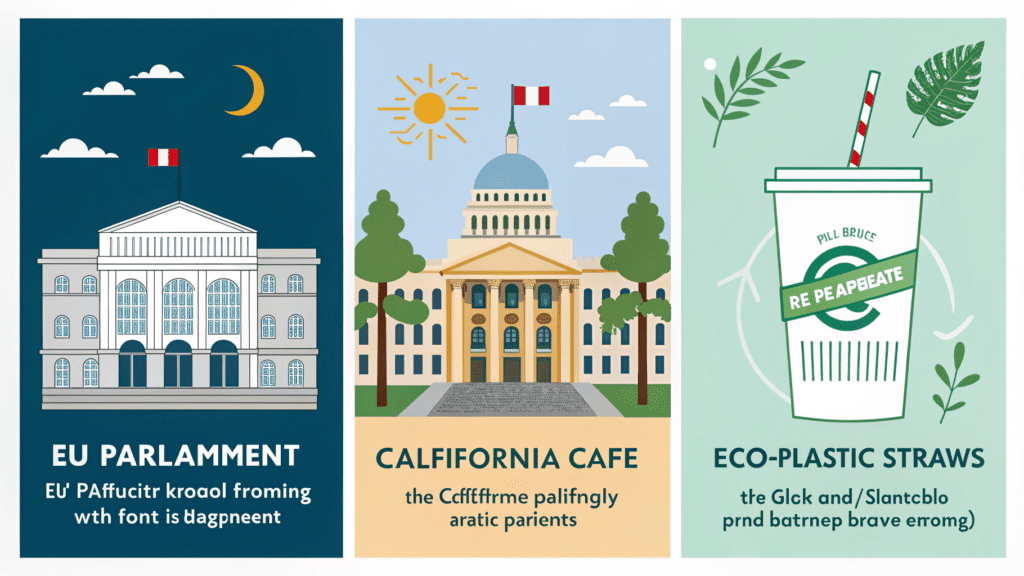
世界中の規制当局が使い捨てプラスチックに対して断固たる措置を講じており、食品サービス業界の調達戦略を根本的に再構築しています。の欧州連合、2021年7月3日より使い捨てプラスチックストローを禁止、海洋ごみの 70% を構成する品目を特に対象とする画期的な指令です。主要経済圏によるこの積極的な姿勢は、世界政策の先例となる。
同様の立法措置は全米で加速している。カリフォルニア、ニューヨーク、オレゴン、ロードアイランド、バーモント、ワシントンを含む米国のいくつかの州は、州全体でプラスチックストローの禁止、または「要請に応じて」政策を実施している。サンフランシスコのような都市はさらに進んでおり、生分解性製品協会 (BPI) またはテュフ オーストリア認定の堆肥化可能また、従来のプラスチックと同様に機能する「堆肥化可能なプラスチック」のポイ捨てを明確に禁止しており、認定された真に分解可能な代替品の必要性を強調しています。台湾がアジアで目指しているのは、2025年までに使い捨てプラスチックストローをすべて廃止する、この政策は、活気に満ちたタピオカ業界やその他の分野に重大な影響を及ぼします。これらの規制は単なる提案ではありません。これらはレストランの営業合法性と市場アクセスに直接影響を与える義務です。
C. 環境上の必須事項: プラスチック廃棄物に対する無策の代償
Beyond market demand and regulatory pressure, the environmental toll of traditional plastic straws presents a compelling argument for immediate action. An estimated8.3 billion plastic straws have polluted beaches since 2019, with a staggering8 million tons of plastic entering oceans annually. This unchecked pollution has severe ecological consequences: over1.1 million marine mammals are reportedly killed each year by plastic debris, highlighting the devastating impact on biodiversity.
再生不可能な化石資源から作られた従来のプラスチックストローは、分解までに最長200年、生態系や食物連鎖に浸透する残留性のマイクロプラスチックに断片化します。それらの生成は、焼却時に有毒な燃焼副産物の原因にもなります。環境に優しい代替品に切り替えることで、限りある資源への依存を劇的に減らし、有毒物質の排出を軽減し、蔓延するプラスチック汚染の問題に直接対処し、より健全な地球と業界のより回復力のある未来に貢献します。
レストランが消費者の需要に応え、進化する世界的な規制に準拠するには、環境に優しいストローを採用することが不可欠です。
II. Decoding Eco-Friendly Straw Materials: Performance & Compliance
Navigating the array of eco-friendly straw materials requires a deep understanding of their performance characteristics, environmental benefits, and compliance nuances. Decision-makers must select options that align with operational needs, customer expectations, and regulatory requirements.
A. Paper Straws: A Common Transition with Evolving Performance
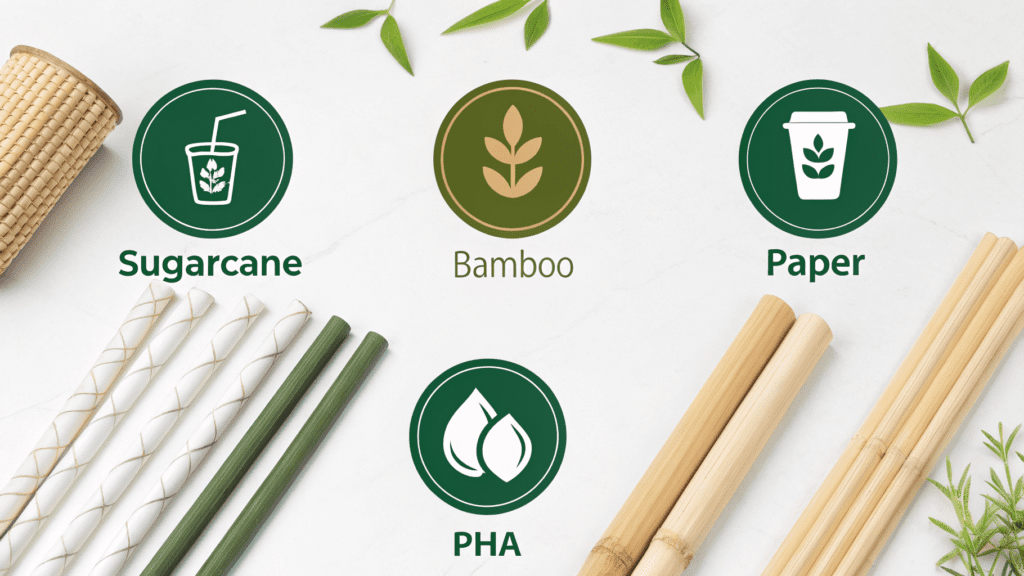
Paper straws represent one of the most common initial transitions for businesses moving away from plastic. They are widely available, typically100% biodegradable, and compostable, often made from Forest Stewardship Council (FSC)-certified paper, signaling responsible sourcing. In industrial composting environments, they biodegrade naturally in45-90 days, a significant improvement over plastic.
Early versions of paper straws were widely criticized forsogginessand premature disintegration, negatively impacting the customer experience. However, modern designs have addressed these concerns with enhanced durability and moisture resistance, often through innovative coatings. A critical concern remains the potential presence ofPFAS “forever chemicals”in some paper straws, used for water resistance, which has prompted FDA phase-out discussions and demands for stringent supplier scrutiny to ensure genuinely safe and eco-friendly products.
B. Plant-Based Bioplastics: PLA, PHA, Sugarcane, Agave
The evolution of bioplastics offers advanced solutions that often mimic the feel and performance of traditional plastic while being environmentally responsible.
- PLA (Polylactic Acid) Straws: Derived from renewable resources like corn starch, PLA straws offer transparency and mechanical properties similar to conventional plastic. They are compostable under industrial conditions, making them a popular choice where such facilities are accessible. PLA straws are designed for cold beverages and perform well without sogginess.
- PHA (Polyhydroxyalkanoates) Straws: Considered a breakthrough, PHA straws are derived from renewable plant sources (e.g., cornstarch, sugarcane). They are home and industrial compostable, and critically, marine degradable in as little as 90-180 days、海洋環境においても環境フットプリントを大幅に削減します。 PHA ストローは高い耐久性と従来のプラスチックに非常に近い感触を提供し、さまざまな種類の飲料でプレミアムな顧客体験を実現するのに最適です。
- サトウキビストロー: サトウキビ加工の繊維状副産物であるバガスから作られたこれらのストローは、アップサイクルに最適な選択肢です。彼らです 100% 家庭で堆肥化可能、PLA/BPA/PFAS フリー、温かい飲み物にも冷たい飲み物にも非常に丈夫で、溶けることなく信頼性が高く快適なユーザーエクスペリエンスを提供します。
- リュウゼツラン ストロー: テキーラとアガベ シロップ製造の副産物であるアガベ繊維からアップサイクルされたアガベ ストローは、温かい飲み物にも冷たい飲み物にも耐久性があり、水浸しになりません。生分解性があり、分解するように設計されています。 within 12 months, with 95% degradation in just 6 months in landfills, and leave no microplastics. They are non-toxic and offer a strong sustainability narrative.
C. Natural Fiber Straws: Wheat, Reed, Bamboo
For a more rustic or natural aesthetic, fiber-based straws offer fully biodegradable and compostable options derived directly from plants.
- Wheat Stalk Straws: An ingenious use of agricultural byproduct, these straws are 100% natural, plastic-free, PFAS-free, sturdy, and zero-waste. They hold up well in both hot and cold beverages, providing a natural and eco-conscious choice.
- Reed Plant Stems: Organic, water-resistant, and durable for both hot and cold beverages, reed straws are compostable in soil and marine environments, making them an environmentally robust option.
- 竹ストロー: Natural, rapidly renewable, and requiring minimal resources to grow, bamboo straws are 100% biodegradable and compostable, offering high environmental friendliness. While reusable bamboo straws can withstand 10-20 uses, careful ethical sourcing is crucial to avoid issues like monoculture that can undermine their sustainability credentials.
D. Innovative & Edible Options for Unique Experiences
Beyond the primary categories, innovative edible and novel material straws provide unique customer experiences and absolute zero-waste solutions.
- パスタストロー: Edible and compostable, these straws can even be flavored, offering a completely zero-waste solution that adds an interactive element to beverages.
- 海苔ストロー:育てやすく炭素吸収性が高く、驚くほどプラスチックの海藻ストローに近い質感です。 急速に生分解されて海洋動物の餌になる、優れた海洋フレンドリーなプロファイルを提供します。
- 稲わら: 完全に生分解性があり、多くの場合グルテンフリーで食用に適している稲わらは、さまざまな飲料に適しており、消費したり自然分解させたりすると、真の循環ソリューションを提供します。
食用ストローは本質的に安全で毒性がなく、消費されなければ自然に分解するため、環境負荷が大幅に軽減され、環境に配慮したブランドに説得力のあるストーリーを提供します。
E. 比較表: B2B 調達向けの主要な環境に優しいストロー
| 特徴 | B2B運用上の影響 | コンプライアンスノート | ROIポテンシャル |
|---|---|---|---|
| 紙ストロー | 広く普及しており、スタッフにも馴染みがあります。以前のバージョンでは水浸しになる傾向がありました。現代のものは改良されています。 | Generally biodegradable/compostable; crucial to check for PFAS-free certification. | 一部の代替品よりも初期コストが低く、基本的なプラスチック禁止コンプライアンスを満たしています。品質が悪い場合に顧客が不満を抱くリスク。品質の向上により苦情が減り、ブランドイメージが向上します。 |
| サトウキビストロー | 温かい/冷たい飲み物に丈夫で、優れたユーザーエクスペリエンスを提供します。ねっとり感は最小限。 | 100% 家庭で堆肥化可能、PLA/BPA/PFAS フリー一般的に入手可能な証明書。 | ブランドイメージの向上と強力な持続可能性の物語。普通紙より若干高価かもしれませんが、堅牢な性能により顧客からの苦情が軽減され、適切に堆肥化されれば廃棄物の流れのコスト削減の可能性が高まります。プレミアムを払っても構わない環境意識の高い消費者に強くアピールします。 |
| PHAストロー | 耐久性と性能が高く、従来のプラスチックの感触に近く、さまざまな種類の飲料に適しています。 | Home & industrial compostable, marine degradable (90-180 days). Strong future-proofing against stricter regulations. | Premium user experience justifies higher cost. Positions brand as cutting-edge in sustainability. Significantly positive environmental impact for brand story and consumer engagement. Strong compliance with evolving regulations, reducing long-term risk. |
| リュウゼツラン ストロー | Durable in hot/cold beverages, designed to prevent sogginess. Consistent performance. | Biodegradeswithin 12 months (95% in 6 months in landfill)without microplastics. | Upcycled material enhances sustainability narrative, resonating with environmentally aware customers. Good performance minimizes customer service issues. While initial cost might be higher, the strong eco-credentials can attract and retain a valuable customer segment, leading to increased revenue and reduced waste disposal costs over time. |
| Reusable Straws (Metal/Glass) | Requires significant washing/sanitization infrastructure, robust inventory management, and loss prevention strategies. High labor for cleaning. | No disposal compliance concerns if reused; ensures long-term plastic avoidance. | High upfront cost for inventory and specialized dishwashing equipment/labor. Long-term cost savings on disposables; strong sustainability statement for dine-in. However, operational complexities and potential for loss/breakage can reduce overall efficiency and ROI unless strategically focused on specific dine-in only applications. Not practical for high-volume takeout. |
Choosing the right eco-friendly straw material balances performance, compliance, and cost for your restaurant.
III. Strategic Bulk Sourcing of Eco-Friendly Straws: Best Practices
Successful transition to eco-friendly straws hinges on a strategic approach to bulk procurement, focusing on supplier reliability, robust certifications, and cost-effectiveness.
A. Identifying Reputable Bulk Suppliers for Eco-Friendly Straws
Partnering with the right suppliers is paramount for consistent quality and supply. Prioritize suppliers specializing in sustainable foodservice products, such asServous, WebstaurantStore, Good Start Packaging, and Holy City Straw Company. These companies often have expertise in eco-friendly materials and compliance.
A practical first step is to inquire with your current food service supplier about their eco-friendly straw options; for example,US Foods’ “Serve Good®” portfoliooften includes such alternatives. Look for companies offeringwholesale pricing, free samples, and volume discountsfor large orders to manage costs effectively. For businesses with higher volume needs or specific customization requirements, consider direct wholesale manufacturers likePanda Bambu, which may offer custom orders and larger Minimum Order Quantities (MOQs), sometimes requiring30-50 cartonsfor certain products. For more detailed regulatory information,consult our comprehensive guide on sustainable packaging regulations。
B. Certifications and Quality Assurance for Sustainable Sourcing
Due diligence in sustainable sourcing is critical. Always verify certifications to ensure genuine eco-friendliness and compliance. Look for certifications likeBiodegradable Products Institute (BPI), Compost Manufacturing Alliance (CMA), or TÜV AUSTRIAfor industrial and/or home compostability standards. These certifications ensure that products will break down as claimed under specific conditions.
Furthermore, ensure products are explicitly labeled as100% plant-based, PLA-free, BPA-free, and PFAS-freefor genuine eco-friendliness and safety. SeekFDA approvalfor materials that come into contact with food, andFSC® Certifiedlabels for sustainably sourced paper products. Before committing to large orders, always request samples to test durability in various beverages (hot, cold, smoothies) and confirm no off-taste or undesirable characteristics.
C. Cost-Effectiveness and ROI of Eco-Friendly Straws
While the initial cost per eco-friendly straw may behigher than conventional plasticcounterparts, strategic bulk purchasing significantly mitigates this difference. Beyond unit cost, the return on investment (ROI) extends to avoiding potential regulatory fines and attracting a growing segment of higher-spending, eco-conscious customers.
Research indicates that switching to eco-friendly options can lead to long-term savings through improved brand perception and increased customer loyalty. For reusable options, studies show thatreusable plastic dishes need 10-17 usesto be more sustainable than single-use alternatives, demonstrating a break-even point and long-term ROI potential from disposables. For smaller businesses, considercollaborative purchasing initiativeswith other local restaurants or businesses to leverage larger volume discounts and collectively reduce costs. Explore more ROI insights in ourdeep dive into sustainable packaging ROI。
D. Mini Case Study: Cava’s Holistic Sustainability Impact
Mediterranean fast-casual chainCavaexemplifies a comprehensive and impactful approach to sustainable sourcing and operations, demonstrating that sustainability extends far beyond just straws. Cava actively publishes an Impact Report detailing its efforts across its supply chain and operations.
Notably, Cava partnered withToo Good To Go, a food waste reduction initiative, redirecting an estimated77,360 meals in the past yearto minimize food waste and support communities. This initiative directly addresses food security while reducing environmental burden. Furthermore, Cava collaborates withRubiconto enhance its composting and recycling services, ensuring that sustainable packaging and food waste are properly diverted from landfills. This integrated approach not only boosts Cava’s brand image and resonates with its customer base but also drives operational efficiencies by reducing waste disposal costs and optimizing resource utilization.
Strategic bulk sourcing and verified certifications are key to successful eco-friendly straw implementation.
IV. Overcoming Operational Challenges & Maximizing Impact
Implementing eco-friendly straws isn’t just a procurement decision; it requires strategic operational adjustments and clear communication to maximize its positive impact and ensure a seamless customer experience.

A. Addressing Durability and Customer Experience with Eco-Friendly Straws
The transition to eco-friendly straws requires careful consideration of material durability to maintain customer satisfaction. Choose straw materials based on the specific beverage type and expected duration of use. For instance,sugarcane or PHA strawsare robust choices for hot drinks or prolonged use in cold beverages, with PHA straws designed to decompose rapidly, inas little as 90 days in soil。
Communicate the benefits of the chosen material to customers, setting appropriate expectations for performance (e.g., politely explaining that paper straws may soften slightly over extended periods). Offer a variety of sizes, from cocktail to standard, smoothie, and boba colossal sizes, to ensure the appropriate fit and performance for all menu items.Expert opinion highlights durable plant-based straws (PHA, sugarcane, agave) as crucialfor a positive customer experience, as they closely resemble the performance characteristics of traditional plastic.
B. Navigating Disposal and Composting Complexities
Proper disposal is critical for realizing the environmental benefits of compostable straws. Procurement managers must understand local composting infrastructure; many compostable straws, particularly PLA, require産業用堆肥化施設which may not be readily available in all regions. Without access to such facilities, compostable products may end up in landfills, where they behave similarly to conventional plastics.
To guide customers and staff, clearly label disposal bins and packaging. Educate staff thoroughly on the importance of separating compostable items, as even20% improper disposal can significantly undermine environmental benefits. Regulations, such as those in San Francisco, explicitlyprohibit compostable plastic straws if littered, emphasizing the need for proper facility access and diligent waste stream management.
C. Staff Training and Communication for Sustainable Initiatives
A successful sustainability initiative requires comprehensive staff buy-in and effective communication. Train employees on the environmental benefits of eco-friendly straws, their proper handling, and correct disposal protocols. Empower staff to articulate the restaurant’s commitment to sustainability to guests, building a shared narrative and reinforcing brand values.
Implement a“straws upon request” policyto significantly reduce overall straw consumption byapproximately 30%, leading to considerable resource and cost savings. Integrate sustainability training into new employee onboarding and conduct regular refreshers to ensure ongoing adherence and awareness. This proactive approach not only optimizes your eco-friendly straw program but also positions your staff as knowledgeable ambassadors for your brand’s sustainability mission. For more on staff training, see ourguide to sustainable operations training。
Effective operational adjustments and clear communication maximize the positive impact of eco-friendly straws.
V. Future Trends & Innovation
The landscape of sustainable foodservice is continually evolving, driven by innovation in materials, processes, and regulatory foresight. Staying ahead of these trends is crucial for long-term competitive advantage.
The broader compostable packaging market is projected to reach$121.38 billion by 2025, indicating a widespread shift and increasing availability of innovative alternatives beyond straws. The bioplastics market, a key component of this shift, is experiencing robust growth, estimated to reachUSD 42.37 billion by 2034, growing at a CAGR of 14.10% from 2025 to 2034. This expansion is driven by policy pressure, stronger corporate sustainability targets, and improving feedstock flexibility, leading to more diverse and high-performing materials.
Future trends over the next 5-10 years will likely see:
- Next-Generation Bioplastics: Continued development of advanced bioplastics like PHA that offer superior performance (heat resistance, durability) and enhanced degradability (e.g., marine biodegradability), moving closer to truly circular solutions.
- Upcycled Agricultural Waste: Increased utilization of agricultural byproducts and waste streams (e.g., coconut leaves, rice husks, mango peels) to create novel, fully biodegradable materials for straws and other disposables, reducing both waste and reliance on virgin resources.
- Edible Packaging Expansion: Growth in diverse edible straw options and broader edible packaging, offering true zero-waste solutions that can be consumed or naturally degrade into the environment if uneaten.
- Smart Packaging Integration: Evolution towards “smart packaging” that incorporates sensors or indicators for food safety and freshness, while simultaneously being compostable or highly recyclable.
- Enhanced Certification & Traceability: More stringent and globally harmonized certification standards for compostability and biodegradability, alongside advanced supply chain traceability (e.g., leveraging blockchain) to verify sustainability claims from source to disposal.
- Reusable Systems Scaling: Increased adoption and refinement of reusable container and cutlery programs, especially for dine-in and loyalty programs, driven by both environmental goals and long-term cost savings.
- PFAS-Free Mandates: Stricter regulations and consumer demand for PFAS-free coatings in all food contact materials, pushing manufacturers toward safer and truly non-toxic solutions.
- Carbon Footprint Optimization: Greater focus on Life Cycle Assessments (LCAs) to evaluate the full environmental impact of materials, including production and transport, driving innovation towards materials with the lowest overall carbon footprint.
These innovations will provide foodservice businesses with an even wider array of effective, compliant, and environmentally superior options, enabling a more profound commitment to sustainability.
Future trends in sustainable foodservice promise innovative materials and enhanced compliance for restaurants.
VI. Competitive Advantage & Business Case
Embracing eco-friendly straws and broader sustainable sourcing is not merely a cost center; it is a powerful strategic investment that delivers tangible competitive advantages and a compelling business case for B2B decision-makers.
Quantifiable benefits include:
- Cost Savings & Risk Mitigation: Proactive adoption of eco-friendly straws helps restaurants avoid punitive fines associated with plastic straw bans. While initial unit costs may be higher, bulk purchasing and reduced overall consumption through “straws upon request” policies can lead to significant savings. Furthermore, integrating sustainable practices across the supply chain, while potentially incurring higher upfront costs for “green” materials, yields long-term savings by optimizing resource use, reducing waste, and mitigating future regulatory risks. For example, reusable dishes, though requiring high upfront investment, surpass the sustainability and cost-effectiveness of single-use items after just 10-17 uses。
- Enhanced Brand Value & Customer Loyalty: With 80% of consumers preferring eco-friendly products, a visible commitment to sustainability directly translates to an uplift in brand perception. Restaurants that prioritize environmental responsibility attract and retain a growing segment of eco-conscious consumers, particularly Millennials and Gen Z, who are often willing to pay a premium for sustainable options. This leads to increased foot traffic, repeat business, and positive word-of-mouth marketing, building a stronger, more resilient brand.
- 市場シェアの機会: The global eco-friendly straw market’s projected growth to 2035年までに251億ドル signals a vast and expanding market segment. By aligning with this trend, restaurants can capture a larger share of environmentally-minded diners and differentiate themselves in a crowded marketplace. Early adopters gain a significant first-mover advantage, establishing themselves as leaders in sustainable practices.
- Operational Efficiency & Waste Reduction: Beyond straws, a holistic sustainable sourcing strategy (e.g., local sourcing, food waste reduction programs like Cava’s partnership with Too Good To Go, comprehensive recycling and composting initiatives) can significantly reduce operational waste and its associated costs. This extends to optimizing energy and water use within the restaurant, further contributing to the bottom line.
In essence, integrating eco-friendly straws and sustainable sourcing into your restaurant’s core operations is a strategic imperative that translates environmental responsibility into quantifiable economic and reputational gains. It’s an investment in your brand’s future resilience and market leadership.
Sustainable sourcing offers restaurants significant competitive advantages and a strong business case.
結論
The transition to eco-friendly straws is a strategic necessity for modern restaurants, driven by pervasive market demand (projectedeco-friendly straw market growth to $25.1 billion by 2035) and critical regulatory shifts (EU plastic baneffective July 2021). By understanding the diverse material options, prioritizing certified bulk suppliers, and embracing a holistic approach to sustainability across your operations, your restaurant can not only navigate this shift successfully but also significantly enhance its brand reputation, attract a growing segment of eco-conscious consumers, and contribute meaningfully to environmental preservation. Proactive engagement with sustainable sourcing safeguards your operations, secures your market position, and demonstrates undeniable leadership in a rapidly evolving industry.
Take action now to transform your restaurant’s environmental impact and elevate your brand’s commitment to sustainability. Request a tailored bulk sample pack of certified eco-friendly straws to see the quality and compliance benefits firsthand.