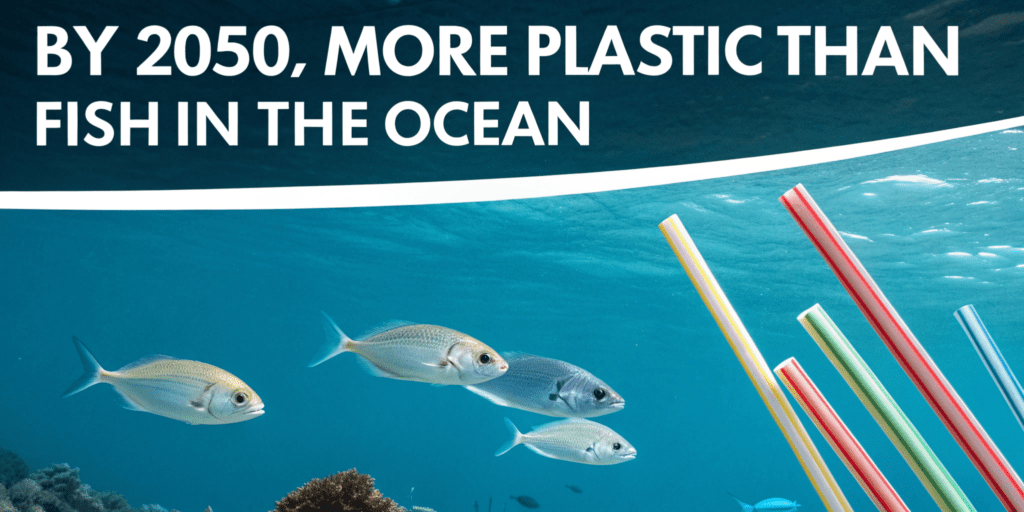
The escalating crisis of plastic pollution presents a profound challenge and a critical opportunity for businesses worldwide. Each year, an alarming 4.8 to 12.7 million metric tons of plastic leak into our environment, with projections indicating that by 2050, plastics in the ocean could tragically outweigh fish. Conventional single-use plastic straws, designed for moments of convenience, persist for centuries, inflicting severe and lasting harm on delicate marine ecosystems. For forward-thinking procurement managers, operations directors, sustainability officers, and supply chain executives, this isn’t merely an environmental issue; it represents an escalating commercial liability, a significant compliance risk, and a growing threat to brand reputation. Ignoring this global imperative means facing increasing regulatory scrutiny, potential consumer backlash, and missed opportunities for market leadership.
The Global Imperative: Addressing Plastic Pollution with Marine-Biodegradable Straws
The sheer volume of plastic waste inundating our oceans demands immediate and effective solutions from the business community. From the consumer-facing hospitality sector to large-scale institutional purchasing, the demand for sustainable alternatives is no longer a niche preference but a core expectation. Businesses that fail to adapt risk not only environmental damage but also tangible operational and commercial impacts, including fines for non-compliance, supply chain disruptions as traditional materials are phased out, and diminished customer trust. The pressure from consumers, environmental organizations, and evolving regulations makes a proactive stance on genuinely sustainable materials paramount.
Embracing marine-biodegradable straws is crucial for hospitality and foodservice to mitigate risks and enhance brand reputation.
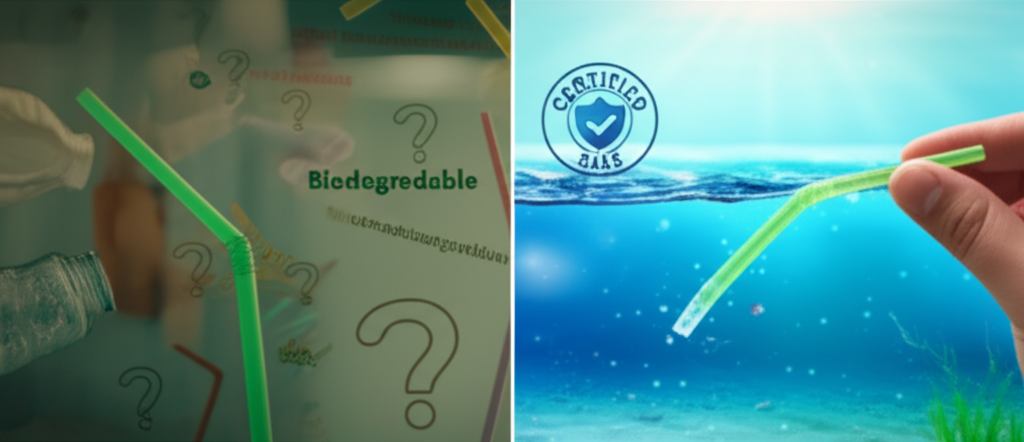
Demystifying “Marine-Biodegradable Straws”: Definitions and Distinctions
The terms “biodegradable” and “compostable” are frequently used interchangeably in marketing, often leading to significant confusion and, at times, what amounts to “greenwashing.” This ambiguity can mislead environmentally conscious businesses and consumers into believing products will break down harmlessly in any natural environment, including the ocean. However, as the National Oceanic and Atmospheric Administration (NOAA) clarifies, many plastics labeled “biodegradable” are designed to degrade only under very specific industrial composting conditions, which are characterized by high temperatures (e.g., 136°F/58°C) and controlled microbial activity – conditions rarely, if ever, found in natural marine environments.
The European Parliament further underscores this distinction, stating that most bioplastics are engineered for industrial composting, not for natural marine environments. True marine biodegradability, therefore, refers to the ability of a material to break down completely into benign components (such as carbon dioxide, water, and biomass) within a reasonable timeframe under ambient ocean conditions, without leaving behind harmful microplastics or toxic residues. Uncertified claims not only deceive businesses committed to sustainability but also carry the risk of “greenwashing” backlash, which can severely damage brand integrity and market standing. For B2B decision-makers, understanding these precise definitions and demanding verifiable certifications is critical to ensuring genuine environmental impact and avoiding regulatory pitfalls.
True marine biodegradability means complete breakdown in ocean conditions, crucial for avoiding greenwashing and regulatory issues.
The Science of Degradation: Which Marine-Biodegradable Straws Perform?
Scientific research is continually advancing our understanding of how different materials truly degrade in marine environments. While many so-called “biodegradable” plastics fall short, certain advanced materials demonstrate promising degradation rates when exposed to coastal ocean conditions and their native microbial communities.
Polyhydroxyalkanoates (PHA) straws, for instance, stand out as a leading solution. Studies have shown that PHA-based straws, such as WinCup’s phade™, achieve complete marine biodegradation. A July 2021 study commissioned by WinCup and conducted by Keypoint Intelligence, a product testing firm, demonstrated that phade™ PHA straws completely biodegraded in controlled saltwater environments within an impressive 54 to 58 days. This rapid breakdown is attributed to PHA serving as a natural food source for bacteria present in these environments.
Beyond PHA, other materials are also being evaluated. Cellulose Diacetate (CDA) foam straws have shown promising results, with projections suggesting they can disintegrate in approximately eight months in seawater, a significantly accelerated rate compared to their solid counterparts, as detailed in research published in *ACS Sustainable Chemistry & Engineering*. Similarly, paper straws, while often suffering from durability issues, are projected to fully disintegrate in coastal oceans within 10 months, and other PHA formulations within 15 months, according to the same *ACS Sustainable Chemistry & Engineering* research. These insights are crucial for procurement professionals seeking materials with a proven environmental end-of-life cycle.
PHA ストローは急速かつ完全な海洋生分解を示し、科学的に裏付けられた優れた持続可能なソリューションを提供します。
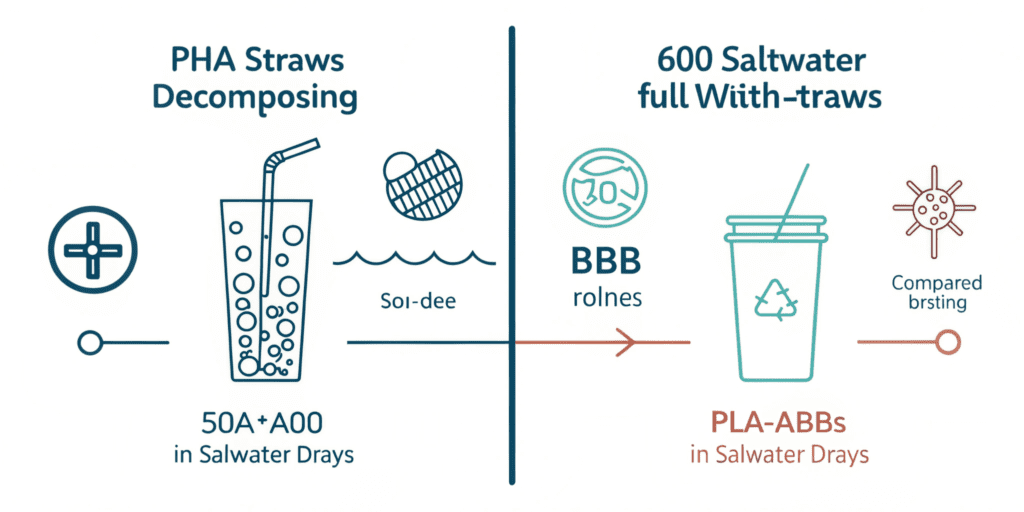
落とし穴: 一部の「堆肥化可能なストロー」が海洋環境で失敗する理由
Despite their green-sounding labels, many straws marketed as “compostable” or “biodegradable” do not perform as expected in the vast, varied, and often cold conditions of marine environments. The primary culprit is often Polylactic Acid (PLA), a common plant-based bioplastic. PLA straws typically require specific industrial composting conditions, including sustained high temperatures (around 136°F or 58°C) and active microbial systems, to break down. These conditions are virtually non-existent in oceans, rivers, or even most natural land environments.
Scientific studies consistently show that conventional plastics like polypropylene (PP) and many PLA straws exhibit no measurable mass loss after 16 weeks in seawater. This means they persist in the ocean for prolonged periods, behaving much like traditional plastics. Even when “biodegradable” plastics do begin to break down in marine settings, they can fragment into smaller pieces, eventually contributing to the growing problem of microplastics. These tiny plastic fragments can be ingested by marine life, entering the food chain and posing risks to ecosystems and potentially human health. Furthermore, a concerning development in recent research indicates that some paper straws, while seemingly a better alternative, may contain “forever chemicals” (PFAS), which are known to be difficult for biological systems to remove and do not break down in the environment or ecosystem. This underscores the need for vigilant scrutiny of chemical additives in seemingly eco-friendly products.
Many “compostable” straws, especially PLA, fail to degrade in marine environments, contributing to microplastic pollution.
Navigating the Regulatory Waters: Standards and Certifications for Marine-Biodegradable Straws
For businesses aiming for genuine sustainability and regulatory compliance, understanding the evolving landscape of standards and certifications for marine-biodegradable straws is non-negotiable. The absence of a single, universally adopted global standard has historically created ambiguity, but rigorous testing protocols are emerging to provide clarity.
Key laboratory tests for aerobic marine biodegradation, typically measured via CO2 production, includeASTM D6691そしてISO 16221. These standards provide a controlled environment to assess a material’s capacity to biodegrade. More comprehensively,ISO 22403:2020mandates at least 90% biodegradation within two years for plastics exposed to marine microorganisms in laboratory settings, alongside criteria for physical disintegration and non-toxicity.
To cut through misleading claims, certifications from independent third-party bodies are crucial.TÜV Austria’s “OK biodegradable MARINE”certification, for example, is highly respected, verifying not only non-toxicity but also a material’s capacity to degrade effectively in marine environments. Similarly, the Biodegradable Products Institute (BPI) certification primarily focuses on industrial compostability, but some materials, like the base material for phade® straws (Danimer Scientific’s Nodax®), also hold BPI certification for industrial compost, soil, freshwater, and marine biodegradability.
The urgency of these standards is reflected in local regulatory precedents. Fort Myers Beach, Florida, for instance, permits only marine-biodegradable straws that demonstrate complete breakdown within one year, aligning with the Federal Trade Commission’s (FTC) Green Guide for scientific evidence. This sets a clear expectation for procurement and operations teams to select products with verifiable credentials. Navigating these regulatory requirements effectively can secure market access and prevent costly non-compliance penalties. For an in-depth look at material-specific biodegradability standards and certifications, explore our insights on thebest”>the”>best” target=”_blank”>best biodegradable plastic straws for B2Bapplications.
Verifiable certifications like TÜV Austria’s “OK biodegradable MARINE” are essential for genuine marine biodegradability claims.

Operationalizing Sustainability: A B2B Procurement Perspective on Marine-Biodegradable Straws
| 特徴 | B2B運用上の影響 | コンプライアンスノート | ROIポテンシャル |
|---|---|---|---|
| PHA Marine-Biodegradable Straws | High durability, excellent user experience, mimics traditional plastic. Resists sogginess and degradation in beverages during use. | Certified marine, soil, home, and industrial compostable (TÜV AUSTRIA, BPI). Meets stringent local and international plastic ban regulations. | Enhanced brand reputation, significant consumer loyalty from eco-conscious demographics. Long-term compliance with evolving plastic bans mitigates future risks and positions for market leadership. Reduces environmental liability. |
| 紙ストロー | Prone to sogginess, shorter lifespan in beverages; can impact customer experience negatively. Potential for PFAS contamination, which is a growing concern. | Generally compostable, but not inherently designed for marine biodegradation. May require specific industrial composting facilities, limiting universal disposal options. Compliance with “plastic-free” mandates but not necessarily “marine-biodegradable.” | Lower upfront cost per unit. However, potential for increased customer complaints, higher waste disposal issues (non-recyclable when soiled), and brand risk if PFAS content is high. Potential for higher consumption due to breakage/sogginess. |
| プラストロー | Better initial durability than paper, but prone to becoming brittle over time. Not truly ocean-friendly despite “plant-based” origins. Limited to cold beverages. | Requires industrial composting conditions (high heat); misleading if marketed as marine-biodegradable, leading to “greenwashing” accusations. Does not degrade in natural marine environments. | Risk of “greenwashing” backlash, consumer and regulatory fines, and significant environmental liability if mislabeled or improperly disposed. Limited long-term viability as regulations tighten. |
| 従来のプラスチックストロー | Lowest upfront cost, highest durability, familiar consumer experience. Wide availability. | Increasingly subject to stringent bans and regulations globally (e.g., EU Single-Use Plastics Directive). High environmental liability and growing social stigma. | High environmental liability, declining consumer and regulatory acceptance, severe brand damage, and eventual market irrelevance as bans become widespread. Potential for legal actions and fines. |
This table clearly illustrates the strategic advantage of opting for genuinely marine-biodegradable solutions, particularly PHA, for businesses committed to both environmental stewardship and long-term commercial success.
PHA straws offer superior operational benefits and compliance, making them a strategic choice for B2B sustainability.
The Economic and Environmental ROI of Marine-Biodegradable Straws for Businesses
The transition to marine-biodegradable straws is not just an environmental imperative; it’s a sound business investment. The global biodegradable straws market is on a trajectory of exponential growth, projected to reach an astounding $204.167 billion by 2031, expanding at a robust Compound Annual Growth Rate (CAGR) of 22.46% from 2024. This burgeoning market underscores a clear shift in consumer demand and regulatory direction.
While PHA straws may be approximately double the cost of traditional petroleum-based plastics upfront, this increased investment translates into superior environmental performance and significant long-term returns. Consumer behavior is increasingly aligned with sustainability: younger generations, in particular, are often willing to pay more for eco-friendly products. By embracing certified marine-biodegradable options, businesses can capitalize on this growing demand, attracting and retaining a loyal customer base.
収益創出を超えて、認定された海洋生分解性ストローは重要なリスク軽減を提供します。平均的なアメリカ人は毎日推定5億本のプラスチック製ストローを使用しており、この驚くべき数字は深刻なプラスチック汚染と海洋汚染に直接寄与している。この野放しの汚染は、使い捨てプラスチックに関連する企業にとって大きなブランドリスクにつながります。検証済みのソリューションを採用することで、企業はネガティブな評判、消費者のボイコット、規制上の罰金の可能性の脅威を積極的に軽減します。これはブランド価値を保護し、企業の社会的責任を強化し、単なる美辞麗句を超えた真の取り組みを示します。
さらに、これらのソリューションを統合すると、組織は環境管理のリーダーとしての地位を確立します。このリーダーシップは競争上の優位性につながり、企業が持続可能性への取り組みで遅れをとっている競合他社から市場シェアを獲得できるようになります。それは、コンプライアンスから競争上の差別化へ移行し、環境意識がますます高まる世界経済において将来性のあるサプライチェーンを確保することです。紙以外の選択肢を求める企業にとって、PHA や CDA などの素材を検討することは、真に持続可能な代替手段を提供します。これについては、当社の分析で詳しく説明しています。best”>the”>best” target=”_blank”>best biodegradable straws not made of paper。
認証された海洋生分解性ストローへの投資は、市場の成長、リスクの軽減、ブランドの強化を通じて大きな ROI をもたらします。
ケーススタディ: 認定された海洋生分解性ストローで先頭に立つ
著名な組織による認定海洋生分解性ソリューションの採用は、説得力のある概念実証を提供し、この戦略的転換の具体的なメリットを浮き彫りにします。代表的な例は、キャノーラ油由来の phade® PHA ストローを製造するメーカー、WinCup です。これらの革新的なストローは、顕著な環境性能を実証しており、2021 年 7 月に Keypoint Intelligence によって検証されたように、管理された海水環境でわずか 54 ~ 58 日以内に完全な生分解を達成します。
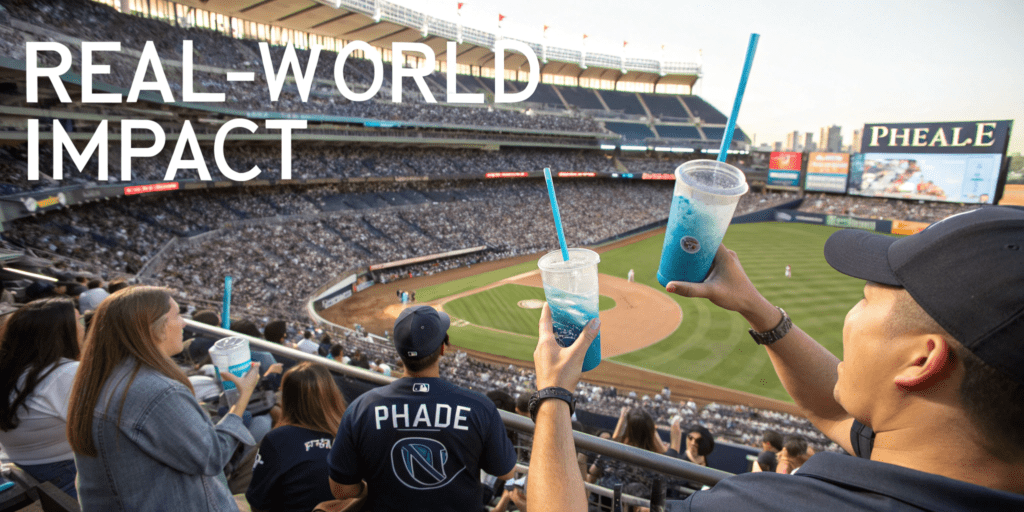
2022 年、WinCup は、ニューヨーク・ヤンキースそしてLegends Hospitalityto provide phade® straws at Yankee Stadium concession stands. This collaboration marked a crucial step in setting a new sustainability precedent within the sports and entertainment industry. By integrating these advanced straws, a high-profile venue actively demonstrated its commitment to reducing plastic waste and embracing a circular economy, enhancing its brand image among environmentally conscious fans.
Further underscoring the real-world viability and regulatory acceptance of such solutions, Fort Myers Beach, Florida, amended its plastic straw ban ordinance in November 2021. This revised policy specifically permits marine-biodegradable straws, provided they adhere to the Federal Trade Commission’s (FTC) Green Guide for scientific evidence of degradation within one year. This local regulation effectively validated solutions like phade®, recognizing their genuine environmental credentials. These real-world applications showcase how investing in proven marine-biodegradable solutions is not only operationally viable but also strategically advantageous for brand enhancement and compliance. Companies looking to make similar impactful shifts in their B2B purchasing can find more strategic insights in our comprehensive guide tobest” target=”_blank”>the best biodegradable straws for B2B in 2025。
ニューヨーク・ヤンキースとのパートナーシップなどの実際の事例研究では、PHA ストローの運用上の利点とブランド上の利点が検証されています。
Future Trends & Innovation: The Horizon of Sustainable Straw Solutions
プラスチック汚染に対処し、ますます厳しくなる環境規制に対応するという緊急の必要性により、持続可能な材料の状況は急速に進化しています。 5 ~ 10 年後の将来を見据えると、いくつかのトレンドとイノベーションが海洋生分解性ストロー市場を再定義しようとしています。
まず、先端材料科学は、分解プロファイルと性能特性が向上した新規バイオポリマーの導入を継続します。例えば、帝人フロンティアは2025年4月、植物由来の酢酸セルロース樹脂「NEQAS™-OCEAN」を原料とした新たな海洋生分解性ストローの開発を発表した。このストローは、海水中で約90日以内に天然物質に生分解されるように設計されており、バブルティーなどの人気の飲料に適した大口径でも従来のプラスチックと同様の高い透明性を誇ります。同様に、Newlight Technologies は、完全に海洋分解可能でカーボンネガティブな製造プロセスを使用して製造されたポリヒドロキシ酪酸 (PHB) 素材である AirCarbon を開発し、持続可能性への総合的なアプローチを実証しています。
第二に、次の点への焦点が強化されます。堅牢で透明性のある認証規格。より多くの「生分解性」製品が市場に参入するにつれて、製品がその主張に真に応えることを保証する、テュフ オーストリアの「OK 生分解性 MARINE」のような検証可能な第三者認証の需要が高まるでしょう。これにより、グリーンウォッシングに対抗し、B2B バイヤーと消費者の間でより大きな信頼を築くことができます。
第三に、規制の枠組みはより規範的で調和されたものになるだろう. While the EU has been a leader in single-use plastic bans, we can expect more countries and regions to adopt similar, detailed regulations, potentially including specific mandates for marine biodegradability in certain applications. This regulatory push will accelerate R&D and market adoption of certified solutions.
Finally,circular economy principleswill permeate product design and end-of-life management. Beyond just biodegradability, future innovations will consider the entire lifecycle, from sustainable feedstock sourcing (e.g., algal biomass, agricultural waste) to effective waste collection infrastructure. The goal will be not just to replace plastic but to redefine consumption models to prevent pollution at its source, while providing robust, functional, and truly benign alternatives when single-use items are unavoidable.
Future trends point to advanced materials, stricter certifications, harmonized regulations, and circular economy principles.
Competitive Advantage & Business Case: Quantifying the Value of Authenticity
調達マネージャー、オペレーションディレクター、サプライチェーン幹部にとって、認証された海洋生分解性ストローに投資するという決定は、環境に対する善意をはるかに超えています。これは、定量化可能な財務的および評判上のメリットを伴う、戦略的な競争上の優位性を表します。
まず、リスクの軽減が最も重要です。使い捨てプラスチックに関する世界的および地域的な規制が強化される中、認定された代替品を積極的に採用する企業は、コンプライアンス違反に伴う重大な罰金、法的責任、業務の中断を回避できます。厳格な海洋生分解基準を常に満たす PHA ストローのようなソリューションに投資することで、進化する法規制に対してサプライ チェーンを将来にわたって保証することができます。
第二に、説得力のあるものがありますブランド価値の向上. In an era of increasing consumer scrutiny, authenticity in sustainability drives brand loyalty and market differentiation. Companies perceived as genuinely committed to environmental stewardship can command premium pricing and attract a growing segment of environmentally conscious consumers. This translates directly into market share opportunity. With the global biodegradable straws market projected for exponential growth to over $200 billion by 2031, early adopters of verified solutions are positioned to capture a significant portion of this expanding market.
Beyond external perception, operational benefits includeimproved employee morale and recruitment. A strong commitment to sustainability resonates with employees, fostering a positive workplace culture and aiding in attracting top talent, particularly younger generations who prioritize ethical and environmentally responsible employers.
While the upfront cost of PHA straws may be approximately double that of traditional plastics, this is an investment in long-term value. The societal costs associated with improper disposal of conventional plastics—cleanup, ecosystem damage, public health impacts—are immense. By internalizing a slightly higher product cost, businesses externalize environmental harm, mitigating future expenses tied to clean-up efforts, fines, and reputational repair. This strategic foresight transforms a perceived cost into a significant competitive moat, securing your company’s position as a responsible and resilient market leader.
Authentic marine-biodegradable solutions offer competitive advantages through risk mitigation, brand uplift, and talent attraction.
Conclusion: Invest in Authenticity and Impact
The journey toward a sustainable future demands decisive action, particularly in addressing the pervasive challenge of plastic pollution. Marine-biodegradable straws, especially those backed by rigorous scientific validation and independent certifications like PHA-based solutions, offer a significant and proven opportunity to mitigate the environmental harm caused by traditional single-use plastics. By prioritizing authenticity through verifiable credentials such as TÜV Austria’s “OK biodegradable MARINE,” businesses can confidently navigate complex environmental challenges and contribute meaningfully to ocean health. The burgeoning global market, projected at a staggering $204.167 billion by 2031, unequivocally underscores the escalating demand and strategic imperative for genuine, high-performing sustainable alternatives.
今こそ、調達マネージャー、オペレーションディレクター、サステナビリティリーダーが行動を起こす時です。認定された海洋生分解性ストロー ソリューションを採用することでサプライ チェーンを変革し、ブランドを向上させ、組織を環境管理のリーダーとして位置づけます。将来の市場での地位を確保し、より健全な地球への揺るぎない取り組みを示してください。
持続可能性をリードし、将来の市場での地位を確保するために、認証済みの海洋生分解性ストローを今すぐ採用してください。
よくある質問(FAQ)
Q: 海洋生分解性ストローは、接客業の収益にどのようなメリットをもたらしますか?
A: Beyond environmental compliance, marine-biodegradable straws enhance brand reputation, attract eco-conscious customers willing to pay more, and mitigate risks of fines and negative publicity. This translates to increased customer loyalty and market share in the growing sustainable products market.
Q: Are marine-biodegradable straws durable enough for busy foodservice operations?
A: Yes, advanced materials like PHA (Polyhydroxyalkanoates) offer durability comparable to traditional plastic straws, resisting sogginess and degradation during use, ensuring a positive customer experience even in high-volume settings.
Q: How can procurement managers verify genuine marine biodegradability claims?
A: Look for independent third-party certifications like TÜV Austria’s “OK biodegradable MARINE” or BPI certification for industrial compost, soil, freshwater, and marine biodegradability. These certifications ensure rigorous testing and verifiable environmental performance.
Q: What are the key differences between “biodegradable,” “compostable,” and “marine-biodegradable” straws?
A: “Biodegradable” is a broad term, often requiring specific conditions. “Compostable” typically means it breaks down in industrial composting facilities. “Marine-biodegradable” specifically means it degrades completely and harmlessly in natural ocean environments within a reasonable timeframe.
Q: Are there any regulatory incentives or penalties related to straw choices for foodservice?
A: Yes, many regions have implemented single-use plastic bans, including straws. Choosing certified marine-biodegradable options helps avoid fines and ensures compliance with evolving regulations, positioning your business favorably.