ストローを提供するという一見単純な行為は、全米の企業にとって複雑かつ一か八かの経営上、戦略上の課題となっています。調達マネージャー、運営責任者、持続可能性責任者、サプライチェーン幹部にとって、使い捨てストローの状況は前例のない政策の矛盾をもたらしています。連邦政府の指令が明確な方向に向かう一方で、州および地方自治体の強力かつ永続的な圧力が対照的な方向性を示しています。この規制の細分化は混乱を招くだけではありません。これにより、重大なコンプライアンス リスク、潜在的なブランドの毀損、および国内または複数の管轄区域で運営されているビジネスの収益への目に見える影響が生じます。
2025年2月、連邦大統領令は連邦政府の業務による「紙ストローの使用を終わらせる」ことを明確に目的としており、プラスチック代替品への回帰を提唱し、紙ストローを不利にする既存の政策を覆そうとした。しかし、この連邦政府の姿勢は、歴史的に紙やその他の非プラスチック製ストローの採用を推進してきた、使い捨てプラスチックストローに対する州および市レベルの禁止または制限の強固なネットワークと並行して存在しています。カリフォルニアからニューヨーク、そしてシアトルからワシントン D.C. に至るまで、企業は連邦政府の優先事項と直接矛盾することが多い義務を遵守することが期待されています。この多様な政策環境から生じる混乱の増大により、戦略的明確性は有益であるだけでなく、急速に進化する市場において業務効率を維持し、法令順守を確保し、ブランドの評判を守るために非常に重要なものとなっています。
事業に影響を与える、進化する規制環境を理解する
この複雑な状況を効果的に乗り切るには、サプライチェーンと運用の選択に影響を与えるさまざまな規制圧力を分析することが重要です。ストローをめぐる物語は過去 10 年で劇的に変化し、単純な便利品から環境政策や政治的議論の避雷針へと移行しました。
連邦レベルでの最近の進展は、重大な逆転を示しています。 2025年2月に署名されたドナルド・トランプ大統領の大統領令は、連邦省庁による紙ストローの調達を停止し、連邦政府の建物内で紙ストローが提供されないようにするという明確な方針を定めている。この指令は、2027年までに使い捨てプラスチックの連邦購入を段階的に廃止することを目的としたバイデン政権の大統領令14057号(2021年12月)など、以前に導入された政策を積極的に覆そうとしている。この連邦政府の方針転換の背後にある理論的根拠には、紙ストローは「機能せず」、特に温かい飲み物の場合、壊れたりべたべたになりやすいという主張、コスト高と「永久化学物質」の潜在的な存在に対する懸念が含まれる。 (PFAS)。政権はプラスチックストローへの回帰を明確に奨励し、45日以内に全国で紙ストローの使用を廃止する国家戦略の策定を義務付けている。 (whitehouse.gov)
In stark contrast to this federal directive, a persistent and expanding network of state and local actions continues to drive the phase-out of single-use plastic straws. These regulations often require restaurants and food service businesses to provide plastic straws only upon request or to use non-plastic alternatives. States such as California led the way with a “straw upon request” law taking effect in January 2019, followed by Maine (January 2022), New Jersey (November 2021), New York, Oregon, Rhode Island (January 2022), Vermont (July 2020), and Washington (January 2022). Cities have often been at the vanguard, with Seattle pioneering a ban on plastic straws and utensils in 2018, and Washington D.C. banning single-use straws in 2019. These localized efforts reflect a broader, deeply embedded public and corporate commitment to reducing plastic pollution, creating a compliance imperative for businesses operating within these varied jurisdictions. (apnews.com)
The current “straw culture war” has deep historical roots. The original drinking straw, patented by Marvin Stone in 1888, was made of paper, a sanitary improvement over natural rye grass. However, by the 1960s, plastic straws—cheaper, more durable, and flexible—dominated the market. The anti-plastic straw movement gained significant momentum in the late 2010s, propelled by viral content, most notably a 2015 video of a sea turtle with a plastic straw in its nostril. This global outcry spurred major corporations like Starbucks and McDonald’s to commit to phasing out plastic straws, initiating a significant industry shift towards paper and other alternatives. This history highlights a fundamental tension: the convenience and low cost of plastic versus the increasing environmental and social demand for sustainable solutions.
情報に基づいた選択: 持続可能でコンプライアンスに準拠したストロー ソリューションのための戦略ガイド
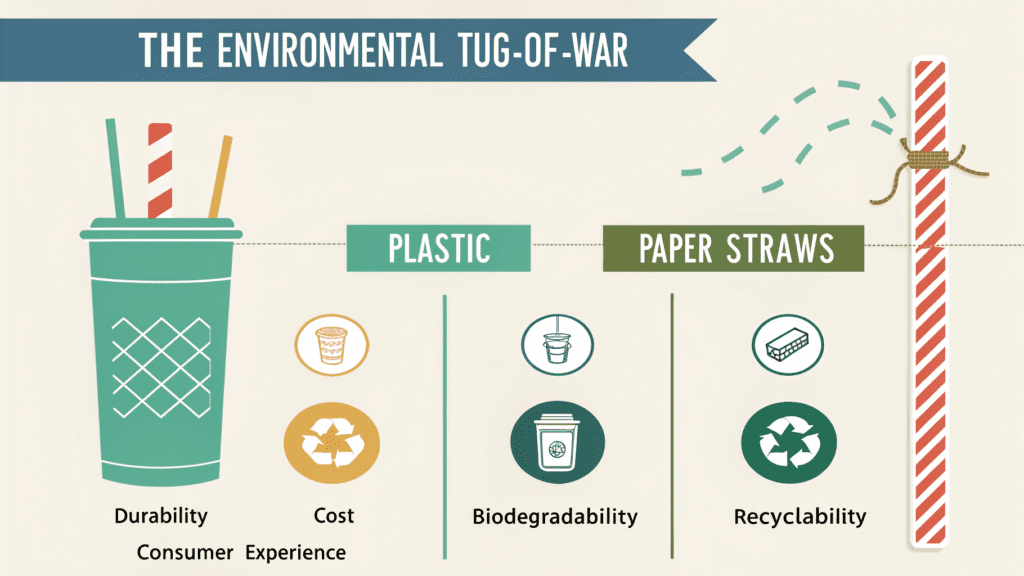
図 1: プラスチックストローと紙ストローの間の環境綱引き。
この二股に分かれた規制環境と進化する消費者の期待に対処するには、調達に対する戦略的なアプローチが必要です。意思決定者は、単純な選択を超えて、環境、健康、運営、社会など、各ストローの選択肢の多面的な影響を考慮する必要があります。
ストローオプションの解体: 環境、健康、運用上の考慮事項
環境綱引き: プラスチック製ストローと紙製ストロー
何十年もの間、プラスチックストローどこにでもあり、その低コスト、耐久性、温かい飲み物と冷たい飲み物の多用途性で高く評価されていました。しかし、それらは石油ベースの組成であるため生分解性がなく、何世紀にもわたって環境中に残留し、有害なマイクロプラスチックに断片化して海洋や生態系を汚染し、海洋生物に重大な脅威をもたらします。プラスチック生産のための化石燃料の抽出と処理も、温室効果ガスの排出と汚染に大きく寄与します。広範囲にわたる禁止にもかかわらず、多くの人にとってプラスチックの機能的優位性は依然として否定できません。
紙ストロー当初は環境に優しい後継製品として支持されました。再生可能な木材パルプから作られており、一般に生分解性があり、適切な条件下では数週間から数か月で分解し、理論的には海洋汚染を軽減します。しかし、その生産には独自の環境負荷があり、かなりのエネルギー、水、そして(持続可能な調達でない場合には)しばしば木の伐採が必要となります。重要なことに、多くの紙ストローは耐久性を高めるためにプラスチックまたはワックスでコーティングされており、生分解性やリサイクル性が複雑になっています。さらに、食品の汚染により、食品はリサイクル施設に受け入れられなくなり、遅い嫌気性分解が起こる可能性のある埋め立て地に送られることになります。紙ベースの使い捨て用品の背後にある材料とプロセスをさらに深く掘り下げるには、使い捨て紙コップの製造にどのような種類の紙が使用され、どのように作られるのかを調べてください。
Here’s a comparative look at their key characteristics:
| 特徴 | プラスチックストロー | 紙ストロー |
|---|---|---|
| 耐久性 | High (resists hot/cold, maintains integrity) | Low (prone to sogginess, disintegrates quickly) |
| Cost (per unit) | Generally Lower (<$0.01) | Generally Higher ($0.02–$0.05) |
| 生分解性 | None (persists for centuries, breaks into microplastics) | Yes (weeks-months, if uncoated and proper conditions) |
| Production Impact | Fossil fuel extraction, GHG emissions | Tree cutting, high water/energy use, chemicals in production |
| Recyclability | Difficult/Rare (due to size/contamination) | Difficult (if coated with plastic/wax or food-contaminated) |
| Health Concerns | Potential for BPA/Phthalates (some types) | Risk of PFAS (“Forever Chemicals”) leaching |
| Consumer Experience | Preferred for functionality | Often criticized for sogginess, taste alteration |
The PFAS Problem: Unpacking “Forever Chemicals” in Paper Alternatives
A significant concern casting a shadow over the “eco-friendly” claims of many paper and plant-based straws is the alarming prevalence of poly- and perfluoroalkyl substances (PFAS). These “forever chemicals” are known for their extreme persistence in the environment and human body. A pivotal 2023 study by Belgian researchers, published inFood Additives & Contaminants, shockingly revealed PFAS in a majority of paper and bamboo straws tested, often at higher concentrations than in plastic or steel alternatives. Used for water-repellent coatings to prevent sogginess, or unintentionally introduced through contaminated raw materials, PFAS pose substantial health and environmental risks. While individual exposure from a single straw may be low, these chemicals accumulate over time, linked to serious health issues including reduced vaccine response, thyroid disease, elevated cholesterol, liver damage, and certain cancers. This revelation compels businesses to critically re-evaluate the true sustainability and safety of ostensibly “green” alternatives. (eurekalert.org)
Accessibility First: Why Plastic Straws Remain Essential for Many with Disabilities
Beyond environmental metrics and chemical concerns, the critical issue of accessibility cannot be overlooked. For a significant population of individuals with disabilities, single-use plastic straws are not a mere convenience but an essential tool for independence, dignity, and health. Their unique combination of flexibility, durability, and resistance to degradation in liquids allows individuals with limited mobility, tremors, muscle spasticity, or swallowing difficulties to drink safely without fear of spilling or choking. Paper straws, which rapidly become soggy, break, or dissolve, present significant hazards. Other alternatives like metal or glass straws introduce risks of injury from involuntary biting or temperature sensitivity. Any policy or procurement strategy that overlooks these vital needs risks creating barriers and inadvertently marginalizing disabled individuals, underscoring the imperative for inclusive solutions that include plastic straw availability upon request for those who medically require them.
Exploring Beyond Paper: Advanced Alternatives for a Future-Proofed Supply Chain
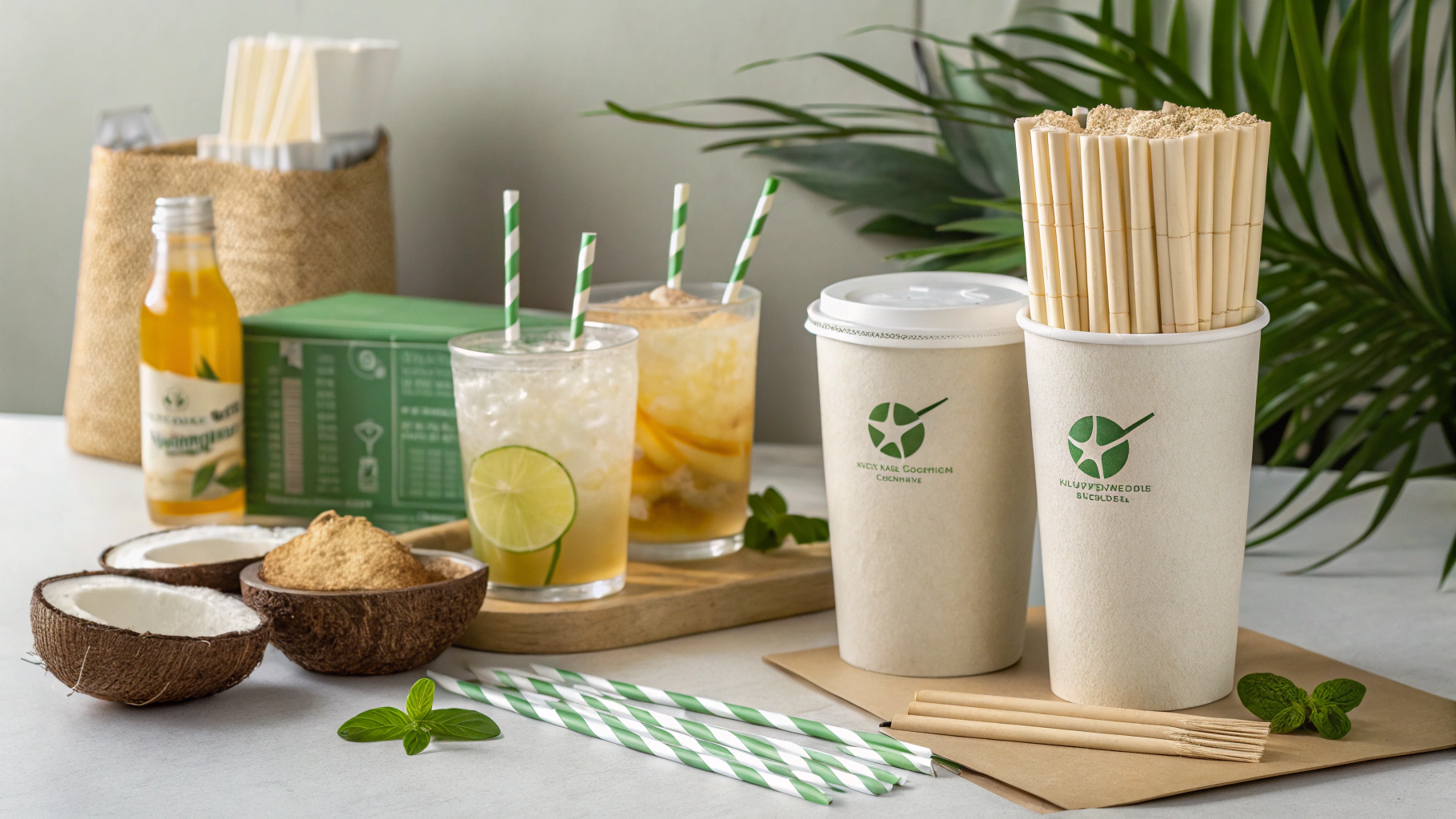
Illustration 2: A diverse collage of alternative straw options.
As businesses seek to future-proof their supply chains against regulatory shifts and evolving consumer demands, exploring advanced straw alternatives becomes paramount. These innovations aim to overcome the limitations of both traditional plastic and early-generation paper options, offering enhanced performance, verifiable sustainability, and greater consumer acceptance. For an in-depth look at what’s available, consider exploring the best biodegradable straws that aren’t paper.
Here’s an overview of emerging straw alternatives and their suitability for various business applications:
| タイプ | Key Materials | 長所 | 短所 | ベストユースケース (B2B) |
|---|---|---|---|---|
| Bioplastics | PLA, PHA, Corn Starch, Agave | Similar feel to plastic, compostable (specific conditions) | Can be costly, requires specific industrial composting infrastructure | Cold beverages, quick-service, events (where composting is viable) |
| Molded Fiber | Various Plant Fibers | Strong growth, biodegradable | Durability varies by composition, newer technology | Foodservice, takeout, large-scale distribution |
| 再利用可能 | Stainless Steel, Glass, Bamboo, Silicone | Durable, long-lasting, highly eco-friendly | Requires cleaning/sanitization, potential for injury (metal/glass), higher upfront cost | Personal use, high-end dining (with robust reusable programs) |
| Edible/Other | Pasta, Rice, Sugarcane, Hay, Ice | Fully biodegradable, novel experience | Durability varies greatly, can alter taste, temperature sensitive | Novelty items, short-term use, specific beverage pairings |
Among these,sugarcane strawsare rapidly gaining traction as a compelling solution. Made from bagasse, a byproduct of sugarcane processing, these straws offer impressive durability that closely mimics traditional plastic, without the persistent environmental footprint. They are often home compostable and entirely free from microplastic concerns. Learn more about the advantages of sugarcane straws vs. plastic and paper options.
Industry Insights: Market Dynamics, Innovations, and Investment Trends
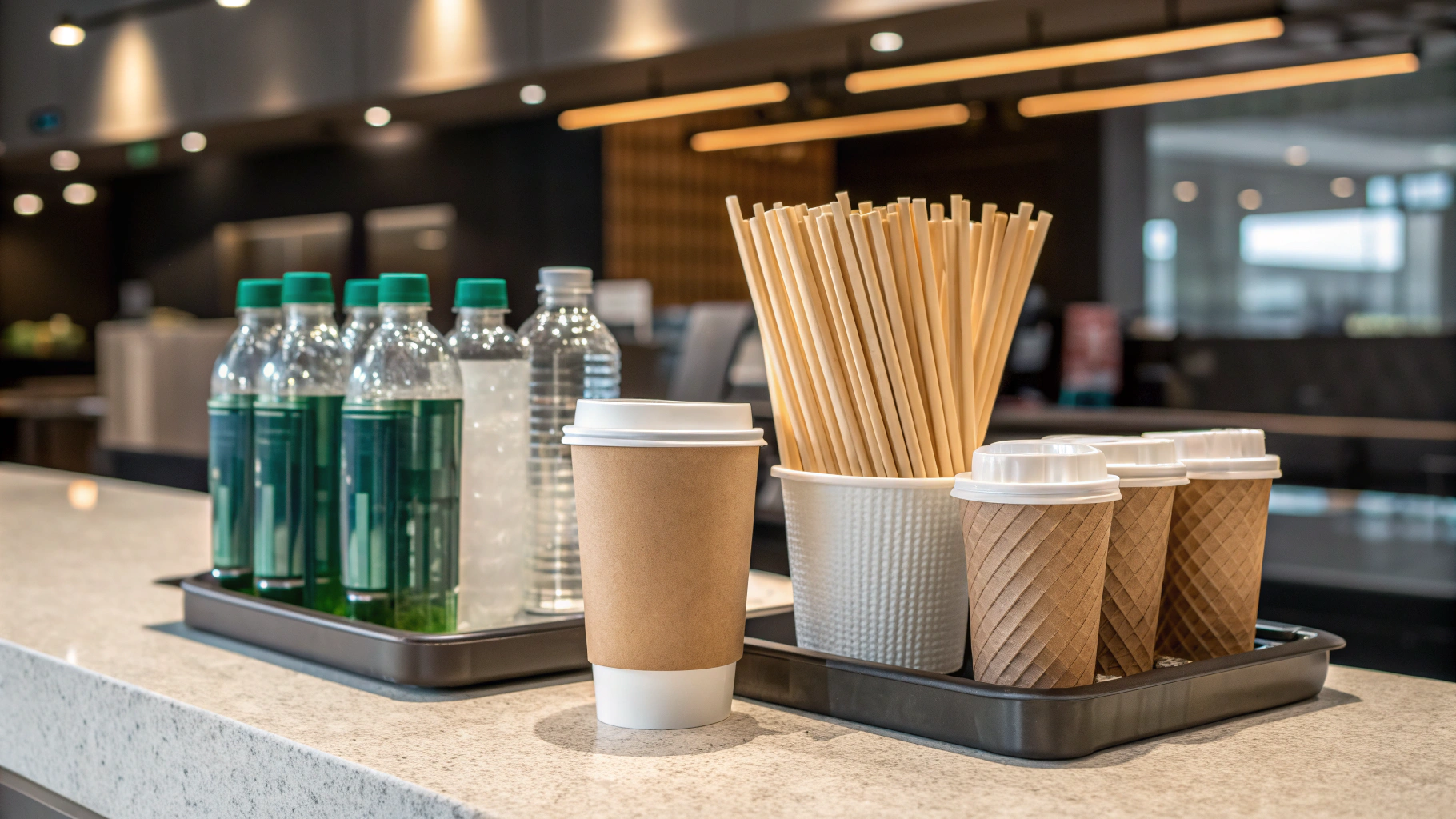
Illustration 3: Projected market growth for sustainable straws and key innovations.
The market for paper and alternative straws in North America is poised for exponential growth. The U.S. paper straw market alone is projected to reach approximately USD 4.35 billion by 2034, growing at a robust compound annual growth rate (CAGR) of 20.57% from 2025. The global biodegradable straws market is set for even more dramatic expansion, with a projected CAGR of 41.1% through 2031. This surge is underpinned by increasing environmental awareness, tightening regional regulations, and significant corporate sustainability commitments.
Key Innovations & Investments:Manufacturers are heavily investing in research and development to overcome traditional paper straw shortcomings. This includes developing advanced biodegradable coatings and water-resistant adhesives; for example, H.B. Fuller’s Swift®tak 5730 offers over three hours of liquid resistance, directly addressing the “soggy straw” problem. Automated production systems are also being implemented to scale output and reduce costs, while the U.S. Department of Energy-funded research, as seen in 2024, is pushing the boundaries of durability and performance for paper alternatives.
Corporate Leadership:Major brands like Starbucks and McDonald’s have already made global commitments to phase out plastic straws, shifting to paper or innovative lid designs. These large-scale corporate directives, while sometimes met with initial consumer feedback on quality, signal a strong, sustained industry drive for greener solutions and demonstrate the feasibility of widespread adoption.
Future Trends (5-10 years):Looking ahead, the next decade will likely witness the commercial maturation of advanced bioplastic straws that genuinely mimic traditional plastic without environmental compromises. Expect to see widespread adoption of truly marine-biodegradable and home-compostable options that excel in functionality and are certified PFAS-free, potentially using novel natural polymer coatings. Supply chains will become increasingly localized and circular, driven by global net-zero targets and reduced transportation footprints. Regulatory landscapes, particularly in the US, will ideally achieve greater harmonization between federal and state policies, favoring innovations with verifiable lifecycle sustainability. The focus will shift from minimizing harm to actively contributing to environmental regeneration, with solutions designed for closed-loop systems and positive ecological impact.
Strategizing for Success: Practical Steps for Business Leaders
Illustration 4: A handshake symbolizing partnership for sustainable supply chains.
In this dynamic and often contradictory straw landscape, inaction is no longer an option. Proactively assessing your organization’s unique operational needs, compliance requirements across jurisdictions, and evolving customer expectations is paramount. This strategic approach will enable you to implement a resilient, future-proof straw strategy that goes beyond mere compliance.
By embracing innovative, rigorously tested, and genuinely sustainable alternativesnow, you can significantly mitigate the escalating risks of regulatory penalties and legal challenges. This forward-thinking stance will also optimize your long-term procurement costs by reducing reliance on volatile materials and improving supply chain stability. More importantly, it will profoundly enhance your brand’s reputation as a leader in corporate responsibility, resonating deeply with environmentally conscious consumers and capturing a growing market segment that values authentic ecological stewardship. Don’t wait for further policy shifts or public sentiment to dictate your choices; empower your supply chain with thoughtful, data-driven decisions that deliver tangible value, foster greater market share, and build enduring brand loyalty.
よくある質問
No, there is no nationwide ban on paper straws in the United States. However, recent federal policy under President Donald Trump aims to end their use within federal government operations, while many individual states and cities have implemented bans or restrictions on single-use plastic straws, which has led to a rise in paper straw use as an alternative in those areas.
In February 2025, President Donald Trump signed an executive order establishing a policy to “end the use of paper straws” by the federal government. This order directs federal departments and agencies to cease the procurement of paper straws and ensure they are not provided in federal buildings. It also seeks to overturn existing policies that disfavor plastic straws and encourages a return to plastic straws.
Despite the federal directive, several U.S. states and cities have independently taken action to reduce plastic waste by banning or restricting single-use plastic straws. States such as California, Maine, New Jersey, New York, Oregon, Rhode Island, Vermont, and Washington have implemented such measures. Cities like Seattle, Washington D.C., and San Francisco have also banned plastic straws, often requiring the use of paper or other non-plastic alternatives.
Yes, a significant concern regarding paper straws is the presence of poly- and perfluoroalkyl substances (PFAS), often referred to as “forever chemicals.” Studies have found PFAS in a majority of paper and plant-based straws, used to make them water-repellent. PFAS can accumulate in the body over time and have been linked to various health problems, including liver and kidney disease, decreased immune response, and certain cancers.
For many individuals with disabilities, single-use plastic straws are a necessity, not a convenience. Their flexibility, durability, and resistance to degradation in liquids enable safe, independent drinking for those with limited mobility, tremors, or swallowing difficulties. Paper straws can quickly become soggy or break, posing choking hazards, while other alternatives like metal or glass may present injury or temperature sensitivity risks.
The North American paper straw market is projected to reach approximately USD 4.35 billion by 2034, growing at a robust CAGR of 20.57% from 2025. The global biodegradable straws market is expected to grow even faster, with a projected CAGR of 41.1% through 2031, driven by increasing environmental awareness, tightening regional regulations, and significant corporate sustainability commitments.