
In the intricate world of B2B operations, every detail can hold profound significance. While “straw color” might seem like a mere aesthetic descriptor, for procurement managers, operations directors, sustainability officers, and supply chain executives, it represents a critical indicator of quality, compliance, and material integrity. This pale yellow hue, resembling dry straw and first recognized as a color name in English in 1589, transcends mere visual appeal to become a key performance indicator (KPI) in diverse industrial applications.
「麦わら色」に関連する正確な仕様を無視すると、運用上および商業上に重大な影響を与える可能性があります。医療製造における高価な製品の拒否から、水処理における不遵守の罰金や農業における遺伝物質の侵害に至るまで、色基準を細心の注意を払って管理しないと、利益率が損なわれ、ブランドの評判が損なわれ、サプライチェーンに予期せぬリスクがもたらされる可能性があります。その産業用途を理解することは、美しさだけの問題ではありません。効率を高め、規制を遵守し、企業レベルのリスクを軽減することが重要です。

Decoding Straw Color: Definition and Properties for Industrial Application
At its core, “straw color” is a light, muted yellow, akin to sunlit wheat fields. This descriptor, which has been part of the English lexicon since the late 16th century, evokes naturalness and warmth. However, for industrial purposes, this seemingly simple hue is precisely defined.
The Fundamental Pale Yellow Hue: Historical Context and Visual Characteristics
Defined by the Collins Dictionary as a pale or light yellow, similar to the color of dry straw, this shade is far more than an evocative image. Its historical presence, documented by Merriam-Webster since 1589, underscores its long-standing recognition. In design, Piktochart notes its ability to evoke naturalness, warmth, and rustic charm, qualities that can influence perception even in highly technical B2B contexts where product appearance subtly communicates quality.
Scientific Specifications: Hexadecimal and RGB Values of Straw Color
For procurement and quality control, subjective descriptions are insufficient. The primary hexadecimal color code for straw is #E4D96F. In the RGB color space, it is precisely defined as (228, 217, 111), boasting a high natural luminance of 67%. The CMYK breakdown is 0% cyan, 5% magenta, 51% yellow, and 11% black. These specific values provide an objective benchmark for color matching, ensuring consistency across suppliers and production batches.Precise color specifications like hexadecimal values ensure objective quality control in B2B supply chains.

Straw Color as a Critical Quality Indicator Across Industries
The precise definition of “straw color” becomes indispensable when it serves as a non-negotiable quality parameter. Its consistent appearance often signifies chemical purity, biological health, or material composition, making it a vital checkpoint for B2B decision-makers.
Medical and Biotechnological Applications: Precision and Compliance in “Straw Color”
In the medical and biotechnological sectors, the “straw color” serves as a critical visual cue for health and quality. Blood plasma is consistently described as “straw-colored” due to its bilirubin content, and deviations can signal medical issues. Similarly, normal urine presents as “straw-colored,” indicating adequate hydration and healthy kidney function. For product identification, medical gloves, such as Mölnlycke’s Biogel®, are specifically available in a “straw color,” enabling quick visual differentiation during surgical procedures and minimizing the risk of error. This highlights how an seemingly simple color choice directly impacts patient safety and operational efficiency in high-stakes environments.
農業・食品加工「麦わらの色」で品質を保証
農業と食品加工において、「麦わらの色」は品質と成熟度を直接示す指標です。 「淡い麦わら色」は、ソーヴィニヨン・ブランやシャルドネなどの特定の高価値ワインの特徴であり、望ましい熟成と風味のプロファイルを示します。穀物の収穫において、パン用コムギは、穀粒が「麦わら色」に変わり、水分が 12 ~ 13% に減少すると生理学的成熟に達します。これは、最適な収量と貯蔵のための重要なパラメータです。粗ヒマシ油の加工においても、最初の「麦わら色」の外観は精製中に変化し、プロセスの進行と製品の品質を示します。それぞれの例は、この特定の色が品質保証のためのすぐに実行可能なインテリジェンスをどのように提供するかを強調しています。
素材と製法:商品仕様の「麦わら色」
製造においては、「麦わらの色」が材料仕様と品質管理に明示的に組み込まれています。たとえば、ヘムモミの木製品は、その「白から淡い麦わら色」で高く評価されており、高品質のケース製品に好まれています。 SEMI (国際半導体製造装置材料協会) や ASME BPE (米国機械学会バイオプロセス装置) などの標準化団体では、用語に「麦わら色」を組み込んでいます。たとえば、SEMI F78 および F81 規格では、半導体材料の「麦わら色から黒い表面のコーティング」について言及していますが、ASME BPE-2016 では、これをバイオ医薬品機器の視覚的特徴または不連続性として言及しています。これらの言及は恣意的なものではありません。これらは、材料の受け入れとプロセス検証の重要なしきい値を示し、製品の性能と規制上の立場に直接影響を与えます。調達専門家は、コストのかかる拒否を回避し、生産スケジュールを維持するために、サプライヤーの仕様をこれらの正確な色の期待と一致させる必要があります。“Straw color” serves as a vital quality indicator across medical, agricultural, and manufacturing sectors, ensuring product integrity.
Navigating Regulatory Compliance and Industry Color Standards
The operational significance of “straw color” is further amplified by its role in regulatory compliance and adherence to industry-specific color standards. For many B2B entities, meeting these visual criteria is non-negotiable for market access and risk mitigation.
Adherence to “Straw Color” Standards: AWWA and European Directives
One notable example is the American Water Works Association (AWWA) standard for Fluorosilicic Acid (FSA), a chemical used in municipal water treatment. The current AWWA standard for FSA color is 100 APHA units, often presenting as a “straw color.” While this standard lacks a direct operational or health basis – with European standards for FSA having no color limits – its enforcement means that procurement managers must ensure their FSA suppliers meet this specific visual benchmark. The intensity of FSA’s “straw color” directly correlates with iodine and phosphoric acid content, making it an indirect indicator of raw material purity and processing consistency. Non-compliance, even on a seemingly arbitrary visual standard, can lead to supply chain disruptions and regulatory scrutiny. For more insights on color compliance, see our detailed guide:What do different straw colors mean B2B Compliance Strategy。
Specialized Sector Guidelines: SEMI and ASME BPE Standards
水処理を超えて、半導体やバイオ医薬品などの高度に規制された分野は、正確な色の定義に依存しています。前述したように、SEMI 国際規格では、材料用語で「麦わら色から黒っぽいコーティング」を文書化しており、非常に敏感な製造プロセスで使用される材料の許容可能な視覚特性を示しています。同様に、バイオ医薬品機器にとって重要な ASME BPE-2016 規格では、潜在的な視覚的特徴または不連続性として「麦わら色」について言及しています。これらの基準は単なる提案ではありません。これらは、材料の調達、機器の検証、そして最終的には規制分野における製品の安全性と有効性にとって非常に重要です。これらの視覚的仕様に従わない場合、材料または機器が失格となり、重大な経済的損失や運用の遅延につながる可能性があります。
「色彩標準」団体と団体の現状
世界中の多くの組織が色の研究と標準化に専念しています。国際色彩協会 (AIC) は、さまざまな業界にわたる研究を促進し、色彩科学へのより深い理解を促進しています。国際着色料製造業者協会 (IACM) は、特に食品、医薬品、化粧品における着色添加剤の規制と使用に焦点を当てています。特定の色の仕様については、英国標準色 (BS384 ライト ストロー、ヘックス #D7C199 など) のようなボディが正確で定量化可能なデータを提供します。 「麦わらの色」を普遍的に管理する単一の団体はありませんが、これらの団体は集合的に、B2B 企業がナビゲートするカラー管理のエコシステムに貢献しており、サプライヤー管理と品質管理に対する高度なアプローチが必要です。Adhering to “straw color” standards is crucial for regulatory compliance and market access across diverse B2B industries.
Operational Impact and ROI: Strategic Applications of Consistent Straw Color
The strategic management of “straw color” is not just about avoiding penalties; it delivers tangible operational benefits and significant return on investment (ROI). By integrating precise color specifications into procurement and quality control, businesses can achieve higher efficiency, reduce waste, and enhance product reliability.
| 特徴 | B2B運用上の影響 | コンプライアンスノート | ROIポテンシャル |
|---|---|---|---|
| Semen Straw Color Coding | Ensures accurate breed identification in animal husbandry. | Adheres to Swissgenetics/ICAR guidelines (e.g., Limousin is “ocher”). | Prevents misbreeding, optimizes herd genetics, secures asset value, avoids costly errors. |
| FSA Color Consistency | Critical for municipal water treatment chemical procurement. | Meets AWWA 100 APHA standard, despite lack of health basis. | Reduces supplier discrepancies, avoids costly rejections or reprocessing, ensures continuous water supply. |
| Medical Glove Color | Assists quick identification of specific glove types (e.g., Biogel® M). | Ensures use of correct glove for surgical procedures. | Enhances surgical efficiency, minimizes procedural errors, improves patient safety, reduces medical waste from incorrect usage. |
| Wood Product Color Grading | Dictates material selection for high-quality millwork. | Aligns with IWPA-BC notes for Hem-Fir’s desirable “light straw color.” | Secures premium pricing for products meeting aesthetic specifications, reduces material sorting costs. |
Case Study: Swissgenetics’ Use of “Straw Color” in Supply Chain Integrity
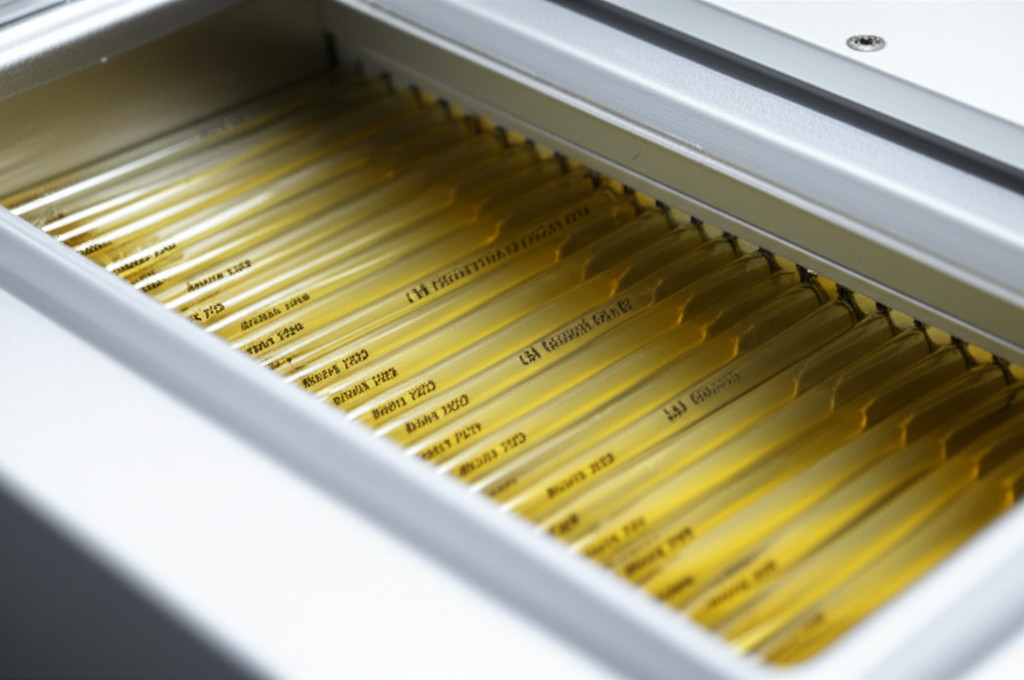
A compelling example of “straw color” driving critical operational integrity comes from the agricultural sector. Swissgenetics, a leading organization in animal breeding, implemented a precise “straw color” coding system for semen straws as early as March 16, 2011. For instance, Limousin (LM) semen straws are specifically colored “ocher,” a defined shade of “straw color.” This color coding, combined with EU codes and batch numbers, ensures precise genetic material traceability throughout the supply chain.
This seemingly simple visual standard has profound implications. It prevents misbreeding, optimizes herd genetics by ensuring the correct genetic material is used, and safeguards significant agricultural investments. By adhering to international guidelines, such as those from ICAR (International Committee for Animal Recording), Swissgenetics reinforces its commitment to breeding regulations and maintains the integrity of its highly valuable genetic assets. The color acts as an immediate visual verification, reducing the potential for human error and enhancing overall supply chain reliability in a sector where precision is paramount.Strategic management of “straw color” delivers tangible ROI by enhancing efficiency and reducing waste across B2B operations.
Future Outlook: Enhancing Efficiency and Quality Through Color Metrics
The future of managing “straw color” and other critical visual characteristics lies in advanced technological integration, moving beyond subjective interpretation to precise, real-time data.
Emerging Trends in “Material Properties” Analysis
The evolution from subjective color naming to quantifiable metrics like CIELAB values offers unprecedented precision in material properties analysis. This shift allows for the objective measurement and tracking of subtle color variations, which can be crucial indicators of material consistency, purity, or even degradation. Leveraging advanced colorimetric data reduces human error and significantly enhances quality control processes. Furthermore, the integration of predictive analytics may soon enable organizations to link even the most subtle color shifts to potential material contamination, shelf-life issues, or performance degradation, allowing for proactive intervention rather than reactive problem-solving. This forward-looking approach ensures that the “straw color” remains a reliable indicator, even as material science becomes more complex. For a deeper understanding of color in B2B applications, consider麦わらの色はどうなるのでしょうか?。
Advancing “Industrial Applications” with Precise Color Management
The next 5-10 years will see the widespread integration of real-time color monitoring systems directly into manufacturing lines. These automated systems will employ hyperspectral imaging and AI-driven algorithms to detect deviations from “straw color” standards instantaneously, triggering immediate alerts or automated process adjustments. Such capabilities will ensure consistent product quality, drastically reducing waste from off-spec materials and improving overall supply chain reliability. Beyond mere detection, these systems will provide continuous data streams, enabling deeper insights into process stability, raw material variability, and even supplier performance. This will transform “straw color” from a simple visual check into a dynamic, data-rich parameter driving operational excellence and competitive advantage.Future advancements in color metrics will enable real-time monitoring, enhancing efficiency and quality in industrial applications.
Competitive Advantage & Business Case
For B2B decision-makers, embracing a sophisticated approach to “straw color” management translates directly into a compelling business case and sustained competitive advantage.
Quantifiable cost savings are immediate. By minimizing material rejections due to color inconsistencies, businesses can significantly reduce waste, rework, and associated logistics costs. For instance, in water treatment, ensuring FSA color compliance can prevent expensive re-procurement or the need for costly reprocessing. In manufacturing, consistent color in raw materials like wood or medical components reduces sorting time and eliminates potential liabilities.
Risk mitigation is another cornerstone of the business case. Adhering to regulatory “straw color” standards, such as those set by AWWA or ASME BPE, protects companies from hefty fines, legal challenges, and operational shutdowns. Beyond direct financial penalties, consistent quality, partly signaled by uniform color, safeguards brand reputation. A medical device supplier whose products consistently meet visual and functional standards, for example, builds trust with healthcare providers, reducing the risk of product recalls or public perception issues.
Furthermore, a commitment to precise color management can unlock market share opportunities. In industries where color is a visual differentiator or a quality mark, delivering products that consistently meet or exceed “straw color” expectations can command premium pricing. For high-quality millwork, for instance, the consistent “light straw color” of Hem-Fir wood products directly correlates with premium market positioning. By ensuring visual consistency and regulatory compliance, companies differentiate themselves as reliable, quality-focused partners, securing long-term contracts and expanding their market presence in a competitive landscape.Precise “straw color” management offers significant competitive advantages through cost savings, risk mitigation, and market differentiation.
The seemingly simple “straw color” is anything but trivial for B2B decision-makers. From ensuring product authenticity in biotech to guaranteeing material quality in manufacturing, its precise definition and consistent application are paramount. By leveraging established standards, embracing cutting-edge colorimetric technologies, and integrating them into robust quality control and supply chain strategies, businesses can not only enhance operational efficiency and ensure regulatory compliance but also unlock substantial ROI. This commitment to visual precision mitigates risks, reduces waste, and elevates a brand’s reputation, ultimately driving significant competitive advantage.
Optimize your supply chain by standardizing color specifications and transforming visual compliance into a strategic asset. Connect with our experts to develop tailored color management strategies and gain a definitive edge in your market today!Connect with Our Experts
よくある質問
Q: Why is ‘straw color’ important in medical manufacturing?
A: In medical manufacturing, ‘straw color’ often indicates specific material properties, purity, or product identification, like for medical gloves, ensuring patient safety and operational efficiency.
Q: How does ‘straw color’ affect agricultural supply chains?
A: In agriculture, ‘straw color’ signifies maturity in crops like wheat and is used in genetic material coding (e.g., semen straws), preventing misbreeding and safeguarding investments.
Q: What are the regulatory implications of ‘straw color’ in water treatment?
A: For water treatment, the AWWA standard for Fluorosilicic Acid (FSA) specifies a ‘straw color’ (100 APHA units), which procurement managers must meet to avoid supply chain disruptions and regulatory scrutiny.
Q: Can ‘straw color’ be quantified for quality control?
A: Yes, ‘straw color’ can be precisely quantified using hexadecimal (#E4D96F) and RGB (228, 217, 111) values, providing objective benchmarks for consistent quality control across suppliers.
Q: How can businesses leverage ‘straw color’ for competitive advantage?
A: By standardizing ‘straw color’ specifications, businesses can reduce material rejections, mitigate regulatory risks, enhance brand reputation, and command premium pricing for consistent quality.