Глобальный императив устойчивого развития требует изменения операций B2B с растущим спросом на упаковочные решения, соответствующие принципам охраны окружающей среды. В этой ситуации компостируемые пластмассы часто кажутся идеальным решением, обещающим биоразлагаемость и снижение воздействия на окружающую среду для определенных применений. Однако, несмотря на присущую им привлекательность и острую необходимость сокращения количества пластиковых отходов, широкое внедрение компостируемых пластиков в сфере B2B сталкивается со значительными и многогранными препятствиями, которые менеджеры по закупкам, операционные директора и специалисты по устойчивому развитию должны критически понимать. Игнорирование этих проблем может привести к напрасным инвестициям, операционной неэффективности, репутационному ущербу и неспособности соответствовать меняющимся нормативным требованиям.
The Infrastructural Reality: A Limited Landscape for Compostable Plastic Disposal
A fundamental misconception surrounding compostable plastics is the assumption that they will naturally decompose in any environment. The reality is far more complex. Effective decomposition of certified compostable plastics requires highly specific industrial conditions, which are rarely found outside dedicated commercial composting facilities. This critical infrastructural gap often forces compostable plastics into traditional waste streams—landfills or incinerators—thereby negating their intended environmental benefit. Currently, only a small fraction of compostable packaging and plastic actually gets processed as intended.
The Strict Requirements for Industrial Composting
Сертифицированные компостируемые пластмассы разработаны так, чтобы разрушаться в определенных условиях: высокие температуры, контролируемая влажность и присутствие определенных микроорганизмов. Промышленные предприятия по компостированию обычно поддерживают температуру в пределах 60–71°C (140–160°F) в течение продолжительных периодов времени. Эти условия редко, если вообще когда-либо, встречаются в домашних системах компостирования или в естественной среде, такой как океаны или почва. Следовательно, если компостируемый пластиковый предмет выбрасывается неправильно — скажем, в компостную кучу на заднем дворе, на свалку или даже в природный водоем — он будет разлагаться очень медленно, потенциально сохраняясь годами или даже десятилетиями, оказывая такое же неблагоприятное воздействие, как и традиционный пластик.
Недостаточный доступ к коммерческим предприятиям по производству компоста
The current waste management infrastructure, particularly in the United States and many parts of Europe, is simply not designed for the large-scale processing of compostable plastics. The number and spatial availability of commercial composting facilities capable of handling these materials are severely limited. Many municipalities are hesitant to accept compostable plastics in their organic waste collection bins due to concerns about contamination, processing capacity, and the variable decomposition rates of different compostable materials. This lack of a robust collection and processing system means that even when businesses procure compostable packaging, a significant portion of it ends up in landfills, where, under anaerobic conditions, it can release methane—a potent greenhouse gas with a global warming potential approximately 30 times higher than carbon dioxide over a 100-year period, according to the U.S. Environmental Protection Agency (EPA).
Limited composting infrastructure hinders the environmental promise of compostable plastics.
The Cost Conundrum: Why Compostable Plastic Remains Pricier
For B2B decision-makers, cost-effectiveness is a paramount consideration. This is where compostable plastics encounter a significant hurdle. They are currently and consistently more expensive than their conventional plastic counterparts, acting as a primary barrier to large-scale procurement and adoption across industries. This disparity is not merely a matter of material cost but reflects deeply embedded economic structures and decades of investment.
Higher Production & Raw Material Expenses
The research highlights a stark financial reality: compostable plastics can cost up to 400% more than traditional plastics. The raw materials used for bioplastics, often derived from renewable sources like corn, potato starch, or sugarcane, are typically 3.5 times pricier than fossil-fuel-based virgin materials. Furthermore, the production processes for compostable polymers are less mature and optimized compared to the established, high-volume manufacturing of conventional plastics. These processes often operate at smaller scales, preventing the economies of scale that drive down costs for traditional polymers.
Economic Lock-ins and Scalability Challenges
Десятилетия масштабных инвестиций в традиционную пластиковую инфраструктуру — от производственных предприятий и оборудования до налаженных сетей распределения и переработки — создали значительные экономические блокировки. Эта обширная существующая инфраструктура по своей сути благоприятствует традиционным пластикам, что усложняет и делает дорогостоящим переход предприятий к использованию биоразлагаемых альтернатив в своих цепочках поставок и производственных процессах. Масштабирование производства компостируемого пластика до уровня, который сможет конкурировать по цене с обычными пластиками, требует значительных, устойчивых инвестиций и адаптации по всей цепочке создания стоимости, и это препятствие, которое в настоящее время способны преодолеть немногие предприятия без значительных стимулов или нормативных требований.
Higher costs and established infrastructure present significant barriers to compostable plastic adoption.
Navigating the Confusion: Mislabeling and Contamination Risks of Compostable Plastic
Beyond infrastructure and cost, a widespread lack of clarity and standardized definitions creates significant confusion for both businesses and end-users. This ambiguity surrounding terms like “biodegradable” and “compostable” directly leads to improper disposal, which subsequently impacts the integrity of both plastic recycling and organic composting streams.
Widespread Consumer and Industry Misunderstanding
The terms “biodegradable” and “compostable” are frequently conflated, often leading to misleading product marketing that complicates proper disposal. For instance, a survey revealed that nearly half of respondents struggled to distinguish between “biodegradable” and “compostable” claims. Furthermore, products labeled with seemingly eco-friendly phrases like “made from plants” can further confuse disposal practices, leading consumers to incorrectly assume they can be composted when they may not meet certified industrial composting standards. This public misunderstanding poses a significant challenge for businesses aiming to implement genuinely sustainable packaging solutions.
Contamination of Recycling & Composting Streams
Одной из наиболее важных проблем, возникающих из-за этой путаницы, является загрязнение потоков отходов. Компостируемые пластмассы часто имеют визуальное и тактильное сходство с обычными пластиками, что приводит к их ошибочному размещению в мусорных баках. Когда эти неперерабатываемые компостируемые материалы попадают в обычный поток переработки пластика, они действуют как примеси, ставя под угрозу качество и ценность всей партии переработанного материала. В настоящее время не существует автоматизированного или экономически эффективного процесса, который мог бы надежно отделить компостируемые материалы от некомпостируемых в больших масштабах на предприятиях по переработке отходов, что приводит к увеличению затрат на сортировку или полному отказу от загрязненных партий. И наоборот, если обычные пластмассы случайно смешиваются с потоками органических отходов, предназначенных для компостирования, они ухудшают качество получаемого компоста и создают проблемы для предприятий по компостированию, которые затем должны сортировать эти некомпостируемые загрязнители.
Mislabeling and confusion lead to significant contamination in waste streams.
Performance and Environmental Trade-offs: The Broader Impact of Compostable Plastic
While designed with environmental benefits in mind, compostable plastics are not without their own lifecycle impacts and performance limitations. B2B decision-makers must consider these trade-offs to ensure that a chosen solution genuinely aligns with sustainability goals and operational requirements.
Durability and Barrier Property Limitations
For many applications, particularly in food service and packaging, material performance is non-negotiable. Compostable materials may offer reduced durability, flexibility, or heat resistance compared to conventional plastics. For instance, common biopolymers such as polylactic acid (PLA) and polyhydroxybutyrate (PHB) are inherently brittle, limiting their suitability for applications requiring high strength or resilience. Furthermore, some compostable materials may have moisture resistance limitations, which can directly impact product shelf life, integrity, and safety. This necessitates careful evaluation by operations directors to ensure that a shift to compostable options doesn’t compromise product quality or lead to increased waste from spoilage or breakage. Businesses exploring alternatives to traditional plastics, such as those evaluating different types of certified compostable straw materials for their hospitality and foodservice operations, must weigh these performance characteristics.
The Hidden Environmental Footprint and Toxicity Concerns
While beneficial at their end-of-life if properly composted, the production of bio-based plastics can still consume significant resources. Growing crops for biomaterials requires substantial amounts of fossil fuels for pesticides, fertilizers, and farm equipment, alongside considerable land and water resources. If compostable products end up in landfills due to inadequate infrastructure, they can break down under anaerobic conditions and release methane, as previously noted.
Moreover, a critical concern pertains to the presence of harmful chemical additives. Bioplastics, including compostable varieties, are manufactured using processes similar to traditional plastics and may contain the same, or even different, chemical additives. Less is known about the potential toxicity of these newer chemicals. Disturbingly, some compostable food containers have been found to contain PFAS (per- and polyfluoroalkyl substances), often referred to as “forever chemicals,” which are linked to serious health issues. If these PFAS-containing items are composted, there is a significant risk that these chemicals could leach into the resulting compost, contaminating soil and the broader environment.
Compostable plastics have performance limitations and potential hidden environmental impacts.
Comparison Table: Packaging Material Considerations for B2B
For procurement managers and supply chain executives, a clear understanding of packaging material attributes is essential. This table outlines key considerations when evaluating conventional versus certified compostable plastics:
| Особенность | Операционное влияние B2B | Примечание о соответствии | Потенциал рентабельности инвестиций |
|---|---|---|---|
| Обычный пластик | Lower material cost, established supply chains, high durability. | Broad regulatory landscape, often less strict on end-of-life; increasing focus on recycling targets. | Cost efficiency, widespread availability, proven product protection, established recycling revenue streams. |
| Certified Compostable Plastic | Higher material cost (up to 400% more), limited disposal options, potential performance trade-offs. | Emerging standards (e.g., ABA “certified compostable,” BPI), lack of federal uniformity, increasing local bans on conventional plastics. | Brand reputation enhancement, consumer appeal, access to niche sustainable markets, risk mitigation against future plastic bans. |
| Paper-Based (e.g., uncoated paper straw) | Lower material cost, readily compostable (if not plastic-lined), widely accepted in composting. | Generally compliant with compostability standards if certified, avoids plastic bans. | Significant brand reputation boost, broad market acceptance, low disposal complexity. |
| Edible Materials (e.g., edible straws) | Higher material cost, niche application, requires consumer consumption. | No specific composting standard needed; food-grade compliance. | Unique brand differentiation, ultimate waste reduction, high consumer engagement. |
*Note: For further insights into the compliance and ROI of certified compostable options, especially for items like straws, consider exploring resources onBPI compostable straws for hospitality compliance and ROI.
Careful evaluation of material features is crucial for B2B packaging decisions.
Case Study: Municipal Challenges in Composting Acceptance
The theoretical promise of compostable plastics often collides with the practical realities of municipal waste management. A prevalent real-world challenge highlights the growing reluctance of commercial composting facilities to accept compostable foodware.
Problem:Across the United States and Europe, despite the increasing availability of certified compostable packaging, many large-scale composting operations are becoming increasingly wary, or outright refusing, to accept them.
Испытание:This reluctance is primarily driven by two critical concerns:
- Contamination from look-alike plastics: As discussed, conventional plastics frequently get mixed in with compostable items due to consumer confusion, leading to impurities in the compost.
- PFAS contamination: The discovery of “forever chemicals” (PFAS) in some compostable food containers has created a significant hurdle. PFAS can leach into the compost, contaminating the finished product and the soil where it’s applied, posing environmental and health risks.
Impact:This situation leads to several adverse outcomes for the waste management system and businesses alike. Composting facilities face increased sorting costs to remove contaminants, reduced quality of their finished compost product, or the outright rejection of incoming loads containing compostables.
Result:Consequently, many B2B users, despite investing in certified compostable packaging, struggle to ensure that their materials are actually processed as intended. Their compostable items often end up being diverted to landfills or incinerators, undoing their sustainability efforts and expenditures.
Insight:This case study underscores the critical need for clearer, standardized labeling (e.g., BPI certification) and facility-specific acceptance guidelines. It emphasizes that simply purchasing “compostable” products is insufficient; businesses must also verify the end-of-life pathways available in their operational regions.
Municipal composting challenges highlight the gap between product and infrastructure.
Towards a Circular Future: Strategic Considerations for B2B Leaders
Given the complex challenges, it’s clear that compostable plastic is a component, not the sole solution, in a comprehensive sustainable packaging strategy. For B2B leaders, especially sustainability officers, the focus must shift towards prioritizing systemic changes in material use and waste management, ultimately aiming for true circularity. The primary goal remains to drastically reduce overall plastic consumption.
Redefining Sustainable Plastic Strategies
While bioplastics, including compostables, represent an innovative step, they currently comprise only a tiny fraction—approximately 1%—of global plastic production, which stands at around 300 million tonnes per year. This minuscule share underscores that relying solely on compostables will not solve the global plastic crisis. Instead, B2B strategies should prioritize the fundamental principles of the circular economy: first,reducingoverall plastic use through redesign and efficiency, and second, fosteringreusablesystems wherever possible. Only after these primary strategies have been exhausted should certified compostables be embraced for specific, unavoidable single-use applications where reuse or mechanical recycling are genuinely unfeasible, such as certain food-soiled packaging or items for short-term consumption. For example, businesses looking forbulk compostable straws for B2B applicationsshould first assess if reusable options are viable for their specific needs.
Advocating for Standardized Regulations and Infrastructure Investment
To unlock the full potential of compostable plastics and integrate them effectively into a circular economy, collective action and policy advocacy are indispensable. B2B leaders should actively support initiatives like the Compostable Packaging Standard Adoption Working Group (CPSA-WG), which aims to pursue agreement on clear standards and labeling for compostable products. Furthermore, businesses have a vested interest in advocating for robust industrial composting infrastructure and the establishment of clear, consistent collection systems at municipal, regional, and national levels. This includes championing standardized, transparent labeling that combats greenwashing and provides unambiguous guidance for disposal, helping to alleviate consumer confusion and reduce contamination. Regulatory bodies, industry associations, and businesses must collaborate to create the necessary framework for compostable plastics to fulfill their environmental promise.
A circular future requires reducing, reusing, and advocating for better infrastructure.
Competitive Advantage & Business Case
For forward-thinking procurement managers, operations directors, and supply chain executives, navigating the complexities of compostable plastics presents a significant opportunity to build competitive advantage and enhance long-term business resilience. Strategic, informed adoption, or the deliberate choice of alternative sustainable materials, can yield quantifiable benefits.
By proactively addressing the challenges of infrastructure, cost, and consumer confusion, businesses can mitigate significant compliance risks. As regulatory landscapes evolve, particularly in the EU and increasingly in the US, with stricter mandates on plastic reduction and end-of-life management, companies that have invested in understanding and implementing genuinely sustainable practices will be better positioned to avoid fines and market access restrictions. Choosing certified compostable materials only where appropriate and ensuring proper disposal channels exist can safeguard against reputational damage from “greenwashing” accusations or mishandled waste.
Moreover, a genuine commitment to sustainability, backed by transparent practices, significantly enhances brand value. Consumers and B2B clients alike are increasingly prioritizing eco-conscious brands. By demonstrating leadership in responsible material selection and waste management, businesses can cultivate a stronger brand image, attract environmentally conscious customers, and potentially capture new market share in a rapidly evolving green economy. While the direct cost of compostable materials might be higher initially, the indirect ROI from risk mitigation, enhanced brand equity, and alignment with future market demands can be substantial, transforming a potential operational hurdle into a strategic competitive differentiator. Embracing certified compostable solutions, where truly appropriate, can secure market access in regions with stringent environmental regulations and enhance a company’s appeal to an increasingly eco-aware consumer base.
Strategic sustainability choices offer significant competitive advantages and ROI.
Conclusion: Unlocking the Potential of Compostable Plastic Requires Collective Action
Compostable plastic, while holding undeniable promise for reducing environmental impact, faces significant and interconnected hurdles across infrastructure, cost, consumer understanding, performance, and broader environmental considerations. For procurement managers, operations directors, and sustainability officers, navigating this complex landscape necessitates looking beyond simplistic “eco-friendly” labels. True sustainability mandates a holistic understanding of the entire product lifecycle, embracing strategic and pragmatic material choices, and advocating for critical systemic improvements in waste management infrastructure and regulatory clarity.
Transform your supply chain: Evaluate your current packaging and single-use items, assess the true end-of-life viability for certified compostable integration within your operational regions, and collaborate with industry stakeholders and waste management partners to build a truly circular economy.
Ready to Optimize Your Sustainable Supply Chain?
Explore our comprehensive resources and solutions for hospitality & foodservice businesses seeking genuine environmental impact and operational efficiency.Contact Our Experts Today
Часто задаваемые вопросы (FAQ)
Q: Why can’t hospitality businesses just switch to compostable plastics for all their disposables?
A: While appealing, a full switch is challenging due to higher costs, performance limitations (e.g., for hot beverages), and critically, the lack of widespread industrial composting facilities. Many compostable items would still end up in landfills, negating their benefit.
Q: How can a restaurant ensure its compostable packaging actually gets composted?
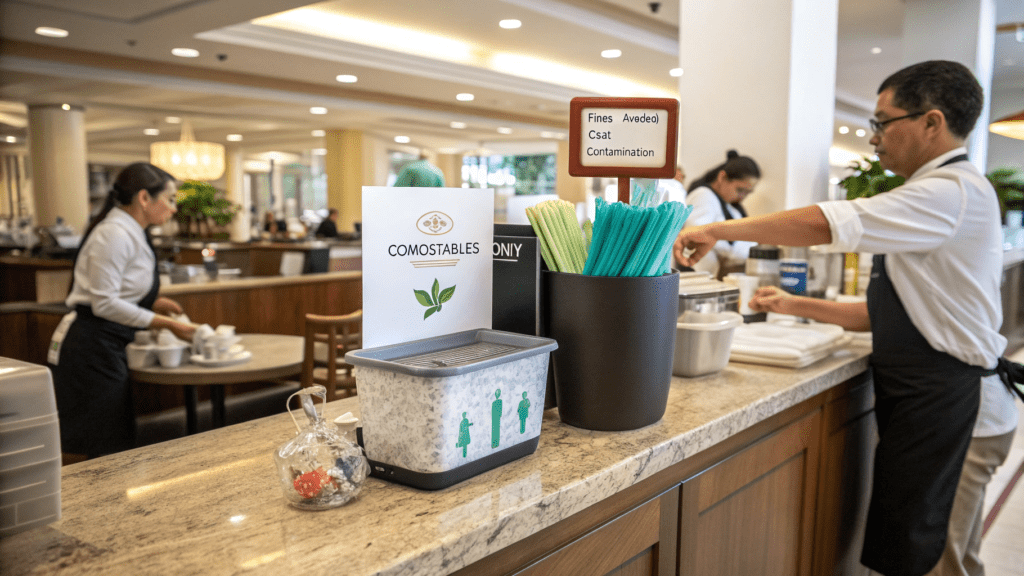
A: Restaurants must partner with certified commercial composting facilities that explicitly accept their specific type of compostable packaging. Clear signage for customers and staff is also crucial to prevent contamination of waste streams.
Q: Are “biodegradable” and “compostable” the same thing for foodservice packaging?
A: No. “Compostable” means a product will break down into natural elements in a specific industrial composting environment. “Biodegradable” is a broader term that doesn’t guarantee breakdown in a reasonable timeframe or without leaving toxic residues.
Q: What are the main cost implications for procurement managers considering compostable options?
A: Compostable plastics can be significantly more expensive (up to 400% higher) than conventional plastics due to raw material costs and less mature production processes. This requires careful ROI analysis beyond just unit price.
Q: How do PFAS chemicals affect the viability of compostable food containers?
A: The presence of PFAS in some compostable containers is a major concern. These “forever chemicals” can leach into compost, contaminating soil and posing health risks, leading many composting facilities to reject such materials.