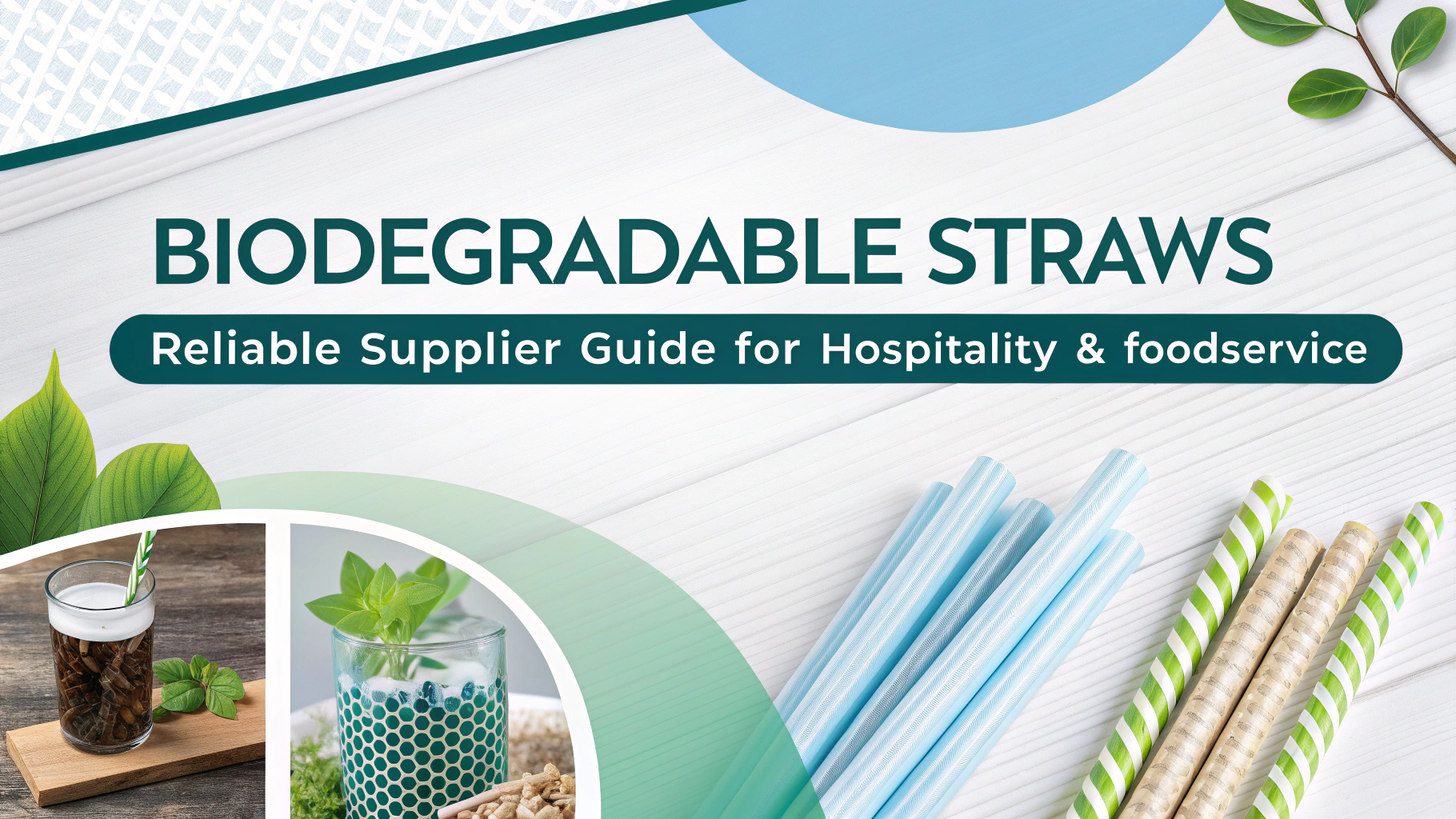
The Urgent Shift: Why Sustainable Straws Are No Longer Optional for B2B Leaders
The tide has irrevocably turned against single-use plastics. Across the globe, businesses are navigating an escalating wave of pressure, driven by stringent government bans – from comprehensive EU directives and UK regulations to progressive US states like California and New York – alongside an overwhelming surge in consumer demand for genuinely eco-friendly practices. For B2B players spanning the vast landscapes of foodservice, hospitality, and retail, this isn’t merely a trend; it’s a critical imperative. The transition from traditional plastic to sustainable alternatives is no longer just about compliance; it’s fundamental to maintaining market relevance and securing long-term viability. In this pivotal moment, every sustainable choice directly impacts your brand image, your competitive standing, and ultimately, your business’s future. Discover how embracing sustainable packaging solutions can redefine your brand’s commitment to the planet.

Beyond Compliance: Tapping into the Multi-Billion Dollar Eco-Friendly Straw Market
The urgency of this shift also unveils a multi-billion dollar opportunity. The global compostable straws market, specifically, is projected to surge from USD 1.9 billion in 2025 to a remarkable USD 3.8 billion by 2035, demonstrating a robust 7.1% Compound Annual Growth Rate (CAGR). This significant growth is overwhelmingly driven by B2B adoption, with the foodservice sector leading the charge, anticipated to command a dominant 52.8% market share. Restaurants, hotels, and cafes are increasingly adopting eco-friendly straws not just to comply with regulations, but to actively bolster their brand image and meet the evolving expectations of their environmentally conscious clientele. This landscape makes private label compostable straws a strategic avenue for businesses to offer custom, branded sustainable solutions that resonate deeply with eco-conscious consumers and proactively align with stringent regulatory bodies. To delve deeper into the scale of the eco-friendly straw market’s growth, consult the latest industry forecasts fromБудущая информация о рынке.
Navigating the Nuances: Addressing Challenges and Innovations in Sustainable Straw Solutions
However, the journey to true sustainability is not without its complexities. Key concerns often arise around “compostable” products, particularly the widespread lack of industrial composting infrastructure necessary for many such items to break down effectively. A significant controversy also surrounds the detection of “forever chemicals” (PFAS) in a high percentage (up to 90% in some European studies) of paper straws, often added for water resistance, yet posing environmental and health risks. This critical issue highlights the importance of ingredient transparency, robust third-party certifications, and the careful selection of truly compostable, PFAS-free materials to avoid inadvertent “greenwashing” and ensure genuine environmental benefit. For more on the PFAS controversy and its implications for the industry, see recent reports fromPackaging Dive.
Innovations are rapidly addressing these challenges. Breakthroughs in materials like advanced PHA (polyhydroxyalkanoates), sugarcane, and bacterial cellulose are emerging, alongside improved water-resistant coatings that enhance durability and user experience without compromising sustainability. For example, researchers in China have developed bacterial cellulose straws that promise to be as cost-effective as plastic while being stronger than paper and edible.

Unlock Your Brand’s Green Potential with Private Label Compostable Straws
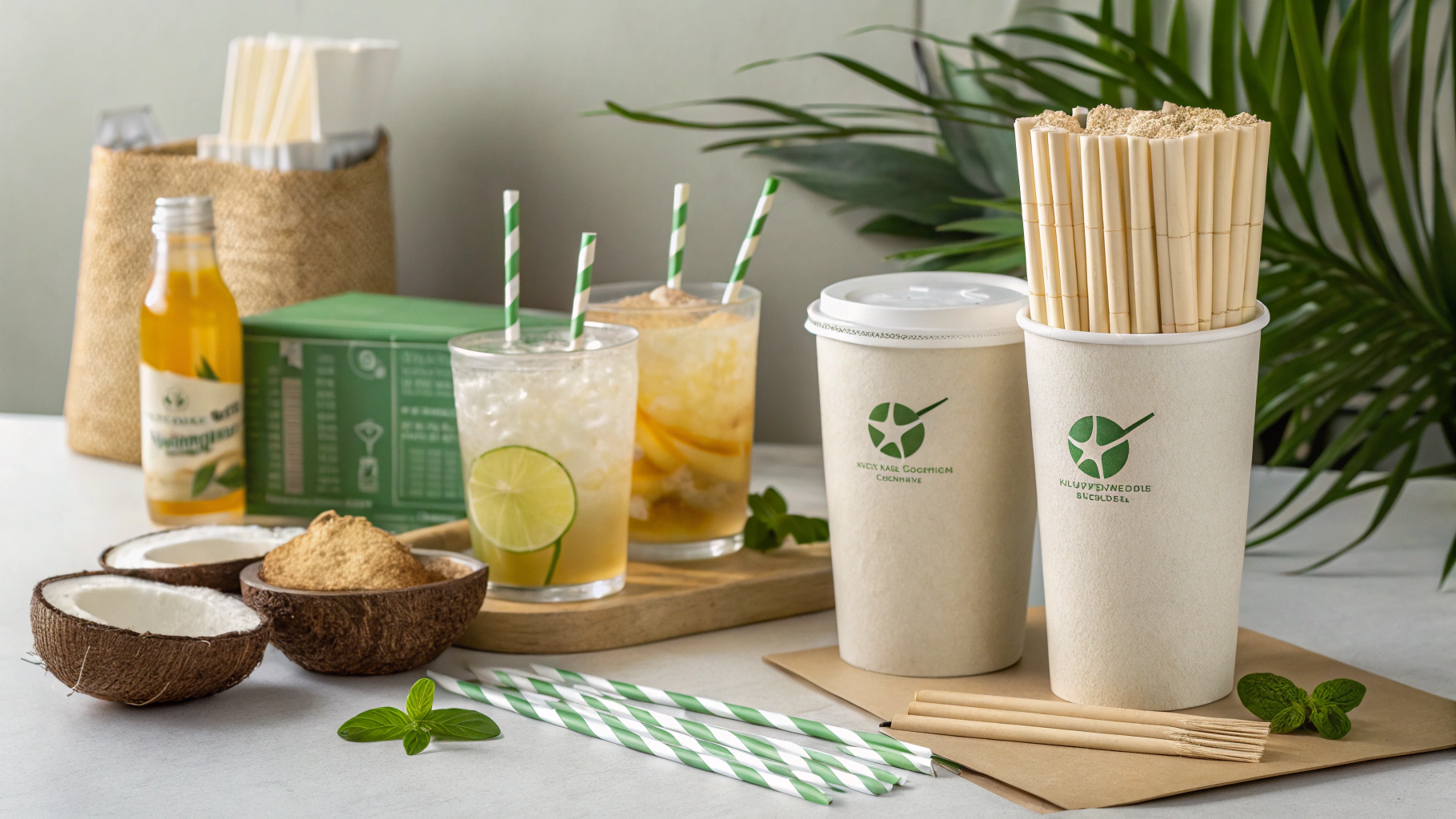
This is where the power of private label compostable straws truly shines as a strategic tool. Beyond mere compliance, they offer a direct pathway to significantly enhance your brand reputation, attract a growing base of eco-conscious customers—over 70% of whom actively prefer sustainable brands—and robustly align with critical ESG (Environmental, Social, and Governance) objectives. Imagine custom-printed straws featuring your logo, brand colors, and unique packaging. This transforms a typically functional item into a compelling marketing asset, tangibly communicating your unwavering commitment to environmental stewardship with every sip. For insights into developing your own custom eco-friendly packaging, explore ourprivate label manufacturing capabilities.
Strategic Advantage: Private Label vs. Generic & Traditional Straws
Understanding the distinct advantages of private label options is crucial for B2B decision-makers.
- Brand Perception & Loyalty:
- Traditional Plastic: Signals outdated practices, damages reputation, risks consumer boycotts, creates regulatory liabilities.
- Generic Compostable: Offers basic compliance, but provides no brand differentiation or positive association, missing a key opportunity for connection.
- Private Label Compostable: Builds positive brand equity, fosters deep customer trust, demonstrates authentic commitment to sustainability, enhancing loyalty and attracting new, values-driven customers.
- Regulatory Resilience & Future-Proofing:
- Traditional Plastic: High risk of non-compliance, inevitable phase-out across major markets (e.g., EU’s Single-Use Plastics Directive), constant adaptation challenges.
- Generic Compostable: Meets current mandates, but may lack specific certifications for emerging standards (e.g., PFAS-free status), posing future risks in a rapidly evolving regulatory landscape.
- Private Label Compostable: Enables proactive compliance with evolving global plastic bans, facilitates the selection of certified, advanced materials, and inherently future-proofs your operations against stricter environmental mandates.
- Marketing & Competitive Edge:
- Traditional Plastic: Offers no marketing value, becomes a significant brand liability.
- Generic Compostable: Minimal marketing impact, easily replicable by competitors, fails to distinguish your brand.
- Private Label Compostable: Transforms a commodity into a unique competitive differentiator, generates positive social media buzz, powerfully reinforces your brand story, and provides a tangible, tactile touchpoint for customer engagement.

Leading the Way: Future-Proofing Your Sustainable Supply Chain
Чтобы по-настоящему извлечь выгоду из этой возможности, предприятия должны стратегически сотрудничать с производителями, глубоко приверженными производству современных, долговечных и действительно компостируемых материалов, особенно с теми, которые используют покрытия, не содержащие ПФАС. Акцент на прозрачных цепочках поставок и надежных сторонних сертификатах (например, BPI или TÜV Austria) имеет первостепенное значение. Эти гарантии обеспечивают целостность продукта и являются вашей передовой защитой от «зеленого промывания», создавая непоколебимое доверие потребителей и укрепляя авторитет вашего бренда. Для получения подробной информации о том, как мы обеспечиваем прозрачность цепочки поставок и целостность продукции, посетите нашвыделенная страница.
Трансформируйте свой бренд: сделайте следующий шаг к устойчивому лидерству
Экономическое обоснование внедрения биоразлагаемых соломинок под собственной торговой маркой убедительно: речь идет о гораздо большем, чем просто соблюдение нормативных требований. Речь идет об активном превышении ожиданий потребителей и использовании устойчивости как мощного и неоспоримого конкурентного преимущества на современном динамичном рынке. Это ваша возможность создать устойчивую, готовую к будущему историю бренда, прочно основанную на подлинной экологической ответственности и революционных инновациях. Чтобы узнать больше о компаниях, лидирующих в области устойчивого развития, изучите более широкую отраслевую информацию отКомпания бизнес-исследований.
Готовы повысить свой бренд с помощью сертифицированных, высокоэффективных биоразлагаемых соломинок под собственной торговой маркой?Schedule a complimentary consultation with our sustainable packaging experts today to explore custom solutions and secure your competitive edge.