

Sustainable Straws for Cafes: A B2B Procurement Guide
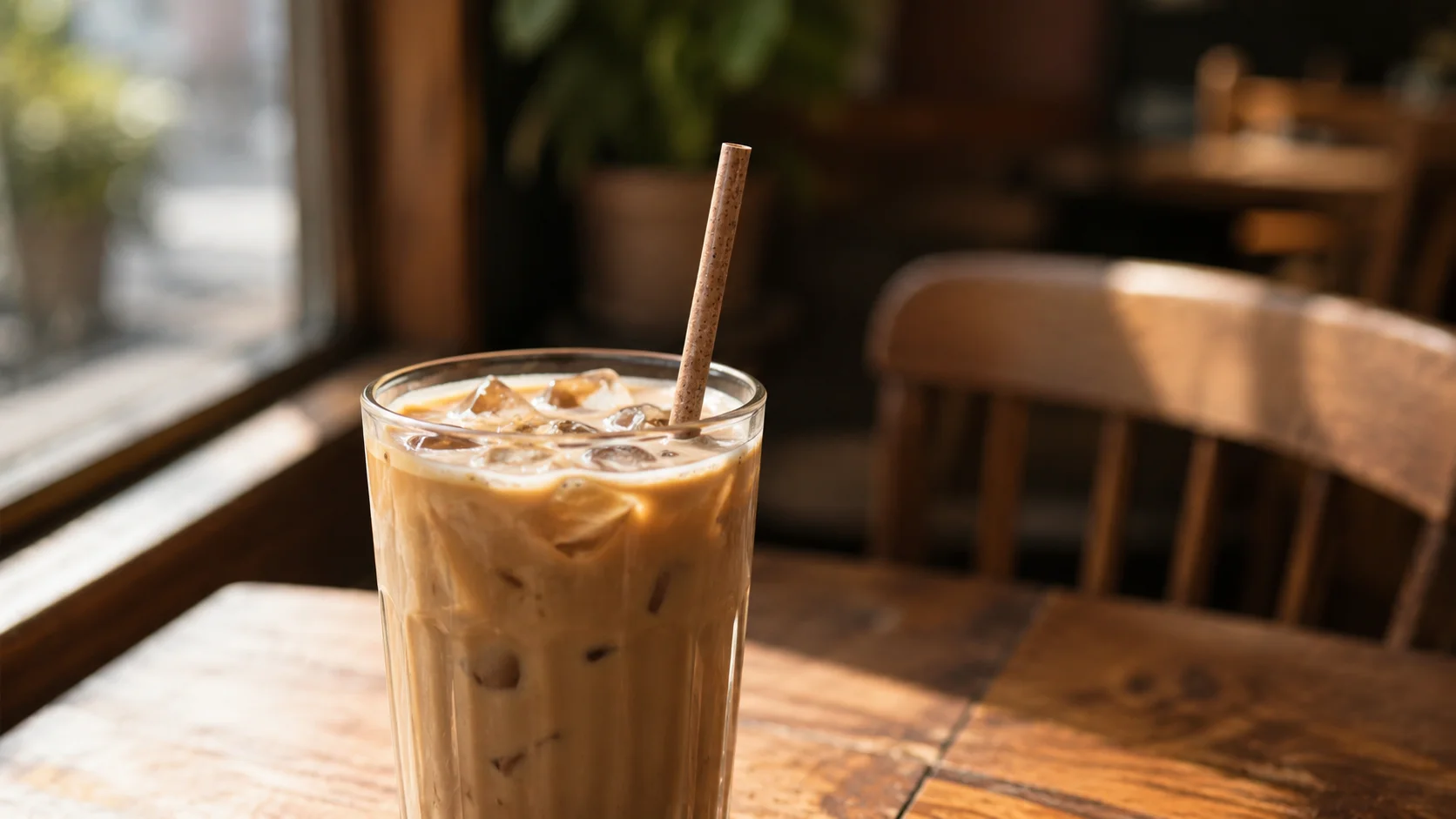
Straws are one of the smallest items in a cafe’s inventory—and one of the most scrutinized. Customers notice them. Regulators regulate them. And the wrong choice can undermine years of brand building in a single sip.
This guide is written for cafe owners, coffee shop operators, and food service procurement managers who need to make an informed decision about sustainable straws. It covers all four major options available today, compares them on the dimensions that matter for cafe operations, and provides a practical framework for evaluating suppliers.
Why Cafes Need to Get This Right
Cafes face a unique set of pressures that make straw selection more consequential than it is for other food service businesses:
Customer expectations are higher. Coffee shop customers skew younger, more urban, and more environmentally conscious than the average restaurant patron. They notice whether your straw matches your brand’s stated values.
The product experience matters more. Unlike fast food, where the straw is an afterthought, cafe beverages—lattes, cold brews, matchas—are products that customers savor. A straw that collapses, imparts taste, or looks cheap degrades the experience.
Regulation is accelerating. The EU Single-Use Plastics Directive, California’s AB 1276, and similar legislation worldwide are phasing out conventional plastic straws. Cafes that have already made the switch avoid last-minute supply chain disruption.
The straw is free marketing. A distinctive, sustainable straw gets photographed and posted. It becomes part of your cafe’s Instagram presence without any additional marketing spend.
The Four Straw Options for Cafes Today
Option 1 — Coffee Ground Straws
Best for: Coffee-focused cafes that want the strongest brand alignment.
Coffee ground straws are made from recycled spent coffee grounds. They are dark brown with visible coffee particles, have a matte texture, and carry a faint coffee aroma when first unwrapped. They are PLA-free and home-compostable.
Cafe-specific advantages:
– The narrative is perfect: “your coffee waste becomes your straw”
– Visually distinctive on Instagram
– Heat-resistant for hot lattes and Americanos
– Customers immediately understand they are not plastic
Limitations:
– Slightly higher unit cost than sugarcane or paper
– Dark color may not suit all cafe aesthetics
Option 2 — Sugarcane Straws
Best for: Cafes with diverse menus that need a versatile, neutral-looking straw.
Sugarcane straws are made from bagasse—the fibrous residue from sugarcane juice extraction. They are cream-beige with a matte finish and subtle fiber grain. PLA-free and home-compostable.
Cafe-specific advantages:
– Neutral appearance works with any beverage and any cafe aesthetic
– Cost-competitive at scale
– Excellent heat resistance
– Same home-compostable credentials as coffee ground straws
Limitations:
– Less distinctive brand narrative than coffee ground straws
– May not stand out visually on Instagram
Option 3 — PLA Straws
Best for: Limited scenarios—cold drinks only, where industrial composting is verified.
PLA (polylactic acid) straws are made from fermented corn starch. They look and feel identical to conventional plastic straws.
Cafe-specific advantages:
– Lowest unit cost
– Transparent/clear appearance is familiar to customers
Cafe-specific problems:
– Cannot handle hot beverages (melts above 50°C)
– Requires industrial composting—most municipal systems do not accept them
– Look like plastic, which confuses customers and undermines your sustainability message
– May not comply with some plastic straw bans due to visual indistinguishability
Verdict: PLA is the weakest option for most cafes unless your municipality has verified industrial composting that specifically accepts PLA items.
Option 4 — Paper Straws
Best for: Budget-constrained operations where performance is not a priority.
Paper straws are the most widely available sustainable option and the cheapest.
Cafe-specific advantages:
– Lowest unit cost
– Widely available from multiple suppliers
Cafe-specific problems:
– Collapse within 15-30 minutes in liquid
– Impart a paper/cardboard taste
– Customers frequently request a second straw
– Degrade the premium experience your cafe is trying to create
Verdict: Paper straws may work for takeout-only operations where the straw is used briefly and discarded. For dine-in cafes where customers sit with their drinks, paper straws create complaint risk.
Comparison Table for Cafe Operators
What Your Straw Says About Your Cafe
| Factor | Coffee Ground | Sugarcane | PLA | Paper |
|---|---|---|---|---|
| Hot drinks (latte, americano) | Excellent | Excellent | Fails (melts) | Poor (collapses) |
| Cold drinks (iced latte, cold brew) | Excellent | Excellent | Good | Poor (15-30 min max) |
| Customer satisfaction | High—unique, premium feel | High—clean, natural | Low—looks like plastic | Low—soggy, bad taste |
| Brand alignment for cafes | Perfect | Good | Weak | Weak |
| Instagram potential | High | Medium | None | None |
| Home compostable | Yes | Yes | No | Yes |
| Per-unit cost | Mid | Low-Mid | Low | Lowest |
| Supplier differentiation | High | Medium | None (commodity) | None (commodity) |
The straw you choose communicates something about your cafe before a customer takes a single sip:
Paper straw: “We made the cheapest possible sustainable choice.”
PLA straw: “We switched to ‘biodegradable’ but didn’t think about what that actually means—and we hope you don’t either.”
Sugarcane straw: “We chose a clean, professional, genuinely sustainable option.”
Coffee ground straw: “We care about every detail of your experience—including the straw. Here is something you have never seen before.”
If your cafe positions itself as premium, artisanal, or environmentally conscious, the straw is part of that positioning. It should not be an afterthought.
How to Evaluate a Straw Supplier for Your Cafe
When contacting potential suppliers, ask these questions:
Product questions:
– What certifications does the straw hold? (EN 13432, OK Compost HOME, BPI, ASTM D6400)
– Is it PLA-free? If not, what percentage is PLA?
– What is the maximum beverage temperature it can withstand?
– How long does it remain structurally intact in cold liquid?
– Is it PFAS-free? (Request test documentation)
– What sizes are available? (Regular 6mm, jumbo/boba 12mm, etc.)
Business questions:
– What are the minimum order quantities (MOQ)?
– What is the per-unit cost at my expected order volume?
– Do you offer custom branding? What is the MOQ for branded straws?
– What are the lead times for standard and custom orders?
– Do you provide samples for testing before committing to a bulk order?
– Can you supply a certificate of conformity for customs/import purposes?
Sustainability questions:
– What composting certifications do your straws hold?
– Can you provide the certificate document for verification?
– What is the shelf life of the straws under standard storage conditions?
– Do you offer packaging made from recycled or recyclable materials?
Regulatory Landscape for Cafe Operators
Cafe operators should be aware of these regulations affecting straw choices:
EU Single-Use Plastics Directive (SUP): Bans certain single-use plastic items, including straws. PLA straws may or may not be covered depending on national implementation. Compostable straws (EN 13432 certified) are typically exempt.
US State-Level Bans: California, New York, Oregon, and others have implemented plastic straw restrictions. Requirements vary by state, but the trend is toward requiring non-plastic alternatives.
Upcoming: Extended Producer Responsibility (EPR) schemes in multiple jurisdictions will increase the cost of non-compostable packaging, making compostable alternatives more cost-competitive over time.
Recommendation: Choose a straw that meets EN 13432 or equivalent standards now, even if your jurisdiction does not currently require it. Regulation is moving in one direction only.
Procurement Checklist
Before placing a straw order, verify:
– [ ] Straw material and PLA content confirmed in writing
– [ ] Certifications verified (certificate numbers, not just claims)
– [ ] Samples tested with your actual hot and cold beverages
– [ ] Unit cost confirmed at your expected order volume
– [ ] Minimum order quantity acceptable for your operation
– [ ] Lead time fits your inventory planning
– [ ] Disposal instructions align with your waste management setup
– [ ] Packaging meets your storage and service requirements
– [ ] Custom branding options confirmed if needed
– [ ] PFAS-free test documentation provided
Frequently Asked Questions
Q: What is the best straw for a specialty coffee shop?
A: Coffee ground straws offer the strongest brand alignment for coffee-focused businesses. The “your coffee waste becomes your straw” narrative resonates with specialty coffee customers, and the dark brown color distinguishes your cafe visually.
Q: Can I use different straws for different drinks?
A: Yes. Many cafes stock coffee ground straws for hot and signature coffee drinks, and sugarcane straws for iced teas, lemonades, and non-coffee beverages. Both are from the same supplier (MOMOIO), simplifying procurement.
Q: How much more do sustainable straws cost than paper?
A: Coffee ground and sugarcane straws typically cost more per unit than basic paper straws. However, paper straws often require customers to use two or more straws per drink, effectively doubling or tripling the per-drink cost. The true cost comparison should account for this failure rate.
Q: Can customers tell the difference between PLA and plastic?
A: No. This is PLA’s biggest weakness for cafe branding—customers cannot visually distinguish PLA from conventional plastic and may assume your cafe has not made the switch. Coffee ground and sugarcane straws are unmistakably not plastic.
Conclusion
Your cafe’s straw is a small, inexpensive item that carries outsized weight. It affects customer satisfaction, brand perception, regulatory compliance, and Instagram presence. The right straw reinforces everything your cafe stands for. The wrong one creates complaints and undermines your sustainability story.
For most cafes, a dual approach works best: coffee ground straws for coffee-based beverages (where the brand alignment is strongest) and sugarcane straws for everything else (where versatility is most valuable). Both are PLA-free, home-compostable, and available from MOMOIO in bulk with custom branding options.
Related: Coffee Ground Straws Guide | Sugarcane Straws Guide | Coffee Ground vs PLA Comparison
Quick Answer for B2B Buyers
- Cafes need straws that protect drink experience, brand perception, and compliance at the same time.
- Coffee ground straws are often the strongest story-led option for cafes, while sugarcane straws are a versatile plant-based option for broader foodservice use.
- Before switching suppliers, cafes should test cold-drink performance, packaging, storage stability, certification documents, and reorder lead time.
Best fit keywords: sustainable straws for cafes, eco friendly straws for cafes, coffee shop straws, compostable straws for cafes, biodegradable straws for cafes.
Need Samples or Wholesale Pricing?
MOMOIO helps cafes, restaurants, hotels, distributors, and private-label buyers compare sustainable straw options, request samples, and prepare bulk orders with clear documentation.
Contact MOMOIO for samples, MOQ, lead time, carton specs, and custom packaging options.
Buyer FAQ
What are the best sustainable straws for cafes?
For cafes, coffee ground straws are strong when brand storytelling matters, while sugarcane straws are a versatile choice for daily cold drinks and broader foodservice operations.
Should cafes choose PLA straws?
PLA straws can look and feel familiar, but many require industrial composting infrastructure. Cafes should check local disposal systems before positioning PLA as compostable.
How can a cafe test sustainable straws before bulk buying?
Order samples, test iced coffee and smoothies, check mouthfeel after 15 to 30 minutes, review packaging options, and request supplier documentation before committing to bulk quantities.