In an era defined by escalating environmental consciousness and increasingly stringent regulatory frameworks, the traditional single-use plastic straw has become a symbol of unsustainable practices. For procurement managers, operations directors, sustainability officers, and supply chain executives, the shift away from conventional plastics isn’t merely a trend; it’s a commercial imperative. With millions of plastic straws used daily, contributing significantly to marine and landfill waste that persists for centuries, the operational and reputational risks for businesses failing to adapt are immense. Consumers, now more than ever, are scrutinizing corporate environmental responsibility, making sustainable sourcing a critical factor in brand loyalty and market differentiation. Ignoring this paradigm shift can lead to not only regulatory penalties, such as those mandated by the EU’s 2025 Packaging and Packaging Waste Management Regulation (PPWR) or various state-level bans across the USA, but also a tangible erosion of brand trust and competitive edge. The time to transition to eco-friendly alternatives is not just looming; it is here, demanding a proactive, informed approach to every aspect of your supply chain, down to the smallest detail like a drinking straw.
The journey of the drinking straw, from ancient Sumerian reeds used to filter beer to the ubiquitous plastic tubes of the 20th century, highlights a profound pivot in material philosophy. While early straws were crafted from natural materials like gold, precious stones, and hollow reeds, the 1800s saw the popularization of rye grass straws, known for their affordability but plagued by a tendency to become mushy and impart a grassy taste. This functional drawback led American inventor Marvin C. Stone to patent the first modern paper straw in 1888, marking a significant step towards mass-produced alternatives. However, the mid-20th century ushered in the dominance of plastic straws, lauded for their low cost, durability, and flexibility—a clear move from renewable resources to oil-based, single-use products. This widespread adoption, driven by post-WWII manufacturing efficiency, ultimately set the stage for the modern environmental crisis.
The infamous “straw wars” that ignited around 2018, amplified by viral imagery of plastic pollution, galvanized a global demand for alternatives. Yet, the initial wave of “eco-friendly” solutions was not without its challenges. Early paper straws, while well-intentioned, often fell short on user experience, quickly turning soggy, altering beverage taste, and possessing an unpleasant texture. Another common alternative, Polylactic Acid (PLA) straws, made from bioplastics derived from renewable resources like cornstarch, canola soy seeds, or sugarcane, presented its own set of complexities. While marketed as compostable, PLA typically requires specific industrial composting facilities to break down effectively, posing a disposal challenge where such infrastructure is not readily available. Furthermore, a significant controversy emerged with the detection of PFAS (per- and polyfluoroalkyl substances), or “forever chemicals,” in some paper straws. These chemicals, used for water resistance, are persistent in the environment and carry potential health risks, undermining the very premise of sustainability. Beyond material science, the plastic straw ban movement also faced legitimate criticism for not fully addressing the needs of individuals with disabilities, who often rely on straws for safe and independent drinking, highlighting the complex balance between environmental goals and accessibility. For businesses, navigating this evolving landscape means finding solutions that are not only environmentally responsible but also perform reliably, remain cost-effective, and provide an acceptable user experience for all patrons.
لقد ظهر مصطلح "القش البني" كاختصار لهذا الجيل الجديد من البدائل المستدامة، والتي تستمد في كثير من الأحيان لونها الترابي من تركيبتها الطبيعية غير المبيضة. هذه ليست خيارات عامة "صديقة للبيئة"؛ إنها تمثل مجموعة متنوعة من ابتكارات علوم المواد المصممة لتلبية الأداء الصارم والمعايير البيئية.
دعونا نتعمق في التركيبات المحددة التي تدعم حلول القش البني الرائدة اليوم:
- Sugarcane Fibers (Bagasse) & PLA Blends: These straws marry agricultural waste (bagasse, the fibrous residue from sugarcane) with PLA, creating a robust, commercially compostable product. They are known for maintaining integrity in both hot and cold beverages without becoming soft or mushy, offering a sturdy and smooth user experience.
- Reprocessed Coffee Grounds & PLA: A truly innovative upcycling approach, these straws combine coffee waste with PLA. They offer similar durability and compostability to sugarcane blends, providing a unique texture and appeal for eco-conscious brands and specialty establishments.
- Kraft Brown Paper: A classic, natural choice, these straws are typically made from FDA-approved, food-grade kraft paper. Often dye-free and toxin-free, they are 100% biodegradable and compostable. While some early versions struggled with longevity, modern kraft paper straws have improved coatings (e.g., natural beeswax) to enhance moisture resistance.
- Agave Fibers: Leveraging waste fibers from tequila and mezcal production, agave straws offer a sturdy, sustainable solution. Some agave straws are certified landfill-degradable, breaking down within one to three years, providing a compelling end-of-life profile.
- Wheat Straw & Rye Grass: These represent the simplest, most natural form of straw—actual plant stems. Wheat straw, a byproduct of harvesting, is naturally brown, thinner, and fully biodegradable. While rye grass straws were historically popular, they could become soggy after prolonged immersion.
- Wood Pulp & Vinegar: Another biobased innovation, these straws are designed for complete biodegradability in both freshwater and soil. They are often gluten-free and free of PFAS or heavy metals, targeting a broader environmental impact.
- بولي هيدروكسي ألكانوات (PHA): As a cutting-edge plant-based thermoplastic, PHA (often derived from fermented canola oil or cornstarch) represents the next generation of biodegradable materials. PHA straws are engineered to look and feel remarkably like traditional plastic straws, offering superior durability and a familiar user experience while being environmentally friendly and often gluten-free.
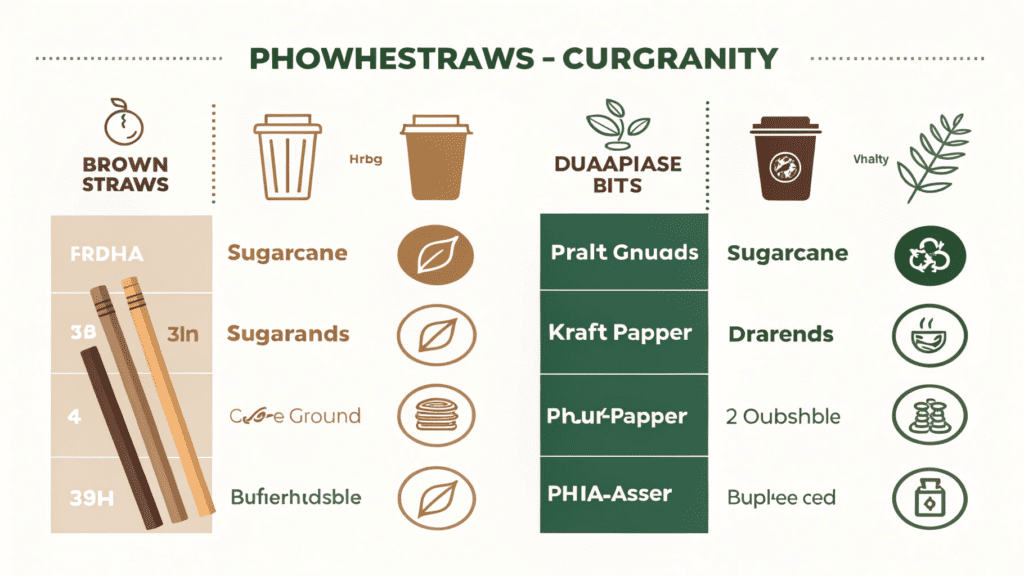
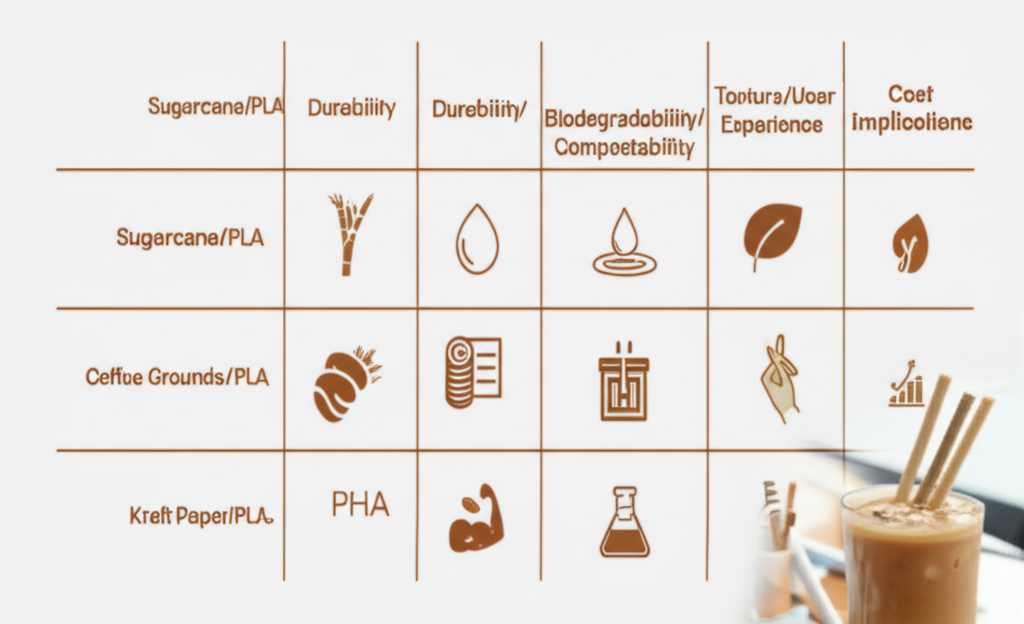
To simplify the procurement decision, consider this performance and sustainability matrix for popular brown straw materials:
| نوع المادة | التركيبة الرئيسية | Durability in Liquid (Hot/Cold) | القابلية للتحلل الحيوي / القابلية للتسميد | Texture/User Experience | Cost Implications (Relative) | التطبيقات المثالية |
|---|---|---|---|---|---|---|
| Sugarcane/PLA | Bagasse, PLA | عالي | Commercial Compostable | Smooth, Sturdy | متوسطة عالية | Restaurants, Cafes, Quick Service |
| Coffee Grounds/PLA | Coffee Grounds, PLA | عالي | Commercial Compostable | Unique, Sturdy | متوسطة عالية | Specialty Coffee Shops, Eco-conscious Brands |
| ورق الكرافت | FDA-approved paper | معتدل (يمكن أن يخفف) | Biodegradable, Compostable | Paper-like | Low-Medium | General Foodservice, Events |
| PHA | Plant-based thermoplastic | عالي | Compostable/Biodegradable | تشبه البلاستيك | عالي | High-volume, Premium Brands, Durable Needs |
The market for eco-friendly straws is poised for significant expansion, reflecting a global pivot away from single-use plastics. Projections indicate the global eco-friendly straw market is set to grow from USD 12.3 billion in 2025 to nearly USD 25.1 billion by 2035, demonstrating a robust Compound Annual Growth Rate (CAGR) of 7.3%. While paper straws currently hold the largest market share within the biodegradable segment due to their widespread adoption and regulatory pressures, plant-based alternatives like those highlighted are rapidly gaining ground. Leading innovators such as Aardvark Straws, Bygreen, EQUO, Phade, and Earth Smart are at the forefront of this evolution, investing heavily in research and development to overcome past limitations, enhance durability, reduce production costs, and improve end-of-life solutions, including the development of truly home-compostable options and advanced waterproof coatings. The regulatory environment, particularly the EU’s proactive stance with the PPWR and the increasing number of state-level bans across the US, serves as a powerful catalyst, accelerating this transition and making sustainable sourcing a non-negotiable aspect of responsible business.
Beyond merely achieving compliance, strategically adopting brown straws offers profound advantages for your business.
First, it significantly enhancesbrand image and consumer trust. Aligning your operations with environmental values resonates deeply with an increasingly eco-conscious consumer base, translating into stronger brand loyalty and positive public perception. Second, it provides a powerfulcompetitive differentiation. في السوق المزدحمة، فإن إظهار التزام ملموس بالاستدامة من خلال سلسلة التوريد الخاصة بك يمكن أن يميزك عن الآخرين، ويجذب عملاء جدد ويعزز مكانتك كقائد ذو تفكير تقدمي. ولنتأمل هنا مثالاً افتراضياً: قامت مجموعة مطاعم أوروبية كبرى، "جرين بايتس"، بتحويل جميع مواقعها الخمسمائة إلى استخدام القش البني المصنوع من ألياف قصب السكر. وفي غضون ستة أشهر، أبلغوا عن زيادة بنسبة 15% في تعليقات العملاء الإيجابية المتعلقة بمبادرات الاستدامة وزيادة بنسبة 5% في الأعمال المتكررة بين المجموعة السكانية المستهدفة، مما أظهر التأثير المباشر على علامتهم التجارية والنتيجة النهائية. ثالثًا، يساهم فهم الفروق الدقيقة في المواد المختلفة في ذلكالكفاءة التشغيلية. Knowing the shelf-life, storage requirements, and optimal disposal methods for each type of brown straw ensures seamless integration into your existing operational flows and waste management systems. Finally, by choosing plant-based brown straws, your business actively contributes to aالاقتصاد الدائري, reducing reliance on finite fossil fuels, minimizing waste, and supporting renewable resources, thereby strengthening your corporate social responsibility profile.

Navigating the multitude of sustainable straw options requires a methodical approach tailored to your organization’s unique needs.
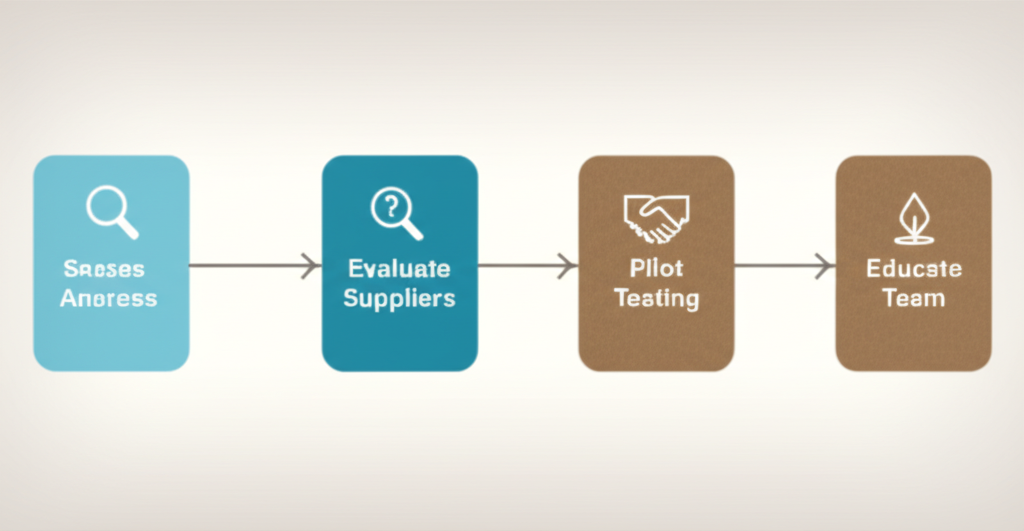
Your immediate next steps should focus on informed decision-making and strategic implementation.
- Assess Your Specific Needs: Begin by evaluating your operational requirements. Consider the volume of straws needed, the types of beverages served (hot/cold, thick/thin), the desired shelf-life, and crucially, your existing waste management and disposal capabilities. Do you have access to industrial composting facilities, or do you require home-compostable or landfill-degradable options?
- Evaluate Supplier Offerings: Look beyond price. Prioritize suppliers who offer transparency in material sourcing, possess relevant certifications (e.g., BPI Compostable, FDA-approved, PFAS-free), and demonstrate a clear commitment to ethical production practices. Inquire about the full lifecycle of their products, from raw material to end-of-life.
- Pilot Testing: Before a full-scale rollout, implement small-scale trials of selected straw alternatives within your operations. This allows you to gauge real-world performance, assess user experience across different beverage types, and identify any unforeseen operational challenges. Gather feedback from both your staff and customers.
- Educate Your Team and Customers: الشفافية هي المفتاح. قم بتدريب موظفيك على فوائد الشفاطات الجديدة والتخلص منها بشكل سليم وكيفية الرد على استفسارات العملاء. قم بتوصيل التزامك بالاستدامة بوضوح إلى عملائك من خلال اللافتات الموجودة في المتجر، أو ملاحظات القائمة، أو القنوات الرقمية، مع تسليط الضوء على التأثير البيئي الإيجابي الذي تختاره.
- التشاور مع الخبراء: بالنسبة لسلاسل التوريد المعقدة أو التحديات التنظيمية المحددة، فكر في التعامل مع مستشاري التغليف المستدام أو جمعيات الصناعة. يمكن أن توفر خبراتهم نصائح مخصصة، وتساعد في تحديد الحلول المتخصصة، والتأكد من أن استراتيجية الشراء الخاصة بك قوية وقابلة للمستقبل.

The choice of drinking straw might seem minor, but it reflects a significant commitment to sustainability that resonates deeply with modern consumers and regulators. By making a strategic, informed transition to advanced brown straw solutions, your business can mitigate regulatory risks, significantly reduce its environmental footprint, and elevate its brand value. This proactive stance offers a compelling opportunity to capture a larger share of the growing eco-conscious market, translating into long-term cost savings, enhanced customer loyalty, and a stronger competitive position. Don’t let outdated materials undermine your commitment to a sustainable future. Act now to secure your reputation and unlock new growth opportunities.
Responsiveness Preview
See how this page adapts to different screen sizes.DesktopTabletMobile
الأسئلة المتداولة
What are brown straws made of?
Brown straws are typically made from various eco-friendly and biodegradable materials chosen as alternatives to plastic. Common compositions include sugarcane fibers (bagasse) blended with PLA, reprocessed coffee grounds with PLA, FDA-approved kraft paper, agave fibers, wheat straw, wood pulp and vinegar, and advanced plant-based thermoplastics like PHA. These materials often give the straws their natural brown color.
Are brown straws truly eco-friendly?
Yes, brown straws are generally designed to be more eco-friendly than traditional plastic straws. They are made from renewable resources and are intended to biodegrade or compost, reducing plastic waste. However, their true environmental impact depends on the material (some require industrial composting, others biodegrade in natural environments) and proper disposal methods. Innovations are continually improving their performance and biodegradability.
What are the key differences between various brown straw materials for B2B procurement?
Key differences lie in their composition, durability in hot/cold liquids, specific biodegradability/compostability requirements, texture, relative cost, and ideal applications. For example, sugarcane/PLA and PHA offer high durability similar to plastic, while kraft paper may soften. Materials like wheat straw are fully biodegradable, whereas PLA-based straws often require commercial composting facilities. Businesses should assess these factors against their specific operational needs and waste management capabilities.
How do regulations impact the choice of sustainable straws?
Increasingly stringent regulations, such as the EU’s 2025 Packaging and Packaging Waste Management Regulation (PPWR) and various state-level bans on single-use plastics in the USA, are a primary driver for businesses to switch to sustainable straw alternatives. Non-compliance can lead to significant penalties and reputational damage. These regulations accelerate the market shift towards eco-friendly options like brown straws, making sustainable procurement a commercial imperative.
What are the benefits of switching to brown straws for businesses?
Switching to brown straws offers multiple strategic advantages: enhanced brand image and consumer trust, competitive differentiation in a crowded market, improved operational efficiency through informed material choices, and a tangible contribution to the circular economy. This transition helps mitigate regulatory and reputational risks while appealing to eco-conscious consumers, potentially leading to increased market share and long-term cost savings.