إن الدفعة العالمية نحو الاستدامة ليست مجرد اتجاه؛ إنها ضرورة عمل عميقة لإعادة تشكيل سلاسل التوريد، واستراتيجيات الشراء، وسمعة العلامة التجارية. ومع تشديد اللوائح البيئية وزيادة طلب المستهلكين على البدائل الصديقة للبيئة، تواجه الشركات ضغوطًا متزايدة للتخفيف من بصمتها البيئية. إن المواد البلاستيكية التقليدية، التي يمكن أن تستمر في مدافن النفايات والمحيطات لمئات إلى آلاف السنين، لم تعد حلاً قابلاً للتطبيق على المدى الطويل. وفي هذه البيئة العالية المخاطر، ظهرت المواد البلاستيكية القابلة للتحلل الحيوي كبديل واعد، إلا أن أدائها الحقيقي غالبا ما يظل محاطا بالغموض.
يمكن أن يكون مصطلح "قابل للتحلل الحيوي" في حد ذاته مضللاً. في حين تم تصميم هذه المواد لتتحلل بواسطة الكائنات الحية الدقيقة إلى مواد طبيعية مثل الماء وثاني أكسيد الكربون والكتلة الحيوية، فإن سرعة واكتمال هذه العملية تعتمد بشكل كبير على الظروف البيئية المحددة. يمكن أن يؤدي سوء فهم هذه الفروق الدقيقة إلى تداعيات تشغيلية وتجارية كبيرة، بدءًا من عدم الامتثال التنظيمي وتضرر ثقة العلامة التجارية إلى الإدارة غير الفعالة للنفايات والتكاليف غير المتوقعة. بالنسبة لمديري المشتريات، ومديري العمليات، ومسؤولي الاستدامة، والمديرين التنفيذيين لسلسلة التوريد، فهم واضح قائم على البيانات لمدى سرعة المواد البلاستيكية القابلة للتحلل الحيويفي الحقيقةلا يعد التقسيم مفيدًا فحسب، بل إنه ضروري لاتخاذ قرارات مستنيرة وعالية التحويل. سوف يفكك هذا الدليل التعقيدات، ويقدم رؤى استراتيجية للتنقل في المشهد المتطور للمواد المستدامة والتأكد من أن عملك ليس فقط متوافقًا، ولكنه مؤثر حقًا.
إن الرحلة من المفهوم إلى التحلل الكامل للمواد البلاستيكية القابلة للتحلل الحيوي بعيدة كل البعد عن الخط المستقيم، وتتأثر بتفاعل معقد من العوامل التي يجب على قادة الصناعة فهمها. تعني القابلية للتحلل الحيوي في جوهرها أنه يمكن تقسيم المواد بواسطة عوامل بيولوجية - مثل البكتيريا والفطريات والطحالب - إلى مركبات طبيعية أبسط. ومع ذلك، نادرًا ما تكون هذه العملية موحدة عبر جميع المواد أو البيئات. تملي المتغيرات الرئيسية وتيرة وفعالية التحلل:
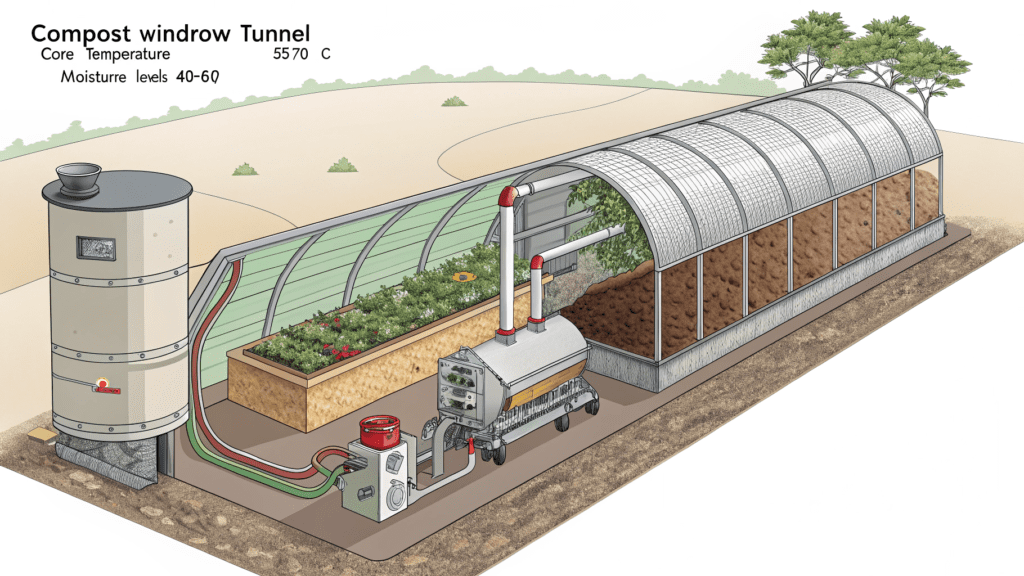
- الظروف البيئية: درجة الحرارة والرطوبة لها أهمية قصوى. تؤدي درجات الحرارة المرتفعة، التي غالبًا ما تتجاوز 55-60 درجة مئوية في البيئات الصناعية، إلى تسريع النشاط الميكروبي بشكل كبير، مما يؤدي إلى تسريع التحلل. تعتبر الرطوبة أمرًا بالغ الأهمية بنفس القدر، حيث تحتاج الكائنات الحية الدقيقة إلى الماء لتزدهر وتؤدي وظائفها. تلعب مستويات الأكسجين أيضًا دورًا حاسمًا: فالبيئات الهوائية (الغنية بالأكسجين)، النموذجية للسماد، تنتج ثاني أكسيد الكربون والمواد العضوية، في حين أن الظروف اللاهوائية (الحرمان من الأكسجين)، الشائعة في مدافن النفايات، يمكن أن تؤدي إلى إنتاج غاز الميثان، وهو غاز دفيئة قوي.
- وجود الكائنات الحية الدقيقة: إن الأنواع المحددة ووفرة الميكروبات - البكتيريا والفطريات - غير قابلة للتفاوض من أجل التحلل الحيوي الفعال. وفي غياب المجتمعات الميكروبية المناسبة، فحتى المواد البلاستيكية المصممة لتكون قابلة للتحلل البيولوجي سوف تضعف.
- نوع البلاستيك وتكوينه: إن التركيب الكيميائي والوزن الجزيئي والسمك وحتى وجود بعض الإضافات يغير بشكل أساسي معدل تحلل البلاستيك. على سبيل المثال، تميل المواد البلاستيكية ذات الهياكل المتفرعة والتي تحتوي على المزيد من روابط الهيدروكسيل إلى التحلل الحيوي بسهولة أكبر. تم تصميم بعض الإضافات، مثل EcoPure®، خصيصًا لتسريع عملية التحلل في البيئات النشطة بيولوجيًا.
A critical distinction for businesses operating across diverse markets like the US and Europe is the difference between “biodegradable” and “compostable.” While all compostable materials are biodegradable, not all biodegradable materials are compostable. In the United States, for example, “certified compostable” products must comply with ASTM D6400 standards, requiring 90% degradation within 180 days under industrial composting conditions. The European Union, a leading market for biodegradable plastics, boasts stringent regulations like the EU Single-Use Plastics Directive, further pushing industries toward genuinely sustainable solutions. This regulatory landscape highlights the need for precise claims and robust testing, especially given concerns about “greenwashing” and the potential for many supposedly biodegradable plastics to merely fragment into microplastics in unmanaged environments. Contamination of conventional recycling streams by mislabeled bioplastics is another significant challenge, threatening the integrity of recycling efforts and adding to waste management complexities. To understand these critical differences for specific applications, explore our guide onالقش القابل للتحلل مقابل القش القابل للتحلل.

Navigating the intricate world of biodegradable plastics requires a strategic approach, blending material science with market realities and future foresight. The global biodegradable plastics market, valued at USD 5.81 billion in 2024, is projected to surge to an estimated USD 12.5 billion to USD 82.05 billion by 2035, driven by regulatory pressures, corporate sustainability goals, and an increasing consumer willingness to pay a premium for eco-friendly products (over 70% of consumers, according to some reports). Europe currently leads this market due to stringent environmental regulations and high consumer awareness; Germany, for instance, is a significant contributor with its advanced R&D. Meanwhile, the Asia-Pacific region is poised for the fastest growth, fueled by rapid industrialization and investment in bioplastic infrastructure, particularly in countries like China and India. North America also shows steady growth, supported by its advanced manufacturing capabilities and demand for sustainable products.
Understanding where and how quickly different bioplastics break down is crucial for effective material selection and robust sustainability claims.
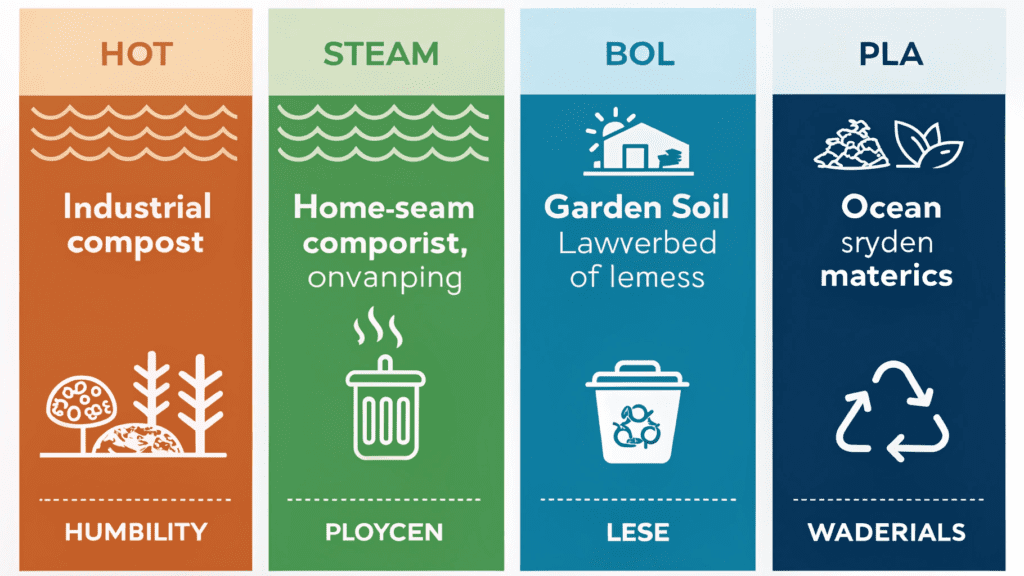
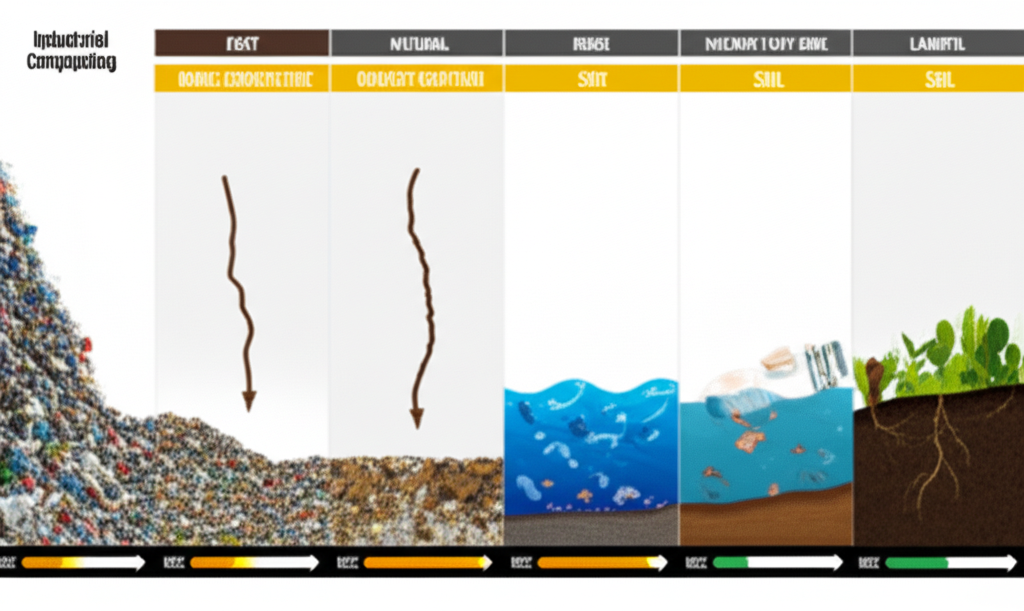
Real-World Decomposition: Where and How Quickly Different Bioplastics Break Down
Industrial Composting Facilities: The Optimal Environment
These facilities provide precisely controlled conditions—high temperatures (often above 55-60°C), optimal humidity, and rich microbial communities—that enable rapid decomposition. Many biodegradable bags and packaging can decompose within 3 to 6 months. Polylactic Acid (PLA) bottles, a common bioplastic from renewable resources like corn starch, can achieve over 90% biodegradation within 60-90 days, while some certified compostable products even disintegrate within 11 to 22 days. Polyhydroxyalkanoates (PHA) films have shown significant biodegradation, with some reaching 80% in 28 days. Starch-based plastics, particularly those with higher glycerol concentrations, can degrade completely in as little as 9 days. For businesses committed to genuine compostability, industrial facilities offer the most reliable end-of-life solution.
Home Composting: A More Variable Reality
Less controlled than industrial facilities, home composting environments feature lower and more variable temperatures, making degradation slower and less predictable. Certified home compostable productscandecompose within 180 days, but this is highly dependent on the pile’s specific conditions. PLA, for instance, struggles in household composts, often taking 12-18 months for bottles to degrade, if at all. This variability presents challenges for consumer-facing “home compostable” claims, necessitating clear communication and consumer education.
Soil Environments: Often Slower Than Expected
The degradation of biodegradable plastics in natural soil is influenced by soil type, microbial populations, temperature, and moisture. Many plastics that claim to be “soil biodegradable” actually degrade very slowly. PLA-based materials, for example, can take 80-100 years to break down in natural environments, far from the rapid decomposition often envisioned. While some starch-based films show promising degradation in agricultural soil (5-6 months under laboratory conditions), the general rule is that soil is not an efficient primary disposal route for most bioplastics.
Marine Environments: The Toughest Challenge
Biodegradation in marine settings is notoriously slow and challenging due to low temperatures, reduced microbial activity, and limited UV exposure once submerged. Many plastics labeled “biodegradable” show little to no degradation in oceans even after years, potentially persisting indefinitely or fragmenting into harmful microplastics. PHA is a notable exception, often presented as marine biodegradable, with a PHA water bottle estimated to biodegrade completely in 1.5 to 3.5 years. However, businesses must be extremely cautious with “marine biodegradable” claims, ensuring rigorous certification and understanding the ecological complexities involved. The World Wildlife Fund (WWF) highlights the urgent need for verifiable solutions to ocean plastic pollution, reinforcing the high stakes of misleading claims.
Landfills: Anaerobic Conditions and Limited Degradation
Standard landfills, often anaerobic (oxygen-deprived), are generally not conducive to the effective degradation of most biodegradable plastics. Here, decomposition can be very slow, taking decades, and may lead to the production of methane, a potent greenhouse gas. While specialized “landfill-biodegradable” plastics with organic additives exist and can break down faster than conventional plastics (tens of years), they remain a niche solution.
Strategic Insights for Businesses: Navigating the Biodegradable Landscape
Here’s a comparison of key biodegradable plastics and their business suitability:
| Plastic Type | Raw Material Source | Typical Breakdown (Optimal) | Key Degradation Environments | B2B Suitability & Considerations |
|---|---|---|---|---|
| جيش التحرير الشعبى الصينى | نشا الذرة، قصب السكر، الكسافا | 60-90 days (Industrial Comp.) | Industrial Composting | Packaging, disposable cutlery, textiles. Requires specific disposal. |
| PHA | Microbial fermentation | 28 days (Controlled Comp.) | Industrial Comp., Soil, Marine | Agriculture, healthcare, food packaging. Better marine biodegradability. |
| Starch-based | Potato, cassava, maize starch | 9-12 days (Soil, High Glycerol) | Industrial Comp., Soil, Home Comp. (variable) | Food packaging, bags. Cost-effective, but performance varies. |
| PBAT/PBS | Petrochemical/Bio-based | Months (Industrial Comp.) | Industrial Composting | Flexible films, compostable bags. Blended for improved properties. |
| Cellulose-based | Wood pulp, plant fibers | Months (Industrial Comp.) | Industrial Composting | Films, coatings. Good barrier properties. |
And a look at degradation environments and their implications for your operations:
| Environment | Degradation Speed & Efficacy | Infrastructure Requirements | Business Implications |
|---|---|---|---|
| Industrial Composting | Fast, complete (months) | Specialized, high-temperature facilities | Ideal for certified compostable packaging. Requires access to commercial facilities for end-of-life strategy. Supports strong “compostable” claims. |
| Home Composting | Variable, slower (up to 6+ months) | Consumer compost bins, less controlled | Suitable for products marketed directly to eco-conscious consumers with home compost access. Less predictable, higher risk of incomplete degradation. |
| Soil (Natural) | Very slow for most (years to decades) | None (natural ecosystems) | Generally not a viable disposal strategy for most bioplastics. “Soil biodegradable” claims must be carefully scrutinized and certified. |
| Marine (Natural) | Extremely slow, often incomplete (years) | None (natural ecosystems) | High risk of pollution, microplastic formation. Only a few specific bioplastics (e.g., some PHAs) show promising marine biodegradability. Avoid “biodegradable” claims for marine disposal unless certified. |
| Landfill | Anaerobic, very slow, limited (decades) | Standard waste management, often anaerobic | Not an effective degradation pathway for most bioplastics. Can lead to methane production. Specialized landfill-biodegradable plastics exist but are niche. |
Future Developments & Opportunities (5-10 Years)
The future of biodegradable plastics is dynamic, marked by relentless innovation aimed at overcoming current limitations and expanding applications.
- Novel Raw Materials: Beyond cornstarch and sugarcane, the industry is aggressively exploring feedstocks like algae, mushroom mycelium, and various agricultural wastes, promising superior biodegradability and reduced reliance on food crops. Researchers are even using captured carbon dioxide (CO2) to produce polymers like PHB, offering truly carbon-neutral solutions. Imagine packaging grown from mycelium, as pioneered by companies like Ecovative, offering a compostable alternative to expanded polystyrene.
- Multifunctional & Smart Materials: The next generation of bioplastics will offer enhanced properties such as antimicrobial features for medical applications, improved UV resistance for outdoor goods, and superior barrier properties crucial for food packaging. “Smart” biodegradable materials with self-healing capabilities, shape-memory, and stimuli-responsive behavior are also on the horizon, expanding applications from biomedical devices (like advanced surgical implants, as noted by the National Institutes of Health) to intelligent packaging.
- Enhanced and Accelerated Degradation: A key focus is on ensuring more effective breakdown across diverse environments. Innovations include supramolecular plastics that can fully degrade in saltwater within hours and in soil within ten days, releasing soil-enriching nutrients rather than pollutants. Technologies like EcoPure® additives are designed to accelerate degradation, and enzyme-incorporated plastics are being developed to break down in hours to days even at home, moving beyond the need for specialized industrial facilities. Such developments will profoundly impact the viability of materials discussed in our biodegradable straws B2B guide.
- Scalable Production & Circular Economy Integration: Advances in 3D printing and microbial fermentation, particularly for PHAs, are making production more efficient and cost-effective. AI and automation are optimizing supply chains and material formulations. Simultaneously, the focus is on integrating bioplastics into circular economy models, ensuring materials can be effectively composted or recycled, maximizing resource efficiency and minimizing waste.
Despite these promising developments, challenges persist: high production costs often make bioplastics more expensive than conventional plastics (sometimes more than twice as much), and some still face limitations in mechanical robustness and thermal stability. The biggest hurdle remains infrastructure deficiencies; dedicated industrial composting and recycling streams for bioplastics are not yet widespread, leading to contamination risks for conventional recycling. Addressing these will unlock the full potential of these materials. For instance, consider the complexities highlighted in our resource:القش القابل للتحلل مقابل القش القابل للتحلل, where the correct disposal pathway is paramount to achieving the desired environmental benefit.
The imperative to transition to sustainable materials is no longer a choice but a critical business advantage. With the global biodegradable plastics market poised for exponential growth, reaching up to USD 82.05 billion by 2035, inaction is a direct threat to your market share and brand value.
Take decisive action now to navigate this evolving landscape. Begin by conducting a comprehensive lifecycle assessment of your current plastic usage, identifying optimal points for biodegradable integration. Prioritize “reduce and reuse” strategies first, then invest in informed sourcing, partnering with suppliers who offer certified compostable materials with clear, verifiable degradation profiles. Actively support and leverage developing industrial composting infrastructure in your operating regions. Most importantly, foster transparent communication with your customers and stakeholders, educating them on proper disposal and the real-world performance of your chosen materials to build unwavering trust and avoid “greenwashing” accusations.
By strategically adopting truly biodegradable solutions, your business can mitigate regulatory risks, significantly uplift brand value, and capture a substantial share of the burgeoning green economy. Don’t let uncertainty delay your sustainable transformation; embrace informed decision-making to secure a competitive edge and contribute to a healthier planet.
الأسئلة المتداولة
Biodegradable plastics are designed to be broken down by microorganisms into natural substances like water, carbon dioxide, and biomass. However, the speed and completeness of this process are highly dependent on specific environmental conditions such as temperature, humidity, the presence of microorganisms, and oxygen levels. It does not automatically imply rapid degradation in all natural environments.
Industrial composting facilities offer optimal conditions for rapid breakdown due to controlled high temperatures (often above 55–60 °C), humidity, and active microbial communities. Many biodegradable bags and packaging can decompose within 3–6 months. PLA bottles can achieve over 90% biodegradation within 60–90 days, and some certified compostable products even disintegrate within 11–22 days.
Home composting is less controlled, leading to slower and more variable degradation (e.g., 12–18 months for PLA). In natural soil, most biodegradable plastics degrade very slowly, with PLA potentially taking 80–100 years. Marine environments are the toughest challenge, with many “biodegradable” plastics showing little to no degradation for years, except for specific materials like some PHAs which can biodegrade in 1.5–3.5 years.
Key challenges include high production costs (often more than twice that of conventional plastics), variability in mechanical and thermal performance, significant infrastructure deficiencies for proper industrial composting and recycling, and the risk of “greenwashing” due to misleading product claims and consumer confusion.
Future developments include the use of novel raw materials like algae, mushroom mycelium, agricultural waste, and even CO2; the creation of multifunctional and “smart” materials with properties like antimicrobial features and self-healing capabilities; enhanced and accelerated degradation technologies; and scalable production methods integrated into circular economy models. These innovations aim to improve performance, reduce costs, and ensure more effective breakdown in diverse environments.