تحسين المخلفات الزراعية: تسريع عملية تحلل القش لتحقيق مكاسب تجارية

في عصر يتطلب ممارسات مستدامة وإدارة فعالة للموارد، يمثل القش الزراعي أصولًا كبيرة، ولكنها غير مستغلة في كثير من الأحيان. فبعيدًا عن كونه مجرد منتج ثانوي أو نفايات، فإنه يمثل مدخلاً قيمًا لإثراء التربة، وعنصرًا حاسمًا في الاقتصاد الدائري المزدهر، وطريقًا لتعزيز استدامة الشركات. ومع ذلك، بالنسبة للمنتجين الزراعيين، وشركات إدارة النفايات، ومصنعي المنتجات المستدامة، فإن الرحلة من القش الخام إلى السماد القابل للاستخدام يمكن أن تكون طويلة وغير متسقة. يشكل هذا التباين تحديات تشغيلية ومالية كبيرة للشركات التي تعتمد على التعديلات العضوية عالية الجودة والتي يمكن التنبؤ بها. ما الذي يملي حقًا الجدول الزمني لتحلل القش، والأهم من ذلك، كيف يمكن للمؤسسات تحسين هذه العملية الطبيعية لتحقيق أقصى قدر من الكفاءة، وخفض التكاليف، وعائد مقنع على الاستثمار؟ إن فهم العلم والاستراتيجية وراء تسميد القش ليس مجرد اهتمام بيئي؛ إنها ضرورة استراتيجية لأي شركة تهدف إلى تقليل بصمتها البيئية، وتحسين صحة التربة، وفتح مصادر إيرادات جديدة مما كان يعتبر في السابق نفايات.
المثال التوضيحي 1: رحلة القش من الحقل إلى السماد النهائي.
فك رموز التحلل: العلم والمتغيرات وراء الجداول الزمنية لتسميد القش
إن عملية تحول المادة العضوية معقدة، والقش بطبيعته الليفية ليس استثناءً. في ظل ظروف التسميد النموذجية في الفناء الخلفي، قد تتوقع أن يتحلل القش إلى سماد صالح للاستخدام خلال ستة إلى تسعة أشهر تقريبًا. ومع ذلك، إذا تركت دون مراقبة في كومة سلبية، غير ممزقة، يمكن أن يمتد هذا الإطار الزمني إلى عام أو أكثر. على العكس من ذلك، مع الظروف المثلى والإدارة الدؤوبة، يمكن تقليل فترة التحلل هذه بشكل كبير إلى أقل من ثلاثة أشهر. بالنسبة للشركات، يسلط هذا الطيف الضوء على الفرق الحاسم بين الإدارة السلبية للنفايات والتثمين النشط للموارد. إن سرعة وجودة التحلل ليست عشوائية؛ ويتم التحكم فيها بدقة من خلال سلسلة من العوامل المترابطة، كل منها يوفر وسيلة لتحسين الأداء التشغيلي.
At the heart of efficient straw composting lies theCarbon-to-Nitrogen (C:N) Ratio. Straw is inherently high in carbon (a “brown” material), boasting a C:N ratio typically ranging from 40:1 to 100:1. For rapid microbial activity and effective decomposition, the ideal compost C:N ratio hovers around 30:1. This means straw must be strategically balanced with nitrogen-rich “green” materials such as grass clippings, kitchen scraps, or, most effectively for large-scale operations, animal manure. An imbalance can lead to sluggish decomposition or even an unpleasant, moldy outcome. Beyond the chemical balance,Moisture Levelsذات أهمية قصوى؛ تحتاج كومة السماد إلى الحفاظ على رطوبة ثابتة، على غرار الإسفنجة المعصورة، ومن الناحية المثالية تتراوح نسبة الرطوبة بين 45-55% للسماد الساخن. يؤدي تناول الكثير من الماء إلى ظروف لا هوائية، مما يؤدي إلى إنتاج روائح كريهة وإبطاء العملية، في حين أن القليل منه يمنع النشاط الميكروبي الحاسم.
التهوية والتحولare also non-negotiable for accelerating decomposition. Regular turning of the compost pile introduces oxygen, which is vital for aerobic microorganisms – the tireless workers breaking down organic matter. Turning also prevents compaction and helps maintain ideal temperatures, typically between 90-140°F (32-60°C). Consistent turning can cut composting time by as much as 50%. For materials like rice straw, turning every three to four weeks is recommended. TheParticle Sizeof the straw also profoundly influences decomposition speed; chopping or shredding straw into smaller pieces (ideally 1-3 inches) dramatically increases the surface area available for microorganisms to colonize and break down, ensuring a faster turnaround. Unshredded materials, by contrast, take considerably longer.
Temperature Managementwithin the pile is a natural byproduct of microbial activity. Monitoring and managing this heat are crucial; if temperatures exceed 140°F (60°C), turning the pile can cool it down and prevent the death of beneficial microbes. For agricultural waste, an initial hot phase (55-65°C) is particularly beneficial as it helps to kill weed seeds and pathogens, ensuring a cleaner, safer end product. Furthermore, theComposting Method and Management Intensitydirectly dictate speed. From passive “dumped” piles that can take a year, to well-managed aerobic systems that finish in 40-60 days (or even 20 days with optimal conditions and cattle manure), the choice of method is a strategic business decision. Finally, the strategic addition ofInoculants and Effective Microorganisms (EM)can significantly boost decomposition rates, especially in the initial stages. These microbial agents introduce or bolster the beneficial bacteria and fungi necessary for breaking down recalcitrant materials like lignin and cellulose found in straw. However, a crucial consideration for businesses is theType of Straw and potential Contaminants. While different straw types (e.g., wheat, rice) have varying decomposition rates, the presence of persistent herbicides, often found in hay, is a significant concern. These chemicals can remain active even after composting, posing a risk to crops and potentially rendering soil unusable for years. Sourcing straw carefully and ensuring it’s untreated is therefore paramount for end-product integrity and compliance. For a deeper dive into the factors influencing decomposition across various compostable materials, explore this resource onأوقات تحلل القش القابل للتحلل.
Illustration 2: Ideal conditions for microbial activity in a compost pile.
Strategic Composting: Leveraging Straw for Enhanced Soil Health and Business Sustainability
Optimizing straw composting for commercial scale requires a strategic approach, blending proven methods with innovative technologies. For smaller, controlled volumes or specific applications,Electric Compostersoffer rapid decomposition, converting waste in weeks to a year. However, for larger agricultural operations, scalable methods are essential.Aerobic Composting, when well-managed with amendments, can achieve decomposition in 40-60 days, and in some intensive systems with daily turning and cattle manure, this can be as short as 20 days.Windrow Composting, a highly scalable method, typically matures in 110-120 days, making it suitable for high-volume agricultural waste streams.
The efficacy of these methods is significantly enhanced by intelligent use ofAdditives and Amendments. Carbon-rich additives like wood chips, mushroom residues, rice bran, and biochar are not just bulking agents; they actively improve porosity, regulate nitrogen loss, and control greenhouse gas emissions. Biochar, in particular, has shown promise in enhancing compost stability and nutrient retention. Conversely, nitrogen-rich additives like manure, grass clippings, and food scraps are vital for balancing straw’s high carbon content. Furthermore, the burgeoning field of microbial biotechnology offers powerful tools. SpecificMicrobial Inoculantssuch asC. iranensis(ZJW-6), Effective Microorganisms (EM), and Waste Decomposers (WD) have been scientifically proven to accelerate the degradation of complex lignocellulose in straw, significantly shortening composting periods and improving nutrient mineralization. Research from institutions like Iowa State University consistently highlights the critical interplay of these factors in achieving optimal compost.
Let’s consider the commercial viability of different composting methods:
| ميزة | Passive Piles | Regularly Turned Piles | Windrow Systems | Mechanized Systems (e.g., IRRI Tech) | Electric Composter/Bio-digesters |
|---|---|---|---|---|---|
| تأثير B2B | Minimal, disposal focus | Moderate, basic soil amendment | High volume, consistent output | High efficiency, premium quality | Niche, rapid, localized solution |
| Composting Time | 1 year+ | 6-9 months | 110-120 days | 20-60 days | Weeks to a year (variable) |
| Management Intensity | الحد الأدنى | معتدل | Higher, structured | High-tech, less manual | Low manual (automated) |
| Output Quality | Variable, often coarse | Good, consistent | Consistent, large scale | High, nutrient-rich, pathogen-free | High, concentrated |
| Capital Investment | منخفض جدًا | Low-Moderate | معتدل | أعلى | عالي |
| Compliance Risk (Herbicides) | High (if unverified straw) | Moderate (if unverified straw) | معتدل | Lower (controlled inputs) | Lower (controlled inputs) |
| إمكانات العائد على الاستثمار | Low (disposal savings) | Moderate (soil health, some sales) | Good (large-scale sales) | Very High (premium product, efficiency) | Moderate-High (niche markets, speed) |
Illustration 3: Commercial viability of different composting methods.
ومن الأمثلة الرئيسية على الابتكار في هذا المجال تكنولوجيا التسميد الآلية القائمة على قش الأرز الحائزة على جوائز، وهو جهد تعاوني رائده المعهد الدولي لبحوث الأرز (IRRI) وقسم كان ثو لإنتاج المحاصيل وحماية النباتات في فيتنام. ينجح هذا النظام في تحويل المخلفات الزراعية إلى سماد عضوي عالي الجودة، مما يجسد نهجًا زراعيًا خاليًا من النفايات ومنخفض الكربون يهدف إلى تعزيز إنتاجية الزراعة وقيمتها وربحيتها مع تقليل البصمة البيئية بشكل كبير. تدفع هذه التطورات سوق النفايات الزراعية نحو النمو المستمر، حيث تشير التوقعات إلى أنها قد تصل إلى 3.3 مليار دولار أمريكي بحلول عام 2033. ويعود هذا النمو إلى الطلب المتزايد على الإدارة المستدامة للنفايات وزيادة تثمين المخلفات الزراعية للطاقة الحيوية والسماد والأسمدة العضوية.
The industry is undergoing a significant transformation, shifting from a waste-driven model to a product-driven one. This means a greater emphasis on creating specialized compost products tailored for diverse urban and agricultural applications, leading to differentiated pricing and quality. This shift is fueling the global compostable straws market, which is projected to grow from USD 1.9 billion in 2025 to USD 3.8 billion by 2035, at a Compound Annual Growth Rate (CAGR) of 7.1%. This expansion is largely spurred by increasing plastic bans, heightened environmental consciousness, and the widespread adoption of eco-friendly alternatives in the foodservice and hospitality sectors. You can delve deeper into how businesses are embracing sustainability by exploring topics likeهل تتحلل قش الخيزران من أجل استدامة B2B.
The technological frontier in composting is rapidly evolving.Biotechnological Advancesare leading to new microbial technologies that accelerate organic material decomposition, enabling faster compost production and allowing for targeted composting processes optimized for specific agricultural needs. This includes innovations like vermicomposting integrated with traditional methods for enhanced nutrient content.Precision Compostingis also emerging, where GPS-guided spreaders and variable rate technologies enable precise compost application, minimizing waste and maximizing soil benefits. Furthermore,Smart Compostingis integrating IoT into composting machines to monitor temperature, moisture levels, and other critical parameters in real-time. These connected devices with automated controls minimize manual intervention, making large-scale composting more accessible and efficient.
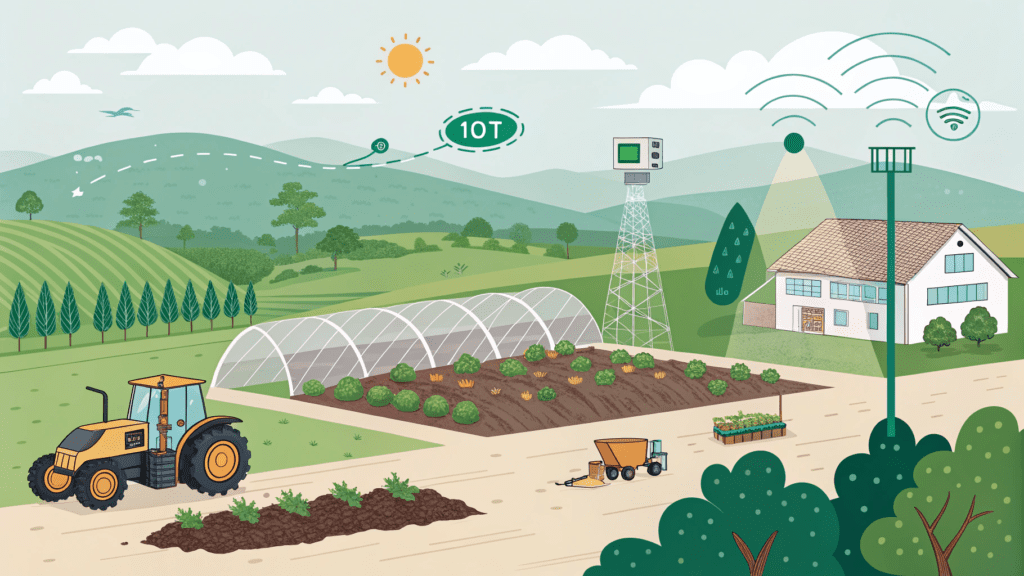
Illustration 4: Precision agriculture technology in compost application.
Central to this evolution is theCircular Economy Integration. Composting agricultural straw is becoming a cornerstone of a no-waste, low-carbon farming model. By diverting organic waste from landfills, it actively prevents methane emissions (a potent greenhouse gas). When applied to soil, the finished compost sequesters carbon, enhances drought resilience, and significantly reduces reliance on synthetic fertilizers, aligning perfectly with global climate mitigation efforts. While challenges persist, such as the long composting cycle, space requirements, greenhouse gas emissions, and the cost-competitiveness of compost versus chemical fertilizers, scientific interventions are actively exploring solutions. The increasing regulatory support from governments and environmental organizations, coupled with strategic partnerships between material suppliers, manufacturers, and waste management companies, are creating a robust framework for a sustainable, circular bioeconomy. Research into bio-based materials and the intricate dynamics of microbial diversity during composting will continue to shape the future, ensuring ever more efficient and effective methods of agricultural waste valorization.
تحويل مجرى النفايات الخاص بك: خطوات لتنفيذ التسميد الأمثل للقش
Transforming your agricultural residue from a disposal challenge into a high-value asset begins with a strategic assessment. First, evaluate your current straw volume, the desired compost output quality, and your available resources. This assessment forms the foundation for developing a tailored composting plan. Based on this, select the most appropriate method – be it enhanced windrows, mechanized systems, or a combination – and identify necessary amendments and technologies. Critically, source your straw strategically, prioritizing materials free from persistent herbicides and minimizing weed seed contamination to ensure a safe, high-quality end product. Implement best practices diligently, focusing on meticulous C:N ratio balance, consistent moisture management, optimized particle size reduction, and regular, consistent aeration. For scaled operations seeking peak efficiency, explore advanced solutions such as mechanized systems, specific microbial inoculants, or smart composting technologies. Finally, connect with industry experts and agricultural extension services. Their specialized knowledge can further optimize your process, ensuring you realize the full value of efficient straw composting: reduced disposal costs, generation of valuable soil amendments, enhanced crop yields, and a tangible uplift in your brand’s commitment to sustainability, potentially capturing greater market share in a rapidly greening economy.
Ready to transform your agricultural residue into a high-value asset, reduce your environmental impact, and unlock new commercial opportunities?Contact Us Today
سماد القش — الأسئلة المتداولة
Under typical backyard conditions, straw often takes 6–9 months to compost.
With optimal management it can be shortened to ≈3 months; if left unattended and unshredded,
it may take 12+ months.
Critical levers include: C:N ratio ≈30:1; moisture 45–55%; regular aeration/turning;
particle size 1–3 in (2.5–7.5 cm); temperature 90–140°F (32–60°C); method (windrow, ASP, in-vessel);
and use of microbial inoculants. Straw type and contaminants (e.g., persistent herbicides) also matter.
Use well-managed aerobic systems (e.g., windrows with scheduled turning, aerated static piles, in-vessel reactors),
blend nitrogen-rich materials, add biochar, and apply microbial inoculants (e.g., EM, ZJW-6).
Mechanization (turners, blowers, probes) improves throughput and quality.
Lower disposal costs; creation of high-quality soil amendments (new revenue); efficiency gains; reduced reliance on synthetic
fertilizers; stronger brand and ESG credentials; and new circular-economy opportunities.
Shift from waste-driven to product-driven composting; ag-waste market projected toward USD 3.3B by 2033;
biotech & smart-composting advances; deeper circular-economy integration (incl. carbon sequestration); and expanding
policy support for sustainable waste management.