

The True Cost of Convenience: Why Your “Compostable” Straws Might Not Be So Green
For procurement managers and sustainability officers, the mandate is clear: deliver eco-friendly solutions without compromising operational efficiency or brand reputation. Yet, navigating the landscape of “sustainable” packaging, particularly single-use items like drinking straws, presents a complex paradox. As global regulations tighten – from the comprehensive EU Single-Use Plastics Directive to nationwide bans in Canada – and consumer environmental awareness rapidly escalates, businesses are under immense pressure to demonstrate genuine commitment to sustainability. However, a pervasive misconception surrounding terms like “biodegradable” versus “compostable” can inadvertently lead to “greenwashing” concerns, threatening corporate responsibility and brand integrity. The challenge isn’t just finding alternatives; it’s finding *truly* sustainable ones that align with both environmental goals and regulatory realities.

Understanding the science behind these alternatives is crucial for informed decision-making. When we talk about “compostable” straws, we’re primarily referring to materials like Polylactic Acid (PLA), Polyhydroxyalkanoates (PHA), paper, and sugarcane bagasse. While all are plant-based, their decomposition pathways vary significantly. PLA, derived from fermented plant sugars like cornstarch, mimics the feel of traditional plastic, but it is strictly dependent on industrial composting facilities to break down as intended. These facilities provide the high temperatures and controlled microbial environments necessary for PLA to decompose. Without these specific conditions, PLA products often fail to break down in landfills or natural environments, persisting for extended periods—sometimes hundreds of years—and contributing to the very plastic pollution they aim to solve. This often fuels “greenwashing” accusations, where a product is marketed as eco-friendly but lacks the proper end-of-life infrastructure for its promised breakdown. The market, however, is undeniably shifting; the global eco-friendly straws market is projected to grow from USD 12.3 billion in 2025 to USD 25.1 billion by 2035, underscoring a clear industry-wide move away from traditional plastics. For a deeper dive into sustainable material procurement, explore our guide on [eco-friendly packaging solutions].
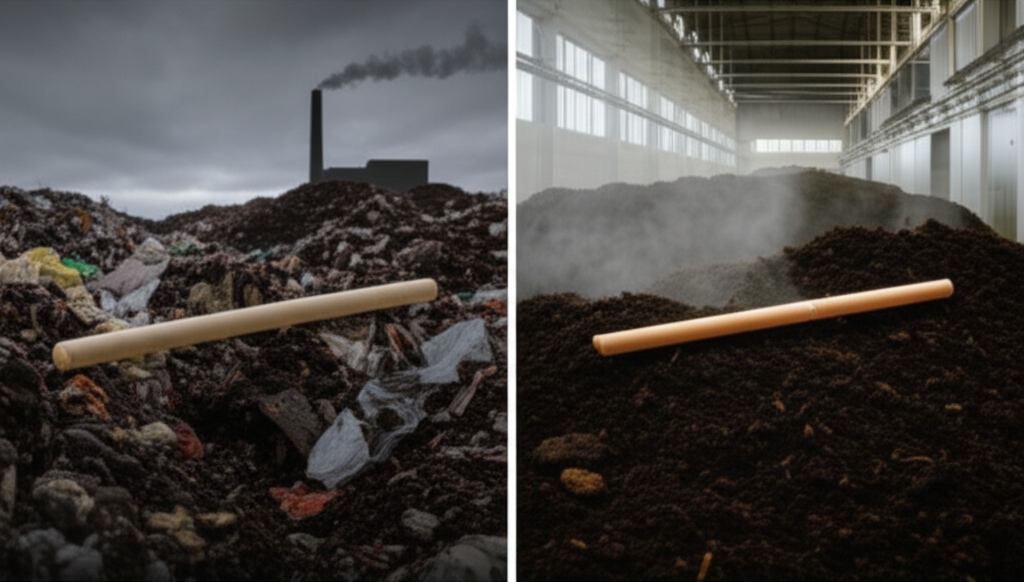
The path to genuine sustainability lies in adopting next-generation materials and certified solutions. Advanced PHA variants, for instance, offer a significant leap forward, demonstrating the ability to break down not just in industrial composting settings but also in home compost, soil, and even marine environments. Similarly, innovations in paper straw technology have produced more durable, water-resistant options that overcome the past performance limitations often associated with paper. By embracing truly certified compostable straws, businesses gain clear operational benefits, enhanced brand positioning, and critical regulatory compliance. Major chains are already leading the charge: McDonald’s and Starbucks, for example, have made significant transitions to compostable straw programs, signaling a clear market trend and consumer preference shift. This isn’t just about compliance; it’s about competitive advantage and building a brand consumers trust.
Comparative Look: Common Compostable Straw Materials
| Feature/Criterion | Paper Straws | PLA (Polylactic Acid) Straws | PHA (Polyhydroxyalkanoates) Straws | Sugarcane Bagasse Straws |
|---|---|---|---|---|
| Primary Material | Plant-based cellulose fibers | Fermented plant sugars (cornstarch, sugarcane) | Plant-based oils (canola) | Fibrous byproduct of sugarcane |
| Decomposition Req. | Rapid, home/industrial compost, natural env. | Strictly Industrial Composting (high heat/controlled env.) | Industrial, home, soil, marine environments (broader biodegrad.) | Industrial, home compost, soil, natural env. |
| Durability | Variable, can soften quickly | Mimics traditional plastic feel, good durability | High, comparable to traditional plastic | High, resists hot/cold beverages |
| Microplastic Risk | Minimal to None | Potential for microplastic release if not composted properly | Very Low to None (breaks down into natural components) | Minimal to None |
| Greenwashing Risk | Low, widely understood | High, often mislabeled as “biodegradable” without context | Low, due to broader biodegradability | Low |
| Cost-Effectiveness | High (generally most affordable) | Moderate | Higher (emerging technology) | Moderate |
| Carbon Footprint | Generally Low | Lower than petroleum plastic, but tied to industrial processes | Generally Low (renewable resource, efficient breakdown) | Very Low (upcycles agricultural waste) |

The strategic imperative for businesses today is to adopt genuinely sustainable straw solutions. This is not merely about ticking boxes; it’s about navigating an evolving regulatory landscape and elevating your corporate social responsibility profile. By moving towards certified compostable alternatives, you mitigate the significant risk of “greenwashing” claims, secure a long-term competitive advantage, and significantly enhance your brand equity in the eyes of increasingly eco-conscious consumers. For more on navigating global compliance, visit this resource on [EU Plastics Directive]. Understand how a robust supply chain can support this transition by reviewing our insights on [optimizing your B2B supply chain]. The future of business demands accountability, and the choices you make today define your impact tomorrow. To explore the critical role of certification, you can learn more about BPI certification standards at [BPI Certification].
Empower Your Sustainable Future
Empower your procurement and sustainability teams to make truly informed decisions. Request a comprehensive consultation with our sustainability experts today to assess your current straw usage, explore certified compostable alternatives tailored to your specific needs, and receive a detailed ROI analysis for integrating these solutions into your operations.Discover How momoio.com Can Assist Your Transition