The global push away from single-use plastics is no longer a distant environmental concern; it’s a pressing business imperative. Driven by escalating environmental awareness and an increasingly stringent regulatory landscape, companies worldwide are facing undeniable pressure to embrace sustainable practices. This shift is deeply rooted in evolving consumer behavior, with approximately 80% of consumers now expressing a willingness to pay more for eco-friendly products and services. For businesses, the core challenge lies in striking a delicate balance: satisfying this imperative for sustainability without compromising on performance, ensuring compliance, and maintaining operational efficiency.
The regulatory environment is rapidly evolving. The European Union’s Single-Use Plastics Directive, implemented in 2021, set a clear precedent, effectively banning many single-use plastic items, including straws. Across the Atlantic, numerous U.S. cities and states, such as New York City, Seattle, and San Francisco, have enacted their own plastic bans or “straw upon request” laws, with Canada following a similar trajectory. Non-compliance carries significant financial and reputational risks, including hefty fines and negative publicity. Businesses must remain vigilant, even while responsibly navigating exceptions for flexible plastic straws, which remain crucial for individuals with disabilities.

Dekódování slámek šetrných k životnímu prostředí: Výkon, úskalí a cesta ke skutečné udržitelnosti
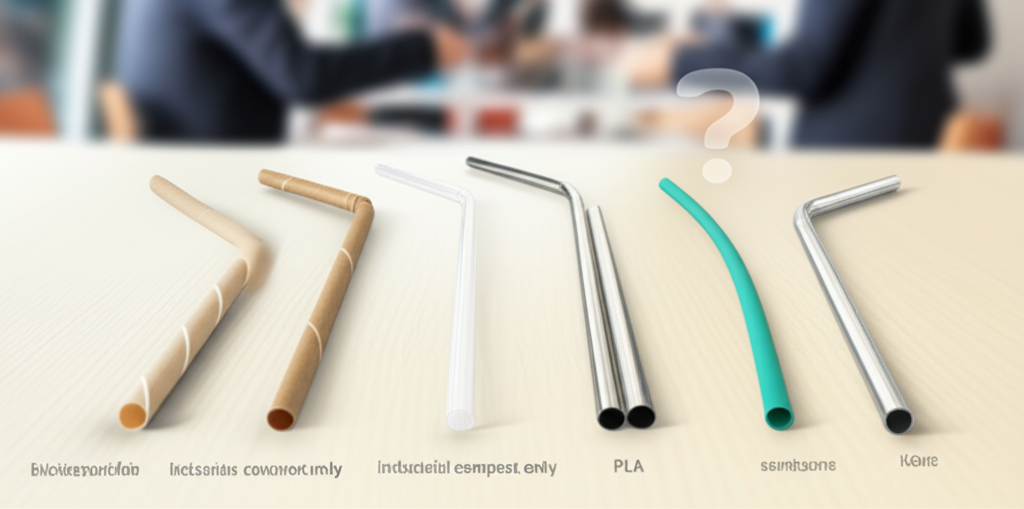
As businesses seek alternatives, the market has exploded with various eco-friendly straw types. Common contenders include paper, sugarcane, PHA (Polyhydroxyalkanoate), PLA (Polylactic Acid), bamboo, and an array of reusable options. Each offers different performance characteristics regarding durability, temperature resistance, and tactile feel, alongside diverse disposal methods. However, the proliferation of options has also given rise to “greenwashing,” where terms like “biodegradable” and “compostable” are often used misleadingly, causing significant confusion in the market.
Common Eco-Straw Contenders: A Performance Snapshot
- Papírové brčka: I když jsou papírová brčka široce přijímaná a obecně dostupná, často trpí problémy s rozmočením, zejména při dlouhodobém kontaktu s kapalinami. Znepokojivým aspektem je potenciální přítomnost PFAS (“věčné chemikálie”) používaných pro hydroizolaci, což vyvolává varovné signály pro zdraví i životní prostředí. Jejich recyklovatelnost je také omezena kvůli kontaminaci potravinami a povaze jejich povlaků.
- PLA brčka: These plant-based straws offer a sturdy, plastic-like feel. However, their critical limitation lies in their end-of-life. PLA straws require specialized industrial composting facilities to break down effectively, which are not widely available. If improperly disposed of in landfills, they behave much like conventional plastics, taking hundreds to thousands of years to decompose and potentially contaminating recycling streams.
- Reusable Straws (Stainless Steel, Glass, Silicone): Tyto opce představují vrchol ekologických kritérií a nabízejí významné dlouhodobé úspory nákladů díky eliminaci opakovaných nákupů. Nerezová brčka jsou odolná a vhodná do myčky, silikonová je flexibilní a bezpečná pro děti. Skleněná brčka poskytují elegantní zážitek s neutrální chutí, i když s sebou nesou riziko rozbití. Pro podniky je hlavním provozním problémem implementace přísných protokolů čištění a dezinfekce, aby byly splněny zdravotní normy, což může být náročné na práci a vyžadovat vyhrazené vybavení.
Beyond surface-level claims, businesses must consider the hidden costs of misinformation. The controversy surrounding PFAS in some paper and bamboo straws highlights that not all “eco-friendly” alternatives are truly benign. Furthermore, the environmental footprint of production varies significantly across materials; for instance, paper production demands substantial water and energy resources. The most significant challenge often remains the disposal infrastructure, especially for materials like PLA, where the lack of industrial composting facilities negates their purported environmental benefits, leading to “compostable” products ending up in landfills.
Strategic Selection: Elevating Your Brand with Next-Generation Eco-Straws
The path to genuine sustainability involves selecting solutions that offer authentic environmental benefits without compromising on performance or operational practicality. This is where advanced biopolymer options like Polyhydroxyalkanoate (PHA) and sugarcane fiber straws emerge as superior alternatives, providing a clear competitive edge for businesses. Choosing truly compostable and PFAS-free options can significantly enhance your brand’s reputation and differentiate you in a crowded market.
The Gold Standard: PHA and Sugarcane Fiber Straws
- PHA brčka: These innovative straws closely mimic traditional plastic in look, feel, and robustness, often backed by a “Never Soggy Promise.” Their standout feature is true biodegradability across diverse environments, including industrial compost, home compost, soil (within 12 months), and even marine water, with 90% disintegration observed in 4-8 months. This makes them an ideal choice for businesses committed to comprehensive environmental responsibility. To learn more about PHA solutions, visit momoio.com/pha-straws.
- Sugarcane Fiber Straws: Crafted from a byproduct of sugarcane processing, these straws embody sustainable sourcing. They are remarkably sturdy, resistant to water for hours, and offer rapid home compostability within weeks to months. Sugarcane fiber straws provide a neutral taste and smooth feel, addressing common complaints associated with paper and PLA, thereby offering a superior customer experience. For a wider range of sustainable packaging, explore momoio.com.
Eco-Friendly Straw Comparison: Performance, Compliance & ROI
| Funkce | Papírová brčka | PLA brčka | Vláknina z cukrové třtiny | PHA brčka | Reusable (Stainless Steel) |
|---|---|---|---|---|---|
| Trvanlivost/promokavost | Poor (soggy quickly) | Fair (can be brittle) | Excellent (water-resistant hours) | Excellent (“Never Soggy”) | Vynikající |
| Hot/Cold Performance | Fair to Poor | Dobrý | Excellent (up to 100°C) | Excellent (up to 100°C) | Vynikající |
| Biodegradability/Compost. | Biodegradable (weeks), often not home compostable | Industrial compostable ONLY (180 days), not home compostable, slow in landfill | Home compostable (weeks-months) | True biodegradable (soil, marine, home/industrial compost) | Reusable (not biodegradable) |
| PFAS-Free Status | Often contains PFAS | Obecně bez PFAS | Obecně bez PFAS | Obecně bez PFAS | Bez PFAS |
| Relativní náklady | Low-Medium | Střední | Středně vysoká | Vyšší | High initial, low long-term |
| Operational Impact | Frequent replacement | Requires specialized disposal | Easy disposal | Easy disposal | Cleaning/sanitization |
As regulations tighten in regions like the EU, where the plastic ban in 2021 significantly shifted market demand, and across various US states and cities, choosing certified, high-performance alternatives becomes paramount. The eco-friendly straw market is projected to expand significantly, from an estimated $12.3 billion in 2025 to nearly $25.1 billion by 2035, underscoring the growing value of sustainable solutions.
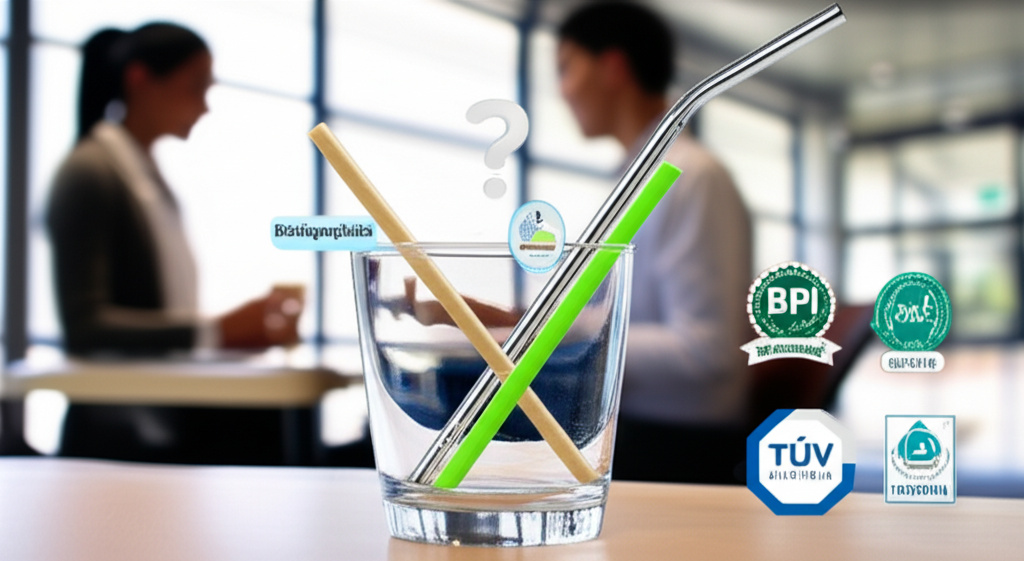
Certifications That Matter: Ensuring Authentic Sustainability
To safeguard your business from “greenwashing” and ensure genuine environmental impact, prioritize products with robust third-party certifications. Look forKompostovatelný s certifikací BPIaTÜV AUSTRIA (OK Compost Home/Industrial), which validate a product’s breakdown in specific composting environments.DIN CERTCOaCompost Manufacturing Alliance (CMA-S)also provide critical validation. These certifications are your assurance of regulatory compliance and authentic claims. Furthermore, always advocate for and seek explicit “PFAS-Free” labeling for both health and environmental safety. For more information on certified solutions, visit a resource like theBiodegradable Products Institute.
Využijte udržitelnou výhodu: Jasná cesta vpřed pro vaše podnikání
The strategic imperative for businesses today is clear: adopt high-performing, compliant, and genuinely sustainable straw solutions. This decision extends far beyond a simple product swap; it’s an investment that directly connects to broader business goals. By choosing advanced eco-friendly straws, you can significantly enhance your brand positioning, cultivate deeper customer loyalty, realize long-term cost savings through reduced waste management, and achieve competitive differentiation in a rapidly evolving market. With the eco-friendly straw market projected to grow dramatically to an estimated $25.1 billion by 2035, this is not just about compliance, but about seizing a significant growth opportunity.
Unlock Your Business’s Green Potential
Embracing superior, certified eco-friendly straws translates into tangible benefits: a consistently excellent customer experience, assured regulatory compliance in regions like Europe and the US, and a highly visible commitment to environmental stewardship. This proactive approach ensures a stronger market presence and attracts the ever-growing segment of eco-conscious consumers who actively seek out brands aligned with their values. Don’t wait for reactive compliance; lead the charge towards a greener future. Explore our range of environmentally responsible solutions at momoio.com/eco-friendly-packaging.
Partner for a Greener Tomorrow: Your Next Step
Ready to upgrade your business with eco-friendly straws that truly deliver on performance, compliance, and sustainability? Don’t let the complexities of the sustainable packaging market hold you back. Contact our experts today to schedule a personalized consultation and receive a custom quote tailored to your operational needs. Discover how our certified, high-performance PHA and sugarcane fiber straw solutions can seamlessly enhance your brand, delight your customers, and ensure effortless compliance, paving the way for a more sustainable and successful future.
Further Resources:
- Learn more about the EU’s Single-Use Plastics Directive: European Commission
- Understand the concerns about “forever chemicals” (PFAS) in food packaging: Environmental Working Group (EWG)
- Explore global plastic pollution statistics and efforts: United Nations Environment Programme (UNEP)