Sådan vælger du den rigtige komposterbare halmfordeler til din virksomhed
The Imperative for Sustainable Sourcing: Beyond Plastic Bans
Navigating the New Era of Eco-Conscious Consumption
The global landscape for businesses, particularly within the foodservice and hospitality industries, is undergoing a profound transformation. Escalating environmental concerns and a worldwide push for plastic reduction are no longer just regulatory challenges; they represent a critical opportunity for businesses to align with evolving consumer values and significantly enhance their brand reputation. Studies consistently show that over 70% of consumers now actively prefer sustainable brands, demonstrating a clear market shift towards eco-conscious consumption. This paradigm shift underscores that moving away from single-use plastics is not merely about compliance, but about strategic growth and future-proofing your business. Against this backdrop, the burgeoning compostable straws market stands out, projected to grow from an estimated USD 1.9 billion in 2025 to a remarkable USD 3.8 billion by 2035. This signals a fundamental industry transformation, compelling businesses to seek out sustainable alternatives with diligence and foresight.

Unpacking the Complexities of Compostable Straws for B2B Buyers
The Material Maze: Understanding Compostable Straw Types
Navigating the world of compostable straws can be complex, given the diverse array of materials now available. Each option presents unique properties, performance characteristics, and environmental considerations that B2B buyers must meticulously evaluate. Common materials include traditional Paper, PLA (Polylactic Acid) derived from plant starches, Sugarcane (Bagasse), and advanced bioplastics like PHA (Polyhydroxyalkanoates), alongside other natural fiber alternatives such as wheat, bamboo, or even rice.
Papirsugerør er generelt overkommelige og bredt tilgængelige, men deres holdbarhed kan variere betydeligt, hvilket ofte fører til blødhed, især ved længere tids brug eller i varme drikke. Nogle kan også give en subtil papiragtig smag. PLA-sugerør giver en god, plastik-lignende følelse og varmebestandighed, men deres komposterbarhed er et afgørende punkt til bekymring; de kræver typisk industrielle komposteringsanlæg for at nedbryde effektivt. Hvis de ikke bortskaffes korrekt, kan de opføre sig meget som traditionel plastik på lossepladser, hvilket forårsager forvirring i genbrugsstrømme. Ydermere er en væsentlig bekymring på tværs af forskellige plantebaserede sugerør og papirstrå den potentielle tilstedeværelse af PFAS "for evigt kemikalier" i visse belægninger, der bruges til vandafvisning, som udgør miljø- og sundhedsrisici.

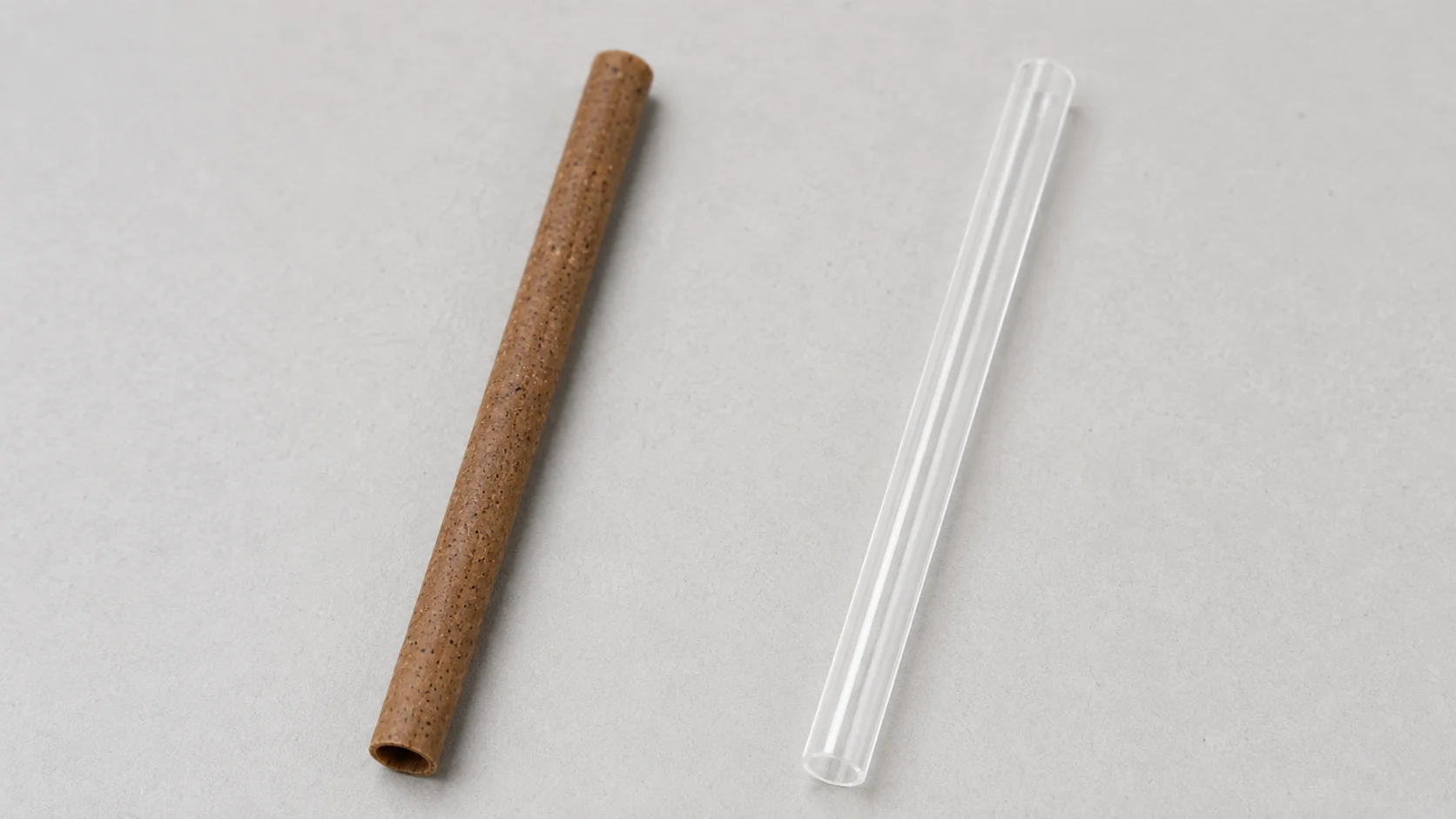
In contrast, sugarcane (bagasse) straws are highly durable, resistant to sogginess, and boast excellent temperature resilience, mimicking the feel of traditional plastic without using PLA. Similarly, PHA straws represent a significant leap forward; derived from plant oils, they offer exceptional durability and the unique advantage of being compostable in industrial, home, and even marine environments without producing microplastics. Understanding these material nuances is paramount for procurement teams looking beyond superficial “eco-friendly” claims.
Beyond “Biodegradable”: The Crucial Role of Certifications & Compliance
Udtrykkene "biologisk nedbrydelig" og "komposterbar" bruges ofte i flæng, men for B2B-indkøb er det absolut afgørende at præcisere denne sondring. Selvom "bionedbrydeligt" indebærer eventuel nedbrydning, garanterer det ikke en bestemt tidsramme eller miljømæssigt resultat, hvilket potentielt efterlader skadelige rester. Ægte "komposterbar" certificering sikrer dog, at et produkt nedbrydes til næringsrige komponenter inden for en defineret periode under kontrollerede forhold, uden at efterlade nogen giftige rester. Denne sondring er afgørende for ægte bæredygtig indkøb.

Key certifications provide the necessary assurance and safeguard against greenwashing. These include BPI Certified Compostable (meeting ASTM D6400/D6868 standards in North America), TÜV OK Compost (INDUSTRIAL/HOME) which aligns with European EN 13432 standards, and DIN CERTCO. Each certification signifies rigorous testing and compliance with specific breakdown conditions and timeframes. Adhering to these globally recognized standards is not only essential for regulatory compliance – particularly with the increasing plastic bans in the EU and various US states – but also vital for protecting your brand reputation and building consumer trust. Businesses can explore more about certified sustainable packaging solutions on themomoio.com sustainability page.
Strategisk udvælgelse: Nøglekriterier for en højtydende komposterbar halmpartner
Evaluering af produktydelse og kundeoplevelse
For any business in foodservice or hospitality, the end-user experience is paramount. When selecting compostable straws, detail the importance of straw durability and resistance to sogginess, particularly in various beverage types – from hot coffees to cold smoothies – to maintain a positive customer experience. The significance of taste neutrality cannot be overstated; a straw should not alter the flavor profile of the drink. Furthermore, a feel that closely mimics traditional plastic straws can minimize disruption for end-users accustomed to conventional options. A robust distributor will also offer a diverse range of sizes and shapes, from slim cocktail straws to wider smoothie options, to accommodate different operational needs.
Critical Distributor Capabilities & Supply Chain Transparency
Choosing the right distributor extends beyond the product itself. It involves evaluating their own commitment to sustainability and operational excellence. Essential attributes of a reliable partner include their sustainable manufacturing practices (e.g., energy efficiency, water conservation, waste management) and transparent, ethical sourcing of raw materials. Beyond this, look for comprehensive customer support, transparent product information, and crucially, the ability to provide samples for rigorous in-house testing before committing to bulk orders. Distributors that offer additional services such as private labeling or custom packaging can further align the product with your brand identity. Understanding the supplier’s supply chain is crucial for consistent quality and timely delivery, especially for bulk orders. Learn more about custom solutions and supply chain integrity atmomoio.com.
Comparative Analysis: Choosing the Optimal Compostable Straw Material
Making an informed decision requires a clear comparison of the leading compostable straw materials against key B2B decision criteria.
| Compostable Straw Material Comparison for B2B | Papir | PLA | Sugarcane/Bagasse | Pha |
|---|---|---|---|---|
| Holdbarhed/Sogginess | Varies (can soften quickly) | Good, plastic-like | Excellent, highly durable | Excellent, highly durable |
| Kompostabilitet | Home/Industrial (if PFAS-free) | Industrial only | Hjem/industriel | Home/Industrial/Marine |
| Smagsneutralitet | Can have papery taste | Neutral | Neutral | Neutral |
| Omkostninger (relativ) | Lav-Middel | Medium | Medium-Høj | High (but improving) |
| PFAS-risiko | Possible in some coatings | Lav | Meget lav | Meget lav |
| Hovedfordel | Widely available, affordable | Plastic-like feel | Durable, PLA-free, home compostable | Most versatile, truly biodegradable |
This analysis highlights that while paper remains a cost-effective choice, materials like sugarcane and PHA offer superior durability and broader compostability, mitigating concerns like the “forever chemicals” (PFAS) found in some paper coatings. Further research on the implications of PFAS in consumer products can be found from environmental health organizations likeEWG. Understanding the nuances of industrial versus home composting is also vital, as detailed by certification bodies likeBPI certificeret komposterbar. This comparative insight empowers decision-makers to select materials that best balance performance, true sustainability, and cost-effectiveness for their specific operational context.
Unlocking ROI: Cost-Effectiveness, Brand Value, and Market Edge
While the initial cost of high-quality compostable straws may appear higher than traditional plastic, focusing solely on unit price overlooks significant long-term ROI. Adopting certified compostable straws leads to enhanced brand reputation, increased customer loyalty, and crucial compliance risk mitigation in an era of tightening regulations. This strategic choice transforms a perceived expense into a competitive differentiator in a market increasingly valuing sustainability. The overall eco-friendly straw market, encompassing both compostable and reusable options, is forecasted to reach nearly USD 25.1 billion by 2035, underscoring the substantial market opportunity. Businesses that embrace genuine sustainable choices contribute meaningfully to their corporate social responsibility (CSR) goals, attracting environmentally conscious consumers and potentially opening new market segments. For further insights into the eco-friendly straw market, refer to reports fromFremtidig markedsindsigt.
Paving the Path to a Truly Sustainable Future: Your Next Steps
Partnering for Performance and Planet
The strategic importance of choosing the right compostable straw distributor cannot be overstated. This decision directly impacts your operational efficiency, customer satisfaction, regulatory compliance, and ultimately, your brand equity. It is a strategic investment in your business’s future, aligning your operations with global sustainability trends and the evolving values of your consumer base. Navigating the complexities of material science, understanding intricate certifications, and ensuring robust supply chain logistics can be challenging, making expert guidance absolutely crucial for an effective transition.
Schedule Your Sustainability Consultation Today
Don’t navigate the complex compostable straw market alone. Schedule a personalized consultation with our experts atmomoio.comto assess your specific business needs, explore certified material options, and tailor a sustainable straw solution that aligns seamlessly with your operational goals and brand values. Take the first step towards a greener future: request samples of specific straw types, or download a comprehensive guide to compostable straw certifications to deepen your understanding and ensure your choice is both sustainable and practical.
Ready to Make a Sustainable Choice?
Connect with our experts to find the perfect compostable straw solution for your business.Planlæg en konsultation