Optimering af landbrugsrester: Fremskyndelse af halmnedbrydning til kommerciel gevinst

I en æra, der kræver bæredygtig praksis og effektiv ressourceforvaltning, udgør landbrugshalm et betydeligt, men ofte underudnyttet, aktiv. Ud over at det blot er et biprodukt eller affald, repræsenterer det et værdifuldt input til jordberigelse, en kritisk komponent i den spirende cirkulære økonomi og en vej til øget virksomheders bæredygtighed. Men for landbrugsproducenter, affaldshåndteringsvirksomheder og bæredygtige produktproducenter kan rejsen fra rå halm til brugbar kompost være langvarig og inkonsekvent. Denne variation udgør væsentlige operationelle og økonomiske udfordringer for virksomheder, der er afhængige af forudsigelige organiske ændringer af høj kvalitet. Hvad dikterer virkelig tidslinjen for halmnedbrydning, og endnu vigtigere, hvordan kan virksomheder optimere denne naturlige proces for maksimal effektivitet, reducerede omkostninger og et overbevisende investeringsafkast? At forstå videnskaben og strategien bag halmkompostering er ikke kun en økologisk bekymring; det er en strategisk nødvendighed for enhver virksomhed, der sigter mod at reducere sit miljømæssige fodaftryk, forbedre jordens sundhed og låse op for nye indtægtsstrømme fra det, der engang blev betragtet som affald.
Illustration 1: Halmens rejse fra mark til færdig kompost.
Afkodning af nedbrydning: Videnskaben og variablerne bag stråkomposteringstidslinjer
Processen med omdannelse af organisk stof er kompleks, og halm er med sin fibrøse natur ingen undtagelse. Under typiske baghavekomposteringsforhold kan du forvente, at halm nedbrydes til brugbar kompost på omkring seks til ni måneder. Men hvis den efterlades uden opsyn i en passiv bunke, ikke makuleret, kan denne tidsramme strække sig til et år eller mere. Omvendt kan denne nedbrydningsperiode med optimale forhold og omhyggelig ledelse reduceres markant til så lidt som tre måneder. For virksomheder fremhæver dette spektrum den kritiske forskel mellem passiv affaldshåndtering og aktiv ressourceudnyttelse. Hastigheden og kvaliteten af nedbrydningen er ikke tilfældige; de styres omhyggeligt af en række indbyrdes forbundne faktorer, der hver tilbyder en løftestang til driftsoptimering.
Kernen i effektiv halmkompostering liggerKulstof-til-nitrogen (C:N) forhold. Halm er i sagens natur højt i kulstof (et "brunt" materiale), der kan prale af et C:N-forhold, der typisk spænder fra 40:1 til 100:1. For hurtig mikrobiel aktivitet og effektiv nedbrydning ligger det ideelle kompost C:N-forhold omkring 30:1. Det betyder, at halm skal være strategisk afbalanceret med nitrogenrige "grønne" materialer såsom græsafklip, køkkenrester eller, mest effektivt til store operationer, husdyrgødning. En ubalance kan føre til langsom nedbrydning eller endda et ubehageligt, muggent resultat. Ud over den kemiske balance,Fugtniveauerer altafgørende; kompostbunken skal opretholde en ensartet fugtighed, svarende til en opvredet svamp, ideelt mellem 45-55 % luftfugtighed til varmkompostering. For meget vand fører til anaerobe forhold, producerer grim lugt og bremser processen, mens for lidt hæmmer afgørende mikrobiel aktivitet.
Luftning og drejninger også ikke-omsættelige for at fremskynde nedbrydning. Regelmæssig vending af kompostbunken introducerer ilt, som er afgørende for aerobe mikroorganismer - de utrættelige arbejdere, der nedbryder organisk materiale. Drejning forhindrer også komprimering og hjælper med at opretholde ideelle temperaturer, typisk mellem 90-140°F (32-60°C). Konsekvent drejning kan reducere komposteringstiden med så meget som 50 %. For materialer som rishalm anbefales det at vende hver tredje til fjerde uge. DePartikelstørrelseaf halmen har også dybt indflydelse på nedbrydningshastigheden; at hakke eller rive halm i mindre stykker (ideelt set 1-3 tommer) øger dramatisk det tilgængelige overfladeareal for mikroorganismer til at kolonisere og nedbryde, hvilket sikrer en hurtigere vending. Ikke-makulerede materialer tager derimod betydeligt længere tid.
Temperaturstyringi bunken er et naturligt biprodukt af mikrobiel aktivitet. Overvågning og styring af denne varme er afgørende; hvis temperaturen overstiger 140°F (60°C), kan vending af bunken køle den ned og forhindre gavnlige mikrobers død. For landbrugsaffald er en indledende varm fase (55-65°C) særlig fordelagtig, da den hjælper med at dræbe ukrudtsfrø og patogener, hvilket sikrer et renere, sikrere slutprodukt. DesudenKomposteringsmetode og ledelsesintensitetdirekte diktere hastigheden. Fra passive "dumpede" pæle, der kan tage et år, til velstyrede aerobe systemer, der slutter på 40-60 dage (eller endda 20 dage med optimale forhold og kvæggødning), er valget af metode en strategisk forretningsbeslutning. Endelig den strategiske tilføjelse afPodemidler og effektive mikroorganismer (EM)kan øge nedbrydningshastigheden markant, især i de indledende faser. Disse mikrobielle midler introducerer eller styrker de gavnlige bakterier og svampe, der er nødvendige for at nedbryde genstridige materialer som lignin og cellulose, der findes i halm. En afgørende overvejelse for virksomheder er dogType af halm og potentielle forurenende stoffer. Mens forskellige halmtyper (f.eks. hvede, ris) har varierende nedbrydningshastigheder, er tilstedeværelsen af persistente herbicider, der ofte findes i hø, en væsentlig bekymring. Disse kemikalier kan forblive aktive selv efter kompostering, hvilket udgør en risiko for afgrøder og potentielt gør jorden ubrugelig i årevis. At indkøbe halm omhyggeligt og sikre, at det er ubehandlet, er derfor altafgørende for slutproduktets integritet og overensstemmelse. For et dybere dyk ned i de faktorer, der påvirker nedbrydning på tværs af forskellige komposterbare materialer, udforsk denne ressource pånedbrydningstider for komposterbar halm.
Illustration 2: Ideelle forhold for mikrobiel aktivitet i en kompostbunke.
Strategisk kompostering: Udnyttelse af halm til forbedret jordsundhed og forretningsmæssig bæredygtighed
Optimering af halmkompostering til kommerciel skala kræver en strategisk tilgang, der blander gennemprøvede metoder med innovative teknologier. Til mindre, kontrollerede mængder eller specifikke applikationer,Elektriske komposteretilbyder hurtig nedbrydning og omdanner affald på uger til et år. Men for større landbrugsaktiviteter er skalerbare metoder afgørende.Aerob kompostering, når den styres godt med ændringer, kan den opnå nedbrydning på 40-60 dage, og i nogle intensive systemer med daglig vending og kvæggylle kan dette være så kort som 20 dage.Skær kompostering, en meget skalerbar metode, som typisk modnes på 110-120 dage, hvilket gør den velegnet til store mængder landbrugsaffaldsstrømme.
Effektiviteten af disse metoder er væsentligt forbedret ved intelligent brug afTilsætningsstoffer og ændringer. Kulstofrige tilsætningsstoffer som træflis, svamperester, risklid og biokul er ikke kun fyldstoffer; de aktivt forbedrer porøsiteten, regulerer nitrogentab og kontrollerer drivhusgasemissioner. Især biokul har vist sig lovende med hensyn til at forbedre kompoststabiliteten og fastholdelse af næringsstoffer. Omvendt er nitrogenrige tilsætningsstoffer som gødning, græsafklip og madrester afgørende for at balancere halms høje kulstofindhold. Desuden tilbyder det spirende område af mikrobiel bioteknologi kraftfulde værktøjer. BestemtMikrobielle inokulantersom f.eksC. iranensis(ZJW-6), Effektive Mikroorganismer (EM) og Affaldsnedbrydere (WD) er videnskabeligt bevist at accelerere nedbrydningen af kompleks lignocellulose i halm, hvilket forkorter komposteringsperioderne betydeligt og forbedrer mineraliseringen af næringsstoffer. Forskning fra institutioner som Iowa State University fremhæver konsekvent det kritiske samspil mellem disse faktorer for at opnå optimal kompost.
Lad os overveje den kommercielle levedygtighed af forskellige komposteringsmetoder:
| Feature | Passive bunker | Regelmæssigt vendte pæle | Skærsystemer | Mekaniserede systemer (f.eks. IRRI Tech) | Elektrisk komposter/biorådnetanke |
|---|---|---|---|---|---|
| B2B indflydelse | Minimalt fokus på bortskaffelse | Moderat, grundlæggende jordændring | Høj lydstyrke, ensartet output | Høj effektivitet, førsteklasses kvalitet | Niche, hurtig, lokaliseret løsning |
| Komposteringstid | 1 år+ | 6-9 måneder | 110-120 dage | 20-60 dage | Uger til et år (variabel) |
| Ledelsesintensitet | Minimal | Moderat | Højere, struktureret | Højteknologisk, mindre manuel | Lav manuel (automatiseret) |
| Outputkvalitet | Variabel, ofte grov | Godt, konsekvent | Konsekvent, stor skala | Høj, næringsrig, patogenfri | Høj, koncentreret |
| Kapitalinvestering | Meget lav | Lav-Moderat | Moderat | Højere | Høj |
| Overholdelsesrisiko (herbicider) | Høj (hvis ubekræftet halm) | Moderat (hvis ikke-verificeret halm) | Moderat | Lavere (kontrollerede indgange) | Lavere (kontrollerede indgange) |
| ROI-potentiale | Lav (bortskaffelsesbesparelse) | Moderat (jordsundhed, noget salg) | Godt (salg i stor skala) | Meget høj (præmieprodukt, effektivitet) | Moderat-Høj (nichemarkeder, hastighed) |
Illustration 3: Kommerciel levedygtighed af forskellige komposteringsmetoder.
Et godt eksempel på innovation på dette område er den prisvindende mekaniserede rishalm-baserede komposteringsteknologi, en samarbejdsindsats, som er banebrydende af International Rice Research Institute (IRRI) og Can Tho Department of Crop Production and Plant Protection i Vietnam. Dette system konverterer med succes landbrugsrester til organisk gødning af høj kvalitet, der inkorporerer en kulstoffattig landbrugstilgang uden spild, der sigter mod at øge landbrugets produktivitet, værdi og rentabilitet og samtidig reducere det miljømæssige fodaftryk betydeligt. Sådanne fremskridt driver markedet for landbrugsaffald i retning af konsekvent vækst, med fremskrivninger, der tyder på, at det kan nå op på 3,3 milliarder USD i 2033. Denne vækst er drevet af den eskalerende efterspørgsel efter bæredygtig affaldshåndtering og den stigende værdiansættelse af landbrugsrester til bioenergi, kompost og organisk gødning.
Industrien gennemgår en markant transformation, der skifter fra en affaldsdrevet model til en produktdrevet. Dette betyder en større vægt på at skabe specialiserede kompostprodukter, der er skræddersyet til forskellige by- og landbrugsanvendelser, hvilket fører til differentieret prissætning og kvalitet. Dette skift giver næring til det globale marked for komposterbare sugerør, som forventes at vokse fra USD 1,9 milliarder i 2025 til USD 3,8 milliarder i 2035 ved en sammensat årlig vækstrate (CAGR) på 7,1 %. Denne udvidelse er i høj grad ansporet af stigende plastikforbud, øget miljøbevidsthed og den udbredte anvendelse af miljøvenlige alternativer i foodservice- og gæstfrihedssektoren. Du kan dykke dybere ned i, hvordan virksomheder omfavner bæredygtighed ved at udforske emner somnedbrydes bambusstrå for B2B-bæredygtighed.
Den teknologiske grænse inden for kompostering er i hastig udvikling.Bioteknologiske fremskridtfører til nye mikrobielle teknologier, der accelererer nedbrydning af organisk materiale, hvilket muliggør hurtigere kompostproduktion og muliggør målrettede komposteringsprocesser, der er optimeret til specifikke landbrugsbehov. Dette inkluderer innovationer som vermicomposting integreret med traditionelle metoder til øget næringsindhold.Præcisionskomposteringer også ved at dukke op, hvor GPS-styrede spredere og teknologier med variabel hastighed muliggør præcis kompostpåføring, minimerer spild og maksimerer jordfordele. DesudenSmart komposteringintegrerer IoT i komposteringsmaskiner for at overvåge temperatur, fugtniveauer og andre kritiske parametre i realtid. Disse tilsluttede enheder med automatiserede kontroller minimerer manuel indgriben, hvilket gør kompostering i stor skala mere tilgængelig og effektiv.
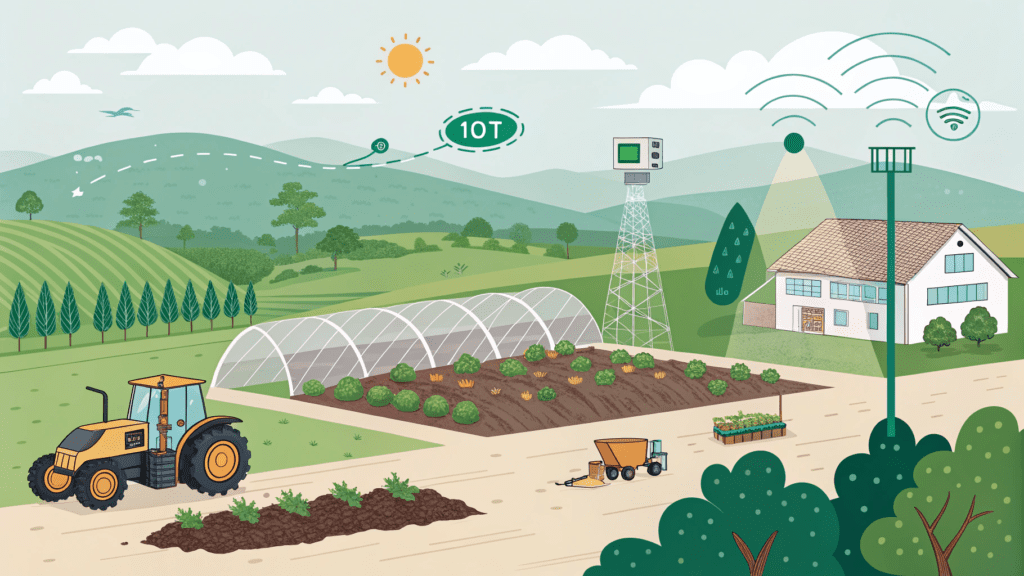
Illustration 4: Præcisionslandbrugsteknologi i kompostanvendelse.
Centralt i denne udvikling erIntegration af cirkulær økonomi. Kompostering af landbrugshalm er ved at blive en hjørnesten i en ikke-spild, kulstoffattig landbrugsmodel. Ved at aflede organisk affald fra lossepladser forhindrer det aktivt metan-emissioner (en potent drivhusgas). Når den påføres på jorden, binder den færdige kompost kulstof, øger tørkemodstandsdygtigheden og reducerer afhængigheden af syntetisk gødning betydeligt, hvilket passer perfekt til den globale indsats for at begrænse klimaet. Mens udfordringerne fortsætter, såsom den lange komposteringscyklus, pladsbehov, drivhusgasemissioner og omkostningskonkurrenceevnen for kompost kontra kemisk gødning, udforsker videnskabelige interventioner aktivt løsninger. Den stigende reguleringsstøtte fra regeringer og miljøorganisationer, kombineret med strategiske partnerskaber mellem materialeleverandører, producenter og affaldshåndteringsvirksomheder, skaber en robust ramme for en bæredygtig, cirkulær bioøkonomi. Forskning i biobaserede materialer og den indviklede dynamik af mikrobiel mangfoldighed under kompostering vil fortsætte med at forme fremtiden og sikre stadig mere effektive og effektive metoder til udnyttelse af landbrugsaffald.
Transformer din spildstrøm: Trin til implementering af optimeret halmkompostering
At transformere dine landbrugsrester fra en bortskaffelsesudfordring til et værdifuldt aktiv begynder med en strategisk vurdering. Evaluer først din nuværende halmvolumen, den ønskede kompostkvalitet og dine tilgængelige ressourcer. Denne vurdering danner grundlaget for at udvikle en skræddersyet komposteringsplan. Ud fra dette skal du vælge den mest passende metode – det være sig forbedrede skår, mekaniserede systemer eller en kombination – og identificere nødvendige ændringer og teknologier. Kritisk skal du hente dit halm strategisk, prioritere materialer fri for vedvarende herbicider og minimere forurening af ukrudtsfrø for at sikre et sikkert slutprodukt af høj kvalitet. Implementer bedste praksis flittigt, med fokus på omhyggelig C:N-forholdsbalance, ensartet fugtstyring, optimeret partikelstørrelsesreduktion og regelmæssig, ensartet beluftning. For skalerede operationer, der søger maksimal effektivitet, udforsk avancerede løsninger såsom mekaniserede systemer, specifikke mikrobielle podemidler eller smarte komposteringsteknologier. Til sidst, kontakt med industrieksperter og landbrugsudvidelsestjenester. Deres specialiserede viden kan optimere din proces yderligere og sikre, at du realiserer den fulde værdi af effektiv halmkompostering: reducerede bortskaffelsesomkostninger, generering af værdifulde jordændringer, forbedret afgrødeudbytte og et håndgribeligt løft i dit brands engagement i bæredygtighed, hvilket potentielt kan erobre større markedsandele i en hurtigt grønnere økonomi.
Klar til at omdanne dine landbrugsrester til et værdifuldt aktiv, reducere din miljøpåvirkning og frigøre nye kommercielle muligheder?Kontakt os i dag
Halmkompostering — ofte stillede spørgsmål
Under typiske baghaveforhold tager halm ofte 6-9 måneder at kompostere.
Med optimal styring kan det forkortes til ≈3 måneder; hvis det efterlades uden opsyn og ikke makuleres,
det kan tage 12+ måneder.
Kritiske håndtag omfatter: C:N-forhold ≈30:1; fugtighed 45-55 %; regelmæssig luftning/drejning;
partikelstørrelse 1-3 tommer (2,5-7,5 cm); temperatur 90–140°F (32–60°C); metode (skær, ASP, i fartøjet);
og brug af mikrobielle podemidler. Halmtype og kontaminanter (f.eks. persistente herbicider) har også betydning.
Brug veladministrerede aerobe systemer (f.eks. skår med planlagt drejning, luftede statiske pæle, reaktorer i kar),
bland nitrogenrige materialer, tilføj biokulog påfør mikrobielle podemidler (f.eks. EM, ZJW-6).
Mekanisering (drejere, blæsere, sonder) forbedrer gennemløb og kvalitet.
Lavere bortskaffelsesomkostninger; skabelse af jordændringer af høj kvalitet (nye indtægter); effektivitetsgevinster; reduceret afhængighed af syntetiske
gødning; stærkere brand og ESG-legitimationsoplysninger; og nye muligheder for cirkulær økonomi.
Skift fra affaldsdrevet til produktdrevet kompostering; ag-affaldsmarkedet fremskrevet mod 3,3 mia. USD inden 2033;
biotech & smart-composting advances; deeper circular-economy integration (incl. carbon sequestration); and expanding
politisk støtte til bæredygtig affaldshåndtering.