Imperativet for bæredygtig Boba: Hvorfor genanvendelige halmprogrammer ikke længere er valgfrie
A Strategic Roadmap for Hospitality & Foodservice Leaders

Overbevisende industriproblemintroduktion
The global bubble tea market faces an environmental crossroads due to single-use plastic waste and proliferating bans.
Det globale marked for bubble tea, en levende sektor, der er vurderet til USD 3,27 milliarder i 2022 og forventes at stige til USD 6 milliarder i 2031 (Grand View Research, 2023), står ved en afgørende miljømæssig korsvej. Med en alarmerende 8 til 10 millioner tons plastik, der kommer ind i vores have årligt (Pew Charitable Trusts, 2020), udgør den eskalerende bølge af engangsplastikaffald en ubestridelig trussel. Over hele kloden vokser strenge forbud mod engangsplastik hurtigt. Fra det omfattendeEU’s engangsplastikdirektivtil byspecifikke regler i Seattle og Californien og Taiwans forestående forbud mod plastikkopper i 2024 (Taiwan Environmental Protection Administration, 2022), står industrien over for et uundgåeligt paradigmeskift. At ignorere denne fundamentale transformation bringer ikke kun miljøintegriteten i fare, men også driftsoverholdelse, brands omdømme og afgørende markedsandele. Dette indlæg skitserer en strategisk køreplan for B2B-beslutningstagere, der giver indsigt i implementering af højkonvertering, kompatible og omkostningseffektive genanvendelige boba straw-programmer designet til fremtiden.
Den eskalerende globale plastikaffaldskrise og udbredte engangsplastikforbud nødvendiggør et strategisk skift for boba-te-industrien for at sikre overholdelse, beskytte mærkets omdømme og sikre markedsandele.
Market & Regulation Insights (EU, US, Asia-Pacific)
Global regulations and consumer demand are driving the shift towards sustainable boba solutions across key markets.
The pervasive wave of legislative actions, particularly the EU's engangsplastikdirektiv, omformer traditionelle boba-te-operationer. Taiwans proaktive skridt mod en plastikfri fremtid, herunder dets omfattende forbud mod plastikkopper i 2024, har betydelige konsekvenser for den globale boba-forsyningskæde, da ø-nationen er fødestedet for denne populære drik. En unik udfordring opstår med boba-sugerør: deres bredere diameter, der er afgørende for tapiokaperler, kræver særlig opmærksomhed, når man søger efter alternative alternativer. Ud over overholdelse er en stærk kraft på spil: den miljøbevidste forbruger. Voksende miljøbevidsthed, især blandt Gen Z og Millennials, driver en ubestridelig efterspørgsel efter ægte bæredygtig praksis inden for madservice. Denne demografiske søger aktivt efter brands, der stemmer overens med deres værdier, og gør gennemsigtige og effektive bæredygtighedsinitiativer afgørende for at øge brandloyalitet og afbøde "grønvask"-opfattelser. Mens mange virksomheder har henvendt sig til almindeligt opfattede miljøvenlige alternativer som papir- og PLA-sugerør, kommer disse ofte til kort på grund af funktionelle begrænsninger - papirstrå bliver bløde eller ændrer smag, og PLA-strå, der kræver komplekse industrielle komposteringsfaciliteter, som ofte er knappe. For et dybere dyk ned i materialer, der virkelig omformer industrien, kan du udforske vores artikel om Materials Reshaping the Straw Industry B2B. For effective biodegradable options, consider learning about the Bedste biologisk nedbrydelige sugerør B2B 2025 og den Best Biodegradable Plastic Straws B2B.
Regulatorisk landskabssammenligning
| Område | Key Regulations/Trends | Impact on Boba Straws |
|---|---|---|
| Den Europæiske Union | Single-Use Plastics Directive (SUPD) bans many single-use plastic items. | Direct ban on plastic straws; drives demand for reusable or certified compostable alternatives. |
| USA | Patchwork of state/city bans (e.g., California, Seattle); federal initiatives emerging. | Varied compliance requirements; strong consumer preference for sustainable options in key markets. |
| Asien-Stillehavsområdet | Taiwan’s 2024 plastic cup ban; South Korea’s deposit scheme; China’s plastic reduction plans. | Significant shift in supply chain and consumer behavior, especially in boba’s birthplace. |
For a comprehensive guide on global regulations, refer to ourFull Regulatory Guide on Single-Use Plastics.

Global regulations, particularly in the EU, US, and Asia-Pacific, coupled with rising eco-conscious consumer demand, are compelling the boba industry to adopt reusable solutions.
Solution: Reusable Boba Straw Programs
Reusable boba straw programs offer a sustainable, cost-effective alternative to single-use plastics for hospitality.
Implementing a high-impact reusable boba straw program hinges on two core components: a robust cleaning Standard Operating Procedure (SOP) and a seamless deposit turnaround model. For commercial use, thorough cleaning is paramount. The essential steps include pre-rinsing to remove immediate debris, washing with specialized brushes and appropriate detergents, a meticulous rinse, and effective sanitizing—either through hot water immersion (e.g., 160°F / 71°C or above for at least 30 seconds) or chemical sanitization using approved commercial food-grade sanitizers. Adherence toFDA Food Code standardsis non-negotiable, with commercial dishwashing offering superior hygienic safety. Key hygiene concerns, such as preventing bacterial buildup, the challenges of cleaning opaque materials, and the absolute necessity of proper staff training, must be rigorously addressed. Drawing inspiration from initiatives like the University of California, Santa Barbara’s (UCSB) reusable container program, a centralized, commercial dishwashing approach ensures optimal sanitization and operational efficiency.
Som supplement til dette tilskynder et veldesignet depositum-retur-system til kundernes tilbagevenden. Denne model indebærer et lille, refunderbart gebyr, der opkræves på købsstedet, hvilket tilskynder til høje retursatser, reducerer spild og affald betydeligt og øger forbrugernes engagement. Succesfulde tilpasninger fra en bredere madservice, såsom Canvas Huskee-system eller Blenheim Palaces teknologibaserede returforsøg og Sydkoreas engangsbeholdere, demonstrerer levedygtigheden af sådanne programmer. Logistiske overvejelser, herunder udpegede indsamlingssteder, effektiv vaskeinfrastruktur og den potentielle rolle af sporingsteknologier som RFID eller QR-koder, er afgørende for en problemfri drift.
Quantified Benefits for Hospitality & Foodservice
- Omkostningsbesparelser: Reduce straw procurement costs by up to 70% annually after initial investment, based on a 150-use lifespan per straw.
- Waste Reduction: Eliminate thousands of single-use plastic straws from landfills and oceans daily, significantly improving environmental footprint.
- Forbedret mærkebillede: Boost customer loyalty and attract eco-conscious consumers, potentially increasing sales by 10-15% through visible sustainability efforts.
- Regulativ overholdelse: Future-proof operations against evolving plastic bans and avoid potential fines, ensuring uninterrupted service.
- Driftseffektivitet: Streamline waste management and reduce labor associated with handling single-use disposables.
ROI Table: Reusable Boba Straw Program vs. Single-Use
| Feature | Single-Use Plastic Straws | Commercial Reusable Boba Straw Program |
|---|---|---|
| Initial Cost | Very Low (1-3 cents/straw) | Moderate (Upfront investment in straws, cleaning equipment) |
| Ongoing Cost | High (Continuous procurement, waste disposal fees) | Low (Utilities for washing, occasional replacement) |
| Miljøpåvirkning | High (Pollution, microplastics, carbon footprint) | Low (Reduced waste, lower long-term carbon footprint) |
| Brand Perception | Negative/Neutral (Associated with pollution) | Positive (Eco-conscious, innovative, responsible) |
| Overholdelsesrisiko | High (Subject to increasing bans and regulations) | Low (Proactive compliance, future-proof) |
| Operational Complexity | Low (Discard & replace) | Moderate (Cleaning SOP, return logistics, staff training) |
Mens engangsplastiksugerør har de laveste forudgående omkostninger (ca. 0,30 EUR/år), bærer de de højeste langsigtede miljø- og bortskaffelsesbyrder. Omvendt bliver sugerør af rustfrit stål, der kan genanvendes, selv om de har en højere startomkostning, økonomisk gunstige over tid (ca. 2,81 EUR/år), med miljøfordele opnået efter betydelig genbrug (f.eks. 130 anvendelser for at udligne produktionspåvirkning). Denne analyse afslører klart de langsigtede besparelser og miljømæssige fordele ved genanvendelige produkter frem for evigt engangsindkøb. Det globale marked for genanvendelige halm blev vurderet til cirka USD 2,2 milliarder i 2023 og forventes at nå op på mellem USD 4,0 milliarder og USD 4,5 milliarder i 2033, hvilket viser et tydeligt markedsskifte. Nordamerika er fortsat en førende region med cirka 0,85 milliarder USD i 2024, drevet af strenge lovgivningsrammer og høj forbrugerbevidsthed, mens Europa følger efter med 0,67 milliarder USD, drevet af omfattende EU-regler.
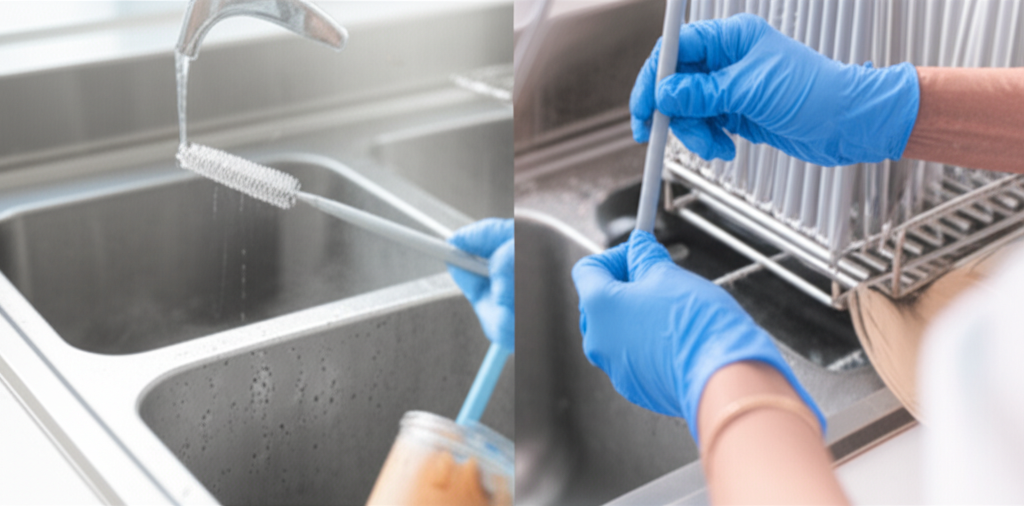
Reusable boba straw programs, supported by robust cleaning SOPs and deposit models, offer significant ROI through cost savings, waste reduction, and enhanced brand value.
Industry Misconceptions & Clarifications
At aflive myter om genanvendelige boba-sugerør er afgørende for vellykket programimplementering og vedtagelse.
Myte: Papir- og PLA-sugerør er virkelig bæredygtige alternativer til boba.
Præcisering:While often marketed as eco-friendly, paper straws frequently degrade quickly in boba drinks, affecting taste and user experience, leading to customer dissatisfaction. PLA (polylactic acid) straws, derived from renewable resources, require specific industrial composting facilities to break down, which are scarce in many regions. If not composted correctly, PLA straws end up in landfills, where they behave much like traditional plastics. For boba, their wider diameter often makes them less durable than standard paper straws, exacerbating the issue. True sustainability for boba requires durable, reusable solutions that can withstand repeated commercial cleaning and use.
Myth: Reusable straws are unhygienic and difficult to clean in a commercial setting.
Præcisering:Med korrekte standarddriftsprocedurer (SOP'er) og kommercielt opvaskeudstyr kan genanvendelige boba-sugerør rengøres til de højeste hygiejnestandarder, der ofte overgår manuel rengøring. Overholdelse af FDA Food Code-standarder og brug af højtemperatur-desinfektion eller godkendte kemiske desinfektionsmidler sikrer sikkerhed. Nøglen er et veldesignet system, dedikerede rengøringsværktøjer og grundig personaleuddannelse, hvilket gør dem til en sikker og levedygtig mulighed for store mængder operationer.
Det er en misforståelse, at papir- og PLA-sugerør er universelt bæredygtige for boba; ægte bæredygtighed og hygiejne opnås gennem veladministrerede genanvendelige programmer.
B2B Customization & Supply Chain Optimization
Optimizing supply chains for reusable boba straws involves strategic procurement, branding, and efficient logistics.
Strategic advantage is also gained through enhanced brand value. A visible commitment to sustainability significantly improves brand perception, fosters deeper customer loyalty, and provides crucial market differentiation. This is particularly true in regions like the US and Europe, where environmental concerns heavily influence consumer purchasing decisions.
Partnering for a sustainable boba future means embracing cutting-edge reusable boba straw innovations designed for commercial scale. This includes collapsible designs like the Bobbleware Sip™ for ultimate portability, optimized wide diameters ensuring compatibility with tapioca pearls, and integrated cleaning tools to streamline post-use hygiene. Businesses can procure bulk reusable solutions crafted from durable and safe materials such as food-grade stainless steel, borosilicate glass, and flexible silicone, all offering longevity and safety. Custom-branded options further enhance identity and appeal, positioning your business as a leader.
Scenario-Specific Tips for Hospitality & Foodservice
- MOQ (Minimum Order Quantity): For large chains or high-volume cafes, negotiate bulk MOQs directly with manufacturers to reduce per-unit cost. Smaller businesses can leverage distributors specializing in sustainable foodservice supplies.
- Branding: Custom laser engraving or printing on reusable straws and their carrying pouches (if applicable) reinforces brand identity and promotes your sustainability commitment. Consider co-branding with local environmental initiatives.
- Logistics: Implement a closed-loop system for straw collection, washing, and redistribution. For multi-location businesses, centralize washing facilities or partner with commercial laundry services to optimize efficiency and reduce individual store burden.
- Lagerstyring: Maintain adequate stock levels to account for straws in circulation, washing, and occasional loss/damage. Utilize tracking systems (e.g., simple count sheets or RFID for larger scale) to monitor inventory.

B2B customization and supply chain optimization for reusable boba straws involve strategic procurement, effective branding, and efficient logistics to maximize operational benefits.
Strong Call to Action
Transitioning to reusable boba straw programs is a strategic imperative for long-term viability and market leadership.
The food service industry is undeniably accelerating its shift towards a circular economy model, which minimizes waste and maximizes resource utility. Comprehensive reusable boba straw programs are not merely a cost center but a strategic competitive advantage. Future trends point towards advanced material science, automated collection and washing systems, and the integration of digital platforms for seamless deposit-return models. Proactive adoption of these innovative solutions positions businesses as frontrunners in a rapidly evolving market, ready to seize new opportunities.
The transition to reusable boba straw programs is no longer a choice but a strategic imperative for long-term viability and market leadership. By implementing robust cleaning SOPs, efficient deposit models, and leveraging favorable life-cycle costs, your business can achieve significant operational efficiencies, ensure regulatory compliance, and build an unassailable brand reputation. Act now: schedule a consultation with our experts to design a tailored reusable boba straw program that minimizes environmental impact, optimizes your operational costs, and positions your brand at the forefront of sustainable innovation.
Schedule Your Reusable Straw Program Consultation Today!
Embrace reusable boba straw programs as a strategic imperative to achieve operational efficiency, regulatory compliance, and market leadership in the evolving foodservice landscape.
Ofte stillede spørgsmål (FAQ)
1. How do reusable boba straw programs impact my operational costs long-term?
While there’s an initial investment in reusable straws and cleaning equipment, a well-managed program can significantly reduce ongoing procurement costs for single-use straws and waste disposal fees. Over a 1–3 year period, life-cycle cost analysis typically shows substantial savings, making it more economically favorable for high-volume operators.
2. What are the most effective cleaning methods for reusable boba straws in a high-volume commercial setting?
The most effective methods involve commercial dishwashers with high-temperature sanitization cycles (160°F / 71°C or above for at least 30 seconds) or chemical sanitization using approved food-grade sanitizers. Pre-rinsing and using specialized brushes for the wide boba straw diameter are crucial steps before machine washing.
3. How can a deposit-return model for boba straws be implemented smoothly to ensure high return rates?
Charge a small, refundable deposit at the point of purchase to incentivize returns. Support this with clear signage, convenient collection points, and a quick, hassle-free refund process—ideally using QR codes or app integration to streamline customer experience.
4. Are there specific materials for reusable boba straws that are better for commercial use?
For commercial use, food-grade stainless steel and borosilicate glass are highly durable and easy to sanitize. Flexible silicone options are also viable, offering safety and portability. Choose materials that can withstand repeated high-temperature washing and resist staining or odor retention.
5. What are the challenges of cleaning opaque reusable boba straws and how can they be addressed?
Opaque straws can hide residue, making visual inspection difficult. To address this, implement a rigorous cleaning SOP that includes pre-rinsing, specialized brushes for thorough scrubbing, and high-temperature or chemical sanitization. Regular spot checks and staff training are essential for maintaining hygiene standards.