Elevating Your Brand with Red & White Dual-Color Straws: Precision, Performance, and a Sustainable Future

I. Introduction: More Than Just a Straw – A Statement of Brand & Sustainability
Das allgegenwärtige rot-weiß gestreifte Stroh – eine nostalgische Ikone, die jetzt an der Spitze der Nachhaltigkeit steht. Was wäre, wenn dieser scheinbar einfache Artikel das Image Ihrer Marke erheblich verbessern, den sich ändernden Verbraucheranforderungen gerecht werden und Ihre Lieferkette vereinfachen könnte?
A classic design meets modern manufacturing. Red/white dual-color straws, especially paper-based, are becoming a staple in B2B hospitality, food service, and retail. Beyond aesthetics, their significance lies in materials, rapid production capabilities (“seasonal fast-turn”), and rigorous quality control (“color-delta tolerance” & QC checkpoints).
Unternehmen stehen zunehmend unter dem Druck, nachhaltige Praktiken einzuführen, ohne Kompromisse bei Qualität, optischer Attraktivität oder betrieblicher Effizienz einzugehen. Zweifarbige Trinkhalme bieten eine einzigartige Lösung, um sich in einem überfüllten Markt hervorzuheben. In diesem Leitfaden werden die Entwicklung, die aktuelle Situation, kritische Qualitätsaspekte und die Zukunft der zweifarbigen Trinkhalme in Rot und Weiß untersucht und gezeigt, wie sie ein strategischer Vorteil für Ihr Unternehmen sein können.
II. Die anhaltende Attraktivität und Entwicklung zweifarbiger Trinkhalme
A. A Blast from the Past, A Nod to the Future: The Iconic Red & White Stripe
Trinkhalme haben eine reiche Geschichte, die bis ins antike Mesopotamien zurückreicht, wo sie aus kostbaren Materialien hergestellt wurden. Marvin Stones Papierstroh-Innovation aus dem Jahr 1888 befasste sich mit dem „grasigen Geschmack“ von Roggengras-Strohhalmen und markierte einen entscheidenden Moment. Die Kunststoffrevolution der 1950er und 1960er Jahre brachte niedrigere Kosten, eine längere Haltbarkeit und die einfache Herstellung bunter, gestreifter Designs durch Coextrusion.
Der ikonische Status des rot-weißen Streifens wurde von Zuckerstangen (Anfang des 20. Jahrhunderts) beeinflusst und in der amerikanischen Diner-Ästhetik der 1950er Jahre populär gemacht, was durch britische Fernsehwerbung der 1970er Jahre belegt wird. Heute beleben hochwertige Papieralternativen diesen klassischen Look aufgrund von Nachhaltigkeitsanforderungen wieder.
B. Kernmerkmale: Was macht zweifarbige Trinkhalme zu einem unverzichtbaren B2B-Produkt?
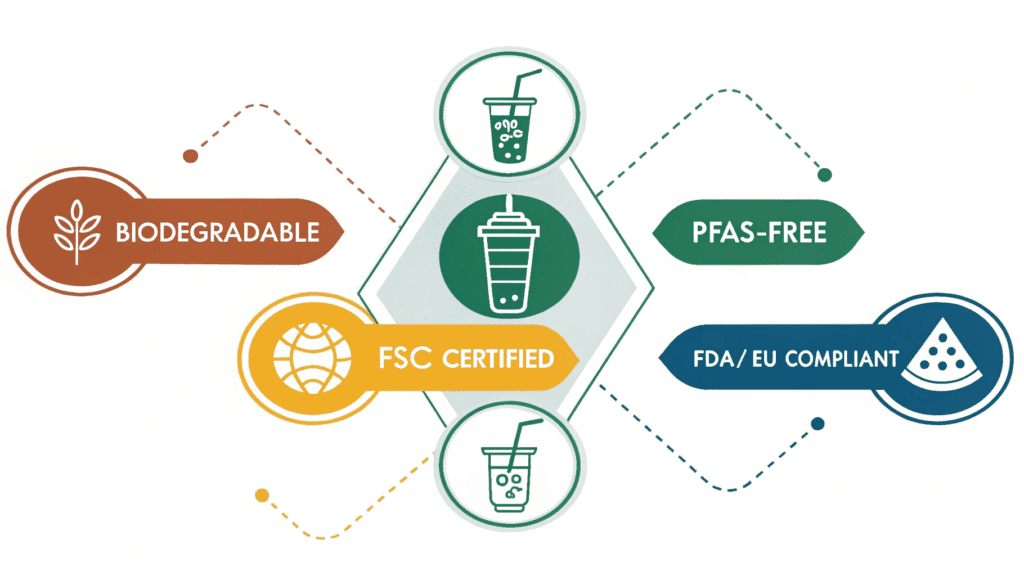
Zweifarbige Trinkhalme auf Papierbasis bestehen hauptsächlich aus 3-lagigem Premium-Kraftpapier in Lebensmittelqualität, gebunden mit minimalem wasserbasierten, lebensmittelechten Klebstoff (ca. 0,6 %). Oftmals ohne absichtlich zugesetzte PFAS (Per- und Polyfluoralkylsubstanzen) oder Wachse hergestellt, was echte biologische Abbaubarkeit und Sicherheit gewährleistet.
Zu den wichtigsten Vorteilen für Unternehmen gehören:
- Umweltfreundlichkeit: 100 % plastikfrei, biologisch abbaubar (oft 60 Tage), kompostierbar, recycelbar. Reduziert die Plastikverschmutzung und stimmt mit den Zielen der sozialen Unternehmensverantwortung (CSR) überein.
- Durability & Performance: Hochwertige Papierstrohhalme, die so konzipiert sind, dass sie nicht durchnässen und in heißen oder kalten Flüssigkeiten 30 Minuten bis 3 Stunden lang unversehrt bleiben. Entscheidend für die Kundenzufriedenheit.
- Food Safety & Compliance: Einhaltung der FDA- und EU-Standards, häufig FSC-zertifiziert.
- Aesthetic & Thematic Versatility: Lebhafte rote und weiße Streifen sorgen für einen optischen Reiz und wecken Nostalgie oder ein festliches Gefühl für verschiedene Themen (Feiertage, Geburtstage, Imbissstände, Cafés, Restaurants). Ermöglicht ein einzigartiges Branding und Kundenerlebnis.
- Funktionelle Vielseitigkeit: Erhältlich in verschiedenen Durchmessern (6 mm, 8 mm, 12 mm) für verschiedene Getränke – von Cocktails bis hin zu dicken Smoothies und Bubble Tea. Kann für heiße und kalte Getränke verwendet werden, was die Lagerhaltung vereinfacht.
Sind Sie daran interessiert, nachhaltigere Verpackungsoptionen zu erkunden? Besuchen momoio.com/eco-freundliche-verpackung für eine kuratierte Auswahl.
III. Navigieren durch die Nuancen: Herausforderungen, Vorschriften und die Bedeutung von Präzision
A. Current Landscape & Shifting Sands: Adoption Trends and Controversies
Der weltweite Markt für umweltfreundliches Stroh wird bis 2035 voraussichtlich 25,1 Milliarden US-Dollar erreichen (CAGR von 7,3 %). Konkret der Papierstrohmarkt: 1,58 Milliarden US-Dollar im Jahr 2024, voraussichtlich 2,69 Milliarden US-Dollar bis 2032 (CAGR von 7,12 %). Dieses Wachstum ist auf behördliche Verbote und eine starke Verbraucherpräferenz für umweltfreundliche Optionen zurückzuführen (ca. 80 % bevorzugen nachhaltige Produkte). Das Feedback der Verbraucher offenbart jedoch Leistungsbedenken.
Das Dilemma des „durchnässten Strohhalms“: Ein Hauptanliegen besteht darin, dass Papierstrohhalme durchnässt werden, den Geschmack verändern oder sich auflösen, was zu einem suboptimalen Kundenerlebnis führt.Hochwertige Lieferanten konzentrieren sich darauf, dieses Problem durch fortschrittliche Beschichtungen und mehrlagige Konstruktionen zu überwinden.Außerdem haben Studien in einigen Papierstrohhalmen „Ewig-Chemikalien“ (PFAS) gefunden, was Fragen zu deren tatsächlichen Auswirkungen auf die Umwelt und die Gesundheit aufwirft.Dies unterstreicht die Notwendigkeit transparenter, zertifizierter PFAS-freier Optionen.
B. Das regulatorische Labyrinth: Die Auswirkungen auf B2B verstehen
Die EU, Kanada und verschiedene US-Bundesstaaten (CA, NY, WA) haben Einwegkunststoffe, einschließlich Strohhalme, verboten oder eingeschränkt. Zu einer kürzlichen Kehrtwende in der US-Bundespolitik (2025) gehören jedoch Durchführungsverordnungen, die darauf abzielen, die bundesstaatliche Beschaffung von Papierstrohhalmen einzustellen und Richtlinien abzuschaffen, die Plastik benachteiligen, unter Berufung auf Bedenken hinsichtlich Funktionalität, Kosten und PFAS. Dadurch entsteht eine komplexe Landschaft für national tätige Unternehmen. B2B-Unternehmen müssen sich mit unterschiedlichen Vorschriften auseinandersetzen, Compliance-Risiken bewältigen und Beschaffungsstrategien anpassen, um lokale Vorschriften zu erfüllen und gleichzeitig Markenstandards aufrechtzuerhalten.
C. Die Wissenschaft der Konsistenz: Farb-Delta-Toleranz (ΔE)
For dual-color straws like red and white, color consistency is paramount for brand identity, visual appeal, and customer perception. Delta E (ΔE) is a metric quantifying the difference between two colors based on L*a*b* color space (Lightness, Red-Green, Yellow-Blue). Lower ΔE indicates a closer match. Industry tolerance varies (e.g., <1 imperceptible, 1-2 perceptible with careful comparison, printing industry up to 5-6).
SehenHunterLabs Erklärung von Delta Efür ein tieferes Verständnis.
Um die Präzision zweifarbiger Trinkhalme zu gewährleisten, müssen folgende Punkte beachtet werden:
- Markenintegrität: Stellt sicher, dass Ihr charakteristisches Rot immer sichtbar ist dein Rot, entscheidend für die Markenbekanntheit und Konsistenz über Standorte/Kampagnen hinweg.
- Kundenerfahrung: Hochwertige, lebendige Farben tragen zu einer positiven Wahrnehmung Ihres Produkts und Ihrer Dienstleistung bei.
- Abfallreduzierung: Das frühzeitige Erkennen von Farbabweichungen minimiert Produktionsfehler und Materialverschwendung.
- Lieferantenzuverlässigkeit: Ein Lieferant, der sich den ΔE-Standards verpflichtet, verfügt über robuste Qualitätskontrollprozesse.
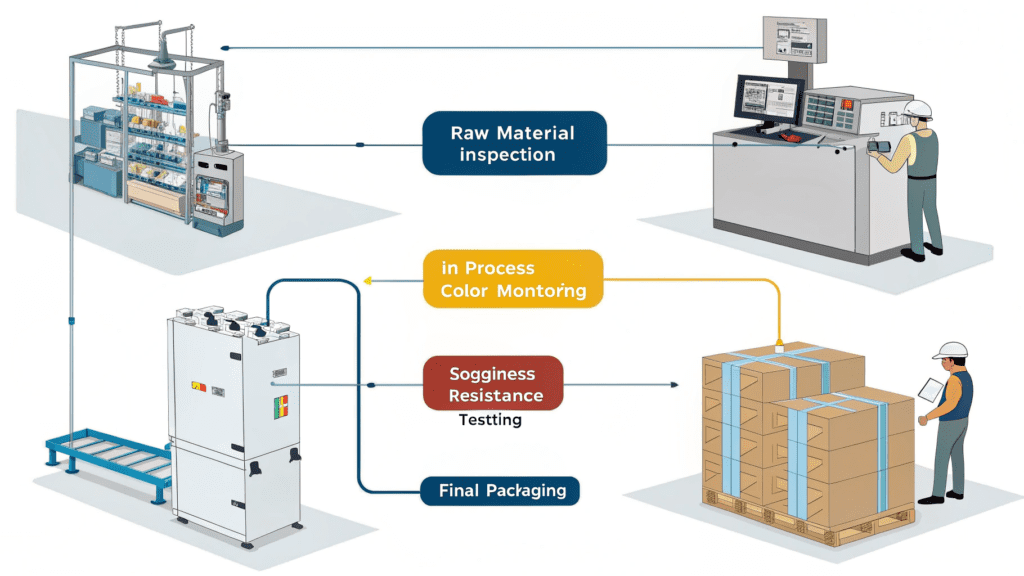
Zu den wichtigsten Kontrollpunkten der Qualitätskontrolle (QC) gehören:
- Materialeingangskontrolle: Überprüfung der Papier- und Tintenqualität (lebensmittelecht, PFAS-frei).
- Farbüberwachung im Prozess: Kontinuierliche Messung von Rot- und Weißtönen mithilfe von Spektralfotometern zur Einhaltung der ΔE-Toleranz.
- Strukturelle Integritätstests: Gewährleistet mehrschichtige Haftung, Durchnässungsfestigkeit und Biegefestigkeit.
- Maßgenauigkeit: Einheitliche Länge und gleichbleibender Durchmesser für Funktionalität (z. B. für Bubble Tea).
- Purity & Contamination Checks: Es wird sichergestellt, dass keine Fremdstoffe oder Chemikalien austreten.
IV. Future-Proofing Your Beverage Service: Innovations & Strategic Sourcing
A. Der Horizont der Strohinnovation: Jenseits von Papier
Mit neuen hydrophoben Beschichtungen und fortschrittlichen Papierherstellungsprozessen, die darauf abzielen, das Durchnässen zu verhindern und die Flüssigkeitsbeständigkeit über Stunden hinweg zu verbessern, zeichnet sich eine verbesserte Haltbarkeit ab. Es entstehen neuartige nachhaltige Materialien, wie zum Beispiel:
- Strohhalme aus Kokosnussblättern (natürliches Wachs, antimykotische Eigenschaften).
- Strohhalme auf Algenbasis (biologisch abbaubar, nicht essbar, Blue Carbon-Technologie).
- Hybridmaterialien (pflanzliche Polymere, wasserbeständige Beschichtungen).
“Smart” & Interactive Straws, like color-changing mood straws (e.g., Logotech’s Frost To Red), offer unique promotional and branding opportunities, reacting to beverage temperature. Advanced Manufacturing incorporates high-speed automation (hundreds of straws per minute), multi-extruder configurations for complex dual/multi-color designs, and integrated flexo printers for in-line branding.
Erfahren Sie mehr überinnovative nachhaltige Materialien von Footprint.
B. Strategische Lieferantenüberlegungen für B2B-Käufer
Comprehensive material & certification vetting is essential. Must-Haves: Food-grade kraft paper, water-based glue, 100% plastic-free (including inks/glues), FDA/EU compliance, FSC Certified. A bonus is USDA biobased certification, no intentionally added PFAS. Proven performance & durability is key, so look for suppliers who guarantee specific sogginess resistance times (e.g., 3+ hours).
Customization capabilities are crucial, with the ability to produce bespoke patterns, specific red/white shades, custom sizes, and branding with logos. “Seasonal Fast-Turn” capabilities should be assessed to determine the manufacturer’s ability for high-volume, high-speed, flexible production to meet fluctuating seasonal demands or urgent needs. Quality control & color-delta expertise requires partnering with suppliers demonstrating rigorous QC, specifically around color consistency (ΔE testing) and structural integrity.
Consider supply chain & local sourcing to reduce emissions and ensure greater control over material sourcing and production. Momoio offers sourcing expertise; explore momoio.com/sourcing-solutions um Hilfe.
C. Der strategische Imperativ: Den nachhaltigen Wandel nutzen
Adopting high-quality, sustainable dual-color straws positions your brand as a leader in environmental responsibility and customer experience. Aligning with eco-conscious consumers (78% prefer eco-friendly options) enhances brand perception & loyalty, fostering trust and driving repeat business. While paper straws may have a higher unit cost, reduced waste from consistent quality and positive brand association can offset initial investments through cost efficiency (long-term). Bulk ordering further optimizes costs.
V. Fazit: Treffen Sie die kluge Wahl für Ihr Unternehmen
Die zweifarbigen Trinkhalme in Rot und Weiß stellen eine kraftvolle Mischung aus klassischer Ästhetik, moderner Nachhaltigkeit und präziser Fertigung dar. Sie sind mehr als ein Wegwerfartikel; Sie sind ein greifbarer Ausdruck der Werte und des Qualitätsbewusstseins Ihrer Marke. Befriedigen Sie nicht nur die Nachfrage; Erwartungen übertreffen. Arbeiten Sie mit einem zukunftsorientierten Lieferanten zusammen, der sich mit „saisonalem Fast-Turn“ auskennt, Wert auf „Farbdelta-Toleranz“ legt und strenge Qualitätskontrollkontrollpunkte einhält. Kontaktieren Sie uns bei momoio, um unsere Dienstleistungen zu erkundenmomoio.comHeute.