Navigieren in der grünen Welle: Warum umweltfreundliche Partyvorräte ein B2B-Imperativ sind

Von momoio | Veröffentlicht: 29. August 2025
Bei Firmenveranstaltungen geht es nicht mehr nur um Networking oder das Feiern von Meilensteinen; Sie sind aussagekräftige Aussagen über die Werte einer Organisation. In einer Zeit, in der Nachhaltigkeit an erster Stelle steht, geht die Wahl des Partyzubehörs über die bloße Ästhetik hinaus und wird zu einem strategischen Gebot für Unternehmen. Den ökologischen Fußabdruck Ihrer Veranstaltungen zu ignorieren, ist keine Option mehr, sondern ein Betriebs- und Reputationsrisiko, das das Engagement Ihrer Marke für eine grünere Zukunft untergraben kann. Der Markt für nachhaltige Eventlösungen wächst nicht nur; Es definiert Branchenstandards neu: Allein der weltweite Markt für biologisch abbaubare Partyartikel soll von 14,3 Milliarden US-Dollar im Jahr 2024 auf beeindruckende 38,7 Milliarden US-Dollar im Jahr 2033 ansteigen, was einer robusten jährlichen Wachstumsrate von 11,7 % entspricht. Spiegelt Ihre Organisation durch ihre Veranstaltungsauswahl wirklich ihr Engagement für eine umweltfreundlichere Zukunft wider, oder hinken Sie unbeabsichtigt hinter einer sich schnell entwickelnden Landschaft zurück?
Die Auswirkungen, wenn man die nachhaltige Beschaffung von Veranstaltungen außer Acht lässt, sind weitreichend. Über die sichtbare Verschwendung hinaus gibt es unsichtbare Kosten, die sich direkt auf Ihr Endergebnis und die öffentliche Wahrnehmung auswirken. Herkömmliche Einwegkunststoffe und nicht recycelbare Materialien vergrößern weiterhin die Mülldeponien und tragen zu einer globalen Umweltkrise bei. Diese wachsende Deponielast ist nicht nur ein ökologisches Problem; Es ist eine PR-Sache. Verbraucher, insbesondere in Europa, wo 63 % eine Präferenz für umweltbewusste Produkte zum Ausdruck bringen, hinterfragen zunehmend die Umweltverantwortung von Unternehmen. Ein Fehltritt bei der Nachhaltigkeit von Veranstaltungen kann schnell zu Vorwürfen des „Greenwashing“ führen, das Markenvertrauen schädigen und den hart erkämpften Ruf untergraben, insbesondere wenn Nachhaltigkeitsaussagen nicht echt oder überprüfbar sind.
The regulatory landscape is also shifting dramatically, making traditional procurement practices risky. Governments worldwide are implementing bans and levies on single-use plastics, creating compliance challenges and increasing operational costs for businesses that fail to adapt. Procurement managers face the complex task of navigating these evolving mandates, which vary across regions. In the US, states are increasingly enacting plastic bag bans and foam container restrictions, while the European Union has led the charge with directives targeting various single-use plastic products, compelling businesses to seek sustainable alternatives. This legislative push directly influences ESG (Environmental, Social, and Governance) criteria, which investors now consider critical indicators of corporate health and long-term viability. Organizations failing to meet these evolving standards risk alienating investors, hindering access to capital, and seeing their corporate reporting reflect poorly on their commitment to sustainability. Moreover, the resource-intensive production of certain conventional party supplies, often involving significant water, energy, and chemical use, presents an ethical dilemma and a logistical strain that modern operations directors can no longer afford to ignore. The disposal costs associated with mixed waste from traditional events further exacerbate operational challenges, making a shift to sustainable practices not just ethical, but economically prudent.
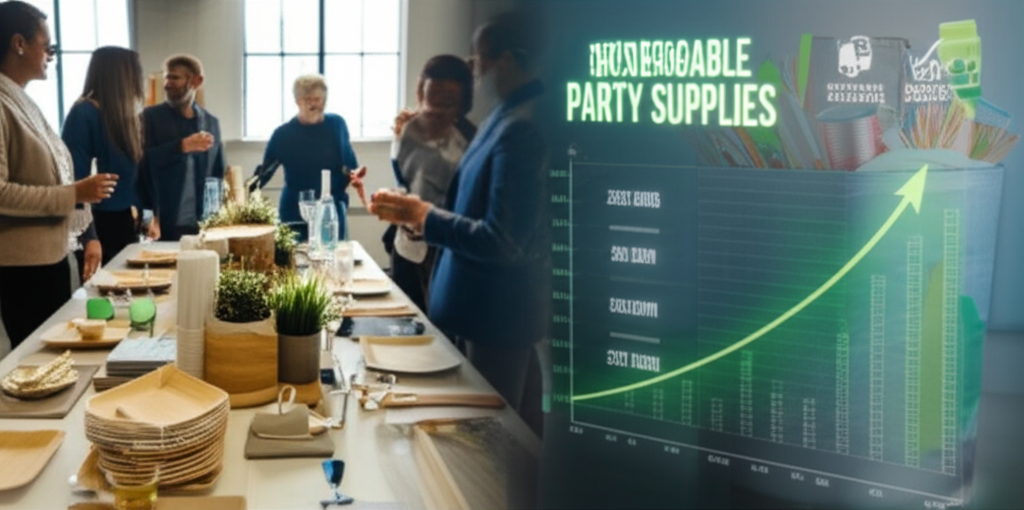
Die Bewältigung dieser Herausforderungen erfordert eine strategische Ausrichtung auf wirklich umweltfreundliche Materialien und Praktiken. Dabei geht es nicht nur darum, Alternativen zu finden; Es geht darum, den Markenwert zu steigern, die Beschaffung zu optimieren und die betriebliche Widerstandsfähigkeit aufzubauen. Der erste Schritt besteht darin, den konkreten Geschäftswert nachhaltiger Materialien zu verstehen.
Betrachten Sie einen Vergleich traditioneller und nachhaltiger Partymaterialien für die B2B-Beschaffung:
| Besonderheit | Traditionell (hoher ökologischer Fußabdruck, regulatorisches Risiko) | Sustainable (Biodegradable, Compostable, Aligns with Green Policies) | B2B-Auswirkungen | Compliance Risk (EU/US) | ROI -Potenzial |
|---|---|---|---|---|---|
| Plates & Cutlery | Disposable Plastics (PP, PS) | Bagasse (sugarcane), Bamboo, Cornstarch (PLA), Recycled Paper, Palm Leaf | Enhanced brand image, reduced waste, positive stakeholder perception | High (plastic bans) | Reduced disposal costs, improved public relations, market differentiation |
| Balloons | Mylar/Foil Balloons (non-biodegradable, microplastic concern) | Natural Latex Balloons (with responsible disposal guidance), Paper Lanterns, Fabric Banners, Bubbles, Pinwheels | Eco-conscious branding, reduced environmental harm, innovative aesthetics | Moderate (litter laws) | Brand reputation lift, potential for reusable decor savings |
| Invitations | Virgin Paper Invitations (resource intensive) | Recycled/Seed Paper, Digital Invitations (e.g., e-vites) | Reduced paper waste, modern appeal, cost savings on printing/postage | Niedrig | Significant cost savings, efficiency, modern brand perception |
| Decorations | Single-use plastic streamers, conventional confetti | Reusable fabric bunting, potted plants, dried flowers, biodegradable confetti | Supports circular economy, minimizes waste, unique event aesthetics | Mäßig | Long-term cost savings through reusability, unique event aesthetic |
The market insights underscore this shift. The global biodegradable party supplies market’s projected growth to USD 38.7 billion by 2033 highlights a clear investment opportunity for businesses. Key growth drivers include rising environmental awareness, stringent plastic waste regulations, and brand-driven sustainability initiatives. This reflects a broad consensus that sustainability is no longer a niche, but a core component of future-proof business strategy.

Allerdings erfordert die Bewältigung dieser grünen Welle Wachsamkeit, insbesondere im Hinblick auf „Greenwashing“. Der Begriff bezieht sich auf irreführendes Marketing, das Produkte umweltfreundlicher erscheinen lässt, als sie tatsächlich sind. Diese betrügerische Praxis stellt ein erhebliches Risiko für Beschaffungsteams dar, die versuchen, wirklich nachhaltige Entscheidungen zu treffen. Viele Produkte, die als „biologisch abbaubar“ oder „kompostierbar“ gekennzeichnet sind, werden in natürlichen Umgebungen oder sogar in herkömmlichen Heimkompostierungssystemen nicht vollständig abgebaut. Beispielsweise scheinen einige zertifiziert kompostierbare Becher zwar umweltfreundlich zu sein, enthalten aber PFAS (Per- und Polyfluoralkylsubstanzen) – Chemikalien mit bekannten Umwelt- und Gesundheitsproblemen – und werden oft nur in kommerziellen Kompostierungsanlagen abgebaut, die nicht überall verfügbar sind. Darüber hinaus kann es Monate oder Jahrhunderte dauern, bis „biologisch abbaubarer Kunststoff“ ohne einen bestimmten Zeitrahmen abgebaut wird, was häufig immer noch zur Mikroplastikverschmutzung beiträgt. Das Fehlen klarer bundesstaatlicher Standards und Vorschriften für Biokunststoff-, biologisch abbaubare oder kompostierbare Produkte in vielen Regionen, einschließlich Teilen der USA, ermöglicht es den Herstellern, vage Behauptungen aufzustellen, was zu erheblicher Verwirrung bei Verbrauchern und B2B-Käufern führt. Organisationen wie Beyond Plastics setzen sich aktiv für klarere Vorschriften zur Bekämpfung dieses Problems ein und unterstreichen die dringende Notwendigkeit einer größeren Transparenz in der Lieferkette.Learn more about plastic pollution and policy efforts at Beyond Plastics
To avoid the pitfalls of greenwashing, it’s crucial to understand how to identify truly sustainable products:
| Besonderheit | Vague/Greenwashed (High Risk of Misinformation) | Truly Sustainable (Verifiable, Low Environmental Impact) |
|---|---|---|
| Product Claim | “Biodegradable Plastic” (without specified conditions or timeline) | Certified Industrial Compostable (e.g., BPI certified, EN 13432 for EU) |
| Zersetzung | May require specific, often unavailable industrial conditions; can take centuries to break down; contributes to microplastics. | Clear guidelines for decomposition in commercial facilities; breaks down into natural elements. |
| Balloons | “Biodegradable” Latex Balloons (can still take years to break down, threats to wildlife) | Reusable Decorations (fabric banners, potted plants), Bubbles, Pinwheels, Dried Flowers |
| Zertifizierungen | Keine oder vage interne Behauptungen | Anerkannte Zertifizierungen Dritter (z. B. BPI, TÜV AUSTRIA, Cradle to Cradle) |
| Transparenz | Begrenzte Informationen zur Materialbeschaffung oder zum End-of-Life-Prozess | Volle Transparenz über Materialherkunft, Herstellung und geprüfte Entsorgungsmöglichkeiten |
Das Streben nach Transparenz und Zertifizierung nimmt zu. Führende Marken legen Wert auf umweltfreundliche Innovationen und klare, überprüfbare Ansprüche, um die Konkurrenz zu übertreffen. Dadurch wird nicht nur das Vertrauen der Verbraucher gestärkt, sondern auch die B2B-Beziehungen gestärkt, indem echtes Engagement für gemeinsame Nachhaltigkeitsziele demonstriert wird. Unternehmen, die in authentische, zertifiziert nachhaltige Produkte investieren, positionieren sich als verantwortungsbewusste Marktführer in ihrer Branche.

Beyond single-use biodegradable items, embracing reusability and circular economy principles offers even greater long-term benefits. Strategic implementation of reusable options, such as cloth linens, durable dishware, and permanent decor, translates into significant cost savings over time and drastically reduced waste. For instance, companies like Brambles, operating through the CHEP brand, exemplify a circular economy model by promoting the “share and reuse” of assets like pallets and containers. This approach minimizes demand for virgin natural resources, reduces waste, and optimizes logistics, providing a powerful blueprint for how event supplies can move towards a more sustainable, closed-loop system. This mindset shift—from disposal to continuous use—is a cornerstone of modern sustainable procurement.Learn more about embracing Circular Economy principles in your operations.

Future-proofing your events means more than just compliance; it means leveraging innovation for differentiation and competitive advantage. The future of eco-friendly party supplies is dynamic, marked by continued advancements in material science. We can expect to see rapidly decomposable plant-based plastics and natural fibers that not only break down quickly but also maintain the strength, durability, and aesthetic appeal of conventional products. Technological integration will play a crucial role, with AI-driven tools emerging to assist with sustainable event planning, offering eco-friendly alternatives and theme generation with unprecedented efficiency. Augmented Reality (AR) and Virtual Reality (VR) are also set to transform how organizations visualize event setups, potentially reducing the need for physical samples and minimizing waste in the planning phase. Imagine previewing your entire event decor in a virtual space, ensuring every element meets your sustainability and aesthetic criteria before a single physical item is produced.
Furthermore, personalization and customization, enhanced by AI and design software, will allow for easier creation of unique, eco-friendly decorations. Technologies like 3D printing, utilizing sustainable materials, could enable on-demand, highly customized items that align perfectly with brand identity while minimizing overproduction and waste. This focus on tailored, sustainable experiences strengthens brand narrative and resonates deeply with environmentally conscious clients, partners, and employees. By visibly aligning with sustainable values, organizations not only enhance their image but also achieve UN Sustainable Development Goals and bolster their ESG performance, attracting top talent and new business opportunities. These forward-thinking strategies promise not only a reduced environmental footprint but also significant cost efficiencies through optimized procurement, reduced waste management expenses, and potential access to green financing or tax incentives. The growth trajectory for eco-conscious products is clear, positioning early adopters for a competitive edge.Explore current consumer preferences and ethical consumption trends at Ethical Consumer.
The time to act is now. To implement a robust sustainable event strategy, begin with a thorough audit of your current event supply procurement processes. Identify areas where single-use plastics and non-recyclable materials are prevalent. Prioritize sourcing from suppliers offering certified compostable, recycled, or reusable products, always verifying claims with third-party certifications. Invest in educating your event planning teams and stakeholders on sustainable choices and proper waste management, establishing clear guidelines for disposal, such as dedicated composting bins for certified items. Explore digital alternatives for invitations, RSVPs, and event marketing materials to drastically reduce paper consumption. Most importantly, seek out suppliers with verifiable sustainability credentials and transparent production processes to ensure authenticity.
Take the definitive step towards a greener, more responsible future for your corporate events. By quantifying cost savings through reduced waste, mitigating regulatory risks, and elevating your brand’s value through visible sustainability, you can capture significant market share opportunities.Consult our guide to sustainable supplier vetting for robust procurement strategies.Engage with sustainability consultants to tailor a bespoke eco-event strategy that aligns with your specific business goals. Access our comprehensive guide to sustainable event supplier vetting to empower your procurement teams. Initiate a pilot program for your next internal or client-facing event, measure the impact, and demonstrate leadership in corporate sustainability. The journey to truly sustainable events is a strategic investment that pays dividends in reputation, efficiency, and market differentiation.
Häufig gestellte Fragen
Why are eco-friendly party supplies a B2B imperative for corporate events?
Eco-friendly party supplies are crucial for B2B due to escalating client, employee, and regulatory demand for greener practices. They help avoid ‘greenwashing’ accusations, reduce operational costs associated with waste, and enhance brand reputation by aligning with sustainability values and ESG criteria. The market is projected to grow significantly, making it a strategic advantage.
How can businesses identify genuinely sustainable party supplies and avoid greenwashing?
Businesses must be vigilant against ‘greenwashing,’ which involves deceptive marketing. Look for products with clear, verifiable third-party certifications (e.g., BPI, EN 13432 for industrial compostability), transparent supply chains, and specified decomposition timelines under realistic conditions. Be cautious of vague terms like ‘biodegradable plastic’ without further context, as they may not break down effectively or contribute to microplastic pollution.
What are the key types of eco-friendly materials and products for corporate events?
Key eco-friendly materials include bagasse (sugarcane byproduct), bamboo, cornstarch (PLA), palm leaves, and recycled paper for tableware. Alternatives to balloons include natural latex (with responsible disposal), paper lanterns, fabric banners, bubbles, and pinwheels. Digital or recycled/seed paper invitations are also sustainable choices. Reusable options like cloth linens and durable dishware further reduce waste.
How do sustainable party supplies impact a company’s ESG performance and brand value?
Adopting sustainable party supplies significantly bolsters a company’s ESG performance by demonstrating environmental responsibility (E). It enhances brand value by attracting environmentally conscious clients and talent, signaling a commitment to ethical practices. This proactive approach mitigates reputational risks, aligns with UN Sustainable Development Goals, and positions the brand as a responsible industry leader.
What future trends should procurement managers anticipate in eco-friendly event supplies?
Procurement managers should anticipate advancements in rapidly decomposable plant-based plastics and natural fibers. AI-driven tools will assist in sustainable event planning and theme generation, while AR/VR technologies will allow for virtual decoration visualization, reducing physical waste in planning. Increased personalization through AI and 3D printing with sustainable materials will also be prominent.