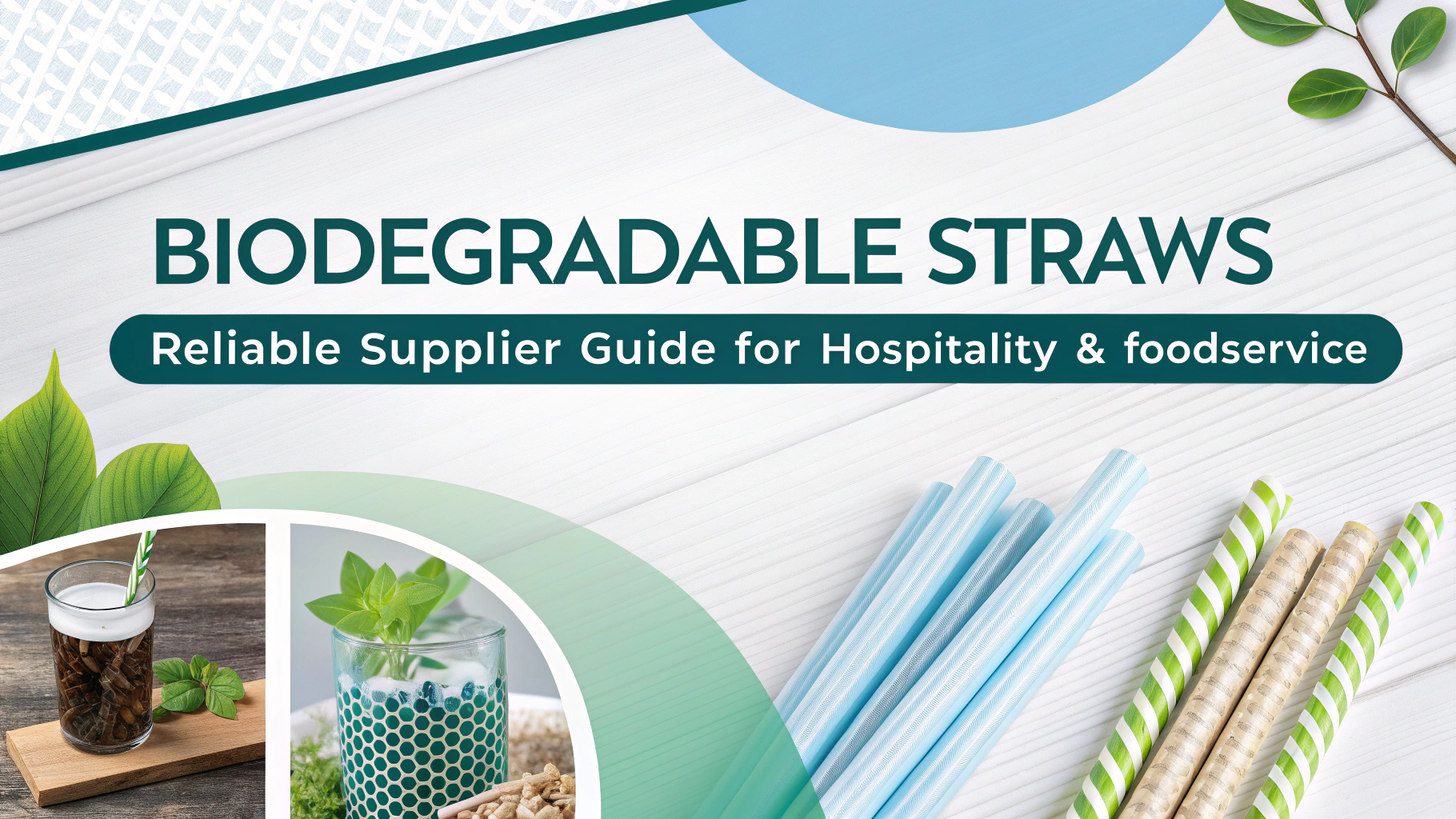
I. Den Wandel im nachhaltigen Gastgewerbe meistern
Das allgegenwärtige Problem der Verschmutzung durch Einwegplastik hat einen kritischen Punkt erreicht, da Plastikstrohhalme zu einem starken Symbol für Umweltzerstörung geworden sind. Unternehmen, insbesondere in der Gastronomie und im Gastgewerbe, sehen sich einem beispiellosen Druck durch zunehmend umweltbewusste Verbraucher, strengere Vorschriften und eine wachsende Nachfrage nach sozialer Verantwortung der Unternehmen (Corporate Social Responsibility, CSR) ausgesetzt. Es ist keine Option mehr, sich nicht an diese sich verändernde Landschaft anzupassen. Es stellt eine direkte Bedrohung für die Markenwahrnehmung, die Kundentreue und den Marktanteil dar.
Dabei handelt es sich nicht nur um einen flüchtigen Trend, sondern um einen grundlegenden Wandel im Geschäftsbetrieb. Für den globalen Markt für kompostierbare Strohhalme wird ein deutliches Wachstum von geschätzten 1,9 Milliarden US-Dollar im Jahr 2025 auf 3,8 Milliarden US-Dollar im Jahr 2035 prognostiziert, was einer robusten jährlichen Wachstumsrate (Compound Annual Growth Rate, CAGR) von 7,1 % entspricht. Dieser beschleunigte Wandel hin zu nachhaltigen Alternativen unterstreicht die klare geschäftliche Notwendigkeit für zukunftsorientierte Unternehmen.
Die zunehmende Plastikverschmutzung erfordert dringende Maßnahmen von Unternehmen.
II. Die Entwicklung und Auswirkungen kompostierbarer Lösungen verstehen
Die durch herkömmliche Plastikstrohhalme verursachten Umweltschäden gehen weit über die optische Unordnung hinaus. Diese erdölbasierten Produkte bleiben jahrhundertelang bestehen und zerfallen in heimtückisches Mikroplastik, das in unsere Ozeane, Böden und sogar in unsere Nahrungsmittelsysteme eindringt. Das virale Video, in dem ein Plastikstrohhalm aus dem Nasenloch einer Meeresschildkröte entfernt wurde, war ein weltweiter Weckruf, löste öffentliche Empörung aus und beschleunigte die Forderungen nach Maßnahmen gegen Einwegkunststoffe. Für Unternehmen bedeutet dies eine klare Aufforderung, ihren ökologischen Fußabdruck zu verringern und sich an öffentlichen Werten zu orientieren.
Die Geschichte der Trinkhalme spiegelt die sich entwickelnde Beziehung der Menschheit zu Bequemlichkeit und Nachhaltigkeit wider. Von alten mesopotamischen Strohhalmen aus Edelmetallen bis hin zu Marvin C. Stones Patent für den ersten Papierstrohhalm aus dem Jahr 1888 waren die ersten Lösungen weitgehend biologisch abbaubar. Mitte des 20. Jahrhunderts erlebten billige, haltbare Plastikstrohhalme einen Aufschwung, der ihre Gegenstücke aus Papier fast ausrottete. Das 21. Jahrhundert hat jedoch ein starkes modernes Wiederaufleben kompostierbarer und biologisch abbaubarer Optionen eingeleitet, angetrieben durch die unbestreitbare Dringlichkeit der Plastikkrise. Die heutigen technologischen Fortschritte gehen direkt auf die Leistungseinschränkungen früherer Alternativen ein und bieten praktikable und skalierbare Lösungen.
Was genau sind kompostierbare Strohhalme? Dabei handelt es sich um technische Alternativen aus natürlich gewonnenen, pflanzlichen Polymeren, die in bestimmten Kompostierungsumgebungen innerhalb von Wochen oder Monaten in natürliche Substanzen wie Wasser, Kohlendioxid und Biomasse zerfallen. Es ist wichtig, zwischen „biologisch abbaubar“ und „kompostierbar“ zu unterscheiden. Obwohl biologisch abbaubare Produkte irgendwann zerfallen, kann der Prozess langsam und unvorhersehbar sein und häufig Rückstände von Mikroplastik hinterlassen. Kompostierbare Strohhalme hingegen sind speziell darauf ausgelegt, innerhalb einer kurzen, kontrollierten Zeitspanne vollständig in organisches Material zu zerfallen und keine schädlichen Rückstände zu hinterlassen. Ihre Behauptungen werden oft durch renommierte Zertifizierungsstellen Dritter wie dem Biodegradable Products Institute (BPI) in den USA oder dem TÜV OK Compost in Europa validiert, was Unternehmen die Gewissheit gibt, dass ihre Umweltaussagen eingehalten werden.
Vor allem der Food-Service-Sektor ist hier führend und wird im Jahr 2025 voraussichtlich 52,8 % des Marktanteils von kompostierbarem Stroh ausmachen. Restaurants, Schnellrestaurants (QSRs), Hotels und Cafés übernehmen diese Lösungen schnell und erkennen den doppelten Nutzen von Umweltschutz und erhöhter Kundenattraktivität.
Kompostierbare Strohhalme zerfallen in natürliche Substanzen und tragen so zu einem gesünderen Planeten bei.
III. Der strategische Vorteil der echten Kompostierbarkeit
Die Akzeptanz zertifizierter kompostierbarer Strohhalme geht weit über die bloße Einhaltung hinaus; Es ist ein strategischer Schritt, der erhebliche Geschäftsvorteile ermöglicht.
Erhöhter Markenruf und Kundentreue:
Durch die Einführung wirklich kompostierbarer Lösungen positioniert sich Ihr Unternehmen als Vorreiter im Bereich Nachhaltigkeit. Dies findet großen Anklang bei modernen Verbrauchern, insbesondere bei der Generation Z und den Millennials, die immer mehr Wert auf umweltfreundliche Marken legen. Studien zeigen, dass sich über 60 % der Verbraucher der Generation Z aktiv für nachhaltige Marken entscheiden, was die Loyalität fördert und neue Kunden anzieht. Dieses Engagement schafft Vertrauen und stärkt Ihre Markenerzählung. Erfahren Sie mehr darüber, wie nachhaltige Praktiken Ihre Marke stärken könnenDie Erkenntnisse von momoio.com zunachhaltige Geschäftspraktiken.
Erfüllung regulatorischer Anforderungen:
Die globale Landschaft verändert sich rasch in Richtung strengerer Vorschriften für Einwegkunststoffe. Die Einwegkunststoffrichtlinie der Europäischen Union, die 2021 Plastikstrohhalme verbot, und ähnliche Verbote in verschiedenen US-Städten wie Seattle und San Francisco unterstreichen die dringende Notwendigkeit konformer Alternativen. Durch die Einführung fortschrittlicher kompostierbarer Lösungen stellen Sie sicher, dass Ihr Unternehmen der Zeit voraus ist, rechtliche Risiken werden gemindert und Betriebsunterbrechungen vermieden.
Erhebliche Reduzierung der Umweltbelastung:
- Reduced Plastic Waste & Microplastics:Zertifiziert kompostierbare Strohhalme verhindern die Ansammlung von Abfall auf Mülldeponien und im Meer. Im Gegensatz zu herkömmlichen Kunststoffen zerfallen sie vollständig in natürliche Bestandteile und hinterlassen keine schädlichen Mikroplastikrückstände. Dies trägt direkt zum Schutz des Meereslebens und der Ökosysteme bei. Weitere Informationen zu den umfassenderen Auswirkungen von Kunststoffabfällen finden Sie in den Ressourcen vonUmweltprogramm der Vereinten Nationen.
- Geringerer CO2-Fußabdruck:Die Herstellung kompostierbarer Strohhalme aus erneuerbaren pflanzlichen Materialien erfordert im Allgemeinen weniger Energie aus fossilen Brennstoffen und stößt weniger Treibhausgase aus als Kunststoffe auf Erdölbasis. Durch den Kompostierungsprozess werden außerdem weniger Treibhausgase freigesetzt, wodurch Methanemissionen vermieden werden.
- Unterstützung einer Kreislaufwirtschaft:Durch die Zersetzung kompostierbarer Strohhalme entsteht nährstoffreicher Kompost, der zur Anreicherung des Bodens verwendet werden kann. Dies trägt zu einer zirkulären Abfallbewirtschaftung bei, verringert die Abhängigkeit von synthetischen Inputs und fördert ein regenerativeres System.
Vergleichsliste: Auswahl des richtigen kompostierbaren Strohhalms für Ihr Unternehmen
| Merkmal/Material | Traditioneller Kunststoff | Papierstrohhalme | Pla Strohhalme | Zuckerrohr-Bagasse-Strohhalme | PHA-Strohhalme (Nächste Generation) |
|---|---|---|---|---|---|
| Zusammensetzung | Auf Erdölbasis | Zellulosefasern (pflanzlich) | Fermentierter Pflanzenzucker (Mais, Zuckerrohr) | Faseriges Nebenprodukt von Zuckerrohr | Pflanzliche Öle (Raps, Zucker) |
| Haltbarkeit | Hoch | Kann weich werden/zerfallen und neigt dazu, durchnässt zu werden | Mimics plastic, can warp in hot drinks (>45°C) | Hoch, haltbar in heißen/kalten Getränken | Hoch, vergleichbar mit Kunststoff, beständig gegen Durchnässen |
| Kompostierbarkeit | Jahrhunderte bis zur Zersetzung, Mikroplastik | Home & Industrial, faster breakdown but can have coatings | Hauptsächlich ist eine industrielle Kompostierung erforderlich | Home & Industrial, decomposes in months | Marine, Home & Industrial, rapid breakdown, no microplastics |
| Auswirkungen auf den Geschmack | Neutral | Kann Papiergeschmack verleihen | Neutral | Neutral | Neutral |
| Kosten | Niedrigste | Kostengünstig, aber höher als Kunststoff | Höher als Kunststoff | Höher als Kunststoff, aber besser | Derzeit höher, aber mit zunehmender Größenordnung abnehmend |
| Entscheidender Vorteil | Günstig, langlebig | Weithin anerkannt, verbessert die Leistung | Plastikartige Haptik, gut für kalte Getränke | Langlebig, ungiftig, PLA-frei, vielseitig einsetzbar | Hervorragende biologische Abbaubarkeit, Haltbarkeit, vielseitig einsetzbar |
Brancheneinblick: Wegweisend mit Innovation und Materialentwicklung
Major corporations like Starbucks and McDonald’s have publicly committed to transitioning away from plastic straws, a clear indicator of the industry’s shift. This move is powered by continuous innovation in materials. Advanced PHA (Polyhydroxyalkanoates) straws, for example, derived from plant-based oils, are emerging as a game-changer. They offer durability comparable to traditional plastic and are certified to biodegrade not just in industrial composting, but also in home compost, soil, and even marine environments. Researchers are also developing cutting-edge materials like bacterial cellulose and seaweed-based “hyper-compostable” straws that promise even faster breakdown rates and improved user experience, addressing common complaints about sogginess or taste. The Asia-Pacific region, alongside North America and Europe, is driving significant R&D in cost-effective, high-performance eco-friendly straws. To find reliable sources forumweltfreundliche ProduktbeschaffungBesuchen Sie die Auswahl von momoio.com.
Der Einsatz kompostierbarer Lösungen unterstützt eine regenerative Kreislaufwirtschaft.
Auseinandersetzung mit dem „Greenwashing“-Mythos
Es stimmt, dass der Begriff „biologisch abbaubar“ zuweilen falsch verwendet wurde, was zu berechtigten Bedenken hinsichtlich „Greenwashing“ führte. Viele „kompostierbare“ Strohhalme, insbesondere solche aus PLA, erfordern bestimmte Bedingungen, die nur in industriellen Kompostieranlagen zu finden sind, um effektiv zersetzt zu werden. Bei unsachgemäßer Entsorgung kann es Jahrhunderte dauern, bis sie sich auf Mülldeponien zersetzen, ähnlich wie herkömmliche Kunststoffe. Dies unterstreicht jedoch die entscheidende Bedeutung der Auswahl zertifizierter Produkte und transparenter Lieferanten, die sich für echte Kompostierbarkeit einsetzen und nicht nur für zweideutige Behauptungen. Renommierte Zertifizierungen, wie sie der TÜV Österreich anbietet, stellen sicher, dass Produkte strenge Standards für die Zersetzung in bestimmten Umgebungen erfüllen. Die Zusammenarbeit mit Lieferanten, die hinsichtlich der Materialzusammensetzung und Entsorgungsanforderungen transparent sind, ist der Schlüssel zur Vermeidung von Greenwashing-Fallstricken und zum Nachweis echten Engagements. Beispielsweise ist es wichtig, die Nuancen verschiedener Zertifizierungen zu verstehen. Weitere Details finden Sie unterOffizielle Website von BPI.
IV. Machen Sie den nachhaltigen Wechsel – eine Partnerschaft für eine grünere Zukunft
Der Übergang zu zertifiziert kompostierbaren Strohhalmen ist nicht mehr nur eine Randerwägung, sondern ein entscheidender nächster Schritt auf dem Weg zu einer nachhaltigen Führung Ihres Unternehmens. Es handelt sich um eine Investition in den Umweltschutz, eine unbestreitbare Steigerung Ihres Markenwerts und eine proaktive Maßnahme, um Ihren Betrieb zukunftssicher gegenüber sich ändernden Vorschriften und Verbrauchererwartungen zu machen.
Machen Sie den entscheidenden Schritt in eine grünere Zukunft:
- Laden Sie unseren Leitfaden herunter: Auswahl des richtigen kompostierbaren Strohhalms für Ihre Geschäftsanforderungen.Dieser umfassende Leitfaden bietet eine detaillierte Analyse von Materialien, Zertifizierungen und Entsorgungsoptionen, die speziell auf B2B-Beschaffungsentscheidungen zugeschnitten sind.
- Request a Free Sample Kit & Consultation.Erleben Sie die Qualität und Leistung fortschrittlicher kompostierbarer Strohhalme aus erster Hand und erhalten Sie fachkundige Beratung zur nahtlosen Integration in Ihre aktuellen Abläufe. Erfahren Sie, wiemomoio.comkann helfen, Ihre zu optimierennachhaltige VerpackungslösungenLieferkette.
- Sprechen Sie noch heute mit einem Nachhaltigkeitsexperten.Unser Team ist bereit, personalisierte Lösungen bereitzustellen, detaillierte Informationen zu Großbestellungen bereitzustellen und alle Fragen zu beantworten, um Ihnen den Übergang zu einem wirklich nachhaltigen Strohprogramm zu erleichtern.
Seien Sie Teil der Lösung, nicht der Umweltverschmutzung.
Sehen Sie sich unsere Video-Erklärung an
Eine kurze Zusammenfassung, warum kompostierbare Strohhalme eine geschäftliche Notwendigkeit sind.
Erleben Sie unser Responsive Design
Der geschäftliche Imperativ…
Illustration der Kreislaufwirtschaft.
…Dies ist kein flüchtiger Trend, sondern ein grundlegender Wandel im Geschäftsbetrieb …