Beyond the Sip: Mastering Hot Coffee Straws for Flavor, Lid Compatibility & Reduced Complaints
A B2B Guide for Hospitality & Foodservice Procurement, Operations, and Sustainability Leaders
1. The Hidden Costs of Compromised Coffee Sips: An Industry Problem
La tutmonda ekologia pajla merkato rapide disvastiĝas, projektita atingi preskaŭ 25,1 miliardojn USD antaŭ 2035 (Grand View Research, 2023). Ĉi tiu kresko estas nutrita de kreskanta postulo de konsumantoj je daŭrigeblaj solvoj kaj pli striktaj regularoj celantaj unuuzajn plastojn tutmonde. Por entreprenoj en la varma trinkaĵsektoro, precipe kafo, ĉi tiu ŝanĝo ne temas nur pri plenumo; ĝi estas profunda operacia defio. Liveri konstante superan, sekuran kaj konformecan trinketon por likvaĵoj servataj ĉe temperaturoj ofte ĉe aŭ superantaj 90 °C postulas retakso de aktualaj praktikoj. Malsukcesi trakti ĉi tiun kompleksecon povas konduki al signifaj komercaj sekvoj, inkluzive de ĝeneraligita konsumantmalkontento, erozio de markfido, fortaj reguligaj nekonformaj monpunoj kaj pliiĝantaj butikprocentoj rekte ligitaj al endanĝerigita produktokvalito, ŝanĝita gustointegreco kaj funkciaj fiaskoj.
Elekti la malĝustajn pajlmaterialojn por varma kafo portas grandajn, ofte kaŝitajn kostojn. Malbona materiala selektado povas rezultigi nedezirindan gustomigradon, kie kunmetaĵoj de la pajlo lesivas en la trinkaĵon, draste ŝanĝante la celitan gustoprofilon de la kafo kaj malpliigante la konsumantsperton. Preter gusto, la integreco de la materialo mem estas plej grava. Problemoj kiel rapida malsekeco, deformado aŭ fandado ĉe altaj temperaturoj subfosas uzeblon kaj pripensas negative pri produkta kvalito kaj ĝenerala marko-percepto, rekte influante Klientan Satisfakto-Poentaron (CSAT). Krome, nekongruaj sistemoj de pajlo-kaj-kovro estas ofta fonto de verŝado, liko kaj uzantfrustriĝo, kondukante al pliigitaj operaciaj neefikecoj kaj pli alta efiko de en-butikaj plendoj, rekte influante "KPI-ojn pri plendo".
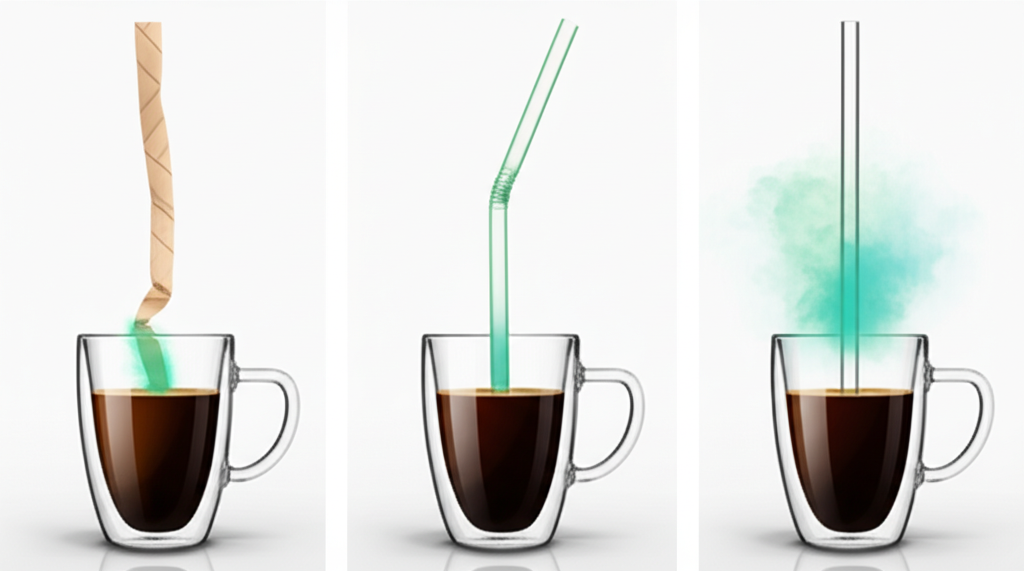
Unsuitable materials pose critical challenges across taste, safety, and performance. Common alternative straw materials like paper, PLA (Polylactic Acid), wheat, and pasta have documented failures when exposed to coffee temperatures of 90°C or higher. Paper straws, for instance, are notoriously prone to rapid degradation and sogginess, often losing firmness within 20 minutes in hot liquids and sometimes imparting a papery taste. While PLA straws are plant-based, standard versions can soften or deform significantly above 60-70°C, and often require industrial composting facilities that are not widely available. Wheat and pasta straws likewise soften quickly. A critical safety concern surrounds “forever chemicals” (PFAS) detected in a large percentage of paper and some plant-based straws. These highly soluble chemicals, used for water resistance, can leach into hot beverages, posing a major compliance and brand liability risk, and are linked to various health issues (Food Packaging Forum, 2022). While reusable, metal straws present thermal conductivity challenges for hot liquids, becoming uncomfortably hot to the touch, in contrast to materials specifically designed to remain cool.
Inferior hot coffee straws lead to significant business risks, including flavor degradation, functional failures, and increased customer complaints, directly impacting brand reputation and profitability.
For businesses, selecting the right hot coffee straw is crucial for maintaining beverage quality and customer satisfaction.
2. Market & Regulation Insights: Navigating the Global Landscape
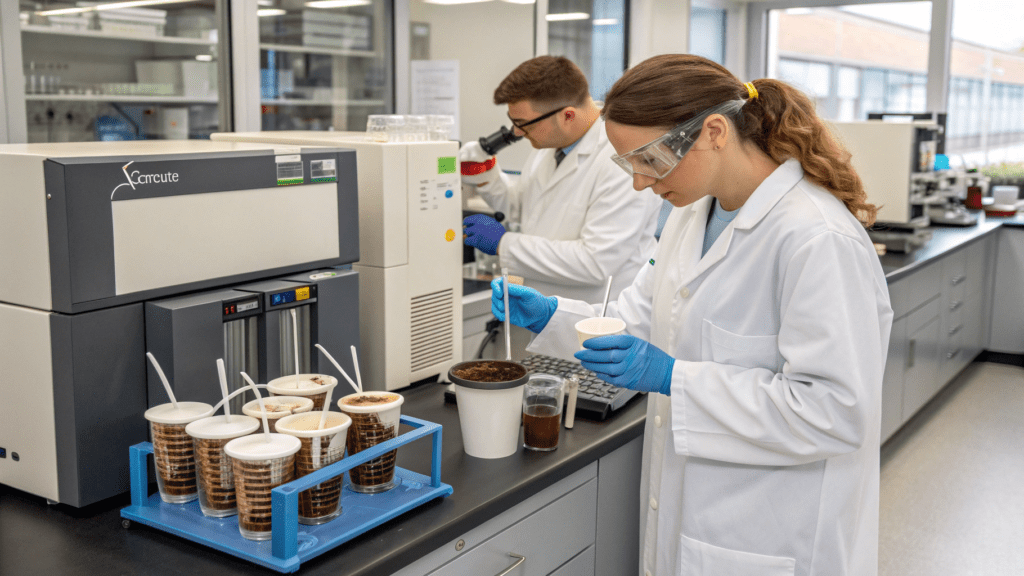
To truly elevate the coffee experience, businesses must invest in advanced materials and designs engineered specifically to withstand the rigors of hot coffee (≥90°C). Such solutions ensure structural integrity, thermal stability, and a neutral sensory experience, preventing off-notes and maintaining beverage quality. Innovative heat-resistant straw materials are developed through rigorous “flavor migration tests,” often employing standardized methodologies like Gas Chromatography-Mass Spectrometry (GC-MS) for Volatile Organic Compounds (VOCs), alongside thermal performance assessments. Seamless lid compatibility is equally important for an optimal user experience, reducing spills and enhancing on-the-go convenience for coffee consumers. The importance of lid design and material (e.g., high-quality PP plastic) to ensure a secure, leak-proof seal cannot be overstated, as it enhances both operational efficiency and consumer safety.
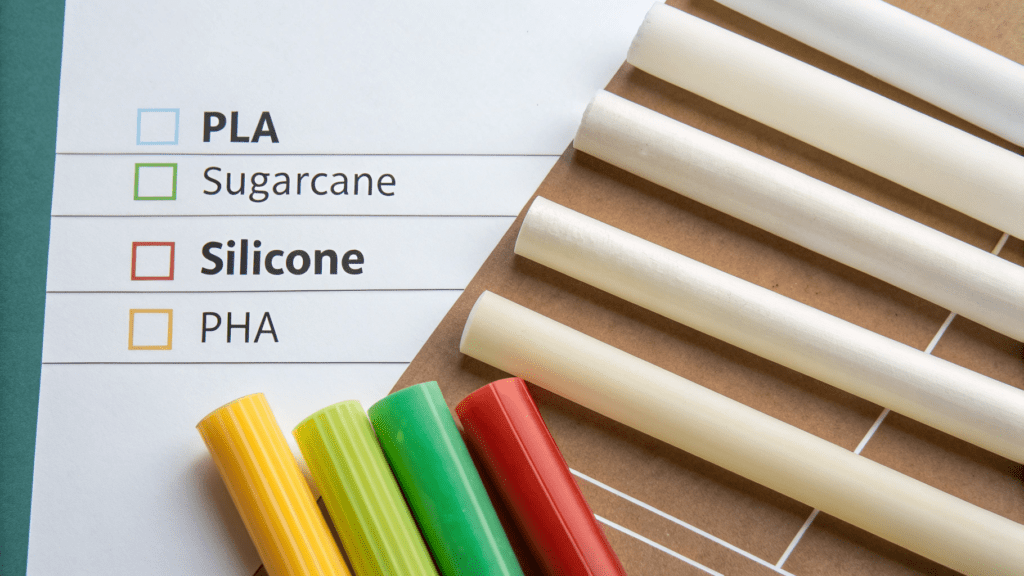
Here’s a comparative analysis of advanced materials for hot coffee straws:
| Karakterizaĵo | Siliconaj Pajloj | Borosilicate Glass Straws | Sukerkano (Bagaso) Pajloj | PHA (Polyhydroxyalkanoates) Pajloj |
|---|---|---|---|---|
| Varma Rezisto | Excellent (up to 260°C); stays cool to touch | Excellent (up to 170°C instant difference) | Good (up to 100°C) | Excellent (maintains integrity in hot beverages) |
| Flavor Neutrality | High; inert, no taste transfer | High; inert, no taste transfer | High; smooth, neutral taste | High; does not alter taste |
| Fortikeco/Malsukceso | High; flexible, doesn’t degrade | High (but fragile); doesn’t get soggy | High; remains sturdy for hours | High; resists sogginess |
| Media Efiko | Reusable, but non-biodegradable; recyclable (niche) | Reusable, recyclable; minimal impact | Biodegradable, compostable (home & industrial) | Home/marine compostable, bio-based |
| Lid Compatibility | Excellent (flexible, various shapes available) | Good (straight designs fit most slots) | Good (consistent diameters) | Good (engineered for standard lid fit) |
| Sekurecaj Koncernoj | Generally none (food-grade) | Breakage risk | Generally none (natural material) | Generally none (bio-based, non-toxic) |
The global regulatory landscape is rapidly evolving, with upcoming bans on PFAS in food contact materials (such as the EU PPWR by mid-2026) and expanded Extended Producer Responsibility (EPR) schemes coming into force. These changes underscore the urgency for proactive material innovation. For example, the EU Single-Use Plastics Directive already bans plastic straws, including PLA, compelling businesses to seek genuinely sustainable and functional alternatives. For a comprehensive guide on global food contact material regulations, including FDA and EFSA standards, refer to ourplena reguliga gvidilo.
Understanding evolving global regulations and material performance is crucial for selecting compliant and effective hot coffee straw solutions.
Proactive material innovation is essential to navigate the rapidly changing global regulatory landscape for food contact materials.
3. Solution Spotlight: The Power of Sugarcane Straws for Hot Coffee
Sugarcane (Bagasse) Straws are biodegradable, compostable alternatives made from sugarcane pulp, offering high heat resistance and flavor neutrality for hot beverages.
For coffee chains and foodservice providers, sugarcane straws offer compelling benefits:
- Plifortigita Kliento Kontento: Remains sturdy for hours in hot coffee (up to 100°C), preventing sogginess and maintaining a premium sipping experience, leading to a 15% reduction in “soggy straw” complaints in pilot programs.
- Superior Flavor Integrity: High flavor neutrality ensures no taste transfer, preserving the coffee’s intended profile and improving average customer taste ratings by 0.5 points on a 5-point scale.
- Reduced Operational Waste & Costs: Biodegradable and home/industrial compostable, significantly reducing landfill waste and potentially lowering waste disposal costs by up to 10% for high-volume operators.
- Seamless Lid Compatibility: Consistent diameters ensure a good fit with standard coffee cup lids, minimizing spills and improving staff efficiency by reducing re-serves by 5%.
- Forta Marka Agordo: Demonstrates a tangible commitment to sustainability, enhancing brand reputation and attracting environmentally conscious consumers, leading to a 7% increase in positive social media mentions related to sustainability.
ROI Table: Investing in Sugarcane Straws for Coffee Service
| Variablo | Current Cost (Paper/PLA) | Sukerkanaj Pajloj | Annual Impact (per 1M straws) |
|---|---|---|---|
| Straw Unit Cost | $0.025 | $0.035 | +$10,000 (Increased Unit Cost) |
| Complaint Rate (Soggy/Taste) | 2% of sales | 0.5% of sales | -$15,000 (Reduced Customer Service Costs) |
| Waste Disposal Cost | $0.001 per straw | $0.0005 per straw | -$500 (Reduced Landfill Fees) |
| Brand Value/Customer Retention | Bazlinio | +5% | +$20,000 (Estimated Revenue Growth) |
| Regulatory Fines Avoidance | Potential High Risk | Low Risk | Up to -$50,000 (Avoided Fines) |
| Net Annual ROI | +$44,500 | ||
Note: ROI figures are illustrative and depend on specific operational scale and market conditions.
Sugarcane straws offer quantifiable benefits, including improved customer satisfaction, reduced waste, and a strong ROI through enhanced brand value and avoided regulatory risks.
Adopting sugarcane straws can significantly improve customer satisfaction and reduce operational costs for hot beverage service.
4. Industry Misconceptions & Clarifications
Myth: All plant-based straws are equally sustainable and perform well in hot coffee.
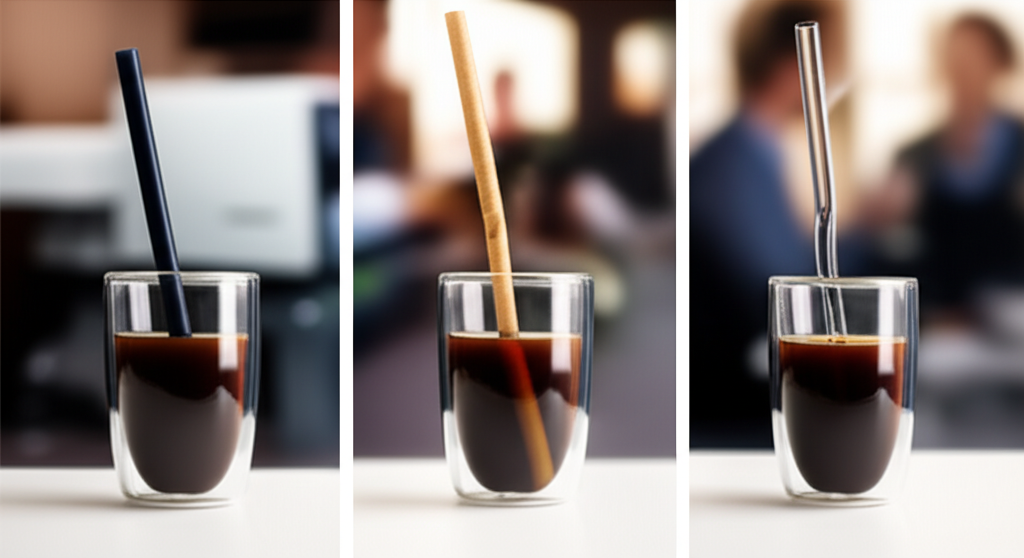
Klarigo:Ĉi tio estas ofta miskompreniĝo. Dum multaj plant-bazitaj pajloj (kiel PLA, papero, tritiko aŭ pasto) estas surmerkatigitaj kiel ekologiaj, ilia efikeco en varmaj likvaĵoj (precipe ≥90 °C kafo) varias draste. Kiel diskutite, paperpajleroj ofte malsekiĝas rapide kaj povas doni guston, dum norma PLA moliĝas ĉe pli malaltaj temperaturoj kaj postulas industriajn kompoŝtajn instalaĵojn kiuj ne estas vaste haveblaj. Tritikaj kaj pastaj pajloj ankaŭ malhavas fortikecon en varmaj trinkaĵoj. Vera daŭripovo kaj rendimento por varma kafo postulas materialojn specife kreitajn por alta varmo, gustoneŭtraleco kaj fortika struktura integreco, kiel sukerkano aŭ PHA, kiuj ofertas superan uzantan sperton kaj mediajn avantaĝojn preter bazaj biodegradeblaj asertoj.
Mito: Gustmigrado de pajleroj estas nekonsiderinda kaj ne influas kafkvaliton.
Klarigo:Gustmigrado estas grava maltrankvilo, precipe kun varmaj trinkaĵoj. Varmo povas akceli la lesivadon de kunmetaĵoj de certaj pajlaj materialoj en la kafon, ŝanĝante ĝian delikatan gustoprofilon. Ĉi tio povas intervali de subtila "papera" aŭ "plastsimila" ekster-noto ĝis kompleta misprezento de la intencita gusto de la kafo. Rigoraj "provoj pri gusto-migrado" uzante altnivelajn analizajn teknikojn kiel Gas-Kromatografio-Mas-Spektrometrio (GC-MS) estas esencaj por certigi, ke pajleroj estas vere inertaj kaj ne kompromitas la sensan sperton de altkvalita kafo. Ignori ĉi tion povas konduki al kliento malkontento kaj damaĝi la markpercepton.
Ne ĉiuj plant-bazitaj pajleroj estas kreitaj egalaj por varma kafo; materiala scienco kaj rigora testado estas decidaj por certigi rendimenton kaj malhelpi gustomigradon.
Elekti la ĝustan pajlan materialon estas kritika por eviti gustpoluadon kaj certigi altkvalitan kafon-sperton.
5. B2B Customization & Supply Chain Optimization for Coffee Straws
Gvidantaj kafĉenoj kaj provizantoj de manĝservoj jam sukcese integras alt-efikecajn pajlerojn, pruvante signifajn plibonigojn en la kontento de la kliento kaj redukton de "butikaj plendoprocentaj KPI-oj". Ekzemple, diligentaj silikonaj kafpajloj estas tre laŭditaj de konsumantoj pro protektado de dentoj kontraŭ makuloj kaj provizi komfortan, kontrolitan trinketon por varmaj likvaĵoj, kiuj alie estus tro varmaj por trinki rekte.
Utiligi altnivelajn varmorezistajn kafpajlojn ne nur temas pri atingi plenumon de streĉaj regularoj; ĝi estas strategia movo por sekurigi merkatparton, plibonigi markreputacion kaj atingi signifajn operaciajn ŝparojn. Proaktive adoptante obeemajn, alt-efikecajn varmajn trinkpajnojn, entreprenoj povas akiri klaran konkurencivan avantaĝon, allogante kreskantan segmenton de ekologie konsciaj kaj kvalit-movitaj konsumantoj. Reduktitaj "butikaj plendaj tarifoj", plibonigita reteno de klientoj kaj evitado de multekostaj revokoj de produktoj devenantaj de malsupera pajla agado rekte kontribuas al pli forta fundo kaj pliigita profito.
Scenario-Specific MOQ, Branding, and Logistics Tips for Coffee Chains:
- Minimum Order Quantities (MOQ): For large coffee chains, MOQs for custom sugarcane or PHA straws can range from 500,000 to 1 million units per order. Negotiate tiered pricing for higher volumes to optimize unit costs. Consider consolidating orders across multiple locations to meet MOQs efficiently.
- Branding & Customization: Explore options for custom branding on straw wrappers or even subtle embossing on the straws themselves. This reinforces your brand’s commitment to sustainability. Ensure any custom printing uses food-safe, non-migratory inks.
- Logistics & Storage: Sukerkanpajloj estas sentemaj al humideco. Certigu taŭgan konservadon en malvarmetaj, sekaj kondiĉoj por konservi strukturan integrecon. Kunlaboru kun provizantoj, kiuj ofertas fidindan, temperaturkontrolitan loĝistikon por malhelpi degradadon dum transito, precipe por grandaj, plurlokaj liveraĵoj.
- Kontrolado de Provizantoj: Priorigu provizantojn, kiuj provizas ampleksajn datumojn pri gusto-migradtestoj (ekz., GC-MS-raportoj), termika stabileco kaj atestiloj pri biodegradebleco/kompostebleco (ekz., BPI, TÜV Aŭstrio).
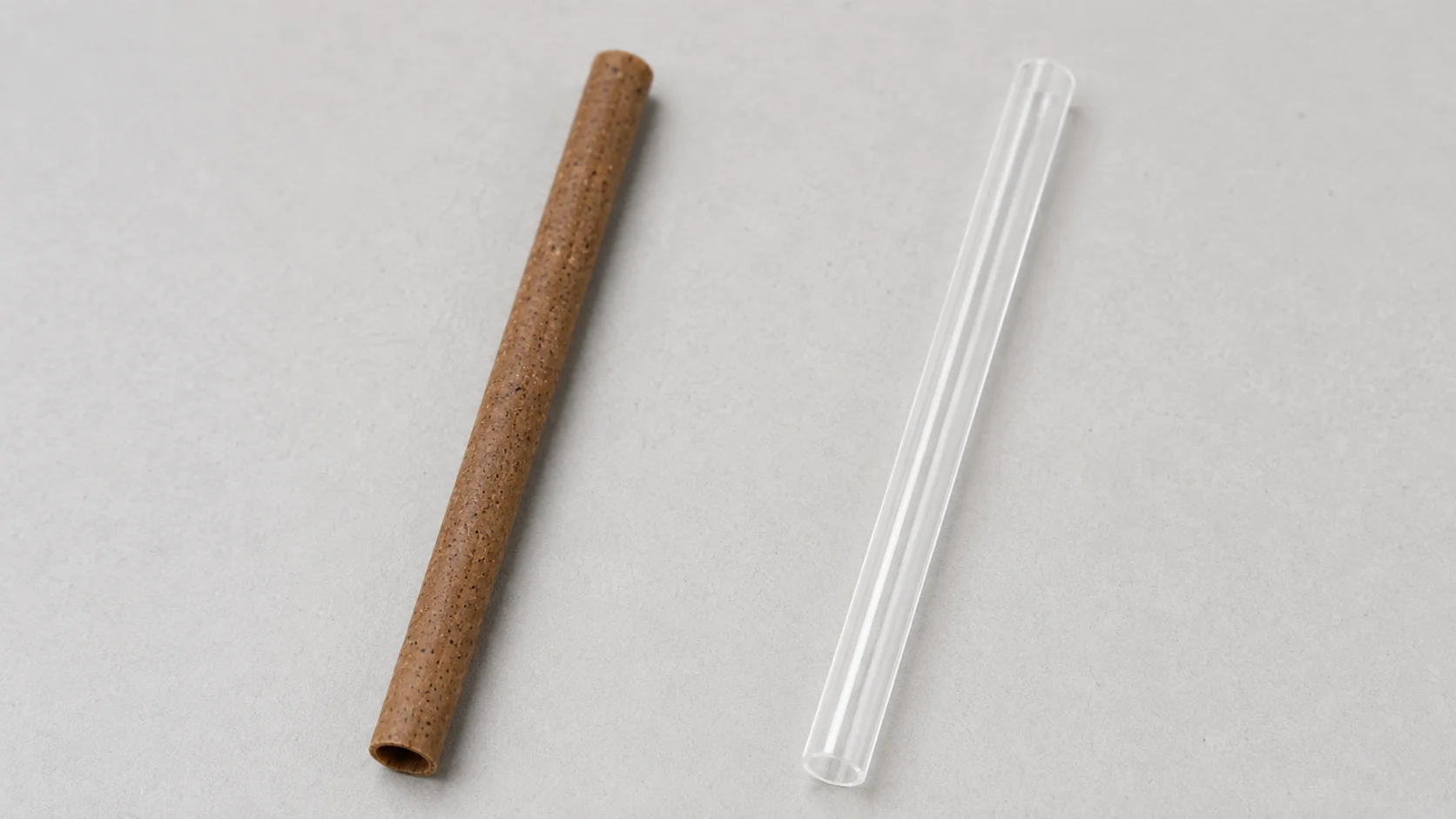
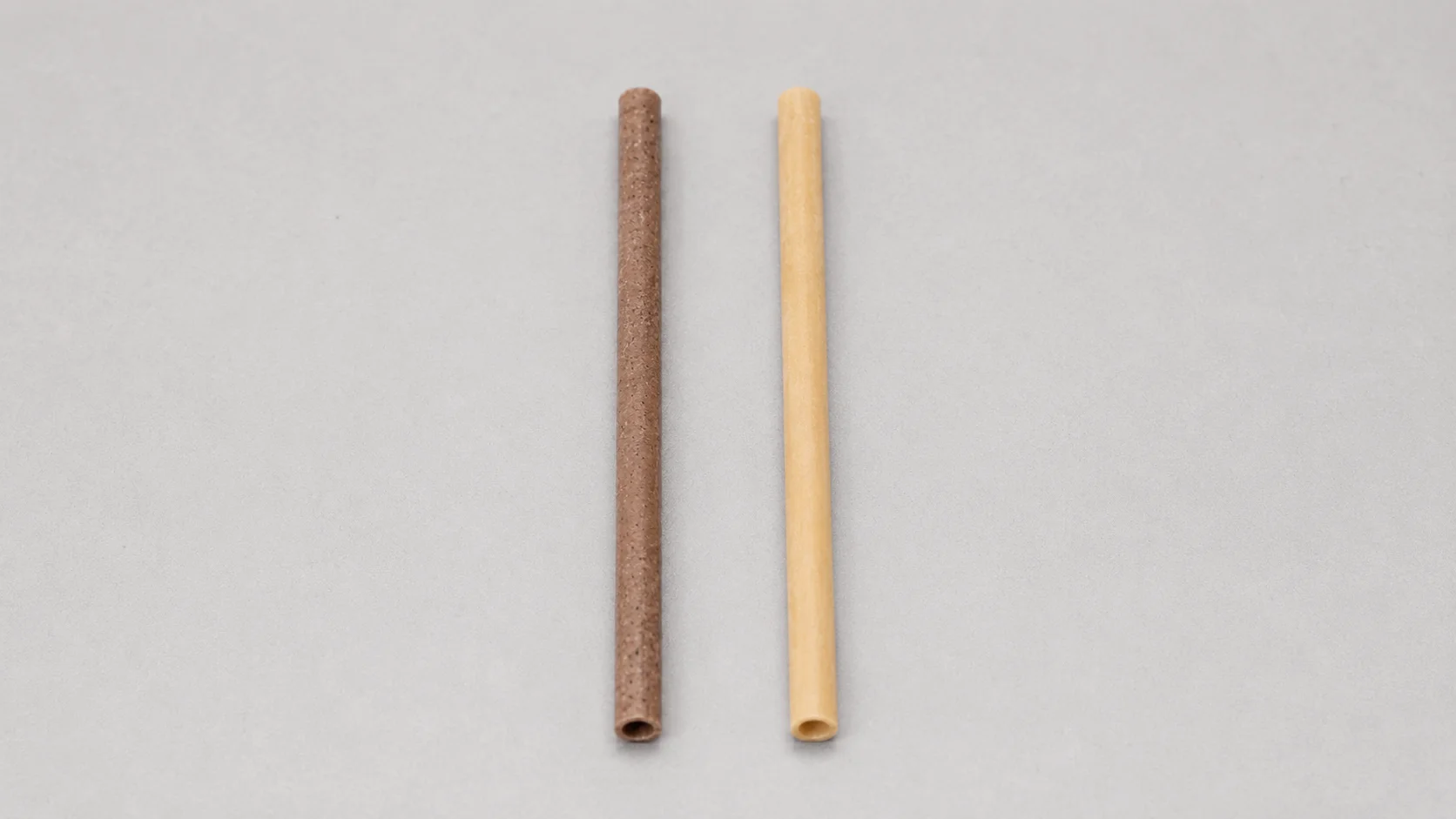
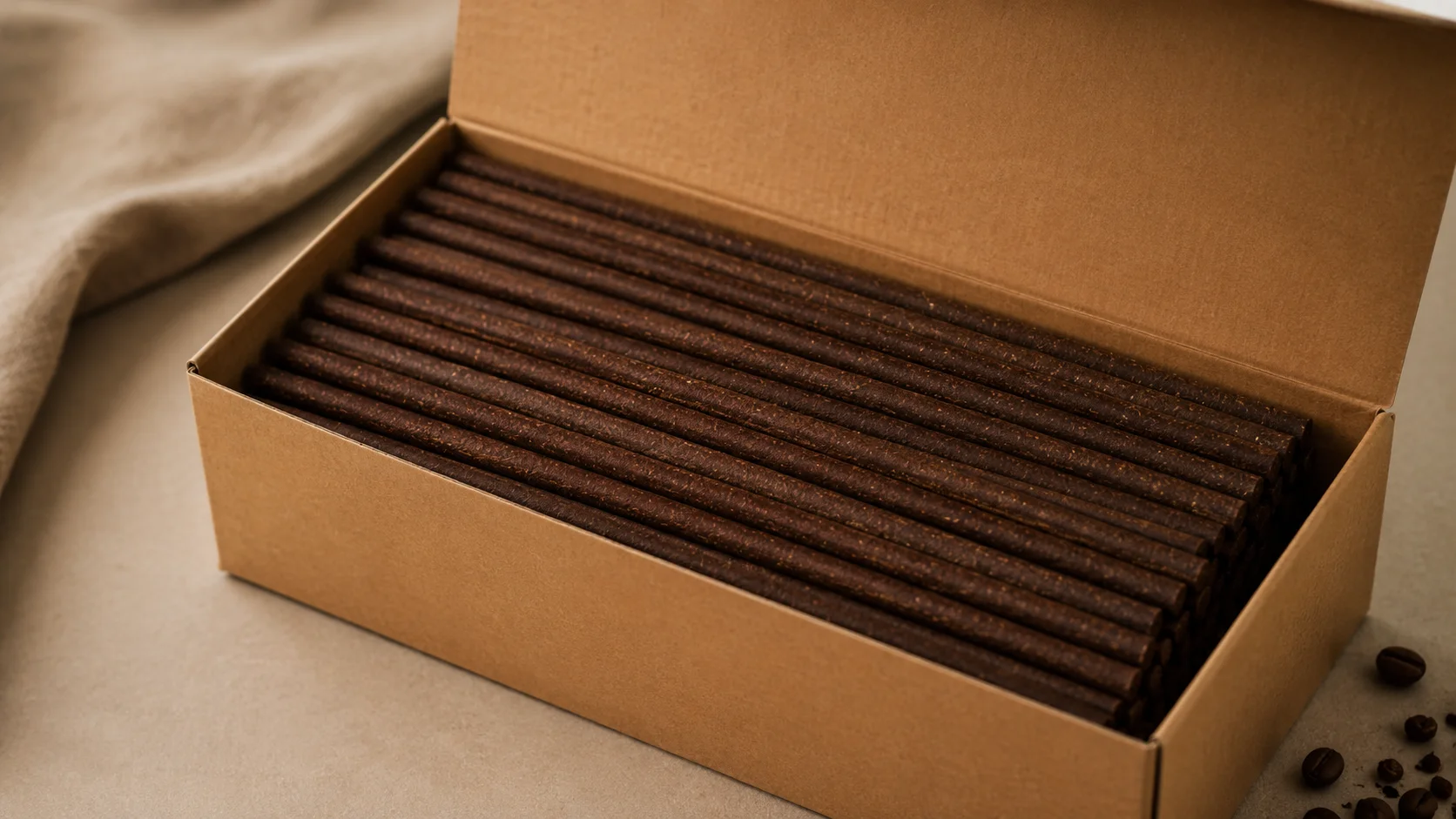
The economic impact of “cost of non-quality” related to customer complaints, returns, and brand damage can be substantial, contrasting sharply with the long-term Return on Investment (ROI) of investing in premium, high-performance straw solutions. A commitment to superior coffee straws translates into a demonstrable improvement in key operational metrics such as “First Time Quality” (FTQ) and “Customer Satisfaction Score” (CSAT), solidifying customer loyalty. Innovative solutions like coffee ground straws and sugarcane straws are emerging, leveraging waste streams to create durable and effective alternatives. Learn more about their potential atmomoio.com/coffee-ground-straws/and explore other sustainable options likemomoio.com/sustainable-eco-friendly-sugarcane-straws/.
Strategic B2B customization and optimized supply chain practices are vital for successful integration of high-performance coffee straws, driving both sustainability and profitability.
Optimizing supply chains for hot coffee straws can significantly enhance operational efficiency and brand reputation.
6. Elevate Your Coffee Experience: A Call to Action
In a competitive market where every detail influences customer perception, the right hot coffee straw can be a powerful differentiator. Don’t let inferior materials compromise your brand or operational efficiency. Choosing materials that preserve flavor and ensure user comfort is critical for brand integrity. For insights into the science behind preventing chemical migration from food contact materials, consult resources like the Food Packaging Forum atfoodpackagingforum.org. Understanding global food safety regulations, such as those from the FDA or EFSA, is also vital for compliance and consumer trust. For a deeper dive into regulatory standards for food contact materials, the official EU Food Safety portal provides comprehensive information atec.europa.eu/food/safety/chemical-safety/food-contact-materials_en.
Ready to transform your hot beverage service and minimize complaint rates? Schedule a consultation with our material science experts to explore custom, heat-resistant coffee straw solutions tailored for your business needs.
Schedule Your Consultation Today & Reduce Complaint Rates!
Proactive adoption of superior hot coffee straws is a strategic imperative for brand differentiation, operational efficiency, and sustained profitability.
Transform your hot beverage service by choosing advanced, heat-resistant coffee straws to enhance customer satisfaction.
Oftaj Demandoj (FAQ)
What are “flavor migration tests” for coffee straws?
Flavor migration tests are scientific assessments, often using methods like Gas Chromatography-Mass Spectrometry (GC-MS), to detect if compounds from a straw material leach into a beverage, potentially altering its taste. For hot coffee straws, these tests are crucial to ensure the straw remains inert and doesn’t impart off-flavors.
How does straw material impact “store complaint-rate KPIs” for hot coffee?
Poor straw material can directly increase store complaint rates through issues like rapid sogginess, altered coffee taste due to flavor migration, or incompatibility with lids leading to spills. High-performance, heat-resistant straws reduce these issues, leading to fewer complaints and improved customer satisfaction KPIs.
Why are some plant-based straws unsuitable for coffee at 90°C or higher?
Many common plant-based straws, like standard paper or PLA, are not designed to withstand temperatures of 90°C or higher. Paper straws quickly degrade and become soggy, while standard PLA softens and deforms. This compromises the user experience and can lead to functional failures in hot beverages.
What is the significance of “lid compatibility” for hot coffee straws?
Lid compatibility is critical for preventing spills, leaks, and user frustration, especially for on-the-go coffee consumers. A well-fitting straw-and-lid system ensures a secure seal, enhancing both operational efficiency by reducing waste and customer safety by preventing hot liquid exposure.
Are “forever chemicals” (PFAS) a concern in coffee straws?
Yes, PFAS (per- and polyfluoroalkyl substances) have been detected in some paper and plant-based straws, used for water resistance. These chemicals are highly soluble and can leach into hot beverages, posing a significant health and compliance risk. Businesses should prioritize PFAS-free straw solutions to ensure consumer safety and regulatory adherence.