Por su estratega de contenido de sostenibilidad

Introducción al problema convincente de la industria
El panorama de los envases para el sector alimentario está experimentando una profunda transformación, impulsada por la intensificación de las exigencias medioambientales y los cambios en las preferencias de los consumidores. Para los gerentes de adquisiciones, directores de operaciones, funcionarios de sustentabilidad y ejecutivos de la cadena de suministro, adaptarse a esta nueva realidad no es simplemente un ejercicio de cumplimiento sino un imperativo estratégico. Se prevé que el mercado mundial de envases compostables, valorado en 55 530 millones de dólares en 2024, aumente a 89 850 millones de dólares en 2032, lo que demuestra una sólida tasa de crecimiento anual compuesto (CAGR) del 6,20 % (Grand View Research, 2024). Este crecimiento exponencial indica una clara demanda del mercado de alternativas ecológicas.
Los consumidores están examinando activamente las credenciales de sostenibilidad de las marcas que apoyan; Una encuesta realizada en varios países reveló que el 86% de los encuestados reconoce el cambio climático y está dispuesto a pagar una media de un 9,7% más por productos sostenibles (NielsenIQ, 2023). Ignorar esta tendencia conlleva importantes riesgos operativos y comerciales, desde erosionar la lealtad a la marca hasta incurrir en sanciones bajo regulaciones ambientales más estrictas. Esta guía completa aclara si las soluciones compostables certificadas por BPI cumplen con los exigentes criterios de seguridad de microondas, eficiencia operativa y responsabilidad ambiental, lo que permite a los tomadores de decisiones B2B tomar decisiones informadas.
Adoptar envases aptos para microondas con certificación BPI es crucial para que el servicio de alimentos satisfaga las demandas cambiantes y mitigue los riesgos.
Comprender la certificación BPI: el estándar de oro para la compostabilidad
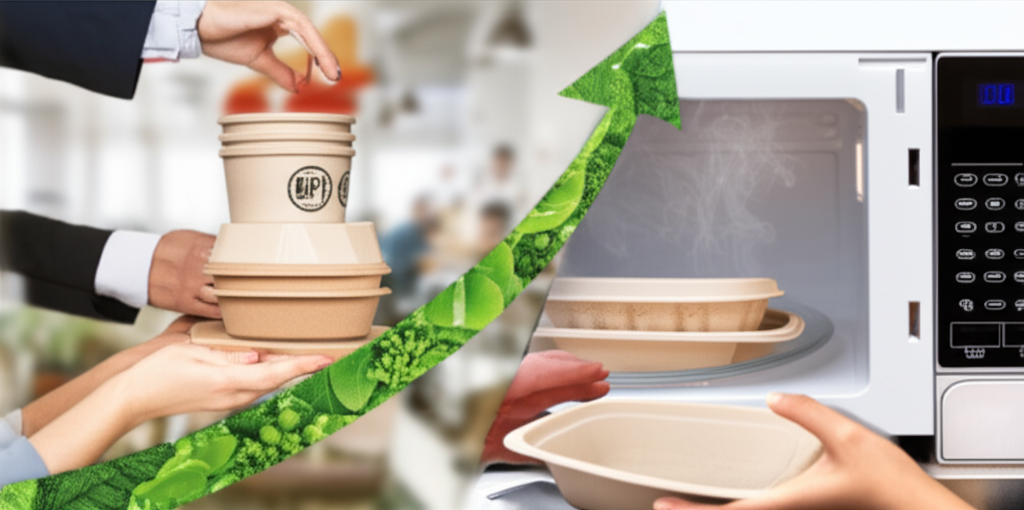
En el corazón de un embalaje compostable fiable se encuentra una certificación rigurosa. ElInstituto de Productos Biodegradables (BPI)ofrece el programa de verificación de terceros líder en América del Norte para productos compostables. La certificación BPI garantiza que los productos cumplan rigurosamente con las normas ASTM D6400 o D6868, que dictan que los artículos alcanzarán un 90 % de desintegración en 12 semanas y un 90 % de biodegradación en 180 días en instalaciones de compostaje industrial. Estas pruebas meticulosas garantizan que los productos certificados por BPI se descomponen en biomasa, agua y dióxido de carbono no tóxicos, sin dejar residuos nocivos ni microplásticos.
Fundamentalmente, al abordar importantes preocupaciones químicas, BPI ha evolucionado proactivamente sus estándares. A partir del 1 de enero de 2020, BPI prohíbe la adición intencional de PFAS (sustancias perfluoroalquiladas y polifluoroalquiladas) en productos certificados, con un límite estricto de menos de 100 ppm de flúor total. Este compromiso de eliminar los “químicos permanentes” de la cadena de suministro establece un punto de referencia vital para la seguridad ambiental y de la salud humana en los envases compostables.
La certificación BPI garantiza rigurosos estándares de compostabilidad, incluida la ausencia de PFAS añadidos intencionalmente.
Desembalaje “apto para microondas” para envases compostables con certificación BPI
Si bien la certificación BPI es el punto de referencia para la compostabilidad, el estado de “apto para microondas” de un producto depende principalmente de la composición del material y el diseño específico. Es imperativo que los compradores B2B comprendan estas distinciones para garantizar tanto la idoneidad operativa como la seguridad.
Asuntos materiales para la seguridad del microondas:
- Sugarcane Bagasse & Plant Fibers: Materiales como el bagazo de caña de azúcar (un subproducto del procesamiento de la caña de azúcar) y otras fibras vegetales (como el bambú, el miscanto o el sorgo) generalmente son muy apreciados por su resistencia al calor. Los productos elaborados con estas fibras naturales suelen ser aptos para microondas y pueden soportar temperaturas de hasta 200 °F (93 °C) durante aproximadamente 20 minutos para recalentarse. Algunos artículos avanzados de fibra vegetal están diseñados para soportar temperaturas aún más altas, hasta 450 °F, lo que los hace aptos para microondas durante 2-3/4 minutos (sin revestimiento) y 5-3/4 minutos (con revestimiento) de calentamiento.
- Consideraciones sobre el PLA (ácido poliláctico): El ácido poliláctico, un bioplástico derivado de recursos renovables como el almidón de maíz, se utiliza ampliamente en envases compostables. Sin embargo, el PLA estándar puede ser sensible a las altas temperaturas y puede deformarse o derretirse cuando se expone a las temperaturas del microondas. Si bien algunos contenedores especializados de "PLA blanco" están diseñados y certificados explícitamente como aptos para microondas, es fundamental comprobar siempre si hay etiquetas o símbolos explícitos de "aptos para microondas" en los productos de PLA. El CPLA (ácido poliláctico cristalizado), aunque está diseñado para alimentos calientes, generalmente no es apto para microondas.
Pautas generales de uso de microondas:
Incluso con envases compostables aptos para microondas, las mejores prácticas son esenciales. Aconseje a sus equipos de operaciones que:
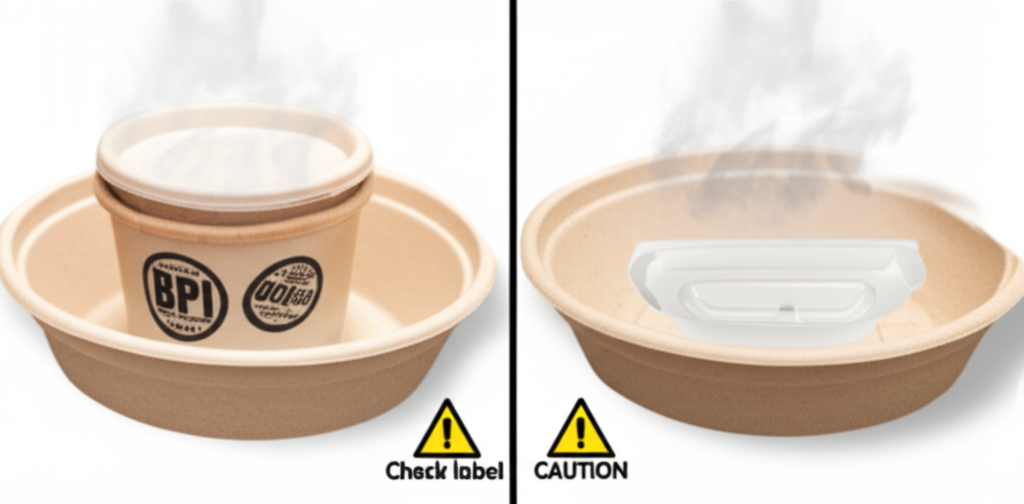
- Siempre verifique la etiqueta "apta para microondas" en el producto mismo. Si no se indica explícitamente, evite el microondas.
- Utilice ajustes de potencia más bajos e intervalos de calentamiento más cortos (por ejemplo, ráfagas de 30 segundos a 1 minuto) para evitar el sobrecalentamiento y una posible deformación.
- Retire o ventile las tapas antes del microondas para evitar la acumulación de vapor y roturas.
- Evite el uso de alimentos ricos en grasas o azucarados., ya que estos pueden alcanzar temperaturas extremadamente altas que podrían comprometer la integridad del contenedor.
- Reconocer que la mayoría de los contenedores compostables están diseñados para un solo uso. y es posible que no resista la exposición repetida al microondas o al lavado.
La seguridad del microondas para envases compostables depende del material y del etiquetado explícito; Siga siempre las pautas de uso.
Panorama regulatorio y cumplimiento para envases compostables aptos para microondas
Navegar por la compleja red de regulaciones es una responsabilidad fundamental de los líderes de la cadena de suministro y las adquisiciones. Los envases compostables con certificación BPI, en particular aquellos diseñados para uso en microondas, deben cumplir con estrictas regulaciones sobre materiales en contacto con alimentos en todos los mercados clave.
En los EE. UU., la FDA regula los materiales en contacto con alimentos, cumpliendo con la regulación GMP (21 CFR 174.5) y el programa FCN que evalúa la idoneidad para microondas. El Reglamento marco de la UE (CE) n.º 1935/2004 y la norma EN 13432 exigen la seguridad para el uso previsto, incluido el microondas, y el SUPD prohíbe muchos plásticos convencionales de un solo uso. A nivel internacional, la norma AS4736:2006 de Australia se alinea con la norma EN 13432, Canadá promueve productos compostables certificados y Japón hace la transición a un sistema de “Lista Positiva” para junio de 2025. Estos movimientos globales subrayan el creciente imperativo de contar con soluciones compostables certificadas y seguras. Para obtener detalles completos sobre los marcos regulatorios globales, consulte nuestra guía completa sobre regulaciones de embalaje sostenible.Obtenga más información sobre las regulaciones globales de embalaje sostenible.
Las regulaciones globales exigen cada vez más envases compostables certificados, lo que exige el cumplimiento B2B para soluciones aptas para microondas.
B2B Operational Impact & ROI of BPI Compostable Microwave Safe Solutions
La adopción de envases compostables aptos para microondas con certificación BPI ofrece un retorno de la inversión multifacético para las operaciones B2B, que va mucho más allá del mero cumplimiento.
- Waste Diversion & Cost Savings: Redirigir los desechos orgánicos (restos de comida y envases compostables certificados) de los vertederos a instalaciones de compostaje puede reducir significativamente las tarifas de eliminación. Para los compostadores, la eliminación de contaminantes no compostables suele representar aproximadamente el 17% de los gastos operativos. Al permitir flujos de desechos más limpios, las empresas pueden contribuir a la eficiencia de costos en la infraestructura de compostaje, reduciendo potencialmente sus propios costos de transporte de desechos a largo plazo. Adoptar una estrategia integral de gestión sostenible de residuos puede desbloquear aún más estos ahorros. Para obtener más información, consulte nuestro manual B2B sobre gestión sostenible de residuos. Lea nuestro manual B2B sobre gestión sostenible de residuos.
- Enhanced Brand Reputation & ESG Commitment: En una era de mayor responsabilidad social corporativa, la adopción de envases compostables con certificación BPI indica un fuerte compromiso con los principios ambientales, sociales y de gobernanza (ESG). Esta postura proactiva mejora la reputación de la marca, genera confianza entre los consumidores y las partes interesadas y puede conducir a un mayor crecimiento de la valoración de la marca para las empresas con un fuerte posicionamiento en materia de sostenibilidad.
- Meeting Mandates & Regulatory Compliance: Las empresas con visión de futuro no esperan mandatos; se están preparando para ellos. La innovadora SB 54 de California, por ejemplo, exige que todos los envases sean reciclables o compostables para 2032. La adopción proactiva de soluciones certificadas garantiza el cumplimiento de las regulaciones actuales e inminentes, mitigando riesgos futuros y posibles sanciones.
- Captar la preferencia del consumidor: La demanda de los consumidores es una poderosa fuerza del mercado. Más del 60 % de los comensales comprueban activamente si hay materiales para llevar compostables o reciclables, y es más probable que 7 de cada 10 comensales compren en establecimientos que utilizan envases sostenibles. Proporcionar opciones convenientes, aptas para microondas y genuinamente compostables aborda directamente esta creciente preferencia, aumentando la satisfacción y lealtad del cliente. Comprender los matices de "compostable" versus "biodegradable" es fundamental para una comunicación clara con sus clientes y equipos internos. Conozca más sobre esta distinción en nuestra guía de sostenibilidad: Explore la distinción entre compostable y biodegradable.
| Característica | Impacto operativo B2B | Nota de cumplimiento | Potencial de retorno de la inversión |
|---|---|---|---|
| Certificación BPI | Agiliza la clasificación de residuos para las operaciones de servicios de alimentos. | Cumple con ASTM D6400/D6868; Libre de PFAS desde 2020. | Reduce los costes de los vertederos y aumenta la fidelidad a la marca. |
| Seguridad en el microondas | Admite un cómodo recalentamiento de comidas para llevar. | Requiere etiquetado "apto para microondas" en el producto. | Mejora la satisfacción del cliente y la oferta de servicios. |
| Materiales de origen vegetal | Reduce la dependencia de los combustibles fósiles en la cadena de suministro. | Certificación USDA Biobased para contenido renovable. | Atrae a consumidores conscientes del medio ambiente y reduce la huella de carbono. |
| Durabilidad (por ejemplo, bagazo) | Minimiza fugas y roturas durante el transporte y uso. | Garantiza la seguridad alimentaria y la integridad del producto bajo calor. | Previene la pérdida de producto, reduce las quejas de los clientes. |
Los envases aptos para microondas con certificación BPI ofrecen un importante retorno de la inversión mediante la reducción de residuos, la mejora de la marca y el cumplimiento.
Estudios de caso: Liderando el avance en envases sostenibles aptos para microondas

Las aplicaciones del mundo real subrayan la viabilidad y el impacto de las soluciones seguras para microondas con certificación BPI. Las empresas con visión de futuro no sólo están adoptando estos materiales, sino que también están innovando para superar sus límites.
- Productos de buen carácter Inc.: Este líder norteamericano ha lanzado con éxito contenedores para llevar aptos para microondas con certificación BPI. Fabricados con un impresionante 97% de materiales de origen vegetal, estos contenedores están diseñados para brindar durabilidad y resistencia a fugas, con un rendimiento comparable al de sus homólogos de plástico tradicionales. Su éxito demuestra que se pueden lograr envases aptos para microondas de origen vegetal, de alto rendimiento, comercialmente viables y asequibles mediante un desarrollo dedicado y un compromiso con la sostenibilidad. Como enfatizó Paul Antoniadis, director ejecutivo de Good Natured Products Inc., en una entrevista con BNN Bloomberg, estos productos garantizan que “sus clientes puedan calentar su comida en paz sabiendo que no se filtra nada desagradable en ella”.
- SupraPulp™ de W-Cycle: Una innovación notable en el campo, SupraPulp™ es un material patentado derivado principalmente del bagazo de caña de azúcar, con potencial para otras materias primas como caña, madera y hojas de plátano. Desarrollado en parte para abordar un desafío del gobierno israelí respecto de las bandejas de comida calientes y grasosas en las escuelas, SupraPulp™ es completamente compostable y cuenta con una extraordinaria resistencia a la temperatura, soportando condiciones de -40°C a 270°C (-40°F a 518°F). La capacidad de este material para ser a prueba de líquidos y aceite, evitando que se mojen con alimentos grasos y húmedos, muestra la ingeniería avanzada que ahora es posible en envases sostenibles y aptos para microondas.
Estos ejemplos resaltan que la industria está yendo más allá de la compostabilidad básica para ofrecer soluciones que cumplan con las rigurosas demandas de las operaciones modernas de servicios de alimentos, desde el congelador hasta el microondas.
Los estudios de caso demuestran la viabilidad y el alto rendimiento de los envases aptos para microondas con certificación BPI en el servicio de alimentos.
Perspectivas futuras y tendencias en envases compostables para microondas de BPI
La trayectoria de los envases compostables para microondas con certificación BPI es una de aceleración de la innovación y la expansión del mercado durante los próximos 5 a 10 años.
- Proyecciones de mercado: Se prevé que el mercado más amplio de envases compostables alcance los 232.470 millones de dólares en 2034, con un crecimiento anual compuesto sólido del 8,4%. Esto indica una clara oportunidad de crecimiento a largo plazo para las empresas posicionadas en este espacio.
- Advanced Materials & Design: Las innovaciones seguirán centrándose en mejorar el rendimiento. Espere la adopción generalizada de bioplásticos PHA (polihidroxialcanoatos), que son completamente biodegradables incluso en ambientes marinos y ofrecen una resistencia a la humedad y durabilidad superiores. Además, los mecanismos integrados de autoventilación, que ya están apareciendo en los envases para microondas, se convertirán en estándar para las opciones compostables. Estas válvulas integradas o puntos débiles prediseñados liberarán vapor automáticamente, evitando estallidos y garantizando una cocción más uniforme de los alimentos sin intervención manual. También se vislumbran en el horizonte nuevos materiales como la nanocelulosa y los recubrimientos comestibles, que prometen envases más ligeros, más resistentes e incluso más respetuosos con el medio ambiente.
- Panorama regulatorio más estricto: El entorno regulatorio será cada vez más estricto. Se espera que más estados de EE. UU. y jurisdicciones internacionales exijan envases compostables certificados e implementen requisitos de etiquetado claros para combatir el “lavado verde” y la confusión de los consumidores. La SB 54 de California es solo un ejemplo, y es probable que la certificación BPI sea obligatoria para los envases de servicios alimentarios en siete estados más para 2026. Este impulso regulatorio acelerará la adopción a medida que las empresas se esfuercen por lograr el cumplimiento.
- Ampliación de infraestructura: El éxito de los envases compostables depende en gran medida de una infraestructura de compostaje sólida. Las tendencias futuras incluyen mayores esfuerzos de colaboración entre fabricantes de envases, compostadores y municipios para ampliar las instalaciones de compostaje industrial. Programas como el Composting Consortium están trabajando activamente para construir una hoja de ruta para la inversión en tecnologías e infraestructura, reduciendo la brecha entre la disponibilidad del producto y el procesamiento adecuado al final de su vida útil.
- Más allá de las PFAS: hacia soluciones verdaderamente libres de químicos: Si bien BPI ya ha dado un paso importante al prohibir la adición intencional de PFAS, en el futuro se hará un énfasis aún mayor en las declaraciones de “libre de” en un espectro más amplio de sustancias químicas preocupantes. Este compromiso con materiales más seguros se convertirá en una expectativa estándar, impulsada por la demanda de los consumidores y un creciente conjunto de investigaciones revisadas por pares sobre la migración química de los envases a los alimentos.
El futuro de los envases compostables para microondas de BPI promete innovación, regulaciones más estrictas y crecimiento de la infraestructura.
Desafíos para una adopción B2B más amplia
A pesar de las perspectivas prometedoras, se deben abordar varios desafíos importantes para una adopción más amplia entre empresas y empresas de envases para microondas compostables con certificación BPI:
- Brechas de infraestructura: Una barrera crítica sigue siendo la limitada infraestructura de compostaje comercial. Actualmente, sólo alrededor del 10% de las instalaciones de compostaje de EE. UU. aceptan restos de comida, que son esenciales para procesar la mayoría de los envases compostables. Esto significa que incluso los productos certificados suelen terminar en vertederos si no se dispone de opciones regionales de compostaje, lo que anula el beneficio medioambiental previsto.
- Confusión del consumidor: La confusión generalizada entre los consumidores es un obstáculo importante. Las etiquetas engañosas, la falta de una diferenciación clara entre plásticos “compostables”, “biodegradables” y convencionales, y una educación insuficiente causan una contaminación significativa tanto en las corrientes de compostaje como en las de reciclaje. Esto obliga a los compostadores a dedicar recursos sustanciales (hasta el 17% de los gastos operativos) para eliminar contaminantes, lo que a veces lleva a que cargas enteras se desvíen a los vertederos.
- Cost & Scalability: El mayor costo inicial de los materiales y procesos de fabricación compostables en comparación con los plásticos tradicionales puede disuadir a las empresas, especialmente a las más pequeñas. Si bien las innovaciones están reduciendo los costos, lograr la paridad de costos y ampliar la producción para satisfacer la demanda masiva del mercado sigue siendo un desafío.
- Preocupaciones sobre la migración química (contexto general del embalaje): Si bien BPI aborda específicamente las PFAS, algunas investigaciones revisadas por pares indican riesgos más amplios de migración química de los plásticos cuando se someten a condiciones de microondas. Los estudios han demostrado que el calentamiento por microondas puede provocar la migración de diversas sustancias añadidas intencionalmente y no intencionalmente (IAS/NIAS) e incluso microplásticos de general recipientes de plástico para alimentos en los alimentos. Si bien la rigurosa certificación de BPI para compostables tiene como objetivo mitigar las preocupaciones químicas, la industria debe innovar continuamente y brindar transparencia en todos los componentes del material para generar plena confianza entre los compradores B2B con respecto a la seguridad alimentaria general en condiciones de microondas.
La infraestructura, la confusión de los consumidores, los costos y la migración de productos químicos son desafíos clave para una adopción B2B más amplia.

Competitive Advantage & Business Case
Para los tomadores de decisiones B2B, la transición a envases compostables aptos para microondas con certificación BPI representa una clara ventaja competitiva y un sólido argumento comercial.
- Quantifiable Cost Savings & Risk Mitigation: Si bien los costos iniciales de materiales pueden ser mayores, los ahorros operativos a largo plazo derivados del desvío de desechos pueden ser significativos. Al facilitar el compostaje de envases sucios con alimentos, las empresas pueden reducir las tarifas de eliminación de vertederos, ahorrando potencialmente hasta un 17 % en gastos de gestión de residuos para operaciones asociadas con compostadores industriales. Además, la adopción proactiva mitiga los crecientes riesgos de cumplimiento asociados con las prohibiciones de plástico de un solo uso y la evolución de las regulaciones PFAS, protegiendo su marca de futuras sanciones y escrutinio público.
- Enhanced Brand Value & Market Share Opportunity: Alinearse con la creciente demanda de sostenibilidad de los consumidores es un poderoso diferenciador. Las empresas con fuertes compromisos ESG logran un mayor crecimiento en la valoración de marca. Al demostrar visiblemente su dedicación a las prácticas ecológicas a través de envases compostables certificados, atraerá a consumidores conscientes del medio ambiente y fortalecerá su lealtad. Es más probable que más del 70% de los comensales elijan establecimientos que utilicen envases sostenibles, lo que brinda una oportunidad directa de participación de mercado en un panorama competitivo. Este compromiso trasciende el simple marketing; habla de los valores fundamentales de los consumidores y socios modernos. Nuestra guía detallada sobre la certificación BPI compostable en hotelería destaca cómo estos esfuerzos se traducen en beneficios comerciales tangibles: Descubra los beneficios de la certificación BPI en hotelería.
- Simplificación operativa: Para las operaciones de servicios de alimentos, los envases con certificación BPI simplifican la clasificación de residuos. Los artículos compostables con suciedad de alimentos se pueden recolectar juntos, lo que agiliza las operaciones internas y reduce las complejidades de capacitación del personal asociadas con la separación de diferentes flujos de desechos. Esta eficiencia operativa refuerza aún más el argumento comercial.
La adopción de envases aptos para microondas con certificación BPI ofrece ventajas competitivas, ahorros de costos y un mayor valor de marca.
Preguntas frecuentes (preguntas frecuentes)
❓ ¿Todos los productos compostables con certificación BPI son aptos para microondas?
No. La seguridad del microondas depende del material:
- Sugarcane bagasse & plant fibers → Generalmente apto para microondas; puede soportar un recalentamiento moderado.
- PLA (ácido poliláctico) → Sensible al calor; puede deformarse o derretirse. Sólo las versiones especializadas (por ejemplo, “PLA blanco”) pueden ser aptas para microondas.
✅ Busca siempre etiquetas explícitas "aptas para microondas" antes de su uso.
❓ ¿Cuáles son los beneficios clave de utilizar envases aptos para microondas con certificación BPI en el servicio de alimentos?
- Waste Diversion & Cost Savings → Reduce las tarifas de vertedero al permitir el compostaje de residuos orgánicos + envases.
- Compliance & Risk Mitigation → Cumple con los estándares ASTM y evita sanciones bajo regulaciones como California SB 54.
- ESG & Brand Reputation → Demuestra liderazgo en sostenibilidad, genera confianza en los consumidores y mejora las calificaciones ESG.
- Eficiencia operativa → Simplifica la clasificación: los envases sucios con alimentos pueden ir directamente a los contenedores de abono.
❓ ¿Cómo abordan los productos certificados por BPI las preocupaciones sobre las PFAS?
Desde enero 2020, BPI prohíbe PFAS añadidos intencionalmente en todos los productos certificados.
- Límite: <100 ppm total fluorine.
- Resultado: Seguro para el contacto con alimentos, elimina los “químicos permanentes” dañinos y reduce el riesgo regulatorio.
❓ ¿Cuáles son los principales desafíos para la adopción B2B de envases compostables para microondas?
- Infraestructura de compostaje limitada → Solo una fracción de las instalaciones acepta envases compostables.
- Confusión del consumidor → Muchos colocan por error los compostables en los contenedores de reciclaje, lo que provoca contaminación.
- Costos iniciales más altos → Los materiales compostables suelen costar más que los plásticos, aunque el retorno de la inversión mejora con el tiempo.
- Preocupaciones por la migración química → Se necesita investigación continua para garantizar la seguridad de los alimentos en todas las condiciones de microondas.
Las preguntas frecuentes aclaran la certificación BPI, la seguridad de las microondas, los beneficios, las PFAS y los desafíos de adopción para los compradores B2B.
Conclusión: Adoptar la seguridad del microondas compostable de BPI para un futuro sostenible
Los envases compostables aptos para microondas con certificación BPI ofrecen una solución convincente y respaldada científicamente para empresas comprometidas tanto con la gestión ambiental como con la excelencia operativa. Si bien persisten los desafíos en infraestructura y educación del consumidor, estos se están abordando activamente a través de la colaboración de la industria, regulaciones más estrictas e innovación continua de materiales.
Al aprovechar estratégicamente materiales avanzados de origen vegetal y adherirse a certificaciones reconocidas como BPI, las empresas pueden satisfacer con confianza la creciente demanda de productos ecológicos por parte de los consumidores. Este enfoque proactivo no solo ayuda a lograr objetivos ESG críticos, sino que también diferencia su marca, mitiga los riesgos regulatorios y contribuye a una economía más circular. La decisión de invertir en soluciones aptas para microondas con certificación BPI es una inversión en el futuro de su marca, ya que alinea la rentabilidad con la responsabilidad planetaria.Cree una estrategia para sus adquisiciones hoy
Integre envases BPI compostables aptos para microondas para mejorar la sostenibilidad, garantizar la excelencia operativa y diferenciar su marca.