

Coffee Ground vs Sugarcane Straws: Which One Should Your Business Choose?
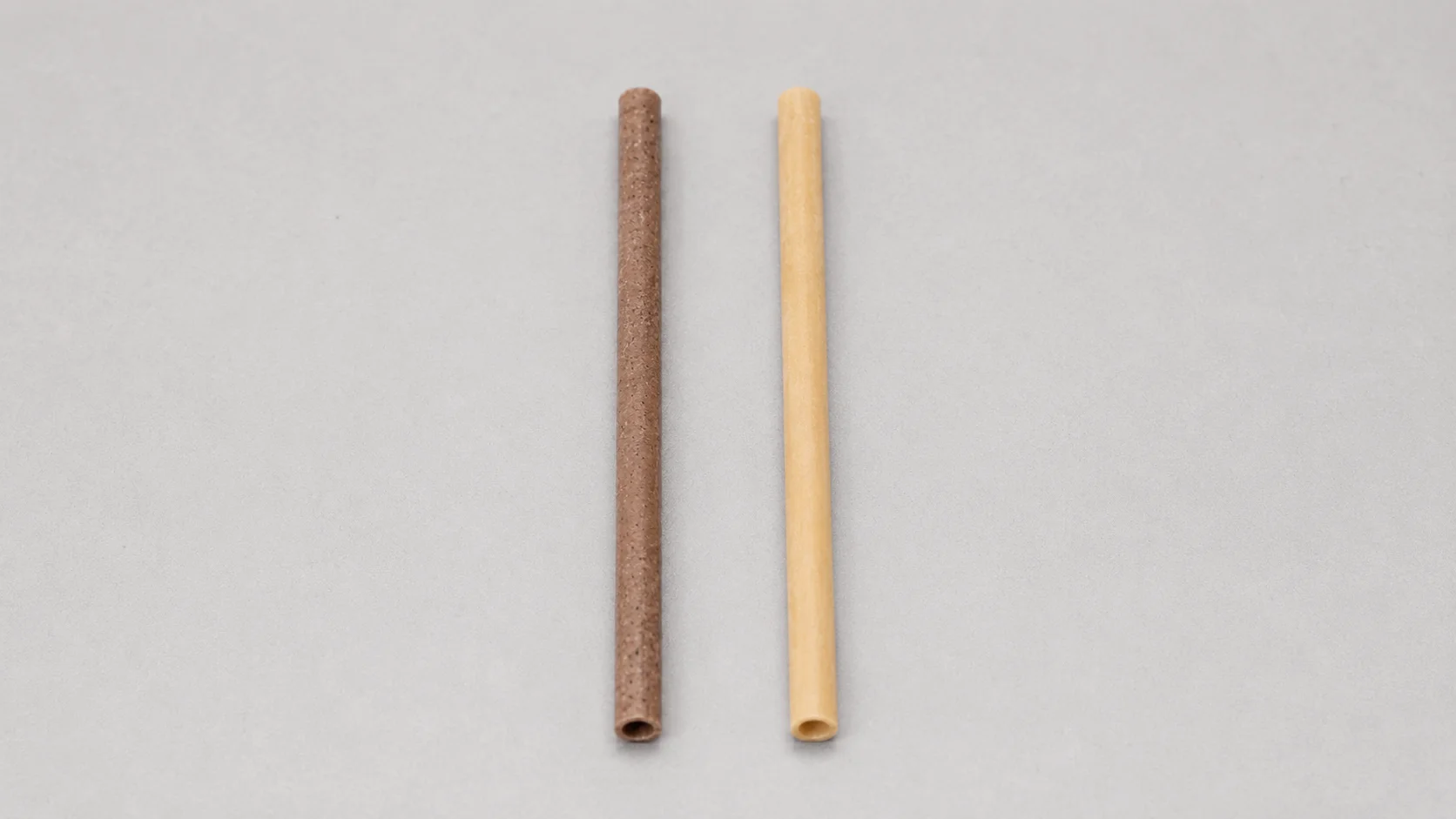
If your business is moving away from plastic straws, you have probably encountered two of the strongest contenders: coffee ground straws and sugarcane straws. Both are PLA-free. Both are home-compostable. Both outperform paper and PLA in real-world use. But they are not the same product, and the choice between them has real consequences for your brand, your customers, and your procurement strategy.
This guide compares coffee ground straws and sugarcane straws across six dimensions that matter to B2B buyers: materials, appearance, performance, compostability, cost, and brand narrative. By the end, you will know which straw fits your business — and whether using both might be the best answer.
Quick Comparison Table
What Are Coffee Ground Straws?
| Dimension | Coffee Ground Straws | Sugarcane Straws |
|---|---|---|
| **Raw Material** | Recycled spent coffee grounds | Sugarcane bagasse (juice extraction waste) |
| **Source Type** | Post-consumer waste stream | Agricultural processing byproduct |
| **PLA Content** | 0% (PLA-free) | 0% (PLA-free) |
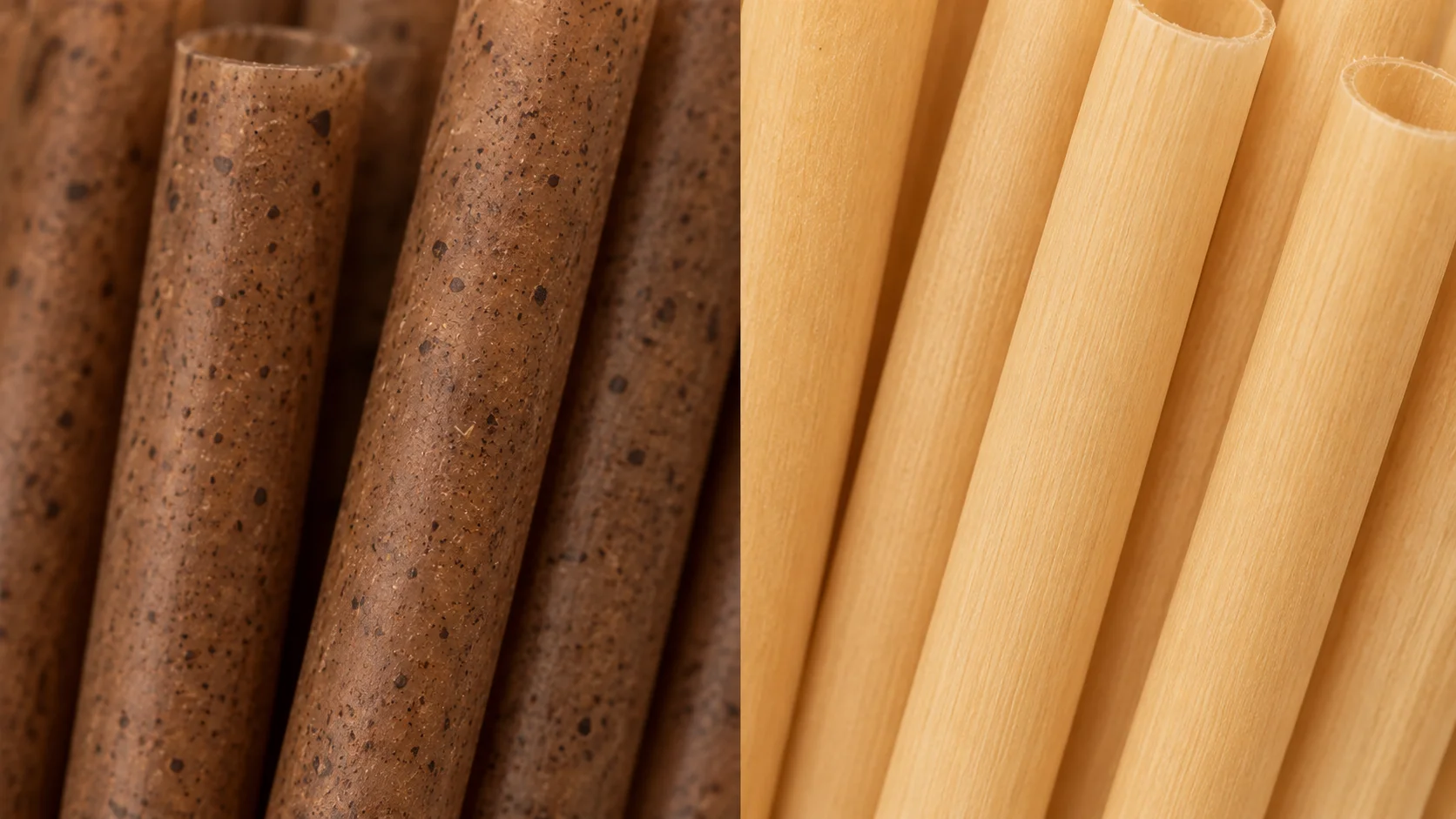
| **Color** | Natural dark brown | Natural cream/beige |
| **Texture** | Matte, visible coffee particles | Matte, subtle fiber grain |
| **Aroma** | Faint coffee scent (dissipates) | Neutral, no detectable taste or smell |
| **Heat Resistance** | Up to ~80 deg C / 176 deg F | Up to ~80 deg C / 176 deg F |
| **Cold Drink Durability** | 2-4 hours without softening | 2-4 hours without softening |
| **Compost Type** | Home + Industrial | Home + Industrial |
| **Decomposition** | 3-6 months (home compost) | 3-6 months (home compost) |
| **Relative Cost** | Mid-range | Low to mid-range |
| **Best Use Case** | Cafes, coffee shops, coffee-focused venues | All food service: restaurants, bars, bubble tea, hotels |
| **Brand Narrative** | Circular economy: your coffee waste becomes your straw | Agricultural valorization: sugar industry byproduct upcycled |
| **Instagram Factor** | High: unique dark brown, instantly recognizable | Medium: natural classic look |
Coffee ground straws are made from recycled spent coffee grounds — the same grounds discarded by cafes and coffee production facilities after brewing. The grounds are collected, cleaned, sterilized, and combined with natural plant-based binders to form durable drinking straws. No PLA, no petroleum-based plastics.
The defining characteristic is the visible coffee ground particles embedded in the dark brown material. This is not a surface treatment — the coffee grounds are the primary structural component (typically 40-60% of the material). The result is a straw that looks and feels fundamentally different from plastic, paper, or generic plant-based alternatives.
For more detail, see the [[Coffee Ground Straws Pillar Page|Complete Guide to Coffee Ground Straws]].
What Are Sugarcane Straws?
Sugarcane straws are made from sugarcane bagasse — the dry fibrous residue left after sugarcane stalks are crushed to extract juice. This agricultural byproduct is processed, combined with bio-based binders, and extruded into straws. Like coffee ground straws, quality sugarcane straws contain no PLA.
The bagasse fiber gives the straws a natural cream-to-beige color with a matte finish and subtle surface grain. Unlike coffee ground straws, they do not have visible particles — the bagasse fibers are finely processed into a uniform texture that resembles a natural paper-like material, but with significantly more structural integrity.
For more detail, see the [[Sugarcane-Straws-Pillar-Page|Complete Guide to Sugarcane Straws]].
Detailed Comparison
Raw Material & Source
Coffee ground straws and sugarcane straws both start from what would otherwise be waste — but the source and scale differ.
Coffee grounds are a post-consumer waste stream: they come from the final stage of the coffee supply chain — cafes, restaurants, instant coffee factories — after the coffee has been brewed. This gives coffee ground straws a uniquely direct “your waste becomes your straw” narrative.
Sugarcane bagasse is an agricultural processing byproduct: it comes from the early stage of sugar production, at the mill where cane is crushed. The scale is enormous — the global sugar industry produces approximately 500 million tons of bagasse annually — which means the feedstock is abundant and supply is stable.
Supply chain consideration: Bagasse supply is tied to the sugar industry, which operates in 90+ countries. Coffee ground supply depends on proximity to large-volume coffee waste sources. Both are renewable and independent of petroleum markets.
Appearance & Sensory Experience
This may be the most important difference for buyer decision-making.
Coffee ground straws have a distinctive dark brown color with visible coffee speckles. They carry a faint coffee aroma when first unwrapped (which dissipates quickly in liquid). This creates a memorable customer experience — the straw itself communicates its origin story without any explanation needed.
Sugarcane straws are cream-beige in color with a clean, neutral appearance. They have no detectable aroma or taste. They communicate “natural and sustainable” in a more understated way.
Practical impact: If you operate a cafe, the coffee ground straw aligns perfectly with your brand identity — it reinforces the coffee connection at every table. If you operate a restaurant, bar, or hotel that serves diverse beverages, the neutral appearance of sugarcane straws may be less visually distracting and more versatile.
Performance & Durability
Both straw types perform similarly in terms of functional durability:
– Both handle hot beverages up to approximately 80 deg C without softening
– Both maintain structural integrity in cold drinks for 2-4 hours
– Neither gets soggy like paper straws
– Neither melts in heat like PLA straws
– Both have a smooth drinking experience with no paper taste
The key functional difference is in the ends: coffee ground straw cut ends may show slightly more fibrous texture due to the coffee particle content, while sugarcane straw ends are more uniform. Neither affects drinking performance.
For bubble tea and thick beverages: Both types are available in wider diameters (12mm+) suitable for boba and smoothie applications.
Compostability & End-of-Life
Both are PLA-free and home-compostable, with similar decomposition timelines: approximately 3-6 months in home compost conditions, and 90-180 days in industrial composting.
The practical disposal guidance is identical for both:
– Best: home or industrial composting
– Acceptable: general waste (will biodegrade, though slowly in landfill)
– Do not: place in plastic recycling bins
The only difference is narrative: coffee ground straws close a loop for coffee-specific businesses; sugarcane straws tell a broader agricultural waste story. Neither has a functional advantage in disposal.
Cost & Wholesale Availability
Sugarcane straws are generally more cost-competitive at scale, owing to the massive and well-established bagasse supply chain. Coffee ground straws, with a more specialized feedstock and production process, tend to be priced slightly higher.
However, the price gap is narrowing as coffee ground straw production scales, and the per-unit difference is typically measured in fractions of a cent — which, at B2B volumes, can be significant for large chains but may be negligible for independent venues.
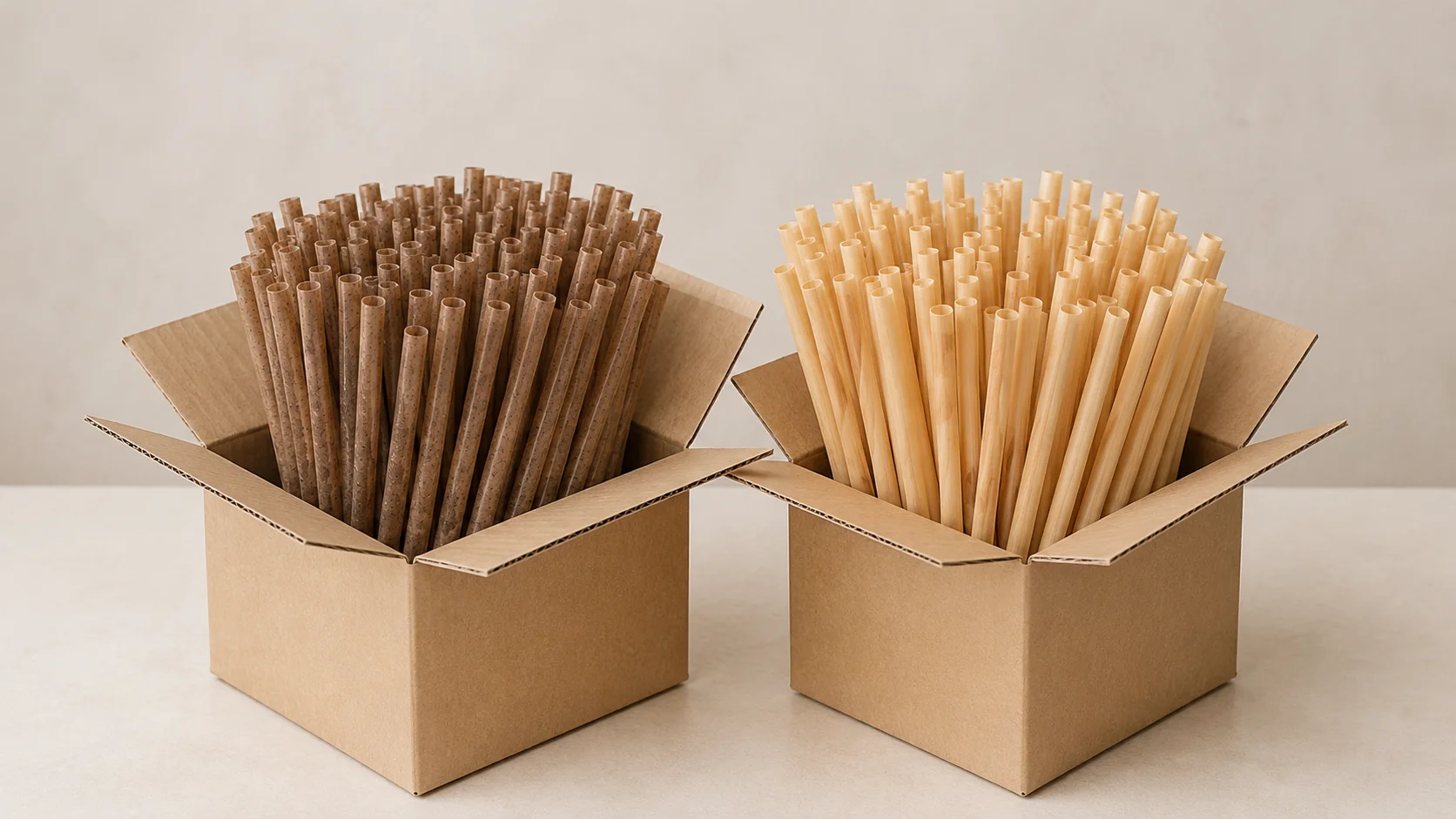
Both types are available in standard wholesale configurations: bulk cartons of 500-6,000 units, with options for individual wrapping and custom branding. For specific pricing and minimum order quantities at MOMOIO, see the product pages linked below.
Brand Story & Marketing Value
This is where the two straws diverge most sharply — and where the right choice depends entirely on your business identity.
Coffee ground straws carry a specific, high-impact story: “The coffee you brewed becomes the straw your customers use.” This circular-economy narrative is concrete, memorable, and directly relevant to coffee-centric businesses. It photographs well on social media and gives staff a talking point with customers.
Sugarcane straws tell a broader but equally valid story: agricultural waste transformed into functional products. The “waste-to-product” angle works across all food service segments, and the clean beige appearance feels premium without calling attention to itself.
Which story fits your business?
– Your core product is coffee → Coffee ground straws amplify your brand
– You serve a diverse menu → Sugarcane straws are more versatile
– You want maximum Instagram presence → Coffee ground’s unique look wins
– You prioritize understated elegance → Sugarcane’s clean beige suits fine dining
When to Choose Coffee Ground Straws
Choose coffee ground straws when:
– Your business is a cafe, coffee shop, or coffee roaster — the narrative alignment is unmatched
– You want a visibly distinctive straw that customers notice and photograph
– “Circular economy” is a core part of your sustainability messaging
– Your customers care about environmental impact and appreciate the direct connection between their coffee and their straw
When to Choose Sugarcane Straws
Choose sugarcane straws when:
– Your business serves a broad range of beverages — cocktails, juices, sodas, coffee
– You want a neutral, professional appearance that fits any table setting
– You are a restaurant, hotel, bar, or catering business that doesn’t center around coffee
– Cost efficiency at scale is a primary concern (bagasse feedstock is highly abundant and cost-competitive)
Can You Use Both?
Yes — and many MOMOIO wholesale buyers do. Using both gives you:
– Coffee ground straws for your coffee and espresso beverages
– Sugarcane straws for everything else (juices, cocktails, smoothies, soft drinks)
This dual approach lets you capture the best of both: the coffee-specific narrative where it matters most, and the cost-effectiveness and versatility of sugarcane straws for the rest of your menu. Both are PLA-free and home-compostable, so your sustainability story remains consistent regardless of which straw a customer receives.
From a procurement standpoint, ordering from a single supplier (MOMOIO) for both types simplifies logistics and potentially unlocks volume discounts.
Frequently Asked Questions
Q: Do coffee ground straws taste different from sugarcane straws?
A: Neither straw type imparts detectable taste to beverages. Coffee ground straws have a faint coffee aroma when first unwrapped, which dissipates quickly in liquid. Sugarcane straws are completely neutral.
Q: Which is more eco-friendly?
A: Both are PLA-free, home-compostable, and made from waste materials. Neither has a clear environmental advantage — they differ in narrative, not in ecological impact.
Q: Are they the same price?
A: Sugarcane straws are generally slightly less expensive at scale due to abundant bagasse supply. Coffee ground straws carry a small premium. The per-unit difference is typically fractions of a cent.
Q: Can I get both types with custom branding?
A: Yes. MOMOIO offers custom logo printing and branded packaging for both coffee ground and sugarcane straws. Contact us for minimum order quantities and specifications.
Q: Which one handles hot drinks better?
A: Both perform equally well with hot beverages up to approximately 80 deg C / 176 deg F. Neither will soften, melt, or deform at normal hot drink serving temperatures.
Q: Can I order samples of both before committing to a large order?
A: Contact MOMOIO directly for sample availability. Testing both straw types with your actual beverages and gathering customer feedback is the best way to make a confident decision.
Conclusion: Don’t Choose — Complement
The question “coffee ground straws or sugarcane straws” frames the decision as mutually exclusive. But for most B2B buyers, the smarter question is: how can I use both to improve the customer experience?
Coffee ground straws excel in coffee environments where the circular-economy story is directly relevant. Sugarcane straws excel everywhere else, offering a clean, versatile, cost-competitive sustainable option.
If your business serves coffee — pair them. If it doesn’t — sugarcane straws are the all-around champion. If you’re still not sure — contact MOMOIO for samples of both. A side-by-side test with your actual beverages and customers will answer the question more definitively than any article can.
Related Guides: Complete Guide to Coffee Ground Straws | Complete Guide to Sugarcane Straws