Par un stratège senior de contenu en développement durable B2B
La directive de l’Union européenne sur les plastiques à usage unique (SUP) (directive 2019/904/UE), promulguée en juillet 2021, représente un changement sismique dans la politique environnementale avec de profondes implications pour le secteur de la restauration. Bien plus qu’une simple mise à jour réglementaire, cette directive est un impératif stratégique visant à réduire le problème omniprésent de la pollution plastique, en particulier les déchets marins, qui représentaient jusqu’à 70 % de tous les déchets marins avant la mise en œuvre du SUPD. Pour les responsables des achats, les directeurs des opérations, les responsables du développement durable et les responsables de la chaîne d'approvisionnement, le SUPD n'est pas seulement une liste de contrôle de conformité ; c’est un appel à réévaluer fondamentalement l’approvisionnement, les opérations et la stratégie commerciale à long terme.
Ignorer les mandats du SUPD n’est plus une option. Les impacts opérationnels et commerciaux de la non-conformité sont graves, allant de lourdes amendes et perturbations de la chaîne d'approvisionnement à d'importantes atteintes à la réputation et à l'aliénation d'une base de consommateurs de plus en plus soucieuse de l'environnement. Une adaptation proactive est essentielle non seulement pour le respect de la législation, mais aussi pour garantir l’accès au marché, accroître la valeur de la marque et favoriser une croissance durable dans un paysage européen en évolution rapide.
Le SUPD de l’UE est un impératif stratégique pour la restauration, exigeant une adaptation proactive pour la conformité et une croissance durable.
Comprendre les principes fondamentaux de la directive européenne sur les plastiques à usage unique
En son cœur, la directive SUP vise à accélérer la transition vers une économie circulaire en ciblant des articles spécifiques en plastique à fort impact environnemental. Comprendre ses définitions et ses interdictions est la première étape vers un approvisionnement efficace.
Définir les plastiques à usage unique
La directive définit précisément les plastiques à usage unique comme des produits constitués entièrement ou partiellement de plastique, y compris les bioplastiques comme le PLA, destinés à être utilisés une seule fois ou pendant une courte période avant d'être éliminés. Cette définition large garantit une couverture complète, ne laissant aucune place à toute ambiguïté quant à ce qui relève du règlement.
Interdictions pures et simples (en vigueur le 3 juillet 2021)
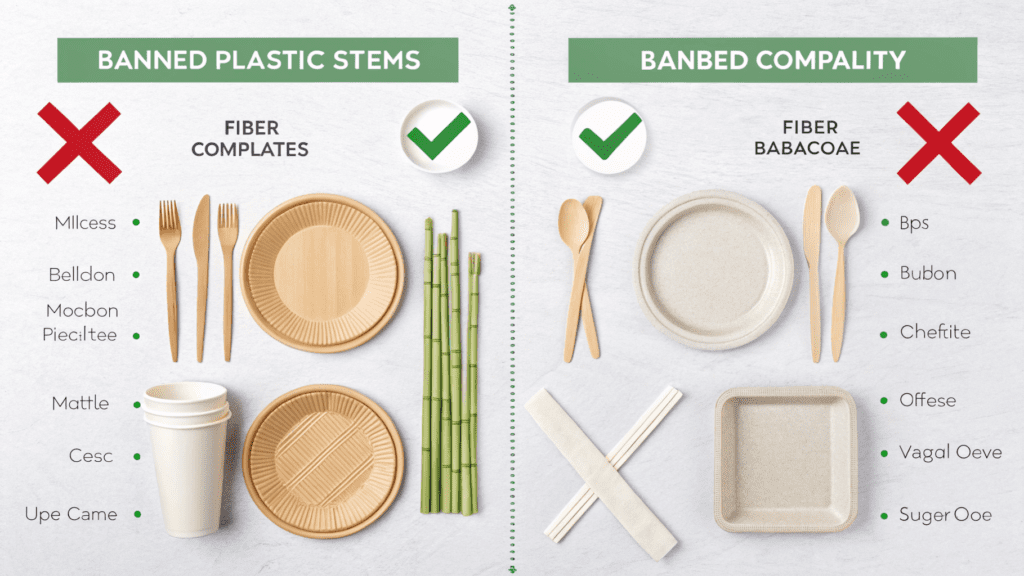
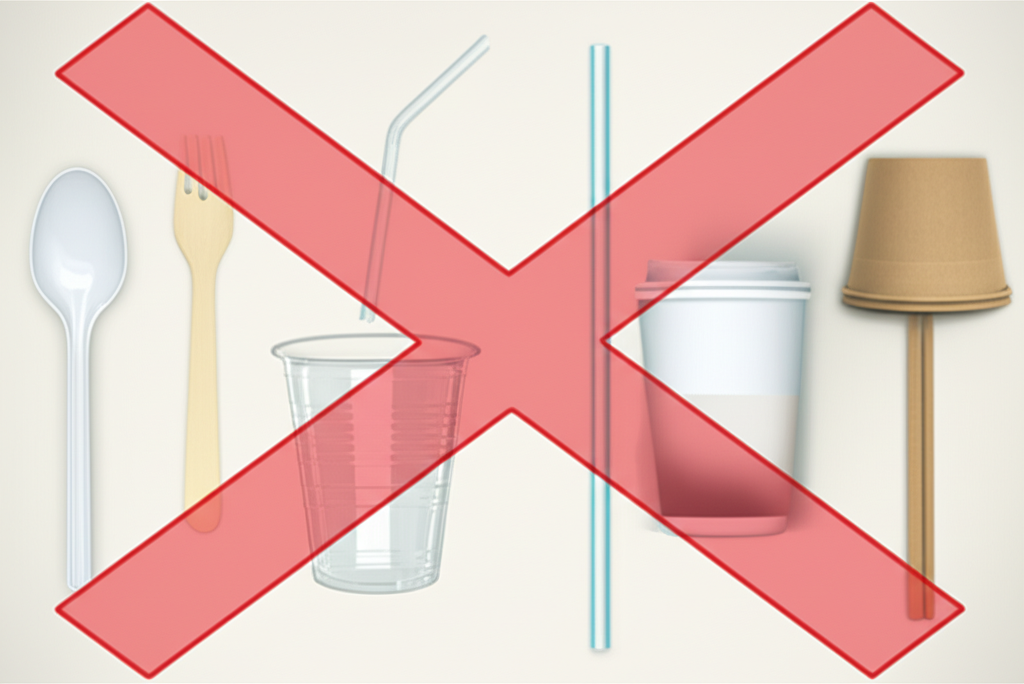
The most immediate impact on foodservice procurement came with the outright ban on several common single-use plastic items. Since July 3, 2021, the EU prohibits the placing on the market of plastic cutlery, plates (even those with plastic linings like PE and PLA), straws (with exceptions for medical use in hospitals for patients unable to consume independently), beverage stirrers, cotton bud sticks, balloon sticks, and disposable food containers made of expanded polystyrene (EPS). Furthermore, all products made of oxo-degradable plastic are universally banned across the EU, reflecting a commitment to truly sustainable alternatives.
The SUP Directive targets high-impact plastic items, necessitating a clear understanding of definitions and bans for foodservice compliance.
Direct Impacts on Foodservice Procurement: The Shift to Sustainable Alternatives
The outright bans necessitate an immediate and decisive material transition for foodservice businesses operating within the EU. Procurement teams must pivot away from traditional plastics towards a new generation of sustainable alternatives.
Immediate Material Transition
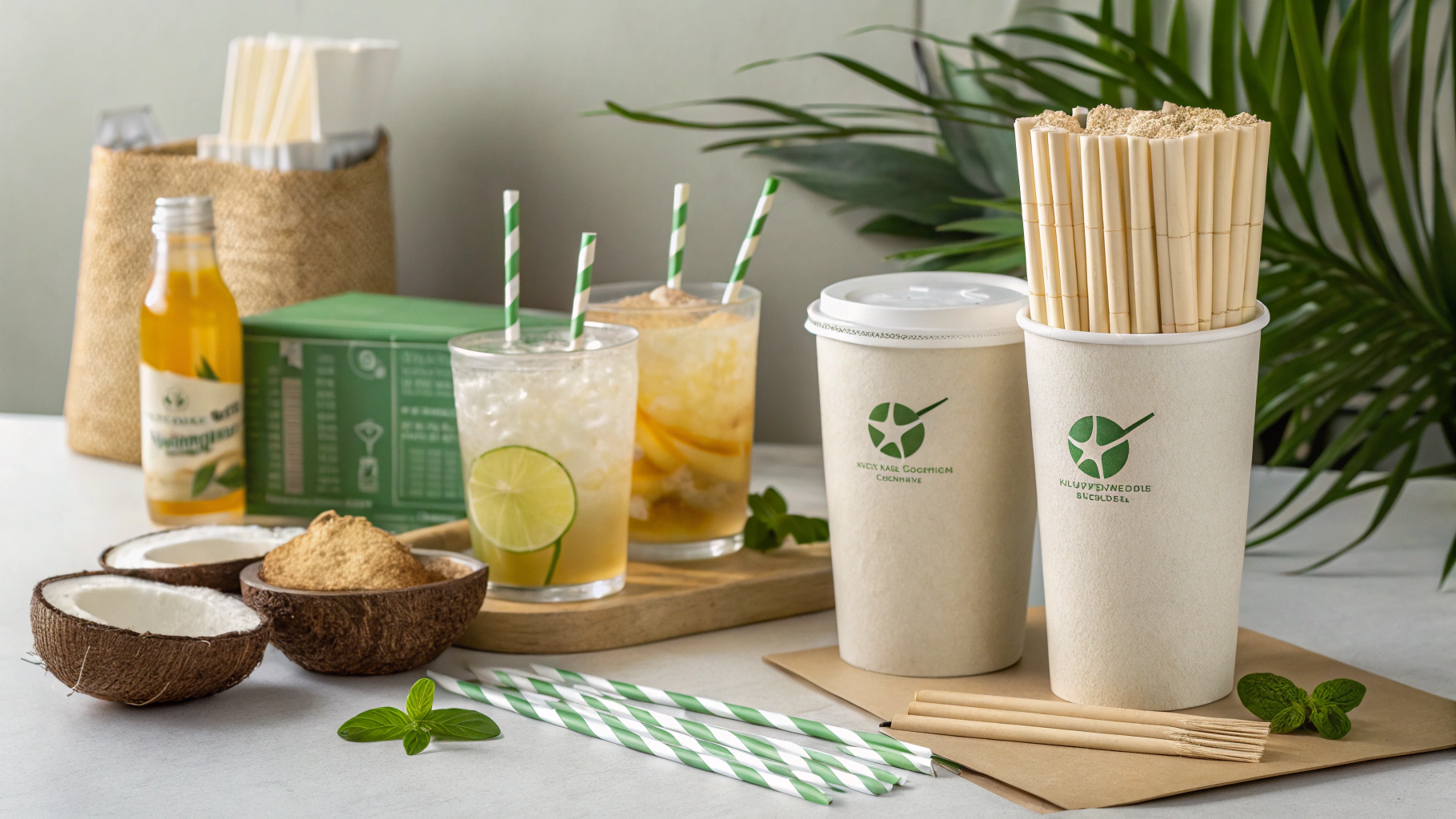
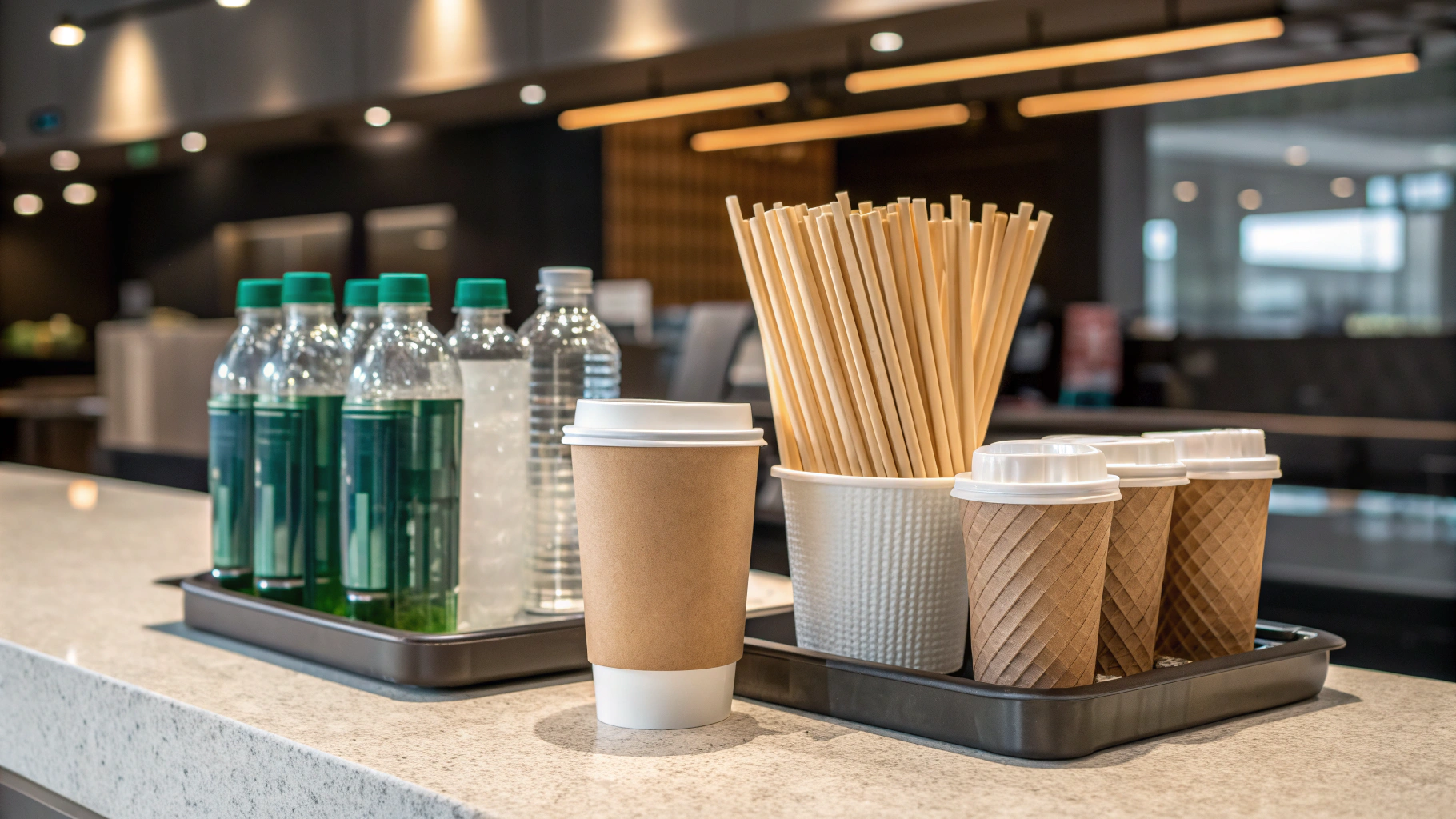
Businesses are now sourcing items made from materials such as unlined paper, molded fiber, bamboo, husk, bagasse/corn starch, and other plant-based materials like palm leaf or areca. This shift is not merely about finding a substitute but about integrating a new material philosophy into the entire supply chain. For example, considering options like innovativepailles de café moulucan help businesses meet sustainability goals while offering unique customer experiences.

Reduction Targets for Consumption (from 2023)
Beyond outright bans, the directive mandates that Member States quantitatively reduce the consumption of single-use plastic cups and takeaway containers. From 2023 onwards, countries must implement these reduction targets, using 2022 consumption levels as a baseline, aiming for “measurable quantitative reduction” by 2026. This requires not just material substitution but also strategies for waste reduction and potentially, a move towards reusable systems.
PFAS and Chemical Restrictions (by August 2026)
The landscape of food packaging is further complicated by the new Packaging and Packaging Waste Regulation (PPWR), which takes aim at “forever chemicals.” By August 12, 2026, this regulation will prohibit Per- and Polyfluoroalkyl Substances (PFAS) in food packaging above 25 parts-per-billion (ppb) for targeted PFAS analysis. This stringent limit necessitates a thorough review of all barrier coatings and food contact materials, pushing procurement towards PFAS-free solutions to avoid significant compliance risks.
Eliminating Plastic for Produce (by January 2030)
The PPWR also extends its reach to fresh produce. From January 1, 2030, single-use plastic packaging for unprocessed, fresh fruits and vegetables weighing less than 1.5 kilograms (kg) will be prohibited, with limited exceptions for specific needs like mitigating water loss or microbiological hazards. This future ban requires foresight in agricultural supply chains and packaging development.
Foodservice procurement must transition to sustainable materials, meet reduction targets, and prepare for PFAS and produce plastic bans.
Evolving Compliance & Operational Shifts Under the EU Single-Use Plastics Directive
The SUPD’s influence extends beyond material composition, encompassing labeling, producer responsibility, and product design.
Mandatory Labeling Requirements (Since July 2022)
La transparence est la clé du SUPD. Depuis juillet 2022, tous les gobelets jetables vendus dans l'UE, même ceux avec une doublure aqueuse, doivent porter un logo tortue visible, clairement lisible et indélébile « Plastique dans le produit » ou « Fabriqué en plastique ». Ce marquage informe les consommateurs sur la teneur en plastique, l'impact environnemental et les méthodes d'élimination appropriées, influençant directement la perception et les comportements d'élimination des consommateurs.
Dispositifs de responsabilité élargie des producteurs (REP) (à partir du 31 décembre 2024)
The “polluter pays” principle is a cornerstone of the SUPD. From December 31, 2024, producers will bear the financial responsibility for the collection, transport, treatment, cleanup of litter, and awareness-raising measures for specified SUP items, including food containers, packets, wrappers, beverage containers, cups, and lightweight plastic bags. These EPR schemes fundamentally alter the cost structure of packaging, making sustainable material choices more economically attractive in the long run.
Attached Caps and Recycled Content Goals (by July 2024)
The directive also addresses product design to promote recyclability. From July 2024, plastic bottle caps and lids for beverage containers up to three liters must be attached to the containers, preventing them from becoming separate litter. Furthermore, demanding recycled content targets are set: PET bottles must contain at least 25% recycled plastic by 2025, increasing to 30% for all plastic bottles by 2030. This drives demand for recycled content and strengthens the circular economy.
Increased Collection Targets
Pour soutenir ces objectifs de recyclage, la directive fixe des objectifs ambitieux de collecte des bouteilles en plastique : 77 % d'ici 2025 et un impressionnant 90 % d'ici 2029. Les États membres mettent en œuvre diverses stratégies, notamment des systèmes de consigne, pour atteindre ces taux. Le système de consigne allemand, par exemple, affiche déjà un taux de collecte remarquable de 98 % pour les bouteilles de boissons en plastique, démontrant l’efficacité de tels systèmes.
Le SUPD impose l'étiquetage, les programmes REP, les bouchons attachés, le contenu recyclé et des objectifs de collecte plus élevés, remodelant les opérations de restauration.
Achats stratégiques pour la conformité à la directive européenne sur les plastiques à usage unique
S’y retrouver dans ces réglementations aux multiples facettes nécessite une refonte stratégique des fonctions d’achats.
Réévaluation et sourcing des fournisseurs
The immediate task for procurement teams is to identify and onboard suppliers offering genuinely compliant alternatives. This involves thorough vetting for certifications (e.g., industrial compostability standard EN 13432), material composition, and supply chain reliability. Businesses must ensure that alternatives, such assustainable boba straw alternatives, not only meet regulatory requirements but also satisfy operational demands and customer expectations.
Cost Implications of Transition
While the long-term benefits of compliance are clear, the initial transition can present cost challenges. Biodegradable or compostable products may initially be more expensive than their plastic counterparts. However, these upfront costs must be weighed against the significant risks of non-compliance, potential fines, and the long-term savings from reduced EPR fees and enhanced brand value. For instance, Poland has already applied additional fees on single-use plastics from January 2024 (e.g., PLN 0.20 for cups, PLN 0.25 for food containers) to cover waste management, illustrating the direct financial impact of non-compliance.
Optimizing Logistics and Storage
Shifting to lighter, more compact sustainable alternatives can offer unexpected benefits. These materials can reduce transport carbon footprint and optimize storage needs, leading to operational efficiencies and potential cost savings in warehousing and distribution. This optimization plays a crucial role in building a more agile and sustainable supply chain.
Mini Case Study: Xylomatrix’s PFAS-Free Innovation
A prime example of compliance-driven innovation comes from Xylomatrix, a company providing biodegradable cellulose fiber packaging. Their solutions offer crucial water and grease barriers without relying on harmful PFAS chemicals, directly addressing the upcoming PPWR restrictions. Such innovations highlight how businesses can not only comply but also lead the market with safer, more sustainable products, building trust and reputation. Many leading foodservice operators in Europe are already requiring certified compostable packaging, demonstrating a market-driven shift.
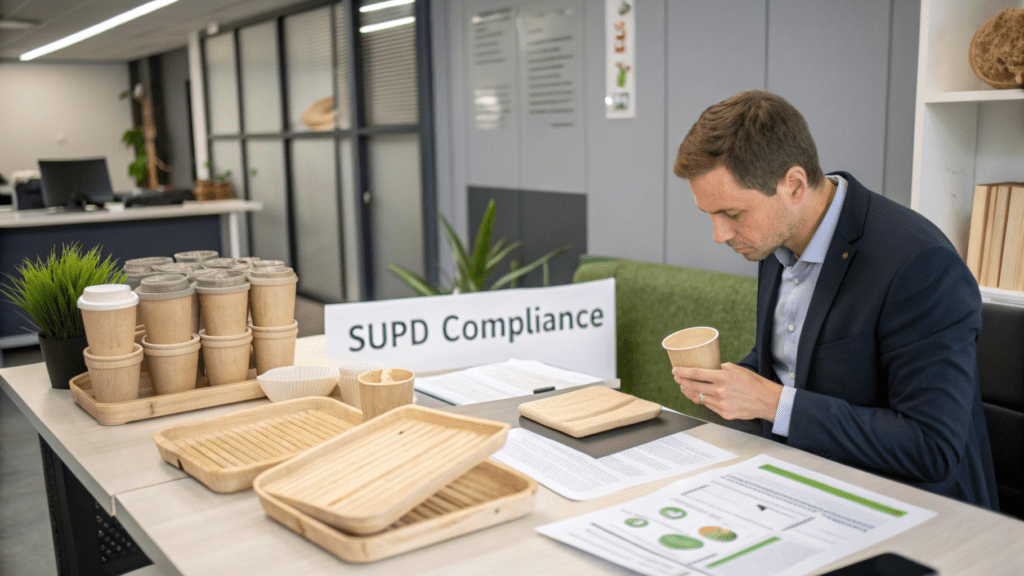
Comparison Table: Single-Use Plastics vs. Compliant Alternatives
| Fonctionnalité | Impact opérationnel B2B | Note de conformité | Potentiel de retour sur investissement |
|---|---|---|---|
| Single-Use Plastic Cutlery (PS/PP) | High waste volume; ongoing disposal costs. | InterditEU-wide since July 2021 (Directive 2019/904/EU). | Negative: Risk of substantial fines, severe reputational damage, consumer backlash, market exclusion. |
| Molded Fiber Plates (Bagasse) | Requires new supplier relationships; potentially higher unit cost. | Compliantalternative, widely accepted in EU; often industrially compostable (EN 13432). | Positive: Enhanced brand image, meeting growing consumer and regulatory demand for sustainability, potential for reduced waste management costs (e.g., compostability), long-term operational stability by proactively avoiding future bans. Supports circular economy goals. |
| Single-Use Plastic Cups (PET/PP lined) | Consumption reduction targets; labeling requirements. | Reduction targetsfrom 2023; “Plastic in Product” label since July 2022. | Variable: Non-compliance risks (fines, public scrutiny); opportunity for cost savings via reduction initiatives; improved brand perception. Strategic shift to reusable options can yield significant long-term savings and stronger loyalty. |
| Reusable Container Systems | Investment in washing/sanitizing infrastructure; logistics for returns. | Mandatedfor on-site by 2030; takeaway options by February 2028 (with no extra charge). | High: Significant long-term cost savings by eliminating recurring purchase of disposables, strong sustainability leadership, improved customer loyalty, potential new revenue streams (deposit schemes), reduced reliance on fluctuating material costs. Drastically lowers environmental footprint and positions business as a market leader in sustainability. |
Strategic procurement involves re-evaluating suppliers, managing transition costs, optimizing logistics, and embracing innovative, compliant solutions.
Embracing Reusable Solutions & Future Outlook for Foodservice Procurement
The SUPD and subsequent regulations clearly signal a strong push towards reusable systems, emphasizing a shift from single-use material substitution to systemic change.
Future Bans in HORECA (by 2030)
The trajectory of regulation is clear: by 2030, single-use packaging will be prohibited for certain foods and beverages consumed on-site at hotels, restaurants, and catering establishments. This extends to individual portion containers, such as creamers, sugar packets, and condiment sachets. This impending ban requires foodservice operators to invest in reusable crockery, cutlery, and condiment dispensers.
Customer’s Own Container Option (by February 2027)
To foster a culture of reuse, foodservice establishments will be required, by February 2027, to offer and actively inform consumers about the option of bringing their own containers for takeout food and beverages, at no extra charge. This necessitates operational readiness to handle customer-provided containers hygienically and efficiently.
Mandatory Reusable Takeaway Options (by February 2028)
Complementing the “bring your own” initiative, businesses must, by February 2028, provide and inform consumers about a reusable takeaway container option, also at no extra charge. This could involve deposit-return schemes or subscription models, pushing procurement towards managing a fleet of durable, food-grade reusable containers.
National Adaptations and Fees
While the directive sets EU-wide standards, Member States retain some flexibility in implementation and can introduce additional measures. For example, countries like Spain aim for a 50% reduction in single-use plastic by 2026 and 70% by 2030 by weight, compared to 2022 data. Such national targets create a patchwork of regulations that procurement must navigate, highlighting the need for a pan-European strategy with local adaptability.
Driving a Circular Economy
The overarching goal of these regulations is to drive a truly circular economy for plastics. The EU Single-Use Plastics Directive is projected to yield substantial environmental benefits, including a reduction in greenhouse gas emissions by 2.63 million tonnes annually and a decrease in marine pollution from single-use plastics by 4,850 tonnes per year. This commitment to sustainability offers a powerful narrative for businesses to connect with environmentally conscious consumers and stakeholders.
The future of foodservice procurement lies in embracing reusable systems and adapting to national regulations to drive a circular economy.
Conclusion: Future-Proofing Foodservice Procurement
The EU Single-Use Plastics Directive, along with the subsequent Packaging and Packaging Waste Regulation, is not merely a collection of environmental regulations; it is a profound strategic shift that redefines operational excellence and competitive advantage for foodservice procurement. By proactively embracing sustainable alternatives, integrating robust reusable packaging systems, and adapting to evolving Extended Producer Responsibility schemes, businesses can unlock significant operational efficiencies, stabilize costs, and mitigate regulatory risks.
Beyond compliance, this transformation offers an unparalleled opportunity to enhance brand reputation, attract and retain customers, and secure a resilient, profitable future. Companies that demonstrate strong sustainability leadership will differentiate themselves in a crowded market, translating environmental responsibility into tangible business value and market share opportunity. Reducing reliance on fluctuating fossil plastic costs and optimizing logistics through lighter, more compact sustainable options or reusable systems can lead to substantial long-term cost savings.
Proactive compliance with EU SUPD future-proofs foodservice procurement, enhancing brand, profitability, and environmental legacy.
Act Now for a Sustainable Future
Review your current procurement strategies and align with the EU Single-Use Plastics Directive to build a resilient, compliant, and sustainable supply chain. Explore innovative solutions likepailles de café mouluand othersustainable boba straw alternativesto lead the market. Don’t wait for the next regulatory deadline; transform your operations today to secure your competitive edge and environmental legacy. For comprehensive details on the directive, refer to theofficial EU information. You can also find valuable insights from industry experts atAranca on the directive’s implications. For a deeper dive into the broader regulatory landscape, consider exploring resources fromRethink Plastic Alliance.Contact Us for a Compliance Assessment