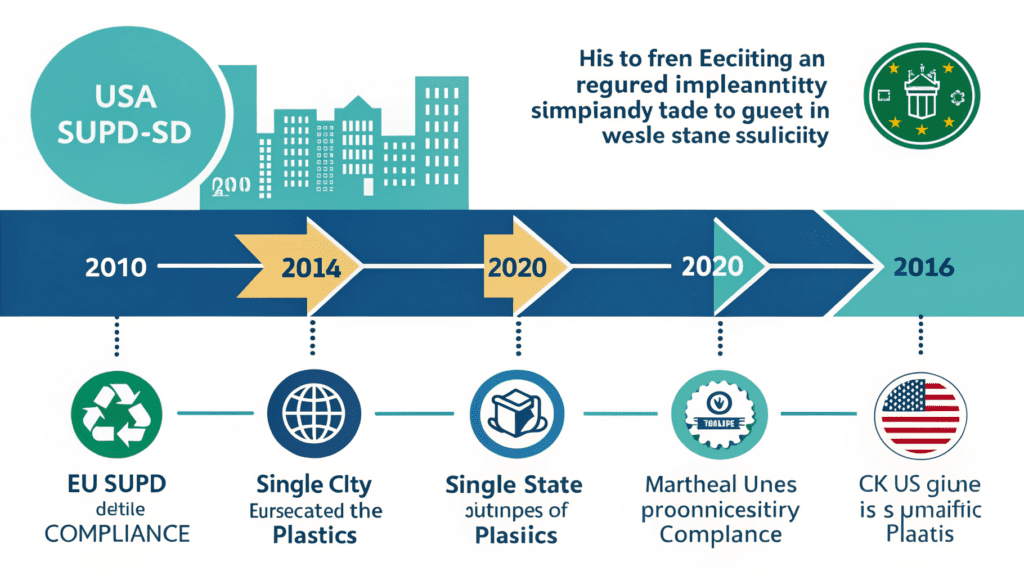
Tá an taoide iompaithe. Maidir le bainisteoirí soláthair, stiúrthóirí oibríochtaí, oifigigh inbhuanaitheachta, agus feidhmeannaigh an tslabhra soláthair, is í an cheist a thuilleadh *má* ba chóir do do ghnó bogadh ar shiúl ó phlaisteach aonúsáide, ach *cé chomh tapa agus chomh straitéiseach* leis an aistriú a dhéanamh. Tá ré na sopaí plaisteacha saor, áisiúla ag druidim chun deiridh, á thiomáint ag riachtanas domhanda do-shéanta maidir le maoirseacht comhshaoil agus athruithe rialála déine. ÓnTreoir an Aontais Eorpaigh maidir le Plaistigh Aonúsáide, a tháinig i bhfeidhm in 2021, de bharr toirmisc shuntasacha ar leibhéal an stáit ar fud na SA, lena n-áirítear Seattle agus California, tá timpeallacht chomhlíonta atá ag forbairt ag teacht ar ghnólachtaí a éilíonn aird láithreach. Déan neamhaird den athrú seo, agus ní hamháin go mbainfidh tú fíneálacha suntasacha ach freisin go ndéanfar dochar do-athleasaithe do chlú do bhranda i measc bonn tomhaltóra atá ag éirí níos éicea-chomhfhiosach. Tá íomhánna de shaol na mara atá i bhfostú i plaisteach tar éis tuairim an phobail a ghalbhánú, rud a fhágann go bhfuil sé soiléir go bhfuil súil ag custaiméirí agus páirtithe leasmhara níos mó. Tá tionchair oibriúcháin agus tráchtála na heaspa gnímh mór, ag síneadh níos faide ná comhlíonadh amháin chun cur isteach ar dhílseacht an chustaiméara, ar dhearcadh an mhargaidh, agus fiú ar mhuinín infheisteoirí.
Yet, the journey toward truly sustainable alternatives is fraught with complexities often overlooked. The term ‘eco-friendly’ itself has become a minefield of misleading claims and unfulfilled promises. Businesses routinely grapple with performance issues – straws that disintegrate too quickly, impart undesirable tastes, or pose new environmental concerns like ‘forever chemicals’ (PFAS). Navigating this landscape requires more than just good intentions; it demands a strategic, data-driven approach to ensure that your chosen alternatives genuinely contribute to sustainability without compromising operational efficiency or the crucial customer experience. Understanding the nuances of new materials, verifying claims, and ensuring compatibility with your existing waste infrastructure are paramount to avoiding ‘greenwashing’ pitfalls and making a truly impactful switch. This is not just about replacing one product with another; it’s about redefining your operational footprint in a rapidly changing world. To explore the broader spectrum of sustainable material swaps, consider our comprehensive insights in ourSraith Roghanna Plaisteacha.
I gcás gnólachtaí a fheidhmíonn ar fud na tíreolaíochta éagsúla, go háirithe sna SA agus san Eoraip, téann an sainmhíniú ar an rogha tuí ‘is sábháilte’ i bhfad níos faide ná in-bhithmhillteacht bhunúsach. Cuimsíonn sé measúnú iomlánaíoch ar shláine comhshaoil, inmharthanacht oibríochta, sástacht chustaiméirí, agus cosaint branda láidir. San Eoraip, ciallaíonn ceanglais dhian na Treorach um Plaistigh Aon-Úsáide go gcaithfidh aon rogha eile fíorthairbhí comhshaoil a léiriú, ag bogadh níos faide ná ábhair a dhéanann aithris ar phlaisteach gan ach miondealú éiceolaíoch. Mar an gcéanna, sna Stáit Aontaithe, cé go bhfuil gníomhaíocht feidearálach níos moille, ciallaíonn éagsúlacht de thoirmeasc ar leibhéal an stáit agus na cathrach, cosúil leis na cinn a cuireadh chun cinn i gCalifornia agus i Washington D.C., go gcaithfidh gnólachtaí straitéisí soláthair lúfar a choinneáil chun neamhchomhlíonadh a sheachaint. Ní bhaineann na rialacháin seo ach le cosc a chur ar phlaisteach; baineann siad le *sábháilteacht* na n-ionadach a chinntiú.
Environmental integrity, at its core, demands alternatives that genuinely decompose, contribute minimally to carbon emissions during production, and, critically, are free from harmful substances such as per- and polyfluoroalkyl substances (PFAS). The discovery of ‘forever chemicals’ (PFAS) in some seemingly eco-friendly paper and plant-based straws, a concern detailed by sources like theAmerican Chemical Society, a úsáidtear le haghaidh friotaíocht uisce, chruthaigh aláram nua, ag casadh lasc dea-intinn isteach i ndliteanas sláinte agus rialála féideartha. Idir an dá linn, tá dúshlán roimh stiúrthóirí oibríochtaí roghanna eile a aimsiú atá buan go leor chun teochtaí éagsúla dí a sheasamh gan teip, sláinteachais don fhoireann agus do chustaiméirí, agus atá éasca le stóráil gan ollchóiriú suntasach lóistíochta. Chuir an gearán clúiteach ‘tuí páipéir soggy’, mar shampla, isteach ar an tionscal, rud a d’fhág míshástacht forleathan i measc tomhaltóirí agus, i gcásanna áirithe, filleadh ar phlaisteach ar aiféala ó ghnólachtaí a bhí frustrachais le drochfheidhmíocht na roghanna eile.
Tá taithí an chustaiméara, iarmhachnamh go minic i dtiomáineann inbhuanaitheachta, ríthábhachtach. Caithfidh roghanna eile a bheith ní amháin iontaofa ach freisin cuimsitheach. Tá an pobal míchumais tar éis imní a chur in iúl, mar is ceart, faoin easpa roghanna solúbtha, sábháilte agus marthanacha nuair a bhaintear sopaí plaisteacha, rud a léiríonn riachtanas inrochtaineachta nach mór do ghnólachtaí aghaidh a thabhairt orthu go freagrach. Má bhreathnaíonn tú ar an déimeagrafach seo, is féidir go n-eascródh bacainní suntasacha caidrimh phoiblí agus dúshláin dhlíthiúla. Ina theannta sin, ní mór do bhainisteoirí soláthair an margadh a dhéanamh le ‘glasnuathú’ – áit a ndéantar bithphlaisteacha cosúil le PLA a mhargú mar nithe in-mhúirín iomlán ach a dteastaíonn saoráidí tionsclaíocha sonracha uathu go minic, rud a fhágann go gcríochnóidh siad i láithreáin líonta talún nach ndianscaoileann siad níos fearr ná plaisteach traidisiúnta. An margadh domhanda sopaí atá neamhdhíobhálach don chomhshaol, réamh-mheasta agLéargais mhargaidh sa todhchaíto grow from USD 12.3 billion in 2025 to nearly USD 25.1 billion by 2035, signals a clear opportunity, but also a complex landscape requiring astute decision-making. Making the wrong choice can lead to wasted investment, reputational damage, and a failure to meet the very sustainability goals you set out to achieve.
Navigating the Array of Plastic Straw Alternatives
Navigating the array of plastic straw alternatives demands a clear-eyed understanding of their commercial implications. The ‘safest’ choice for your enterprise isn’t merely about environmental virtue; it’s about a strategic alignment of performance, cost-effectiveness, regulatory compliance, and brand enhancement. Here’s a comprehensive look at the leading options and their business impacts:
Table: Commercial Straw Alternatives – Features & Business Implications
| Gné | Tionchar B2B | Riosca Comhlíonta | Acmhainneacht ROI |
|---|---|---|---|
| Miotal (Cruach Dhosmálta) | Buntáistí:High durability, premium customer perception for dine-in, reusable for years.Míbhuntáistí:High upfront cost, complex cleaning logistics (brushes, dishwashers), temperature conductivity (hot/cold drinks), perceived safety concern (rigidity, mouth injury risk). | Minimal, but requires robust cleaning protocols to avoid hygiene breaches. | High long-term ROI for reusable models due to reduced repurchase. Potential for premium pricing. Requires 37 uses to offset environmental impact of plastic. |
| Gloine | Buntáistí:Elegant, clear presentation, high-end feel.Míbhuntáistí:Fragility (breakage risk), higher initial cost, safety concerns if broken, careful cleaning required. | Minimal, but breakage is a safety concern. | Moderate to High, for premium establishments. High replacement cost if breakage is frequent. |
| sileacain | Buntáistí:Flexible, soft, durable, child-friendly, non-toxic.Míbhuntáistí:Non-biodegradable, cleaning challenges (retains odors/flavors), not widely recyclable. | Low for usage, but disposal requires care as it’s not biodegradable. | Moderate. Durable for reuse, but lifecycle ends in landfill. |
| Bambú | Buntáistí:Natural aesthetic, rapidly renewable, biodegradable, compostable.Míbhuntáistí:Can split/crack, susceptible to mold if not cleaned thoroughly, potential to impart subtle taste to drinks. | Minimal, but hygiene during reuse is key. | Moderate to High for sustainable branding; lower initial cost for disposables. |
| Páipéar | Buntáistí:Widely available, generally affordable, biodegradable (if uncoated).Míbhuntáistí:Prone to sogginess and disintegration, variable quality, can impart papery taste, some contain PFAS for water resistance. | Moderate. Risk of non-biodegradability if PFAS present or poor quality; consumer dissatisfaction can lead to brand perception issues. | Variable. Low initial cost but high replacement rate due to poor performance. Customer complaints offset savings. |
| PLA (Bithplastic) | Buntáistí:Similar look/feel to traditional plastic, plant-based (e.g., corn starch).Míbhuntáistí:Requires specific industrial composting facilities (not widely available), marine biodegradability debated, greenwashing risk, concerns about competition with food crops. | High. Mislabeling as “compostable” without proper infrastructure is a major risk. | Moderate, but requires significant investment in waste stream management or reliance on third-party industrial composters. |
| Edible (Pasta, Rice, Seaweed) | Buntáistí:Zero-waste, novelty appeal, biodegradable, compostable.Míbhuntáistí:Limited shelf life, softens quickly in liquids (e.g., pasta straws soften in 15-20 min), specific storage requirements (humidity control), higher cost. | Low. Truly zero-waste and biodegradable. | Low to Moderate. High novelty, but practical application limited by durability. Higher cost per unit. |
| Grass (Wheat, Reed) | Buntáistí:Fully natural, organic, highly biodegradable, compostable, low carbon footprint, generally tasteless, surprisingly strong.Míbhuntáistí:Can be brittle, inconsistent supply for large scale, limited customization. | Very Low. Fully natural and eco-friendly. | Moderate to High. Excellent for sustainable branding, good cost-effectiveness if scaled. |
| Agave Fiber/Sugarcane Fiber | Buntáistí:Closely resembles plastic, compostable, robust for hot/cold drinks.Míbhuntáistí:Emerging options, supply chain consistency can be a challenge, higher cost than traditional plastic. | Low to Moderate. Compostability needs verification. | Moderate to High. Good performance, strong sustainability story. |
| Wood (e.g., Forest Straw) | Buntáistí:Natural, compostable, resistant to hot/cold, durable.Míbhuntáistí:Newer innovation, perceived as rustic, cost can be higher, sourcing requires FSC certification for true sustainability. | Low. If FSC certified, strong environmental integrity. | Moderate. Premium offering, strong brand alignment for eco-conscious businesses. |

Agus na roghanna seo á meas, caithfidh critéir chinnidh ríthábhachtacha do rogha a threorú. Síneann cost-éifeachtúlacht níos faide ná praghas aonaid chun bainistíocht dramhaíola, lóistíocht, agus gnóthachain nó caillteanais cháil a d'fhéadfadh a bheith ann a áireamh. Tá taithí agus aiseolas an chustaiméara thar a bheith luachmhar; réiteach nach dtaitníonn le custaiméirí a theipfidh ar deireadh thiar, beag beann ar a fhiúntas comhshaoil. Déan machnamh ar thuras custaiméara atá ag lorg rogha tuí boba atá fíor-inbhuanaithe, áit a bhfuil marthanacht agus neodracht blas ríthábhachtach – léargais a fhaightear i dtreoirleabhair mar árRoghanna Inbhuanaithe Boba Tuícan be crucial. Moreover, your local waste management infrastructure dictates the true environmental impact of ‘compostable’ options; without industrial composting facilities, PLA, for example, often ends up in landfills, defeating its purpose. For those focusing on genuine compostability, a deep dive into options like those inThe Great Straw Escape: Compostable Alternativesis essential.
Real-world examples highlight both the challenges and opportunities. Craig Graffius, who started EcoGlass Straws over a decade ago, saw orders triple in a single year, demonstrating a clear market shift towards durable, reusable options. Similarly, America’s largest paper straw producer, Aardvark, has significantly increased production, continuously working to improve durability and eliminate the dreaded papery taste, indicating that even traditional alternatives are evolving rapidly. This dynamism is why the global eco-friendly straws market is projected to skyrocket, reaching nearly USD 25.1 billion by 2035, up from USD 12.3 billion in 2025. This isn’t just a trend; it’s a massive, burgeoning market opportunity.

The Future of Sustainable Straws: 5-10 Year Outlook
Looking ahead 5-10 years, the industry will be shaped by a relentless pursuit of true sustainability and performance. Regulatory pressures, especially the EU’s Single-Use Plastics Directive and similar legislations globally, will continue to tighten, mandating not just alternatives, but *genuinely sustainable* alternatives. Technological advancements are already revolutionizing the field: manufacturers are investing heavily in advanced waterproof coatings for paper straws to prevent sogginess and developing new bioplastics from sustainable sources like potato starch and lignin, aiming for materials that are both structurally sound and truly biodegradable without harmful byproducts like PFAS. The focus is increasingly shifting towards natural polymers to avoid the ‘forever chemical’ trap that has snared some early plant-based options.

Beyond the material itself, innovative strategies are gaining traction. ‘Straw upon request’ policies, adopted by major players like Starbucks and McDonald’s, significantly reduce unnecessary straw usage. The rise of ‘strawless lids,’ often dubbed ‘adult sippy cups,’ offers a practical alternative that minimizes the need for a separate straw altogether. However, businesses must remain vigilant against greenwashing. Transparent certifications – like FSC for wood products or verifiable industrial compostability standards – will become non-negotiable proofs of genuine sustainability. Crucially, the imperative of accessibility for individuals with disabilities will continue to drive inclusive innovation, ensuring that sustainable choices do not inadvertently create barriers. The future demands not just an alternative, but a thoughtfully integrated solution that addresses environmental, operational, and social responsibilities in equal measure.
Making Your Strategic Choice
The decision of which straw alternative is ‘safest’ is not a one-size-fits-all solution; it’s a strategic choice that reflects your business’s unique operational needs, customer demographics, and brand values. To avoid the common pitfalls of greenwashing and ensure genuine sustainability, start by conducting a thorough internal assessment. Pilot programs with different alternatives within your specific operational context are invaluable for gauging real-world performance and gathering candid feedback from both staff and customers. Crucially, partner with suppliers who offer complete transparency in sourcing and hold verifiable certifications for their products, assuring you of their environmental claims and adherence to safety standards.
Integrating your straw choices into a broader sustainability framework moves your business beyond mere compliance to genuine leadership. This involves educating your staff on the environmental impact of your choices and empowering them to communicate your sustainable practices effectively to customers. By embracing systemic waste reduction and demonstrating a commitment to responsible sourcing, you not only mitigate regulatory risks but also cultivate a powerful narrative of corporate social responsibility that resonates deeply with modern consumers and investors.

Don’t let the complexity of the market deter you from making a truly impactful and responsible decision. The ‘safest’ alternative is the one that not only meets rigorous environmental standards but also seamlessly integrates into your operations, delights your customers, and reinforces your brand’s commitment to a sustainable future. By making an informed choice today, your business can significantly quantify cost savings through reduced waste, mitigate substantial regulatory and reputational risks, and achieve a crucial uplift in brand value, securing a stronger competitive edge in a market increasingly defined by ethical leadership.
Ready to elevate your sustainability initiatives and future-proof your supply chain against evolving demands?Explore momoio.com’s certified eco-friendly straw solutions today
nócontact our dedicated sustainability expertsfor a customized consultation tailored to your business’s unique needs.
Ceisteanna Coitianta
The ‘safest’ alternatives depend on your business’s specific needs, balancing environmental impact, operational efficiency, and customer experience. Options include reusable metal, glass, silicone, and bamboo straws, as well as disposable paper, PLA, edible, grass, agave fiber, sugarcane fiber, and wood straws. Each has pros and cons regarding durability, hygiene, and biodegradability. Grass and certified wood straws are often highlighted for their natural composition and full biodegradability, while reusable options offer long-term sustainability if managed correctly.
The transition is crucial due to increasing global regulatory pressures (e.g., EU Single-Use Plastics Directive, US state bans), growing consumer demand for sustainable practices, and the significant negative impact of plastic pollution on the environment and marine life. Failing to transition risks fines, damage to brand reputation, and loss of customer loyalty among an eco-conscious market. It also reflects a commitment to corporate social responsibility.
To avoid greenwashing, businesses must conduct due diligence. This includes verifying supplier claims with transparent certifications (e.g., FSC for wood, verified industrial compostability standards), understanding the true decomposition requirements of materials like PLA, and being aware of potential hidden chemicals like PFAS in supposedly eco-friendly options. Prioritize alternatives that genuinely contribute to sustainability and align with your local waste management infrastructure.
In Europe, businesses must comply with the Single-Use Plastics Directive, which bans many single-use plastic items, including straws. In the US, a complex patchwork of state and city-level bans requires businesses to stay updated on local legislation. The challenge lies in navigating these varied regulations while ensuring alternatives meet performance and safety standards, particularly concerning genuine biodegradability and the absence of harmful chemicals.
Ensuring accessibility means recognizing that individuals with disabilities may rely on flexible, durable, and safe plastic straws. When transitioning, businesses should provide suitable alternatives that cater to these needs, potentially by offering flexible silicone or high-quality paper straws upon request, or exploring innovative strawless lid designs. The goal is to balance sustainability efforts with inclusivity, ensuring no customer is disadvantaged.