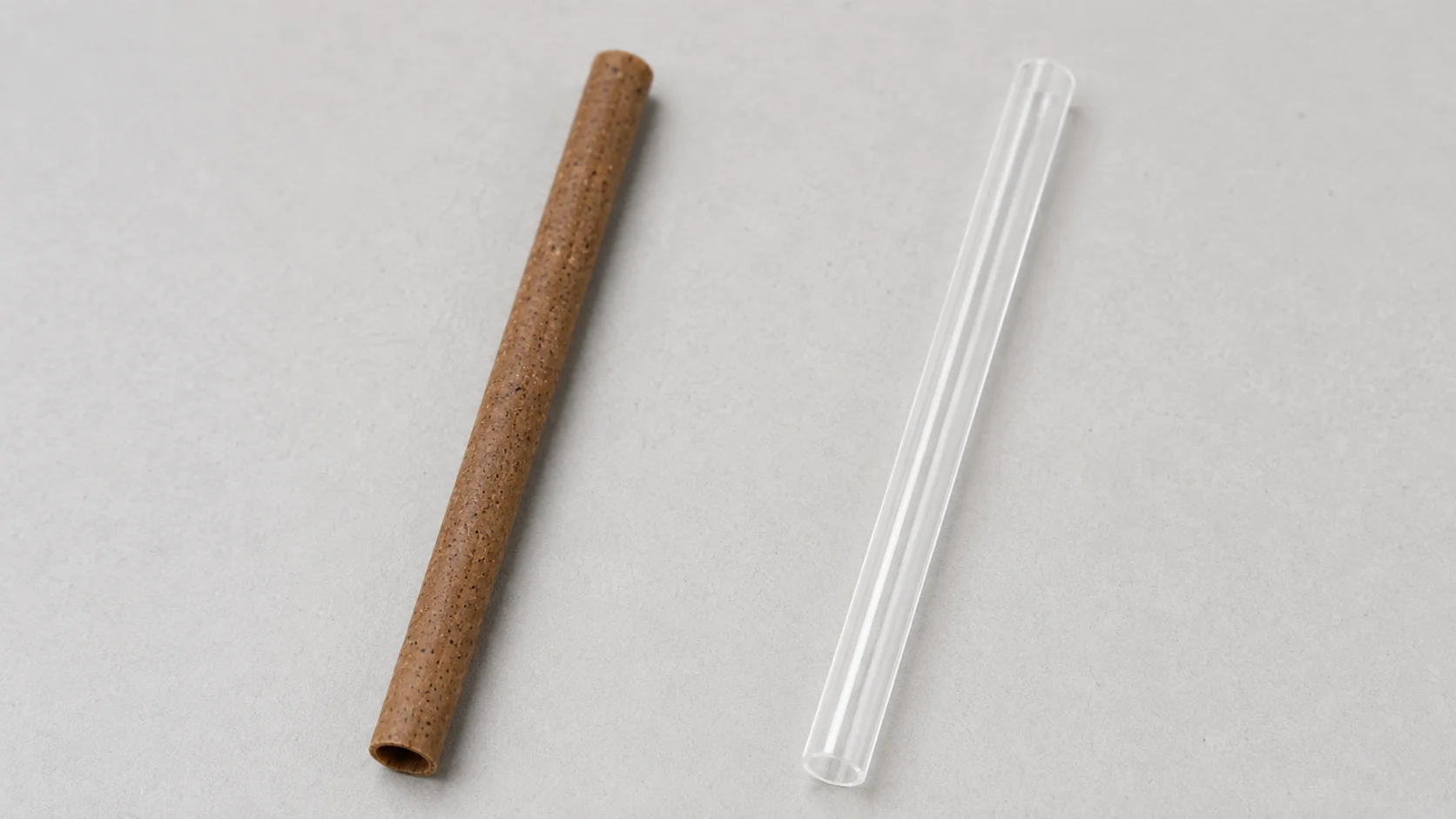
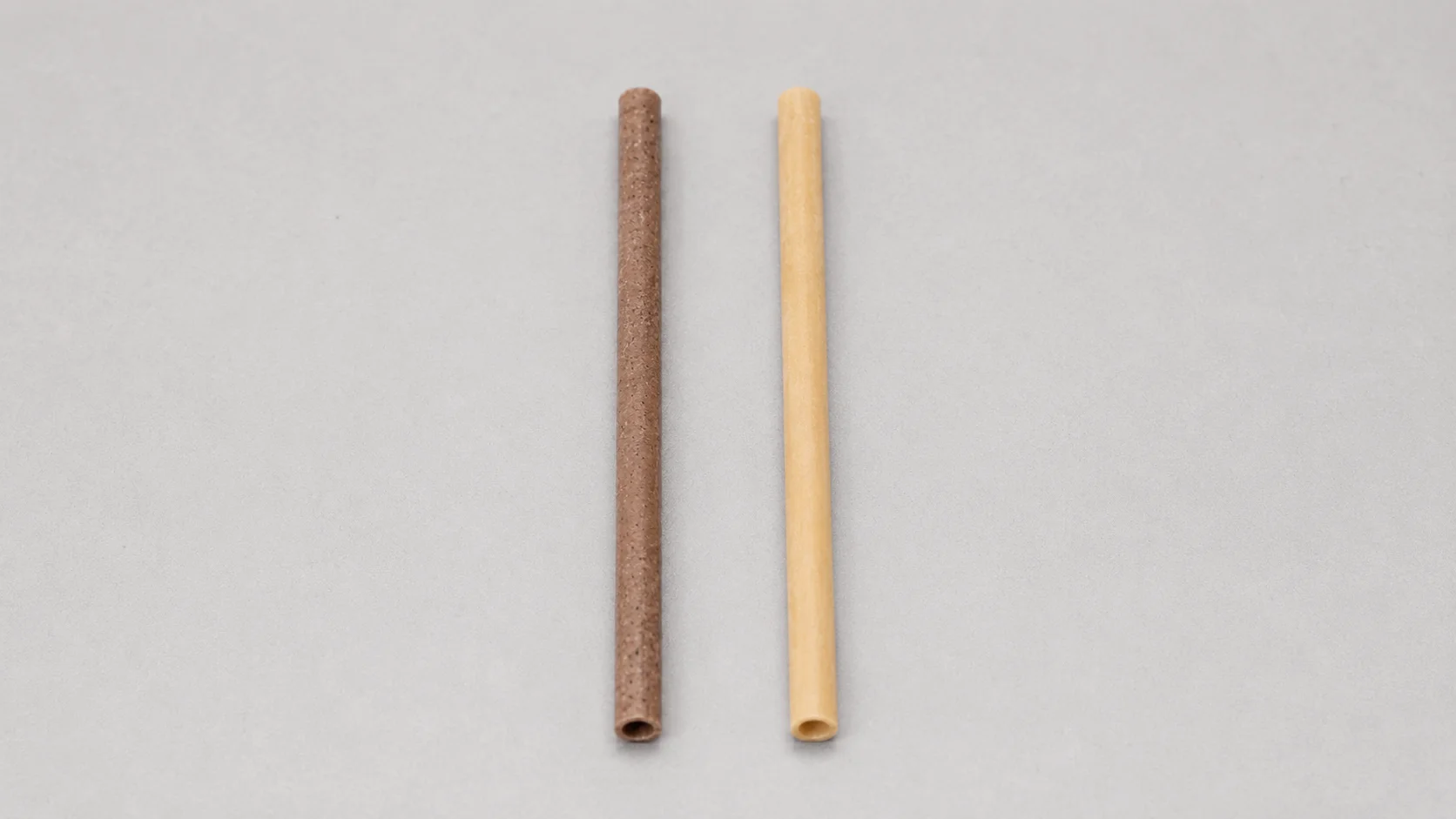
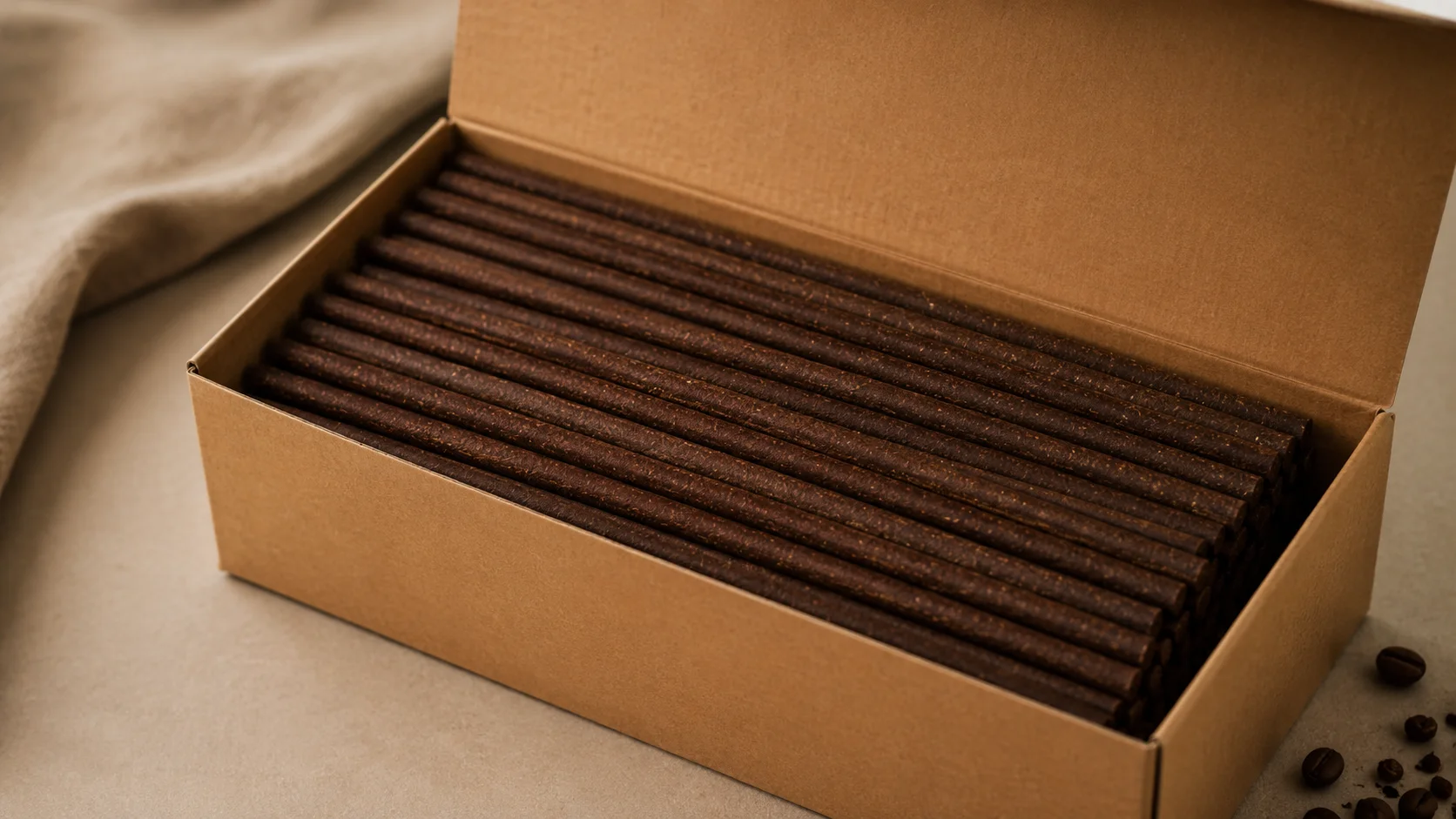
サトウキビのストローは食品と接触しても安全ですか?
今日の急速に進化する持続可能性の状況において、世界中の企業は、使い捨てプラスチックの代替に重点を置き、環境フットプリントを削減するという多大なプレッシャーにさらされています。革新的な代替品が登場するにつれ、B2Bバイヤーには重要かつ複雑な問題が迫っています。これらの「グリーン」ソリューション、特にサトウキビストローは、食品との接触に対して明白に安全ですか?また、世界市場や目の肥えた消費者が期待するますます厳格化する規制基準を満たしていますか?
現在、市場にはエコクレームの不協和音が溢れており、B2Bバイヤーにとって真の安全性、検証されたコンプライアンス、真の持続可能性を見極めることは非常に困難になっています。誤った情報、曖昧な約束、または規制の詳細の見落としは、ビジネスに重大なリスクをもたらす可能性があります。潜在的な影響を想像してみてください。顧客の健康への懸念がブランドの評判を傷つけ、ますます厳格化する環境法や食品安全法に基づく高額の罰金、そして長年にわたって苦労して築き上げてきた消費者の信頼の低下です。根拠のない主張に頼るにはリスクが高すぎます。
この包括的なガイドは、ノイズを打ち破るように設計されており、認定サトウキビストローが環境に配慮した選択であるだけでなく、ビジネスの多様な食品サービスのニーズに完全に安全で準拠し、将来も保証されるソリューションである理由について、明確な答えと深い洞察を提供します。私たちは科学を解明し、認証を解明し、規制の状況をわかりやすく解明し、お客様が収益、顧客、地球に利益をもたらす情報に基づいた意思決定を行えるようにします。

II.興味: サトウキビストローの妥協のない安全性と堅牢な証明を明らかにする
真に持続可能な食品サービス ソリューションへの道は、安全性と検証可能な認証に対する妥協のない取り組みから始まります。サトウキビストローは、天然素材、厳格なテスト、包括的な認証を基盤として構築された、最高の代替品として際立っています。
1. 安全性の基礎: 材料組成と化学純度
サトウキビストローの本質的な安全性は、その基本的な組成から始まります。これらは主に、砂糖抽出後に残る繊維状の副産物であるサトウキビのバガスから作られています。持続可能な方法で調達されたセルロース系資源であるこの素材は、かつて農業廃棄物だったものを貴重な環境に優しい製品に変えます。重要なことは、市場に出回っている高品質の製品の多くは明示的に「PLA フリー」であり、特定の規制ニーズや、バイオベースのプラスチックさえ避けようとする消費者の好みに対応していることです。
評判の良い製造業者は、サトウキビストローの化学的純度を保証するために多大な努力を払っています。この取り組みにより、従来のプラスチックに一般的に関連付けられているさまざまな有害物質が含まれていないことが厳格にテストされ、認定されていることを保証します。
- BPA (Bisphenol-A) and Phthalates: Known endocrine disruptors, these are entirely absent.
- PFAS (“Forever Chemicals”) and Fluorine: A critical safety concern, certified sugarcane straws are explicitly PFAS-Free and Fluorine-Free, putting your business ahead of emerging global restrictions.
- Heavy Metals: Strict limits are maintained to prevent any migration of toxic elements.
- Petroleum and Bleach: These harsh chemicals, often found in paper processing, are excluded.
- “5 Plastics Free”: High-quality sugarcane straws are certified free from Polystyrene (PS), Polyethylene (PE), Polypropylene (PP), Polyvinyl Chloride (PVC), and Polyethylene Terephthalate (PET/PETE), ensuring they are devoid of conventional plastic compounds.
- Gluten-Free: 食事制限に配慮したこのストローはグルテンフリーでもあります。
サトウキビのストローは、有害物質が含まれていないだけでなく、厳格な食品グレードの材料基準を遵守し、非の打ちどころのない非浸出性を保証します。これは単なる主張ではなく、食品との接触の安全性に関する米国 FDA の承認や EU の食品安全規制 (EU 規則 10/2011 など) への準拠など、強力な国際承認によって裏付けられています。これにより、望ましくない物質が飲料に浸出せず、飲料の純度と味が維持されることが保証されます。さらに、無臭かつ無味になるよう細心の注意を払って設計されており、消費者の感覚体験が変化することを防ぎます。
熱性能と耐久性も重要な差別化要因です。幅広い温度にわたって構造の完全性を維持するように設計されており、冷たい飲み物と温かい飲み物には最高 60 °C まで耐えることができ、一部の高度な品種では最高 90 °C で確実に動作します。すぐに水浸しになったり潰れたりする多くの紙の代替品とは異なり、サトウキビ ストローは優れた耐久性を備え、飲み物全体にわたってプレミアムなユーザー エクスペリエンスが保証されます。
健康を意識する企業や消費者にとって、砂糖の抽出プロセスにより、サトウキビのストローは血糖値に影響を与えないことを明確にすることが重要です。天然素材で作られており毒性はありませんが、次の点に注意することが重要です。食べられないそして摂取すべきではありません。他の非食品と同様に、子供が噛んだり誤飲したりしないように監督することをお勧めします。

2. 信頼の証: 堆肥化可能性と環境主張を検証する世界的な認証
「グリーン」主張が飽和している市場では、検証済みの認証が製品の真の環境性能と安全性を最も強力に保証します。サトウキビのストローは、食品の安全性と使用後の生分解性の両方に対する比類のない取り組みを示す、一連の広範な国際認証を通じて他と区別されています。
国際的な食品接触の安全性
The foundation of trust begins with direct food contact safety. Our sugarcane straws are universally US FDA Approved and have successfully passed the rigorous EU Regulation EU No. 10/2011 food contact tests, verifying their safety for direct contact with food and beverages. These approvals are critical for any B2B operation serving the public.
Industrial Compostability Powerhouses
For products truly designed for a circular economy, industrial compostability is paramount. Sugarcane straws lead the way with multiple certifications:
- EN 13432 (ヨーロッパ): 産業堆肥化の可能性に関するこの欧州基準は基礎です。 DIN CERTCO などの団体によって認証され、EN 13432 を満たす製品は、産業用堆肥化施設で 6 か月以内に 90% の生分解を達成し、12 週間以内に 2 mm 未満の破片に分解する必要があります。これにより、得られる堆肥を損なうことなく、材料が確実に土に還ります。 EN 13432 の公式規格文書には、生分解性、崩壊、化学組成、生態毒性に関する厳しい基準が概説されており、堆肥化可能な包装に対する総合的なアプローチが保証されています。この重要な欧州規格の詳細については、次の資料を参照してください。 ヨーロッパのバイオプラスチック EN 13432 に関する組織のリソース。
- ASTM D6400 (米国): In the United States, the Biodegradable Products Institute (BPI) certifies products against the American Society for Testing and Materials (ASTM) D6400 standard. This specifies that products must achieve 90% biodegradation within 180 days in municipal/industrial composting facilities, along with proper disintegration and non-toxicity to the compost. The BPIworld.org website is the authoritative source for BPI certification standards, including ASTM D6400, for compostable products in North America.
- ASTM D6868 (USA): This standard is critical for products incorporating plastics as coatings or additives with other compostable substrates. It ensures the entire product’s compostability in industrial settings, meaning both the bagasse and any binding agents are fully compostable.
- BPI Industrial Certification: As mentioned, the Biodegradable Products Institute (BPI) provides third-party verification, ensuring compliance with ASTM D6400/D6868 and promoting responsible waste management practices.
- TÜV OK Compost Industrial: An independent verification of industrial compostability provided by TÜV Austria, aligning with the stringent requirements of EN 13432.
Home Compostability Advantage
Going a step further, many sugarcane straws offer home compostability, providing even greater end-of-life flexibility:
- TÜV OK Compost Home & Home Material: This more stringent certification, also from TÜV Austria, verifies complete biodegradability in backyard soil environments, without the need for industrial conditions.
- ABA Home Composting: The Australian Biodegradable Plastics Association (ABA) provides certification for home composting in the Australian market.
Chemical Transparency & Carbon Footprint
Beyond biodegradability, comprehensive environmental responsibility extends to chemical transparency and climate impact:
- PFAS-Free and Fluorine-Free: Explicitly certified, this guarantees freedom from “forever chemicals,” a crucial consideration for modern food contact materials.
- SVHC Free: Certified free from Substances of Very High Concern.
- BSI Carbon Footprint Certified: Demonstrates a commitment to assessing and reducing the product’s carbon footprint throughout its lifecycle.
To illustrate the distinctions and shared criteria of these vital certifications, here is a comparison table:
| 認証 | 地域 | 集中 | Key Requirements | Certification Body (Examples) |
|---|---|---|---|---|
| EN 13432 | ヨーロッパ | Industrial Compostability | 90% biodegradation in 6 months; 90% disintegration (<2mm) in 12 weeks; low heavy metals; no ecotoxicity. | DIN CERTCO, TÜV Austria |
| ASTM D6400 | USA | Industrial Compostability | 90% biodegradation in 180 days; disintegration comparable to compost; low heavy metals; no ecotoxicity. | BPI (生分解性製品研究所) |
| ASTM D6868 | USA | Industrial Compostability (Coated Products) | Ensures compostability of entire product, including plastic coatings/additives on other substrates (e.g., paper). | BPI (生分解性製品研究所) |
| TÜV OK Compost Industrial | Global (Europe-aligned) | Industrial Compostability | Aligns with EN 13432; verified by independent third-party. | TÜV Austria |
| TÜV OK コンポスト ホーム | Global | Home Compostability | More stringent; complete biodegradation in lower, less consistent home composting temperatures. | TÜV Austria |

3. Navigating the Regulatory Landscape: Sugarcane Straws as a Future-Proof Solution
使い捨てプラスチックと食品に接触する材料に関する世界的な規制環境は、環境問題の高まりと循環経済への推進によって急速に進化しています。サトウキビストローは、その堅牢な材料構成と包括的な認証を備えており、この複雑な状況を乗り切る上で重要な利点を提供します。
EU 使い捨てプラスチック指令 (SUPD) への準拠 (指令 2019/904)
のEU 使い捨てプラスチック指令 (指令 2019/904), implemented in July 2021, has fundamentally reshaped the market for single-use items in Europe. It bans a range of single-use plastic products, including straws, to combat plastic pollution. The directive’s definition of “plastic” is broad, encompassing even bio-based and biodegradable plastics if they consist of “chemically modified natural polymers.”
This is where the distinction of truly “PLA-Free” or unmodified bagasse sugarcane straws becomes critical. If sugarcane straws are made entirely from natural sugarcane bagasse that has not been chemically modified during processing, they may fall outside the SUPD’s definition of plastic and thus be exempt from the ban on single-use plastic straws. However, if they contain chemically modified natural polymers or other plastics like PLA, even if compostable, they would typically be subject to the ban. Choosing certified “PLA-Free” sugarcane straws ensures your business aligns with the strictest interpretation of this directive, providing a compliant solution for the European market. The full text of the directive is available from officialEuropa.eusources.
Global PFAS Restrictions & Bans
The global movement against Per- and Polyfluoroalkyl Substances (PFAS) in food contact materials represents one of the most urgent compliance challenges for businesses. These “forever chemicals” are under increasing scrutiny due to their environmental persistence and potential health impacts. Sugarcane straws’ certified PFAS-Free status positions businesses proactively ahead of critical and rapidly approaching deadlines:
- EU Ban: A full ban on PFAS in food packaging is set to take effect across the EU from August 12, 2026, under the new Packaging and Packaging Waste Regulation (PPWR). This will prohibit food packaging containing PFAS above stringent concentration limits.
- US State-Level Bans: Several US states have already enacted stringent bans:
- カリフォルニア: Banned plant fiber-based food packaging with intentionally added PFAS or exceeding 100 ppm total organic fluorine, effective January 1, 2023.
- New York: Prohibited distribution and sale of food packaging containing intentionally added PFAS from December 31, 2022.
- Maine, Colorado, Connecticut, Minnesota, Vermont, and Rhode Island: Have similar bans or phase-outs coming into effect between 2023-2024.
- FDA Voluntary Phase-out: At the federal level, the US FDA announced a voluntary phase-out by food packaging manufacturers of PFAS-containing grease-proof packaging in February 2024, demonstrating a clear industry shift.
- Canada’s Toxic Substance Designation: Canada is taking steps to add PFAS as a class to its official list of toxic substances, with a phased approach to address their use in consumer products, including food packaging, from 2025 onwards.
By choosing certified PFAS-Free sugarcane straws, businesses can confidently meet these diverse and evolving regulatory requirements, avoiding costly fines and upholding their commitment to public health.
FTC Green Guides Alignment (USA)
In the United States, the Federal Trade Commission (FTC) Green Guides provide essential guidance for marketers to avoid making deceptive environmental claims. While not legally binding regulations, claims inconsistent with the Green Guides can lead to FTC enforcement actions. Formore information on the FTC Green Guides, visit the official website of the Federal Trade Commission.
The extensive certifications for sugarcane straws (BPI, TÜV OK Compost, PFAS-Free) provide the robust scientific evidence and third-party verification needed to substantiate environmental claims truthfully. This allows businesses to confidently market their eco-friendly initiatives, avoid accusations of “greenwashing,” and uphold consumer trust, aligning perfectly with the FTC’s principles of clear and substantiated environmental marketing.
Extended Producer Responsibility (EPR) Trends
Extended Producer Responsibility (EPR) is a policy approach gaining global traction, shifting the responsibility for the entire lifecycle of products and packaging to their producers. EPR policies (such as the EU Waste Framework Directive, Packaging and Packaging Waste Directive, and new initiatives in the UK and various US states) are pushing producers to fund and manage product end-of-life, including collection, recycling, and disposal.
Compostable sugarcane straws align perfectly with these EPR trends:
- Incentivizing Sustainable Design: EPR encourages manufacturers to design packaging that is easier to recycle, reuse, or compost. Sugarcane straws embody this by being derived from renewable resources and designed for organic recovery.
- Infrastructure Support: As EPR schemes generate fees from producers, these funds are increasingly earmarked for improving waste management infrastructure, including dedicated composting facilities, which directly benefits the end-of-life processing of compostable items like sugarcane straws.
- Circular Economy Principles: By choosing compostable products, businesses contribute to a circular economy, where materials are kept in use for as long as possible, and waste is minimized. This proactive approach not only satisfies regulatory mandates but also demonstrates leadership in sustainable practices.
III. Desire: Transform Your Business with Smart, Sustainable, and Compliant Sugarcane Straws
Adopting certified sugarcane straws is more than just an eco-friendly switch; it’s a strategic business decision that delivers multifaceted benefits, elevating your brand and future-proofing your operations in a rapidly changing market.
1. Ensure Seamless Regulatory Compliance and Mitigate Risk
Navigating the intricate web of international and national environmental regulations can be daunting. With certified sugarcane straws, you can confidently steer through complex compliance landscapes, including the EU SUPD, global PFAS bans, US state PFAS laws, and the FTC Green Guides. This proactive approach helps you avoid costly fines, legal challenges, and reputational damage. By demonstrating unwavering adherence to the highest food safety and environmental standards, you protect your brand’s integrity and gain a significant competitive advantage.
Gain a competitive edge and ensure your business stays ahead of regulatory changes with our in-depth guide.
2. Elevate Your Brand’s Image and Meet Conscious Consumer Demand
Today’s consumers and B2B partners increasingly prioritize sustainability. By choosing sugarcane straws backed by verifiable, industry-leading certifications (BPI, TÜV OK Compost, PFAS-Free), you showcase an authentic, transparent commitment to environmental responsibility. This resonates deeply with eco-conscious customers, attracting new clientele and fostering stronger loyalty. Differentiate your brand in a crowded market as a leader in responsible, innovative, and genuinely safe food service solutions, demonstrating that your green claims are not just marketing, but a verifiable reality.
3. Optimize Operational Efficiency and Enhance Customer Experience
Beyond compliance and brand, sugarcane straws offer tangible operational and experiential benefits. Provide a superior drinking experience with durable, taste-neutral, and non-soggy straws that don’t compromise the quality or enjoyment of beverages. Their robust performance outshines many flimsy alternatives, reflecting positively on your service standards. Furthermore, simplifying waste management is a major operational advantage. With products that are industrially compostable and, in many cases, home compostable, you contribute to reducing landfill burden and streamline your waste streams. This reduces reliance on traditional plastics, simplifies procurement of compliant alternatives, and aligns your operations with a more sustainable future.
Compare sugarcane straws with other leading sustainable options like bamboo to make the best choice for your hospitality brand.そしてlearn more about sustainable straws for hospitality.
4. Drive Real Environmental Impact and Support a Circular Economy
Your choice of disposables has a direct impact on the planet. By integrating certified sugarcane straws, you actively contribute to the reduction of plastic pollution and landfill waste, choosing products designed to biodegrade and return valuable nutrients to the earth. This supports sustainable agricultural practices by utilizing sugarcane bagasse, a renewable byproduct, thereby reducing the need for virgin resources and fostering a more circular and regenerative economy. This commitment is a tangible demonstration of your business’s role in creating a healthier planet.
IV. Action: Secure Your Future with Certified Sugarcane Straws
Don’t just switch to “eco-friendly”—choose genuinely safe, certified, and compliant sugarcane straws that benefit your business, your customers, and the planet. The time to act is now, to ensure your operations are not only sustainable but also future-proof against evolving regulations and increasing consumer expectations.
Specific Next Steps:
- Explore Our B2B Sugarcane Straw Collection: Browse momoio.com’s full range of certified, high-performance sugarcane straws designed to meet the highest standards of safety and sustainability.
- Download Your Exclusive B2B Guide: Access the ultimate resource for seamlessly integrating sustainable straws into your operations and mastering compliance. Find it here: momoio.com/eco-friendly-sugarcane-straws-b2b-guide/
- Request a Sample Pack: Experience the quality, durability, and superior performance of momoio.com sugarcane straws firsthand before making a commitment.
- Connect with a Sustainability Expert: Get personalized consultation on selecting the optimal compliant and sustainable straw solution for your specific business needs.
Partner with momoio.com to confidently navigate the future of sustainable disposables, enhance your brand, and make a tangible positive impact on both your bottom line and the environment.
よくある質問
Yes, certified sugarcane straws are unequivocally safe for food contact. They are crafted primarily from natural sugarcane bagasse, a sustainably sourced cellulosic material. Reputable manufacturers ensure they are rigorously tested and certified free from harmful substances such as BPA, PFAS, phthalates, heavy metals, petroleum, and bleach. Furthermore, these straws hold robust international food contact approvals, including US FDA approval for food contact safety and compliance with EU food safety regulations (e.g., EU Regulation 10/2011).
Sugarcane straws are backed by an extensive suite of international certifications that affirm their compostability and environmental performance. Key certifications include EN 13432 (Europe, certified by DIN CERTCO or TÜV OK Compost Industrial), ASTM D6400 / D6868 (USA, certified by BPI), and TÜV OK Compost Home certification for biodegradability in backyard soil environments. They are also PFAS-Free, SVHC Free, and BSI Carbon Footprint Certified.
Certified “PLA-Free” sugarcane straws comply with the EU Single-Use Plastics Directive (Directive 2019/904) as they are made from natural, unmodified sugarcane bagasse. Their PFAS-Free certification ensures compliance with the EU ban on PFAS in food packaging (effective 2026) and US state-level bans (California, New York, etc.), helping businesses avoid fines and maintain safety standards.
Yes, sugarcane straws are engineered to resist sogginess and collapse, unlike many paper alternatives. They perform reliably in cold beverages and hot drinks up to 60°C, with some variants tested up to 90°C. They are odorless and flavor-neutral, ensuring no impact on taste.
Sugarcane straws are safe for all ages, including children, as they are non-toxic and free from harmful chemicals. However, they are not edible and should not be consumed. Supervision is recommended to avoid chewing or swallowing, as ingestion could cause discomfort or choking risk.