世界は変化しています。食品サービス、ホスピタリティ、小売業界の企業にとって、使い捨てプラスチックへの従来の依存は、環境上のジレンマだけでなく、経営上および評判上の重大な課題をもたらしています。サステナビリティがニッチな関心事から中核的なビジネスの責務へと移行するにつれて、環境に優しい代替品、特にストローのようにどこにでもあるものについてのライフサイクルと特性を理解することが最重要になっています。調達マネージャー、オペレーションディレクター、サステナビリティ責任者、サプライチェーン幹部は、もはや単に製品を購入するだけではありません。彼らはブランドの将来に投資し、進化する消費者の価値観に合わせて、ますます厳しくなる規制環境に積極的に対処しています。
The visible impact of plastic pollution, from oceanic gyres to microplastic contamination in our food chain, directly impinges on corporate social responsibility (CSR) and public perception. Brands associated with plastic waste risk consumer backlash and a decline in market trust. The consumer sentiment is clear: studies, including market insights from Grand View Research, indicate that approximately 80% of consumers actively prefer eco-friendly products, translating directly into purchasing decisions and brand loyalty. This is not a trend; it’s a fundamental shift in consumer behavior. Simultaneously, a global regulatory tide is turning against single-use plastics. The European Union’s sweeping Single-Use Plastics Directive and a growing patchwork of state-level bans across the United States are legally mandating a transition. Non-compliance invites not only hefty fines and legal challenges but also significant reputational damage. The strategic adoption of biodegradable straws, therefore, is not merely about avoiding penalties; it’s about seizing a powerful competitive advantage, signaling innovation, and cementing market leadership in an era defined by environmental accountability.
持続可能なソリューションを明らかにする: 生分解性ストローの背後にある科学
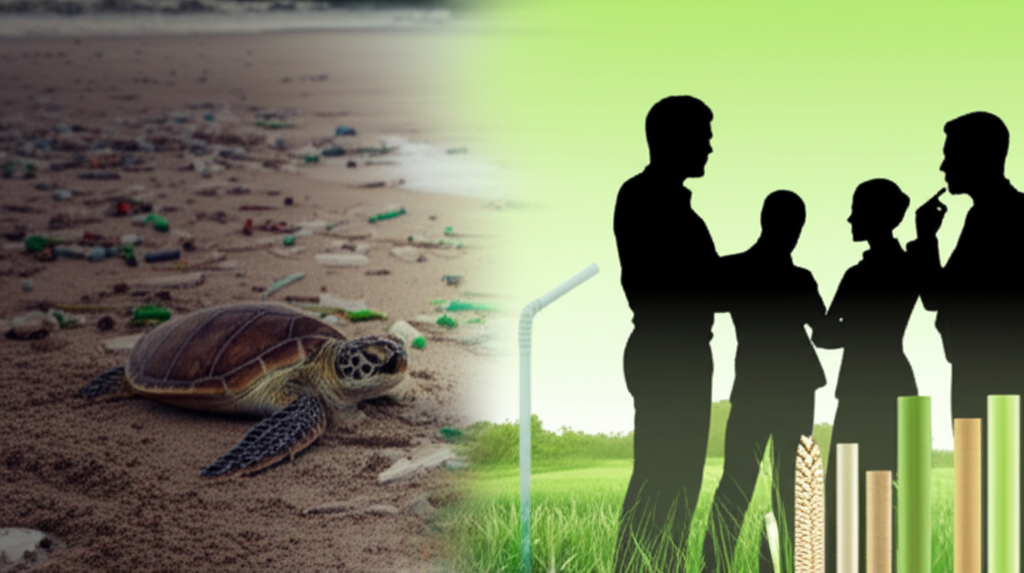
The journey from ancient drinking tubes to today’s advanced biodegradable straws is a testament to human ingenuity and evolving environmental consciousness. Millennia ago, ancient Mesopotamians and Egyptians utilized natural reeds and precious metals for sipping. The 19th century saw Marvin C. Stone’s revolutionary paper straw, born from a desire for a cleaner, non-soggy alternative to rye grass. Despite this innovation and Joseph Friedman’s later invention of the bendy straw, the mid-20th century ushered in the era of plastic straws—cheap, durable, and globally dominant. However, the 21st century witnessed a dramatic awakening. Viral images of marine life entangled in plastic waste underscored the devastating impact of single-use plastics, reigniting a global demand for sustainable solutions.
Today, biodegradable straws are crafted from a diverse array of materials, each bringing unique properties and manufacturing complexities to the table. These fall broadly into three categories:
- Plant-Based Polymers (Bioplastics): Leading this category are Polylactic Acid (PLA) and Polyhydroxyalkanoates (PHA). PLA is derived from fermented plant starches (like corn, sugarcane, or cassava) and offers a feel and clarity similar to conventional plastic. PHA, a newer bioplastic, comes from renewable resources like vegetable oils and is known for enhanced biodegradability.
- 紙: A common and continuously evolving option, paper straws are made from high-quality, food-grade paper, often sourced from sustainably managed (FSC-certified) forests.
- Natural Fibers and Agricultural Byproducts: This diverse group includes materials like fast-growing bamboo, hollow wheat stems (a byproduct of grain harvesting), rice and tapioca starches, fibrous residue from crushed sugarcane (bagasse), and even agave waste fibers.
The manufacturing processes for these eco-friendly alternatives are as varied as their materials, yet all are designed with sustainability at their core.
The Manufacturing Journey: From Raw Material to Eco-Friendly Straw
1. Bioplastic (PLA & PHA) Straw Production
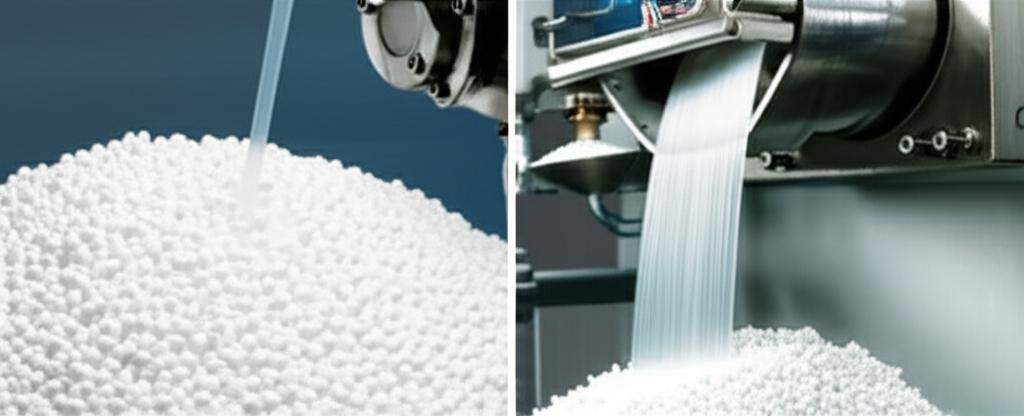
The production of PLA straws begins with the careful sourcing of renewable raw materials, typically corn starch or sugarcane. The starch is extracted and then undergoes a fermentation process, where enzymes and beneficial bacteria convert it into lactic acid. This liquid lactic acid is then subjected to heat and combined in a polymerization reaction, forming long chains of polylactic acid (PLA resin). This resin is subsequently processed into small, purified pellets. These PLA pellets are melted and fed into an advanced extruder machine, which pushes the molten PLA through a precisely engineered die, shaping it into long, continuous tubes. The extruded tubes are rapidly cooled to solidify their form, ensuring structural integrity, before being cut to the desired straw length. The final stage involves rigorous quality inspections, where straws are checked for uniform dimensions, smooth edges, and overall durability. Crucially for B2B procurement, manufacturers verify compliance with specific industrial composting standards, ensuring the product meets its intended end-of-life cycle. This requires conditions like higher temperatures (56-60°C) and specific microbial activity, which is a key distinction for proper disposal. Understanding the specific requirements for products like these is crucial, as navigating the complexities of compostable versus biodegradable certifications is crucial for procurement managers, a topic explored in our detailed guide onBPI compostable vs. biodegradable sustainability。
2. Advanced Paper Straw Manufacturing
現代の紙ストローは、耐久性と環境保全性の強化に重点を置き、初期の以前のものから大幅な進歩を遂げています。このプロセスは、多くの場合持続可能な方法で調達された高品質の食品グレードの紙の大きなロールから始まり、細いストリップに正確にカットされます。複数の紙層 (通常は 3 層または 4 層) が、環境に優しい水性接着剤でコーティングされています。次に、これらのストリップをマンドレルまたはスピンドルの周りにしっかりと巻き付けて、管状のストローの形状を形成します。重要な進歩には、パフォーマンスを劇的に向上させ、水浸しという一般的な問題に対処する、独自の耐水性コーティング (多くの場合植物ベースで PFAS フリー) の開発が含まれます。形成されたストローは、接着剤を硬化させて形状を固定するために、制御された乾燥プロセスを経ます。次に、長いチューブが正確な長さの個々のストローに切断されます。厳格な品質検査により、強度、均一性、および責任ある調達の重要な考慮事項である有害な「永久化学物質」(PFAS) が含まれていないことの検証を含む食品安全基準の順守が保証されます。
3. 天然繊維ストローの生産(竹、小麦、米、サトウキビ)

These straws leverage the inherent properties of natural plants, often requiring simpler, more mechanical processing. Raw materials like mature bamboo stalks or hollow wheat stems are sustainably harvested. For materials like sugarcane bagasse, it involves collecting the fibrous residue from existing agricultural processing. Thorough cleaning is paramount. For bamboo, this might involve natural disinfection with solutions like vinegar and water, followed by cutting into desired lengths and hollowing out natural nodes. Rice and tapioca straws involve producing a starch mixture, which is then steamed and extruded into straw shapes. Sugarcane bagasse can be pressed and molded into a material with plastic-like properties. The straws undergo natural or controlled drying processes to reduce moisture content and enhance stability. Edges are often sanded smooth for safe and comfortable use. These natural fiber straws inherently boast high biodegradability, breaking down without leaving harmful residues, aligning perfectly with a circular economy approach. For those exploring viable alternatives for everyday consumables, our comprehensive B2B guide onbiodegradable drinking tubesoffers deeper insights into material selection and supplier vetting.
Empowering Business Decisions: Comparative Analysis & Market Dynamics
For discerning decision-makers, choosing the right biodegradable straw involves a nuanced understanding of their performance characteristics, environmental impact, and cost implications. The market offers a range of options, each suited to different business needs and customer experiences.
| ストロータイプ | Key Performance Attributes | Disposal & Environmental Impact | Cost Implications (B2B) | Ideal Business Applications |
|---|---|---|---|---|
| 人民解放軍 | Durability:High, similar to plastic.Temperature:Best for cold/room temp (can soften in hot).Taste/Odor:Neutral.口当たり:Smooth, plastic-like.Reusability:Single-use. | 堆肥化可能性:Industrial composting required (e.g., 56-60°C).生分解性:Very slow in landfills/natural environments; can take years.Microplastics:Can persist and break into microplastics if not industrially composted. | Medium (more cost-effective than paper). | Quick-service restaurants, cafes with cold drinks, events where plastic feel is desired. |
| 紙 | Durability:Variable; improved with coatings, but can get soggy.Temperature:Best for cold/room temp.Taste/Odor:Can impart slight paper taste.口当たり:Varies; can feel fibrous.Reusability:Single-use. | 堆肥化可能性:Generally compostable, but often requires industrial composting (some contain PFAS).生分解性:Breaks down within 2-6 weeks.Microplastics:No plastic microplastics; concern over PFAS residues. | Medium to High (can be more expensive than PLA). | Cafes, bars, takeaway, high-volume venues, compliant with broad bans. |
| 竹 | Durability:High, very sturdy.Temperature:Suitable for hot/cold.Taste/Odor:Natural, subtle.口当たり:Natural, woody.Reusability:Yes, with cleaning. | 堆肥化可能性:Home & industrial compostable.生分解性:Fully natural breakdown into soil nutrients.Microplastics:None. | High (initial cost), but offset by reusability. | Eco-conscious establishments, high-end cafes, hotels, catering (for reusable options). |
| サトウキビ(バガス) | Durability:Good, sturdy, maintains integrity.Temperature:Good for hot beverages (up to 90°C).Taste/Odor:Neutral.口当たり:Smooth, fibrous feel.Reusability:Single-use. | 堆肥化可能性:Home & industrial compostable.生分解性:Breaks down naturally.Microplastics:None. | Medium. | Cafes, hotels, catering, any venue needing durable, heat-resistant single-use option. |
| Rice/Edible | Durability:Moderate (can soften in hot liquids).Temperature:Best for cold/room temp.Taste/Odor:Neutral; can be flavored.口当たり:Smooth, edible.Reusability:Single-use (and edible). | 堆肥化可能性:Fully home compostable.生分解性:Very fast (e.g., 90 days in natural environment).Microplastics:None. Safe for marine life if consumed. | Medium to High. | Unique cafes, eco-conscious events, educational institutions (novelty, safety), places with severe plastic bans. |
| Wheat Stem | Durability:Good, naturally hollow & sturdy.Temperature:Good for cold/room temp.Taste/Odor:Neutral (gluten-free despite wheat origin).口当たり:Natural, clean.Reusability:Single-use. | 堆肥化可能性:Home & industrial compostable.生分解性:Fully natural breakdown.Microplastics:None. | Low to Medium (agricultural byproduct). | Bars, eco-friendly events, cost-sensitive businesses seeking natural alternative. |
Navigating the Green Market: Essential Industry Insights for Decision-Makers
The global eco-friendly straws market is experiencing robust growth, projected to reach nearly USD 25.1 billion by 2035 from an estimated USD 12.3 billion in 2025, with a compound annual growth rate (CAGR) of 7.3%. This expansion is fueled by several interconnected factors crucial for businesses to recognize. Government mandates, such as the EU’s proactive stance on single-use plastics and various state-level prohibitions across the USA, are directly driving demand. Concurrently, evolving consumer preferences, particularly among younger generations, for transparently sustainable products compel businesses to adapt. Corporate sustainability initiatives, driven by CSR goals and investor pressure, further accelerate this shift. Leading regions in adoption include North America and Europe, pioneers in environmental consciousness and policy, while Asia-Pacific is rapidly emerging due to increasing urbanization and green manufacturing initiatives.
Despite the momentum, decision-makers must navigate certain complexities. The“Greenwashing” Debateremains pertinent: while PLA straws are plant-based, they primarily require industrial composting facilities (operating at specific temperatures like 140°F or 60°C) to break down effectively, a nuance often misunderstood by consumers. If mismanaged, they can persist in landfills for centuries, behaving much like traditional plastics. This highlights the importance of transparent BPI certifications and understanding true compostability.
A significant concern is thePFAS Challenge. Recent studies, notably from Europe, have detected “forever chemicals” (poly- and perfluoroalkyl substances) in many paper and bamboo straws, used for water repellency. These chemicals are long-lasting and linked to health issues, necessitating stringent supplier vetting and demanding PFAS-free certifications to protect both consumers and the environment. This directly impacts the safety and long-term compliance of your procurement choices.
BalancingPerformance vs. Cost vs. Perceptionis another ongoing challenge. Early iterations of paper straws, for example, often suffered from sogginess, affecting customer experience. While innovations have improved durability, this trade-off between cost efficiency, product performance, and customer satisfaction requires careful consideration. Ultimately, choosing the right supplier for biodegradable drinking straws is paramount to ensuring product integrity and alignment with your sustainability goals.
のDisposal Infrastructure Gapspresent a practical hurdle. Even truly compostable bioplastics face limitations due to the scarce availability of industrial composting facilities, particularly in the United States where there are just over 100 qualified commercial composting centers. This means many “compostable” straws may still end up in landfills, negating their environmental benefit. Businesses need to assess local infrastructure and plan accordingly. Finally,アクセシビリティに関する考慮事項for individuals with disabilities must be addressed. Many rely on the flexibility and safety of traditional plastic straws, and alternatives like metal or glass can pose injury risks, while some compostable options may not be suitable. Inclusive solutions are paramount. Despite these hurdles, adopting verified sustainable straws presents immenseOpportunities for Brand Differentiation. It showcases a genuine commitment to environmental stewardship, attracting eco-conscious customers and aligning with critical CSR goals, ultimately enhancing brand value and market competitiveness.

Your Path to Sustainable Operations: A Forward-Looking Outlook
The future of biodegradable straws is vibrant, with continuous innovation aimed at overcoming current limitations and pushing the boundaries of sustainable design. Breakthroughs in materials science are leading toemerging materialssuch as bacterial cellulose straws, which are as cheap as plastic, stronger than paper, and break down without composting, potentially tasting like dried coconut. Advanced PHA bioplastics and foam-based bioplastics are being engineered for faster and more complete degradation in diverse environments, including marine settings, with foam CDA straws showing disintegration in seawater in as little as 8 months. Researchers are also exploring bio-based plastics incorporating starch and lignin for enhanced integrity and natural decomposition. Thesetechnological advancementsinclude improved water-resistant coatings for paper straws using biodegradable plastic and cellulose nanocrystals, ensuring they maintain physical integrity in both hot and cold drinks. Furthermore, the focus oncircular economy principlesis driving research into energy-efficient production methods, such as solar-powered machinery, and fostering collaborations between manufacturers and waste management facilities to streamline composting and repurposing processes.
To effectively transition your operations towards a greener future with biodegradable straws, a strategic and informed approach is paramount. Firstly, conduct acomprehensive needs assessmentfor your business, evaluating volume requirements, types of beverages served, and available waste management infrastructure. This will guide your material selection. Secondly, forge astrategic supplier partnership. Prioritize suppliers offering transparent certifications (e.g., BPI, TUV Austria OK Compost INDUSTRIAL/HOME, FSC) and proven product performance, ensuring their claims align with your sustainability goals and local disposal capabilities. Thirdly, consider apilot programwithin a controlled environment. Test different straw types in real-world scenarios to gauge durability, user satisfaction, and operational efficiency, gathering invaluable feedback before a full-scale rollout. Fourthly,educate and communicateeffectively. Develop clear internal training for staff on proper usage and disposal, and create compelling messaging for customers explaining your commitment to sustainable choices. Finally,embrace the future of waste managementby actively investigating opportunities for partnering with industrial composting facilities or supporting local green initiatives that can handle your chosen biodegradable materials.
The time to act is now. By integrating carefully selected, truly biodegradable straws into your supply chain, your organization can significantly reduce its environmental footprint, mitigate escalating regulatory risks, and enhance brand value in a competitive market. This proactive approach will not only contribute to a healthier planet but will also position your company as a visionary leader, capturing market share and building deep, lasting trust with an increasingly eco-conscious clientele. Make the strategic choice for sustainability, and lead your business into a more responsible and prosperous future.
よくある質問(FAQ)
What are the primary materials used to make biodegradable straws?
Biodegradable straws are primarily made from:
- Plant-based polymers (e.g., PLA, PHA)
- Food-grade paper
- Natural fibers & agricultural byproducts — bamboo, wheat stems, rice/tapioca starch, sugarcane bagasse, agave, etc.
Do PLA straws truly biodegrade?
PLA is plant-based and compostable, but typically needs industrial composting (≈56–60 °C and specific microbial activity). In landfills or natural environments, PLA can persist for years and may fragment into microplastics if not properly composted.
Are there concerns about “forever chemicals” (PFAS) in biodegradable straws?
Yes. Some studies (especially in Europe) detected PFAS in certain paper そして bamboo straws used for water resistance. Choose suppliers that provide PFAS-free certifications to protect health and environmental integrity.
What are the main challenges businesses face when adopting biodegradable straws?
- Higher production and unit costs vs. plastic
- Performance issues (e.g., early paper versions getting soggy)
- Limited access to industrial composting for PLA
- Verifying real biodegradability and avoiding greenwashing
- Ensuring accessibility (e.g., options for guests with disabilities)
What are the future developments in biodegradable straw technology?
- Next-gen materials like bacterial cellulose and advanced PHA (faster marine degradation)
- Improved water-resistant, PFAS-free coatings for durability
- More energy-efficient manufacturing and broader circular-economy integration