サステナビリティ コンテンツ ストラテジストによる

業界の切実な問題の紹介
食品サービスの包装業界は、環境への要求の高まりと消費者の好みの変化により、大きな変化を遂げています。調達マネージャー、オペレーションディレクター、サステナビリティ責任者、サプライチェーン幹部にとって、この新たな現実に適応することは、単なるコンプライアンスの実践ではなく、戦略的義務です。世界の堆肥化可能な包装市場は、2024 年に 555 億 3000 万米ドルと評価され、2032 年までに 898 億 5000 万米ドルに急増すると予測されており、6.20% という堅調な年間平均成長率 (CAGR) を示しています (Grand View Research、2024)。この急激な成長は、環境に優しい代替品に対する市場の明確な需要を示しています。
Consumers are actively scrutinizing the sustainability credentials of the brands they support; a multi-country survey revealed that 86% of respondents acknowledge climate change and are willing to pay an average of 9.7% more for sustainable products (NielsenIQ, 2023). Ignoring this trend carries significant operational and commercial risks, from eroding brand loyalty to incurring penalties under tightening environmental regulations. This comprehensive guide clarifies whether BPI-certified compostable solutions meet the demanding criteria of microwave safety, operational efficiency, and environmental responsibility, empowering B2B decision-makers to make informed choices.
Embracing BPI-certified microwave-safe packaging is crucial for foodservice to meet evolving demands and mitigate risks.
Understanding BPI Certification: The Gold Standard for Compostability
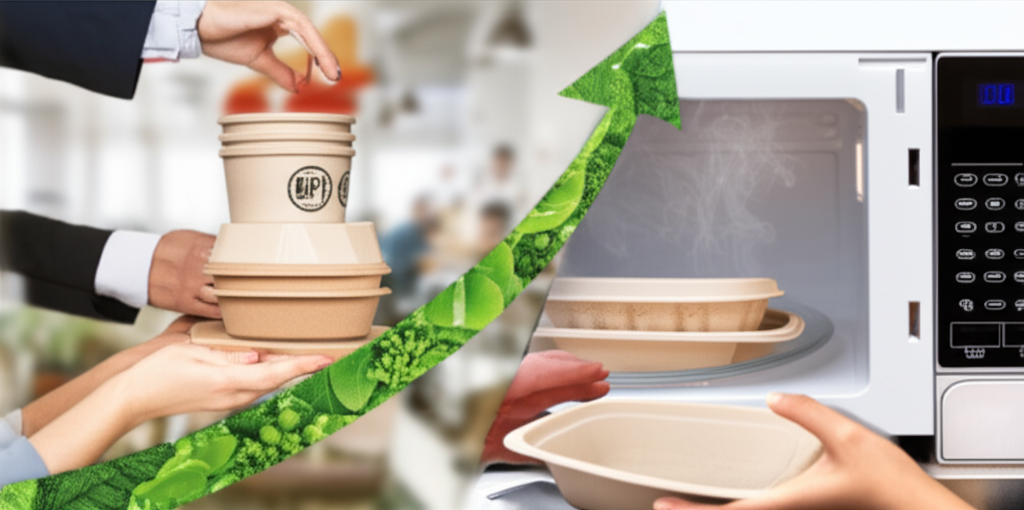
At the heart of reliable compostable packaging lies rigorous certification. The生分解性製品研究所(BPI)offers North America’s leading third-party verification program for compostable products. BPI certification ensures that products rigorously meet ASTM D6400 or D6868 standards, which dictate that items will achieve 90% disintegration within 12 weeks and 90% biodegradation within 180 days in industrial composting facilities. This meticulous testing guarantees that BPI-certified products break down into non-toxic biomass, water, and carbon dioxide, without leaving harmful residues or microplastics.
Crucially, addressing significant chemical concerns, BPI has proactively evolved its standards. As of January 1, 2020, BPI prohibits intentionally added PFAS (per- and polyfluoroalkyl substances) in certified products, with a strict limit of less than 100ppm total fluorine. This commitment to eliminating “forever chemicals” from the supply chain sets a vital benchmark for environmental and human health safety in compostable packaging.
BPI certification guarantees rigorous compostability standards, including the absence of intentionally added PFAS.
Unpacking “Microwave Safe” for BPI Certified Compostable Packaging
BPI 認証は堆肥化可能性のベンチマークですが、製品の「電子レンジ対応」ステータスは主にその材料構成と特定の設計によって決まります。 B2B バイヤーが運用の適合性と安全性の両方を確保するには、これらの違いを理解することが不可欠です。
電子レンジの安全性に関する重要事項:
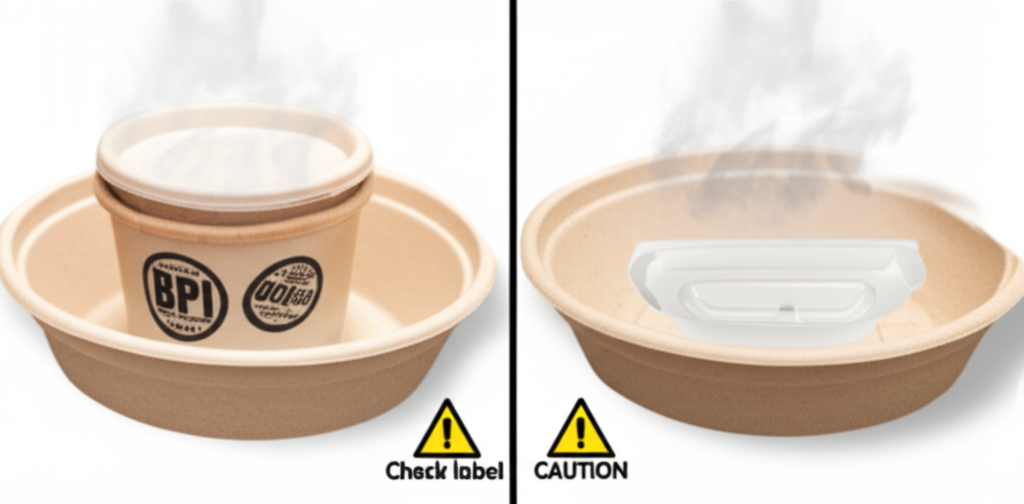
- Sugarcane Bagasse & Plant Fibers: Materials like sugarcane bagasse (a byproduct of sugarcane processing) and other plant fibers (such as bamboo, miscanthus, or sorghum) are generally highly regarded for their heat resistance. Products made from these natural fibers are typically microwave-safe, capable of withstanding temperatures up to 200°F (93°C) for approximately 20 minutes for reheating. Some advanced plant fiber items are engineered to handle even higher temperatures, up to 450°F, making them microwave-safe for 2-3/4 minutes (unlined) and 5-3/4 minutes (lined) of heating.
- PLA (Polylactic Acid) Considerations: Polylactic Acid, a bioplastic derived from renewable resources like corn starch, is widely used in compostable packaging. However, standard PLA can be sensitive to high heat and may warp or melt when exposed to microwave temperatures. While some specialized “white PLA” containers are explicitly designed and certified as microwave-safe, it is crucial to always check for explicit “microwave-safe” labels or symbols on PLA products. CPLA (crystallized polylactic acid), while designed for hot foods, is generally not microwave-safe.
General Microwave Usage Guidelines:
Even with microwave-safe compostable packaging, best practices are essential. Advise your operations teams to:
- Always check for the “microwave-safe” label on the product itself. If it’s not explicitly stated, avoid microwaving.
- Use lower power settings and shorter heating intervals (e.g., 30-second to 1-minute bursts) to prevent overheating and potential deformation.
- Remove or vent lids before microwaving to prevent steam buildup and breakage.
- Avoid using for high-fat or sugary foods, as these can reach extremely high temperatures that might compromise the container’s integrity.
- Recognize that most compostable containers are designed for single use and may not withstand repeated microwave exposure or washing.
Microwave safety for compostable packaging depends on material and explicit labeling; always follow usage guidelines.
Regulatory Landscape and Compliance for Microwave Safe Compostable Packaging
Navigating the complex web of regulations is a core responsibility for supply chain and procurement leaders. BPI-certified compostable packaging, particularly those designed for microwave use, must comply with stringent food contact material regulations across key markets.
米国では、FDA が食品と接触する材料を管理し、GMP 規制 (21 CFR 174.5) およびマイクロ波適合性を評価する FCN プログラムに準拠しています。 EU 枠組み規則 (EC) No 1935/2004 および EN 13432 は、電子レンジを含む使用目的の安全性を義務付けており、SUPD は多くの従来の使い捨てプラスチックを禁止しています。国際的には、オーストラリアの AS4736:2006 は EN 13432 と一致し、カナダは認定された堆肥化可能な陶器を促進し、日本は 2025 年 6 月までに「ポジティブリスト」システムに移行します。これらの世界的な動きは、認定された安全な堆肥化可能なソリューションの重要性が高まっていることを強調しています。世界的な規制枠組みの詳細については、持続可能な包装規制に関する包括的なガイドを参照してください。Learn more about global sustainable packaging regulations.
Global regulations increasingly mandate certified compostable packaging, requiring B2B compliance for microwave-safe solutions.
B2B Operational Impact & ROI of BPI Compostable Microwave Safe Solutions
Adopting BPI-certified microwave-safe compostable packaging offers a multi-faceted return on investment for B2B operations, extending far beyond mere compliance.
- Waste Diversion & Cost Savings: Redirecting organic waste (food scraps and certified compostable packaging) from landfills to composting facilities can significantly reduce disposal fees. For composters, the removal of non-compostable contaminants often accounts for approximately 17% of operating expenses. By enabling cleaner waste streams, businesses can contribute to cost efficiencies in the composting infrastructure, potentially reducing their own waste hauling costs in the long run. Embracing a comprehensive sustainable waste management strategy can further unlock these savings. For more insights, refer to our B2B playbook on sustainable waste management. Read our B2B playbook on sustainable waste management.
- Enhanced Brand Reputation & ESG Commitment: 企業の社会的責任が高まる時代において、BPI 認定の堆肥化可能な包装材を採用することは、環境、社会、ガバナンス (ESG) 原則への強い取り組みを示しています。この積極的な姿勢はブランドの評判を高め、消費者や関係者との信頼を構築し、持続可能性を強力に位置付けている企業のブランド評価の向上につながる可能性があります。
- Meeting Mandates & Regulatory Compliance: 先進的な企業は命令を待っているわけではありません。彼らはそのために準備をしているのです。たとえば、カリフォルニア州の画期的な SB 54 では、2032 年までにすべての包装をリサイクル可能または堆肥化可能にすることが義務付けられています。認定ソリューションを積極的に採用することで、現在および差し迫った規制への準拠が保証され、将来のリスクや潜在的な罰則が軽減されます。
- Capturing Consumer Preference: Consumer demand is a powerful market force. Over 60% of diners actively check for compostable or recyclable takeout materials, and 7 in 10 diners are more likely to purchase from establishments that use sustainable packaging. Providing convenient, microwave-safe, and genuinely compostable options directly addresses this growing preference, boosting customer satisfaction and loyalty. Understanding the nuances of “compostable” versus “biodegradable” is critical for clear communication with your customers and internal teams. Learn more about this distinction in our sustainability guide: Explore the compostable vs. biodegradable distinction.
| 特徴 | B2B運用上の影響 | コンプライアンスノート | ROIポテンシャル |
|---|---|---|---|
| BPI認定 | Streamlines waste sorting for foodservice operations. | Meets ASTM D6400/D6868; PFAS-free since 2020. | Reduces landfill costs, boosts brand loyalty. |
| Microwave Safety | Supports convenient reheating of grab-and-go meals. | Requires “microwave-safe” labeling on product. | Enhances customer satisfaction and service offerings. |
| Plant-Based Materials | Reduces reliance on fossil fuels in supply chain. | USDA Biobased certification for renewable content. | Appeals to eco-conscious consumers, lowers carbon footprint. |
| Durability (e.g., Bagasse) | Minimizes leaks and breakage during transport and use. | Ensures food safety and product integrity under heat. | Prevents product loss, reduces customer complaints. |
BPI-certified microwave-safe packaging offers significant ROI through waste reduction, brand enhancement, and compliance.
Case Studies: Leading the Charge in Sustainable Microwaveable Packaging

Real-world applications underscore the viability and impact of BPI-certified microwave-safe solutions. Forward-thinking companies are not just adopting these materials but innovating to push their boundaries.
- Good Natured Products Inc.: This North American leader has successfully launched BPI-certified microwavable to-go containers. Made from an impressive 97% plant-based materials, these containers are engineered for durability and leak resistance, performing comparably to traditional plastic counterparts. Their success demonstrates that high-performance, commercially viable, and affordable plant-based microwaveable packaging is achievable through dedicated development and a commitment to sustainability. As Paul Antoniadis, CEO of good natured Products Inc., emphasized in a BNN Bloomberg interview, these products ensure “your customers can heat up their grub in peace knowing there’s nothing nasty leaching into it!”
- W-Cycle’s SupraPulp™: A remarkable innovation in the field, SupraPulp™ is a patented material derived primarily from sugarcane bagasse, with potential for other feedstocks like reed, wood, and banana leaves. Developed in part to address an Israeli government challenge for hot and greasy food trays in schools, SupraPulp™ is fully compostable and boasts an extraordinary temperature resistance, withstanding conditions from -40°C to 270°C (-40°F to 518°F). This material’s ability to be both liquid and oil-proof, preventing wetting by oily and moist foods, showcases the advanced engineering now possible in sustainable, microwave-safe packaging.
These examples highlight that the industry is moving beyond basic compostability to deliver solutions that meet the rigorous demands of modern foodservice operations, from freezer to microwave.
Case studies demonstrate the viability and high performance of BPI-certified microwave-safe packaging in foodservice.
Future Outlook and Trends in BPI Compostable Microwave Packaging
The trajectory for BPI-certified compostable microwave packaging is one of accelerating innovation and market expansion over the next 5-10 years.
- Market Projections: The broader compostable packaging market is projected to reach USD 232.47 billion by 2034, growing at a robust CAGR of 8.4%. This indicates a clear long-term growth opportunity for businesses positioned in this space.
- Advanced Materials & Design: Innovations will continue to focus on enhancing performance. Expect the widespread adoption of PHA bioplastics (Polyhydroxyalkanoates), which are fully biodegradable even in marine environments, offering superior moisture resistance and durability. Furthermore, integrated self-venting mechanisms, already emerging in microwave packaging, will become standard for compostable options. These built-in valves or pre-engineered weak spots will automatically release steam, preventing bursting and ensuring more evenly cooked food without manual intervention. New materials like nano-cellulose and edible coatings are also on the horizon, promising lighter, stronger, and even more environmentally benign packaging.
- Stricter Regulatory Landscape: The regulatory environment will become increasingly stringent. More U.S. states and international jurisdictions are expected to mandate certified compostable packaging and implement clear labeling requirements to combat “greenwashing” and consumer confusion. California’s SB 54 is just one example, with BPI certification likely becoming mandatory for foodservice packaging in seven additional states by 2026. This regulatory push will accelerate adoption as businesses strive for compliance.
- Infrastructure Expansion: 堆肥化可能な包装の成功は、堅牢な堆肥化インフラストラクチャに大きく依存します。今後の傾向としては、産業用堆肥化施設を拡張するための包装メーカー、堆肥化業者、地方自治体の間でのさらなる協力努力が含まれます。 Composting Consortium のようなプログラムは、製品の入手可能性と適切な使用済み処理の間のギャップを埋める、技術とインフラへの投資のロードマップの構築に積極的に取り組んでいます。
- PFAS を超えて: 真に化学物質を含まないソリューションに向けて: BPI はすでに意図的に添加された PFAS を禁止するという重要な一歩を踏み出しましたが、今後はより広範囲の懸念化学物質にわたって「含まれていない」という主張がさらに強調されることになるでしょう。より安全な素材への取り組みは、消費者の需要と、包装から食品への化学物質の移行に関する査読済みの研究の増加により、標準的な期待となるでしょう。
BPI の堆肥化可能な電子レンジ用包装の将来には、革新、より厳格な規制、インフラの成長が約束されています。
より広範な B2B 導入への課題
有望な見通しにもかかわらず、BPI 認定の堆肥化可能な電子レンジ用パッケージを B2B に広く導入するには、いくつかの重要な課題に対処する必要があります。
- インフラストラクチャのギャップ: A critical barrier remains the limited commercial composting infrastructure. Currently, only about 10% of U.S. composting facilities accept food scraps, which are essential for processing most compostable packaging. This means that even certified products often end up in landfills if regional composting options are unavailable, negating their intended environmental benefit.
- Consumer Confusion: Widespread consumer confusion is a major hurdle. Misleading labels, a lack of clear differentiation between “compostable,” “biodegradable,” and conventional plastics, and insufficient education cause significant contamination in both composting and recycling streams. This forces composters to dedicate substantial resources (up to 17% of operating expenses) to remove contaminants, sometimes leading to entire loads being diverted to landfills.
- Cost & Scalability: The initial higher cost of compostable materials and manufacturing processes compared to traditional plastics can deter businesses, particularly smaller enterprises. While innovations are reducing costs, achieving cost parity and scaling production to meet mass market demand remains a challenge.
- 化学物質移行の懸念 (一般的な包装状況): BPI は特に PFAS に取り組んでいますが、査読済みの研究の中には、マイクロ波条件にさらされた場合のプラスチックからの広範な化学物質移行リスクが示されているものもあります。研究によると、マイクロ波加熱により、意図的および非意図的に添加されたさまざまな物質 (IAS/NIAS)、さらにはマイクロプラスチックがマイクロプラスチックから移行する可能性があることが示されています。 一般的な プラスチック製の食品容器を食品に入れる。 BPI の堆肥化可能品に対する厳格な認証は化学的懸念を軽減することを目的としていますが、業界は継続的に革新し、すべての材料成分の透明性を提供して、マイクロ波条件下での全体的な食品の安全性について B2B バイヤーの間で完全な信頼を築く必要があります。
インフラストラクチャ、消費者の混乱、コスト、化学物質の移行は、B2B の広範な導入にとって重要な課題です。
Competitive Advantage & Business Case
B2B の意思決定者にとって、BPI 認定の電子レンジ対応の堆肥化可能なパッケージへの移行は、明らかな競争上の優位性と堅牢なビジネス ケースを意味します。
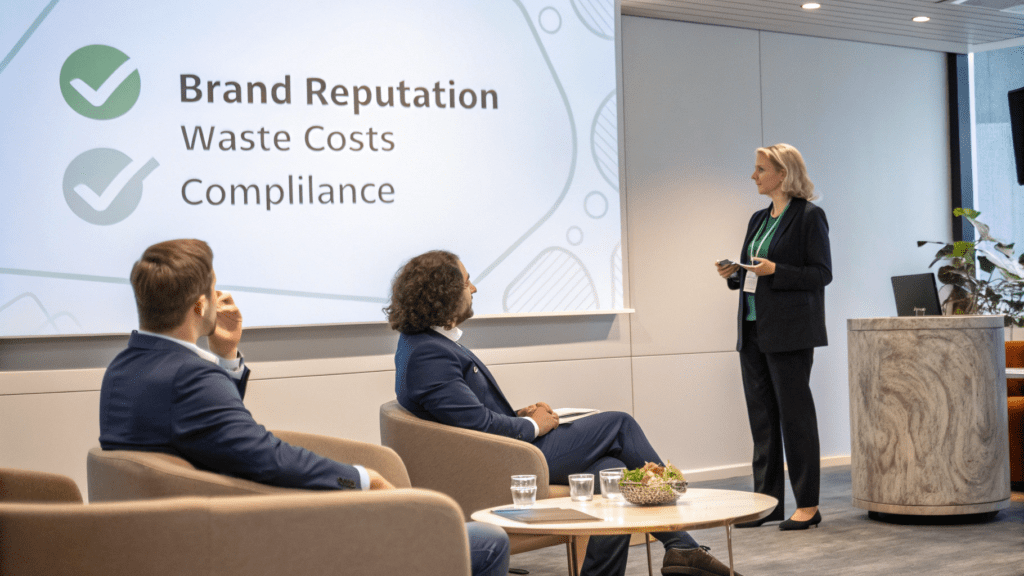
- Quantifiable Cost Savings & Risk Mitigation: While initial material costs might be higher, the long-term operational savings from waste diversion can be significant. By facilitating the composting of food-soiled packaging, businesses can reduce landfill disposal fees, potentially saving up to 17% on waste management expenses for operations partnered with industrial composters. Furthermore, proactive adoption mitigates the increasing compliance risks associated with single-use plastic bans and evolving PFAS regulations, protecting your brand from future penalties and public scrutiny.
- Enhanced Brand Value & Market Share Opportunity: Aligning with increasing consumer demand for sustainability is a powerful differentiator. Companies with strong ESG commitments achieve higher brand valuation growth. By visibly demonstrating your dedication to eco-friendly practices through certified compostable packaging, you attract environmentally conscious consumers and strengthen loyalty. Over 70% of diners are more likely to choose establishments using sustainable packaging, providing a direct market share opportunity in a competitive landscape. This commitment transcends simple marketing; it speaks to the core values of modern consumers and partners. Our detailed guide on BPI compostable certification in hospitality highlights how these efforts translate into tangible business benefits: Discover BPI certification benefits in hospitality.
- 運用の合理化: 食品サービス業務では、BPI 認定のパッケージを使用することで廃棄物の分別が簡素化されます。食べ物で汚れた堆肥化可能なアイテムをまとめて収集できるため、裏方業務が合理化され、さまざまな廃棄物の流れの分別に伴うスタッフのトレーニングの複雑さが軽減されます。この運用効率により、ビジネスケースがさらに強化されます。
BPI 認定の電子レンジ対応パッケージを採用することで、競争上の優位性、コスト削減、ブランド価値の向上が実現します。
よくある質問(FAQ)
❓ BPI 認定の堆肥化可能な製品はすべて電子レンジで使用できますか?
いいえ。 電子レンジの安全性は素材によって異なります。
- Sugarcane bagasse & plant fibers → 通常は電子レンジ対応。中程度の再加熱に対応できます。
- PLA(ポリ乳酸) → Sensitive to heat; may warp or melt. Only specialized versions (e.g., “white PLA”) may be microwave-safe.
✅ Always look for explicit “microwave-safe” labels before use.
❓ What are the key benefits of using BPI-certified microwave-safe packaging in foodservice?
- Waste Diversion & Cost Savings → Reduces landfill fees by enabling organic waste + packaging composting.
- Compliance & Risk Mitigation → Meets ASTM standards and avoids penalties under regulations like California SB 54.
- ESG & Brand Reputation → Demonstrates sustainability leadership, builds consumer trust, and improves ESG ratings.
- 運用効率 → Simplifies sorting—food-soiled packaging can go directly into compost bins.
❓ How do BPI-certified products address PFAS concerns?
Since January 2020, BPI prohibits intentionally added PFAS in all certified products.
- Limit: <100 ppm total fluorine。
- Outcome: Safe for food contact, eliminates harmful “forever chemicals,” and reduces regulatory risk.
❓ What are the main challenges for B2B adoption of compostable microwave packaging?
- Limited Composting Infrastructure → Only a fraction of facilities accept compostable packaging.
- Consumer Confusion → Many mistakenly place compostables in recycling bins, leading to contamination.
- Higher Upfront Costs → Compostable materials often cost more than plastics, though ROI improves over time.
- Chemical Migration Concerns → Ongoing research needed to ensure food safety under all microwave conditions.
FAQs clarify BPI certification, microwave safety, benefits, PFAS, and adoption challenges for B2B buyers.
Conclusion: Embracing BPI Compostable Microwave Safety for a Sustainable Future
BPI-certified compostable microwave-safe packaging offers a compelling, scientifically backed solution for businesses committed to both environmental stewardship and operational excellence. While challenges in infrastructure and consumer education persist, these are actively being addressed through industry collaboration, stricter regulations, and continuous material innovation.
By strategically leveraging advanced plant-based materials and adhering to recognized certifications like BPI, businesses can confidently meet increasing consumer demand for eco-friendly products. This proactive approach not only helps achieve critical ESG objectives but also differentiates your brand, mitigates regulatory risks, and contributes to a more circular economy. The decision to invest in BPI-certified microwave-safe solutions is an investment in your brand’s future, aligning profitability with planetary responsibility.Strategize your procurement today
Integrate BPI compostable microwave-safe packaging to enhance sustainability, ensure operational excellence, and differentiate your brand.