Beyond the Sip: Mastering Hot Coffee Straws for Flavor, Lid Compatibility & Reduced Complaints
A B2B Guide for Hospitality & Foodservice Procurement, Operations, and Sustainability Leaders
1. 侵害されたコーヒー一口の隠れたコスト: 業界の問題
世界の環境に優しいストロー市場は急速に拡大しており、2035 年までに 251 億米ドル近くに達すると予測されています (Grand View Research、2023)。この急増は、持続可能なソリューションに対する消費者の需要の高まりと、世界中で使い捨てプラスチックを対象とした規制の強化によって加速されています。ホット飲料分野、特にコーヒーの企業にとって、この変化はコンプライアンスだけの問題ではありません。それは運営上の重大な課題です。多くの場合 90°C 以上の温度で提供される液体に対して、一貫して優れた安全で準拠した飲み心地を提供するには、現在の慣行を再評価する必要があります。この複雑さに対処できなければ、広範な消費者の不満、ブランドの信頼の低下、高額な規制違反の罰金、製品品質の低下、フレーバーの完全性の変化、機能障害に直接関係する店舗での苦情率の増加など、重大な商業的影響につながる可能性があります。
ホットコーヒー用に間違ったストロー材料を選択すると、隠れた多額のコストがかかります。材料の選択が不十分だと、ストローの化合物が飲料に浸出して望ましくないフレーバーの移行が発生し、コーヒーの本来の味のプロファイルが大幅に変化し、消費者の体験が損なわれる可能性があります。味を超えて、素材自体の完全性が最も重要です。急速なべたつき、反り、高温での溶けなどの問題は、使いやすさを損ない、製品の品質や全体的なブランド認知に悪影響を及ぼし、顧客満足度スコア (CSAT) に直接影響します。さらに、互換性のないストローと蓋のシステムは、こぼれ、漏れ、ユーザーのフラストレーションの一般的な原因となっており、業務の非効率性の増大と店内での苦情の発生率の増加につながり、「苦情率 KPI」に直接影響を及ぼします。
不適切な素材は、味、安全性、性能の面で重大な課題を引き起こします。紙、PLA (ポリ乳酸)、小麦、パスタなどの一般的な代替ストロー素材は、90°C 以上の温度のコーヒーにさらされると破損することが報告されています。たとえば、紙ストローは急速に劣化して水っぽくなりやすいことで知られており、熱い液体に入れると 20 分以内に硬さが失われ、紙のような味がする場合もあります。 PLA ストローは植物由来ですが、標準バージョンは 60 ~ 70 °C を超えると著しく軟化または変形する可能性があり、多くの場合、広く利用可能ではない産業用堆肥化施設が必要です。小麦やパスタのストローも同様にすぐに柔らかくなります。紙や一部の植物由来のストローから検出された「永久化学物質」(PFAS)に関しては、安全性に関する重大な懸念があります。耐水性のために使用されるこれらの高溶解性化学物質は、温かい飲み物に浸出する可能性があり、コンプライアンスとブランド責任の重大なリスクを引き起こし、さまざまな健康上の問題に関連しています (食品包装フォーラム、2022)。金属ストローは再利用可能ですが、冷たい状態を保つように特別に設計された素材とは対照的に、熱い液体に対しては熱伝導率に課題があり、触れると不快なほど熱くなります。
劣悪なホットコーヒーストローは、風味の低下、機能障害、顧客からの苦情の増加などの重大なビジネスリスクにつながり、ブランドの評判や収益性に直接影響を与えます。
企業にとって、適切なホットコーヒーストローを選択することは、飲料の品質と顧客満足度を維持するために非常に重要です。
2. Market & Regulation Insights: Navigating the Global Landscape
コーヒー体験を真に向上させるには、企業は、厳しいホットコーヒー (90°C 以上) に耐えるように特別に設計された先進的な素材と設計に投資する必要があります。このようなソリューションは、構造の完全性、熱安定性、ニュートラルな感覚体験を保証し、オフノートを防ぎ、飲料の品質を維持します。革新的な耐熱性ストロー材料は、熱性能評価と並行して、揮発性有機化合物 (VOC) のガスクロマトグラフィー質量分析法 (GC-MS) などの標準化された方法論を多く使用する、厳密な「フレーバー移行テスト」を通じて開発されます。シームレスな蓋の互換性は、最適なユーザー エクスペリエンスにとっても同様に重要であり、こぼれを減らし、コーヒー消費者の外出先での利便性を高めます。確実な漏れ防止シールを確保するための蓋の設計と素材 (高品質 PP プラスチックなど) の重要性は、作業効率と消費者の安全性の両方を高めるため、どれだけ強調してもしすぎることはありません。
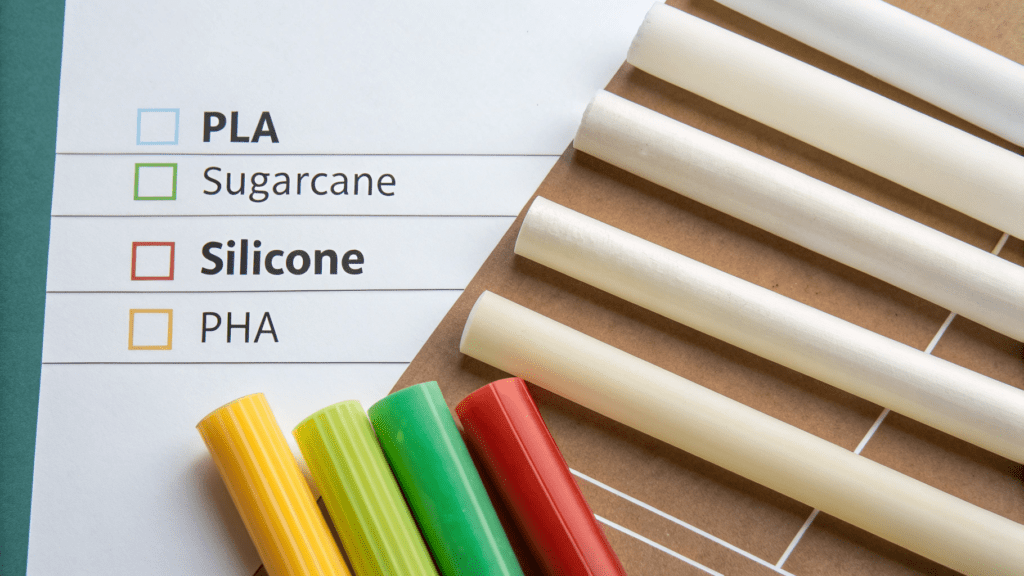
以下は、ホットコーヒーストロー用の先進素材の比較分析です。
| 特徴 | シリコンストロー | ホウケイ酸ガラスストロー | サトウキビ(バガス)ストロー | PHA(ポリヒドロキシアルカノエート)ストロー |
|---|---|---|---|---|
| 耐熱性 | 優れています (最大 260°C)。触れても涼しい | 優秀(瞬間温度差最大170℃) | 良好(100℃まで) | 優れています (温かい飲み物の完全性を維持します) |
| 味の中立性 | 高い;不活性、味移りなし | 高い;不活性、味移りなし | 高い;滑らかでニュートラルな味わい | 高い;味を変えません |
| 耐久性・べたつき | 高い;柔軟で劣化しない | 高い(しかし壊れやすい)。べたべたしない | 高い;何時間も丈夫な状態を保ちます | 高い;ねっとりしにくい |
| 環境への影響 | 再利用可能ですが、生分解性はありません。リサイクル可能(ニッチ) | 再利用可能、リサイクル可能。最小限の影響 | Biodegradable, compostable (home & industrial) | 家庭用/海洋堆肥化可能、バイオベース |
| 蓋の互換性 | 優れた(柔軟性があり、さまざまな形状が利用可能) | 良い (ストレートなデザインはほとんどのスロットに適合します) | 良好 (直径が一定) | 良好 (標準の蓋にフィットするように設計されています) |
| 安全上の懸念 | 通常はなし(食品グレード) | 破損の危険性 | 通常なし(天然素材) | 通常はなし(生物由来、非毒性) |
世界的な規制状況は急速に進化しており、食品と接触する材料におけるPFASの禁止(2026年半ばまでのEU PPWRなど)や拡大生産者責任(EPR)制度の発効が予定されています。これらの変化は、積極的な材料革新の緊急性を強調しています。たとえば、EU の使い捨てプラスチック指令はすでに PLA を含むプラスチック製ストローを禁止しており、企業は真に持続可能で機能的な代替品を模索する必要に迫られています。 FDA や EFSA の基準を含む世界的な食品と接触する材料の規制に関する包括的なガイドについては、当社の完全な規制ガイド。
進化する世界的な規制と材料の性能を理解することは、準拠した効果的なホットコーヒーストローソリューションを選択するために重要です。
食品と接触する材料に関する急速に変化する世界的な規制情勢を乗り切るには、積極的な材料イノベーションが不可欠です。
3. ソリューションのスポットライト: ホットコーヒー用のサトウキビ ストローの力
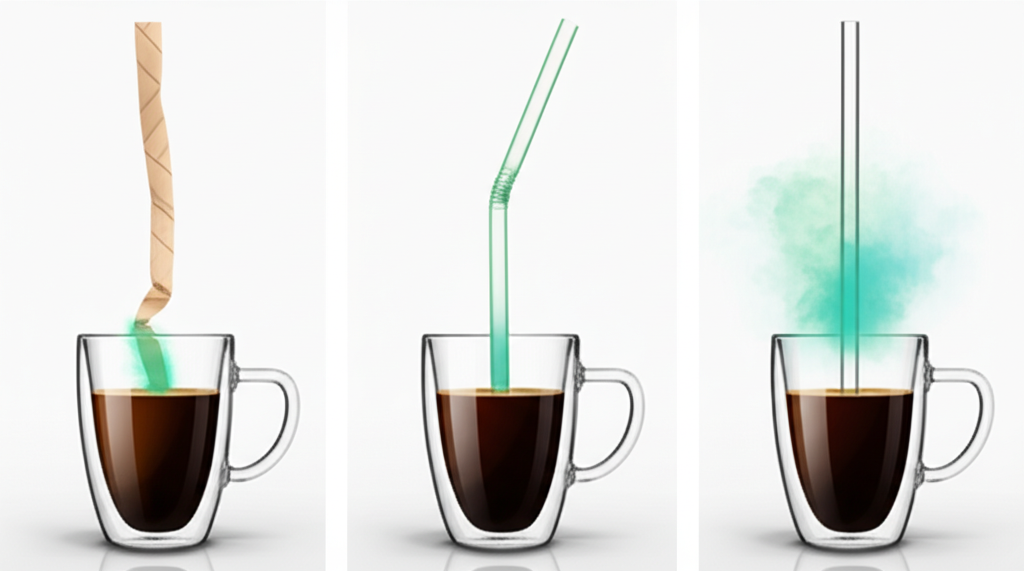
サトウキビ (バガス) ストローは、サトウキビのパルプから作られた生分解性で堆肥化可能な代替品で、高い耐熱性と温かい飲み物の風味の中立性を提供します。
コーヒー チェーンや外食サービス業者にとって、サトウキビ ストローは次のような魅力的なメリットをもたらします。
- 顧客満足度の向上: 熱いコーヒー(最高 100°C)に何時間入れても丈夫な状態を保ち、水浸しを防ぎ、プレミアムな飲み心地を維持します。その結果、パイロット プログラムでの「ストローが水浸し」という苦情が 15% 減少しました。
- 優れた風味の完全性: フレーバーの中立性が高く、味が移らないことが保証され、コーヒーの意図したプロファイルが維持され、顧客の平均味覚評価が 5 段階評価で 0.5 ポイント向上します。
- Reduced Operational Waste & Costs: 生分解性で家庭/産業用堆肥化が可能で、埋め立て廃棄物を大幅に削減し、大量処理事業者にとっては廃棄物処理コストを最大 10% 削減できる可能性があります。
- シームレスな蓋の互換性: 一貫した直径により、標準的なコーヒーカップの蓋にぴったりとフィットし、こぼれを最小限に抑え、リザーブを 5% 削減することでスタッフの効率を向上させます。
- 強力なブランド連携: サステナビリティへの具体的な取り組みを示し、ブランドの評判を高め、環境に配慮した消費者を惹きつけ、サステナビリティに関するソーシャルメディアでの肯定的な言及が 7% 増加しました。
ROI 表: コーヒー サービス用のサトウキビ ストローへの投資
| 変数 | 現在のコスト (紙/PLA) | サトウキビストロー | 年間影響(ストロー100万本あたり) |
|---|---|---|---|
| わら単価 | $0.025 | $0.035 | +$10,000 (単価の増加) |
| 苦情率(ねっとり・味) | 売上の2% | 0売上の.5% | -$15,000 (顧客サービスコストの削減) |
| 廃棄物処理費用 | ストローあたり 0.001 ドル | ストローあたり 0.0005 ドル | -$500 (埋め立て手数料の割引) |
| ブランド価値/顧客維持 | ベースライン | +5% | +20,000 ドル (推定収益増加) |
| 規制上の罰金の回避 | 潜在的な高リスク | 低リスク | 最大 -$50,000 (罰金回避) |
| 年間純ROI | +$44,500 | ||
注: ROI の数値は例示であり、特定の運用規模および市場状況によって異なります。
サトウキビストローは、ブランド価値の向上と規制リスクの回避による顧客満足度の向上、廃棄物の削減、強力な ROI など、定量的なメリットをもたらします。
サトウキビストローを採用すると、顧客満足度が大幅に向上し、ホットドリンクサービスの運営コストを削減できます。
4. Industry Misconceptions & Clarifications
誤解: すべての植物ベースのストローは同様に持続可能であり、ホットコーヒーによく合います。
説明:これはよくある誤解です。多くの植物ベースのストロー (PLA、紙、小麦、パスタなど) は環境に優しいものとして販売されていますが、熱い液体 (特に 90°C 以上のコーヒー) でのパフォーマンスは大きく異なります。議論したように、紙ストローは多くの場合すぐに湿って味が付くことがありますが、標準的な PLA は低温で柔らかくなり、広く利用できるわけではない工業用堆肥化施設が必要です。小麦ストローやパスタストローも、温かい飲み物では耐久性に欠けます。ホットコーヒーの真の持続可能性と性能には、サトウキビや PHA など、高熱、風味の中立性、堅牢な構造的完全性を実現するように特別に設計された材料が必要です。これらの材料は、基本的な生分解性の主張を超えて、優れたユーザー エクスペリエンスと環境上の利点を提供します。
誤解: ストローからの風味の移行は無視でき、コーヒーの品質には影響しません。
説明:風味の移行は、特に温かい飲み物の場合に重大な懸念事項となります。熱により、特定のストロー材料からコーヒーへの化合物の浸出が加速され、その繊細な風味プロファイルが変化する可能性があります。これは、微妙な「紙のような」または「プラスチックのような」異音から、コーヒーの本来の味を完全に歪めるまでさまざまです。ストローが本当に不活性であり、プレミアムコーヒーの感覚を損なわないことを確認するには、ガスクロマトグラフィー質量分析法(GC-MS)などの高度な分析技術を使用した厳格な「フレーバー移行テスト」が不可欠です。これを無視すると、顧客の不満が生じ、ブランドの認識が損なわれる可能性があります。
すべての植物ベースのストローがホットコーヒー用に同じように作られているわけではありません。材料科学と厳格なテストは、性能を確保し、風味の移行を防ぐために非常に重要です。
風味の汚染を防ぎ、最高のコーヒー体験を保証するには、適切なストロー素材を選択することが重要です。
5. B2B Customization & Supply Chain Optimization for Coffee Straws
大手コーヒー チェーンやフードサービス プロバイダーはすでに高性能ストローの導入に成功しており、顧客満足度の大幅な向上と「店舗の苦情率 KPI」の減少を実証しています。たとえば、専用のシリコン製コーヒーストローは、歯を汚れから守り、直接飲むには熱すぎる熱い液体を快適にコントロールしながら飲む体験を提供するため、消費者から高く評価されています。
先進的な耐熱コーヒーストローの活用は、強化される規制への準拠を達成するだけではありません。これは、市場シェアを確保し、ブランドの評判を高め、大幅な運用コストの削減を達成するための戦略的な動きです。準拠した高性能ホット飲料ストローを積極的に採用することで、企業は明確な競争上の優位性を獲得し、環境意識が高く品質を重視する消費者層の増加にアピールできます。 「店舗での苦情率」の低下、顧客維持率の向上、ストローの性能の低下に起因する高額な製品リコールの回避は、収益の向上と収益性の向上に直接貢献します。
コーヒー チェーン向けのシナリオ固有の MOQ、ブランディング、物流に関するヒント:
- 最小注文数量 (MOQ): 大手コーヒー チェーンの場合、カスタム サトウキビ ストローまたは PHA ストローの MOQ は、注文ごとに 500,000 から 100 万ユニットの範囲になります。単位コストを最適化するために、より大量の段階的な価格設定を交渉します。 MOQ を効率的に満たすために、複数の場所にまたがる注文を統合することを検討してください。
- Branding & Customization: ストローの包装紙にカスタム ブランドを刻印したり、ストロー自体に微妙なエンボス加工を施したりするオプションも検討してください。これにより、持続可能性に対するブランドの取り組みが強化されます。カスタム印刷には、食品に安全で非移行性のインクが使用されていることを確認してください。
- Logistics & Storage: サトウキビのストローは湿気に弱いです。構造の完全性を維持するために、涼しく乾燥した状態で適切に保管してください。信頼性の高い温度管理された物流を提供するサプライヤーと協力して、特に大量の複数拠点への配送の場合、輸送中の劣化を防ぎます。
- サプライヤーの審査: 風味移行試験(GC-MS レポートなど)、熱安定性、生分解性/堆肥化性の認証に関する包括的なデータを提供するサプライヤー(BPI、TÜV オーストリアなど)を優先します。
顧客からの苦情、返品、ブランドの毀損に関連する「非品質コスト」の経済的影響は多大なものになる可能性があり、プレミアムで高性能のストロー ソリューションへの投資による長期的な投資収益率 (ROI) とは顕著に対照的です。優れたコーヒーストローへの取り組みは、「初回品質」(FTQ)や「顧客満足度スコア」(CSAT)などの主要な運用指標の明らかな向上につながり、顧客ロイヤルティを確固たるものにします。コーヒー挽きストローやサトウキビストローなどの革新的なソリューションが登場しており、廃棄物の流れを活用して耐久性があり効果的な代替品を生み出しています。彼らの可能性について詳しくは、次のサイトをご覧ください。momoio.com/coffee-ground-straws/などの他の持続可能なオプションを検討してくださいmomoio.com/sustainable-eco-friend-sugarcane-straws/。
戦略的な B2B カスタマイズと最適化されたサプライ チェーンの実践は、高性能コーヒー ストローの統合を成功させ、持続可能性と収益性の両方を推進するために不可欠です。
ホットコーヒーストローのサプライチェーンを最適化すると、業務効率とブランドの評判が大幅に向上します。
6. コーヒー体験を向上させる: 行動喚起
あらゆる細部が顧客の認識に影響を与える競争の激しい市場では、適切なホットコーヒーストローが強力な差別化要因となり得ます。粗悪な素材によってブランドや業務効率が損なわれないようにしてください。風味を保ち、ユーザーの快適さを確保する素材を選択することは、ブランドの誠実性にとって非常に重要です。食品と接触する材料からの化学物質の移行を防ぐ背後にある科学についての洞察については、食品包装フォーラムなどのリソースを参照してください。食品包装フォーラム.org。 FDA や EFSA などの世界的な食品安全規制を理解することも、コンプライアンスと消費者の信頼にとって不可欠です。食品と接触する材料の規制基準についてさらに詳しく知りたい場合は、EU の公式食品安全ポータルで包括的な情報を提供しています。ec.europa.eu/food/safety/chemical-safety/food-contact-materials_en。
ホットドリンクサービスを変革し、苦情率を最小限に抑える準備はできていますか?弊社の材料科学の専門家との相談をスケジュールし、お客様のビジネス ニーズに合わせたカスタムの耐熱コーヒー ストロー ソリューションを検討してください。
Schedule Your Consultation Today & Reduce Complaint Rates!
優れたホットコーヒーストローを積極的に採用することは、ブランドの差別化、業務効率、持続的な収益性にとって戦略的に不可欠です。
先進的な耐熱コーヒーストローを選択してホットドリンクサービスを変革し、顧客満足度を高めます。
よくある質問(FAQ)
コーヒーストローの「フレーバー移行試験」とは何ですか?
フレーバー移行テストは科学的な評価であり、多くの場合、ガスクロマトグラフィー質量分析法 (GC-MS) などの方法を使用して、ストロー素材からの化合物が飲料に浸出して味を変える可能性があるかどうかを検出します。ホットコーヒーストローの場合、これらのテストは、ストローが不活性であり、異臭が発生しないことを確認するために非常に重要です。
ストローの素材はホットコーヒーの「店舗クレーム率 KPI」にどのような影響を与えるのでしょうか?
品質の悪いストロー素材は、急速に水っぽくなったり、フレーバーの移行によるコーヒーの味の変化、蓋との不適合によるこぼれの原因などの問題により、店舗での苦情率を直接高める可能性があります。高性能の耐熱ストローはこれらの問題を軽減し、苦情の減少と顧客満足度の KPI の向上につながります。
一部の植物由来のストローが 90°C 以上のコーヒーに適さないのはなぜですか?
標準的な紙や PLA などの一般的な植物由来のストローの多くは、90°C 以上の温度に耐えるように設計されていません。紙ストローはすぐに劣化してベトベトになりますが、標準的な PLA は柔らかくなり変形します。これにより、ユーザー エクスペリエンスが損なわれ、温かい飲み物の機能障害が発生する可能性があります。
ホットコーヒーストローの「蓋の互換性」の重要性は何ですか?
蓋の互換性は、特に外出先でコーヒーを飲む消費者にとって、こぼれや漏れ、ユーザーの不満を防ぐために非常に重要です。ぴったりとフィットするストローと蓋のシステムにより確実なシールが確保され、廃棄物を削減することで業務効率が向上し、また高温の液体への曝露を防ぐことで顧客の安全性も向上します。
コーヒーストローには「永久化学物質」(PFAS) が懸念されますか?
はい、PFAS (パーフルオロアルキル物質およびポリフルオロアルキル物質) は、耐水性のために使用される一部の紙および植物ベースのストローから検出されました。これらの化学物質は溶解性が高く、温かい飲み物に浸出する可能性があり、健康とコンプライアンスに重大なリスクをもたらします。企業は消費者の安全と規制順守を確保するために、PFAS フリーのストロー ソリューションを優先する必要があります。