A B2B Guide for Procurement, Operations, and Sustainability Leaders in Hospitality & Foodservice
4,000億ドル以上と評価される世界のコーヒー産業は重大な岐路に立っています。かつては後回しだった地味なストローが、調達マネージャー、業務責任者、サプライチェーン幹部にとって、一か八かの業務上およびコンプライアンスの課題として浮上しました。規制の圧力が強まり、持続可能性に対する消費者の期待が高まるにつれ、コーヒーストローの素材の選択は、もはや購入の重要な決定事項ではなくなり、市場へのアクセス、ブランドの評判、長期的な収益性を形成する戦略的に不可欠な要素となっています。
従来のプラスチックストローを含む使い捨てプラスチックは、EUの使い捨てプラスチック指令に代表されるように、世界的に積極的な禁止に直面しており、加盟国ではプラスチックストローがすでに廃止されています。米国では、カリフォルニア州 (AB1276、2022 年 6 月 1 日発効) などの州は、要請があった場合にのみストローの使用を義務付けていますが、フィリピンの 2022 年 EPR 法は、ストローを含むプラスチック包装廃棄物に対する財政的責任を製造業者に課しています。この進化する状況を無視することは、規制上の罰金のリスクを冒し、より高い廃棄物処理コストが発生し、急速に成長している環境意識の高い消費者層を遠ざけることを意味します。世界の非プラスチック製ストロー市場だけでも、2023年の推定98億4000万ドルから2028年までには驚くべき175億5000万ドルにまで急成長すると予測されており、B2Bの意思決定者がこれらの環境に配慮したトレンドに合わせて事業を調整する緊急の必要性を浮き彫りにしている。
進化する規制や消費者の需要を満たすために、ホスピタリティやフードサービスでは、持続可能なコーヒーストローを選択することが重要です。
The Core: What are Coffee Straws Made Of? Exploring Key Materials
The days of a single, ubiquitous plastic straw are over. Today, the market offers a diverse array of innovative materials, each designed to meet specific performance, environmental, and commercial needs for both hot and cold beverages. Understanding these compositions is fundamental to making informed procurement decisions.
A. Innovative Coffee Grounds Straws: A Circular Economy Solution
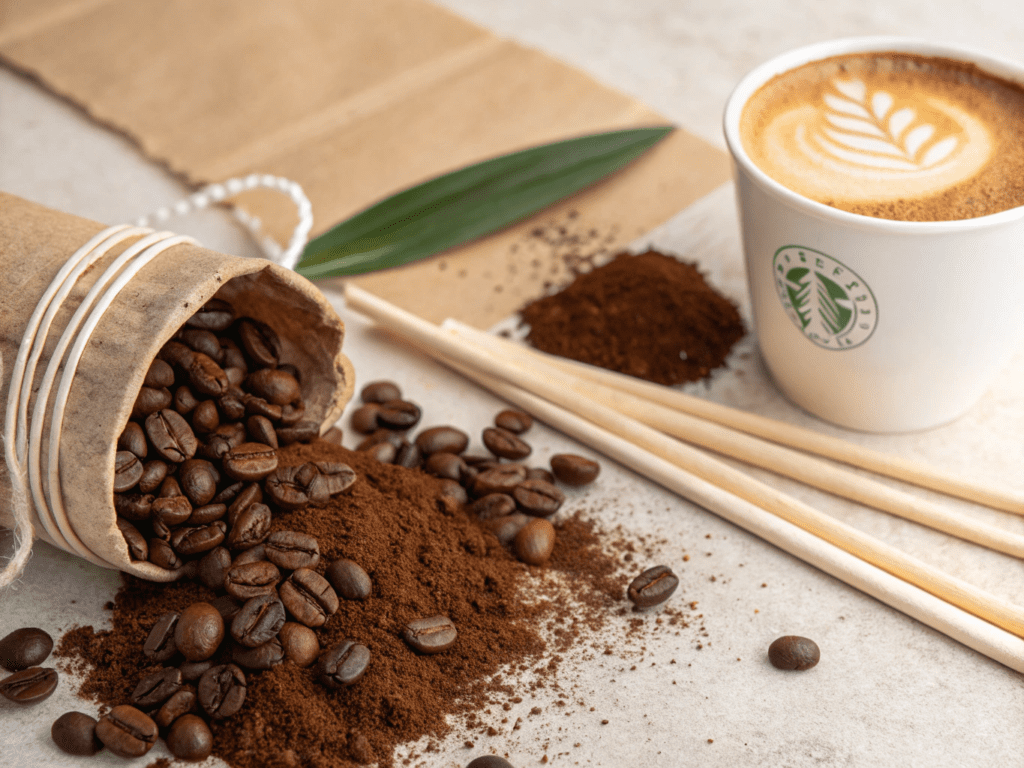
持続可能なストローにおける最も魅力的なイノベーションの 1 つは、コーヒー業界そのものから直接生まれたものです。それは、コーヒー粕ストローです。これらの注目すべきストローは、コーヒー生産の副産物であるリサイクルされたコーヒー粕から作られ、天然樹脂、植物由来の繊維、デンプンと組み合わせられています。この独創的なアプローチは、プラスチック汚染と毎年世界中で発生する 60 億ポンドを超えるコーヒー廃棄物という 2 つの重要な廃棄物の流れに同時に対処します。
得られた材料は 100% 堆肥化可能でプラスチックを含まず、工業用堆肥化施設では 90 ~ 180 日以内、家庭や庭の堆肥環境でも 12 ~ 18 か月以内に自然に分解されるように設計されています。コーヒー粕ストローは、優れた生分解性を備えているだけでなく、性能を重視して設計されています。驚くべき耐久性と柔軟性を備え、環境に負担をかけることなく従来のプラスチック製ストローの感触を模倣しています。コーヒー店にとって重要な点は、最高 75°C (167°F) までの温度に耐え、初期の紙代替品に共通する問題点である水っぽくならないことで知られています。また、ほのかに自然なコーヒーの香りが漂い、味を損なうことなく飲料体験を向上させます。多くは生分解性製品協会 (BPI) によって認定されており、ASTM D6400 や EN13432 などの規格に準拠しています。
B. The Rise of Edible Coffee Straws: A Zero-Waste Indulgence
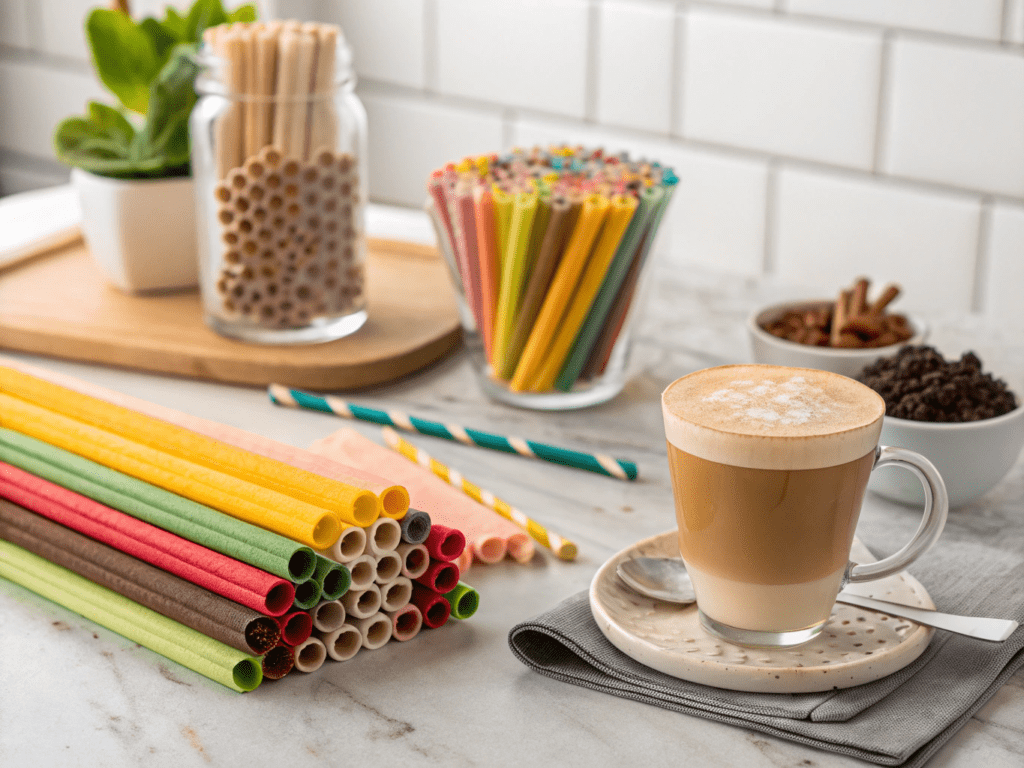
For businesses seeking to offer a truly zero-waste customer experience, edible coffee straws present an exciting frontier. These innovative straws are crafted from various plant-based materials such as repurposed coffee grounds, tapioca starch, rice flour, or other natural ingredients like sugar and corn starch. Brands like Sorbos and EQUO have pioneered edible straws that not only function as a drinking straw but can be consumed after use.
食用ストローは、優れた構造的完全性を実現するように設計されており、冷たい飲み物の場合は数時間、温かい飲み物の場合は最大 1 時間その形状を維持します。コーヒーの自然な味を生かしたノンフレーバーのオプションや、コーヒー、バニラ、チョコレートなどのさまざまなフレーバーがあり、ユニークで贅沢な、真に無駄のない顧客体験を提供します。個別包装されているため、大量作業における衛生上の懸念にも対処でき、最長 2 年の保存期間を誇ります。食用ストロー市場は2030年に4億4,696万米ドルに達すると予測されており、その魅力がますます高まっていることが浮き彫りとなっている。
C. 植物由来の生分解性ストロー: サトウキビ、PLA など
コーヒー粕や食用品種を超えて、幅広いカテゴリーの植物ベースの生分解性ストローが多様なソリューションを提供します。
- サトウキビストロー(バガス): サトウキビ加工の繊維状副産物であるバガスから作られたこれらのストローは、非常に持続可能です。最高 90°C (194°F) までの温度に耐える優れた耐熱性を誇り、従来の紙ストローに比べて水浸しに対する耐性が大幅に向上しています。これらは 100% 堆肥化可能で、PLA や PFAS を含まず、ホット コーヒーに堅牢で信頼性の高いオプションを提供します。
- PLAストロー(ポリ乳酸): コーンスターチやサトウキビなどの再生可能資源から得られる PLA は、透明でプラスチックのような感触があるため、人気のバイオプラスチックです。 PLA ストローは工業的には堆肥化可能ですが、60°C (140°F) を超えると変形したり柔らかくなったりする可能性があるため、特別に耐熱性を持たせるように配合されていない限り (結晶化 PLA、85°C まで耐えることができる)、非常に熱いコーヒーにはあまり適していません。 PLA では、故障するために特定の産業用堆肥化施設が必要であり、それは普遍的に利用できるわけではない可能性があることに注意することが重要です。
- PHA ストロー (ポリヒドロキシアルカノエート): Representing the next generation of biopolymers, PHA straws are produced by microorganisms and offer superior heat resistance, enhanced durability, and broad biodegradability in various environments, including marine water, soil, and composting facilities, without leaving microplastics.
- Other Natural Options: アシ、草、竹、麦わらなどの材料も多様な用途に使用できます。竹や葦のストローは耐久性が高く、何度も再利用できます。草ストローは化学薬品を含まず、6 か月以内に自然に分解されることで知られています。
D. 再利用可能なコーヒーストロー: 耐久性と持続可能性の融合
特定の運用モデル、特に顧客にマイカップの持参を奨励するモデルでは、再利用可能なコーヒーストローは依然として持続可能な選択肢です。これらは通常、次のような耐久性のある素材で作られています。
- ステンレス鋼: 冷たい飲み物には非常に耐久性があり長持ちしますが、温かい飲み物と一緒に使用すると急速に熱が伝わり、火傷の危険が生じる可能性があります。
- ガラス(ホウケイ酸): 風味を与えることなく非常に高い温度に耐えることができますが、壊れやすいです。
- シリコーン: 100% BPA フリーで柔軟性に優れたシリコン ストロー (KoffieStraw など) は、温かい飲み物にも安全で、食器洗い機にも対応しているため、消費者にとって便利です。 2025 年 7 月の Google トレンド データによると、「再利用可能なコーヒー ストロー」の検索数が突然急増し、これらの長期的なソリューションに対する消費者の関心の高まりが浮き彫りになりました。
While offering significant long-term waste reduction, reusable straws require a robust cleaning and sanitation infrastructure for B2B settings, and they still depend on customer adoption and commitment to regular washing.
Diverse sustainable straw materials offer varied performance and environmental benefits for B2B coffee operations.

Navigating the Market: Performance, Compliance, and Cost of Coffee Straws
For procurement managers and operations directors, selecting the right sustainable straw material involves a careful evaluation of performance, regulatory compliance, and economic viability.
A. Performance Benchmarks for Sustainable Coffee Straws: Beyond Soggy Paper
The early generation of paper straws, a common first step away from plastic, often became soggy within 20 minutes, severely compromising the customer experience and leading to dissatisfaction. This “soggy straw” dilemma highlighted the critical need for advanced materials.
Today’s innovative materials offer significant improvements:
- Advanced Materials: Sugarcane and coffee grounds straws, for instance, are engineered to maintain their integrity for hours, even in hot beverages, providing a consistent and enjoyable drinking experience.
- Heat Resistance is Crucial: Many standard plant-based straws, particularly earlier PLA versions, fail or deform above 60-90°C, making them unsuitable for hot coffee. Businesses must scrutinize heat resistance specifications to avoid functional failures and negative customer feedback. Materials like sugarcane and PHA are specifically designed to excel in high-temperature applications.
- Taste and Texture: Quality control is paramount. High-performance sustainable straws should be odorless and tasteless, ensuring they do not alter the delicate flavor profile of coffee. Their texture should also provide a comfortable, non-papery feel.
B. Regulatory Landscape & Compliance for Sustainable Straws: Navigating Global Bans
The global shift away from single-use plastics is not voluntary; it’s legally mandated in many key markets. Procurement strategies must prioritize compliance to mitigate significant risks.
- Global Plastic Bans: The EU Single-Use Plastics Directive (SUPD) already bans plastic straws, including PLA, in member states. This necessitates a complete pivot to genuinely plastic-free alternatives for European market access. The Philippines’ EPR Act of 2022 mandates increasing recovery targets for plastic packaging, including straws, reaching 50% in 2025 and 80% from 2028 onward, directly impacting manufacturers’ responsibilities.
- U.S. State Laws: In the U.S., states like California (AB1276) require straws only upon request, while New York City implemented similar rules in 2021. Businesses must be acutely aware of regional variations in plastic bans and “straws-upon-request” laws.
- PFAS の懸念: A growing concern surrounds “forever chemicals” (PFAS) detected in some paper and plant-based straws, used for water resistance. These chemicals can leach into hot beverages and pose significant health and compliance risks, leading to legal liabilities and reputational damage. Sourcing certified PFAS-free options is now a non-negotiable.
- Certifications: To ensure compliance and genuinely sustainable sourcing, B2B buyers must insist on verifiable certifications. Look for:
- BPI (Biodegradable Products Institute) Certification: Confirms industrial compostability in North America (meeting ASTM D6400/D6868 standards).
- EN13432: The European standard for industrial compostability.
- FDA Approval: Ensures food safety.
- Plastic-Free Verification: Essential for meeting most plastic ban regulations.
C. Economic Implications: ROI and Cost-Benefit for B2B Operations
While sustainable straws can have higher upfront costs—for example, PLA straws surged 67% in price in 2020, and paper straws can be significantly more expensive than plastic—the long-term ROI is compelling.
- Consumer Willingness to Pay: A significant 74% of consumers are willing to pay more for sustainable packaging, and adopting eco-friendly solutions can boost customer loyalty by up to 20%. This translates directly to increased revenue and stronger brand equity.
- Reduced Operational Costs: Shifting to compostable straws can reduce waste disposal fees by diverting materials from landfills. Furthermore, the enhanced brand image attracts environmentally conscious customers, expanding market share without heavy marketing spend.
- Supply Chain Optimization: Strategic bulk purchasing from specialized B2B platforms and direct manufacturers can help optimize costs. Procurement managers should evaluate total cost of ownership, considering not just unit price but also compliance risk, brand uplift, and waste management savings. For more insights on sourcing sustainable options, read our guide on sustainable” target=”_blank” class=”text-primary-dark hover:underline”>sustainable coffee straws for B2B。
D. Comparison Table: Key Sustainable Coffee Straw Types for B2B
| 特徴 | B2B運用上の影響 | コンプライアンスノート | ROIポテンシャル |
|---|---|---|---|
| コーヒーかす | Reduces waste stream, subtle coffee aroma, durable in hot/cold drinks up to 75°C. | 100% compostable (e.g., ASTM D6400, BPI), plastic-free, PFAS-free. | Enhanced brand image, waste diversion, premium perception, customer loyalty. |
| 食用ストロー | Zero-waste, high novelty factor, individual hygiene. Holds for hours in cold, 1 hr in hot. | Fully biodegradable, consumable; check allergen compliance. | Premium offering, viral marketing potential, eliminates waste collection. |
| サトウキビ(バガス) | High heat resistance (up to 90°C), minimal sogginess, sturdy. | 100% compostable, no PLA/PFAS, complies with plastic bans. | Appeals to eco-conscious consumers, robust performance, cost-effective in bulk. |
| PLA (バイオプラスチック) | Similar feel to plastic, clear options, widely available. | Industrial composting required; may soften >60°C; restricted in some bans. | Widely available, meets some “green” criteria, good for cold drinks. |
| Reusable (Metal/Silicone) | High initial cost, requires washing/storage infrastructure, potential heat conductivity issue (metal). | Long-term waste elimination; specific cleaning protocols needed. | Significant long-term cost savings, strong sustainability messaging, reduces repeat purchases. |
Evaluating performance, compliance, and cost is essential for B2B sustainable straw procurement.
IV. Driving Adoption: B2B Opportunities and Future of Coffee Straws
The imperative to transition to sustainable straws extends beyond mere compliance; it’s a profound opportunity for businesses to gain a competitive edge, deepen customer loyalty, and contribute to a more sustainable future.
A. Enhanced Brand Image & Customer Loyalty: The Sustainability Dividend
Adopting eco-friendly solutions directly improves a company’s Corporate Social Responsibility (CSR) profile. This resonates deeply with today’s consumers, especially younger demographics who are increasingly prioritizing environmental impact in their purchasing decisions. Businesses that actively reduce their plastic footprint, using certified compostable options like coffee grounds or sugarcane straws, gain a significant competitive advantage. This communicates a genuine commitment to reducing plastic pollution, impacting marine life, and fostering a circular economy. Such tangible actions can attract new, loyal customers and reinforce positive brand perception, transforming a compliance challenge into a powerful marketing asset.
B. Mini Case Study: Starbucks’ Evolution in Sustainable Straws
Starbucks, a global coffee giant, has been a bellwether in the industry’s struggle with single-use plastics. In 2018, the company committed to eliminating 1 billion plastic straws annually by 2020, initially introducing strawless lids and FSC® certified paper straws. This move was a significant step towards their broader sustainability goals, which include a 50% reduction in waste, carbon emissions, and water usage by 2030.
However, the journey has not been without its challenges. In a significantpilot program in June 2025, Starbucks Korea reintroduced sugarcane-based plastic straws in approximately 200 stores. This decision came in response to persistent customer complaints about the performance of soggy paper straws, highlighting the ongoing tension between sustainability, customer experience, and operational feasibility. This case underscores a vital lesson for B2B decision-makers: true sustainable innovation must balance environmental responsibility with uncompromised product performance. Sourcing heat-resistant, non-soggy options like those available atMomoio” target=”_blank” class=”text-primary-dark hover:underline”>Momoio Heat-Resistant Coffee Strawsis crucial.
C. Future Trends in Sustainable Coffee Straw Innovation: 2025-2035 Outlook
The next 5-10 years will witness an acceleration of innovation in sustainable coffee straws, driven by evolving regulations and material science breakthroughs.
- 市場の成長: The eco-friendly straw market is projected to reach nearly $25.1 billion by 2035, growing at a robust CAGR of 7.3%. Biodegradable straws (including paper, bamboo, PHA, and PHBH) are expected to capture a commanding 60% market share by 2030.
- Advanced Materials & Coatings: Expect a strong focus on advanced water-resistant coatings for paper straws and hybrid materials for enhanced durability. Next-generation bioplastics like PHA (Polyhydroxyalkanoate) and PHBH (Polyhydroxybutyrate-co-hydroxyhexanoate), derived from biomass, will gain prominence for their plastic-like performance and broad biodegradability in diverse environments, including marine water.
- Waste Valorization: Innovations leveraging waste streams, such as coffee grounds and sugarcane bagasse, will continue to expand, promoting a circular economy.
- AI-Fueled Manufacturing: Artificial intelligence will play an increasing role in material research, driving the discovery of novel bio-based polymers and optimizing production efficiency for sustainable straws.
- Integrated Solutions: The market will see more multi-use straw solutions, including collapsible reusable straws, and integrated tumbler-straw products, offering enhanced convenience for on-the-go consumption.
- Smart Composting: Advances in smart composting technologies will make it easier for businesses to handle compostable straws, closing the loop on their lifecycle.
Future trends indicate significant growth and innovation in sustainable coffee straw materials and solutions.
Conclusion: Elevate Your Coffee Experience with Sustainable Choices
The transition away from single-use plastics is not just a passing trend; it’s a fundamental shift reshaping business operations and consumer expectations across the globe. By understandingwhat coffee straws are made ofand embracing innovative, high-performance sustainable options like coffee grounds and edible straws, your business can achieve critical regulatory compliance, enhance operational efficiency, and capture the loyalty of a growing eco-conscious market. This proactive approach mitigates risks, quantifies cost savings through reduced waste, and significantly uplifts brand value, positioning your enterprise as a market leader in sustainability.
Embracing sustainable coffee straws ensures compliance, boosts efficiency, and enhances brand loyalty.
Act now to future-proof your procurement strategy.Momoio.com” target=”_blank” class=”btn-primary inline-block”>Explore Truly Compostable Options for Your Coffee Shop
よくある質問 (FAQ)
Q: How do coffee grounds straws perform in hot beverages compared to paper straws?
A: Coffee grounds straws are engineered to withstand temperatures up to 75°C (167°F) and are significantly more resistant to sogginess than traditional paper straws, providing a consistent and enjoyable experience for hot coffee drinkers in hospitality settings.
Q: Are edible coffee straws a hygienic option for high-volume foodservice operations?
A: Yes, many edible straws are individually wrapped, which addresses hygiene concerns for high-volume operations. They also boast a shelf life of up to two years, making them a practical and zero-waste solution for cafes and restaurants.
Q: What certifications should procurement managers look for to ensure sustainable straw compliance?
A: Key certifications include BPI (Biodegradable Products Institute) for industrial compostability in North America (ASTM D6400/D6868), EN13432 for European industrial compostability, FDA approval for food safety, and explicit plastic-free verification to meet global plastic ban regulations.
Q: How can adopting sustainable straws impact a hospitality business’s brand image and customer loyalty?
A: Adopting eco-friendly straws significantly enhances a company’s Corporate Social Responsibility (CSR) profile, resonating with eco-conscious consumers. This can attract new, loyal customers and reinforce positive brand perception, transforming a compliance challenge into a powerful marketing asset.
Q: What are the long-term cost benefits of switching to compostable straws for foodservice operations?
A: While upfront costs might be higher, compostable straws can reduce waste disposal fees by diverting materials from landfills. The enhanced brand image also attracts environmentally conscious customers, potentially increasing revenue and market share without heavy marketing spend, leading to compelling long-term ROI