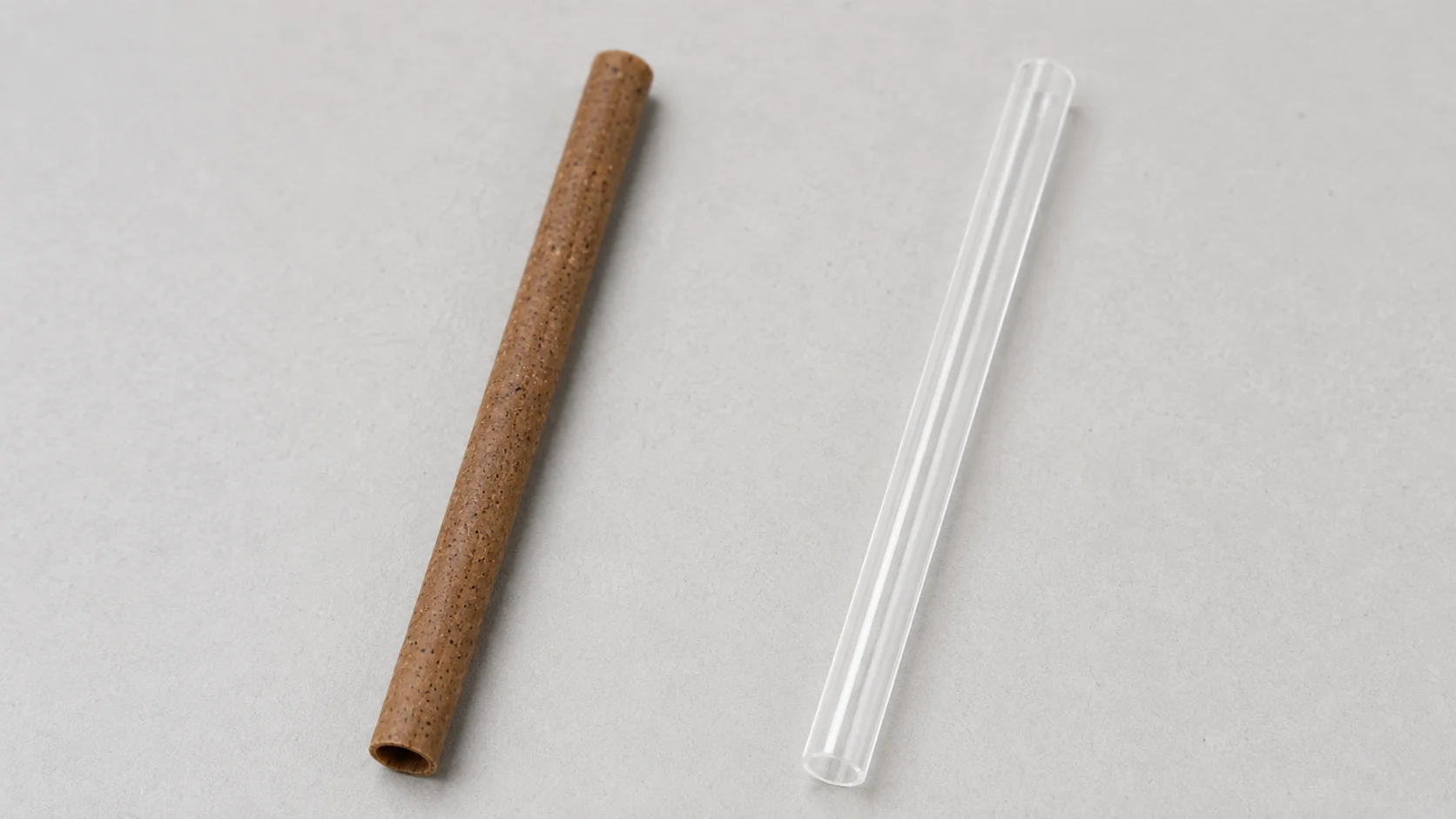
De waarheid uitpakken: zijn composteerbare rietjes echt composteerbaar?
The global push to curb plastic pollution has thrust “compostable” alternatives into the spotlight, particularly for high-volume consumables like drinking straws. However, a lingering skepticism pervades boardrooms and procurement offices: do these seemingly eco-friendly options genuinely decompose as promised, or are they merely another form of greenwashing? For procurement managers, operations directors, sustainability officers, and supply chain executives in the hospitality & foodservice industries, this question isn’t academic; it’s a critical operational and commercial imperative.
Het negeren van de nuances van echte composteerbaarheid heeft aanzienlijke operationele en commerciële gevolgen. De Europese Unie’s Plasticrichtlijn voor eenmalig gebruik (2019/904), van kracht sinds 2021, heeft conventionele plastic rietjes effectief verboden, waardoor naleving van strenge normen zoals EN13432 voor alternatieven verplicht is. Op dezelfde manier hebben belangrijke Amerikaanse markten, zoals San Francisco (januari 2020) en New York City (november 2021), regels opgelegd die BPI- of TÜV AUSTRIA-gecertificeerde composteerbare voedselwaren vereisen of het gebruik van plastic rietjes beperken. Het niet naleven ervan kan leiden tot hoge boetes, verstoorde toeleveringsketens en een beschadigde merkreputatie bij een steeds milieubewustere consumentenbasis. Dit artikel gaat dieper in op de wetenschap, certificeringen en de tastbare operationele impact van composteerbare rietjes, waardoor B2B-beslissers de duidelijkheid krijgen die nodig is om geïnformeerde keuzes met een hoge conversie te maken.
Het begrijpen van echte composteerbaarheid is van cruciaal belang voor horeca- en foodservicebedrijven om boetes te vermijden en de merkreputatie te verbeteren.
Composteerbare rietjes begrijpen: een spectrum aan oplossingen voor B2B
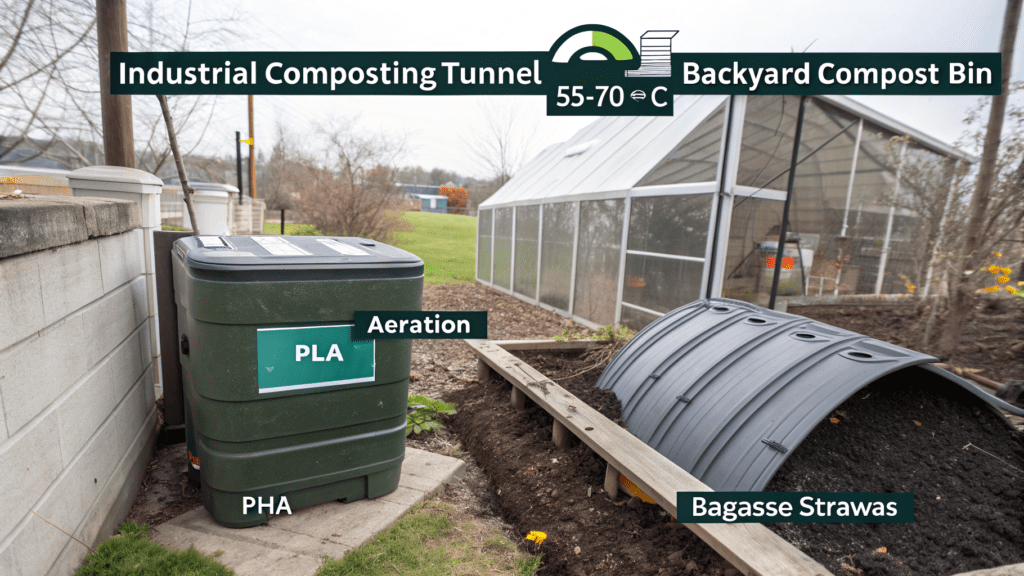
Het afbraakproces van composteerbare rietjes in een industriële composteerinstallatie.
De term ‘composteerbaar’ wordt vaak verward met ‘biologisch afbreekbaar’, maar het onderscheid is cruciaal voor B2B-toepassingen. Composteerbare rietjes zijn speciaal ontworpen om binnen een bepaald tijdsbestek, onder specifieke omstandigheden, en zonder giftige resten achter te laten, af te breken in organisch materiaal, water en koolstofdioxide. Dit staat ver af van generieke ‘biologisch afbreekbare’ claims, die vaak geen gecertificeerde normen voor volledige afbraak hebben en nog steeds kunnen resulteren in microplasticverontreiniging of een onbepaalde hoeveelheid tijd nodig hebben om af te breken.
Het definiëren van echte composteerbaarheid: verder dan ‘biologisch afbreekbare’ labels
Echte composteerbaarheid impliceert een beheerd, gecontroleerd proces. Deze rietjes zijn geformuleerd om volledig te re-integreren in de natuurlijke cyclus, waardoor ze een heilzame bodemverbeteraar worden. De ontbinding vindt doorgaans binnen enkele weken tot enkele maanden plaats in professionele composteringsomgevingen, in schril contrast met conventionele kunststoffen die eeuwenlang kunnen blijven bestaan en uiteenvallen in schadelijke microplastics die ecosystemen doordringen. De afwezigheid van giftige residuen is een niet-onderhandelbaar criterium voor certificering, waarmee wordt gegarandeerd dat het eindproduct veilig is voor het milieu.
De dubbele route: industriële versus thuiscomposteerbare rietjes
Het begrijpen van het specifieke composteringstraject is van cruciaal belang voor effectief afvalbeheer en compliance in de horeca en foodservice.
- Industriële compostering: Dit traject maakt gebruik van gespecialiseerde faciliteiten die nauwkeurig hoge temperaturen handhaven (doorgaans 55-70°C / 131-160°F), gecontroleerde vochtigheidsniveaus en optimale beluchting. Deze omstandigheden versnellen de afbraak, waardoor rietjes binnen enkele weken tot enkele maanden kunnen worden afgebroken. Materialen zoals polymelkzuur (PLA) vereisen vaak deze industriële omstandigheden vanwege hun hogere temperatuurvereisten voor afbraak. Als een industrieel composteerbaar rietje in een compostbak thuis terechtkomt of, erger nog, op een stortplaats, ontbindt het mogelijk niet zoals bedoeld, waardoor het potentieel voor de opwarming van de aarde tot wel zes keer toeneemt.
- Thuiscomposteren: Thuiscomposteerbare rietjes zijn ontworpen voor compostbakken of stapels in de achtertuin en werken bij lagere, meer variabele temperaturen (rond 50-65°C / 122-149°F). Hun afbraakproces verloopt langzamer en duurt doorgaans 6 tot 12 maanden, afhankelijk van de plaatselijke omstandigheden. Materialen omvatten vaak bagasse (suikerrietvezels) en enkele geavanceerde PHA-formuleringen (polyhydroxyalkanoaten), gekozen vanwege hun vermogen om af te breken zonder dat de intense hitte van industriële faciliteiten nodig is.
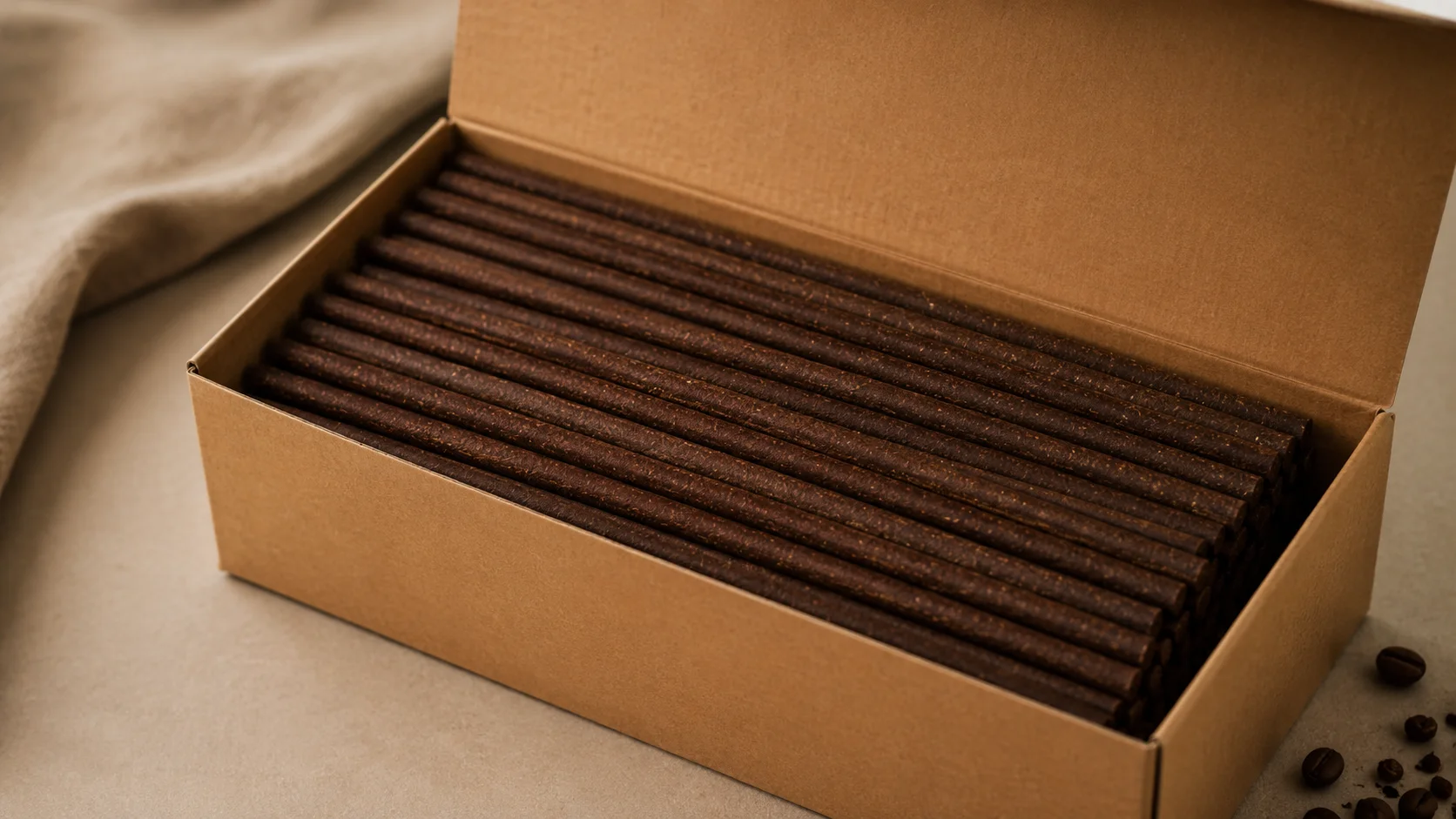
Veel voorkomende materialen voor composteerbare rietjes zijn suikerrietbagasse, maïszetmeel (PLA), PHA en houtpulp. Elk biedt verschillende eigenschappen die tegemoetkomen aan verschillende behoeften en composteringsvereisten.
Composteerbare rietjes zijn ontworpen om veilig te ontbinden, in tegenstelling tot generieke biologisch afbreekbare claims.
Navigating Certifications: Ensuring True Compliance for Compostable Straws
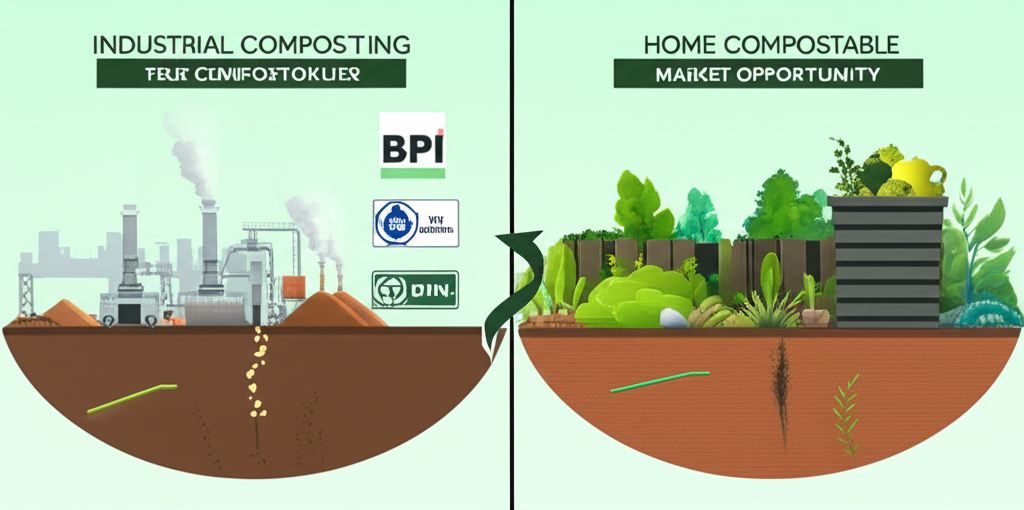
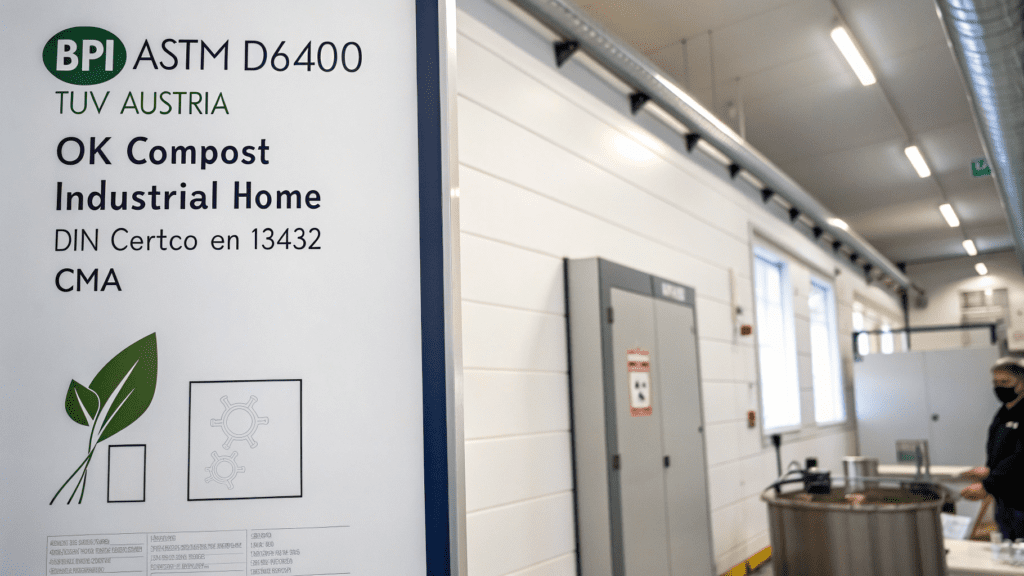
Key certification logos for compostable straws.
For B2B decision-makers in hospitality and foodservice, navigating the landscape of compostable products requires more than just good intentions; it demands adherence to recognized certifications and regional mandates. These certifications are the bedrock of trust in the sustainable packaging market.
Decoding Compostable Straws Certifications: BPI, TÜV AUSTRIA, & DIN-CERTCO
Om echte composteerbare producten te onderscheiden van misleidende “greenwashing”-claims, is het essentieel om te vertrouwen op onafhankelijke certificeringsinstanties.
- BPI (Instituut voor Biologisch Afbreekbare Producten): BPI, een toonaangevend Noord-Amerikaans certificeringsorgaan, certificeert de industriële composteerbaarheid op basis van de ASTM D6400-normen. Producten moeten binnen zes maanden voor ten minste 90% biologisch afbreekbaar zijn en binnen twaalf weken voldoende uiteenvallen om de BPI-certificering te behalen, waardoor ze efficiënt kunnen worden afgebroken in commerciële composteringsinstallaties zonder giftige resten achter te laten.
- TÜV OOSTENRIJK: This reputable European certification body offers “OK compost INDUSTRIAL” (meeting EN 13432 or ASTM D6400) and “OK compost HOME” certifications. The “OK compost HOME” certification is particularly relevant for businesses seeking products that can break down in backyard composting environments, adhering to standards like NF T51-800.
- DIN-CERTCO: A prominent German and European certification body, DIN-CERTCO awards a mark indicating compliance with the European standard EN 13432 for industrial compostability. They also offer a “DIN Tested – Garden Compostable” certification for home composting.
- Australasian Bioplastics Association (ABA) Seeding Mark: Recognized in Australia and New Zealand, this certification verifies compostable products for those markets.
- Compost Manufacturing Alliance (CMA): In the US, CMA certifies commercially compostable products through rigorous lab and field tests, ensuring they meet ASTM D6400 or D6868 standards.
These certifications assure businesses that their chosen straws will decompose safely, leaving no microplastics, heavy metals, or other toxic chemicals, thereby contributing to soil enrichment.
Regulatory Compliance and Regional Mandates (plastic bans)
The global regulatory environment is rapidly evolving, with a clear trend towards restricting single-use plastics, directly impacting hospitality and foodservice supply chains.
- The EU Single-Use Plastics Directive (2019/904): Enforced since 2021, this directive has effectively banned plastic straws, including those labeled “bio-sourced” or “home compostable” if they contain any plastic. This mandates that alternatives must comply with EN13432, pushing businesses towards certified compostable options to maintain market access.
- US City and State Mandates: In the United States, while a federal ban is absent, numerous state and municipal governments have implemented strict regulations. San Francisco, as of January 2020, requires BPI or TÜV AUSTRIA-certified compostable foodware. New York City, since November 2021, allows compostable plastic straws only with on-premise use and proper organics collection. These localized plastic bans Creëer een complex compliancelandschap dat waakzame inkoopstrategieën vereist.
Bedrijven moeten proactief op zoek gaan naar gecertificeerde producten om nalevingsrisico's te vermijden en zich aan deze strengere regelgeving te houden, waardoor een naadloze werking op diverse markten wordt gegarandeerd.
Certificeringen zoals BPI en TÜV AUSTRIA zijn van cruciaal belang voor het garanderen van naleving van de wereldwijde plasticverboden.
Voorbij de hype: de milieuvergelijking van composteerbare rietjes
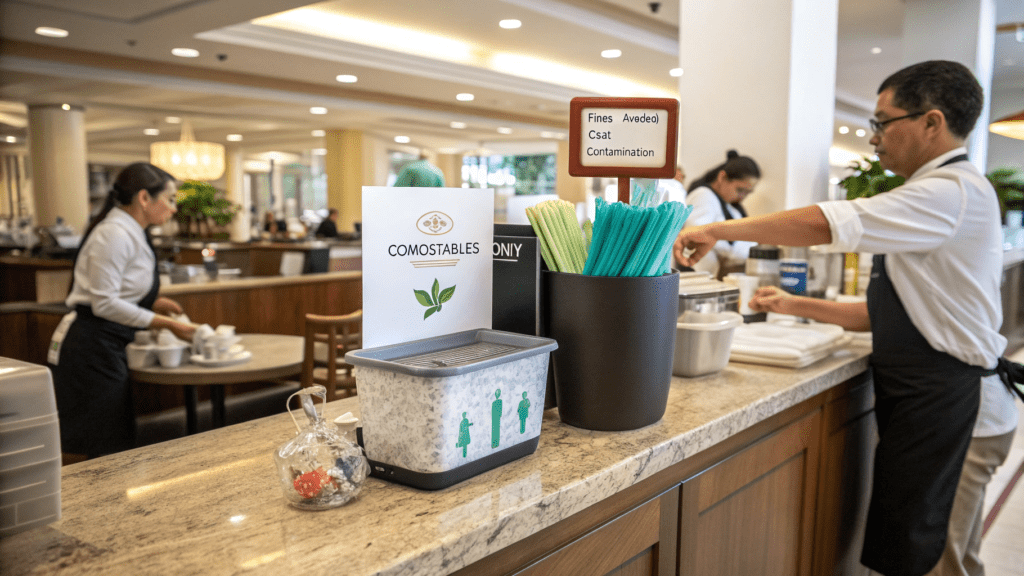
Vergelijking van de duurzaamheid van suikerriet en papieren rietjes in dranken.
Hoewel het concept van composteerbare rietjes inherent aantrekkelijk is, onthult een diepere duik in hun materiaalwetenschap, potentiële verontreinigingen en afvalinfrastructuur een genuanceerder milieuprofiel voor horeca en foodservice.
Materialen zijn belangrijk: uitdagingen op het gebied van samenstelling en duurzaamheid
The choice of material profoundly impacts a straw’s environmental footprint and operational performance in high-volume settings.
- Sugarcane Bagasse and PHA: These materials offer superior durability for both hot and cold beverages, making them ideal for diverse foodservice needs. Sugarcane bagasse straws are sturdy and provide a neutral taste, appealing to customers seeking a natural feel. PHA, notably, stands out for its marine biodegradability, meaning it can break down even in ocean environments, offering an important failsafe if mismanaged.
- Papieren rietjes: Hoewel ze algemeen verkrijgbaar en kosteneffectief zijn, hebben papieren rietjes historisch gezien uitdagingen op het gebied van duurzaamheid met zich meegebracht. Uit peer-reviewed onderzoek blijkt dat papieren rietjes 70-90% van hun druksterkte kunnen verliezen na minder dan 30 minuten in vloeistof, waarbij ze ongeveer 30% van hun gewicht absorberen. Dit kan leiden tot een slechte klantervaring en mogelijk het totale rietjesverbruik verhogen, omdat klanten mogelijk om meerdere rietjes vragen.
- PLA (polymelkzuur): PLA-rietjes bootsen het gevoel van traditioneel plastic na, wat een sterk punt is voor de acceptatie door de consument van koude dranken. Hun afhankelijkheid van industriële composteringsfaciliteiten betekent echter dat onjuiste verwijdering de voordelen voor het milieu teniet kan doen.
De verborgen bedreiging: PFAS in “milieuvriendelijke” composteerbare rietjes (PFAS)
A critical concern for B2B buyers in hospitality is the presence of per- and polyfluoroalkyl substances (PFAS) in some “eco-friendly” straws. These “forever chemicals,” used for water and grease resistance, pose significant health and environmental risks.
- A study published in the peer-reviewed journal Chemosfeer found PFAS in 36 of 38 tested paper and bamboo straw brands, with common detections including perfluorobutanoic acid, perfluorooctanoic acid, and perfluorohexanoic acid. PFOA, one of these, has been globally banned since 2020.
- These chemicals are linked to various human health problems, including compromised immune responses, thyroid disease, and certain cancers. They persist in the environment for thousands of years, making the “biodegradable” marketing claims for PFAS-containing products highly misleading.
- Environmental scientists, like Dr. Thimo Groffen from the University of Antwerp, advise using reusable alternatives such as stainless steel straws or avoiding single-use straws entirely due to PFAS concerns. For businesses committed to true sustainability, sourcing PFAS-free compostable straws is paramount.
Waste Infrastructure & Lifecycle Impact: A Holistic View
The true environmental benefit of compostable straws hinges on proper end-of-life management, especially for high-volume hospitality waste streams.
- Uitdagingen bij verwijdering: Zoals opgemerkt kan het onjuist weggooien van composteerbare rietjes op stortplaatsen het broeikaseffect tot wel zes keer vergroten als gevolg van anaërobe ontbinding. Dit onderstreept de dringende noodzaak tot uitbreiding industriële compostering infrastructuur en duidelijke etiketteringsnormen.
- Holistische beoordeling: Uit onderzoek blijkt dat de belangrijkste bijdrage aan de milieu-impact van verschillende soorten stro vaak de eerste fase van de productie van grondstoffen is. De vooruitgang verzacht dit echter. PHA-rietjes, afkomstig van het afleiden van antropogeen methaan, hebben bijvoorbeeld het potentieel getoond om een netto-negatief broeikaseffect te bereiken, wat de kracht aantoont van materiaalinnovatie in combinatie met duurzame inkoop.
Material choice, PFAS presence, and proper disposal infrastructure significantly impact compostable straws’ environmental benefits.
Strategic Adoption: Driving Value with Compostable Straws in B2B Operations
For forward-thinking businesses in hospitality and foodservice, adopting certified compostable straws is not just about compliance; it’s a strategic move that enhances brand value, mitigates risk, and captures a growing market opportunity.
The Growing Market: Seizing Sustainable Procurement Opportunities
The global market for compostable straws is experiencing robust growth, reflecting a significant shift in consumer and corporate priorities. The market is projected to grow from USD 1.9 billion in 2025 to USD 3.8 billion by 2035, exhibiting a substantial Compound Annual Growth Rate (CAGR) of 7.1%. In 2024, sales were already at USD 1.8 billion.
The foodservice segment is set to lead this expansion, commanding a 52.8% market share in 2025. This growth is directly driven by increasing sustainability commitments from major players in restaurants, quick-service restaurants (QSRs), hotels, and cafes, alongside rising consumer demand for eco-friendly dining experiences. While paper straws are expected to dominate as the material of choice (44.3% of the market in 2025), the focus is increasingly on high-performing, certified alternatives that genuinely deliver on their environmental promise. This represents a prime opportunity for businesses to align their procurement with evolving market demands. To explore options for your hospitality business, check out this guide onBPI composteerbare rietjes voor compliance in de horeca en ROI.
B2B Operational Impact & ROI Considerations
Selecting the right compostable straw involves balancing material properties with operational realities and ROI for hospitality and foodservice.
| Functie | B2B operationele impact | Nalevingsopmerking | ROI-potentieel |
|---|---|---|---|
| Material Durability (e.g., Sugarcane Bagasse) | Ensures customer satisfaction for hot/cold beverages, reducing complaints and need for multiple straws in cafes and hotels. | Meets performance expectations for certified compostable products. | Reduced straw consumption, improved customer experience, enhanced brand perception, leading to repeat business. |
| Certified Compostability (e.g., BPI) | Guarantees proper breakdown in industrial composting facilities, aligning with waste management goals. | Essential for compliance with EU, US city, and other regional plastic bans. Avoids fines. | Avoidance of regulatory fines, enhanced brand reputation, access to markets with strict sustainability mandates. |
| PFAS-Free Assurance | Protects customer and employee health, aligns with growing consumer demand for chemical-free products in foodservice. | Critical for meeting emerging health and environmental regulations; prevents future liabilities. | Mitigated legal and reputational risks, increased consumer trust, competitive differentiation in a health-conscious market. |
| Supply Chain Optimization (MOQ, Logistics) | Ensures consistent availability and efficient delivery for high-volume hospitality operations. | Adherence to supplier agreements and delivery schedules. | Reduced inventory costs, minimized stockouts, improved operational efficiency, and reliable product flow. |
For hospitality businesses, understanding Minimum Order Quantities (MOQ) and logistics is crucial for efficient supply chain management. Most suppliers offer flexible MOQs to accommodate various business sizes, from small cafes to large hotel chains. Branding options, such as custom logos or colors, are often available to reinforce your commitment to sustainability. For full details on regulatory compliance, MOQ, and branding, refer to our comprehensive internal resource on sustainable packaging solutions.
Strategic adoption of certified compostable straws enhances brand value and mitigates operational risks.
Real-World Sustainability: Mini Case Study & Best Practices
Leading organizations are already demonstrating the practical benefits of adopting compostable straw solutions in their operations.
- Kaiser Permanente: This healthcare giant made a significant commitment to sustainability by adopting compostable straws across its facilities, a move that substantially reduced its single-use plastic waste footprint. This decision was driven by a holistic view of environmental stewardship, recognizing the link between environmental health and community well-being.
- Bon Appetit: As a major restaurant management company, Bon Appetit took proactive steps, committing to banning plastic straws and stirrers by September 2019 across its more than 1,000 cafes. This initiative showcased a top-down commitment to sustainable practices that could be scaled across diverse operations.
- Starbucks: While global brands like Starbucks have implemented significant sustainable packaging initiatives, including compostable straws, their journey highlights both success and challenges. With 89.5% consumer awareness of sustainable packaging, the intention is clear. However, only 67.6% of consumers reported familiarity with their “Green Packaging Initiative,” indicating a gap in active participation often due to inconvenience or lack of clear disposal instructions. This emphasizes the need for comprehensive communication and accessible disposal infrastructure to maximize the environmental impact of sustainable products. For cafes and restaurants keen on navigating this shift, resources on compostable straws for coffee shops can offer tailored insights.
These examples underscore that while the intent for sustainability is strong, successful implementation requires careful consideration of material properties, consumer behavior, and robust waste management infrastructure.
Leading companies demonstrate that successful compostable straw adoption requires material, behavior, and infrastructure alignment.
The Evolving Landscape: Future Innovations in Compostable Straws
The field of compostable materials is a hotbed of innovation, continuously striving to overcome existing limitations and offer even more sustainable, high-performance solutions. The next 5-10 years promise revolutionary advancements in materials, processes, and regulatory frameworks for hospitality and foodservice.
Pioneering Materials & Technologies (innovation)
The future of compostable straws is being shaped by cutting-edge material science:
- Bacteriële cellulose: Emerging research points to bacterial cellulose as a game-changer. Produced by bacteria feeding on sugar, these straws offer plastic-like durability at potentially low costs and, remarkably, can degrade without the need for traditional industriële compostering. While edible, their primary benefit lies in their robust performance and environmental profile.
- PLA-Free Innovations: Recognizing the limitations of early PLA formulations (particularly their reliance on industrial composting), companies are investing heavily in new solutions. Sulapac Ltd., a Finnish sustainable packaging innovator, secured €15 million in 2023 to develop PLA-free compostable straw technology, directly addressing microplastic concerns and broadening disposal options.
- Eetbare rietjes: Beyond bacterial cellulose, edible straws made from materials like pasta or rice offer a novel, truly zero-waste solution. These provide a unique customer experience while ensuring complete biological degradation.
- Enhanced Barrier Coatings: Future innovation will focus on advanced, truly compostable coatings that provide superior moisture and temperature resistance, ensuring compostable straws remain durable for longer durations in various beverages, outperforming current paper straw limitations.
Overcoming Challenges: Cost, Performance, and Disposal (industrial composting)
Addressing key challenges is central to the widespread adoption of next-generation compostable straws in B2B settings:
- Cost Competitiveness: Technological advancements are continuously working to lower production costs, making certified compostable straws more competitive with traditional plastics. Economies of scale and improved manufacturing efficiencies will play a crucial role.
- Consistent Performance: Ensuring consistent performance across a wide range of hot and cold beverages remains a continuous focus for material science innovation, guaranteeing customer satisfaction regardless of drink choice.
- Expanding Infrastructure: The most critical challenge lies in expanding industriële compostering infrastructure globally. For these products to realize their full environmental benefits, proper end-of-life collection and processing must be ubiquitous. Regulatory incentives and public-private partnerships will be vital in developing this crucial infrastructure.
Future innovations in compostable straws aim for better performance, lower costs, and broader disposal options.
Competitive Advantage & Business Case: Elevate Your Brand with Certified Compostable Straws
In an era defined by environmental consciousness and stringent regulations, adopting certified compostable straws is more than a responsible choice—it’s a potent strategic differentiator for hospitality and foodservice businesses.
By proactively transitioning to certified compostable solutions, your business can quantify significant benefits:
- Kostenbesparingen: Mitigate the risk of hefty fines and penalties associated with non-compliance with single-use plastic bans in key markets. Avoid potential legal costs and operational disruptions.
- Risicobeperking: Shield your brand from reputational damage and consumer backlash linked to plastic pollution. Public awareness of environmental issues is at an all-time high, and missteps can severely impact brand loyalty.
- Verhoging van de merkwaarde: Enhance your corporate social responsibility (CSR) profile and brand image, appealing to the rapidly growing segment of eco-conscious consumers. Studies show that a strong commitment to sustainability can drive purchasing decisions and foster customer advocacy.
- Kans op marktaandeel: Seize a competitive edge in a market increasingly valuing sustainability. As consumer preferences shift and regulations tighten, businesses that lead with verified eco-friendly practices are positioned to capture a larger share of the growing eco-friendly straws market. The global compostable straws market’s projected growth from USD 1.9 billion in 2025 to USD 3.8 billion by 2035 clearly illustrates this expansive opportunity.
This strategic alignment transforms compliance from a burden into a powerful lever for growth and market leadership.
Adopting certified compostable straws offers significant cost savings, risk mitigation, and brand value uplift.
Conclusion: Elevate Your Brand with Certified Compostable Straws
The question “Are compostable straws really compostable?” can be answered with a resounding “yes,” provided they adhere to rigorous certifications. For B2B decision-makers in hospitality and foodservice, embracing these verified alternatives is not merely an environmental gesture but a vital step towards future-proofing operations, mitigating risks, and securing a competitive advantage in a rapidly evolving market. While challenges like PFAS contamination and infrastructure gaps persist, ongoing innovation and stringent certification standards offer a clear path forward.
Do not allow uncertainty to impede your sustainability goals.Invest in certified compostable straws today to align with global sustainability imperatives and drive positive, quantifiable change for your business and the planet.
Certified compostable straws are a strategic investment for future-proofing hospitality and foodservice operations.
Veelgestelde vragen (FAQ)
Are compostable straws truly compostable in hospitality and foodservice settings?
Yes, certified compostable straws are genuinely compostable, breaking down into organic matter without toxic residues under specific conditions. For hospitality and foodservice, industrial composting is often required for full decomposition.
What is the difference between industrial and home compostable straws for B2B use?
Industrial compostable straws require high-temperature commercial facilities to break down quickly (weeks to months). Home compostable straws decompose slower (6-12 months) at lower, variable temperatures, suitable for backyard bins. B2B operations typically need industrial-certified options.
Do ‘eco-friendly’ compostable straws contain harmful PFAS chemicals?
Some paper and bamboo straws have been found to contain PFAS ‘forever chemicals’ for water resistance. Businesses must source certified PFAS-free compostable straws to ensure true sustainability and avoid health/environmental risks.
How can adopting certified compostable straws benefit my hospitality business’s ROI?
Adopting certified compostable straws mitigates compliance fines from plastic bans, enhances brand reputation among eco-conscious consumers, and captures market share in the growing sustainable packaging sector, leading to significant long-term ROI.
What certifications should procurement managers look for when buying compostable straws?
Procurement managers should look for certifications like BPI (ASTM D6400), TÜV AUSTRIA (EN 13432, NF T51-800), DIN-CERTCO (EN 13432), ABA Seeding Mark, and Compost Manufacturing Alliance (CMA) to ensure genuine compostability and compliance.