Nippen aan duurzaamheid: een strategische B2B-gids voor biologisch afbreekbare rietjes voor leiders in de foodservice
Als leiders op het gebied van hotels, bars, cafés, restaurants, cateringgroothandels en importbedrijven staat u aan de frontlinie van een cruciale verschuiving. De dagen van alomtegenwoordige plastic rietjes voor eenmalig gebruik lopen snel ten einde. Deze gids is bedoeld om u te voorzien van de strategische inzichten die nodig zijn om door deze verandering te navigeren, compliance te garanderen, uw merk te versterken en bij te dragen aan een gezondere planeet.
I. Inleiding: de onvermijdelijke verschuiving naar duurzaam nippen
A. De plastic situatie in de foodservice: een roep om verandering
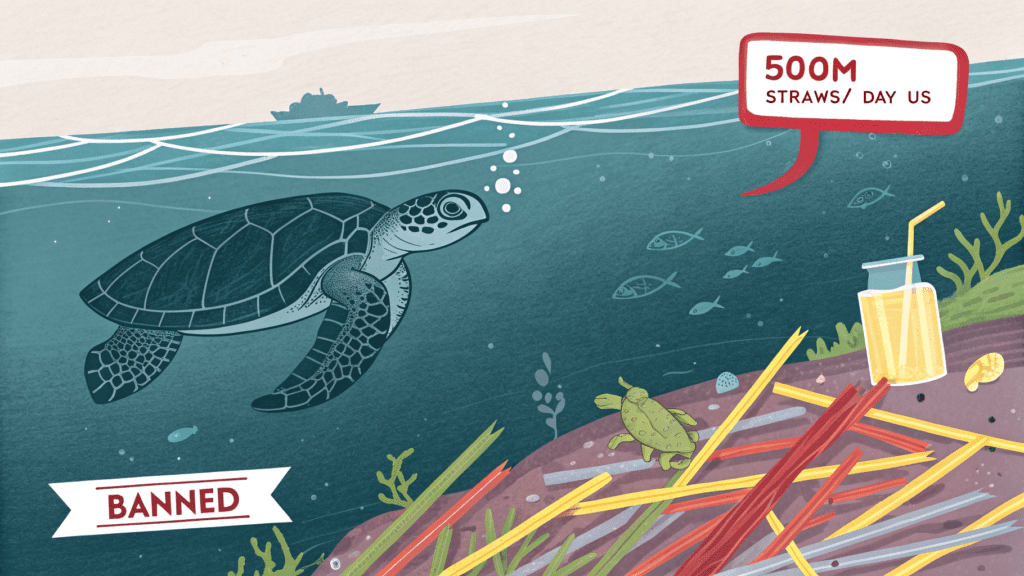
Wereldwijd, Dagelijks worden honderden miljoenen plastic rietjes voor eenmalig gebruik weggegooidHet duurt eeuwen voordat het is afgebroken en het levert een aanzienlijke bijdrage aan de milieuvervuiling, vooral in de oceanen en op stortplaatsen. Deze escalerende milieucrisis, gekoppeld aan veranderende consumentenwaarden en strengere regelgeving, is niet langer een bijzaak voor foodservicebedrijven, maar een kritisch operationeel en merk imperatief. Alleen al de VS zijn bijvoorbeeld verantwoordelijk voor het dagelijks gebruik van naar schatting 500 miljoen plastic rietjes. Bedrijven die zich niet aanpassen, lopen het risico klanten van zich te vervreemden en te maken te krijgen met juridische gevolgen.
B. De ecologische revolutie omarmen: wat zijn biologisch afbreekbare rietjes?
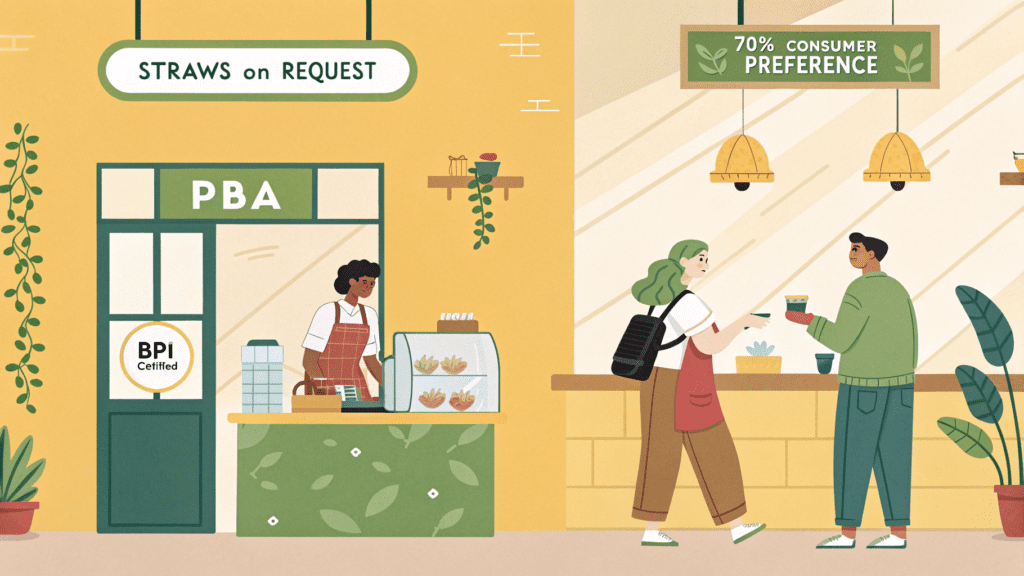
Biologisch afbreekbare rietjes wel innovatieve, plantaardige alternatieven ontworpen om op natuurlijke wijze af te breken, waardoor de ecologische voetafdruk aanzienlijk wordt verminderd. Dit zijn niet alleen een nalevingsmaatregel; zij zijn een strategische troef voor het verbeteren van het merkimago en het aantrekken van het groeiende segment van milieubewuste consumenten, zo blijkt uit onderzoeken ruim 70% van de consumenten geeft de voorkeur aan duurzame merken.
Lees meer over duurzame oplossingen voor uw bedrijf op momoio.com
II. De evolutie van het slokje: van oud riet tot moderne hernieuwbare energiebronnen
A. Een historisch overzicht: de reis van het rietje
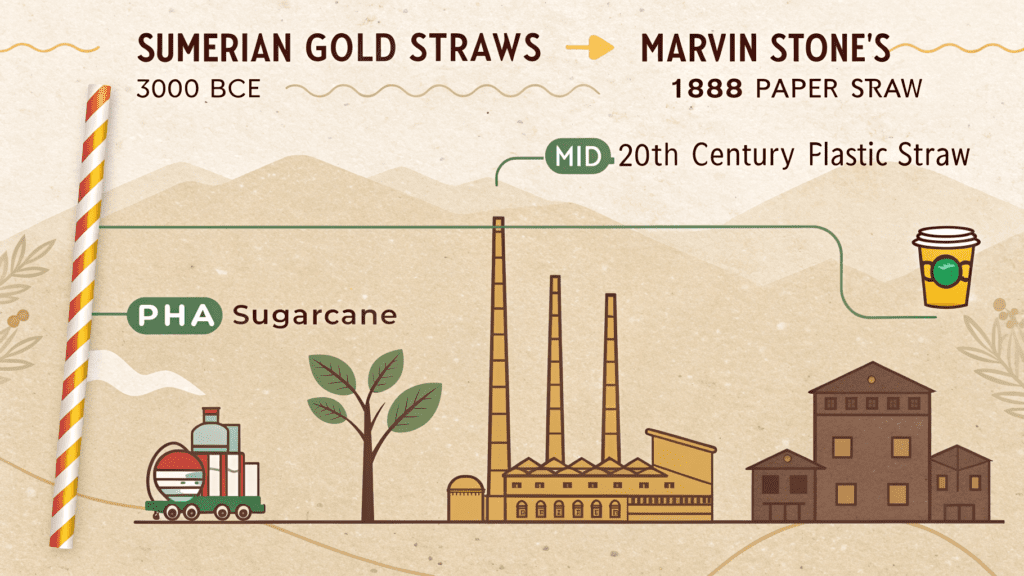
Het rietje heeft een rijke geschiedenis, van de Sumerische en Egyptische oudheid, waarbij gouden en houten rietjes werden gebruikt, tot de baanbrekende uitvinding van het papieren rietje van Marvin Stone in 1888. In het midden van de 20e eeuw zag de opkomst van plastic rietjes, gedreven door de groei van fastfood en de vraag naar goedkope, duurzame wegwerpartikelen, wat leidde tot het bijna uitsterven van papieren alternatieven in de jaren zeventig.
B. The Tipping Point: Environmental Awakening & Regulatory Action
De toename van het publieke en industriële bewustzijn over plasticvervuiling begon eind jaren 2000, met name benadrukt door de virale zeeschildpadvideo uit 2015. Dit bewustzijn veroorzaakte een golf van regelgevende maatregelen:
- EU-richtlijn inzake kunststoffen voor eenmalig gebruik (SUPD), juli 2021: Een mijlpaal verbod op verschillende soorten plastic voor eenmalig gebruik, inclusief plastic rietjes (zelfs PLA), met beperkte ziekenhuisuitzonderingen. Deze richtlijn legt ook op Regelingen voor uitgebreide producentenverantwoordelijkheid (EPR)., waarbij producenten verantwoordelijk worden gehouden voor afvalbeheer en schoonmaakkosten.
- Verboden op staatsniveau in de VS: A lappendeken van regelgeving bestaat, inclusief regelrechte verboden (bijvoorbeeld Seattle in juli 2018, New York, New Jersey, Vermont, Washington) of ‘straw upon request’-beleid (bijvoorbeeld Californië in januari 2019, New York City). Sommige Amerikaanse steden hebben zelfs ‘composteerbaar plastic’ (PLA), zo niet echt niet-plastic, verboden.
- Reactie van de industrie: Grote bedrijven zoals Starbucks (belofte van 2018, introductie van plantaardige rietjes van Green Planet™ in Japan in 2024), McDonald's (mondiale transitie van papierstro), Hyatt, American Airlines en Disney hebben aanzienlijke toezeggingen gedaan, waarbij succesvolle verschuivingen zijn aangetoond die hebben geleid tot een grotere klanttevredenheid en positieve berichtgeving in de media.
Deze periode markeerde een definitief keerpunt voor de foodservice, waardoor compliance en duurzame inkoop een topprioriteit werden.
III. Navigeren door het groene landschap: keuzes, trends en waarheden
A. Uw opties begrijpen: een diepe duik in biologisch afbreekbare materialen
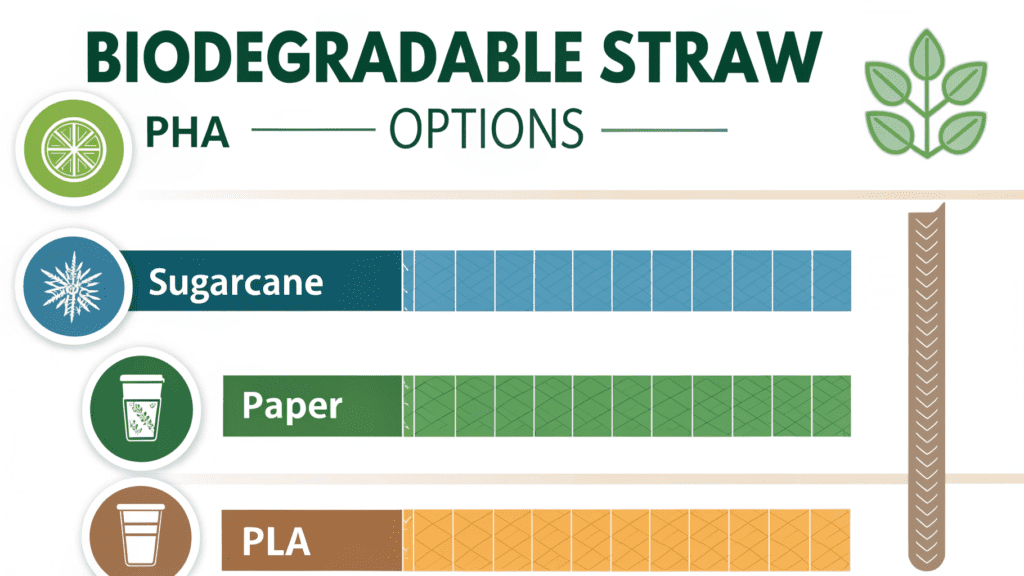
Bij het kiezen van het juiste biologisch afbreekbare rietje moet u de unieke eigenschappen en geschiktheid ervan voor verschillende foodservice-toepassingen begrijpen. Wij zullen ons richten op de nieuwe generatie PLA-vrije opties:
- Polyhydroxyalkanoaten (PHA):
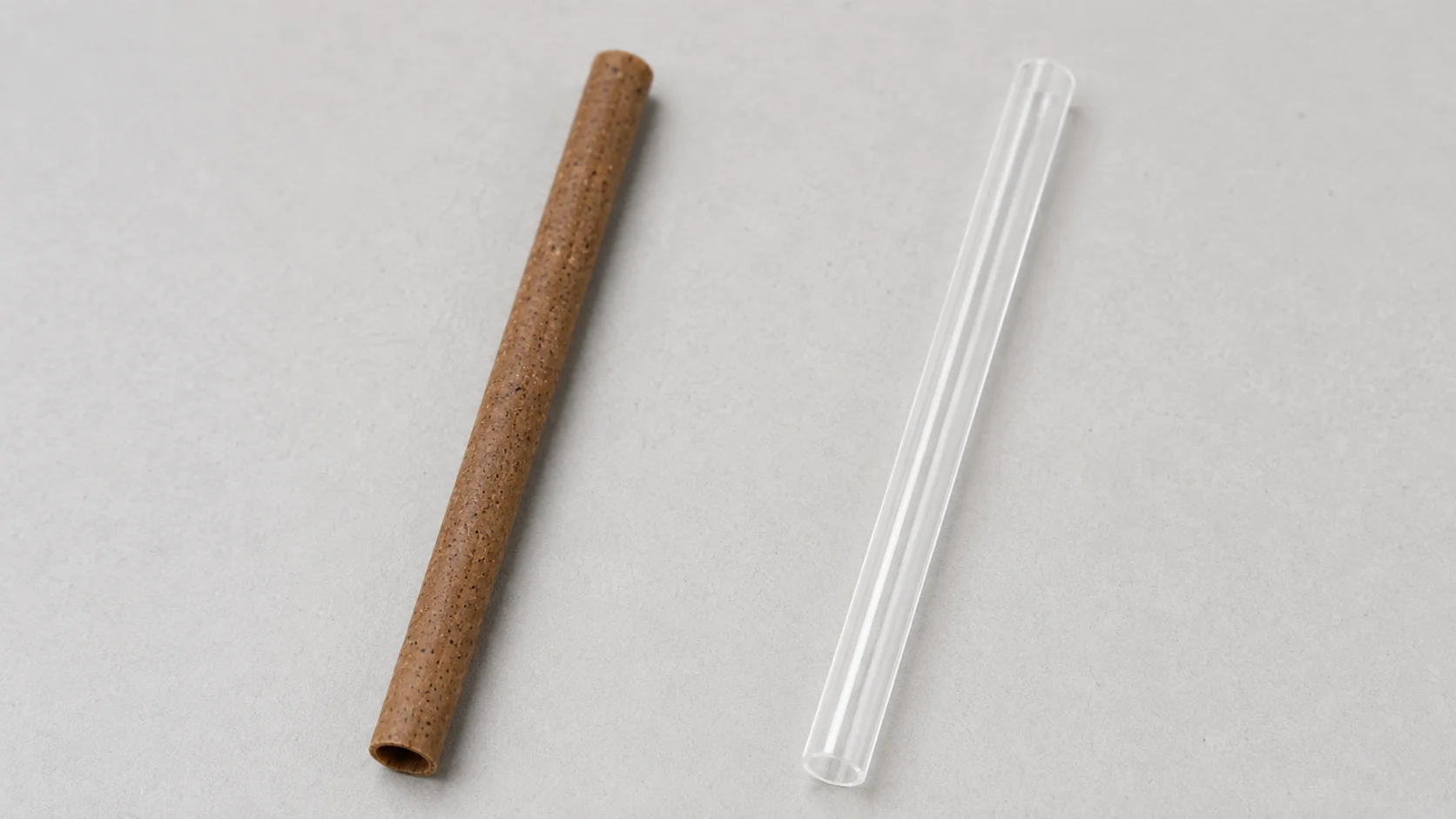
- Pluspunten: PHA-rietjes bootsen de gevoel en duurzaamheid van traditioneel plastic, Zijn marine & home/industrial compostable, duurzaam, geschikt voor warme dranken (tot 100°C/212°F), FDA-goedgekeurd, en produceren geen microplastics. Ze hebben een aanzienlijk verminderde ecologische voetafdruk (tot 70% minder uitstoot dan plastic).
- Nadelen: PHA-rietjes kunnen dat wel zijn duurder than other biodegradable options due to their complex fermentation production process, though costs are improving. Critically, the De EU classificeert PHA als een “niet-natuurlijk polymeer” vanwege het industriële fermentatieproces, waardoor PHA-rietjes voor eenmalig gebruik worden verboden als “plastic” ondanks hun biologische afbreekbaarheid, die een aanzienlijke impact heeft op het gebruik ervan in Europa. PHA-rietjes zijn ook ontworpen voor eenmalig gebruik, waardoor het voortdurende verbruik van hulpbronnen wordt bestendigd.
- Suikerriet (Bagasse):
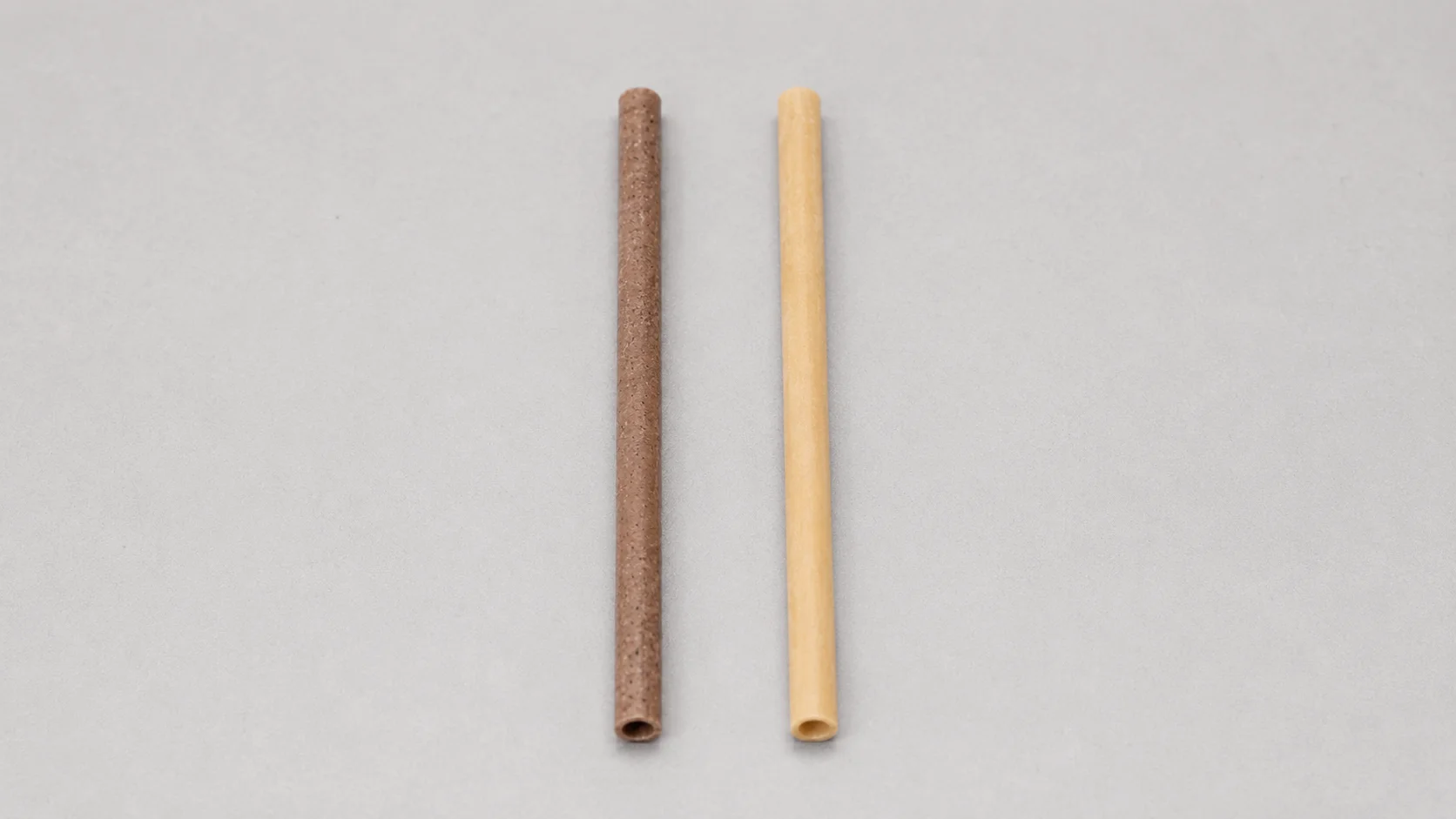
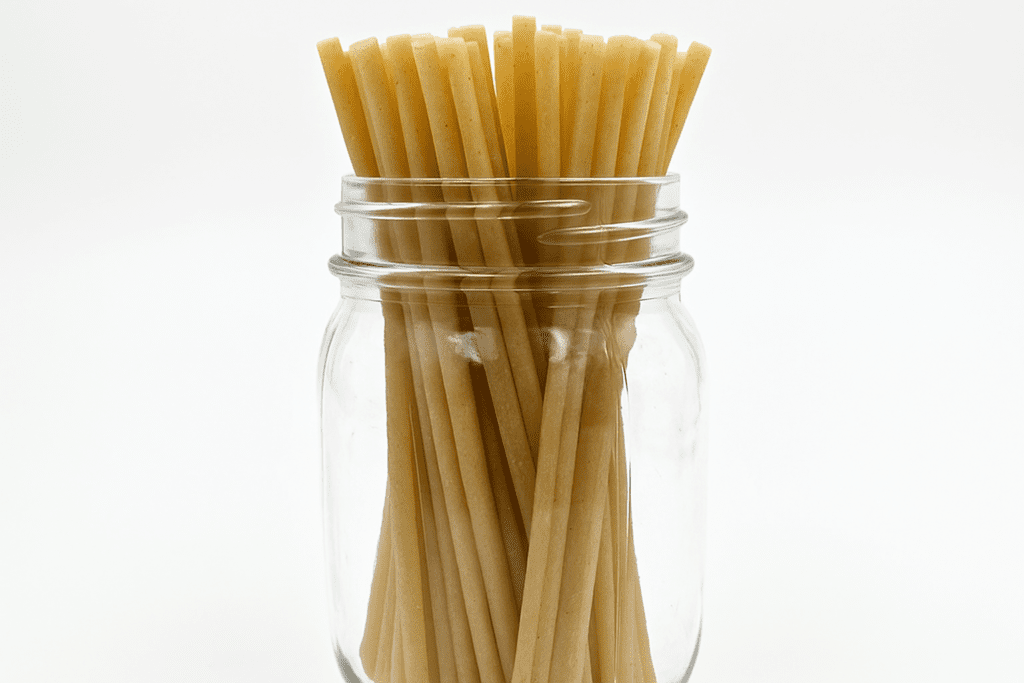
- Pluspunten: Gemaakt van bagasse, het vezelachtige bijproduct van de extractie van suikerrietsap, waarbij landbouwafval wordt hergebruikt in een circulaire economie. Dat zijn ze vaak 100% PLA-vrij en PFAS-vrij, duurzaam, waterbestendig, geschikt voor warme dranken (tot 90°C/220°F), thuis composteerbaar (meestal 3-6 maanden) en smaakvrij. Rietjes van suikerriet wel algemeen toegestaan onder de EU SUPD als een natuurlijke, niet-chemisch gemodificeerde vezel.
- Nadelen: Hoewel ze urenlang houdbaar zijn, kunnen sommige binnenin iets zachter worden erg hete vloeistoffen, hoewel ze functioneel blijven. Sommige vroege versies (V1) bevatten PLA, wat nu verboden is in de EU. Voor optimale afbraakvoordelen is toegang tot composteringsfaciliteiten vereist. Ze hebben een houdbaarheid van 10-18 maanden en vereisen een goede opslag.
- Papier (voor context):
- Pluspunten: Op grote schaal verkrijgbaar, kosteneffectief (vergeleken met sommige bioplastics), biologisch afbreekbaar, recyclebaar.
- Nadelen: Gevoelig voor drassigheid, verliest na 20 minuten meer dan 75% stevigheid en zakt binnen 30-60 minuten in, wat klanten kan frustreren. Ze kunnen een ‘papierachtige’ smaak geven, en uit sommige onderzoeken is gebleken dat ze schadelijk zijn PFAS-gehalte (per- en polyfluoralkylstoffen)..
- Polymelkzuur (PLA) (voor context):
- Pluspunten: Soortgelijke look/feel als plastic, stevig voor koude dranken.
- Nadelen: Vereist vooral industriële composteerinstallaties; het duurt jaren voordat het bij kamertemperatuur op stortplaatsen of in de oceanen wordt afgebroken en zich gedraagt als conventioneel plastic. Wordt zacht en kromtrekt in hete vloeistoffen (boven ~60-70°C). Cruciaal is dat de EU SUPD PLA-rietjes als plastic verbiedt.
B. Current Market Adoption & B2B Buyer Preferences
De mondiale markt voor biologisch afbreekbaar stro maakt een aanzienlijke groei door, die naar verwachting zal groeien van 41,52 miljard dollar in 2024 naar 178,87 miljard dollar in 2031 (een CAGR van 23,20%). Noord-Amerika en Azië-Pacific hebben leidende marktaandelen en groei.
Bedrijven geven prioriteit aan duurzaamheid voor MVO-doelstellingen, naleving van regelgeving en merkverbetering. Functionaliteit (duurzaamheid, geschiktheid voor warm/koud) en kosteneffectiviteit zijn belangrijke beslissingsfactoren. Succesverhalen van grote ketens als Starbucks, McDonald’s, Hyatt, American Airlines, Disney, Sweetgreen, Dunkin’, Tous les JOURS en First Watch benadrukken succesvolle transities die tot een grotere klanttevredenheid leiden.
Klaar om leiding te geven aan de verandering? 🌱 Neem vandaag nog contact met ons op om een offerte aan te vragen of gratis monsters te ontvangen van premium suikerriet- en PHA-rietjes voor uw koffiezaak of foodservicebedrijf. Het is tijd om je aan te sluiten bij de duurzame cafés en restaurants die het tij keren op het gebied van wegwerpplastic – rietje voor rietje. Uw klanten zullen u dankbaar zijn, en de planeet ook!
C. Addressing the Elephant in the Room: Challenges & Misconceptions
- Kostenbarrière: Biodegradable straws are generally more expensive than traditional plastic (e.g., paper straws 5-12 cents vs. plastic <2 cents). However, this must be weighed against the “echte kosten” van plasticvervuiling ($75 miljard per jaar voor de samenleving) en de langetermijnvoordelen van een verbeterde merkreputatie en klantenloyaliteit. Rietjes van suikerriet zijn concurrerend met papieren rietjes als ze in bulk worden gekocht.
- The “Biodegradable” Myth & Greenwashing: Veel “biologisch afbreekbare” kunststoffen (zoals PLA) vereisen specifieke industriële composteringsomstandigheden en kunnen zich op stortplaatsen of oceanen gedragen als conventioneel plastic, wat bijdraagt aan de vervuiling. Actionable Advice: Emphasize the importance of clear “compostable” certifications (e.g., OK Compost Home/Industrial) over vague “biodegradable” claims.
- PFAS Concerns: Studies (2019-2024) have detected harmful “forever chemicals” (PFAS) in many paper and plant-based straws. Actionable Advice: Seek “PFAS-Free” certifications when sourcing. Sugarcane straws are typically PFAS-free.
- Composting Infrastructure Challenge: While sugarcane and PHA straws are compostable, widespread access to commercial composting facilities is not universal in the US, highlighting the importance of home compostable options.
IV. Strategic Sourcing & Future-Proofing Your Business
A. Key Supplier Considerations for B2B Buyers
To make a confident and compliant choice, B2B buyers must prioritize:
- Non-Negotiable Certifications:
- Composteerbaarheid: Look for BPI Certified Compostable, DIN CERTCO, TÜV Austria (OK Compost Industrial/Home, Marine Biodegradable).
- Biobased inhoud: USDA BioPreferred Program verifies renewable resource content.
- Voedselveiligheid: FDA Food Contact Safety Guidelines, LFGB, Good Manufacturing Practices (GMP).
- Sourcing & Safety: FSC-certified sources (for paper straws), and crucially, PFAS-Free verification.
- Logistics & Scalability: Inquire about typical production lead times (e.g., 15-35 days), Minimum Order Quantity (MOQ), and discuss flexibility for initial trials. Leverage the cost-effectiveness of bulk and wholesale purchasing for significant savings.
- Customization for Brand Alignment (OEM Opportunities): Consider custom logo printing (colorful inks), laser engraving (bamboo), and bespoke designs to reinforce your brand identity. Ensure availability of different diameters, lengths, and shapes (straight, flexible, spoon), and packaging options (bulk, individual paper wraps).
B. The Business Case for Adoption: Beyond Compliance
Switching to compostable, PLA-free straws offers tangible business advantages:
- Compliance with Current (and Future) Regulations: Align with growing laws banning single-use plastics, future-proofing your operations against the next wave of plastic restrictions.
- Oproep aan milieubewuste consumenten: Over 70% of consumers prefer sustainable brands, enhancing your brand and building customer loyalty.
- Verbeterde klantervaring: Durable, taste-neutral straws eliminate common complaints associated with soggy paper, leading to higher customer satisfaction.
- Contribute to a Circular Economy: Utilizing agricultural byproducts and truly compostable materials reduces waste and carbon footprint.
- Ease of Disposal & Waste Management: Compostable straws can often go into food waste or compost bins, simplifying waste sorting and potentially saving on disposal costs.
- Marketing & Storytelling Opportunities: Highlight your “compostable straws initiative” on menus, signage, and social media, positioning your cafe as a leader in sustainable practices and generating positive PR.
C. Actionable Steps: Implementing Your Sustainable Straw Strategy
- Beoordeel uw behoeften: Conduct an internal audit of current straw usage, considering beverage types (hot/cold, thin/thick) and volume.
- Pilotprogramma: Initiate a trial phase with a selection of biodegradable materials, gathering feedback from both staff and customers on performance and preference.
- Opleiding van personeel: Educate your team on the new materials, proper handling, and the correct disposal methods (e.g., differentiating industrial vs. home compostable) to maximize environmental benefits.
- Klantcommunicatie: Proactively communicate your sustainability commitment through menus, signage, and social media to reinforce brand values and educate consumers. Consider offering straws “upon request” to further reduce waste.
- Voorbij het rietje: Position this switch as a stepping stone within a larger, holistic sustainability strategy, exploring other waste reduction strategies, reusable systems, and responsible sourcing.
V. Future Outlook: Beyond 2025 – Continuous Innovation & Global Impact
The global eco-friendly straws market is set for continued robust growth, with projections to reach $19.36 billion by 2029 En $25.1 billion by 2035 (7.3% CAGR).
• Opkomende innovaties: Anticipate breakthroughs in materials, coatings for enhanced durability, and true biodegradability in diverse environments (marine, home compost). This includes advanced PHA production (genetic engineering, new substrates like food waste) and novel plant-based materials like seaweed, rice, coffee grounds, coconut, and cellulose acetate.
• Cost Optimization: Economies of scale and technological advancements are expected to drive down the cost of biodegradable straws, making them even more accessible.
• Holistic Sustainability: The shift to biodegradable straws is part of a broader industry movement towards comprehensive sustainable practices, integrating with other eco-friendly disposables and waste management solutions. Hotels, for example, are moving towards carbon neutrality, integrating AI for resource management, sustainable design, and circular economy initiatives. This reflects a shift from sustainability as a “marketing add-on” to a “cost-avoidance strategy” for procurement, driving efficiency and resilience.
The time to act is now. Aligning with sustainable practices is not just about compliance but seizing a competitive advantage in a rapidly evolving market. By adopting these next-generation PLA-free straws, you demonstrate your commitment to a sustainable future, delight your customers, and future-proof your business operations.
Klaar om leiding te geven aan de verandering? 🌱 Neem vandaag nog contact met ons op om een offerte aan te vragen of gratis monsters te ontvangen van premium suikerriet- en PHA-rietjes voor uw koffiezaak of foodservicebedrijf. Het is tijd om je aan te sluiten bij de duurzame cafés en restaurants die het tij keren op het gebied van wegwerpplastic – rietje voor rietje. Uw klanten zullen u dankbaar zijn, en de planeet ook!