Mastering the Modern Straw: Sustainable & Compliant B2B Choices
Het bescheiden rietje, ooit een alomtegenwoordig gemak, is uitgegroeid tot een krachtig symbool van veranderingen in het milieu en een formidabele uitdaging op het gebied van de regelgeving. Voor B2B-kopers – of het nu gaat om horeca, foodservice of detailhandel – draait het navigeren door het enorme en vaak verwarrende landschap van stro-opties niet langer alleen om kostenefficiëntie. Het gaat om cruciale compliance, het beschermen van de merkreputatie en het tonen van oprechte toewijding aan duurzaamheid.

Heeft u er echt vertrouwen in dat uw huidige “milieuvriendelijke” stro-oplossingen echt veilig, conform de voorschriften en echt duurzaam zijn? Het tijdperk van eenvoudige plastic rietjes is onherroepelijk voorbij en vervangen door een complex web van milieuclaims, snel evoluerende regelgeving zoals de EU-richtlijn voor eenmalig gebruik van kunststoffen (SUPD) en de alarmerende waarheid over verborgen “forever chemicaliën” (PFAS) in ogenschijnlijk groene alternatieven. In deze snel veranderende markt kan wat u niet weet uw bedrijf aanzienlijk kosten, niet alleen aan boetes en reputatieschade, maar ook aan verloren klantenvertrouwen.
De strorevolutie uitpakken – materialen, regelgeving en de verborgen waarheden
De transitie weg van conventionele kunststoffen heeft een doos van Pandora met alternatieven geopend, elk met zijn eigen voordelen, nadelen en regelgevingsoverwegingen. Het begrijpen van deze nuances is van cruciaal belang voor het nemen van weloverwogen B2B-aankoopbeslissingen.
De diverse wereld van rietjes: een materiële analyse voor B2B-kopers
Laten we eens kijken naar de kernmaterialen die de huidige stromarkt bepalen:
Het plastic probleem:
- Traditionele kunststoffen (polypropyleen (PP), polyethyleen (PE), polyvinylchloride (PVC)): Decennia lang domineerden deze kunststoffen de stromarkt vanwege hun lage kosten, duurzaamheid en veelzijdigheid. Het wijdverbreide gebruik ervan heeft echter aanzienlijk bijgedragen aan de vervuiling van microplastics, de vervuiling van de oceaan en de schade aan het milieu, waarbij veel ervan potentieel schadelijke chemicaliën zoals BPA of ftalaten bevatten.
- Belangrijkste inzicht: De Europese Unie heeft deze crisis al vroeg onderkend en de maatregelen ten uitvoer gelegd EU-richtlijn inzake kunststoffen voor eenmalig gebruik (SUPD), dat sinds 3 juli 2021 het plaatsen van plastic rietjes voor eenmalig gebruik op de EU-markt heeft verboden. Dit verbod omvat niet alleen traditionele kunststoffen, maar ook oxo-afbreekbare kunststoffen en zelfs biokunststoffen zoals polymelkzuur (PLA) als ze door de richtlijn als ‘plastic’ worden beschouwd, wat betekent dat ze niet snel en volledig biologisch afbreekbaar zijn in een natuurlijke omgeving. Deze fundamentele verschuiving betekent dat bedrijven die binnen de EU opereren of naar de EU exporteren, zich moeten richten op niet-plastic alternatieven.
The Promise & Pitfalls of Bioplastics:
- Polymelkzuur (PLA): Afgeleid van hernieuwbare bronnen zoals maïszetmeel, suikerriet of cassave, biedt PLA een plasticachtig gevoel en uiterlijk. Het is duurzaam en bestand tegen desintegratie in drankjes, waardoor het een populaire “milieuvriendelijke” keuze is.
- Polyhydroxyalkanoaat (PHA): PHA, een innovatief biopolymeer, is afgeleid van plantaardige oliën of suikers en is op unieke wijze biologisch afbreekbaar in de zee, wat betekent dat het op natuurlijke wijze kan worden afgebroken in diverse omgevingen, waaronder oceanen.
- Uitdaging: Hoewel ze biobased zijn, vereisen veel PLA-rietjes nog steeds gespecialiseerde industriële composteringsfaciliteiten om effectief af te breken en zijn, zoals opgemerkt, verboden als plastic voor eenmalig gebruik onder de EU SUPD. Bedrijven moeten de specifieke certificeringen en verwijderingsinfrastructuur begrijpen die nodig zijn om ervoor te zorgen dat deze producten hun milieubelofte daadwerkelijk waarmaken. Verkeerde etikettering of een gebrek aan correcte verwijdering kunnen ertoe leiden dat deze bioplastics op stortplaatsen belanden, waar ze zich net als conventionele plastics gedragen.

Papieren rietjes: een populair, maar problematisch alternatief:
- Paper straws emerged as a seemingly ideal solution: biodegradable, compostable, and breaking down much faster than plastic. They offer a tangible alternative to single-use plastics and are widely accepted by consumers.
- Critical Finding: Recent research has unveiled a concerning truth: a significant majority of tested paper straw brands (up to 90% in some studies) contain Per- and polyfluoroalkyl substances, commonly known as PFAS of ‘voor altijd chemicaliën’. Deze chemicaliën worden vaak opzettelijk toegevoegd voor waterbestendigheid of kunnen het gevolg zijn van vervuiling tijdens het productieproces. PFAS kunnen in dranken terechtkomen, wat potentiële gezondheidsrisico's voor de consument met zich meebrengt en voor onbepaalde tijd in het milieu blijft bestaan. Deze onthulling compliceert het “milieuvriendelijke” verhaal rond papieren rietjes.
Reusable & Durable Options:
- Metaal (roestvrij staal): Roestvrijstalen rietjes (meestal 304- of 316-kwaliteit) zijn een zeer duurzame, herbruikbare en stijlvolle optie. Ze geven geen smaak of geur af, zijn gemakkelijk schoon te maken en bieden een luxe uitstraling. Cruciaal is dat roestvrijstalen rietjes consequent PFAS-vrij zijn gebleken, wat een betrouwbare en echt duurzame keuze biedt voor bedrijven die prioriteit geven aan veiligheid en een lange levensduur.
- Glas: Often made from borosilicate glass for heat resistance, glass straws are reusable and chemically inert, posing no microplastic risk. While elegant, their fragility requires careful handling.
- Siliconen: Flexibel, duurzaam en veilig voor kinderen: siliconen rietjes zijn uitstekend geschikt voor zowel warme als koude dranken. Ze zijn echter niet biologisch afbreekbaar en kunnen moeilijk te recyclen zijn.
- Bamboe: Deze rietjes zijn geoogst van snelgroeiende bamboeplanten en zijn natuurlijk, milieuvriendelijk en biologisch afbreekbaar. Ze geven drankjes een natuurlijke, verfijnde esthetiek en zijn een populaire keuze vanwege hun duurzame eigenschappen. Ontdek onze speciale selectie van Bamboe rietjes voor veelzijdige en natuurlijke opties.
Innovative & Fully Biodegradable Choices:
- Eetbare rietjes (rijst, zeewier, rogge, agave): Deze rietjes zijn een leuke en echt afvalvrije optie en kunnen worden gegeten na het nuttigen van een drankje. Hun duurzaamheidsaantrekkingskracht is groot, hoewel ze niet altijd geschikt zijn voor zeer warme dranken of langdurig gebruik.
- Rietjes met natuurlijke stam (hooi, riet, tarwe): Gemaakt van agrarische bijproducten, deze zijn volledig natuurlijk, composteerbaar en biologisch afbreekbaar. Tarwerietjes zijn bijvoorbeeld stevig en bestand tegen verzachting.
- Rietjes van suikerriet: Deze rietjes zijn gemaakt van 100% plantaardige suikerrietvezels en zijn duurzaam, gecertificeerd composteerbaar en herbruikbaar. Ze bieden een uitstekend, echt duurzaam alternatief voor traditionele kunststoffen. Lees meer over onze Duurzame, milieuvriendelijke suikerrietrietjes en hun voordelen.
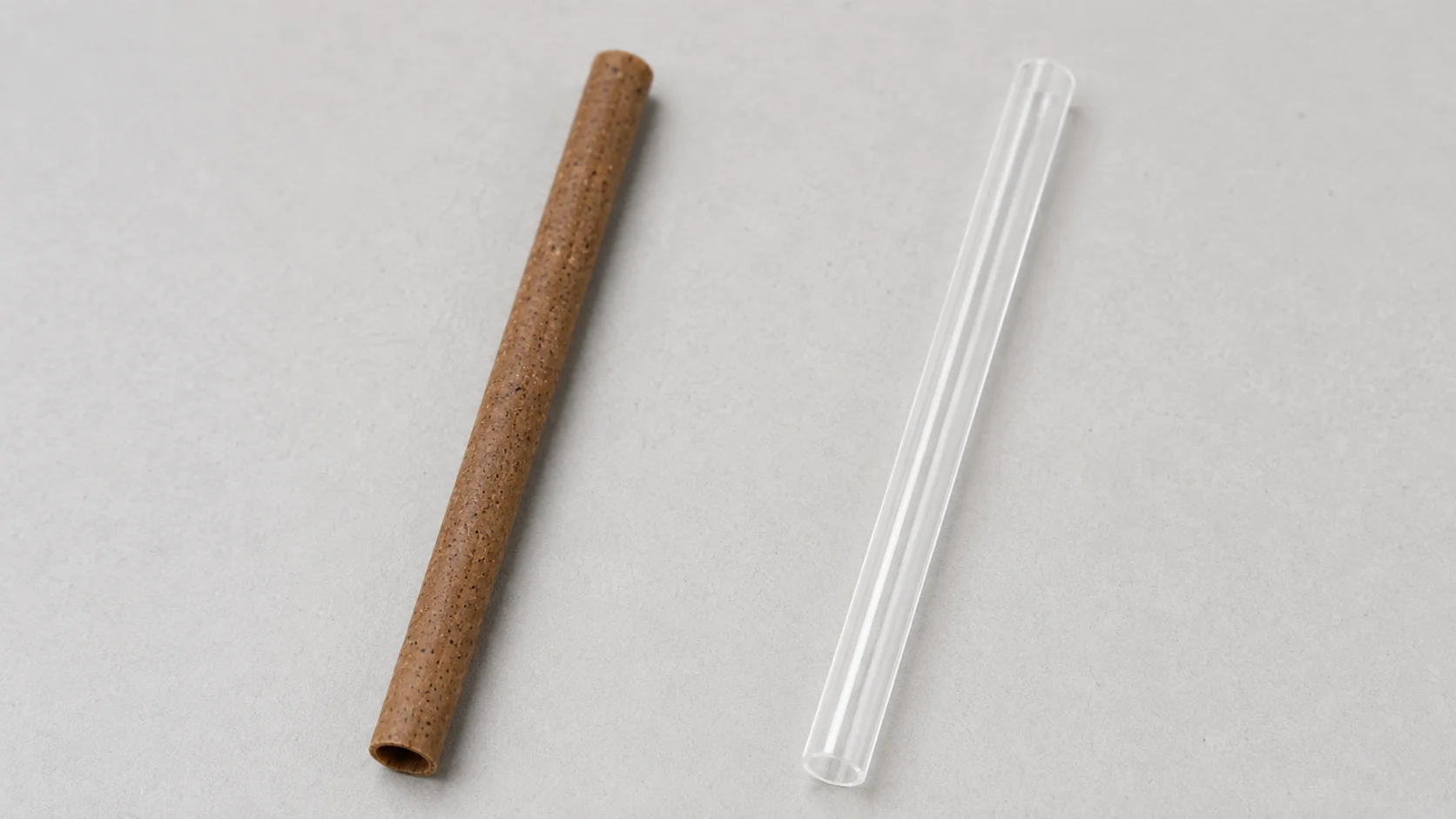
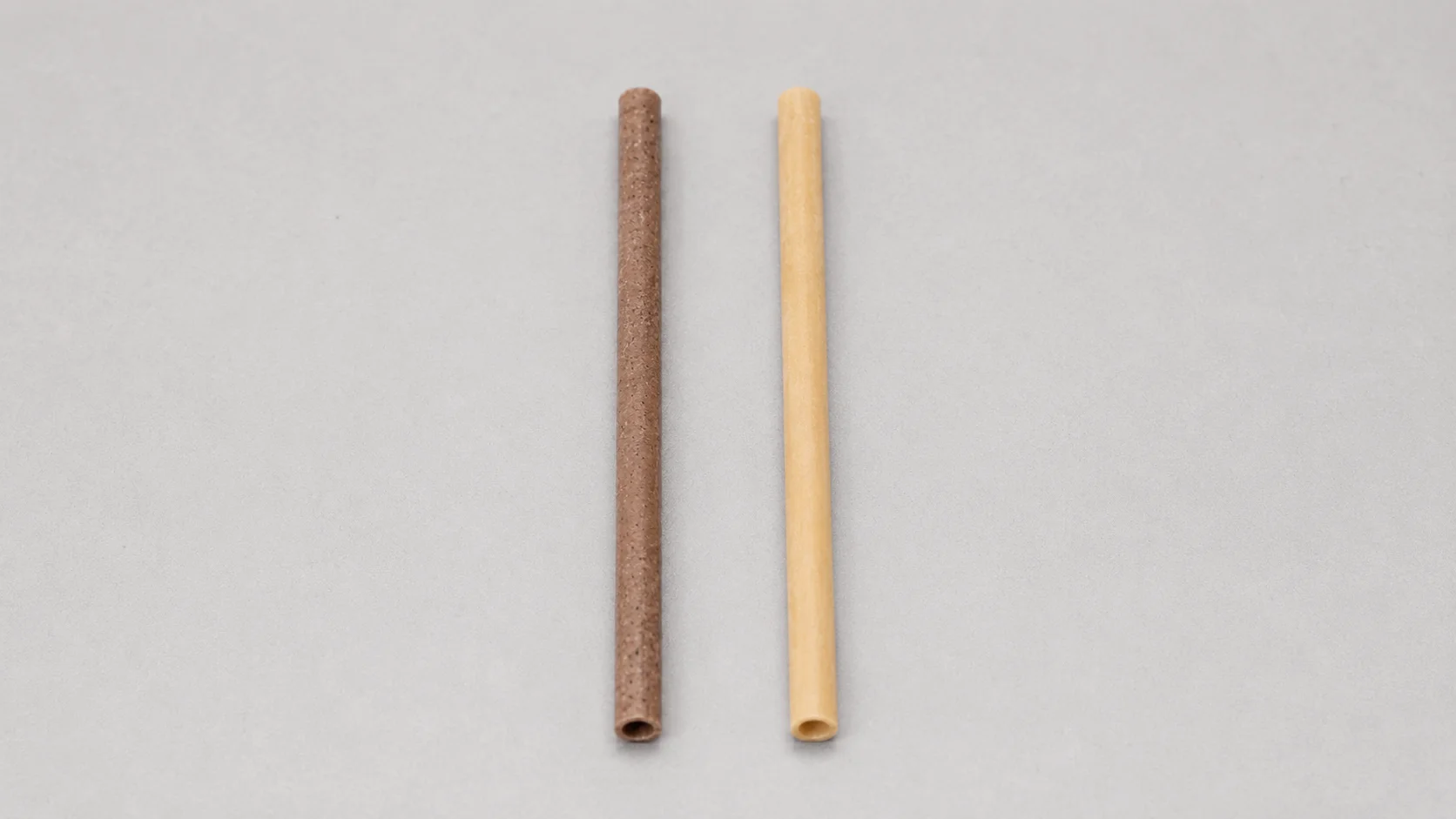
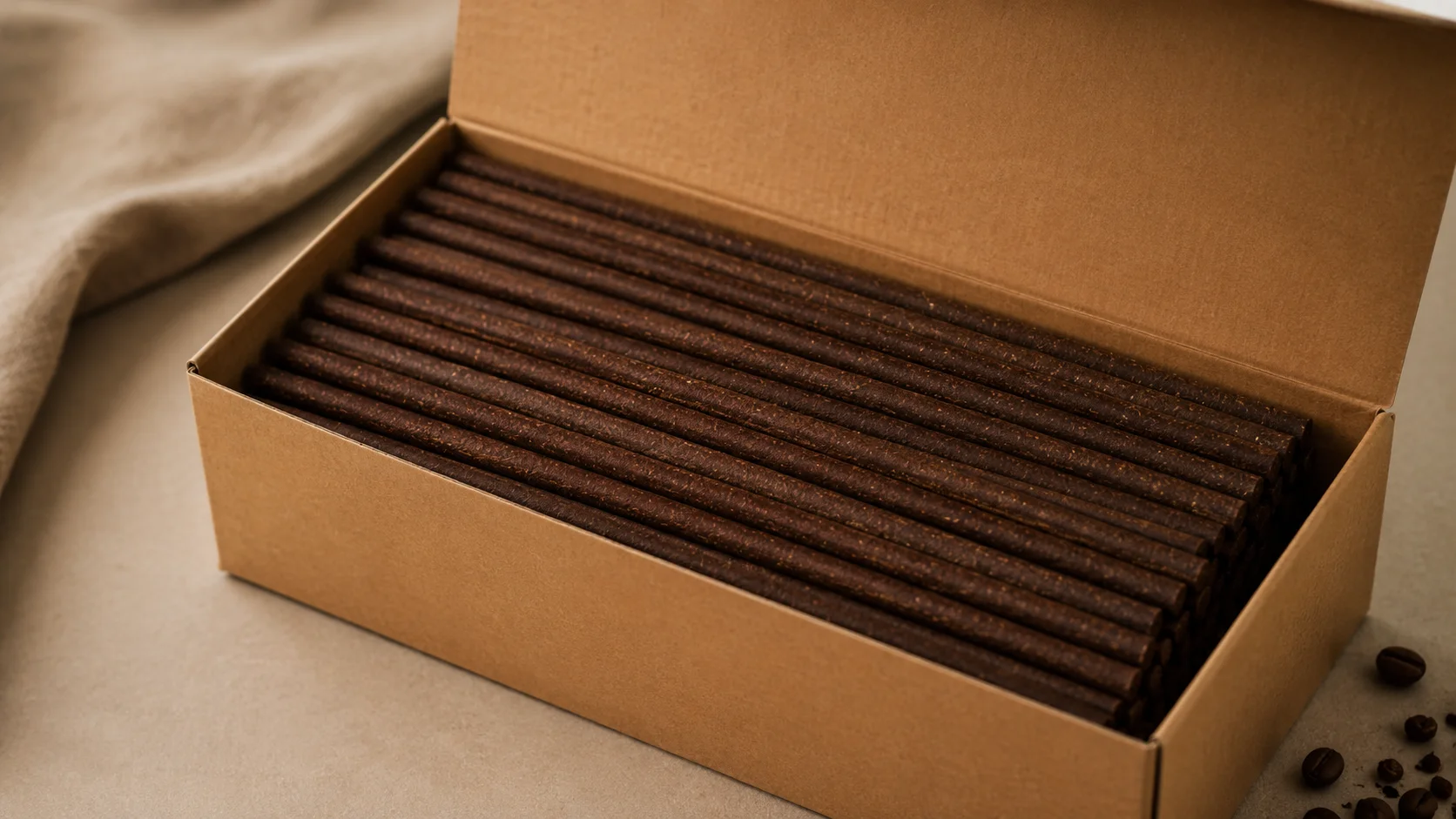
- Koffie gemalen rietjes: Deze rietjes zijn een nieuwe en zeer duurzame innovatie en maken gebruik van hergebruikt koffiedik, wat perfect aansluit bij de principes van de circulaire economie. Ontdek de unieke aantrekkingskracht van onze Koffie Gemalen Rietjes voor een echt milieubewust aanbod.
Hier is een vergelijking van veelgebruikte stromaterialen en hun belangrijkste kenmerken voor B2B-kopers:
| Materiaalsoort | Belangrijkste voordelen | Belangrijkste nadelen | Compliance & Environmental Notes (B2B Focus) |
|---|---|---|---|
| Traditioneel kunststof(PP, PE, PVC) | Inexpensive, durable, lightweight, widely available. | Major environmental pollutant (microplastics), non-biodegradable, petroleum-based. | Banned in EU (SUPD)since July 2021. Significant reputational risk due to environmental impact. Contains BPA/phthalates. |
| PLA Bioplastic | Renewable resource origin, plastic-like feel, industrially compostable (under specific conditions). | Often banned as “plastic” under EU SUPD, requires industrial composting facilities (not home compostable), does not biodegrade in natural environments. | Banned in EU (SUPD). RequiresEN 13432 / ASTM D6400industrial composting certification. Risk of misdirection if not properly disposed of. |
| PHA Bioplastic | Marine-biodegradable, derived from plant oil, breaks down in diverse natural environments. | Newer technology, potentially higher cost, availability may vary. | Excellent for comprehensive sustainability. Look forOK biodegradable MARINE / SOILand industrial/home compostability certifications. Offers a strong environmental claim. |
| Papier | Biodegradable, compostable, widely accepted as an alternative. | Can get soggy quickly, potentially alters drink taste. | High risk of PFAS contamination (up to 90% of brands).Subject to US state-level PFAS bans and upcoming EU-wide PFAS restrictions in food contact materials. Requires careful sourcing for PFAS-free options. |
| Metaal (roestvrij staal) | Highly durable, reusable, elegant, PFAS-free, fully recyclable. | Conducts temperature, rigid (potential dental risk), higher upfront cost. | PFAS-free, highly compliant.Uitstekend geschikt voor duurzaamheidsstrategieën op de lange termijn en het verminderen van afval voor eenmalig gebruik. Sluit aan bij de trends in de circulaire economie en EPR. |
| Glas | Herbruikbaar, chemisch inert, geen microplastic risico, elegant. | Kwetsbaar, hogere initiële kosten. | Veilige en conforme keuze. Biedt transparantie en premium esthetiek. |
| Siliconen | Herbruikbaar, flexibel, veilig voor kinderen, duurzaam. | Niet biologisch afbreekbaar, moeilijk te recyclen, kan stof aantrekken. | Conform (herbruikbaar), maar het einde van de levensduur blijft een uitdaging. Geen “biologisch afbreekbare” oplossing. |
| Bamboe | Natuurlijk, milieuvriendelijk, biologisch afbreekbaar, hernieuwbaar. | Kan een subtiele smaak geven, varieert in consistentie/duurzaamheid, kan drassig worden als het niet op de juiste manier wordt behandeld. | Biologisch afbreekbaar, voldoet over het algemeen aan SUPD als niet-plastic. Controleer op de juiste behandeling (geen PFAS-coatings) en certificeringen voor duurzame inkoop. |
| Suikerriet | 100% plant-based, durable, certified compostable, reusable. | Newer to market, perception of “plastic-like” may require consumer education. | Excellent, fully biodegradable and compostable. Look forEN 13432 / ASTM D6400 / BPI / OK compostcertifications. PFAS-free options available. |
| Koffie gemalen | Novel, circular economy focus, innovative. | Emerging product, availability, cost, consumer perception. | Strong story for circularity and waste reduction. Verify compostability certifications and PFAS-free status. |
| Edible (Rice, Seaweed, etc.) | Zero waste, fun, fully biodegradable. | Limited durability, not suitable for hot drinks, can alter drink taste, higher cost. | Highly sustainable, zero waste. Generally compliant. Good for novelty and specific use cases. |
| Natural Stem (Hay, Reed, Wheat) | Volledig natuurlijk, composteerbaar, agrarisch bijproduct. | Kan een subtiele smaak, beperkte duurzaamheid en specifieke esthetiek overbrengen. | Natuurlijk conform, volledig biologisch afbreekbaar en composteerbaar. Goed voor rustieke/natuurlijke branding. |
Beyond Material: Understanding Straw Features & Sizes
Naast het materiaal zijn de functionaliteit en de grootte van een rietje van cruciaal belang voor specifieke zakelijke behoeften:
- Cocktailroerders (ca. 3 mm diameter): Ideaal voor mixdrankjes en kleinere glazen.
- Standaard/Jumbo rietjes (diameter 6 mm): De dagelijkse keuze voor water, sap en frisdrank.
- Super Jumbo/Smoothie-rietjes (diameter 7-10 mm): Perfect voor dikkere dranken zoals milkshakes, smoothies en frappes.
- Boba-rietjes (12-13 mm diameter): Essentieel voor bubble tea, ontworpen voor tapiocaparels.
- Kolossale/extra lange rietjes (12 mm+ diameter): Voor zeer dikke dranken, hoge glazen of diepe kopjes.
Het kiezen van de juiste maat zorgt voor klanttevredenheid en operationele efficiëntie, ongeacht het materiaal.
Navigeren door het regelgevingslandschap
De impact op het milieu van artikelen voor eenmalig gebruik heeft geleid tot een wereldwijde verschuiving in de regelgeving, waardoor een groter bewustzijn van B2B-kopers is vereist.
- EU-richtlijn inzake kunststoffen voor eenmalig gebruik (SUPD): This comprehensive directive, active since July 3, 2021, is a game-changer for businesses dealing with plastic products in the EU. It outright bans the placement of single-use plastic straws on the market, a prohibition that extends even to many bioplastics like PLA if they are deemed “plastic” within the directive’s strict definition. This applies unless the product can truly biodegrade naturally in open environments. While medical exemptions exist, the directive also imposes Extended Producer Responsibility (EPR) schemes on other plastic products, holding producers financially accountable for end-of-life management. For any business operating within the EU or exporting to it, strict adherence to SUPD is non-negotiable, influencing material choices, supply chains, and product labeling. The official guidance from the European Commission clarifies the scope and implications of this directive for various stakeholders. Businesses must consult resources like the official EU publications on the Single-Use Plastics Directive to ensure full compliance.
- PFAS Restrictions: A Growing Global Concern: The ubiquity of PFAS in many “eco-friendly” alternatives, particularly paper straws, has ignited a wave of global restrictions.
- US State-Level Bans: In the absence of a federal ban, numerous US states have taken the lead. California’s Assembly Bill 1200, effective January 2023, specifically bans intentionally added PFAS in paper, paperboard, or plant-based food packaging and straws, with a threshold for unintentional PFAS. Other states like Colorado, Connecticut, Maryland, and Minnesota implemented similar bans in January 2024, with many more states (e.g., Illinois, Michigan, Oregon, Rhode Island in 2025; Maine, New Hampshire, Pennsylvania, Wisconsin by 2028) set to follow suit. These regulations are creating a complex patchwork of compliance requirements for national businesses.
- EU-Wide Restrictions: The European Union is also moving swiftly. From August 2026, food contact packaging sold in the EU will be prohibited if PFAS content exceeds specific concentration limits (25 ppb for individual PFAS, 250 ppb for sum of PFAS, and 50 ppm total fluorine). This sweeping restriction will impact all food contact materials, including straws.
- Federal US Action: In a significant development, an Executive Order (E.O. 14208) issued in early 2025 by the US federal government explicitly called for a halt to the federal government’s purchase of paper straws due to documented PFAS contamination concerns. This directive underscores the serious health and environmental risks associated with these chemicals and signals a growing federal intent to address them. This move is detailed on the official White House website, highlighting the administration’s stance on this issue.
Demystifying Certifications: The Gold Standard for B2B Trust
Navigating environmental claims requires more than just good intentions; it demands verifiable certifications. These provide the scientific backing and third-party assurance that B2B buyers need.
- Industrial Compostability (EN 13432, ASTM D6400, ASTM D6868):
- EN 13432 (Europese norm): This rigorous European standard sets the benchmark for industrial compostability. To achieve this certification, products must demonstrate at least 90% biodegradation within six months and 90% disintegration (into fragments smaller than 2mm) within 12 weeks, all under the high temperatures (40-60°C) and controlled conditions of industrial composting facilities. Crucially, the standard also mandates strict limits on heavy metals and ecotoxicity, ensuring the resulting compost is safe for plant growth.
- ASTM D6400 & ASTM D6868 (American Standards): These American standards serve a similar purpose, specifically for plastics and products incorporating plastics designed to be aerobically composted in municipal or industrial facilities. ASTM D6400 focuses on the plastic material itself, requiring at least 90% biodegradation within 180 days and disintegration within 12 weeks. ASTM D6868 addresses products with biodegradable plastic films or coatings attached to other compostable substrates (like paper straws with a bioplastic lining), ensuring the entire composite product breaks down appropriately. Both standards require the end-compost to be non-toxic and support plant growth.
- BPI (Biodegradable Products Institute) & TÜV AUSTRIA “OK compost”: These are the leading global certification bodies that verify compliance with the aforementioned standards.
- BPI & OK compost INDUSTRIAL: These certifications are aligned with EN 13432 and ASTM D6400/D6868, signifying that a product will reliably break down in commercial composting facilities.
- OK compost HOME: A unique and highly valued certification, this guarantees a product will decompose safely and completely in a backyard compost pile, where temperatures are lower and less consistent.
- OK biodegradable MARINE / SOIL: These certifications indicate a product’s capacity to biodegrade in specific natural environments like oceans or soil, offering advanced environmental assurances.
- Crucial Note: BPI certification has evolved to combat greenwashing and address emerging concerns. It now mandates that certified compostable products must be free of intentionally added PFAS, with a total organic fluorine content measuring below 100 ppm. This is a vital benchmark for ensuring true environmental safety.
Here’s a concise overview of these key compliance and certification frameworks:
| Framework / Certification | Primary Focus for Straws | Key Criteria & B2B Relevance |
|---|---|---|
| EU SUPD | Ban on single-use plastic straws (including many bioplastics). | Direct market bansince July 2021 for EU businesses. Mandates shift to non-plastic alternatives. Compliance is essential for market access and avoiding significant penalties. |
| PFAS Restrictions | Prohibiting “forever chemicals” in food packaging & straws. | Growing global concern.US state bans (e.g., CA AB 1200, effective 2023) and upcoming EU-wide restrictions (effective Aug 2026) are critical. Federal US action (E.O. 14208) highlights the risk. Essential for public health, brand safety, and avoiding legal repercussions. |
| EN 13432 | European standard for industrial compostability. | Requires 90% biodegradation in 6 months, 90% disintegration in 12 weeks in industrial facilities. Sets heavy metal limits, ecotoxicity tests. Ensures products truly return to earth without harm. Essential for claiming “compostable” in EU markets. |
| ASTM D6400 / D6868 | American standards for industrial compostability. | Similar to EN 13432, for plastics (D6400) and coated products (D6868). Requires 90% biodegradation in 180 days, disintegration in 12 weeks. Crucial for “compostable” claims in North American markets. |
| BPI / TÜV OK compost | Independent third-party verification of compostability. | BPI & OK compost INDUSTRIAL:Aligned with EN 13432/ASTM D6400.OK compost HOME:Verifies backyard compostability.OK biodegradable MARINE / SOIL:Verifies breakdown in specific natural environments.Crucial for trusted “green” claims, with BPI now requiring PFAS-free (<100 ppm total organic fluorine) products. |
| FTC Groene Gidsen | Preventing “greenwashing” in environmental marketing. | Requires all environmental claims to be substantiated by scientific evidence, be specific, and avoid deception. Broad claims like “eco-friendly” must be qualified. Essential for truthful marketing and avoiding legal action from regulatory bodies. Consult the official FTC Green Guides for detailed guidance. |
| EPR Trends | Producers responsible for product end-of-life. | Not a direct straw ban, but incentivizes eco-design and circularity. Choosing easily recyclable/compostable straws helps businesses meet broader EPR obligations and reduce waste management costs, aligning with future regulatory landscapes. |
Avoiding Greenwashing: The FTC Green Guides
Beyond formal certifications, businesses must navigate the subtle art of environmental marketing responsibly. TheFTC Groene Gidsenprovide critical principles for making truthful and non-deceptive environmental claims. These guides, published by the Federal Trade Commission, advise marketers to:
- Substantiate Claims: Any environmental benefit claim, whether “compostable,” “biodegradable,” or “eco-friendly,” must be backed by competent and reliable scientific evidence.
- Be Specific: Avoid broad, unqualified claims that are difficult to substantiate. For instance, a claim of “compostable” must specify the conditions (industrial vs. home) and the availability of such facilities to consumers. If a product contains PFAS, it cannot genuinely be marketed as broadly “eco-friendly.”
- Prevent Deception: Claims should not overstate environmental attributes or imply benefits that don’t exist. If a product has an environmental benefit but also a significant environmental trade-off (like PFAS in paper straws), marketers must qualify their claims clearly.
Adhering to these guides is vital not only for ethical marketing but also for avoiding legal scrutiny and maintaining consumer trust in an increasingly skeptical market.
Beyond Compliance – Elevating Your Brand with Truly Sustainable Straw Solutions
For forward-thinking B2B leaders, compliance is merely the baseline. The true opportunity lies in proactively choosing straw solutions that not only meet but exceed regulatory demands, enhancing your brand’s reputation and demonstrating genuine commitment to a sustainable future.
The Momoio Advantage: Your Partner in Sustainable, Compliant Sourcing
At MOMOIO, we understand the complexities and the stakes involved. We are dedicated to being your trusted partner in navigating the challenging landscape of sustainable sourcing.
- Navigate the Complexities with Confidence: We offer a carefully curated selection of straw solutions engineered to meet stringent global standards and address the latest environmental and health concerns. We remove the guesswork from sustainable sourcing, allowing you to focus on your core business operations with peace of mind.
- Genuinely Eco-Friendly & Certified: Don’t fall prey to greenwashing. Our products undergo rigorous testing and achieve industry-leading certifications, ensuring they deliver on their environmental promises. From our durable Duurzame, milieuvriendelijke suikerrietrietjes which are biodegradable and compostable alternatives to plastic, to innovative solutions like our Koffie Gemalen Rietjes designed with true circularity in mind, we provide verified eco-conscious choices. Explore our full range, including our elegant Bamboe rietjes, all crafted for a greener future.
- PFAS-Free Assurance: We recognize the critical importance of health and safety for your customers and your brand. Our stainless steel options and specifically certified plant-based straws are meticulously sourced and tested to be free from harmful PFAS. This commitment safeguards your customers from “forever chemicals” and protects your brand’s integrity, aligning with critical state-level bans in the US and upcoming EU regulations.
- Built for Performance & Satisfaction: Sustainability should never compromise quality or user experience. Our straws are designed not just for environmental benefit but for optimal functionality. They resist sogginess, hold up to both hot and cold beverages, and maintain their integrity throughout use, ensuring a premium and satisfying experience for your customers.
- Compliance Made Easy: Stay ahead of the curve. Partnering with MOMOIO ensures your straw choices align seamlessly with evolving legal requirements, from the EU SUPD ban on single-use plastics to the intricate web of US state PFAS restrictions. This proactive approach mitigates risk, avoids costly penalties, and clearly demonstrates your business’s commitment to responsible and ethical practices.
- Align with EPR Trends: As Extended Producer Responsibility (EPR) legislation becomes more widespread globally, choosing products designed for a circular economy is increasingly vital. Our product offerings are designed with their entire lifecycle and end-of-life management in mind, helping your business meet its environmental obligations and significantly reduce its overall ecological footprint.
Tailored Solutions for Every Business
Whether you operate a bustling café, a luxury hotel, or a dynamic retail establishment, MOMOIO offers sustainable straw and food packaging solutions that not only enhance your brand’s image but also improve operational efficiency. Consider extending your sustainable impact with ourMomoio Bamboo CutleryofHouten bestekto complete your eco-friendly offering and create a truly cohesive brand experience.
Make the Sustainable Choice Today
The choice of drinking straw reflects your business’s values, commitment to the planet, and dedication to customer well-being. Transform your business’s environmental impact and confidently meet regulatory demands by choosing MOMOIO’s certified, sustainable straw solutions.
Explore our comprehensive range of certified, sustainable straw solutions on our main Products page. Download our detailed B2B catalog and sustainability reports for in-depth information. To discuss your specific needs and find the perfect straw solution for your business, contact our sustainability experts today. Learn more about our unwavering commitment to a greener future by reading our About Us story, and stay informed on the latest trends and regulations by following our Blog.
Veel Gestelde Vragen
How does the EU Single-Use Plastics Directive (SUPD) affect drinking straws?
How does the EU Single-Use Plastics Directive (SUPD) affect drinking straws?
The SUPD, effective July 3, 2021, bans the placement of single-use plastic straws—including many bioplastics like PLA—on the EU market. Businesses operating in or exporting to the EU must pivot to genuinely non-plastic, fully biodegradable, or reusable alternatives. This fundamentally reshapes material selection, labeling, and supply-chain strategies for compliance.
Why are PFAS in paper straws a concern?
Why are PFAS in paper straws a concern?
PFAS (“forever chemicals”) persist in the environment and the human body. They may be opzettelijk toegevoegd for water resistance or present via manufacturing contamination. Recent studies found PFAS in a majority of paper straws, raising potential leaching and health-risk concerns. This has driven US state-level bans and upcoming EU-wide restrictions on PFAS in food-contact materials.
Which third-party certifications prove real compostability/sustainability?
Which third-party certifications prove real compostability/sustainability?
- EN 13432(EU 工业堆肥)
- ASTM D6400 / D6868(美标工业堆肥)
- BPI(Biodegradable Products Institute)认证:无有意添加 PFAS,且总有机氟 < 100 ppm
- TÜV OOSTENRIJK:OK compost INDUSTRIAL / OK compost HOME
务必核验证书有效期、适用范围与当地处理基础设施(是否有可用的工业堆肥)。
How can businesses avoid greenwashing in straw claims?
How can businesses avoid greenwashing in straw claims?
遵循 FTC Groene Gidsen 等指南,所有环保主张需以可靠科学证据佐证,并保持具体且可验证(如“工业可堆肥,需送至具资质设施”)。避免“eco-friendly”等笼统说法;如材料含 PFAS 或存在权衡,应进行清晰披露。
What straw diameters fit common beverages?
What straw diameters fit common beverages?
- Cocktail Stirrers:≈ 3 mm(搅拌/小杯)
- Standard / Jumbo:6 mm(水、汽水、冰茶;复用标准常见)
- Super Jumbo / Smoothie:7–10 mm(奶昔、思慕雪、沙冰)
- Boba:12–13 mm(珍珠奶茶/配料)
- Colossal / Extra-Long:≥12 mm(超厚饮品、长杯/深杯)
依据黏度与固形物匹配直径,可减少堵塞与报废,优化成本与体验。