Voorbij het verbod: waarom uw ‘milieuvriendelijke’ lange rietjes nog steeds een nalevingsrisico kunnen vormen
De wereldwijde drang om traditionele plastic rietjes af te schaffen valt niet te ontkennen, gedreven door een universeel verlangen naar een duurzamere toekomst. Regelgeving, met name de EU-richtlijn voor plastics voor eenmalig gebruik (SUPD), heeft al een regelrecht verbod op conventionele plastic varianten uitgevaardigd, waardoor bedrijven over de hele wereld gedwongen zijn te zoeken naar haalbare, milieuvriendelijke alternatieven. Deze urgentie is vooral acuut voor etablissementen die cocktails en sterke dranken serveren, waar een lang, stevig rietje niet alleen een gemak is, maar vaak een essentieel onderdeel van de klantervaring.
De reis naar echte duurzaamheid is echter beladen met verborgen complexiteiten. Veel algemeen op de markt gebrachte ‘bio-sourced’ of ‘composteerbare’ rietjes zijn weliswaar onschuldig, maar voldoen in werkelijkheid niet aan de strenge internationale regelgeving, waardoor ze illegaal zijn op markten als de EU. Erger nog, sommige alternatieven herbergen verborgen gevaren, zoals per- en polyfluoralkylstoffen (PFAS) – ‘forever chemicaliën’ met zorgwekkende gevolgen voor het milieu en de gezondheid. Om door dit ingewikkelde landschap van werkelijk milieuvriendelijke lange rietjes te navigeren, is veel meer nodig dan alleen goede bedoelingen; het vereist een diep en genuanceerd begrip van complexe mondiale compliance-kaders. Voor bedrijven die zich inzetten voor zowel milieubeheer als operationele integriteit, is het onderscheid tussen marketinghype en verifieerbare duurzaamheid niet alleen een goede praktijk, maar een absolute noodzaak.
Het regelgevende mijnenveld voor duurzame rietjes uitpakken
In een tijdperk waarin de waarden van de consument steeds meer op één lijn komen met de verantwoordelijkheid voor het milieu, kan de keuze voor ogenschijnlijk eenvoudige artikelen zoals rietjes een aanzienlijke impact hebben op de reputatie en juridische status van een merk. Voor B2B-kopers is het begrijpen van de nuances in de regelgeving van cruciaal belang. Niet-naleving is niet slechts een ethische misstap; het kan leiden tot hoge boetes, verstoringen van de toeleveringsketen en onomkeerbare schade aan het merkvertrouwen.
De regelgevingsimperatief: waarom naleving niet onderhandelbaar is
De verschuiving van plastic voor eenmalig gebruik is geen voorbijgaande trend, maar een mondiaal wetgevend mandaat, waarbij de EU het voortouw neemt.
- De EU-richtlijn inzake kunststoffen voor eenmalig gebruik (Richtlijn EU 2019/904): een gamechangerDe EU SUPD, die in juni 2019 van kracht werd en van kracht wordt vanaf 3 juli 2021, vertegenwoordigt een cruciaal moment in de strijd tegen plasticvervuiling. Het verbiedt expliciet het plaatsen van plastic rietjes voor eenmalig gebruik op de EU-markt, en cruciaal is dat dit verbod verder reikt dan de traditionele op aardolie gebaseerde kunststoffen. Veel bioplastics, zoals polymelkzuur (PLA), vallen onder het verbod van deze richtlijn, zelfs als ze het etiket ‘biologische herkomst’ of ‘thuiscomposteerbaar’ hebben, als ze volgens de SUPD-definitie als ‘plastic’ worden beschouwd (een polymeer waaraan additieven of andere stoffen kunnen zijn toegevoegd, en dat kan functioneren als een structureel hoofdbestanddeel van eindproducten). Er worden alleen vrijstellingen verleend voor medisch gebruik, wat een definitieve verschuiving noodzakelijk maakt naar echt niet-plastische, volledig biologisch afbreekbare of echt herbruikbare materialen voor alle andere toepassingen. Voor bedrijven die actief zijn in of leveren aan de EU betekent dit een grondige herevaluatie van de huidige stro-inkoop, waarbij we verder gaan dan oppervlakkige ‘milieuvriendelijke’ labels om diepgewortelde naleving te garanderen.
De waarheid over “composteerbaar”: normen die er toe doen
De term ‘composteerbaar’ wordt vaak misbruikt, wat leidt tot wijdverbreide verwarring en onbedoelde greenwashing. Echte composteerbaarheid is geen subjectieve claim, maar een strikt gedefinieerde wetenschappelijke standaard, geverifieerd door middel van specifieke certificeringen.
- Europese normen (EN 13432): veeleisende industriële composteerbaarheidIn Europa is EN 13432 de gouden standaard voor verpakkingsmaterialen die industriële composteerbaarheid claimen. Dit strenge raamwerk vereist dat producten binnen zes maanden ten minste 90% biologische afbraak bereiken en binnen twaalf weken 90% uiteenvallen in fragmenten kleiner dan 2 mm, allemaal onder de hoge temperaturen (doorgaans 40-60°C) en gecontroleerde omstandigheden die voorkomen in industriële composteringsfaciliteiten. Bovendien legt EN 13432 strikte limieten op aan zware metalen en ecotoxiciteit, waardoor wordt gegarandeerd dat de resulterende compost veilig en gunstig is voor de plantengroei. Voor elk product dat het label “composteerbaar” wil krijgen en op de EU-markt verkocht wil worden, is naleving van EN 13432 niet onderhandelbaar.
- American Standards (ASTM D6400 & D6868): Ensuring Industrial Compostability in North AmericaAan de andere kant van de Atlantische Oceaan biedt de American Society for Testing and Materials (ASTM) vergelijkbare normen voor industriële composteerbaarheid, voornamelijk via ASTM D6400 en ASTM D6868.
- ASTM D6400: Deze norm heeft specifiek betrekking op de composteerbaarheid van kunststoffen die zijn ontworpen voor aërobe compostering in gemeentelijke of industriële faciliteiten. Het schrijft minimaal 90% biologische afbraak binnen 180 dagen (zes maanden) en desintegratie binnen 12 weken voor. Net als bij EN 13432 moeten producten niet-giftig zijn en vrij van zware metalen of fluor.
- ASTM D6868: Deze norm is cruciaal voor composietproducten, met name papieren rietjes met bioplastic voering of coating. Het zorgt ervoor dat het hele product, inclusief de verschillende componenten, op de juiste manier wordt afgebroken in een industriële composteringsomgeving. Beide ASTM-normen vereisen dat de uiteindelijke compost niet giftig is en de plantengroei kan ondersteunen. Het naleven van ASTM D6400 is een voorwaarde voor een product om de certificering van het Biodegradable Products Institute (BPI) te behalen.
Deze certificeringen zijn niet uitwisselbaar. Hoewel ze gemeenschappelijke doelen delen, kunnen hun specifieke vereisten en testmethoden verschillen, wat het belang onderstreept van het inkopen van producten die expliciet zijn gecertificeerd voor uw doelmarkt.
Tabel 1: Vergelijking van de belangrijkste industriële composteerbaarheidsnormen
| Functie | EN 13432 (Europa) | ASTM D6400 (North America) | ASTM D6868 (North America) |
|---|---|---|---|
| Focus | Packaging materials | Compostable plastics | Products with compostable plastic films/coatings |
| Biologische afbraak | ≥90% in 6 months | ≥90% in 180 days (6 months) | ≥90% of organic carbon into CO2 in 180 days |
| Desintegratie | ≥90% fragments <2mm in 12 weeks | ≥90% fragments <2mm in 12 weeks | Visually indistinguishable in 12 weeks |
| Composting Env. | Industrial (40-60°C) | Industrial/Municipal | Industrial/Municipal |
| Ecotoxiciteit | Required (safe for plant growth) | Required (non-toxic to plants) | Required (non-toxic to plants) |
| Zware metalen | Strict limits | Strict limits | Strict limits |
| PFAS/Fluorine | Limits total fluorine (often <100ppm implicitly) | Explicitly requires no heavy metals/fluorine | Explicitly requires no heavy metals/fluorine |
| Primary Cert. | TÜV AUSTRIA OK compost INDUSTRIAL | BPI, TÜV AUSTRIA OK compost INDUSTRIAL | BPI, TÜV AUSTRIA OK compost INDUSTRIAL |
- BPI (Biodegradable Products Institute) Certification’s Strong StanceBPI is the leading certification body in North America, offering third-party verification that a product will truly break down safely in industrial composting facilities. By certifying against ASTM D6400 and D6868, BPI ensures products decompose into natural elements without leaving behind harmful chemicals. Critically, since January 1, 2020, BPI has elevated its standards: all certified items must now be PFAS-free, with total organic fluorine levels below 100 ppm. This proactive measure establishes a vital industry benchmark for safety and environmental integrity.
- TÜV AUSTRIA (OK compost) CertificationsTÜV AUSTRIA offers a comprehensive suite of “OK compost” certifications that provide granular detail about a product’s end-of-life pathway:
- OK compost INDUSTRIEEL: Aligns with EN 13432 and ASTM D6400/D6868, signifying industrial compostability under controlled conditions.
- OK compost HOME: A more rigorous certification, guaranteeing that a product will compost safely and completely in a typical home compost heap, where temperatures are lower and less consistent. This certification significantly broadens disposal options and consumer convenience.
- Both TÜV AUSTRIA’s industrial and home compost certifications also mandate PFAS-free status, reinforcing the industry’s commitment to eliminating “forever chemicals.”
The Silent Threat: PFAS and the “Forever Chemicals” Problem
Beyond compostability claims, a more insidious threat has emerged in the world of eco-friendly alternatives: Per- and polyfluoroalkyl substances (PFAS). These “forever chemicals” are notorious for their persistence in the environment and their documented links to various health issues.
Studies hebben op alarmerende wijze PFAS ontdekt in verschillende soorten ‘duurzame’ rietjes, waaronder papier en bamboe, die vaak worden toegevoegd om waterbestendigheid te bieden of als gevolg van verontreiniging van de toeleveringsketen. De groeiende mondiale bezorgdheid over PFAS heeft geleid tot aanzienlijke wetgevende maatregelen. Terwijl het Europees Agentschap voor chemische stoffen (ECHA) actief discussieert over een universele beperking van PFAS in de hele EU, voeren individuele Amerikaanse staten al verboden uit, zoals de AB 1200 in Californië, die PFAS in voedselverpakkingen aan banden legt.
The industry is responding forcefully. As mentioned, BPI certification already requires all certified items to be PFAS-free (total organic fluorine <100 ppm). Similarly, TÜV AUSTRIA’s OK compost certifications also mandate PFAS-free status for certified products. Savvy businesses are now prioritizingPFAS-free productsnot just for compliance, but as a critical component of genuine environmental responsibility and consumer safety. Sourcing from manufacturers with explicit “no PFAS” clauses in their charters of trust and robust testing protocols is quickly becoming a non-negotiable aspect of sustainable procurement.
Avoiding “Greenwashing”: FTC Green Guides and Verifiable Claims
The proliferation of “eco-friendly” products has unfortunately led to a rise in “greenwashing”—deceptive marketing practices that mislead consumers about a product’s environmental benefits. To combat this, the U.S. Federal Trade Commission (FTC) provides itsFTC Groene Gidsen.
Hoewel het geen juridisch bindende regelgeving is, bieden de Groene Gidsen kritische richtlijnen voor marketeers over hoe ze milieuclaims kunnen maken zonder consumenten te misleiden, en fungeren ze als een interpretatieve regel die aanvaardbare praktijken schetst onder sectie 5 van de FTC-wet. Ze benadrukken de behoefte aan specifieke, verifieerbare en duidelijk bewezen claims. Algemene claims als ‘milieuvriendelijk’ of ‘groen’ worden ontmoedigd, tenzij ze worden onderbouwd met robuuste wetenschappelijke gegevens. De Gidsen behandelen verschillende milieulabels, waaronder ‘composteerbaar’, ‘biologisch afbreekbaar’ en ‘recyclebaar’, waarbij wordt benadrukt dat marketeers claims moeten kwalificeren om bedrog te voorkomen. Een product mag bijvoorbeeld niet het etiket “composteerbaar” krijgen als het alleen kan worden gecomposteerd in gespecialiseerde industriële faciliteiten die voor de meeste consumenten niet direct beschikbaar zijn. De FTC is momenteel bezig met het herzien en herzien van de Groene Gidsen, wat wijst op een verscherpt toezicht en een strenger handhavingslandschap voor milieumarketingclaims. Bedrijven moeten er daarom voor zorgen dat hun marketing de gecertificeerde milieukenmerken van hun producten accuraat weerspiegelt. U kunt de volledige richtlijnen bekijken op deFTC website.
Extended Producer Responsibility (EPR): A Shifting Burden
Another significant global trend impacting B2B buyers is Extended Producer Responsibility (EPR). EPR schemes shift the financial and organizational responsibility for the end-of-life management of products and packaging from municipalities and taxpayers to the producers themselves.
The EU SUPD incorporates EPR schemes for specific single-use plastic products, including food containers and beverage cups containing plastics. Beyond Europe, several US states have already enacted EPR programs for packaging, with more in development. These laws typically require producers to register, report on the types and quantities of their packaging materials, and pay fees that often vary based on the recyclability or compostability of those materials.
EPR-programma's zijn bedoeld om producenten te stimuleren duurzamere verpakkingen te ontwerpen, de afvalproductie te verminderen en de recycling- en composteringspercentages te verhogen. Voor bedrijven die milieuvriendelijke lange rietjes en andere verpakkingen inkopen, vertaalt dit zich in een cruciale behoefte om de strategieën voor de toeleveringsketen te heroverwegen, samen te werken met leveranciers die aan de regels voldoen, en de activiteiten af te stemmen op deze evoluerende verwachtingen van de regelgeving en de consument. Proactieve betrokkenheid bij EPR zorgt niet alleen voor compliance, maar ook voor een concurrentievoordeel in een snel veranderende markt.
Het leveren van echt conforme en duurzame lange-rietjesoplossingen
In deze complexe regelgeving hebben bedrijven meer nodig dan alleen een label; ze hebben verifieerbare naleving, transparantie en een partner nodig die het ingewikkelde regelgevingslandschap diepgaand begrijpt. Het risico op greenwashing, niet-naleving en de aanwezigheid van schadelijke chemicaliën zoals PFAS vraagt een hogere standaard van uw leveranciers.
De oplossing: samenwerken voor echte duurzaamheid en gemoedsrust
Momoio stands at the forefront of this evolution, offering genuinely compliant and sustainable long drinking straw solutions. Our commitment goes beyond superficial claims, focusing on rigorous certification and unwavering transparency. By partnering with Momoio, your brand ensures it meets the highest environmental and regulatory standards, effectively mitigating risks, enhancing your sustainable reputation, and demonstrating true leadership in environmental stewardship. We empower businesses to confidently navigate the compliance maze, providing peace of mind in every sip.
Momoio’s Industry-Leading Certifications and Materials:
We believe in substantiating our claims with concrete evidence. Our comprehensive product range for long drinking straws is meticulously designed and certified to meet the most stringent global standards.
- Comprehensive Compliance: Our products are rigorously tested and align with leading certifications, guaranteeing genuine biodegradability and compostability where applicable:
- EN 13432: For European industrial compostability.
- ASTM D6400/D6868: For North American industrial compostability.
- BPI Certified: Meeting the highest standards for industrial compostability in North America, including PFAS-free requirements.
- TÜV AUSTRIA OK compost (Industrial & Home): Verifying compostability under both industrial and home conditions, offering broader end-of-life solutions.
These certifications are our promise that our straws break down safely, returning to nature without harmful residues, thereby fulfilling the true spirit of eco-friendliness.
- Guaranteed PFAS-Free: We adhere to a strict “no PFAS” policy across our entire straw portfolio. This means our products are guaranteed to be free from “forever chemicals,” ensuring they meet the most rigorous safety and environmental requirements. Our commitment to PFAS-free solutions protects your customers, your brand, and the planet from these persistent contaminants, aligning with the rising global demand for safer food contact materials.
- Innovative Materials for Diverse Needs: Momoio offers a curated selection of advanced, eco-conscious materials, each engineered to provide superior performance and meet specific long drinking straw requirements:
- Sustainable Sugarcane Straws: Crafted from reclaimed sugarcane fiber (bagasse), these straws offer exceptional durability and heat resistance, making them a robust, compostable alternative perfect for long drinks and cocktails. They are a testament to circular economy principles, transforming agricultural waste into a high-value product. Learn more about Sustainable Eco-Friendly Sugarcane Straws
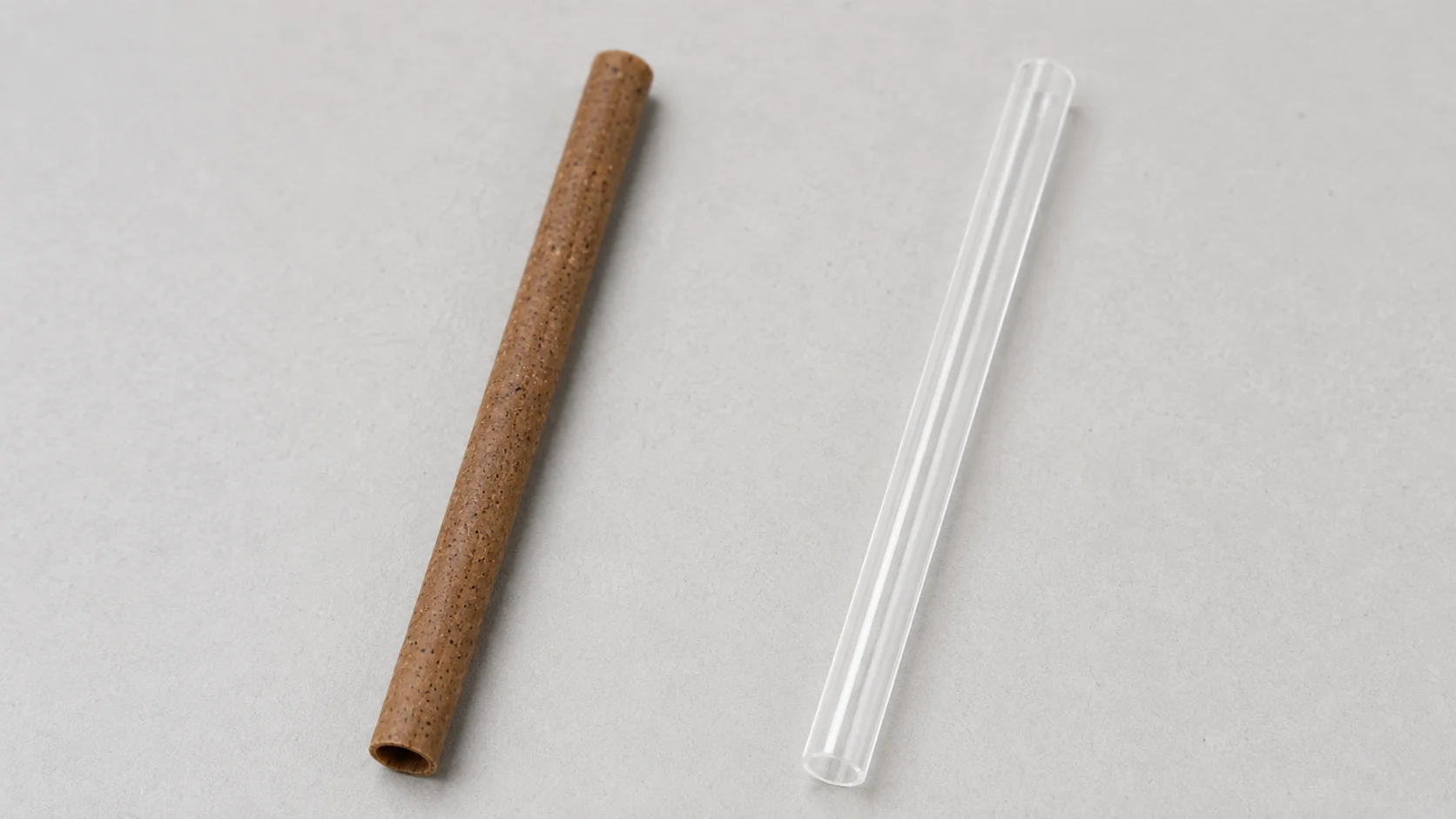
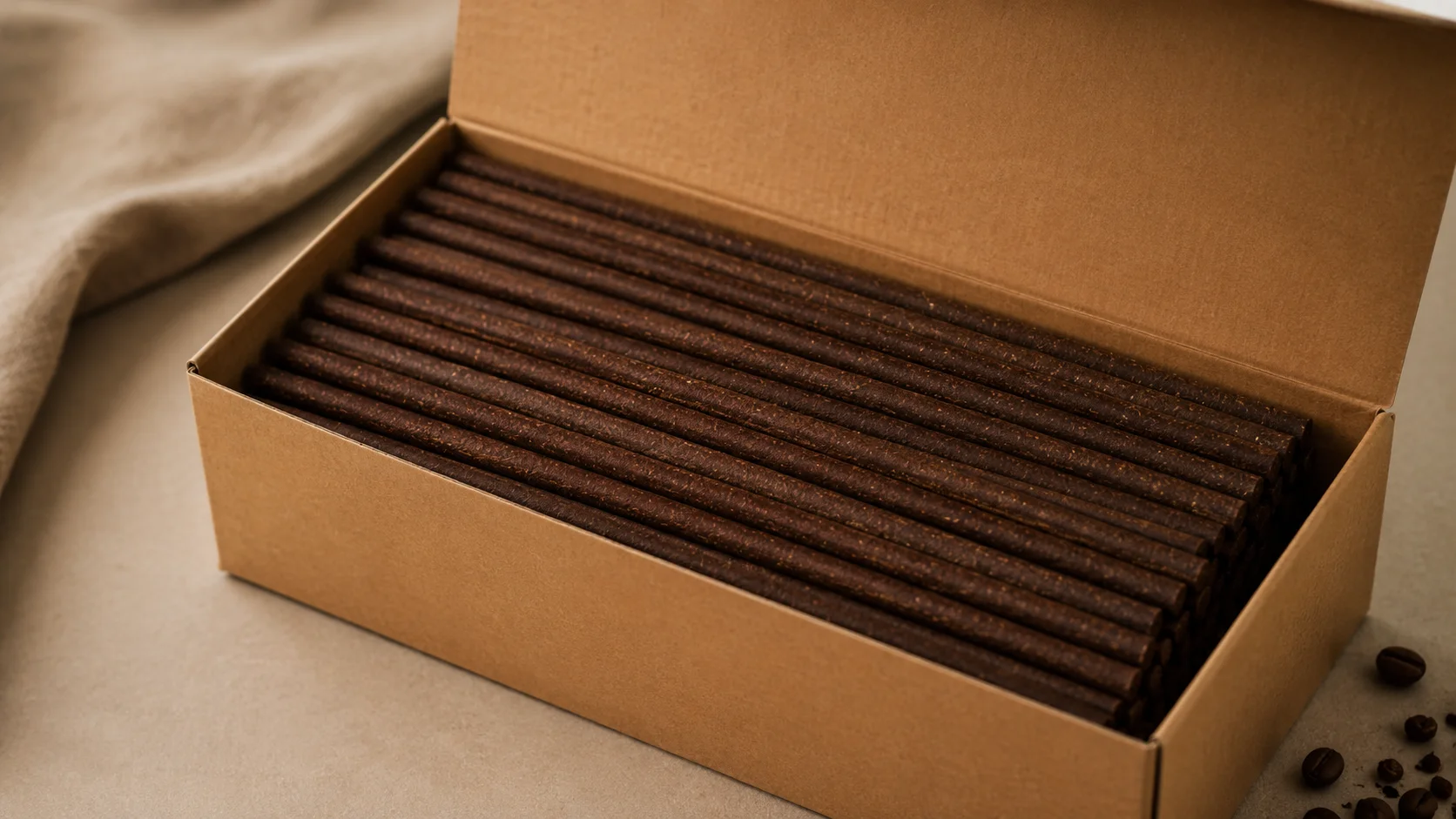
- Revolutionary Coffee Ground Straws: Unique and highly sustainable, our coffee ground straws leverage another abundant waste stream, offering a distinctive aesthetic and strong environmental credentials. These straws are a pioneering example of upcycling, providing a novel and compliant option for businesses seeking to stand out. Discover Coffee Ground Straws
- Eco-Conscious Bamboo Drinking Straws: For a natural, reusable, and premium feel, our bamboo drinking straws offer an elegant solution. Sourced responsibly, these durable straws are ideal for establishments aiming for a high-end, sustainable presentation. Explore Bamboo Drinking Straws
We understand that every business has unique needs. Explore our full range of certified eco-friendly long drinking straws and find the perfect match for your operation at Momoio Products.
Beyond Straws: A Holistic Approach to Sustainable Packaging
Momoio’s commitment to sustainability extends far beyond just drinking straws. We offer a comprehensive ecosystem of compliant, sustainable solutions designed to meet the diverse needs of businesses across various sectors. Frompaper food packagingto advancedbiologisch afbreekbare voedselverpakkingenand our elegantbamboo cutlery, our product lines are developed with the same rigorous adherence to compliance and environmental integrity.
We help businesses across sectors, including cafes, hotels, and retail, not only meet escalating consumer demand for genuine sustainability but also navigate complex EPR obligations. By partnering with Momoio, you gain access to a complete portfolio of responsibly sourced and certified products that support your holistic sustainability goals, streamline your supply chain, and reduce your overall environmental footprint. Our expertise ensures that every aspect of your packaging strategy is future-proof and compliant.
The Momoio Advantage: Reduce Risk, Enhance Reputation
Choosing Momoio means choosing a partner dedicated to your success and the planet’s well-being. Our advantage lies in:
- Reduced Environmental Impact: Our certified products ensure genuine biodegradability and compostability, actively contributing to waste reduction and a circular economy.
- Avoidance of Greenwashing Pitfalls: With our transparent certifications and PFAS-free guarantee, your brand can confidently make verifiable environmental claims, building genuine trust with your customers.
- Seamless Compliance: We continuously monitor and adapt to evolving global regulations, providing solutions that meet current and anticipated compliance frameworks, protecting your business from fines and reputational damage.
- High-Quality, Functional Products: Sustainability never compromises quality. Our long drinking straws are designed for superior performance, durability, and a positive customer experience, ensuring your sustainable choice doesn’t mean a sacrifice in functionality or aesthetics.
In a market saturated with vague “green” claims, the Momoio difference is clear: verifiable compliance, uncompromised quality, and a genuine commitment to a sustainable future. An organization likeEuropese bioplasticsprovides excellent insights into the broader bioplastics industry, underscoring the importance of industry standards and certified products, which Momoio consistently champions. This dedication allows you to focus on your core business, secure in the knowledge that your sustainable choices are rigorously vetted and truly impactful.
Choose Proven Compliance. Choose Momoio.
The imperative for genuinely eco-friendly long drinking straws is no longer a choice—it’s a business necessity, shaped by evolving regulations and a discerning consumer base. Don’t let the complexity of compliance and the risk of greenwashing compromise your brand’s integrity or future growth.
Ready to Make the Right Choice for Your Business?
Partner with Momoio to ensure your long drinking straws, and all your packaging solutions, meet the highest global standards for sustainability and compliance. Our expert team is ready to guide you through our certified product lines, offering tailored solutions that perfectly align with your operational needs and environmental commitments.
Browse Our Sustainable Straws and PackagingContact Us Today for a Consultation
Download Resources:Empower your purchasing decisions with valuable insights and access our complete portfolio of certifications and product specifications. This knowledge will solidify your understanding of true sustainability and compliance. For a broader understanding of industry best practices and standards, consider exploring resources from reputable organizations such as theInstituut voor Biologisch Afbreekbare Producten (BPI). Their work highlights the critical role of certification in ensuring product compostability and safety.
By choosing Momoio, you’re not just buying straws; you’re investing in a compliant, sustainable, and responsible future for your brand.
Veel Gestelde Vragen
Why are “eco-friendly” long straws still a compliance risk for businesses?
Many “bio-sourced” or “compostable” long straws are non-compliant with strict frameworks like the EU Single-Use Plastics Directive (SUPD), making them illegal in the EU. Some alternatives also contain hidden PFAS (“forever chemicals”). Non-compliance risks fines, supply disruption, and brand damage—so a precise grasp of global rules is essential.
What certifications ensure a long drinking straw is truly compostable and compliant?
Look for EN 13432 (EU) and ASTM D6400/D6868 (North America). Prefer third-party marks such as BPI and TÜV AUSTRIA OK compost INDUSTRIEEL / OK compost THUIS. These verify safe breakdown without harmful residues and typically include PFAS-free requirements.
What are PFAS and why must long straws be PFAS-free?
PFAS (per- and polyfluoroalkyl substances) persist in the environment and are linked to health risks. They have been detected in some paper/bamboo straws (added for water/grease resistance or via supply-chain contamination). Laws such as California AB 1200 and expected EU-wide restrictions—plus BPI/TÜV criteria—now push PFAS-free products for safety and compliance.
How does the EU Single-Use Plastics Directive (SUPD) affect long drinking straws?
The SUPD (EU 2019/904), effective July 3, 2021, bans placing single-use plastic straws on the EU market. The ban extends to many bioplastics (e.g., PLA) if they meet the SUPD definition of “plastic.” Businesses must shift to truly non-plastic, fully compostable/biodegradable, or reusable materials (medical exceptions apply).
What is “greenwashing,” and how can businesses avoid it when selecting sustainable long straws?
Greenwashing is misleading environmental marketing. Follow the FTC Green Guides: make specific, verifiable claims backed by science. Demand third-party proofs (BPI, TÜV AUSTRIA, EN 13432, ASTM D6400/D6868) instead of vague “eco-friendly” labels, and clearly qualify any “compostable/biodegradable” claims.