
Introdução: Navegando pela paisagem plástica em evolução da Califórnia
A Califórnia está há muito tempo na vanguarda da legislação ambiental, estabelecendo precedentes que muitas vezes repercutem em todo o país e até mesmo em todo o mundo. Para as empresas que operam no estado, esta liderança traduz-se num ambiente regulatório dinâmico, particularmente no que diz respeito aos plásticos descartáveis. Compreender estes mandatos em evolução não se trata apenas de conformidade legal; é um imperativo estratégico para a eficiência operacional, mitigação de riscos e reputação da marca num mercado cada vez mais consciente da sustentabilidade.
Ignorar os regulamentos relativos às palhinhas de plástico da Califórnia, ou interpretar mal as suas nuances, pode ter impactos operacionais e comerciais tangíveis. Para além das sanções financeiras diretas, as empresas correm o risco de alienar um segmento crescente de consumidores ambientalmente conscientes, manchando a imagem da sua marca e ficando para trás dos concorrentes que adotam proativamente práticas sustentáveis. Este guia abrangente dissecará os atuais mandatos estaduais e locais que regem os canudos plásticos na Califórnia, oferecendo aos gerentes de compras, diretores de operações, responsáveis pela sustentabilidade e executivos da cadeia de fornecimento os insights necessários para se adaptarem proativamente, minimizarem a poluição plástica e garantirem uma vantagem competitiva em um cenário em mudança.Proactive adaptation to California’s plastic straw regulations is crucial for business success and brand reputation.
The Core of California’s Plastic Straw Regulations for Businesses
Contrary to a common misconception, California does not enforce a complete statewide ban on plastic straws. Instead, the state’s primary legislation focuses on restricting theautomatic distributionof single-use plastic straws, rather than an outright prohibition. This distinction is crucial for businesses, as compliance hinges on understanding where and when these restrictions apply. Navigating this regulatory framework is paramount for any enterprise to avoid fines, maintain a positive public image, and align with California’s broader environmental objectives.
Understanding AB 1884: The “Straws-Upon-Request” Policy
The foundational piece of California’s plastic straw regulation is Assembly Bill 1884 (AB 1884), which officially took effect on January 1, 2019. This landmark legislation introduced a “straws-upon-request” policy primarily for full-service restaurants. Under AB 1884, these establishments are explicitly prohibited from automatically providing single-use plastic straws to customers. Instead, a customer must specifically ask for a straw to receive one.
When signing AB 1884 into law in 2018, then-Governor Jerry Brown emphasized its modest yet symbolic intent, stating that “plastic, in all forms, are choking our planet.” He viewed the bill as a “small step” aimed at increasing public awareness and reducing the pervasive impact of plastic pollution on the environment. For businesses, this translates into a fundamental shift in operational protocol, moving from a default offering to an opt-in system.
Defining “Full-Service Restaurants” and Key Exemptions
Um aspecto crítico do AB 1884 reside na sua definição específica dos estabelecimentos que governa. A lei se aplica a “restaurantes de serviço completo”, caracterizados como estabelecimentos onde os garçons anotam os pedidos nas mesas e servem comida para consumo no local. Esta formulação precisa significa que muitos estabelecimentos de alto volume e sem assentos foram inicialmente isentos da exigência estadual de “canudos mediante solicitação”.
Fast-food restaurants, delis, coffee shops, and drive-throughs, for instance, were not subject to AB 1884 at its inception. This legislative nuance created what many observers termed a “loophole” for a significant portion of the food service industry, allowing them to continue offering plastic straws automatically. For operations directors and procurement teams, this meant a bifurcated compliance strategy, where rules varied significantly based on the service model.
Penalties for Non-Compliance with California Plastic Straw Law
While the statewide law is not an outright ban, non-compliance with AB 1884 carries escalating penalties designed to encourage adherence. State Public Health Officers are primarily responsible for enforcement, typically initiated through local environmental health divisions, such as the Tulare County Environmental Health Division. Businesses found in violation of AB 1884 will first receive two warnings. These initial notices serve as an opportunity for establishments to rectify their practices and train staff on the “straws-upon-request” policy.
However, subsequent non-compliance following these warnings incurs financial repercussions. Violations can result in a fine of $25 per day. To prevent undue financial burden, the law caps the maximum annual fine for AB 1884 violations at $300. While this might seem a modest sum for larger enterprises, repeated fines can accumulate, and more importantly, the associated reputational damage from being identified as non-compliant can far outweigh the monetary penalty.California’s AB 1884 mandates “straws-upon-request” for full-service restaurants, with penalties for non-compliance.

Beyond Statewide: Local Plastic Straw Bans in California
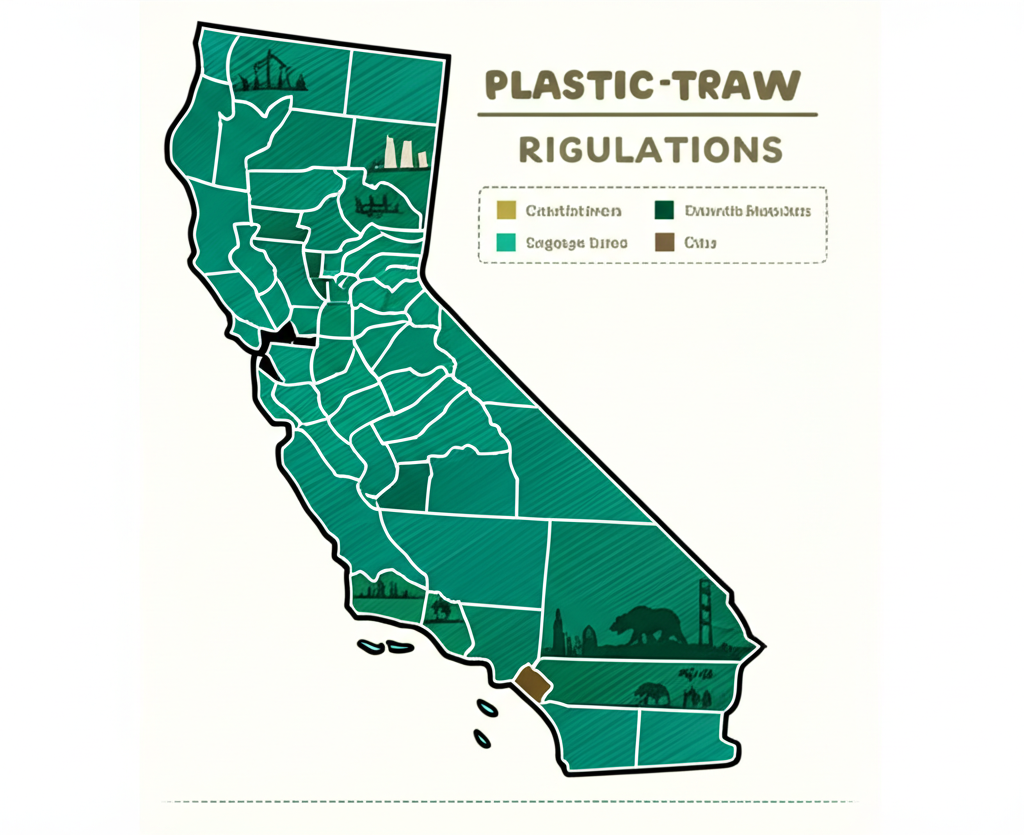
While AB 1884 sets a baseline for plastic straw regulations statewide, it is crucial for businesses, especially those operating across multiple locations, to understand that individual cities and counties in California possess the authority to implement stricter ordinances. This decentralized regulatory power has led to a patchwork of local laws that often go beyond the “straws-upon-request” policy, demanding a localized strategy for true compliance and sustainability leadership.
Cities with Complete Plastic Straw Bans
Numerous cities across California have taken a more aggressive stance against single-use plastic straws, enacting outright bans within their jurisdictions. These local ordinances mean that plastic straws are often not provided at all, even upon customer request, with some exceptions for medical or disability needs.
- São Francisco: A trailblazer in environmental policy, San Francisco implemented a full ban on plastic straws, stirrers, and other plastic food accessories effective July 1, 2019. This ordinance is particularly stringent, as it also restricts compostable plastic straws and mandates that acceptable single-use straws (like paper) only be available upon request. Plastic straws are only to be provided for disability or medical needs.
- Malibu: Even earlier, in June 2018, Malibu moved to bar all single-use plastic straws, stirrers, and cutlery, reflecting its strong commitment to protecting its coastal environment.
- Monterey, Santa Barbara, and Del Mar: These cities, along with others such as Calabasas, Davis, Alameda, Carmel, San Luis Obispo, Oakland, and Berkeley, have also enacted outright bans on plastic straws, underscoring a growing municipal trend.
- Considerations for Accessibility: É importante notar que, embora algumas proibições sejam abrangentes, muitas leis locais, como a de São Francisco, incluem disposições para indivíduos com deficiência, garantindo que as palhinhas de plástico possam ser fornecidas mediante pedido, caso sejam consideradas clinicamente necessárias. Isto reconhece necessidades legítimas de acessibilidade, ao mesmo tempo que impulsiona o objetivo mais amplo de redução do plástico.
“Canudos a pedido” estendidos do condado de Los Angeles
O Condado de Los Angeles, que abriga uma vasta população e numerosas empresas, também expandiu os seus regulamentos para além do âmbito inicial da AB 1884. A partir de Abril de 2019, Los Angeles alargou o requisito de “canudos a pedido” a uma gama mais ampla de vendedores de alimentos. Esta política alargada aplicava-se não só aos restaurantes de serviço completo, mas também às cadeias de fast-food, grandes mercearias e outros grandes vendedores de alimentos que operam nas áreas não incorporadas do condado. Além disso, a portaria do condado de Los Angeles proíbe especificamente os dispensadores de canudos plásticos de autoatendimento, com o objetivo de eliminar a disponibilidade imediata que incentiva o consumo inconsciente. Esta medida fechou significativamente a “brecha” inicialmente presente na lei estadual para estabelecimentos de fast-food, impactando um segmento de mercado de alto volume.
Navigating Varied Local Plastic Straw Regulations
A existência de uma variedade de regulamentos nas cidades e condados da Califórnia apresenta um desafio complexo de conformidade para as empresas, especialmente aquelas com múltiplas localizações ou extensas cadeias de abastecimento. Um gestor de compras de uma cadeia de restaurantes, por exemplo, não pode aplicar uma única política estadual, mas deve, em vez disso, realizar pesquisas diligentes para cumprir cada jurisdição local específica. Isso geralmente exige uma estratégia localizada para compras, gerenciamento de estoque e treinamento de funcionários.
The broader context of these varied local rules signals a clear trend: increasing restrictions on single-use plastics. Businesses that proactively anticipate and adapt to this trajectory, rather than merely reacting to individual mandates, will be better positioned for long-term success. Understanding these nuances is crucial for supply chain executives who must ensure their procurement strategies align with both state and municipal environmental objectives.Local California ordinances often impose stricter plastic straw bans, requiring localized business compliance strategies.
Operational Impacts and Strategic Shifts for Businesses
The regulatory landscape surrounding plastic straws in California is not merely a legal hurdle; it presents a significant operational challenge and a strategic opportunity. Adapting to these mandates requires more than just swapping out one material for another. It demands a holistic re-evaluation of procurement processes, customer experience strategies, and overall commitment to sustainability. This pivot is influenced by a global push for plastic reduction, which is rapidly shaping policy, consumer behavior, and competitive differentiation.
Embracing Alternatives to Single-Use Plastic Straws
AB 1884, while restricting plastic straws, explicitly permits the use of non-plastic alternatives. This flexibility has spurred innovation and market growth in sustainable straw options. For operations and procurement teams, the decision on which alternatives to adopt involves considerations of cost, durability, customer preference, and environmental impact.
- Canudos de papel: A common and widely available alternative, paper straws meet compliance requirements for both AB 1884 and most local bans. Advances in manufacturing have improved their durability, though perceptions around sogginess persist.
- Metal Straws: Often offered as reusable options, metal straws are permissible if they adhere to California Retail Food Code standards for cleanliness and sanitization. These can be a premium offering for dine-in establishments or sold as retail items.
- Canudos de Bambu: Made from natural, fast-growing resources, bamboo straws offer a rustic, sustainable appeal. They can be single-use or reusable depending on processing.
- Palhinhas de Cana: Derived from a byproduct of the sugar industry, sugarcane straws are notable for their sturdy feel and biodegradability, offering a compelling blend of functionality and environmental benefit.
- Pasta Straws: Edible and biodegradable, pasta straws offer a unique, zero-waste solution, though their application might be limited to certain beverage types.
For businesses aiming for comprehensive sustainability beyond just straws, exploring a broader range of sustainable disposables is key. A comprehensive B2B guide to non-plastic drinking straws can provide further insights into material properties, certifications, and supplier options, helping procurement managers make informed decisions.Learn more about Non-Plastic Drinking Straws for B2B.
Cost-Benefit Analysis: Transitioning to Straw Alternatives
Transitioning away from conventional plastic straws involves an initial investment that supply chain executives and operations directors must carefully evaluate. Alternative materials often have a higher unit cost compared to their plastic counterparts. This requires adjusting budgets and potentially negotiating new new terms with suppliers. However, this initial outlay is quickly offset by significant long-term ROI potential.
The benefits extend beyond simply avoiding regulatory fines. By embracing sustainable alternatives, businesses enhance their brand image, appeal to eco-conscious consumers, and contribute positively to their corporate social responsibility profile. Consumer preference is undeniably shifting towards sustainable options; studies consistently show that customers are willing to support businesses aligned with their environmental values. This shift translates into increased customer loyalty, positive public relations, and a strengthened market position. Furthermore, proactive adoption can mitigate future compliance risks as regulations inevitably become stricter.
Here’s a strategic breakdown of common options for procurement and operations teams:
| Recurso | Impacto operacional B2B | Nota de Conformidade | ROI potencial |
|---|---|---|---|
| Canudos Plásticos | Low immediate unit cost, established supply chains, high inventory ease. | AB 1884 “upon request” for full-service restaurants; outright bans in numerous California cities. | Risk of recurring fines (up to $300/year after warnings), significant negative public relations, erosion of brand trust among sustainability-conscious consumers. |
| Canudos de papel | Higher unit cost, potential for faster degradation in beverages, shelf-life concerns. | Meets AB 1884 “upon request” policy; acceptable for most local bans. | Enhanced “green” brand image, avoids all fines related to plastic straw distribution, positive customer perception, potential for increased customer loyalty from eco-conscious demographics. |
| Reusable Straws | Higher initial investment per unit, requires robust cleaning and sanitation protocols, inventory management for reuse cycles. | Meets all existing California state and local regulations for single-use plastics, aligns with strong sustainability mandates. | Significant long-term cost savings by reducing recurring disposable straw purchases, positioned as a premium offering, strong environmental leadership, appeals to high-value, environmentally committed customers, potential for retail sales of branded reusable options. |
| No Straws/Opt-in | Minimal product cost for the business, operational simplicity by reducing inventory items and handling. | Compliant with “upon request” laws for full-service restaurants; aligns with outright bans where applicable. | A redução máxima de resíduos, poupanças substanciais de custos na aquisição de palhas, uma postura “verde” forte e inequívoca, apela a um segmento de consumidores que prefere evitar totalmente as palhinhas e contribui para os objectivos globais de redução de resíduos. |
Para as empresas que procuram fazer a transição especificamente para opções biodegradáveis, um guia sobre a seleção das melhores palhinhas plásticas biodegradáveis para as necessidades B2B pode oferecer informações detalhadas sobre a composição do material, o desempenho e as certificações cruciais para as reivindicações de conformidade e sustentabilidade.Conheça os Melhores Canudos Plásticos Biodegradáveis para B2B.A transição para alternativas sustentáveis de canudos oferece ROI de longo prazo por meio de imagem de marca aprimorada e riscos de conformidade reduzidos.
Mini estudo de caso: Proibição total de San Luis Obispo (2019) e adaptação empresarial
The City of San Luis Obispo provides a compelling real-world example of how local regulations can drive business adaptation. In 2019, the city enacted a comprehensive ban on plastic straws, mandating a complete shift away from their use in all food service establishments. This ordinance went beyond the statewide “straws-upon-request” model, requiring businesses to proactively seek out and implement alternative solutions.
Local restaurants, including popular spots like Splash Café, responded by transitioning proactively to non-plastic alternatives. They embraced paper and other compostable straws, ensuring a seamless experience for customers while adhering to the new regulations. A key aspect of their successful adaptation involved diligent customer communication. Staff were trained to explain the new policy, educate patrons about the environmental benefits of the change, and introduce the new straw materials. This transparency helped mitigate potential customer friction and built goodwill.
Key Takeaways for Procurement and Operations
The experience of businesses in San Luis Obispo offers valuable lessons for procurement and operations leaders statewide:
- Proactive Supplier Diversification: Depender de uma única fonte para itens de uso único é arriscado num ambiente regulatório volátil. As empresas precisam de identificar e examinar múltiplos fornecedores de materiais de palha alternativos para garantir a resiliência da cadeia de abastecimento e preços competitivos.
- Treinamento de funcionários: A equipe da linha de frente é a interface direta com os clientes. Um treinamento abrangente sobre políticas de “canudos mediante solicitação”, especificações de proibições locais e os benefícios de materiais alternativos é fundamental para uma implementação tranquila e interações positivas com os clientes.
- Comunicação com o cliente: Informar proativamente os clientes sobre novas políticas e escolhas sustentáveis pode transformar um desafio regulatório numa narrativa de marca positiva. Explicar o “porquê” da mudança promove a compreensão e constrói uma percepção positiva da marca.
- Vantagem Competitiva por meio de Compliance: Abraçar a conformidade como uma oportunidade de inovação, em vez de um fardo, permite que as empresas se posicionem como líderes em sustentabilidade. Num mercado onde a consciência ambiental está a crescer, esta postura proativa pode tornar-se uma vantagem competitiva significativa. As empresas que lideram o mercado de produtos alimentares sustentáveis, como o foco em palhinhas biodegradáveis para restaurantes, registam frequentemente um aumento na fidelidade dos clientes e na reputação da marca. Explore opções de canudos biodegradáveis para restaurantes.
A proibição de San Luis Obispo destaca a importância da diversificação proativa de fornecedores, treinamento e comunicação para a adaptação dos negócios.
O contexto mais amplo: a liderança da Califórnia na redução do plástico
California’s regulations concerning plastic straws are not an isolated policy but a deliberate component of the state’s far-reaching and consistent commitment to environmental stewardship. For decades, California has historically led the nation in enacting stringent environmental legislation, often serving as a blueprint for other states and even countries. Understanding this broader strategic context is vital for businesses, as it indicates a clear trajectory of increasing regulations that will continue to impact B2B supply chains, product design, and operational mandates for years to come.
California’s Historic Stand Against Plastic Pollution
California’s efforts to combat plastic pollution extend far beyond straws:
- Single-Use Plastic Bags: The state was the first in the U.S. to implement a statewide ban on single-use plastic bags. Enacted in 2014, Proposition 67 further solidified this stance in 2016, prohibiting major retailers from distributing plastic bags and imposing a minimum 10-cent charge for alternative bags. This groundbreaking move drastically reduced plastic bag litter and set a powerful precedent.
- Plastic Microbeads: Reflecting its commitment to protecting marine ecosystems, California also banned plastic microbeads in personal care products, with the prohibition becoming effective in 2020. These tiny plastic particles, commonly found in exfoliants and toothpastes, were identified as significant contributors to microplastic pollution in waterways and oceans.
- Combatting Marine Debris: These legislative actions collectively reflect a consistent and unwavering commitment to combating marine debris. Plastic straws, although a small fraction of overall plastic waste by weight, are a highly visible symbol of single-use plastic consumption and are consistently ranked among the top ten contributors to plastic marine debris globally. The difficulty in recycling them—as most recycling machines are not equipped to process straws—means that only about 9% of all used plastic has been recycled worldwide, making reduction and alternative materials critical. (Source: The Guardian)
Future of Plastic Reduction: SB 54 Mandates and Projections
The regulatory landscape in California is poised for even more transformative changes with the enactment of Senate Bill 54 (SB 54), also known as the Plastic Pollution Prevention and Packaging Producer Responsibility Act. Signed into law in 2022, SB 54 represents the nation’s most ambitious extended producer responsibility (EPR) policy for packaging. It mandates aggressive targets for plastic waste reduction and recycling, fundamentally shifting the burden of plastic pollution from consumers and municipalities to manufacturers.
Key mandates and projections under SB 54 include:
- 25% Less Single-Use Plastic Packaging: By 2032, California mandates that 25% less single-use plastic packaging must be sold within the state. This target compels manufacturers to reduce plastic use at the source, innovate in product design, or switch to alternative materials.
- Recyclable or Compostable by 2032: All single-use plastic packaging and foodware sold in California must be recyclable or compostable by 2032. This requires significant investment in material science and infrastructure to ensure proper end-of-life solutions. (Source: UCLA Institute of the Environment and Sustainability)
- 65% Recycling Rate by 2032: The law also sets a challenging target of a 65% recycling rate for single-use plastic packaging by 2032. This will necessitate substantial improvements in collection, sorting, and reprocessing capabilities.
- $5 Billion Industry Fund: SB 54 establishes a $5 billion industry fund, financed by plastic producers, to address plastic pollution initiatives. This fund will support infrastructure improvements, consumer education, and environmental restoration efforts, creating a collective responsibility model. (Source: Stanford University)
These comprehensive mandates under SB 54 signal a clear direction for businesses: proactive engagement with sustainability is no longer optional. The plastic straw legislation, in this broader context, serves as a “gateway plastic” initiative, preparing consumers and industries for more extensive regulations aimed at a circular economy.California’s comprehensive plastic reduction efforts, including SB 54, signal a clear trajectory towards a circular economy.

Competitive Advantage and Business Case
Num mercado cada vez mais impulsionado pela consciência ambiental, a conformidade estratégica com os mandatos de redução de plástico oferece mais do que apenas a mitigação de riscos – apresenta uma profunda oportunidade de vantagem competitiva. Para os decisores B2B, quantificar os benefícios da sustentabilidade proativa pode criar um caso de negócio convincente para investimento.
Primeiro, considereeconomia de custos. Embora os investimentos iniciais em palhinhas alternativas possam ser mais elevados, evitar multas recorrentes (até 300 dólares anuais por violação da AB 1884) é um benefício financeiro direto. Mais significativamente, cadeias de abastecimento otimizadas focadas em materiais sustentáveis e em conformidade podem gerar poupanças a longo prazo, reduzindo os custos de eliminação de resíduos e protegendo o futuro contra regulamentações cada vez mais rigorosas.
Segundo,mitigação de riscovai além das sanções financeiras. A adesão às leis sobre plásticos em evolução minimiza a exposição legal e protege contra danos à reputação. Numa era em que a atenção negativa dos meios de comunicação social pode espalhar-se rapidamente, ser visto como ambientalmente irresponsável pode minar a confiança do cliente e o valor da marca.
Por outro lado, investir em soluções sustentáveis pode levar a um aumento significativoaumento do valor da marca. Os consumidores, especialmente em mercados ambientalmente conscientes como a Califórnia, estão cada vez mais escolhendo marcas que se alinhem com os seus valores. Um forte compromisso com a redução do plástico melhora a percepção da marca, promove a fidelidade do cliente e atrai novas oportunidades de negócios. Esta associação positiva da marca traduz-se num aumento de vendas e numa posição de mercado mais resiliente.
Finalmente, há uma claraoportunidade de participação de mercado. As empresas que fazem a transição proactiva para alternativas sustentáveis e comunicam os seus esforços de forma eficaz podem conquistar quota de mercado aos concorrentes mais lentos. À medida que as regulamentações se tornam mais rigorosas e as preferências dos consumidores se solidificam, ser um líder reconhecido em práticas sustentáveis pode diferenciar uma empresa, atrair os melhores talentos e abrir portas a parcerias com organizações ambientalmente alinhadas. Esta abordagem voltada para o futuro posiciona as empresas não apenas para a conformidade, mas para o crescimento sustentado numa economia mais verde.A sustentabilidade proativa oferece vantagens competitivas significativas por meio de economia de custos, mitigação de riscos e aumento do valor da marca.

Perguntas frequentes (FAQ)
P: Existe uma proibição total de canudos de plástico em todo o estado da Califórnia?
R: Não, o AB 1884 da Califórnia implementa principalmente uma política de “canudos mediante solicitação” para restaurantes de serviço completo, e não uma proibição total. No entanto, muitas cidades e condados individuais promulgaram proibições mais rigorosas e completas.
P: Quais são as penalidades para empresas de hospitalidade que não cumpram a AB 1884?
R: As empresas recebem duas advertências, após as quais as violações podem incorrer em uma multa diária de US$ 25, limitada a US$ 300 anuais. Os danos à reputação podem ser mais significativos do que as penalidades monetárias.
P: Como uma rede de restaurantes com vários locais pode garantir a conformidade em toda a Califórnia?
R: As redes devem pesquisar e cumprir regulamentações locais específicas em cada jurisdição, muitas vezes exigindo uma estratégia localizada para compras, inventário e treinamento de pessoal além das regras estaduais.
Q: Are there exceptions for plastic straws for medical or disability needs?
A: Yes, many local bans and even some statewide interpretations include provisions allowing plastic straws to be provided upon request for individuals with disabilities or medical needs.
Q: What are the best sustainable straw alternatives for high-volume foodservice operations?
A: Paper, bamboo, and sugarcane straws are popular biodegradable options. Reusable metal straws are also viable for dine-in, requiring robust cleaning protocols.
Conclusion: Strategic Compliance for a Sustainable Future
A abordagem progressiva da Califórnia à regulamentação das palhinhas de plástico é um sinal claro e inequívoco do seu compromisso inabalável com a gestão ambiental e uma visão mais ampla para uma economia circular. Para gestores de compras, diretores de operações, responsáveis pela sustentabilidade e executivos da cadeia de abastecimento, este cenário exige mais do que um mero cumprimento reacionário. É um imperativo estratégico que impacta diretamente os custos operacionais, a reputação da marca e o posicionamento futuro no mercado.
A adaptação proactiva, incluindo uma transição ponderada para alternativas viáveis e uma compreensão profunda das nuances dos mandatos locais, garantirá não só a prevenção de sanções, mas também uma vantagem competitiva robusta. Ao alinharem-se com a evolução dos valores do consumidor e prepararem-se para uma tendência acelerada de redução do plástico, as empresas podem transformar os desafios regulamentares em poderosas oportunidades de inovação, eficiência e maior valor da marca. A hora de agir é agora.
Otimize suas operações para conformidade e sustentabilidade. Revise seu estoque atual de plástico descartável e desenvolva hoje um plano de transição abrangente para canudos alternativos para garantir sua posição de mercado na economia verde da Califórnia.Contate-nos para soluções sustentáveis