I. O imperativo urgente: mudança de linear para circular
A dependência global de plásticos de utilização única criou uma crise ambiental monumental, com as palhinhas de plástico a servirem como um símbolo pungente do modelo económico linear “pegar-fazer-descartar”. Estes itens aparentemente inócuos persistem no nosso ambiente durante séculos, decompondo-se em micro e nanoplásticos insidiosos que se infiltram nos ecossistemas, representando graves ameaças à vida marinha através da ingestão e de lesões. Este paradigma insustentável esgota recursos finitos, gera resíduos colossais e perturba os sistemas naturais, exigindo uma mudança imediata e fundamental na forma como as empresas operam.
Entre na economia circular – um quadro transformador concebido para dissociar o crescimento económico do consumo de recursos. Os seus princípios fundamentais são claros: eliminar resíduos e poluição, fazer circular produtos e materiais com o seu valor mais elevado e regenerar sistemas naturais. Esta abordagem holística não só mitiga a degradação ambiental, mas também abre novos caminhos para a inovação, eficiência e vantagem competitiva. Para as organizações com visão de futuro, dar prioridade à sustentabilidade significa alinhar as aquisições e as operações com os mandatos globais, nomeadamente o Objectivo de Desenvolvimento Sustentável 12 das Nações Unidas (ONU, 2015), que defende padrões de consumo e produção sustentáveis. Este alinhamento não é mais opcional; é um imperativo estratégico para a viabilidade e o impacto a longo prazo.
Business risks for hospitality and foodservice include reputational damage, regulatory fines, and missed opportunities for market differentiation if this challenge is ignored.
Embracing circularity is a strategic imperative for long-term viability and impact in hospitality and foodservice.
II. Driving Growth: The Surging Market for Sustainable Straws
A dinâmica do mercado ressalta a urgência e a oportunidade. O mercado global de palha ecológica, avaliado em aproximadamente 6,90 mil milhões de dólares em 2024, deverá aumentar para surpreendentes 24,48 mil milhões de dólares até 2034, demonstrando uma robusta Taxa Composta de Crescimento Anual (CAGR) de 13,50% de 2025 a 2034 (Precedence Research, 2024). Este crescimento explosivo é uma resposta direta à crescente procura dos consumidores por produtos ambientalmente responsáveis, com dados convincentes que indicam que 80% dos consumidores preferem ativamente opções sustentáveis, e um número significativo de 66% está disposto a pagar um prémio por elas (NielsenIQ, 2023).
Para além do sentimento do consumidor, regulamentações governamentais rigorosas estão a acelerar a adopção pelo mercado a um ritmo sem precedentes. As proibições de plásticos descartáveis, particularmente evidentes em toda a União Europeia e cada vez mais na América do Norte, obrigam as empresas a procurar alternativas compatíveis. Em 2023, a América do Norte detinha mais de 35% da participação nas receitas do mercado, refletindo a sua adoção precoce e o impulso regulatório. No entanto, a região Ásia-Pacífico está preparada para o crescimento mais rápido até 2030, sinalizando um compromisso global com a transição dos plásticos convencionais. Estas forças de mercado criam um ímpeto poderoso para que os gestores de compras e os executivos da cadeia de abastecimento em hotelaria e serviços alimentares reavaliem os seus portfólios e incorporem soluções sustentáveis.

The eco-friendly straw market’s rapid growth signals a powerful impetus for sustainable solutions.
III. Pioneering Materials: Diverse Sustainable Straw Solutions for Circularity
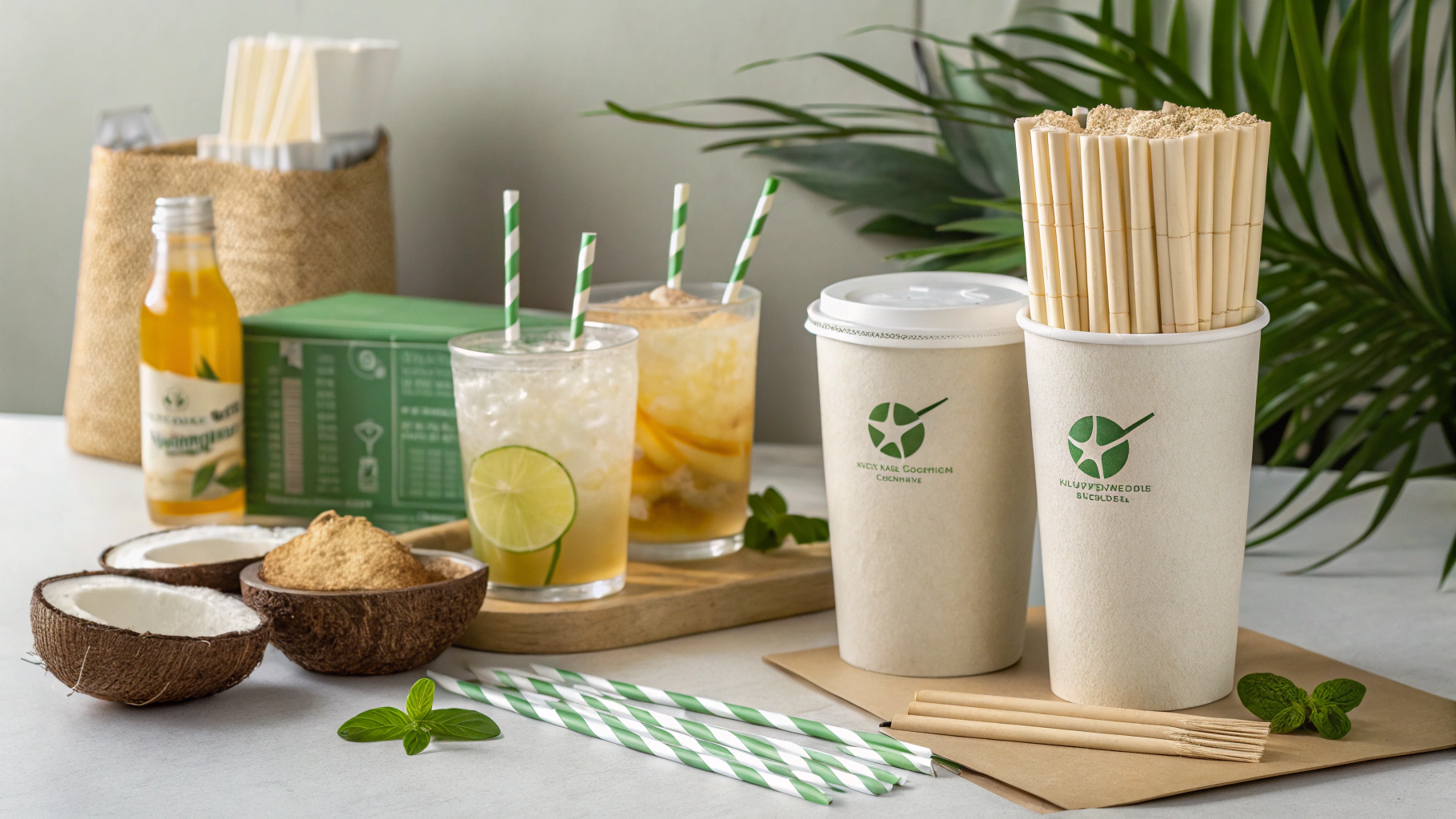
Innovation in sustainable straw materials is rapid and diverse, extending far beyond simple paper alternatives. Today’s solutions span advanced plant-based bioplastics like Polyhydroxyalkanoates (PHA), lignocellulosic biocomposites, and refined versions of traditional materials such as paper and bamboo. The focus is on harnessingresource efficiencyutilizando fluxos de resíduos agrícolas. Materiais como bagaço de cana (resíduo fibroso após a extração do suco), arroz e até folhas secas de coco, conforme demonstrado por empresas como a Sunbird Straws desde 2018, exemplificam essa abordagem, transformando subprodutos em itens valiosos e biodegradáveis.
Moreover, materials such as cellulose acetate, exclusively adopted by Unistraw since 2018, represent a significant leap. Sourced from trees and vinegar-derived acetic acid, cellulose acetate offers durability comparable to conventional plastic, eliminating the “soggy straw” drawback often associated with paper. For ultimate product circulation, reusable options like stainless steel, glass, and silicone straws stand as bastions of waste reduction, designed for repeated use and extended lifespans, minimizing the need for constant material input. For a deeper dive into material choices in the hospitality sector, explore our comparison ofsugarcane vs. bamboo sustainable straws in hospitality.
As palhinhas sustentáveis utilizam diversos materiais, desde bioplásticos a resíduos agrícolas, para uma maior circularidade.
III.A. Navegando pelos padrões de bioplásticos e biodegradabilidade
O panorama dos bioplásticos e da sua biodegradabilidade é complexo, necessitando de uma compreensão clara dos padrões de certificação para garantir um verdadeiro impacto ambiental. Nos EUA, a norma ASTM D6400 regula rigorosamente a biodegradabilidade dos produtos, servindo como uma referência crítica para declarações compostáveis. Da mesma forma, na Europa, a norma EN 13432 dita os requisitos para embalagens recuperáveis através de compostagem e biodegradação. Por exemplo, embora as palhinhas de ácido polilático (PLA) sejam de base biológica, são frequentemente restringidas pela Diretiva de Plásticos de Utilização Única (SUP) da UE, a menos que cumpram explicitamente as rigorosas normas de compostabilidade EN 13432, enfatizando a necessidade de precisão na conformidade das operações de serviços alimentares.
Certificações de órgãos conceituados como o Instituto de Produtos Biodegradáveis (BPI) e a TÜV Áustria são indispensáveis. Estas certificações proporcionam garantia de que os produtos se decomporão adequadamente em instalações de compostagem industrial, sendo que algumas até verificam a biodegradabilidade doméstica ou marinha. As equipas de compras devem exigir estas certificações para evitar o greenwashing e garantir uma circularidade genuína. Além disso, análises abrangentes do ciclo de vida (ACV) são essenciais para avaliar a verdadeira pegada ambiental das palhinhas sustentáveis, avaliando criticamente tudo, desde a origem da matéria-prima até ao impacto no fim da vida útil. Isto inclui a vigilância contra “produtos químicos eternos” (PFAS), que foram detectados em algumas alternativas de papel e palha de bambu, sublinhando a necessidade de alegações transparentes e verificáveis. Para obter orientação sobre o gerenciamento de produtos compostáveis, consulte nossoManual B2B para gestão sustentável de resíduos.

Certifications and LCAs are crucial for verifying true environmental impact and avoiding greenwashing.
III.B. Reusability and Extended Lifespan: The Ultimate Waste Reduction
While innovative disposable options are vital, reusable straws (e.g., stainless steel, glass, silicone) epitomize the core circular economy principle of keeping resources in use for as long as possible. By directly extending product life, they dramatically minimize waste generation over countless uses. Although their initial environmental impact might be higher due to manufacturing and transportation, this is significantly offset by their repeated utility, leading to a much lower overall lifecycle impact compared to their single-use counterparts.
Businesses can actively maximize the circularity of reusable options by implementing robust cleaning, sanitization, and return programs. This infrastructure not only supports extended product life but also positions the organization as a leader in sustainable practices, appealing to environmentally conscious customers and stakeholders. The long-term waste reduction and potential cost savings associated with reusability make it a compelling component of any comprehensive circular supply chain strategy for hotels and restaurants.
Reusable straws offer significant long-term waste reduction and cost savings through extended product lifespans.
IV. Strategic Material Selection: A Comparison of Sustainable Straws
Selecting the optimal sustainable straw material requires a nuanced understanding of operational impact, compliance, and ROI potential. The table below outlines key considerations for decision-makers in hospitality and foodservice:
| Recurso | Impacto operacional B2B | Nota de Conformidade | ROI potencial |
|---|---|---|---|
| Canudos de papel | Widely available, low initial cost; potential for softening/flavor impact, not recyclable with food contamination. | FSC® certification for responsible sourcing; often best for industrial composting (EN 13432). | Enhanced brand image, immediate regulatory compliance; high consumer acceptance despite performance issues. |
| Plaudos de PLA | Biobased, clear appearance; requires industrial composting, not home compostable; can break down into microplastics if not properly composted. | Must meet EN 13432 standards for compostability; restricted in some EU regions under SUP Directive. | Reduced virgin plastic waste, alignment with bio-based mandates; potential lower landfill costs if composted. |
| Canudos PHA | Marine biodegradable, home compostable; offers superior durability than paper; less prone to PFAS contamination. | TÜV Austria certification for home/marine biodegradability is key for disposal flexibility. | Premium pricing offset by strong eco-credentials; broad disposal flexibility for customers; strong brand differentiation. |
| Reutilizável (Metal/Vidro) | Higher upfront cost, requires washing/logistics infrastructure; highly durable for repeated use, significant initial carbon footprint. | No specific disposal compliance; focus on hygiene and maintenance standards (e.g., NSF). | Significant long-term cost savings, near-zero waste generation; strong sustainability statement, potential for customer loyalty programs. |
| Agricultural Waste (e.g., Sugarcane Bagasse) | Utilizes by-products, variable supply chains; good performance characteristics, often compostable. | ASTM D6400/EN 13432 for compostability; often supports local economies and waste reduction. | Reduced reliance on virgin materials, potential for cost-effective sourcing; strengthenssupply chain sustainabilityand local community engagement. |
Strategic material selection balances operational impact, compliance, and ROI for optimal sustainability.
V. Operationalizing Circularity: Integrating Sustainable Straws into Supply Chains
Successfully integratingsustainable straws in circular economy supply chainsis more than a procurement decision; it demands end-to-end collaboration across manufacturers, distributors, and retailers. This interconnectedness is crucial for achieving true efficiency and minimizing environmental impact. While growing demand for eco-friendly straws signals progress, it can also strain raw material supply, particularly for specialized bioplastics or agricultural by-products, necessitating strategic, diversified sourcing for hospitality and foodservice.
To mitigate carbon footprints, businesses must prioritize efficient manufacturing processes and localized supply chains wherever feasible. This reduces the energy and emissions associated with long-distance transportation. Crucially, proper disposal methods are paramount for genuine circularity. For example, BioPak’s Compost Connect initiative demonstrates this principle by linking foodservice businesses directly to industrial composters, diverting over 1,500 tonnes of waste from landfills and showing a tangible return on sustainable practices. Understanding and implementing these integrated approaches can revolutionize a company’s environmental performance. For deeper insights into the future of sustainable straws in foodservice, refer to our article onsugarcane straws and the sustainable foodservice future.

Integrating sustainable straws requires end-to-end collaboration for true circularity and efficiency.
V.A. Overcoming Challenges in Adoption: Cost and Performance Trade-offs
The transition to sustainable straws is not without its hurdles. One significant barrier is the often higher production costs associated with eco-friendly materials and specialized manufacturing processes, making them appear less competitive than conventional plastics on a unit-cost basis. Furthermore, performance issues, such as the well-known tendency of some paper straws to soften quickly or affect beverage flavor, can impact customer experience and brand perception in high-volume foodservice environments.
Despite these challenges, a strategic perspective reveals compelling long-termROI potential. Reduced waste disposal costs, enhanced brand loyalty among increasingly eco-conscious consumers, and improved regulatory compliance can significantly offset initial investments. Moreover, ongoing innovation is rapidly addressing performance trade-offs. Materials like Unistraw’s cellulose acetate, for instance, are engineered to offer plastic-like durability without the environmental burden, demonstrating that solutions are continually evolving to meet both sustainability and functional demands for hospitality and foodservice.
Overcoming cost and performance hurdles reveals significant long-term ROI potential for sustainable straws.
VI. Real-World Impact: Mini Case Studies in Sustainable Straw Adoption
The successful integration of sustainable straws into large-scale operations is a testament to their viability and strategic value. Several leading organizations have already demonstrated impactful shifts:
- HMSHost: In January 2023, this global restaurateur, a prominent player in airport dining venues across the U.S., took a significant step by introducing BIOLO PHA biodegradable straws. This move showcased a tangible commitment to reducing single-use plastics in high-traffic environments, aligning their vast operations with modern sustainability expectations.
- TOUS les JOURS: The popular French-Asian bakery café chain also embraced advanced sustainable solutions, rolling out plant-based straws made with PHACT™ PHA across its U.S. stores in February 2025. This large-scale adoption signals a major brand shift, influencing consumer perception and setting a new standard for the quick-service industry.
- Kaiser Permanente: This healthcare giant, recognizing its extensive environmental footprint, proactively phased out traditional plastic straws. By adopting compostable alternatives, Kaiser Permanente set a crucial precedent for responsible procurement within the healthcare sector, demonstrating how even large, complex organizations can prioritize environmental stewardship.
- Sunbird Straws (India): A remarkable example of circularity in action, Sunbird Straws innovates by transforming dried coconut leaves—an abundant agricultural by-product—into biodegradable, multilayered straws. This zero-waste solution not only addresses plastic pollution but also empowers local economies by creating value from otherwise discarded materials.
These examples underscore that transitioning to sustainable straws is not merely theoretical; it’s being implemented by diverse industries, yielding tangible environmental benefits and reinforcing corporate responsibility across hospitality, foodservice, and beyond.
Real-world case studies demonstrate the viability and strategic value of sustainable straw adoption.

VII. Navigating the Regulatory Landscape and Certifications for Responsible Procurement
O ambiente regulatório global é o principal motor para a rápida adoção de palhinhas sustentáveis. As políticas governamentais, especialmente as proibições generalizadas de plásticos descartáveis, aceleram ativamente esta mudança. A Diretiva de Plásticos de Uso Único (SUP) da UE, por exemplo, teve um impacto profundo nas cadeias de abastecimento, restringindo especificamente materiais como o PLA, a menos que aderissem a padrões rigorosos de compostabilidade, como a EN 13432. Esta pressão regulatória exige que os profissionais de compras em hotelaria e serviços de alimentação priorizem alternativas certificadas.
To ensure compliance and validate environmental claims, adherence to robust certification programs is essential. Certifications like those from the Biodegradable Products Institute (BPI) in North America, TÜV Austria (which validates home and marine biodegradability), and the Forest Stewardship Council (FSC®) for paper products, provide verifiable proof that products meet stringent environmental criteria. Furthermore, programs like the USDA BioPreferred initiative in the United States actively promote and certify biobased products, guiding businesses toward truly sustainable procurement choices and mitigating the risk of greenwashing. For full regulatory details, please refer to ourcomprehensive regulatory guide for sustainable foodservice.
Navigating regulations and certifications is crucial for responsible, compliant sustainable straw procurement.
VIII. Future Outlook: Trends Shaping Circular Straw Supply Chains
The next 5-10 years will witness a continued evolution in the sustainable straw market, driven by escalating environmental pressures and technological advancements. We can anticipate significant developments in several key areas for hospitality and foodservice supply chains:
- Advanced Biopolymer Innovations: Expect to see new generations of bioplastics with enhanced properties, including superior durability, heat resistance, and diverse end-of-life options (e.g., broader marine biodegradability, more efficient industrial composting). Research into new lignocellulosic biocomposites and novel agricultural waste derivatives will yield materials that are not only sustainable but also high-performing.
- Hyper-Localized & Decentralized Production: As supply chain resilience becomes paramount, there will be a growing trend towards localized production of sustainable straw materials and finished products, reducing transportation emissions and supporting regional economies.
- Smart & Interactive Materials: Innovations could include straws with embedded indicators for biodegradability status or even edible straws that dissolve cleanly post-consumption, pushing the boundaries of true zero-waste solutions.
- Integrated Waste Stream Solutions: Future regulations will likely push for more integrated waste management infrastructure that can effectively handle compostable and biodegradable materials. This includes expanded industrial composting facilities and potentially new technologies for material valorization.
- Global Harmonization of Standards: While regional regulations currently vary, there is a growing push for more harmonized international standards for biodegradability and compostability, simplifying compliance for global supply chains.
- AI and Data Analytics in LCA: Advanced analytics and AI will play a greater role in conducting comprehensive Life Cycle Assessments (LCAs), providing more precise environmental impact data to guide material selection and supply chain optimization.
These trends will reshape procurement strategies, compelling decision-makers to invest in R&D, forge new partnerships, and build more resilient, truly circular supply chains in the hospitality and foodservice sectors.
Future trends promise advanced biopolymers, localized production, and integrated waste solutions for circularity.
IX. Beyond Compliance: Quantifying the Competitive Advantage
For B2B decision-makers in hospitality and foodservice, embracing sustainable straws extends far beyond mere regulatory compliance; it’s a profound strategic move that translates into quantifiable business benefits and a distinctcompetitive advantage.
- Economia de custos: While initial unit costs may sometimes be higher, long-term cost savings accrue from reduced waste disposal fees, lighter packaging weights (reducing shipping costs), and potential tax incentives or rebates for sustainable practices. Furthermore, a proactive shift mitigates the financial risks associated with future environmental regulations and potential non-compliance penalties.
- Mitigação de riscos: By moving away from fossil-fuel-dependent plastics, businesses reduce exposure to volatile oil prices and supply chain disruptions. Compliance with evolving global environmental mandates also protects against legal repercussions, reputational damage, and market access restrictions, particularly in stringent markets like the EU.
- Aumento do valor da marca: In an era where consumer and investor scrutiny of environmental performance is at an all-time high, adopting visible sustainable solutions like eco-friendly straws significantly enhances brand perception. This commitment signals leadership, fosters consumer trust, and resonates with a growing segment of environmentally conscious customers, leading to increased loyalty and patronage.
- Oportunidade de participação de mercado: Early movers in the sustainable products space can capture significant market share. As the global eco-friendly straw market accelerates towards USD 24.48 billion by 2034, businesses that proactively integrate these solutions position themselves as preferred partners and suppliers, tapping into new revenue streams and differentiating themselves in a crowded marketplace. This creates a powerful business case for proactive investment.
Embracing sustainable straws offers significant competitive advantages beyond mere regulatory compliance.

Conclusion: Pioneering a Plastic-Free Future in Circular Economy Supply Chains
The integration ofsustainable straws in circular economy supply chainsis not merely an environmental trend; it is a strategic imperative for modern businesses in hospitality and foodservice. By embracing material innovation, adhering to rigorous certifications, and optimizing supply chain operations, organizations can significantly reduce plastic pollution, enhance brand reputation, and achieve long-term cost efficiencies. The global market’s projected growth to USD 24.48 billion by 2034 underscores the undeniable momentum towards a more circular future, driven by stringent regulatory demands and increasingly conscious consumerism. This is a pivotal moment for procurement managers, operations directors, sustainability officers, and supply chain executives to lead a transformative shift.
Act Now: Optimize Your Procurement Strategy
Integrating sustainable straws is a strategic imperative for a competitive, plastic-free future.
Perguntas frequentes
Q: Why are sustainable straws crucial for hospitality and foodservice?
A: Sustainable straws help hospitality and foodservice businesses reduce plastic waste, comply with evolving regulations, meet consumer demand for eco-friendly options, and enhance brand reputation, mitigating environmental and reputational risks.
Q: What are the key types of sustainable straw materials available?
A: Key materials include paper, PLA (Polylactic Acid), PHA (Polyhydroxyalkanoates), reusable options like stainless steel/glass, and agricultural waste derivatives such as sugarcane bagasse or coconut leaves.
Q: How do I ensure my sustainable straws are truly compostable or biodegradable?
A: Look for certifications from reputable bodies like BPI (ASTM D6400) in the U.S. or TÜV Austria (EN 13432) in Europe, which verify industrial or home compostability and biodegradability claims.
Q: What are the cost implications of switching to sustainable straws for a restaurant chain?
A: While initial unit costs might be higher, long-term savings can come from reduced waste disposal fees, enhanced brand loyalty, and avoiding potential regulatory fines, offering a strong ROI.
Q: How can foodservice operations manage the logistics of reusable straws effectively?
A: Implementing robust cleaning, sanitization, and return programs is essential. This infrastructure not only supports extended product life but also positions the organization as a leader in sustainable practices.